Geert A. Folkertsma is a Lecturer affiliated with the Digital Society Institute at the University of Twente, specializing in Robotics and Mechatronics. His work focuses on energy-aware robotic systems, autonomous vehicles, and biomimetic actuation technologies. Research Interests: Energy-efficient robotic architectures Biomimetic actuation and control Autonomous aerial and ground vehicles Embedded safety-critical systems Research Trends: His publications demonstrate expertise in applying bond graph modeling to UAV control, developing distributed robotic architectures with stability guarantees, and creating energy-aware actuation systems. Work spans aerospace robotics, dexterous manipulation, and bio-inspired design. Academic Contributions: Active in robotics education Developing simulation tools for autonomous systems Advancing energy-aware actuation for humanoid robots
Jørn H Hansen is a Professor in Organic/Medicinal Chemistry at the Department of Chemistry, UiT The Arctic University of Norway. He leads the Chemical Synthesis and Analysis (CSA) Group and contributes to the SusSTEMEd: Center for Sustainable STEM Education project. His research spans bioactive heterocyclic compounds, photoredox/transition metal catalysis, late-stage functionalization, small-molecule PET radiopharmaceuticals, and molecular sensors. Ph.D. in Organic Chemistry (Emory University, USA) M.Tech in Chemistry and Biotechnology (NTNU, Norway) His recent research focuses on green synthesis methods, marine-inspired antifoulants, and photoredox catalysis mechanisms. Publications highlight innovations in benzimidazole synthesis, halogen bonding, and computational/experimental synergy in catalysis. He has supervised numerous interdisciplinary projects in organic chemistry and environmental toxicology. 2024: Cryptophane synthesis for methane sensing 2023: Teaching reforms and antifouling compound libraries 2022: Marine pharmacophore-based enzyme inhibitors 2021: Water-compatible indole synthesis and halogen bonding studies 2020: Rapid quinoxaline synthesis and GnRH receptor antagonists Scientific awards include recognition as a Merited teacher . He teaches courses like KJE-3314 Organic Chemistry II and KJE-3308/8308 Organometallic Compounds in Organic Synthesis , emphasizing innovative assessment methods and student engagement.
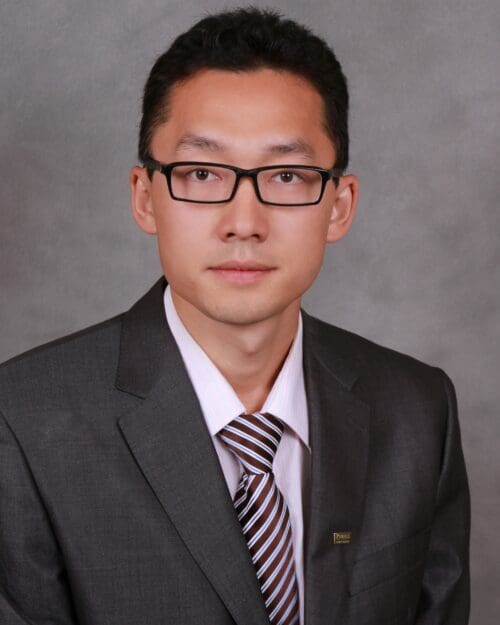
Yun (Tom) Liu is an Associate Professor of Mechanical Engineering in the College of Engineering and Sciences at Purdue University Northwest. He joined PNW as an Assistant Professor in 2017 after earning his Ph.D. from Purdue University West Lafayette in 2016. Dr. Liu's teaching philosophy emphasizes experiential learning, using real-world examples to bridge theoretical concepts with practical applications, particularly during the pandemic when he developed innovative homemade lab equipment. Dr. Liu received his educational background from prestigious institutions: Ph.D. in Mechanical Engineering, Purdue University West Lafayette (2016) M.S. in Mechanical Engineering, University of Science and Technology of China (2011) B.S. in Mechanical Engineering, University of Science and Technology of China (2008) His research spans bio-fluid mechanics, renewable energy systems, three-dimensional flow measurement, optical diagnostics, and multiphase flow phenomena. Dr. Liu's work bridges traditional engineering with biological systems, demonstrated through studies on insect flight aerodynamics and bio-inspired designs. His solar energy research explores capturing radiation at higher altitudes where solar intensity is stronger above cloud cover. Dr. Liu's scholarly recognition includes: 2020 Proposal Submission Grant, Purdue University Northwest 2019 NSF-Major Research Instrument Grant 2019 Honorable Mention for Best Design Award, Global Space Balloon Challenge 2018 Catalyst Grant Award ($7,000), Purdue University Northwest Dr. Liu actively mentors students through research projects and the Aerosolar Engineering Club. He supervised six students who developed a weather balloon platform for solar radiation measurement, earning recognition in the Global Space Balloon Challenge among 400 universities. His teaching innovations include homemade wind tunnels using cardboard and computer fans during virtual learning, which were incorporated into PNW's Engineering Summer Camp. His laboratory work encompasses bio-fluid mechanics studies, solar energy capture systems, and advanced flow visualization techniques. Dr. Liu's interdisciplinary approach connects mechanical engineering with biology and environmental science, reflecting his belief that 21st-century engineering challenges require collaboration across diverse fields.
John Hopfield and Geoffrey Hinton are distinguished academics who jointly won the 2024 Nobel Prize in Physics for their foundational contributions to machine learning and artificial neural networks. Their research established theoretical frameworks and scalable practical tools, bridging statistical mechanics and computational models inspired by biological neural networks. Research Interests: Their work integrates principles from theoretical physics (e.g., Ising model, Boltzmann equation) into artificial intelligence systems, enabling associative memory mechanisms and back-propagation algorithms critical to modern neural networks. They pioneered models like the Hopfield model and Boltzmann machine, which underpin advancements in AI and interdisciplinary applications such as protein structure prediction. Scientific Awards: Recipients of the 2024 Nobel Prize in Physics for discoveries enabling machine learning with artificial neural networks.
Elisa Benedetta Primavera Tiezzi serves as an Associate Professor in the Department of Information Engineering and Mathematical Sciences at the University of Siena, teaching Programming Fundamentals for Management Engineering and Mathematics undergraduate programs alongside Fuzzy and Real-Time Modeling for the Master's in Applied Mathematics. Her research integrates mathematical modeling with sustainability science and biological systems, emphasizing fuzzy logic applications in real-time environmental assessment and computational biology. Key contributions span emergy algebra for ecological accounting, hemostasis pathway modeling, and nutritional life cycle analysis in agro-food systems, demonstrating methodological innovation across theoretical and applied domains. Publication trends reveal consistent focus on sustainability metrics since 2011, evolving from emergy theory foundations toward contemporary work on food systems and biological modeling, with recent 2024 publications establishing computational frameworks for hemostasis and sustainable agriculture. Scientific awards: No awards were documented in source materials. Advising and grants: Student supervision details and research funding information were not provided in available texts. Labs and teams: No institutional affiliations with research laboratories or collaborative teams were specified.
Prof. Thomas Ihle is a leading researcher at the University of Greifswald , heading the Soft Matter Theory group. His work bridges statistical physics , active matter , and computational modeling . Biology-inspired statistical and computational physics Statistical physics of active matter Kinetic theory of swarms and flocks Soft condensed matter physics Pattern formation far from equilibrium His research focuses on active matter systems , studying how energy uptake from the environment generates non-equilibrium phenomena like flocking, pattern formation, and memory effects. He uses kinetic theory and multi-particle collision dynamics to derive hydrodynamic equations and simulate complex liquids. Key trends in his recent publications include non-reciprocal interactions , exact collision operators , and hyperuniformity in active systems. Collaborations span institutions like Humboldt University Berlin , Northwestern University , and University of Gothenburg . Awards: Outstanding Referee 2017 (American Physical Society). Students: Mentored Jakob Mihatsch , Rüdiger Kürsten , and others in Master’s/Bachelor’s theses . Teaching includes a group seminar on active matter held every Friday.
Josefin Starkhammar is a Senior Lecturer at the Division for Biomedical Engineering, Faculty of Engineering, Lund University. She serves as Principal Investigator for eSSENCE: The e-Science Collaboration, while also contributing to LU Profile Area: Natural and Artificial Cognition and LTH Profile Area: Engineering Health. Her research focuses on marine acoustics and biosonar with development of technological tools for bioacoustic studies. Acoustic finite element modeling Signal processing algorithms Underwater measurement systems Infrastructure non-destructive testing She teaches advanced computer-based measurement systems courses at LTH. Her research outputs span biological sciences, engineering, zoology, signal processing, and fluid mechanics. Current projects include 3D acoustic field propagation models for dolphin echolocation beam formation using in vivo CT imaging data. Josefin has received multiple awards including the Fred Fairfield Memorial Award (2007), Best Student Presentation (2008), and Outstanding Poster Presentation (2009). She actively participates in academic conferences like The COMSOL Conference 2023 and has served as external reviewer for PhD theses. Her work appears in journals such as the Journal of the Acoustical Society of America and JASA Express Letters.
Prof. Dr.-Ing. Cristian Axenie serves as a Professor within the Faculty of Informatics at Nuremberg Institute of Technology, where he leads the Cognitive Neurocomputing research group. His institutional contact includes office room SP.488 and direct email correspondence. His research centers on cognitive neurocomputing, spanning neural networks, cognitive computing, artificial intelligence, machine learning, computational neuroscience, and neuroinformatics. This interdisciplinary focus aims to develop brain-inspired computing architectures that bridge biological cognition with artificial systems, emphasizing efficient neural modeling and adaptive learning frameworks. As an active faculty member, he contributes to both theoretical and applied research in neurocomputing, with his work influencing the development of next-generation intelligent systems through the integration of neuroscience principles and computational engineering.
Dr. Andrea Soltoggio is a Reader in Artificial Intelligence (Associate Professor) and Research Coordinator in the Computer Science Department at Loughborough University's School of Science. He holds a combined BSc and MSc in Computer Science from the Norwegian University of Science and Technology and Politecnico di Milano, and a PhD from the University of Birmingham. His academic journey includes research positions at EPFL, the University of Central Florida, and Bielefeld University where he served as Technical Coordinator for the FP7 European project AMARSi. His research focuses on creating AI systems that learn continuously like biological brains, with particular emphasis on lifelong learning, collaborative knowledge sharing, and energy-efficient AI. Dr. Soltoggio has made significant contributions to the development of algorithms that enable AI systems to share knowledge without centralized control, as demonstrated in his MOSAIC framework published in 2025 and his Nature Machine Intelligence paper on collective AI systems. His recent publications reveal a strong trend toward sustainable AI development, with multiple projects focused on reducing the energy footprint of machine learning systems. His work bridges neuroscience and AI, exploring how biological learning mechanisms can inform more adaptive artificial systems. The research spans from theoretical frameworks to practical applications in robotics, healthcare diagnostics, and edge computing. Fellow of the Higher Education Academy (FHEA) Published in Nature Machine Intelligence (2024) Lead researcher on multiple funded projects including FP7 AMARSi Regular media contributor on AI topics (BBC, The Conversation) Dr. Soltoggio actively supervises PhD students and postdoctoral researchers in the Computer Science Department, with current projects focusing on lifelong learning, neuromorphic computing, and sustainable AI. His research group collaborates with Loughborough Business School on digital decarbonization initiatives and maintains connections with international AI laboratories. The team has access to advanced computational resources including Nvidia A100 GPUs and various robotic platforms for experimental validation of their theories.
Tom Glover is an Assistant Professor in the Department of Computer Science within the Faculty of Technology, Art and Design at Oslo Metropolitan University. His office is located at Stensberggata 29, 0170 Oslo (Office number: SG204) with contact information including mobile: +47 975 38 894 and office: +47 672 37 712. Dr. Glover's research focuses on the intersection of cellular automata, artificial intelligence, and complex systems. His work spans theoretical computer science, artificial life, and practical applications in reservoir computing and control systems. His research group is part of the Innovation, Digital Transformation and Sustainability Research groups within the Department of Computer Science. Analysis of his publications reveals a consistent focus on cellular automata as computational models, with particular emphasis on their application in reservoir computing, network dynamics, and self-organizing systems. His work demonstrates how simple computational rules can generate complex behaviors with applications across multiple domains including control systems and biologically inspired computing. As an active researcher, Glover has published in reputable venues including the International Journal of Parallel, Emergent and Distributed Systems, Complex Systems, and proceedings from the Artificial Life Conference series. His recent work (2023-2024) shows continued development in sensitivity analysis of cellular automata and network topologies.
Dr. Otar Akanyeti is a Senior Lecturer in the Department of Computer Science at Aberystwyth University. His research integrates engineering, physics, computer science, and biology to advance underwater robotics and health informatics. He holds a BSc in Electronic Engineering, an MSc in Embedded Systems and Robotics, and a PhD in robot learning from the University of Essex. He co-founded the Aberystwyth Stroke Research Group and leads projects on AI-driven healthcare interventions. His research focuses on two primary strands: 1) Bio-inspired Robotics , developing sensors and control systems for underwater autonomy using biological principles; and 2) Health Informatics , employing wearable technology and AI to improve stroke rehabilitation and chronic disease management. Current investigations include hydrodynamic imaging, collective intelligence for data mining, and predictive tools for neurorecovery. Akanyeti's recent publications emphasize interdisciplinary approaches, with articles spanning gait analysis using smartphone sensors, clinical outcome prediction in stroke, and biomimetic robotics. His work consistently bridges biomechanics, machine learning, and clinical applications. He leads multiple funded projects including 'Miscanthus AI' (plant phenotyping for Net Zero), 'Intelligent Exercise Practitioner for Stroke Survivors', and 'iNavigate' (brain-inspired navigation technologies). His lab utilizes advanced equipment like instrumented treadmills and eye-tracking systems.
Konstantinos Demertzis is a Postdoctoral Researcher in Cyber Security of Critical Infrastructures at the School of Civil Engineering, Democritus University of Thrace. He also serves as Chief Information Security Officer at the Research & Informatics Directorate of the Greek Army and maintains research affiliations with National and Kapodistrian University of Athens. His academic journey includes PhD studies in Advanced Machine Learning and multiple Master's degrees spanning Mathematics, Cyber Security, Big Data, and Networking Technologies. PhD in Advanced Machine Learning (2017) - Democritus University of Thrace MSc in Mathematics (2020) - University of Crete MSc in Cyber Security and Big Data (2020) - University of Thessaly MSc in Networking Technologies (2012) - University of the Aegean BSc in Military Science (1996) - Academy of Non-Commissioned Officers Demertzis's research spans the intersection of machine learning, cybersecurity, and critical infrastructure protection. His work focuses particularly on developing intelligent systems for cyber defense of urban critical infrastructure, with applications in smart grids, environmental monitoring, and disaster response. His methodology often combines biologically inspired computational intelligence approaches with blockchain technology and federated learning frameworks. He has published extensively in high-impact journals with particular emphasis on anomaly detection, adaptive learning systems, and privacy-preserving architectures. His recent publications demonstrate a clear trend toward increasingly sophisticated integration of machine learning with critical infrastructure security. The 15 most recent papers show progression from foundational machine learning applications to complex, multi-layered security architectures incorporating blockchain, explainable AI, and cross-modal neural networks. His work consistently addresses real-world security challenges in industrial control systems, smart cities, and military applications. Windows Azure for Research Award Winner (2015-2016) Multiple Postgraduate Academic Excellence Scholarships Google Scholarship (2017-2018) Cisco CCNA Cyber Ops Scholarship (2017-2018) Best Research Paper Award at ISCRAM-med 2017 IBM Cloud Award (2017) Demertzis has advised multiple research projects including the Operational Programme 'Digital Convergence' and the Electoral Observatory Internet Research Programme. His technical expertise spans a wide range of cybersecurity domains including network security, blockchain applications, and AI-powered threat detection systems. He maintains active collaborations across academic and military institutions, with particular focus on protecting critical national infrastructure. His laboratory work primarily centers on the Lab of Forest-Environmental Informatics and Computational Intelligence, where he has developed intelligent models for environmental risk assessment and critical infrastructure protection. Current research directions include blockchained adaptive federated auto meta-learning architectures for cybersecurity and privacy in Industry 4.0 environments.
Auke Ijspeert is a Full Professor at École Polytechnique Fédérale de Lausanne (EPFL), leading the Biorobotics Laboratory (BioRob). He earned a B.Sc./M.Sc. in physics from EPFL (1995) and a Ph.D. in artificial intelligence from the University of Edinburgh (1999). After postdoctoral work at IDSIA, EPFL, and the University of Southern California (USC), he returned to EPFL as an SNF assistant professor, becoming associate professor in 2009 and full professor in 2016. He holds primary affiliation with EPFL's Institute of Bioengineering and secondary affiliation with the Institute of Mechanical Engineering. 1995: B.Sc./M.Sc. in Physics, EPFL 1999: Ph.D. in Artificial Intelligence, University of Edinburgh 2002: SNF Assistant Professor, EPFL 2009: Associate Professor, EPFL 2016: Full Professor, EPFL His research explores the intersection between robotics, computational neuroscience, nonlinear dynamical systems, and machine learning. He develops robotic models to study animal locomotion principles and creates bio-inspired adaptive controllers. His work extends to assistive technologies like exoskeletons and smart furniture for mobility assistance. Notable publications include Science 2007 and 2014, and Nature 2019 with Nyakatura et al. He has received numerous awards, including: 2020: IEEE Fellow 2006: SNSF Professorship 1997: Marie Curie Scholarship 2024: IEEE ICRA Most Influential Paper Award 2019: CLAWAR Best Paper Prize 2018: SAB Best Conference Paper Award 2014: IEEE RO-MAN Best Paper Award 2007: IEEE Humanoids Best Paper Award 2002: ICRA Overall Best Paper Award Professor Ijspeert teaches courses in autonomous robotics, computational motor control, and legged robots at EPFL. He supervises numerous PhD students and contributes to editorial boards of leading journals in robotics and neuroscience. His laboratory investigates locomotion principles through robotic models and simulations, bridging biological understanding with technological innovation.
Ioannis Mastorakos is an Associate Professor in the Mechanical & Aerospace Engineering Department at the Coulter School of Engineering & Applied Sciences , Clarkson University. He is also affiliated with the Center for Advanced Materials Processing (CAMP). His academic journey includes a B.Sc. in Physics (1994) and a Ph.D. in Engineering (2004) from Aristotle University of Thessaloniki, Greece. Prior to his current position, he held roles such as Visiting Assistant Professor and Clinical Assistant Professor at Washington State University’s School of Mechanical and Materials Engineering before joining Clarkson in 2014 as an Assistant Professor. His research focuses on nanomaterials science , particularly the mechanical properties and applications of nanoscale composite nanofoams and high entropy alloys. He employs molecular dynamics, Monte Carlo simulations, dislocation dynamics, and finite element analysis to study deformation mechanisms across length scales. Recent work includes multiscale modeling of nanofoams, dislocation patterning in aluminum, and the mechanical behavior of bivalve shells under predation. Key research trends in his articles emphasize multiscale modeling of metallic systems, high entropy alloys , nanofoam mechanics , and bio-inspired materials . His studies bridge atomic-scale phenomena with macroscopic material behavior, addressing challenges in energy absorption, structural resilience, and alloy design. Awards/Grants: Co-PI on NSF-CMMI-MEP 1634640 (2016-2019) for strengthening metallic nanofoams via ligament-scale design. Mastorakos advises on graduate research in materials science and collaborates on grants focusing on irradiation effects, nanocomposites, and additive manufacturing. His lab, part of Clarkson’s CAMP, integrates computational and experimental approaches to advance next-generation materials.
Amjad Ullah is a Research Fellow at the School of Computing, Engineering and the Built Environment , Edinburgh Napier University. His expertise spans cloud computing, edge computing, and bio-inspired models for resource management. MSc in Distributed Systems (University of Leicester, 2011) PhD in Cloud Elasticity (University of Stirling, 2017) Research interests include: Orchestration and runtime management in cloud-to-edge environments AI-driven resource optimization and network cost analysis Privacy-preserving encryption techniques Serverless computing frameworks and microservices deployment Current projects: Swarmchestrate (2024-2026): Decentralized orchestration across cloud-to-things continuum GREET (2025-2029): Explainability in cyber-physical systems Long-range Perceptive AVs (2024-2026): Autonomous vehicle situational awareness