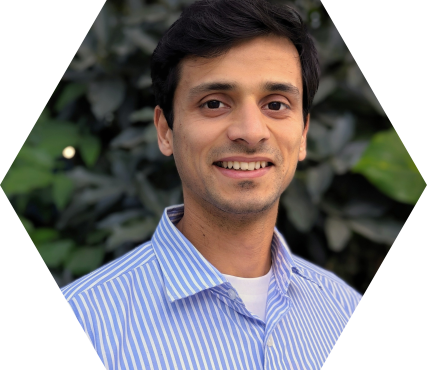
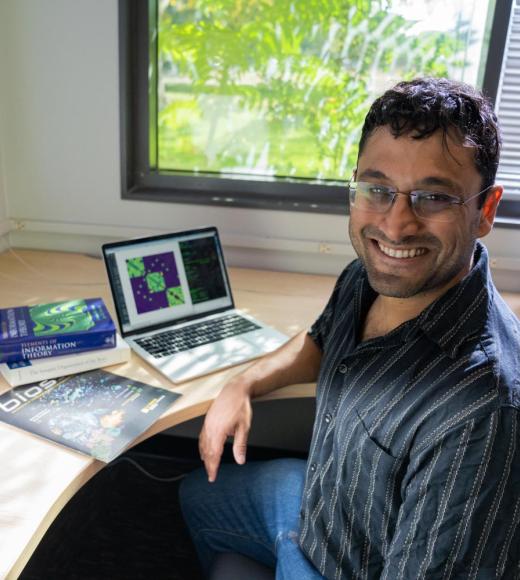
Kamal Sen is an Associate Professor in the Department of Biomedical Engineering at Boston University, serving as Director of the Natural Sounds and Neural Coding Laboratory and Director of Admissions and Recruitment for Master’s Programs. He holds a PhD and MA in Physics from Brandeis University and a BA in Physics from Bates College. His research focuses on understanding how neurons encode natural sounds, particularly in the auditory cortex. Key areas include neural coding efficiency, hierarchical auditory processing, and the role of learning in shaping receptive fields. He developed the BOSSA algorithm to address sound segregation challenges in noisy environments, with applications for hearing aid technology. Sen’s work integrates electrophysiological techniques with theoretical approaches from signal processing, information theory, and systems theory. His lab explores neural discrimination of behaviorally relevant sounds and models cortical processing dynamics using computational frameworks. Recent studies investigate parvalbumin neuron contributions to temporal coding and cortical noise reduction in complex auditory scenes. His publications span neural circuit modeling, fNIRS applications in BCI, and biomimetic algorithms for auditory scene analysis. Research highlights include exploring schizophrenia-related gene effects on neural circuits and developing 3D neurosphere models for Parkinson’s disease.
Gustavo M. Silva is the Jack H. Neely Associate Professor of Biology at Duke University's Trinity College of Arts & Sciences, a position he has held since 2025. Previously, he served as Associate Professor of Biology (2024-present) and Assistant Professor of Cell Biology (2022-present) at Duke. His research is conducted through the Silva Lab (sites.duke.edu/silvalab), which focuses on molecular mechanisms of cellular stress response. Education: Ph.D. from University of Sao Paulo (Brazil), 2010 B.Sc. from University of Sao Paulo (Brazil), 2004 Dr. Silva's research centers on understanding how gene expression is regulated at transcriptional and translational levels during cellular stress. His lab specifically investigates how the ubiquitin system controls protein synthesis and degradation dynamics under stress conditions, which are critical for cellular physiology. His work has significant implications for understanding disease mechanisms where protein homeostasis is disrupted. The research combines biochemical, genetic, and proteomic approaches to dissect these complex regulatory networks. His publication record demonstrates a clear evolution from fundamental studies on redox regulation and proteasome function to more complex investigations of ubiquitin signaling in translation control and stress response. Recent work increasingly focuses on K63-linked ubiquitination's role in ribosome function and translation regulation, with growing emphasis on the clinical implications of these mechanisms in disease contexts including cancer. Scientific Awards & Recognition: Paul T. Englund Emerging Scholar Award (Johns Hopkins School of Medicine, 2024) Dean's Award for Excellence in Mentoring (Duke Graduate School, 2023) Science Diversity Leadership Award (Chan Zuckerberg Initiative, 2022) Best Professor Award (Vanderbilt Basic Sciences Juneteenth Committee, 2022) 100 inspiring Black scientists in America (CellPress, 2020) Dr. Silva actively mentors students at multiple levels, as evidenced by his Dean's Award for Excellence in Mentoring. His research is supported by substantial funding including NIH grants such as the Tri-Institutional Molecular Mycology and Pathogenesis Training Program (2024-2029) and 'Stalling cancer at the ribosome' from the V Foundation for Cancer Research (2025-2028). He also serves as Principal Investigator on multiple R01 grants focused on ubiquitin's role in translation control and stress response. The Silva Lab maintains strong collaborative relationships with institutions including the Chan Zuckerberg Initiative and ETH Zurich, and participates in several interdisciplinary training programs at Duke that support underrepresented students in biomedical sciences.
Karthik Menon serves as an Assistant Professor with a joint appointment in the Woodruff School at Georgia Institute of Technology and the Coulter Department of Biomedical Engineering. His research integrates fluid mechanics, computational modeling, and data-driven methodologies to address critical challenges in healthcare, renewable energy, and bio-inspired engineering systems. His academic credentials include: Ph.D. in Mechanical Engineering, Johns Hopkins University (2021) M.S. in Mechanical Engineering, Johns Hopkins University (2019) B.E. in Mechanical Engineering, Birla Institute of Technology and Science, Pilani, India (2015) Menon's research program centers on three interconnected domains: cardiovascular flows for personalized treatment of heart disease, fluid-structure interactions in biological systems like heart valves and bio-mimetic robots, and vortex-dominated flows for renewable energy applications. His approach combines high-fidelity computational modeling with machine learning to uncover fundamental physics and develop clinical solutions, such as cardiovascular digital twins for non-invasive risk assessment. Current projects focus on patient-specific hemodynamics using CT imaging and uncertainty quantification to improve surgical planning. Analysis of his 15 most recent publications (2023-2025) reveals a dominant focus on advancing multi-fidelity computational frameworks for cardiovascular applications. Key trends include Bayesian uncertainty quantification, zero-dimensional solver development, and integration of clinical imaging data to create predictive digital twins. His work bridges fluid dynamics with clinical cardiology, targeting improved outcomes in coronary artery disease and Kawasaki-related complications through physics-informed machine learning. Menon's scholarly contributions have been recognized through competitive awards: WCCM-PANACM 2024 Travel Award, U.S. Association for Computational Mechanics (2024) Future Faculty Symposium Travel Award, Society of Engineering Science Conference (2023) Mark O. Robbins Prize in High-performance Computing, Johns Hopkins University (2021) Corrsin-Kovasznay Outstanding Paper Award, Johns Hopkins University (2020) Prosperetti Travel Award, Johns Hopkins University (2017) Mechanical Engineering Departmental Fellowship, Johns Hopkins University (2016) As principal investigator of the ComBiNE Fluid Dynamics Lab, Menon mentors graduate students in developing computational tools for fluid-structure interaction problems. His collaborative projects with cardiologists at Stanford and Emory hospitals translate engineering principles into clinical applications for cardiovascular disease management. Current grant activities focus on NSF and NIH-funded initiatives for uncertainty-aware cardiovascular modeling and bio-inspired flow energy harvesting. The ComBiNE Fluid Dynamics Lab operates as an interdisciplinary hub where engineers, clinicians, and data scientists collaborate on fluid mechanics challenges. Current lab initiatives include developing real-time hemodynamic simulators for surgical planning, creating reduced-order models for cardiac device optimization, and investigating vortex dynamics in fish schooling for underwater vehicle design. The lab maintains strong partnerships with Children's Healthcare of Atlanta and the Parker H. Petit Institute for Bioengineering and Bioscience.
Randall D. Beer is a Provost Professor at Indiana University with affiliations across multiple departments and centers, including the Cognitive Science Program , Program in Neuroscience , School of Informatics, Computing, and Engineering , and the Center for Complex Networks and Systems Research . His research focuses on understanding how organisms function as integrated wholes, emphasizing the interplay between brains, bodies, and environments. He develops computational models of neuromechanical systems, biologically-inspired robotics, and dynamical systems approaches to cognition. Education: While formal educational details are not explicitly listed, Beer's academic trajectory is reflected in his extensive publications and roles in interdisciplinary research programs. Research Interests: Beer investigates: - Embodied cognition and enaction frameworks - Neurodynamics and central pattern generators - Evolution of behavior in artificial agents - Metabolic and developmental systems biology - Dynamical systems theory - Computational modeling of C. elegans locomotion Software Contributions: Beer has developed tools like Dynamica (for dynamical systems analysis), CTRNN (neural network simulation), and Evolutionary Agents (robotics control frameworks). These tools are widely used in computational neuroscience and robotics research. Advising and Teams: He supervises a large group of graduate students and postdocs, contributing to projects such as neuromechanical modeling and evolutionary robotics. His work is supported through grants focusing on embodied cognition and systems biology. Labs and Collaborations: Active in the Center for Complex Networks and Systems Research and collaborates with interdisciplinary teams exploring topics like autopoiesis, viability theory, and robotic embodiment.
Steve Collins is an Associate Professor of Mechanical Engineering at Stanford University, with a courtesy appointment in the Department of Bioengineering. His research focuses on wearable robotics, biomechanics, and human-machine interaction. He leads projects on exoskeleton optimization, prosthetic design, and energy-efficient robotic actuators. His work aims to improve mobility for older adults and individuals with mobility impairments through innovative assistive technologies. Research Interests: Collins explores biomechanical principles underlying human movement, exoskeleton torque control strategies, and the design of devices that reduce metabolic costs during walking. His lab develops both hardware (e.g., exoskeleton emulators) and software (e.g., AddBiomechanics modeling tools) to advance assistive technologies. Key Contributions: He pioneered human-in-the-loop optimization methods for exoskeleton control, demonstrated energy-saving designs for ankle exoskeletons, and investigated how exoskeletons can enhance balance and reduce fall risks. His team also developed the 'Tripod' prosthesis emulator and electrostatic clutch systems for energy-efficient actuators. Grants & Collaborations: His work is supported by NSF grants (e.g., NRI: Small grant for exoskeleton control) and industry partnerships. He collaborates with clinicians to translate robotic innovations into clinical applications for amputees and aging populations. Labs & Teams: His research is conducted in Stanford's robotics and biomechanics facilities, focusing on interdisciplinary projects at the intersection of mechanical engineering, bioengineering, and computer science.
Renate Sachse is a Researcher and Responsible Investigator at the Chair of Structural Analysis, Technical University of Munich (TUM), under Prof. Kai-Uwe Bletzinger. She holds a Dr.-Ing. from the University of Stuttgart and has held postdoctoral positions at Harvard University (Bertoldi Lab) and TU Munich's Institute for Computational Mechanics. Her research focuses on biomimetic adaptive structures, biomechanics, and smart materials. Education M.Sc. in Civil Engineering (University of Stuttgart, 2014) – Thesis: "Isogeometric Contact Analysis of Thin-Walled Structures" B.Sc. in Civil Engineering (University of Stuttgart, 2011) – Thesis: "Elementary School Pavilion Structural Analysis" Study Abroad: École Spéciale des Travaux Publics (ESTP, France, 2012) Research Interests Her work integrates principles from biology and mechanics to design adaptive structures, including motion design, soft robotics, and active metamaterials. Notable projects include studying snapping mechanisms in plants (e.g., Venus flytrap) and developing bio-inspired systems like Flectofold shading devices. She also explores isogeometric analysis and structural optimization for thin-walled and slender structures. Grants & Awards Bertha Benz Prize 2022 (Daimler and Benz Foundation) Klaus Tschira Boost Fund Fellowship (€80,000 interdisciplinary grant) 3rd Place AVK-Prize for Innovations (2017, Flectofold Shading System) GAMM Juniors Fellowship (2020–2022) Teaching & Grants She teaches advanced finite element methods and nonlinear mechanics at TUM and has supervised projects in computational mechanics. Her grants include CareerDesign@TUM funding and the Klaus Tschira Fellowship for high-risk, interdisciplinary research. Labs & Teams Associated with the Chair of Structural Analysis at TUM, collaborating on projects like livMatS (Living Materials Systems) and the Harvard SEAS Bertoldi Lab. Involved in software development (e.g., Carat++, Kiwi!3d) and third-party initiatives (CoDA, FlexWing).
Rishidev Chaudhuri is an Associate Professor at the University of California, Davis in the Department of Neurobiology, Physiology and Behavior within the College of Biological Sciences. His research focuses on computational neuroscience and neural dynamics, employing mathematical models to investigate how neural circuits generate cognitive processes such as memory, perception, and decision-making. His work explores neural dynamics through models of memory systems, attentional mechanisms, and probabilistic inference. Recent publications highlight advances in understanding hippocampal memory scaffolds, parietal-frontal interactions, and neuromorphic computing inspired by brain architecture. Education: BA in Physics (Amherst College), PhD in Applied Mathematics (Yale University) Centers: Center for Neuroscience; affiliated with Applied Mathematics and Neuroscience Graduate Groups Scientific awards and honors are not explicitly mentioned in the provided materials.
Prof. Heinz Koeppl is a Professor in the Department of Electrical Engineering and Information Technology at TU Darmstadt. His research focuses on self-organizing systems, systems biology, and control theory, with applications in synthetic biology, robotics, and stochastic processes. He explores interdisciplinary topics such as genetic circuit design, UAV swarm dynamics, and machine learning-driven modeling of biochemical systems. Key research areas include the development of deep learning frameworks for kinetic modeling, Bayesian optimization for riboswitch design, and mean field control theory for sparse networks. His work bridges theoretical foundations with practical engineering solutions, addressing challenges in molecular communication, gene regulation, and robotic swarm coordination. Publications from 2023–2025 highlight advancements in bio-inspired algorithms, swarm intelligence, and computational biology. Notable contributions include studies on RNA-based circuits, active matter dynamics, and optimization strategies for large-scale systems. His research emphasizes interdisciplinary collaboration, leveraging tools from electrical engineering, mathematics, and life sciences. No scientific awards are explicitly listed in the provided text. Advising and grants details are not available. Prof. Koeppl’s lab focuses on integrating systems biology approaches with engineering principles to solve complex problems in healthcare, environmental sustainability, and technological innovation.
Prof. Dr. Wolfgang Nejdl is a Professor at the Institute for Data Science within the Faculty of Electrical Engineering and Computer Science at Leibniz University Hannover. He serves as Executive Director of the L3S Research Centre and Leibniz Forschungszentrum Inclusive Citizenship. Web Science Information Retrieval Artificial Intelligence Deep Learning His recent research focuses on AI applications in medicine , multimodal data fusion , and ethical AI systems . Projects include CAIMed (AI in Causal Medicine) and DAISEC (AI & Cybersecurity). His publications span conferences like AAMAS, WWW, and SIGIR. Notable awards include membership in the National Academy of Science and Engineering (acatech) . Former students hold positions at institutions like Stanford, TU Dresden, and ETH Zürich. Current projects involve climate resilience AI , federated learning for healthcare , and quantum-inspired data science .
Robert F. Shepherd is an Associate Professor and Director of Graduate Studies for Mechanical Engineering at Cornell University's College of Engineering. He holds appointments in Aerospace Engineering, Fiber Science, Materials Science, Mechanical Engineering, Systems Engineering, and Theoretical and Applied Mechanics. Educational background: B.S. Material Science & Engineering, University of Illinois (2002) M.B.A. General Management, University of Illinois (2009) Ph.D. Material Science & Engineering, University of Illinois (2010) His research focuses on disruptive manufacturing technologies (3D printing, microfluidics) and functional materials for novel devices. He develops soft actuators mimicking biological functions and enhances fabrication techniques for efficient biomimetic machines. His work bridges materials innovation with robotic applications. Publications primarily explore soft robotics, biomimetic systems, and advanced manufacturing, with consistent emphasis on material behavior and actuator design across diverse applications. Scientific awards: Senior Member, National Academy of Inventors (2022) ONR Young Investigator (2016) Cornell Engineering Teaching Award (2016) Extreme Mechanics Letters Award (2016) NAE FOE Fellow (2016) NAS KAVLI Fellow (2016) Leads the Shepherd Group Research Laboratory and Organic Robotics Lab, focusing on soft material systems and bio-inspired machines.
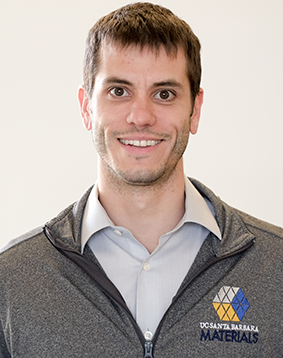
Christopher Bates is an Associate Professor in the Department of Chemistry & Biochemistry at the University of California, Santa Barbara (UCSB), with a joint appointment in the Division of Chemistry and Biochemistry (DCB). He leads the Bates Research Group, focusing on the design, synthesis, and application of soft materials. His lab develops advanced polymers and copolymers with tailored properties for applications in electronics, energy storage, and sustainable materials. Contact information includes cbates@ucsb.edu and an office in Engineering II Building. Research interests emphasize polymer architecture design, including block copolymers, bottlebrush networks, and degradable materials. Key areas include molecular cross-linking for photovoltaic stability, slide-ring gels for mechanical performance, and physics-informed machine learning for phase identification. The group also explores recyclable materials and sustainable synthesis methods. Recent work highlights advancements in α-lipoic acid-based materials, dynamic covalent networks, and electrochemical degradation strategies. The Bates Lab collaborates on projects such as tunable polyborosiloxane networks and self-healing elastomers. Advising includes Dr. Elizabeth Murphy (PhD 2025). No scientific awards are explicitly listed in the provided texts. The lab’s work is supported by grants such as the NSF CAREER award (2019) for block copolymer research. Labs and teams: The Bates Group operates within the UCSB Materials Department, leveraging interdisciplinary approaches to materials science challenges.
Kunihiko Kaneko is a Professor at the Niels Bohr Institute, University of Copenhagen, with a distinguished career in theoretical biophysics and complex systems. He received his PhD and MSc in Physics from the University of Tokyo, and has held leadership roles at the Universal Biology Institute and Center for Complex Systems Biology. PhD Physics, 1984 - University of Tokyo MSc Physics, 1981 - University of Tokyo His research spans five primary areas: Universal Biology, Evolutionary Constraints, Ecosystem Dynamics, Neural Cognition, and Universal Anthropology. He has published extensively on multi-level consistency principles, dimensional reduction in biological systems, and reciprocity between robustness and plasticity across scales. Recent publications show strong focus on microbial ecosystems (2025), evolutionary game theory (2025), neural modular architectures (2024), and dimensional reduction in cellular systems (2024). His work bridges physics and biology through dynamical systems theory applied to diverse phenomena from protocells to human societies.
Kwantae Kim is an Assistant Professor at the Department of Electronics and Nanoengineering within Aalto University's School of Electrical Engineering . He leads the Tiny Systems and Circuits (TSirc) Group , focusing on power-efficient analog/mixed-signal ICs for biomedical and neuromorphic sensor systems. IEEE Senior Member (2025) Collaborates with institutions across Europe, Asia, and America Specializes in ultra-low-power AI-embedded IoT platforms His research emphasizes Tiny, Sensory, Intelligent, and Wireless IoT systems through: Development of energy-efficient IC architectures Democratizing access to advanced chip design Hardware-software co-design for edge computing Recent publications highlight innovations in: Spoken-language-understanding SoCs Temporal-sparsity-aware keyword spotting Open-source silicon frameworks Awards include: 2025 IEEE Senior Member 2023 Best Poster Award (AICAS) 2019 Samsung HumanTech Silver Award Research partnerships span: Prof. Tobi Delbruck (UZH/ETH Zurich) Prof. Hoi-Jun Yoo (KAIST) Prof. Shih-Chii Liu (UZH) Prof. Sohmyung Ha (NYU Abu Dhabi)
Joel Zylberberg is an Adjunct Assistant Professor at the University of California, Los Angeles (UCLA), affiliated with the Department of Ophthalmology within the School of Medicine . His research bridges Computational Neuroscience , Neural Networks , and Machine Learning , focusing on how neural activity and biological mechanisms inform artificial intelligence and visual cortex dynamics . Joel's work explores retinal computation , population coding , and neural adaptation , often analyzing mouse visual cortex and neurophysiological data . His recent publications highlight trends in dynamic retinal processes , stimulus-driven network topology , and brain-inspired machine learning , emphasizing the interplay between biophysics and computational modeling . Collaborators include Greg Field (UCLA), Richard Born (Harvard), and Michael DeWeese (UC Berkeley), with affiliations spanning institutions like University of Washington and University of California, San Diego (UCSD). His work appears in journals such as Nature Neuroscience , Neuron , and PLOS Computational Biology .
Professor Bing Chu is an academic at the University of Southampton, actively contributing to research in control systems, robotics, and machine learning. They are a member of the Vision, Learning and Control Centre for Internet of Things and Pervasive Systems and the Centre for Robotics, focusing on interdisciplinary approaches that combine control theory with data-driven methodologies. Current research interests include: Iterative learning control Human-robot interaction Wind farm power optimization Robot behavior modeling Control system architectures Collaborative learning systems Recent publications highlight trends in data-driven control systems, human-robot interaction datasets, and optimization techniques for both continuous-time systems and wind energy applications. Professor Chu supervises multiple PhD students across robotics and electronic engineering, including Balint Gucsi, Haonan Shen, and Aleksander Wolski, while leading projects funded by Zhengzhou University and the Royal Society.