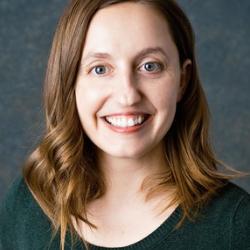
Eric Roy is an Associate Professor at the Rubenstein School of Environment and Natural Resources, University of Vermont, and Director of the Casella Center for Circular Economy and Sustainability. He is also a Fellow at the Gund Institute for Environment. His research focuses on nutrient cycling, biogeochemistry, and ecological engineering to design sustainable systems for nutrient management in food, waste, and water systems. Education: Ph.D. in Oceanography & Coastal Sciences from Louisiana State University (2013), M.S. in Food, Agricultural & Biological Engineering from Ohio State University (2008), and B.S. in Mechanical Engineering from Old Dominion University (2006). Research interests include nutrient stewardship, circular bioeconomy, and nature-based solutions. His work integrates lab and field studies with modeling to explore nutrient dynamics in engineered, urban, and agricultural ecosystems. Key themes include improving nutrient use efficiency in food systems, resource recovery, and green infrastructure design. Teaching emphasizes ecological design in water quality, waste management, and food systems. His recent publications highlight advancements in phosphorus retention modeling, floodplain function analysis, and composting system optimization. He leads the Nutrient Cycling and Ecological Design Lab, advancing interdisciplinary solutions for environmental sustainability.
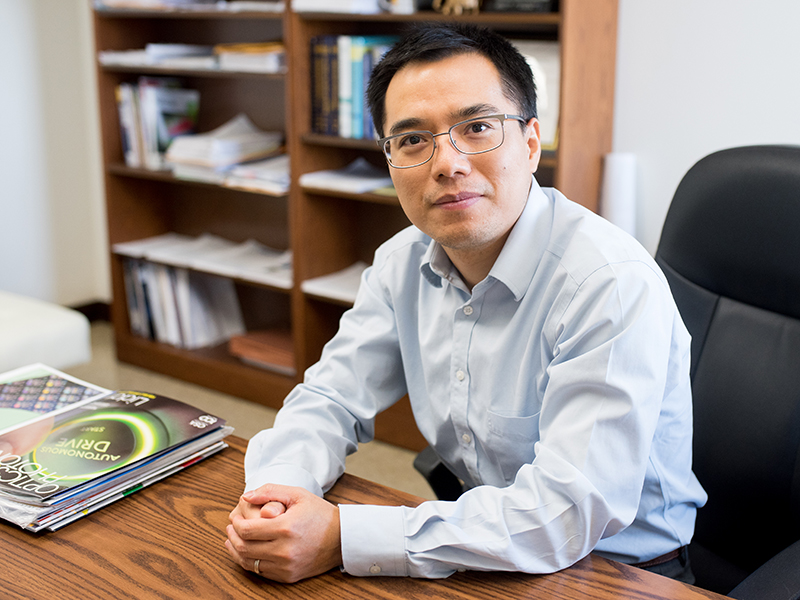
Yuebing Zheng is a Professor of Mechanical Engineering & Materials Science and Engineering at the University of Texas at Austin, holding the Cullen Trust for Higher Education Endowed Professorship. He leads a research group innovating optical nanotechnologies for applications in health, energy, and manufacturing. His work focuses on light-matter interactions, optically active materials, and interdisciplinary training. Key roles include Graduate Advisor for the Materials Science Program and past leadership as Associate/Assistant Professor since 2013. Education: PhD in Engineering Science and Mechanics (2010), Penn State University Postdoctoral Researcher (2010-2013), UCLA (Chemistry and Biochemistry) MSc in Physics (2003), National University of Singapore BSc in Physics (2001), Nankai University Research Interests: Optical manipulation technologies (e.g., optothermal tweezers) Nanophotonics and metamaterials Machine learning for materials discovery Biomedical applications (e.g., cell analysis, chiral sensing) Clean energy systems Recent Article Trends: Focus on AI-driven materials design, optothermal microrobotics, and advanced optical systems for energy and biomedical applications. Key innovations include photonic batteries, graphene moiré systems, and steerable active particle swarms. Awards: 2025 SPIE Fellow 2024 Optica Fellow 2017 NIH New Innovator Award 2014 Beckman Young Investigator Multiple best paper awards (2019–2023) Advising & Grants: Supervised over 20 PhD students/postdocs. Active grants from NIH, NSF, ONR, NASA, and industry partnerships. Current lab focuses on optical manipulation, metamaterials, and AI-integrated nanotechnology. Labs/Teams: Director of the Zheng Research Group, affiliated with the Texas Materials Institute. Collaborates on projects merging nanoscience with machine learning and biomedical engineering.
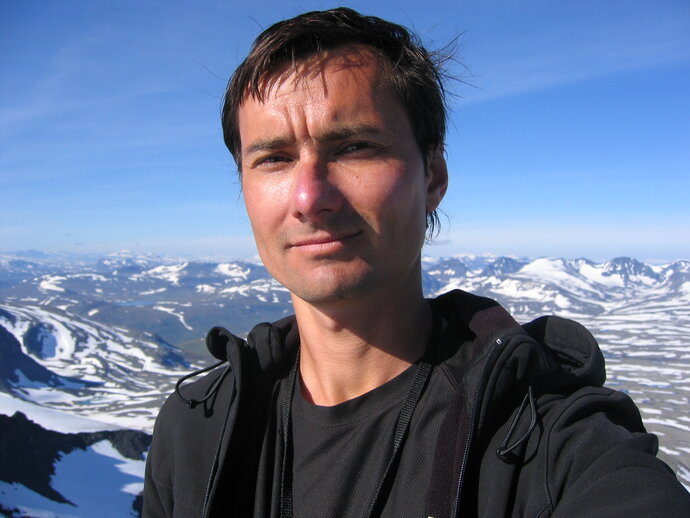
Ben Goddard is a Professor in the School of Mathematics at the University of Edinburgh. His work bridges applied mathematics with real-world scientific challenges, emphasizing interdisciplinary collaboration across engineering, biology, chemistry, and physics. He earned his PhD at the University of Warwick, later completing his final year at TU Munich following his advisor. His research focuses on mathematical modeling, numerical methods, and asymptotic analysis applied to problems such as quantum chemistry, fluid dynamics, and biological systems. Education: Bachelor’s degree in Mathematics (undergraduate details unspecified) PhD in Mathematical Quantum Chemistry (University of Warwick/TU Munich) Research interests include: Dynamic density functional theory (DFT) for complex fluids and nanoparticles Interfacial phenomena and contact line dynamics Numerical optimization and pseudospectral methods Biological systems modeling (e.g., RNA transcription mechanics) Recent work explores applications like ouzo phase behavior, aerosol droplet stability, and opinion dynamics in social networks. His collaborations span diverse fields, including experimental biology at the Welcome Centre for Cell Biology. He advocates for mathematicians’ role in interdisciplinary problem-solving, emphasizing clear communication and adaptability. Advising and grants: While specific grant details are not listed, his projects reflect significant funding and team-based research. He actively promotes STEM engagement through activities like designing math-themed escape rooms with his spouse, a statistician. Labs/Teams: Collaborates extensively with Edinburgh’s Schools of Engineering, Biology, and Informatics, though no specific lab names are mentioned.
George Alvarez is a Professor of Psychology in the Faculty of Arts and Sciences at Harvard University, where he leads the Vision Sciences Laboratory. His research lies at the intersection of cognitive science, neuroscience, and computational modeling, focusing on how the human visual system efficiently encodes and processes information through mechanisms such as attention, memory, and statistical learning. His research interests center on the cognitive and computational foundations of visual intelligence. Specifically, he investigates attentional selection , visual and working memory storage , fluid resource allocation , and ensemble coding . A key focus is understanding how the brain extracts regularities from visual input to form efficient representations. He explores whether detailed visual memory recall involves reactivation in the primary visual cortex, how learning statistical covariances alters object representations in the ventral visual stream, and where in the visual hierarchy ensemble statistics first emerge. His lab combines behavioral studies , fMRI , neurostimulation , and deep neural network models to probe these questions and bridge human and machine vision. Alvarez is affiliated with Harvard’s Mind, Brain, and Behavior (MBB) consortium and actively contributes to interdisciplinary research. He mentors students and researchers in the Vision Sciences Laboratory, fostering innovation in cognitive and computational neuroscience. While no specific awards or grants are listed in the provided text, his work is supported through institutional and research funding mechanisms at Harvard. His lab collaborates across disciplines, leveraging AI advances to refine models of human visual cognition. The lab maintains active participation in public science through platforms like TestMyBrain.org and MechanicalTurk.com, enabling large-scale behavioral data collection. Future work aims to deepen the integration between artificial and biological vision systems, uncovering fundamental principles of perception and cognition.
Ignacio Insua López is a Ramón y Cajal researcher at the University of Santiago de Compostela (Spain), affiliated with the Department of Pharmacology, Pharmacy and Pharmaceutical Technology within the Faculty of Pharmacy. He leads research in the ID-FARMA group, focusing on drug delivery systems and supramolecular peptide nanomaterials. His work is conducted at the Research Center in Biological Chemistry and Molecular Materials (CIQUS) and the Strategic Grouping in Materials (AEMAT). Dr. Insua López holds a PhD from the University of Birmingham (UK), awarded in 2017 for his thesis on polyion complex nanoparticles for antimicrobial delivery. His research interests span peptide-based nanomaterials, self-assembly processes, and biomimetic systems, with applications in antimicrobial materials and drug delivery. His lab (insualab.com) explores supramolecular chemistry, coacervates, and functional nanostructures. His recent publications highlight advancements in peptide amphiphile design, fluorescent nanoparticles, and biomaterials with environmental responsiveness. Collaborations include studies on fungal symbionts and enzyme-responsive drug carriers. Despite no explicit awards listed, his prolific output reflects recognition in supramolecular and pharmaceutical research.
Bruno A.M. Carciofi is an Assistant Professor in the Department of Biological and Agricultural Engineering at the University of California, Davis. His research focuses on food processing engineering, predictive microbiology, and innovative food technologies. He holds multiple degrees from the Federal University of Santa Catarina, Brazil, including a Ph.D. in Food Engineering. Education: B.S. in Food Engineering (Federal University of Santa Catarina) B.S. in Chemical Engineering (Federal University of Santa Catarina) M.S. in Food Engineering (Federal University of Santa Catarina) Ph.D. in Food Engineering (Federal University of Santa Catarina) Research interests include non-thermal processing technologies, agro-industrial by-product valorization, and mathematical modeling of food systems. Recent work emphasizes cold plasma applications for food safety and sustainability, microwave drying optimization for plant-based products, and microbial growth modeling. His publications span food engineering innovations, such as plasma-activated water for pest control and advanced drying techniques for nutrient retention. He actively contributes to Sustainable Development Goals through biotechnology solutions for food waste reduction. Notable contributions include development of antimicrobial packaging systems and engineered plant-based protein structures. His research bridges food science, engineering, and biotechnology to address global challenges in food safety and resource efficiency.
Dr. Dominique Claveau-Mallet is an Associate Professor in the Department of Civil, Geological and Mining Engineering at Polytechnique Montréal. She holds a Tier 2 Canada Research Chair in Water Treatment in Decentralized or Small-Scale Facilities and serves as Co-Director of the Environmental Engineering Laboratory. Her affiliations include membership in the Center for Research, Development and Validation of Water Treatment Technologies and Processes (CREDEAU) and the Geothermal and Hydrogeology Research Group. Her research focuses on innovative solutions for water treatment challenges, with emphasis on: Decentralized wastewater systems and small-scale treatment facilities Microplastics capture and pollution mitigation strategies Phosphorus removal technologies using reactive filters Membrane filtration processes and hydraulic performance optimization Hydrogeology of contaminants in groundwater systems Analysis of her recent publications reveals strong research trends in microplastics characterization (capture methods, environmental fate, citizen science approaches), advanced filtration systems (reactive filters, membrane technologies), and sustainable wastewater treatment solutions for decentralized applications. Her work frequently combines experimental research with practical implementation studies. Awards & Recognition: Tier 2 Canada Research Chair (2020-present) Recipient of federal/provincial research grants including NSERC Discovery Grants She actively supervises graduate students, having recently directed 2 doctoral theses and 5 master's theses on topics spanning membrane filtration, phosphorus removal, and microplastics mitigation. Her research receives significant media coverage for its environmental impact, particularly regarding microplastics capture technologies and septic system management. Dr. Claveau-Mallet leads interdisciplinary teams at the Environmental Engineering Laboratory and collaborates extensively with municipal partners and citizen science initiatives. Current investigations focus on developing next-generation filtration systems and optimizing existing water treatment infrastructure for climate resilience.
Dwight Houweling is an Associate Professor in the Department of Civil, Geological and Mining Engineering at Polytechnique Montréal . His expertise focuses on environmental engineering and wastewater treatment , particularly in nutrient removal, biological processes, and modeling. B.Sc. in Civil Engineering (Queen’s University) Ph.D. in Civil Engineering (Polytechnique Montréal) Industrial Postdoctoral Fellow at EnviroSim Assoc. Ltd. Research interests include municipal/industrial wastewater treatment , phosphorus/nitrogen removal , biofilm systems , mechanistic modeling , and sludge densification . His work bridges activated sludge optimization , membrane-aerated biofilms , and green wastewater solutions . Recent publications emphasize modeling frameworks for nature-based solutions , biofilm technology in retrofitting plants , and sludge characterization in lagoons . He collaborates with institutions like EnviroSim Assoc. Ltd. and contributes to the Laboratoire de génie de l'environnement (LGE) at Polytechnique Montréal.
Maurizio Ramanzin is a Full Professor at the University of Padova , affiliated with the School of Animal Science and Department of Agronomy, Animals, Food and Natural Resources (DAFNAE) . His research focuses on Agricultural Sustainability , Environmental Impact Assessment , and Precision Livestock Farming . Academic Field : AGR/19 Email : maurizio.ramanzin@unipd.it Address : Agripolis - Viale dell'università, 16 - Legnaro (Padova) – ITALY His work explores the interactions between livestock systems and ecosystem services in mountainous regions, with emphasis on: Grazing Management and biodiversity conservation Life Cycle Assessment (LCA) of dairy and beef systems Climate Change Adaptation in Alpine ungulates Animal Welfare in small-scale farms Technological Tools (GPS, NIRS) for monitoring grazing behavior Key trends in his recent publications include: Quantifying environmental drivers of wolf predation on livestock Developing low-cost biologging systems for dairy cows Analyzing social-ecological trade-offs in mountain agriculture Assessing microbial dynamics in alpine soils
Andrey Anikin is an Associate Professor and Researcher in Cognitive Science at the Department of Philosophy, Lund University. His work focuses on vocal communication and emotions, exploring how the voice conveys information beyond linguistic codes through nonverbal vocalizations and acoustic phenomena. Research Interests Dr. Anikin investigates how vocal qualities like roughness, laughter, and screams convey emotional and social information. His research takes a cognitive and biological approach, examining sensory biases and auditory attention in vocal communication. His work aims to illuminate the evolutionary origins and universal features of vocal communication across human cultures and animal species. Key areas include emotion perception, nonverbal vocalizations, acoustic analysis, and vocal communication systems. Research Output Trends Dr. Anikin's recent publications (2025) demonstrate a strong focus on acoustic properties of vocalizations across species. His work bridges biology, psychology, and acoustics with methodological innovations in analyzing nonlinear phenomena, voice roughness, and formant structures. His research shows increasing interdisciplinary collaboration, particularly with zoologists and signal processing experts, while maintaining a core focus on the cognitive mechanisms underlying vocal communication. Research Projects What makes baby cries impossible to ignore? (2024-2026): Funded by the Swedish Research Council, this active project investigates the sensory mechanisms behind infant cry perception. Sensory biases in nonverbal communication (2021-2023): A completed project funded by the Swedish Research Council that examined how sensory systems shape nonverbal communication. Research Environment Dr. Anikin is affiliated with the Cognitive Zoology Group and the Lund University Cognitive Science (LUCS) program. He contributes to the LU Profile Area: Natural and Artificial Cognition. His work connects with the UN Sustainable Development Goals through interdisciplinary research on communication and cognition, with implications for understanding human well-being and social interaction.
Luigi Bruno is an Associate Professor of Machine Design at the Department of Mechanical, Energy and Management Engineering (DIMEG), University of Calabria. He has held this position since 2014, following 12 years as an Assistant Professor at the same institution and Visiting Professorships at IIT Gandhinagar (2012), University of Alabama at Birmingham (2013-2017), and Free University of Bozen-Bolzano (2021). 1999 : Master's in Mechanical Engineering, University of Calabria (110/110 cum laude) 2003 : PhD in Mechanical Engineering, University of Pisa His research interests span: Experimental Mechanics : Pioneering speckle interferometry for micro-displacement measurement and residual stress analysis. Materials Science : Elastic characterization of anisotropic materials, biomedical applications of soft substrates, and 3D-printed composites. Biomedical Engineering : Mechanical behavior of biological tissues, ocular biomechanics, and dental implant material testing. Recent research trends focus on: Integrating artificial muscles into rehabilitation devices Advancing full-field optical measurement via microCT/DVC Optimizing 3D printed polymer adhesion for industrial components Exploring neuronal biomechanics on soft surfaces Scientific contributions include: CS2007A00010 patent for dual-focus speckle interferometers Deputy Editor of Optics and Lasers in Engineering (2019-present) Guest Editor for special issues on optical methods in experimental mechanics and nanobiotechnology Academic leadership extends to coordinating Mechanical Engineering committees (2021-present), serving on editorial boards, and organizing international conferences like AIAS National Conference (2018). He has secured multiple MIUR research grants and industry collaborations with Alfagomma, 3DNA, and Ferrovie della Calabria. His laboratory, Mechanics of Materials and Structures , supports both research and teaching activities with advanced optical measurement systems and computational tools for mechanical design.
Mathias Unberath is the John C. Malone Associate Professor in the Department of Computer Science at Johns Hopkins University, with secondary appointments in Ophthalmology and Otolaryngology—Head and Neck Surgery at the School of Medicine. He is a core faculty member of the Laboratory for Computational Sensing and Robotics (LCSR) and the Malone Center for Engineering in Healthcare, and affiliate faculty at the Institute for Assured Autonomy and Data Science and AI Institute. Education: PhD in Computer Science from Friedrich-Alexander University of Erlangen-Nürnberg (2017), MSc in Optical Technologies (2014), BSc in Physics (2012) His research focuses on computer-assisted medicine, integrating computer vision, machine learning, and medical robotics to develop human-centered solutions through mixed reality and embodied technologies. His work addresses surgical phase recognition, explainable AI, and digital twin representations for clinical workflows. Unberath's 15 most recent publications demonstrate expertise in surgical AI (7/15), medical imaging (12/15), and mixed reality (8/15), with specific subfields including segmentation frameworks (3 papers), cognitive load estimation (4 papers), and surgical robotics (5 papers). NSF CAREER Award NIH NIBIB Trailblazer R21 Google Research Scholar Award Inaugural DSAI Junior Faculty Award IPCAI 2025 Best Paper Award He teaches graduate courses in machine learning, AI system design, and interpretable machine learning. His group, the ARCADE Lab, develops technologies for computer-assisted interventions, emphasizing robustness, explainability, and human-AI collaboration in clinical settings.
Amy Wagoner Johnson is a Professor in the Department of Biomedical and Translational Sciences at the Carle Illinois College of Medicine, University of Illinois Urbana-Champaign, with secondary appointments in Mechanical Science and Engineering. She leads the Applied Biomaterials and Biomechanics Lab (ABBL), conducting interdisciplinary research spanning bone tissue engineering, women's reproductive health, and coral reef restoration. Her educational background includes: Ph.D. in Materials Science from Brown University (2002) M.S. in Materials Science from Brown University (1998) B.S. in Materials Science and Engineering from The Ohio State University (1996) Professor Wagoner Johnson's research focuses on biomaterials and biomechanics, particularly: Developing multiscale bone scaffolds for trauma repair Investigating cervical biomechanics in pregnancy and preterm birth Creating coral settlement substrates for reef restoration Designing hydroxyapatite-based systems for stem cell delivery Her work integrates materials science, mechanical engineering, and clinical medicine to address critical challenges in tissue regeneration. Analysis of her recent publications reveals strong trends in translational biomaterials development, with increasing emphasis on women's health applications and marine ecosystem restoration. Her bone scaffold research has evolved toward multi-material systems with spatially graded architectures, while her reproductive health work increasingly employs advanced imaging techniques like second-harmonic generation microscopy. Her scientific honors include: Fellow of the American Institute for Medical and Biological Engineering (2021) Grainger College DEI Award (2022) Andersen Faculty Scholar (2020) Dean's Research Excellence Award (2018) As an educator, she has received multiple teaching awards including the Society of Women Engineers Outstanding Engineering Educator Award (2020) and multiple 'Teachers Ranked as Excellent' recognitions. She serves as MechSE Pre-Med Advisor and actively mentors undergraduate researchers, receiving the Campus Award for Guiding Undergraduate Research (2013). Her lab has secured significant funding for projects including NSF's 'Collaborative Research: ECO-CBET' and NIH-supported work on preterm birth mechanisms. The Applied Biomaterials and Biomechanics Lab maintains strong collaborations with veterinary medicine, surgery departments, and international partners including the NanoSciences Foundation in Grenoble, France. Current projects focus on developing tools to track inflammation in human tissue as Chan Zuckerberg Biohub Chicago Investigators.
Marta Halina is a University Associate Professor in the Philosophy of Cognitive Science at the University of Cambridge, affiliated with the Department of History and Philosophy of Science. She serves as a Senior Research Fellow at the Leverhulme Centre for the Future of Intelligence and is a Fellow of Selwyn College. Her academic journey began with a PhD in Philosophy and Science Studies from the University of California, San Diego in 2013, followed by a McDonnell Postdoctoral Fellowship in the Philosophy-Neuroscience-Psychology Program at Washington University in St. Louis before joining Cambridge in 2014. Halina's educational background includes a PhD from UC San Diego (2013) and postdoctoral training at Washington University in St. Louis. Her academic trajectory reflects a strong interdisciplinary foundation bridging philosophy, cognitive science, and neuroscience. Her research focuses on nonhuman animal cognition, mechanistic explanation, and artificial intelligence, with particular emphasis on comparative cognition and the philosophical foundations of cognitive science. Halina investigates how researchers design studies to address complex questions about animal minds, arguing that current methods in comparative cognition often face challenges with hypothesis underdetermination by empirical evidence. She advocates for additional behavioral constraints on theorizing, known as 'signature testing,' while emphasizing the need to incorporate neuroscience and biology more substantially into animal cognition research. Her work on major transitions in cognitive evolution proposes treating the evolution of cognition as a series of major evolutionary transitions to better comprehend cognitive complexity across species. Analysis of Halina's recent publications reveals a clear trajectory toward computational comparative cognition. Her work increasingly integrates AI and machine learning techniques with traditional comparative cognition approaches, exemplified by her development of the Animal-AI Testbed. This platform allows for direct comparison between AI systems, humans, and animals on cognitive tasks, revealing that while AI and children perform similarly on basic navigational tasks, children outperform AI on more complex cognitive tests requiring object permanence. Her research demonstrates how computational modeling can generate novel hypotheses about animal behavior that generate precise, testable predictions beyond what traditional experimental methods alone can achieve. McDonnell Postdoctoral Fellowship Halina directs research initiatives at the Leverhulme Centre for the Future of Intelligence, particularly focusing on the intersection of AI and animal cognition. Her work on the Animal-AI Environment has received significant funding and collaborative support, enabling interdisciplinary research that bridges computer science, cognitive science, and biology. She actively collaborates with researchers across multiple institutions to develop computational frameworks for understanding nonhuman animal cognition. Halina leads significant research initiatives through the Leverhulme Centre for the Future of Intelligence, where she develops the Animal-AI Environment—a research platform for conducting cognitive experiments with artificial agents, humans, and nonhuman animals in directly comparable, ecologically valid contexts. This environment facilitates interdisciplinary collaboration between computer scientists, engineers, biologists, and cognitive scientists, reducing the 'language barrier' between these fields and enabling cross-pollination of ideas and methodologies.
Daniela Carnevale is a Full Professor at Sapienza University of Rome, where she serves in the Department of Medical-Surgical Sciences and Biotechnologies within the Faculty of Medicine. She directs the Laboratory of Neuro and Cardiovascular Immunology at the Department of Molecular Medicine, based at IRCCS Neuromed in Pozzilli. Her academic career spans over a decade with a permanent position as Assistant Professor since 2012, progressing to her current role as Full Professor. Education: PhD in Neuroscience (2010) - Faculty of Medicine and Surgery, Catholic University of the Sacred Heart in Rome Professional qualification in Biology (2006) - Sapienza University of Rome Degree in Biological Sciences (2005) - Sapienza University of Rome, final mark 110/110 cum laude Daniela Carnevale's research primarily focuses on the intersection of cardiovascular medicine, neuroscience, and immunology. She investigates neuroimmune mechanisms in hypertension, exploring how the nervous and immune systems interact to influence blood pressure regulation and organ damage. Her work encompasses biotechnologies and translational approaches to understand arterial hypertension, chronic heart failure, Alzheimer's related dementias, and adaptive immune responses. She has pioneered research on brain-spleen communication pathways in hypertension, demonstrating how neural signals prime immune responses that contribute to cardiovascular pathology. Analysis of her recent publications reveals a strong emphasis on neuroimmune cardiovascular interfaces, with particular focus on hypertension-induced cognitive impairment, cerebrovascular remodeling, and organ damage mechanisms. Her work increasingly integrates advanced imaging techniques, genetic analyses, and immune profiling to uncover novel therapeutic targets for cardiovascular and neurodegenerative conditions. Scientific Awards: Fellow of the American Heart Association (FAHA) (2016) Council on Hypertension Mid Career Award for Research Excellence (2019) International Patent in medical technology (2010) Multiple research awards from the Italian Society of Arterial Hypertension Research Award from the Foundation "Roberto Cornelli" (2009) Professor Carnevale has secured significant research funding as Principal Investigator, including grants from Sapienza University, Istituto Pasteur-Fondazione Cenci Bolognetti, and the Italian Ministry of Health. She has supervised numerous PhD students, post-doctoral fellows, and undergraduate students across various biomedical programs. Her laboratory collaborates internationally with leading researchers from Harvard University, Vanderbilt University, University of Glasgow, and University of Munich. At IRCCS Neuromed, Professor Carnevale directs the Laboratory of Neuro and Cardiovascular Immunology, where her team investigates the cellular and molecular mechanisms underlying neuroimmune interactions in cardiovascular diseases. Her research facility includes advanced preclinical imaging capabilities, including a 7Tesla MRI for small animal research, which she secured through competitive grant funding.