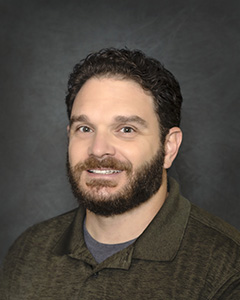
Jack Skinner is a Professor and Department Head of Mechanical Engineering at Montana Technological University's Lance College of Mines & Engineering. He is also Interim Dean of the college and a licensed professional engineer (WY/14963). Education: B.S. in General Engineering (Montana Tech, 2000), M.S. in Mechanical Engineering (Washington State University, 2002), Ph.D. in Mechanical Engineering (UC Davis, 2007) Professional Roles: Interim Dean, Department Head, Principal Member of Technical Staff at Sandia National Labs (2003-2012) His research focuses on nanotechnology and MEMS , with expertise in nanoscale devices, materials, and fabrication techniques. Key areas include: Nanofabrication and microfabrication Electrospinning methods for biomedical and energy applications Plasmonics in polymer composites Advanced materials for energy systems and environmental remediation Device characterization and integration He has taught courses such as: Introduction to Micro/Nanoelectromechanical Systems Heating, Ventilating, and Air Conditioning Engineering Mechanics - Dynamics
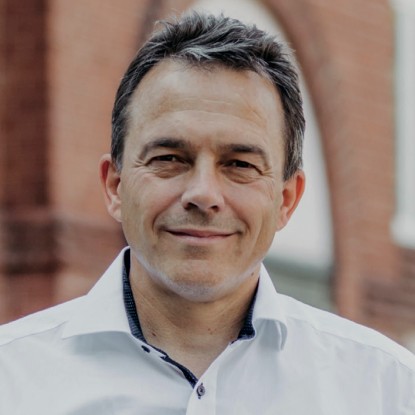
Andrea Tosin is a Full Professor of Mathematical Physics at the Department of Mathematical Sciences "G. L. Lagrange" (DISMA), Politecnico di Torino. He serves as Coordinator of the Doctoral College of Mathematical Sciences and Deputy Coordinator of the Doctoral College of Pure and Applied Mathematics. His research bridges kinetic theory, transport equations, and applied mathematics with applications in multi-agent systems, traffic, social dynamics, and epidemiology. His research interests focus on: Kinetic theory and its applications to real-world systems Transport and diffusion equations in complex environments Modeling of vehicular traffic, crowd dynamics, and social behavior Epidemiological modeling with a focus on viral load and multi-scale dynamics Mathematical modeling of collective behavior in biological and social systems His recent publications demonstrate a consistent trend in developing and analyzing kinetic models for traffic flow, opinion dynamics, and epidemic spread, often incorporating uncertainty, network structures, and multi-population interactions. These works frequently involve rigorous mathematical derivations from microscopic models to macroscopic equations, with applications in safety, public health, and urban planning. His scientific awards include: SIMAI Biennial Award (2013) INDAM-SIMAI Award (2010) He actively supervises PhD students and postdoctoral researchers, including Martina Fraia, Emanuele Bernardi, Elisa Paparelli, and Mattia Sensi. He has secured significant research grants from national (PRIN, INdAM) and institutional (Politecnico di Torino, Google) sources. His research is supported by projects such as IMASED (Integrated Mathematical Approaches to Socio-Epidemiological Dynamics) and ANATOMY (A Unitary Mathematical Framework for Modelling Muscular Dystrophies). He also leads the "Modelli e Metodi della Fisica Matematica" research group at DISMA.
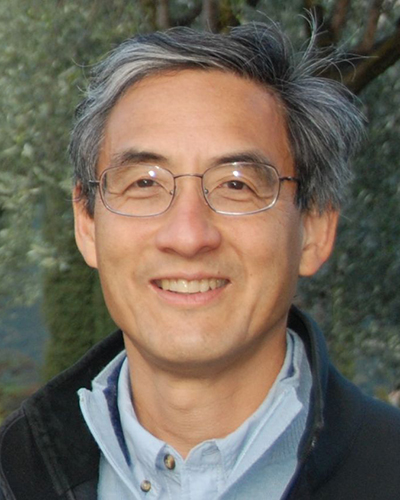
Prof. Rolf Findeisen is a Professor in the Department of Control and Cyber-Physical Systems (CCPS) at Technische Universität Darmstadt. His work focuses on advancing control theory and its applications in cyber-physical systems, autonomous systems, and energy storage systems. Key areas include model predictive control (MPC), battery management systems, machine learning integration into control frameworks, and optimization of crystallization processes. He leads research on safety-critical systems, data-driven control methods, and interdisciplinary applications in robotics and biotechnology. His research spans theoretical advancements in MPC stability, stochastic control, and Gaussian process modeling, alongside practical implementations in autonomous vehicles, lithium-ion battery systems, and bioprocess optimization. Notable contributions include frameworks like HILO-MPC for integrating machine learning with control systems, and methodologies for safe exploration in autonomous navigation. Prof. Findeisen's publications emphasize energy-efficient trajectory planning, fault detection in battery systems, and real-time optimization of manufacturing processes. His work bridges academic theory with industrial applications, addressing challenges in scalability, safety, and computational efficiency. His lab collaborates on national projects like IN-Fly-Tec and INFLIGHT, focusing on innovative flight control systems and sensor technologies. Current research trends include hybrid intelligent optimization, cybergenetic control of microbial systems, and safe reinforcement learning for control systems.
Artemio Cerda Bolinches is a Professor in the Department of Geography at the Faculty of Geography and History, University of Valencia, Spain. His academic work centers on Physical Geography, with a strong emphasis on soil erosion, hydrological processes, land degradation, and wildfire impacts. He leads the SEDER (Soil Erosion Rates and Runoff Generation) research group, reflecting his leadership in environmental process studies. His educational background includes a PhD from the Universitat de València in 1993, with a thesis on soil infiltration in the Valencian region, supervised by Dr. Adolfo Calvo Cases. This foundational research has evolved into a prolific career in geomorphology and environmental change. Cerda Bolinches’ research interests span soil erosion dynamics , wildfire-soil interactions , sustainable land management , and Mediterranean environmental systems . His work integrates field experiments, modeling, and global meta-analyses, often using GIS and machine learning to analyze spatial patterns of erosion and degradation. He explores biological influences on hydrology, post-fire recovery, and nature-based solutions for flood and erosion control. His recent publications (2022–2025) reveal a strong trend in interdisciplinary environmental science, with frequent studies on machine learning applications in soil mapping, fire impacts on hydrology, and sustainability in agricultural systems. His work spans regions including Spain, Iran, China, Ethiopia, and Bangladesh, indicating broad international collaboration and relevance. While no specific scientific awards are listed in the provided text, his leadership in special issues and editorial contributions (e.g., introducing FIRElinks and fire-hydrology special issues) highlights recognition in the academic community. He is actively involved in advising and research supervision, implied by his PhD and research group leadership. His projects often address applied environmental problems, including soil conservation in vineyards, wildfire management, and climate change adaptation. He has contributed to policy-relevant studies, such as the EU Soil Observatory’s role in erosion monitoring. Cerda Bolinches is affiliated with the SEDER research group, which conducts long-term experimental studies on soil erosion, such as at the El Teularet-Sierra de Enguera experimental station in Valencia. This lab supports field-based research on erosion processes, land management, and sustainable viticulture.
Prof. Paola Russo is a Researcher at the University of Ancona (Università Politecnica delle Marche), affiliated with the Department of Information Engineering (Dipartimento di Ingegneria dell'Informazione) under the Engineering School. Her work focuses on electromagnetic fields, antenna design, and biomedical engineering applications. Key research areas include reverberation chamber analysis, microwave engineering, and sensor technologies for healthcare and accessibility. She has contributed to advancements in electromagnetic compatibility testing, non-invasive medical sensing, and antenna systems for visually impaired navigation. Her research integrates theoretical modeling with experimental validation, addressing challenges in 5G channel emulation, radar cross-section prediction, and bioimpedance measurements for medical diagnostics. Projects include developing contactless respiratory monitoring systems and guiding devices for visually impaired athletes. Prof. Russo collaborates on interdisciplinary initiatives combining electrical engineering with biomedical applications, such as tissue inflammation detection and astronaut health monitoring.
Yii-Jan Lin is an Associate Professor of New Testament at Yale Divinity School, Yale University, where she teaches and conducts research at the intersection of biblical studies, critical theory, and cultural politics. Her work bridges textual scholarship with contemporary social issues, particularly concerning race, gender, immigration, and affect. Education: Ph.D., New Testament, Religious Studies, Yale University M.A., New Testament, Trinity Evangelical Divinity School M.A., English Literature, University of Chicago B.A., English Literature, Pomona College Professor Lin’s research centers on the Book of Revelation , textual criticism , and the politics of biblical interpretation . She explores how metaphors of race, family, and biological inheritance shape scholarly practices in New Testament studies. Her recent work investigates the cultural construction of cuteness and its affective power in religious and political discourse. She also examines how apocalyptic imagery is mobilized in debates over immigration and national identity. Her recent publications reveal a strong trend toward interdisciplinary engagement, combining biblical scholarship with insights from critical race theory, gender studies, affect theory, and postcolonial critique. The articles span topics from the genealogy of textual criticism to the emotional rhetoric of Revelation, reflecting a deep commitment to decolonizing and democratizing biblical interpretation. Scientific Awards and Honors: Elected Member, Studiorum Novi Testamenti Societas Co-chair, Minoritized Criticism and Biblical Interpretation Section, Society of Biblical Literature Steering Committee, Ethnic Chinese Biblical Colloquium Steering Committee, New Testament Textual Criticism Section, SBL Steering Committee, Bible in America Section, SBL Editorial Board, Journal of Biblical Literature Professor Lin actively contributes to academic governance and inclusive scholarship. She advises graduate students and participates in multiple research networks, including the Greco-Roman Lunch and the Ancient Societies Workshop. She has received external funding and fellowships supporting her research on immigration and apocalypse. Her current projects include further exploration of scripturalization, affect, and the political theology of inclusion. She is affiliated with the Society of Asian Biblical Studies and the European Association of Biblical Studies, and her work appears in leading journals such as Journal of Biblical Literature , Early Christianity , and TC: A Journal of Biblical Textual Criticism .
David Andow is Professor and Department Head of the Department of Applied Ecology at North Carolina State University's College of Agriculture and Life Sciences. He previously served as Distinguished McKnight University Professor in Entomology at the University of Minnesota for 38 years and conducted extensive research in Brazil with Embrapa. His work focuses on insect population ecology , ecological risk assessment , and science policy related to genetically engineered organisms. PhD in Ecology from Cornell University BSc in Biology (magna cum laude) from Brown University Postdoctoral work at Cornell University and Japan's National Institute of Agro-environmental Sciences His research has tracked insect resistance management across decades, showing consistent interest in Bt crops and transgenic plant risks . Recent work emphasizes molecular gut content analysis for understanding predator-prey relationships and insect dispersal patterns in agricultural ecosystems. Major awards include: OECD Fellow McMaster Fellow (Australia) JSPS Fellow (Japan), twice Rockefeller Foundation Fellow Entomological Society of America Fellow With over 250 invited presentations and extensive publications, Dr. Andow remains a leading voice in genetic engineering risk assessment and ecological policy .
Warren M. Grill is the James B. Duke Distinguished Professor and Bass Fellow at Duke University, holding appointments in Neurobiology, Neurosurgery, and Biomedical Engineering. He serves as Core Faculty in Innovation & Entrepreneurship, a Faculty Network Member of the Duke Institute for Brain Sciences, and an Associate of the Duke Initiative for Science & Society. His research employs engineering approaches to understand and control neural function, with a focus on electrical stimulation of the nervous system to restore function in neurological disorders. Ph.D., Case Western Reserve University (1995) M.S., Case Western Reserve University (1992) B.S., Boston University (1989) Dr. Grill's research spans multiple areas of neural engineering and neuromodulation. His work focuses on developing engineering approaches to understand and control neural function, particularly through electrical stimulation of the nervous system. Current projects include deep brain stimulation for movement disorders, peripheral nerve stimulation for bladder function restoration, spinal cord stimulation for chronic pain, transcranial magnetic stimulation, and novel electrode and waveform design. His research integrates computational modeling with experimental approaches to advance bioelectronic medicine. Dr. Grill's recent publications (2023-2025) demonstrate a strong focus on computational modeling of neural stimulation, with particular emphasis on deep brain stimulation, vagus nerve stimulation, and transcranial magnetic stimulation. His work increasingly integrates advanced computational methods with experimental validation across multiple species. There's a clear trend toward developing more selective and efficient stimulation paradigms, understanding cross-species translation of stimulation parameters, and identifying novel therapeutic targets for neurological disorders. Fellow, National Academy of Inventors (2022) Capers & Marion McDonald Award for Excellence in Teaching and Research, Pratt School of Engineering (2018) Javits Neuroscience Investigator Award, NIH-NINDS (2015) Scholar / Teacher of the Year Award, Duke University (2014) Outstanding Postdoc Mentor, Duke University (2013) Fellow, Biomedical Engineering Society (2011) Fellow, American Institute for Medical and Biological Engineering (2007) Dr. Grill has mentored numerous students and postdocs, many of whom have gone on to successful careers in academia and industry. His lab has been consistently supported by major NIH grants, including the Javits Neuroscience Investigator Award from NIH-NINDS. He has also secured funding from various foundations and industry partners to advance his research in neural engineering and bioelectronic medicine. Dr. Grill is known for his collaborative approach, working with clinicians, engineers, and basic scientists across multiple institutions. Dr. Grill leads a vibrant research laboratory at Duke University that combines expertise in neural engineering, computational neuroscience, and experimental neurophysiology. His team includes graduate students, postdoctoral fellows, and research staff working on various aspects of neural stimulation. He is actively involved in the Duke Institute for Brain Sciences and collaborates with members of the Deep Brain Stimulation Think Tank. His lab has developed several innovative computational models and experimental approaches that have significantly advanced the field of neuromodulation.
Huanhuan CUI is a Research Associate Professor in the Department of Biology within the School of Life Sciences at Southern University of Science and Technology (SUSTech) in Shenzhen, China. She joined SUSTech in December 2018 and serves as a master's supervisor, contributing to both research and graduate education in molecular biology and genetics. Educational Background: PhD in Biology, Free University of Berlin (2011.09-2016.04) MS in Animal Genetics, Northwest A&F University (2008.09-2010.06) BE in Bioengineering, Northwest A&F University (2004.09-2008.06) Dr. CUI's research focuses on the mechanisms and method development of gene transcription and epigenetic regulation, with particular emphasis on RNA translation control. Her work spans multiple biological systems including cancer biology, developmental biology, and cardiovascular research, demonstrating a strong interdisciplinary approach that integrates molecular biology, genomics, and bioinformatics techniques. She has made significant contributions to understanding chromatin remodeling, transcriptional regulation, and RNA processing mechanisms. Dr. CUI's publication record shows a consistent trajectory of high-impact research, with publications in prestigious journals including Nature Communications, Nucleic Acids Research, and Cellular & Molecular Immunology. Her work demonstrates expertise in CRISPR-based technologies, epigenetic regulation, and multi-omics approaches to studying complex biological processes. Before joining SUSTech, Dr. CUI held positions as a Clinical Research Manager at BGI Genomics (2017.09-2018.11), a PostDoc at Charite Universitaetsmedizin Berlin (2016.05-2017.06), and a Research Assistant at Humboldt University of Berlin (2010.09-2011.08), building a diverse research background that bridges basic science and clinical applications.
Anne McIntosh is an Associate Professor and Associate Dean at the Augustana Campus of the University of Alberta, with an adjunct appointment in the Department of Renewable Resources at the Faculty of Agricultural, Life and Environmental Sciences. Her research spans forest ecology, disturbance dynamics, and ecological reclamation, focusing on post-disturbance recovery of biodiversity and ecosystem services. PhD in Biology MSc in Ecology BSc (Honours) in Environmental Science Her research explores: Ecological recovery after natural and anthropogenic disturbances (mountain pine beetle, oil sands, reclamation) Microbial and plant community interactions Functional trait variability in forest ecosystems Conservation in mixed-use landscapes Teaching innovations in ecology and biology Her recent publications emphasize trait-based forest restoration, invasive species impacts, and monitoring reclaimed ecosystems globally. She leads the Ecological Recovery Lab and collaborates on cross-continental studies in Canada, Sweden, and Costa Rica. She teaches advanced courses in: AUBIO 315 - Advanced Biological Analysis (statistical methods) AUBIO 323 - Plant Biology AUBIO 253 - Ecological Interactions AUBIO 411 - Capstone Biology Perspectives AUSTA 215 - Statistical Methods for Natural Sciences Her lab focuses on long-term ecological monitoring, using field surveys and UAV technology to assess recovery trajectories in forest and grassland ecosystems.
Dr. Kaushik Venkiteshwaran is an Assistant Professor in the Department of Civil, Coastal, and Environmental Engineering at the University of South Alabama . His work focuses on sustainable water and wastewater treatment, nutrient recovery, and microbial ecology in engineered systems. Ph.D. in Civil Engineering, Marquette University M.S. in Civil Engineering, Clarkson University B.Tech. in Biotechnology, ICFAI University His research emphasizes biological process development, bio-adsorbent design, microbial community modeling, and advanced oxidation for contaminant removal. Recent publications highlight innovations in phosphate-binding proteins and microplastics remediation. Key trends in his 15 most recent articles (2025–2022) span nutrient recovery , microplastics removal , bio-energy production , fermentation optimization , and socio-technical wastewater systems . Technologies include protein-based phosphate adsorption, algal biogas upgrading, and microfluidic microbial analysis. He teaches foundational courses in environmental engineering and wastewater treatment design. A provisional patent (US20210147259A1) covers phosphate recovery using selective proteins.
Assoc. Prof. Dr. Wayne FULLER is a faculty member at Near East University's Faculty of Veterinary Medicine, Department of Genetics. He earned his BSc in Zoology from the University of Oxford before pursuing doctoral research at Exeter Universities' Centre for Ecology and Conservation in North Cyprus. Specializing in Mediterranean marine turtle conservation and ecology, his work spans climate change impacts, plastic pollution, and stable isotope applications. Education: BSc in Zoology, PhD in Marine Ecology Current Roles: Head of Department of Genetics, Near East University Key Projects: IUCN Marine Turtle Specialist Group (2017-present), EU Nature 2000 implementation in Cyprus (2008) His recent research explores phenological shifts in sea turtle offspring under climate change, macroplastic ingestion patterns, and avian conservation in Mediterranean forests. Publications emphasize ecological monitoring, habitat connectivity, and conservation technology applications like GPS and stable isotopes. Scientific recognition includes: Member of IUCN Marine Turtle Specialist Group
Timothy Jackson is a Professor of Chemistry at the University of Kansas, specializing in bioinorganic and bio-inspired chemistry. He investigates metalloenzyme mechanisms involving manganese, iron, and copper, focusing on oxidative transformations critical to biological and industrial processes. Ph.D. (2004) and B.S. (2000) in Chemistry NIH Postdoctoral Fellow (2007) at the University of Minnesota Research Interests: His lab combines synthetic, spectroscopic, and computational methods to study metal-oxygen species like Mn III -hydroxo and Mn IV -oxo complexes. Key areas include C-H and O-H bond cleavage, dioxygen activation, and green catalysis using earth-abundant metals. Recent Publications: His team explores ligand sphere perturbations in manganese complexes, hydrogen-atom tunneling mechanisms, and non-macrocycle-based cobalt catalysts for selective O 2 reduction. Articles emphasize spectro-structural correlations and environmentally benign oxidation processes. Collaborations: Active partnerships with labs at Roosevelt University, University of Montana, Université Paris Diderot, and Univ. Grenoble Alpes focus on electronic structure analysis and high-valent metal reactivity. Lab Members: Current graduate students include Markell Lomax, Zahra Aghaei, Anagha Puthiyadath, and Purti Patel. Former students hold positions at institutions like Ohio State University and companies like Intel and Catalent.
Diane Gilbert-Diamond serves as Professor of Epidemiology, Medicine, and Pediatrics at Dartmouth College's Geisel School of Medicine, with primary appointment in the Department of Epidemiology. Her research program integrates genetic epidemiology and environmental health sciences to investigate developmental origins of child health outcomes, leveraging longitudinal cohort studies and advanced neuroimaging techniques. Her educational trajectory includes an AB in Biology from Dartmouth College (1998) and an ScD in Nutritional Epidemiology from Harvard School of Public Health (2010), followed by a postdoctoral fellowship in Bioinformatics at Geisel before joining the faculty in 2012. Professor Gilbert-Diamond's research centers on gene-environment interactions affecting child health, with dual emphases on in utero environmental exposures (arsenic and Vitamin D impacts on growth and immune function) and genetic susceptibility to obesogenic environments (neurological responses to food advertising, eating behaviors). Her work employs the New Hampshire Birth Cohort Study and fMRI methodologies to uncover biological mechanisms linking environmental factors with developmental trajectories. Her publication record demonstrates consistent focus on early-life determinants of health, spanning environmental toxicology, nutritional sciences, and behavioral genetics. The research portfolio reveals strong thematic continuity in identifying modifiable environmental factors that interact with genetic predispositions to influence obesity risk and developmental outcomes from prenatal stages through adolescence. She directs an active research laboratory funded by multiple NIH and EPA grants including In utero arsenic exposure and early childhood growth , In utero vitamin D exposure and early childhood immune function , and Children’s genetic predisposition to eat without hunger after food advertisements . While specific advisees aren't named, she offers thesis projects on in utero arsenic/Vitamin D exposures and genetic influences on food response, indicating active graduate mentorship. As Course Director for QBS 130: Foundations of Epidemiology, she contributes significantly to medical and graduate education.
Jonathan Czuba is an Associate Professor in the Department of Biological Systems Engineering at Virginia Tech's College of Engineering. His research program integrates ecological engineering with fluvial geomorphology to address riverine ecosystem dynamics under anthropogenic and climatic pressures. Key Themes: Stream restoration, river network connectivity, ecohydraulics, and plastic pollution mitigation Methods: Coupling field measurements with computational models (HEC-RAS, Landlab) Collaborations: USGS, Indiana University, University of Minnesota Research Focus: Advances understanding of how sediment and nutrient fluxes interact with vegetation, aquatic biota, and human interventions across diverse river systems. Notable work includes quantifying floodplain connectivity, modeling post-wildfire sediment cascades, and developing tools for ecohydraulic assessments. Awards: 2023 UCOW Early Career Award 2023-2024 Engineering Teaching Excellence 2024 CALS Impactful Researcher of the Month Mentorship: Actively advises graduate/undergraduate researchers in Watershed Engineering, emphasizing fieldwork, modeling, and remote sensing. Collaborates with Kyle Strom (Civil Engineering) and Doug Edmonds (Indiana University).