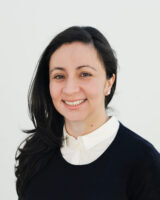
Dr. Nancy Forero-Martinez serves as a Researcher at the Institute of Physics within the Faculty of Physics, Mathematics and Computer Science at Johannes Gutenberg University Mainz (JGU Mainz), Germany. She is an active member of the KOMET research group specializing in theoretical and computational physics. Her research spans interdisciplinary domains in soft matter and biological physics, with core expertise in: Multiscale Modeling of complex systems Fundamental Nonequilibrium Phenomena in dynamic systems Macromolecular Systems and polymer physics Complex Fluids and Flow behavior Interfaces and Confinement effects Biological Physics applications The KOMET group employs advanced computational methodologies to investigate emergent phenomena across physics, chemistry, and biology. Dr. Forero-Martinez contributes to projects examining non-equilibrium statistical mechanics and multiscale simulation techniques for soft condensed matter systems. No information regarding academic advising, research grants, or scientific awards was available in the provided materials.
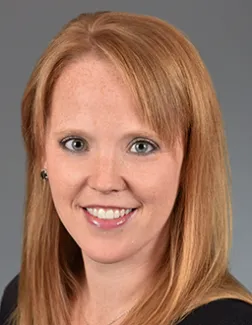
Dr. Lauren Henderson serves as an Attending Physician in Rheumatology at Boston Children's Hospital and Instructor in Pediatrics at Harvard Medical School. She directs the New-onset JIA Registry and Rheumatic Diseases of Childhood Biorepository while chairing the CARRA federated biorepository subcommittee, coordinating over 60 pediatric rheumatology sites across North America. Education Graduate School: Harvard Medical School (2014) Medical School: Harvard Medical School (2008) Internship: Boston Children's Hospital (2009) Residency: Boston Children's Hospital (2011) Fellowship: Pediatric Rheumatology, Boston Children's Hospital (2015) Research Focus Dr. Henderson's work centers on regulatory T cell dysfunction in juvenile idiopathic arthritis pathogenesis, with groundbreaking investigations into the 'Treg paradox' in inflammatory arthritis. Her expertise spans macrophage activation syndrome biomarker discovery, cytokine storm immunopathology, and immune dysregulation mechanisms in pediatric rheumatic diseases. She employs advanced techniques including T cell profiling and multi-omics approaches to unravel disease mechanisms. Publication Trends Her recent publications (2023-2025) reveal three dominant themes: (1) biomarker development for hyperinflammatory disorders (hyperferritinemia, interferon signatures), (2) immune cell dynamics in JIA/MAS pathogenesis (Treg/B cell interactions, cytokine networks), and (3) clinical management innovations for complex pediatric rheumatic conditions. These works consistently bridge basic immunology with clinical applications. Scientific Awards No awards were documented in the source material. Research Leadership Dr. Henderson's biorepository initiatives represent major collaborative infrastructure for pediatric rheumatology research. Through CARRA leadership, she has established standardized protocols for biorepository management across North American centers, enabling large-scale translational studies in childhood arthritis. Laboratory Operations She oversees two major institutional resources: the New-onset JIA Registry tracking disease evolution from diagnosis, and the Rheumatic Diseases of Childhood Biorepository housing longitudinal biospecimens. These platforms support multicenter studies on JIA immunopathogenesis and treatment response biomarkers.
Dr. Andrew Resnick serves as a Professor at Cleveland State University, affiliated with the Center for Gene Regulation in Health and Disease (GRHD). His research bridges physics and biology through two primary tracks: sensory cilia in cellular mechanosensation and optical probes of matter. He utilizes experimental tools including epithelial cell culture, electrophysiology, microscopy, laser tweezers, microfluidics, and analytical modeling. Dr. Resnick's research focuses on the intersection of physics and biology, particularly examining how renal and airway epithelial tissues respond to fluid flow stimulation in contexts of tissue maintenance and repair. His work emphasizes multidisciplinary approaches, with long-term goals of bridging physics and biology to produce revolutionary results. Key areas include primary cilia mechanics, cellular mechanotransduction, and optical manipulation techniques. Analysis of Dr. Resnick's publication record reveals consistent focus on cilia biophysics and fluid-structure interactions across biological systems. His work spans fundamental physics of cellular structures to applied physiological investigations, demonstrating strong integration of mathematical modeling with experimental approaches. Recent publications show expanding applications into educational research and interdisciplinary topics like martial arts physics. Dr. Resnick actively mentors graduate researchers, currently supervising Pinak Deshpande and doctoral student Ishan Chawan. His laboratory work involves collaboration across disciplines, with emphasis on training students in both biological and physical science methodologies. The GRHD center provides infrastructure support for his research program, facilitating access to advanced instrumentation. The Resnick laboratory investigates biological systems including renal and airway epithelial tissues to study connections between fluid flow stimulation and physiological responses. His team employs multidisciplinary approaches combining physics principles with biological experimentation, maintaining a research environment focused on crossing traditional disciplinary boundaries to address complex physiological questions.
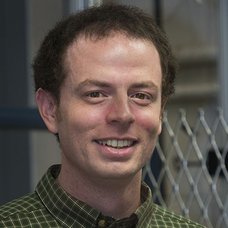
Timothy Fitzgerald serves as Professor of Mechanical Engineering and Associate Dean of Academics and Research at Gonzaga University's School of Engineering & Applied Science, where he maintains active faculty status alongside administrative leadership. His research focuses on interdisciplinary mechanical systems with emphasis on: Nonlinear fluid-structure interactions in biological contexts Advanced computational continuum mechanics methodologies Experimental characterization of biological systems Complex system dynamics analysis Reduced-order modeling for control applications No scientific awards were documented in the provided source material. Administrative responsibilities as Associate Dean indicate leadership in academic programming, though specific advising activities, grant funding details, laboratory facilities, or research teams were not referenced in the available profile information.
Dr. Anna Maria Spagnuolo serves as Professor of Mathematics in the Department of Mathematics and Statistics at Oakland University's College of Arts and Sciences and as Executive Director of the Oakland University Math Corps. She earned her Ph.D. from Purdue University and has developed a distinguished research program bridging theoretical mathematics with practical applications. Her research focuses on Fluid Flow in Porous Media , Numerical Analysis , Mathematical Modeling , and applications in Mathematical Biology including the Computation of Disease Processes . Her interdisciplinary work combines computational methods with physical modeling to address complex problems in fluid dynamics and biological systems. 2023 Distinguished Professor of the Year Award, Michigan Association of State Universities Dr. Spagnuolo has successfully mentored doctoral students including Amera H. Almusharrf (2016) who researched 'Delay Differential Equations and the Logistic Model with Two Delays,' and Daniel Coffield (2009) who developed 'A Model for Single Phase Flow in Horizontally Fractured Porous Media Using Homogenization Techniques.' Her students have progressed to academic positions at institutions including The Royal Commission Yanbu Colleges & Institutes and the University of Michigan-Flint. As Executive Director of the Oakland University Math Corps, she leads comprehensive mathematics education initiatives that provide tutoring, mentoring, and enrichment programs for students from elementary through college levels, with particular emphasis on supporting underserved student populations.
Shai Revzen is a Professor in the Department of Electrical and Computer Engineering at the University of Michigan, specializing in robotics, biomechanics, and control systems. His research focuses on geometric mechanics, multi-legged locomotion, and data-driven modeling of biological and robotic systems. He emphasizes independent thinking in students and requires weekly structured updates, including progress tracking and problem-solving. Revzen’s lab maintains rigorous communication protocols, with public calendars and mandatory weekly meetings. His work integrates experimental validation, sensor calibration, and theoretical frameworks such as Koopman operator theory to model complex systems. Recent studies explore phase response dynamics in biological systems and modular robot design with wireless power solutions. Revzen advocates for professional development, requiring students to mentor undergraduates and gain teaching experience through GSI roles. Conference attendance is fully funded, with a focus on IEEE robotics events and interdisciplinary meetings like Dynamic Walking. Revzen’s advising style prioritizes autonomy, expecting students to evolve into junior colleagues by graduation. Authorship policies are transparent, with contributions tracked across ideas, data, analysis, writing, and supervision. The lab environment emphasizes results over hours worked, with a culture valuing health and work-life balance.
Professor Gareth Morris is a Professor of Physical Chemistry at the University of Manchester, leading research in NMR spectroscopy techniques and their applications in chemistry, biochemistry, and medicine. He holds an esteemed position in the Department of Chemistry, contributing to advancements in diffusion-ordered spectroscopy (DOSY), pure shift NMR, and instrumentation development. His work spans structural analysis of large molecules, localized human spectra, and pH imaging in the brain. Education: Began at Magdalen College Oxford (1972-1981), with a postdoctoral fellowship at the University of British Columbia (1978-1979). Joined the University of Manchester in 1982. Research Interests: Focuses on novel NMR methodologies, including DOSY for complex mixtures, pH imaging in the brain, deconvolution techniques, and instrument improvements. His group is part of the Analytical Science and Spectroscopy research clusters. Articles Trends: Recent work emphasizes ultra-high resolution NMR, solvent suppression, and real-time spectral analysis. Key contributions include advancements in pure shift NMR for continuous flow systems and resolving complex mixtures via diffusion techniques. RSC Corday-Morgan Medal (1988) Fellow of the Royal Society (2014) Russell Varian Prize (2011) Günther Laukien Prize (2021) Advising/Grants: Actively accepts PhD students and leads projects like the NMR spectrometer development (2020-2025). Collaborates internationally on spectroscopic methodologies. Labs/Teams: Member of the Manchester NMR group, one of the world's best-equipped NMR facilities, with over ten superconducting spectrometers. Collaborates with teams in Paris and British Columbia.
Martin Ostoja-Starzewski is a Professor in the Department of Mechanical Science and Engineering at the University of Illinois at Urbana-Champaign, with affiliate appointments at the Beckman Institute and The Institute for Condensed Matter Theory. His academic leadership includes editorial roles at Acta Mechanica , Journal of Thermal Stresses , and chairing the Managing Editor position for Mathematics and Mechanics of Complex Systems (2012-2023). Education: Ph.D. in Mechanical Engineering (Dean's Honour List), McGill University (1983) M.Eng. (Thesis option), McGill University (1980) Engineer's degree, Cracow University of Technology (1977) Ostoja-Starzewski's research spans stochastic mechanics , fractal materials , and non-equilibrium thermodynamics , focusing on tensor random fields (TRFs) for modeling heterogeneous media. His work established quantitative bounds for representative volume elements (RVEs) and pioneered continuum models with Second Law violations , connecting micromechanics to global material behavior. Recent publications examine fractional wave equations , stochastic homogenization , and electromagnetic shielding in nanocomposites. His editorial contributions include editing 16 books/journal issues and co-founding the Modern Mechanics and Mathematics book series. Scientific Recognition: Rothschild Distinguished Visiting Fellow (2023) Academia Europaea member (2024) European Academy of Sciences and Arts (2022) Worcester Reed Warner Medal (ASME, 2018) Timoshenko Distinguished Visitor (Stanford, 2012) He leads NSF's Industry/University Cooperative Research Center for Novel High Voltage/Temperature Materials and Structures and maintains active collaborations in computational mechanics, biomedical applications, and multiscale modeling.
Qian Chen is a Professor at the University of Illinois Urbana-Champaign holding multiple appointments across the Grainger College of Engineering, specifically in the Department of Materials Science and Engineering, as well as affiliations with the Materials Research Lab, Chemical and Biomolecular Engineering, Chemistry, Biomedical and Translational Sciences, and the Beckman Institute for Advanced Science and Technology. As a Racheff Faculty Scholar, Dr. Chen leads a highly productive research program focused on nanoscale materials characterization and engineering. Dr. Chen's research spans multiple cutting-edge areas in nanoscience, with particular emphasis on nanoparticle self-assembly, liquid phase transmission electron microscopy, and the characterization of nanocrystal dynamics. Their work bridges fundamental materials science with practical applications in energy storage, corrosion science, and sustainable materials. The research employs advanced imaging techniques including 4D-STEM and in situ electron microscopy to observe nanoscale phenomena in real time, providing unprecedented insights into dynamic processes at the nanoscale. The publication record demonstrates a clear trend toward increasingly sophisticated in situ characterization methods, with recent work focusing on capturing dynamic processes in liquid environments and developing new computational approaches for electron microscopy data analysis. This research has significant implications for battery technology, corrosion prevention, and the design of novel nanomaterials with tailored properties. AFOSR Young Investigator Award (2016) NSF CAREER Award (2018) Sloan Research Fellowship (2018) Unilever Award for Outstanding Young Investigator in Colloid and Surfactant Science (2018) Dr. Chen's research has generated significant interest in both academic and industrial circles, as evidenced by numerous media mentions and social media engagement with their work. The research group maintains active collaborations across multiple disciplines, including chemistry, engineering, and biological sciences, reflecting the interdisciplinary nature of modern materials research. Their work on nanoparticle self-assembly and in situ characterization techniques continues to push the boundaries of what can be observed and understood at the nanoscale.
LEE L is a researcher affiliated with ETH Zurich's Department of Mechanical and Process Engineering (D-MAVT) and Department of Management, Technology and Economics (D-MTEC). Their interdisciplinary work bridges engineering, biology, and materials science, focusing on microfluidic systems, cellular mechanics, and aging mechanisms in yeast. LEE L's research integrates advanced imaging techniques, machine learning, and nanotechnology to address challenges in biomedical diagnostics and environmental health. Key research interests include the development of microfluidic platforms for single-cell analysis, studying how mechanical stress affects cellular signaling pathways, and understanding the molecular basis of aging through yeast models. Their work on nanoplastics' toxicity and synthetic hydrogels highlights contributions to both environmental science and regenerative medicine. LEE L has pioneered tools like the MicrobioRaman repository and holotomography-based imaging frameworks, advancing open science and quantitative biology. Their articles frequently intersect with systems biology, emphasizing data-driven approaches to complex biological systems.
George Biros is a Professor of Mechanical Engineering and holds the W.A. 'Tex' Moncrief Jr. Endowed Chair in Simulation-Based Engineering Sciences at the University of Texas at Austin. He leads the Parallel Algorithms for Data Analysis and Simulation Group within the Institute for Computational Engineering and Sciences (ICES). His research focuses on computational mathematics, parallel algorithms for physics-based simulations, and large-scale data analysis, with applications in biomedical imaging, tumor growth modeling, and high-performance computing. Biros earned his Ph.D. in Computational Science and Engineering from Carnegie Mellon University (CMU), followed by a postdoctoral fellowship at NYU's Courant Institute. He previously held faculty positions at the University of Pennsylvania and Georgia Tech. His work emphasizes scalable algorithms for exascale computing, including fast multipole methods and hierarchical matrix techniques. Research interests span parallel algorithms, numerical methods for PDEs, inverse problems, and biophysical modeling. Notable contributions include tumor growth models with mass effect, image registration algorithms (e.g., CLAIRE), and GPU-accelerated solvers for fluid dynamics and plasma simulations. His group develops open-source libraries like PyKokkos for performance-portable Python kernels. Recent publications highlight advancements in grain microstructure prediction via graph neural networks, single-scan MRI tumor calibration, and tau protein dynamics modeling in Alzheimer's disease. He has pioneered GPU-based diffeomorphic image registration for large biomedical datasets, achieving real-time performance on multi-GPU systems. Awards: Two-time ACM Gordon Bell Prize (2010, 2016), DOE Early Career Award Grants: Leads projects in exascale computing, numerical methods, and medical image analysis Labs: ICES Parallel Algorithms Group, ExaNIML (Exascale Numerically Inspired Machine Learning)
Rico Tabor is a Professor (Research) in the School of Chemistry at Monash University. He holds a PhD from the University of Bristol (UK) and has been a lecturer at Monash since 2012. His research focuses on soft and colloidal systems, including self-assembly of nanoscale materials, surface forces in emulsions/foams, and stimuli-responsive stabilizers. Key tools include small-angle neutron scattering (SANS) and collaborations at global facilities like ISIS (UK) and the Bragg Institute (Australia). Education: BSc (Undergraduate) in Chemistry, University of Bristol (UK) PhD in Physical Chemistry, University of Bristol Research Interests: His work spans soft matter systems, including micelles, liquid crystals, and microemulsions. He investigates structural forces in colloidal systems and develops light-responsive materials (e.g., azobenzene-based systems). Applications include drug delivery, pollutant capture, and sustainable materials. Projects: He leads 46 projects, including ARC-funded research on 2D materials (AM2D Hub), compostable packaging, and graphene oxide composites. Recent projects focus on thermal energy storage and nanomaterial coatings. Publications: Over 180 outputs since 2006, with recent work on stimulus-responsive polymers, carbon-based catalysts, and neutron scattering analysis of emulsions. Grants & Collaborations: Funding from ARC, industry partners (e.g., Varden Process Pty Ltd), and international networks. His work aligns with UN SDGs related to sustainable industry (SDG 9) and responsible consumption (SDG 12).
Dr. Monica Oliveira is a Senior Lecturer in the Department of Mechanical & Aerospace Engineering at the University of Strathclyde. She holds a PhD in Chemical & Process Engineering from Heriot-Watt University and a degree in Chemical Engineering from the University of Porto. Her research focuses on fluid flows and transport phenomena, particularly the rheology of complex fluids and microfluidics. She has been affiliated with institutions like MIT and CEFT, and her work appears in journals such as Physical Review Letters and Journal of Fluid Mechanics. Her expertise includes computational fluid dynamics, microdevice design, and rheology (shear and extension). Key projects include designing microfluidic components for extensional rheometry and developing biofluid analogues. She leads several research projects, including the DTP 2224 and KTP collaborations. Awards include the Chaires Paris-Science 2024 Invited Professorship and FEUP Scientific Incentive Prize. Her research integrates fundamental flow physics with biomedical applications, such as ophthalmic viscosurgical devices and blood flow dynamics in aneurysms. Recent publications address topics like ferrofluid emulsions, viscoelastic instabilities, and microscale mixing. She actively participates in international conferences and serves roles in professional societies like the European Society of Rheology. Her lab focuses on optimizing microfluidic geometries for precise fluid characterization and biomedical applications.
Dr. Jason Morrison is an Associate Professor and Associate Head (Undergraduate) in the Department of Biosystems Engineering at the University of Manitoba. He holds degrees in Mechanical Engineering, Computer Science, and Computational Science from McMaster and Carleton Universities. His research focuses on creating simplified data models, optimizing model fits, and analyzing process outcomes, particularly in chemical spectra modeling, biological material analysis, and 3D printer performance optimization. He has received grants in both Information Technology and Materials and Chemical Engineering, emphasizing reproducible open-source tools for additive manufacturing and spectroscopy data analysis. Dr. Morrison’s work addresses challenges in proprietary data formats that hinder reproducibility and interoperability in these fields. His teaching awards reflect his dedication to student success in engineering education. Recent research spans agricultural applications (e.g., Fusarium detection in wheat), biomaterials development (e.g., hemp fiber processing), and medical device sterilization (3D-printed plastics). His publications (2015–2021) highlight interdisciplinary approaches bridging engineering, biology, and computer science. Education: B.Eng. in Mechanical Engineering, McMaster University (1993) B.Sc. Honours in Computer Science, McMaster University (1995) M.Comp.Sc. in Computational Science, Carleton University (1997) Ph.D. in Computational Science, Carleton University (2002) Research Interests: Optimization of mathematical models and data simplification Spectroscopic analysis of chemical/biological materials Additive manufacturing (3D printing) tooling and sterilization Ergonomics of agricultural machinery design Non-destructive testing via hyperspectral imaging Grants & Awards: Grants in Information Technology and Materials Engineering (details unspecified) Teaching awards (specific names unspecified) Labs/Teams: Not explicitly mentioned in profile; focus on interdisciplinary collaborations in biosystems engineering.
Charlie Duclut is an Associate Professor at Sorbonne University and conducts research at the Physico-Chimie Curie laboratory. His work bridges physics and biology, focusing on theoretical approaches such as statistical physics and non-equilibrium thermodynamics to study collective cell behavior and tissue dynamics. Key research areas include the development of theoretical tools like integral geometry and renormalization group methods, applied to problems involving tissue mechanics, electrohydraulics, and morphogenesis. He holds a PhD from Université Paris VI (UPMC) and has held postdoctoral positions at the Max Planck Institute for the Physics of Complex Systems and Matière et Systèmes Complexes in Paris. His teaching includes thermodynamics, mechanics, and stochastic modeling courses at Sorbonne University and Technische Universität Dresden. Education: Bachelor/Master at École Normale Supérieure (ENS) with a focus on Macroscopic Physics and Complexity; PhD in theoretical physics under Bertrand Delamotte at LPTMC (UPMC). Research experience includes internships at LANL (USA) and LPS (Paris). Research Interests: Theoretical frameworks for tissue deformation, interplay of mechanical/hydraulic/electrical tissue properties, and active matter phenomena. Current projects explore electrohydraulic control of cell spheroids and chemotactic self-organization. Active collaborations address biological systems like Drosophila wing discs and ascidian notochords. Publications highlight contributions to tissue rheology, cellular network dynamics, and fluid-electric interactions. His work has appeared in PNAS , Proc. Natl. Acad. Sci. U.S.A. , and Physical Review series. Invited talks and seminars span international conferences and institutions including Rice Global Paris Center, Westlake University, and EMBL.