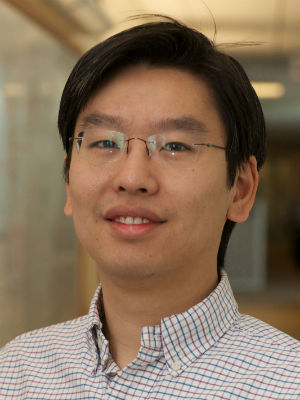
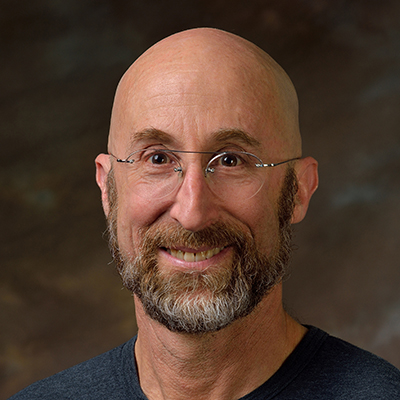
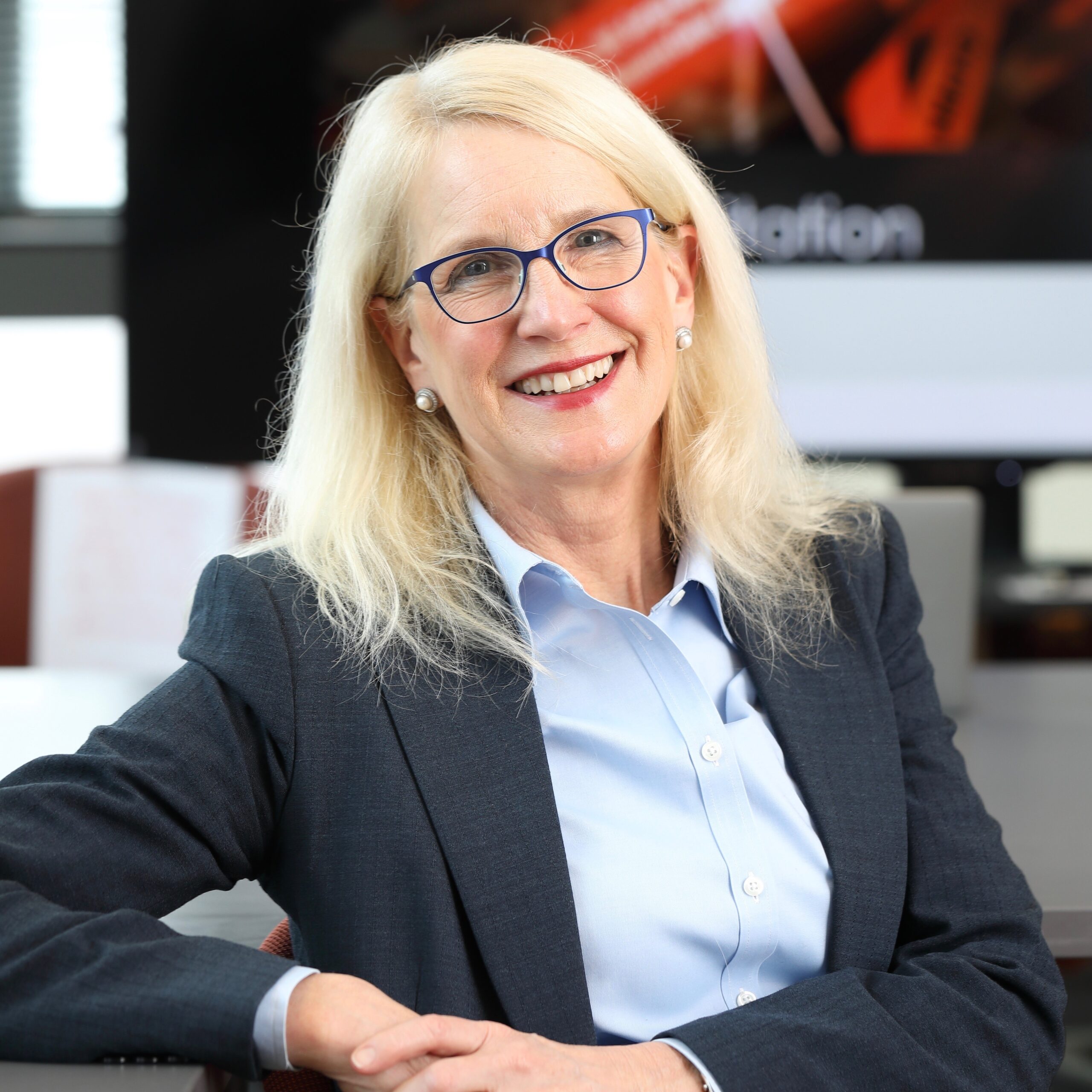
Stefano Ermon is an Associate Professor in the Department of Computer Science at Stanford University, affiliated with the Artificial Intelligence Laboratory and a Senior Fellow at the Woods Institute for the Environment. His research focuses on advancing machine learning and generative AI techniques to address societal and environmental challenges, including computational sustainability, geospatial analysis, and climate science. He holds a Ph.D. from Cornell University (2015). Education: Ph.D. in Computer Science, Cornell University (2015). Research Interests: Ermon’s work bridges foundational machine learning (e.g., diffusion models, generative AI, and optimization) with applications in sustainability, geospatial analysis (via satellite imagery), and earth observation systems. Notable contributions include predicting poverty using satellite data and developing scalable methods for molecule generation. Articles Trends: His recent work emphasizes diffusion models for generative tasks (e.g., text-to-image, molecule design), geospatial AI (e.g., environmental monitoring), and ethical AI (e.g., bias mitigation in LLMs). He also explores applications in robotics and scientific computing. Awards: He has received prestigious awards, including the ICML 2024 Best Paper Award, Sloan Research Fellowship, Microsoft Research Faculty Fellowship, and the IJCAI Computers and Thought Award. Advising and Grants: Ermon teaches courses like Probabilistic Graphical Models (CS228) and has secured grants from NSF, ONR, AFOSR, and private foundations. His lab develops tools for climate science and sustainable development. Labs/Teams: Leads the Stanford AI Lab group focused on computational sustainability and generative AI, collaborating with institutions like the Woods Institute for environmental applications.
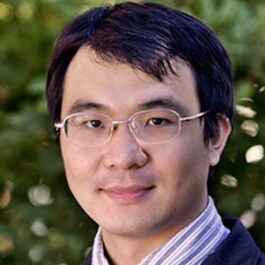
Heng Huang is the Brendan Iribe Endowed Professor in the Department of Computer Science and the Department of Electrical and Computer Engineering at the University of Maryland, College Park . He earned his Ph.D. in Computer Science from Dartmouth College and holds prior degrees from Shanghai Jiao Tong University. His research focuses on advancing the foundations and applications of artificial intelligence, particularly in machine learning, data mining, natural language processing, computer vision, and biomedical informatics . His work integrates large-scale optimization, fairness, and robustness in deep learning systems. Heng Huang’s recent publications demonstrate a strong trend in large language models, federated learning, model watermarking, continual learning, and medical image analysis . His work appears consistently in top venues like NeurIPS, ICML, CVPR, ICLR, and MICCAI, reflecting a broad impact across theoretical and applied AI. He actively mentors students and postdocs, seeking highly motivated researchers in machine learning and related domains. His work has significant implications for healthcare, privacy, and trustworthy AI.
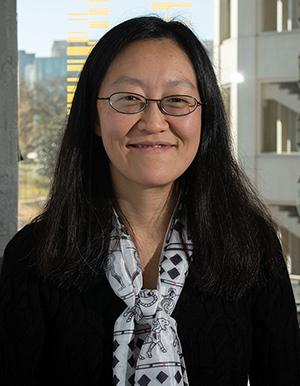
Harris H. Wang is an Associate Professor in the Department of Systems Biology and Department of Pathology and Cell Biology at Columbia University's Vagelos College of Physicians and Surgeons, where he also serves as Interim Chair of Systems Biology. He is affiliated with the Center for Computational Biology and Bioinformatics (C2B2) and the Integrated Program in Cellular, Molecular and Biomedical Studies (CMBS). B.S., Physics and Mathematics, MIT Ph.D., Biophysics, Harvard University Dr. Wang's research lies at the intersection of systems and synthetic biology, focusing on developing foundational technologies for genome engineering, microbiome manipulation, and synthetic genomics. His lab pioneers methods such as MAGE, MAGIC, CAST, and CAMII to enable high-throughput genetic manipulation, in situ microbiome engineering, and AI-driven microbial culturomics. Key research themes include understanding microbial community dynamics, engineering cellular memory systems, designing biocontained genetic circuits, and applying synthetic biology to human health challenges in personalized medicine and infectious disease. His recent publications reveal a strong trend in spatial and functional metagenomics, CRISPR-based microbiome editing, and synthetic biology tools for data storage and genetic stability. The articles span high-impact journals like Nature , Science , and Nature Biotechnology , reflecting his leadership in developing scalable, programmable biological systems. Scientific Awards: NIH Director’s Early Independence Award Forbes 30 Under 30 in Science Sloan Research Fellowship NSF CAREER Award ONR Young Investigator Award Burroughs Wellcome Fund PATH Award Schaefer Scholar Blavatnik National Award Vilcek Prize PECASE Dr. Wang has advised numerous PhD and postdoctoral researchers, many of whom have gone on to independent scientific careers. His lab is supported by major grants from NIH, NSF, DARPA, DOE, and foundations including the Bill & Melinda Gates Foundation and CZ Biohub NY. He is actively involved in educational initiatives, including organizing Columbia’s iGEM team and the Cold Spring Harbor Laboratory Synthetic Biology course. The Wang Lab is based at the Columbia University Irving Medical Center and is part of national consortia such as the Engineering Biology Research Consortium (EBRC) and the Genome Project-Write (GP-Write) initiative. The lab develops and applies cutting-edge technologies in automation, machine learning, and synthetic biology to engineer microbiomes for applications in medicine, global health, and climate change.
Han Liu is a Professor in the Department of Computer Science at Northwestern University's McCormick School of Engineering. He directs the MAGICS (Modern Artificial General Intelligible and Computer Systems) Lab and the Center for Foundation Models and Generative AI at Northwestern, with prior roles as director of the Deep Reinforcement Learning Center at Tencent AI Lab and professor at Princeton and Johns Hopkins Universities. PhD in Machine Learning and Statistics from Carnegie Mellon University (2012), advised by John Lafferty and Larry Wasserman Han Liu's research focuses on integrating artificial intelligence with computer systems, particularly through foundation models and probabilistic graphical models. His work aims to revolutionize science, engineering, and business by deploying statistical machine learning methods in edge and cloud computing environments. Recent research trends include transformer-based models, modern Hopfield networks, genomic foundation models, and theoretical analysis of attention mechanisms. His 2025 publications explore topics like species differentiation with DNA embeddings, universal approximation capabilities of transformers, and metaverse spatial reasoning. Alfred P Sloan Fellowship in Mathematics IMS Tweedie New Researcher Award ASA Noether Young Scholar Award NSF CAREER Award Presidential Early Career Awards for Scientists and Engineers Han Liu serves as associate editor for the Journal of American Statistical Association, Electronic Journal of Statistics, Technometrics, and the Journal of Portfolio Management. He has directed research centers at Northwestern and contributed to major conferences as area chair (NeurIPS, ICML, ICLR).
Hang Lu is a Professor and holds the Cecil J. "Pete" Silas Chair of Chemical & Biomolecular Engineering at the Georgia Institute of Technology. Dr. Lu also holds a Love Family Professorship and leads the Lµ Fluidics Group, which focuses on engineering microfluidic systems and machine learning tools to address complex questions in neuroscience, developmental biology, and cell biology that are difficult to address with conventional techniques. Dr. Lu's research lies at the intersection of engineering and biology, with primary interests including: Microfluidic systems for high-throughput screens and image-based genetics and genomics Systems biology: large-scale experimentation and data mining Microtechnologies for optical stimulation and optical recording Big data, machine vision, and automation Developmental neurobiology, behavioral neurobiology, and systems neuroscience Cancer biology, immunology, embryonic development, and stem cells Her laboratory engineers microfluidic devices and BioMEMS to study neuroscience, genetics, cancer biology, and biotechnology. These miniaturized Lab-on-a-chip tools operate at scales comparable to biological systems, leveraging unique micro and nano-scale phenomena to gather large-scale quantitative data about complex biological systems. Current projects include Microfluidics for Life Sciences, Optical Neuron Recordings and Manipulations, Machine Learning Tools for Neuroscience, Measuring and Modeling Behavior, and High-throughput, High-content Cell-based Assays. Analysis of Dr. Lu's recent publications (2024-2025) reveals a strong trend toward integrating microfluidics with advanced computational methods: Development of deep learning frameworks for biological image analysis Advanced neuron tracking and functional imaging techniques Non-invasive characterization of 3D organoid cultures Sophisticated neuromechanical modeling of locomotion Microfluidic temperature control systems for in vivo studies Label-free imaging pipelines for neural development Dr. Lu's significant professional honors include: Cecil J. "Pete" Silas Chair of Chemical & Biomolecular Engineering Love Family Professorship The Lµ Fluidics Group actively mentors students and postdocs, currently accepting new postdoctoral researchers. The lab receives substantial funding for interdisciplinary projects at the engineering-biology interface, with research implications spanning fundamental biological understanding to therapeutic development. The group operates within Georgia Tech's School of Chemical & Biomolecular Engineering, with specialized facilities for microfluidic device fabrication, biological experimentation, and advanced imaging, maintaining strong collaborative ties across engineering, neuroscience, and biological disciplines.
University of Illinois Urbana-ChampaignUnited States
Dr. Jimeng Sun is a Health Innovation Professor at the Siebel School of Computing and Data Science and Carle Illinois College of Medicine at the University of Illinois Urbana-Champaign. Co-founder of Keiji AI , he leads groundbreaking research at the intersection of artificial intelligence and healthcare, actively deploying clinical AI systems and developing frameworks like PyHealth and Therapeutics Data Commons . His research spans four major areas: Clinical AI Systems : Developing interpretable models (e.g., RETAIN) for patient similarity, temporal event prediction, medication recommendation, and clinical outcome forecasting Drug Discovery : Creating molecular optimization frameworks, drug-target interaction models, and AI-driven platforms Clinical Trials : Pioneering patient-trial matching, outcome prediction, and optimization frameworks using deep learning and graph neural networks Biosignal Analysis : Advancing sleep staging, seizure classification, and automated EEG/Cardiac monitoring systems With over 500 top-tier publications (including in Nature , NEJM AI , and leading AI conferences) and an h-index of 99, his work has been recognized with the Top 100 AI Leaders in Drug Discovery and Advanced Healthcare award. He maintains active collaborations with institutions like Massachusetts General Hospital , Medidata Solutions , and OSF Healthcare . His recent publications reveal a strong focus on: Reinforcement learning applications in medical data analysis Large language model adaptation for clinical tasks Knowledge graph integration with AI systems Synthetic data generation for healthcare Multi-modal learning in clinical contexts Explainable AI for medical applications Dr. Sun's lab ( Sunlab ) emphasizes practical impact over theoretical work, actively collaborating with hospitals and healthtech companies. He welcomes contributions from clinicians, researchers, and industry partners through initiatives like his AI for Health webinar series .
Philip S. Yu is a Distinguished Professor in the Department of Computer Science at the University of Illinois at Chicago and holds the Wexler Chair in Information Technology. Previously, he led the Software Tools and Techniques department at IBM Thomas J. Watson Research Center. Education: B.S. in Electrical Engineering, National Taiwan University M.S. and Ph.D. in Electrical Engineering, Stanford University M.B.A., New York University His research spans data mining , big data , social networks , privacy-preserving data publishing , graph/network mining , recommender systems , and deep learning . He has authored over 970 papers with 74,500+ citations and an H-index of 127. Recent work focuses on heterogeneous graph representation, quantum walks in network analysis, and federated unlearning. Scientific Honors: ACM SIGKDD 2016 Innovation Award IEEE Computer Society 2013 Technical Achievement Award IEEE ICDM 2003 Research Contributions Award IEEE Region 1 Award (1999) UIC Research of the Year (2013) IBM Master Inventor with 300+ patents AI 2000 Most Influential Scholar Honorable Mentions (2024-2025) He served as Editor-in-Chief for ACM Transactions on Knowledge Discovery from Data and IEEE Transactions on Knowledge and Data Engineering , and on steering committees for ACM KDD and IEEE Data Mining. His work bridges theoretical advances in graph neural networks , deep learning , and privacy-preserving systems with applications in healthcare, social media, and enterprise analytics.
Bei Wang Phillips is an Associate Professor in the School of Computing and a faculty member at the Scientific Computing and Imaging (SCI) Institute at the University of Utah. She holds a Ph.D. in Computer Science from Duke University and an undergraduate degree from the University of Bridgeport. Her research focuses on Topological Data Analysis (TDA), data visualization, computational topology, and machine learning, with applications in scientific data exploration and analysis. She has received prestigious awards including the NSF CAREER Award (2022) and the PECASE Award (2025). Her work spans projects funded by NSF, NIH, and DOE, including multiparameter TDA and topology-aware data compression. She advises numerous students and collaborates on interdisciplinary initiatives in astrophysics, climate science, and AI fairness. Education: Ph.D. in Computer Science, Duke University (2010) B.S. in Computer Science and Mathematics, University of Bridgeport (2003) Research Interests: Topological techniques for large-scale data analysis Integration of topological, geometric, and machine learning methods Applications in visualization, bioinformatics, and network analysis Key Projects: NSF-funded TDA research (DMS-2301361, OAC-2313124) DOE project on topology-preserving data compression Collaborations with NASA, Argonne National Lab, and Carnegie Institution of Washington Awards: Presidential Early Career Award for Scientists and Engineers (2025) NSF CAREER Award (2022) DOE Early Career Research Program (2020) Advising and Grants: Mentored over 30 students and postdocs Recipient of multiple NSF and DOE grants totaling millions
Alexis Battle is an Associate Professor at Johns Hopkins University with appointments in Biomedical Engineering , Computer Science , and Genetic Medicine (secondary). She directs the Malone Center for Engineering in Healthcare and serves as Deputy Director of the Data Science and AI Institute . Educated at Stanford University (PhD in Computer Science, 2013), Battle transitioned to academia after leadership roles at Google. Research Focus: Battle’s work bridges genomics and machine learning , emphasizing the impact of genetic variation on human health. Her lab develops tools like Watershed to predict functional effects of rare variants, aiming to enhance rare disease diagnosis. Key themes include non-coding DNA analysis , personalized genomics , and systems biology , with applications in cardiovascular disease and neurodegenerative disorders . Publications & Awards: Over 60 peer-reviewed articles in journals like Nature , Science , and Genome Biology , with recent emphasis on single-cell transcriptomics , multiomics integration , and telomere biology . Recipient of the President’s Frontier Award (2022), Microsoft Investigator Fellowship (2019), and Searle Scholar (2016). Scientific Awards: 2022 President’s Frontier Award 2019 Microsoft Investigator Fellowship 2019 Johns Hopkins Discovery Award 2017 Johns Hopkins Catalyst Award 2016 Searle Scholar Advising & Funding: Mentors 11 PhD students, 3 undergraduates, and postdoctoral fellows. Her research is funded by NIH, Searle Scholars, and institutional grants. The Battle Lab collaborates on projects like the GTEx Consortium , focusing on gene regulation and clinical genomics .
Martin T. Wells is the Charles A. Alexander Professor of Statistical Sciences at Cornell University, with joint appointments in the Department of Statistical Science, Department of Biological Statistics and Computational Biology, Department of Social Statistics, and as Professor of Clinical Epidemiology and Health Services Research at Weill Medical School. He serves as Editor-in-Chief of the ASA-SIAM Book Series and Co-Editor of the Journal of Empirical Legal Studies. Cornell University, Ithaca, NY Weill Cornell Medical College Research Interests span applied and theoretical statistics, Bayesian methods, biostatistics, clinical epidemiology, and computational biology. His work bridges disciplines like finance, legal studies, and health services research. Article Trends highlight advancements in Bayesian modeling, quantum cognition machine learning, tensor analysis, and misclassification correction, with applications in genomics, finance, and public health. Fellow of the American Statistical Association Fellow of the Royal Statistical Society Contributions include developing statistical software (e.g., rTensor), methodological innovations in clinical trials, and empirical legal studies on civil rights and the death penalty.
Pieter Abbeel is a Professor in the Department of Electrical Engineering and Computer Sciences (EECS) at the University of California, Berkeley. He leads the Berkeley Robot Learning Lab and co-directs the Berkeley Artificial Intelligence Research (BAIR) Lab. His work focuses on advancing AI and robotics through deep reinforcement learning, imitation learning, and unsupervised learning, with applications in automation, healthcare, and education. Abbeel's research also explores the societal implications of AI and its potential to revolutionize other scientific and engineering fields. Education: Ph.D. in Computer Science, Stanford University (2008) M.S. in Electrical Engineering, KU Leuven, Belgium (2000) Research Interests: Robotics, AI, Machine Learning, Reinforcement Learning, Autonomous Systems, and Applications in Surgery, Manufacturing, and Education. Recent Article Trends: Focus on multimodal learning, robot manipulation, protein structure prediction, and scalable AI systems. Key areas include sim-to-real transfer, embodied AI, and foundation models for decision-making. Awards & Honors: IEEE Kiyo Tomiyasu Award (2022) ACM Prize in Computing (2021) IEEE Fellow (2018) MIT Tech Review TR35 (2011) Advising & Grants: Advises startups and has received grants from NSF, DARPA, and industry partnerships. Notable students include those advancing robotics, reinforcement learning, and bioAI. Labs & Initiatives: Berkeley Robot Learning Lab, BAIR Lab, and collaborations with the Center for Human-Compatible AI (CHAI). Founded companies include Gradescope, Covariant, and Berkeley Open Arms.
Gail E. Kaiser is a Professor of Computer Science and the Director of the Programming Systems Laboratory (PSL) in the Computer Science Department at Columbia University. She has been with Columbia University since 1985, becoming a full Professor in 1998. Prof. Kaiser's research spans software engineering, program analysis, software testing, and software security, with recent focus on addressing challenges in AI/ML systems testing and security. Prof. Kaiser received her PhD in Computer Science from Carnegie Mellon University in 1985 and her ScB in Computer Science and Engineering from MIT in 1979. Her dissertation at CMU was titled "Semantics for Structure Editing Environments" under advisor Nico Habermann, and at MIT she completed "Automatic Extension of an Augmented Transition Network Grammar for Morse Code Conversations" under advisor Al Vezza. Prof. Kaiser's research interests primarily focus on software engineering following a systems building approach, with recent emphasis on static and dynamic program analysis techniques to improve software reliability and security. Since 2005, she has investigated testing "non-testable" programs, particularly in machine learning, data mining, and scientific computing applications where traditional testing oracles are insufficient. She has developed novel techniques and tools for detecting bugs and verifying repairs in complex systems. Concurrently, she has worked on collaboration environments for computational scientists, creating knowledge sharing and domain-aware environments to support scientific workflows. Prof. Kaiser's recent publications demonstrate a strong focus on the intersection of software engineering and artificial intelligence. Her work addresses critical challenges in testing AI systems, code understanding through deep learning, vulnerability detection, and educational tools for computational thinking. There's a clear evolution from traditional software engineering topics toward AI/ML applications, with particular emphasis on metamorphic testing for non-testable systems, code similarity analysis, and educational applications. Prof. Kaiser has received numerous prestigious awards throughout her career: Distinguished Journal Award (10 Years) from 18th IEEE International Conference on Software Testing, Verification and Validation (ICST), April 2025 Best Research Paper Award at 24th IEEE International Conference on Source Code Analysis & Manipulation (SCAM), October 2024 Distinguished Reviewer Awards for ASE 2024 and FSE 2024 ACM SIGSOFT Distinguished Paper Award for "CONCORD: Clone-aware Contrastive Learning for Source Code", July 2023 Best Student Paper Award at ICCE 2021 Multiple ACM SIGSOFT Distinguished Paper Awards dating back to 2014 Presidential Young Investigator in Software Engineering and Software Systems from NSF (1988-1993) Prof. Kaiser has chaired Columbia's doctoral program since 1997 and served on editorial boards including IEEE Internet Computing and as a founding associate editor of ACM Transactions on Software Engineering and Methodology. Her lab has been continuously funded by major agencies including NSF, NIH, DARPA, ONR, NASA, and numerous companies. Current grants include significant NSF funding for secure containers architecture, learning semantics of code for software assurance, and finding semantic security bugs. As Director of the Programming Systems Laboratory (PSL), Prof. Kaiser leads research in software systems, program analysis, and software testing. The lab has developed numerous tools and techniques for software reliability and security, with recent focus on challenges in AI/ML systems. Her work bridges theoretical foundations with practical applications, often resulting in deployable tools that address real-world software engineering challenges.
Lyle Ungar is a Professor at the Department of Computer and Information Science at the University of Pennsylvania . He is affiliated with multiple graduate groups, including Genomics and Computational Biology in the School of Medicine , Operations, Information and Decisions in the Wharton School , and Psychology in the School of Arts and Sciences . His research focuses on explainable machine learning , deep learning , and natural language processing for psychology and medical research , analyzing social media and sensor data to understand well-being, empathy, and stress. His work spans bioinformatics , applied economics , and group decision-making . Recent publications examine LLM-based tutoring , cross-cultural translation , and AI in palliative care , showing trends in reinforcement learning , mobile health , and health data analytics . He has contributed to Google Scholar , PubMed , and DBLP with over 15 papers since 2023. Scientific Awards : 2019 Alan I. Leshner Leadership Institute Public Engagement Fellow His students include Vitoria Aquino Guardieiro , Yihao Li , and co-advised researchers like Shreya Havaldar with Eric Wong. He leads projects at interdisciplinary centers such as the Annenberg Public Policy Center , Center for Cognitive Neuroscience , and Institute for Translational Medicine .
Susan Davidson is the Weiss Professor in the Department of Computer and Information Science at the University of Pennsylvania, where she co-directs the Data Science Program. She currently serves as Deputy Dean of the School of Engineering and Applied Science and chairs the Computing Research Association's Board of Directors. Her research focuses on databases, bioinformatics, data management, and provenance-based systems. Co-founder, Greater Philadelphia Bioinformatics Alliance Founding co-director, Center for Bioinformatics Fulbright Scholar and Hitachi Chair, INRIA-GEMO Key research areas include data citation, trust management in collaborative systems, workflow provenance, and privacy in data analysis. Her recent publications explore explainability frameworks, sub-table selection for data exploration, and security in distributed training systems. 2023 Lindback Award for Distinguished Teaching 2021 VLDB Women in Databases Award 2021 AAAS Fellow 2020 Spira Award for Teaching & Mentoring 2017 IEEE TCDE Impact Award She has advised numerous PhD students and postdocs, including Sudeepa Roy (Duke University) and Julia Stoyanovich (NYU). Courses taught recently include CIS550 (Database Systems) and CIS545 (Big Data Analytics).
Dr. Mihai Pop is a Professor of Computer Science and Director of the University of Maryland Institute for Advanced Computer Studies (UMIACS). He holds appointments in the Department of Computer Science, UMIACS, and the Center for Bioinformatics and Computational Biology (CBCB). His research focuses on computational biology, metagenomics, and algorithm development for genomic data analysis. He received a Ph.D. in Computer Science from Johns Hopkins University (2000), followed by work at The Institute for Genomic Research (TIGR) developing genome assembly algorithms. Education: Ph.D., Computer Science, Johns Hopkins University, 2000. Research Interests: Bioinformatics, genomics, metagenomics, computational geometry, software testing. His lab develops tools for analyzing microbial communities and has pioneered methods for metagenomic assembly and analysis. Notable tools include the AMOS genome assembly toolkit. Recent Article Trends: Recent work emphasizes long-read sequencing, metagenomic profiling (e.g., TIPP3), and strain-level analysis (e.g., Strainy). He addresses challenges in scaling sequence-based searches and improving taxonomic resolution in large datasets. Awards: ACM Fellow (2019), ISCB Fellow (2022), UMD Excellence in Teaching Award (2015). Grants & Leadership: Co-leader of the Human Microbiome Project data analysis group. Active in diversity initiatives to promote inclusivity in computational fields. Labs/Teams: Pop Lab (pop-lab.org) focuses on computational methods for microbial genomics and metagenomics.