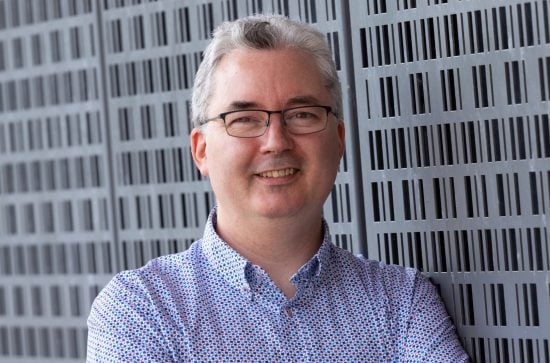
Paul O'Toole is a Professor of Microbial Genomics and Principal Investigator at the APC Microbiome Ireland, University College Cork. His research focuses on the gut microbiome's role in health, aging, and disease, particularly in the context of diet and probiotics. He leads projects like the ELDERMET study on elderly nutrition and the NU-AGE project exploring Mediterranean diets' anti-aging effects. He holds a BA (Mod.) from Trinity College Dublin and a PhD from Lund University, with postdoctoral training in Canada and New Zealand. Key grants include studies on dairy-derived microbiota, probiotic strain improvement, and microbiome analysis in aging populations. He has published extensively on Lactobacillus genomics, gut-brain interactions, and microbiome-driven health outcomes. His work bridges fundamental microbiology with clinical applications, emphasizing translational research. Scientific highlights include discovering microbiome links to cognitive decline, demonstrating dietary modulation of gut microbes to combat obesity, and identifying keystone species in healthy aging. He advocates for sustainability in conservation and food systems, reflecting his interdisciplinary approach to global health challenges.
Catherine Mooney is a Professor in the School of Computer Science at University College Dublin (UCD), leading the Life Science Data Analytics Group (LiSDA). Her research focuses on applying machine learning to healthcare challenges, including biomarker development, clinical decision support systems, and addressing ethical and technical barriers in healthcare AI. Education: BSc in [field unspecified] from Trinity College Dublin PhD in Computer Science from UCD Prof Dip University Teaching & Learning from UCD Research Interests: Machine Learning applications in healthcare Biomarker discovery for neurological and metabolic conditions Explainable AI for clinical decision support Promoting diversity and inclusion in STEM education Her work bridges computational methods with medical challenges, emphasizing ethical AI and translational research. Notable Awards: Best Paper Award in Applied Biosciences (2023) UCD Long-Service Award (2022) Best Poster Award at ITiCSE ’20 (2020) Her research has led to impactful tools like LiSDA’s clinical decision support systems for epilepsy and pregnancy care. She also advocates for gender diversity in computing, serving in leadership roles like Vice Principal for EDI in UCD’s College of Science (2022–2024).
Elaine O'Reilly is an Associate Professor and Vice-Principal for Research & Innovation at the School of Chemistry, University College Dublin . She holds a PhD in organic chemistry from UCD (2010) and has held academic positions at the University of Manchester (Postdoctoral 2010-2014), Manchester Metropolitan University (Lecturer 2014-2015), and University of Nottingham (Assistant Professor 2015-2019, promoted to Associate Professor 2018). Expertise in biocatalyst development and application Specialization in transaminase and cytochrome P450 engineering Focus on sustainable pharmaceutical and fine chemical synthesis Research Interests center on creating biocatalytic cascades for synthesizing complex molecules like chiral amines and iminosugars. She pioneered transaminase-triggered aza-Michael reactions for alkaloid synthesis and developed smart amine donors to overcome equilibrium limitations in biotransformations. Scientific Awards include the RSC Harrison-Meldola Prize (2017) Grants from EPSRC, BBSRC, and SFI support her work on continuous transaminase processes, heterogeneous biocatalysts, and sustainable chemistry collaborations with the University of Nottingham. Teaching Activities include coordinating the Aspects of MedChem and ChemBio module since 2019 and supervising PhD/BSc theses on biocatalysis and chemical biology.
Professor Damien Woods is a faculty member at Maynooth University's Faculty of Science & Engineering, specifically affiliated with the Department of Computer Science and the Hamilton Institute. He leads groundbreaking research in DNA computing, molecular programming, and optical computing, focusing on self-assembly, algorithmic design, and computational complexity. ERC Consolidator Grant: 'Computationally Active DNA Nanostructures' SFI ERC Support Award EIC Pathfinder Challenge Grant: 'DISCO - DNA Infrastructure for Storage and Computation' His research projects explore programmable DNA storage, molecular robotics, and robust self-assembly systems. Recent publications span diverse topics like algorithmic DNA tile assembly, thermodynamic stability, and computational universality in nanosystems. Awards include ERC and SFI grants, with a focus on bridging theoretical computer science and experimental molecular biology. Scientific Contributions include: 2022: 'Turning Machines' - Molecular Robotics 2019: 'Diverse Molecular Algorithms' in Nature 2017: 'A Cargo-Sorting DNA Robot' in Science
Dr. F. Jerry Reen serves as a Senior Lecturer and Principal Investigator in the School of Microbiology at University College Cork (UCC), Ireland. With over two decades of academic experience since joining UCC's Department of Microbiology in 2002, he has established himself as a leading researcher in microbial communication systems and host-pathogen interactions. His research group operates within the BIOMERIT Research Centre, and he maintains active collaborations across multiple institutions in Ireland and internationally. Dr. Reen earned his BSc in Biochemistry at the National University of Ireland Galway (NUIG), followed by a PhD in the Molecular GlycoBiotechnology Group at NUIG, supported by an Enterprise Ireland Scholarship and an NUI Teaching Fellowship. His academic journey includes a postdoctoral position in the lab of Dr. E. Fidelma Boyd at UCC, during which he was a visiting scientist at the Sidney Kimmel Cancer Center in San Diego and received an IRCSET Postdoctoral Fellowship for bacteriophage-host interactions research. Dr. Reen's research focuses on deciphering communication systems underpinning polymicrobial-host interactions for human and ecosystem health, with particular emphasis on small molecule signaling in microbial communities. His work bridges fundamental microbiology with translational applications, targeting antimicrobial resistance through chemico-biological therapeutics and developing sustainable pharmaceutical production methods using marine biocatalysts. His research has evolved from early work on Vibrio species to current investigations of Pseudomonas aeruginosa signaling systems, bile acid interactions in cystic fibrosis, and marine enzyme applications in green chemistry. His laboratory's publication record demonstrates consistent productivity with over 80 peer-reviewed papers (h-index 26), spanning from foundational studies on LysR-type transcriptional regulators to recent innovations in virtual reality educational tools. The research trajectory reveals an expanding scope from molecular microbiology to systems-level understanding of microbial communities, with increasing emphasis on sustainable solutions for the pharmaceutical industry. Bronze LEAF Award (2022) - Green Campus University College Cork The Disciplinary Excellence in Learning, Teaching and Assessment (DELTA) Award (2021) - National Forum for the Enhancement of Teaching and Learning Purdy-Lucey UCC Life Sciences Invention of the Year 2015 (2016) Best Poster Exhibition (2012) - Royal Irish Academy National Researcher of the Year, Silver Medal (2011) - Roche BioSciences Researcher of the Year, Gold Medal (2011) - Roche Dr. Reen has successfully secured significant research funding from multiple sources including Science Foundation Ireland (SFI), Health Research Board (HRB), Enterprise Ireland, and Irish Research Council. His current projects include 'BioBloc' enhanced Contact LEns solutioNS (BBCLENS), HEACOVID19, SSPC3 Pharm5, and investigations into novel macrolides for cystic fibrosis management. He has mentored numerous graduate students, including Stephanie Flynn (PhD, 2019), Noelle McCarthy (PhD, 2009), and David Woods (MSc, 2008), with two doctoral students currently completing their research. His educational innovations, particularly student-partnered virtual reality simulations, have transformed how challenging molecular concepts are taught. Dr. Reen leads an interdisciplinary research group that combines microbiology, chemistry, bioinformatics, and education technology. His team collaborates with internal UCC colleagues including Dr. Gerard McGlacken and Prof. Anita Maguire, as well as external partners from institutions like the University of Warwick, Medical University of Graz, and University de Porto. The laboratory maintains strong connections with clinical researchers studying cystic fibrosis and has developed novel approaches for detecting bacterial signaling molecules using boron-doped diamond electrodes.
Dr. Md Noor-A-Rahim is an Assistant Professor (Lecturer-Above the Bar) at the School of Computer Science and Information Technology, University College Cork (Ireland). He previously served as a Senior Researcher and Marie Curie Fellow at the same institution. His academic journey includes a PhD from the University of South Australia (2015) and the prestigious Michael Miller Medal for his outstanding thesis on wireless communication systems. His research focuses on Intelligent Transportation Systems, Machine Learning, IoT, Wireless Networks, and DNA-based data storage. He has published extensively on topics like 6G-V2X systems, time-sensitive networking, and error characterization in DNA storage. His work integrates cutting-edge technologies such as intelligent reflecting surfaces (IRS), federated learning, and ultra-reliable low-latency communication (URLLC). Research Interests : Dr. Rahim's research bridges theoretical advancements and real-world applications in vehicular networks, smart manufacturing, and next-generation communication systems. He explores challenges in autonomous driving, edge computing, and bio-constrained data storage. His contributions include novel coding schemes for anytime transmission and frameworks for mitigating big vehicle shadowing in V2X communications. Key Publications : His recent work includes a comprehensive survey on wireless TSN (2025), analysis of 6G-V2X systems (2022), and breakthrough studies on DNA data storage error modeling (2023). These publications highlight his expertise in both foundational research and industry-relevant solutions. Awards : Recipient of the Michael Miller Medal (2015) for doctoral research excellence. Grants & Labs : While specific grants are not listed in the text, his research portfolio suggests involvement in collaborative projects with industry partners and funding bodies. He leads interdisciplinary efforts in smart manufacturing and vehicular communication systems.
Dr. Georgiana Ifrim is an Associate Professor at the School of Computer Science, University College Dublin , where she serves as Director of Graduate Research and Co-Lead of the SFI Centre for Research Training in Machine Learning (ML-Labs). She holds concurrent appointments as an SFI Funded Investigator at the Insight Centre for Data Analytics and VistaMilk SFI Research Centre . Her academic journey includes postdoctoral research at Insight Centre, Cork Constraint Computation Centre (4C), and Aarhus University's Bioinformatics Research Centre (BiRC). Education: BSc in Computer Science, University of Bucharest, Romania MSc and PhD in Informatics, Max-Planck Institute for Informatics, Germany Dr. Ifrim specializes in scalable predictive modeling for diverse applications including: Sequence learning (DNA analysis, time series) Real-time prediction for streaming data (news/social media, energy) Interpretable machine learning models Knowledge graph exploitation (WordNet/Yago, Naga) Wearable sensor data analysis (sports science, health monitoring) Energy price forecasting for sustainable systems Her recent publications focus on time series explainability (TSHAP, tsCaptum), multivariate analysis (scalable channel selection), and healthcare applications (fall detection, walking speed estimation). Key contributions include open-source tools like SEQL (sequence learner) and Twitter-Topics (event detection). Scientific Awards: Winner of SNOW@WWW14 Data Challenge As Director of Graduate Research, she oversees advanced academic training while leading funded projects at the intersection of machine learning , real-time analytics , and domain-specific applications in agriculture, healthcare, and digital journalism. Her research group maintains active GitHub repositories with open-source implementations.
Fabiano Pallonetto is a Professor at Maynooth University's School of Business, with affiliations to the Hamilton Institute and Innovation Value Institute (IVI). He combines academic research with industry experience in energy, IT, and transport sectors. Role: Professor Location: Room 314, Maynooth University Contact: Fabiano.Pallonetto@mu.ie His research focuses on smart grid integration, energy system optimization, and sustainable development. Key projects include: NexSys (Funded Investigator): Developing net-zero energy pathways FLOW (Principal Investigator): Flexible EV-grid integration RES4CITY (Coordinator): Workforce upskilling for renewables Recent publications analyze energy flexibility software, deep learning optimization models, phase change materials for thermal storage, and blockchain security frameworks. His work spans smart cities , renewable integration , and AI-driven energy systems . Student Supervision: Currently advising MR B. Mohseni-Gharyehsafa (PhD research).
Dr. Sabin Tabirca is a Senior Lecturer at the School of Computer Science and Information Technology, University College Cork (UCC). He holds a BSc from Bucharest University and a PhD from Brunel University. His research focuses on Artificial Intelligence, Data Analytics, Algorithmics, Interactive Media, and HCI, with applications in computational cancer modeling, mobile health (mHealth), and parallel computing. He coordinates MPT Activities and is affiliated with the CRR Group and BCRI Centre. Notable awards include UCC's President Award for Innovation in Teaching (2007), IT@Cork Leader Award (2008), and UCC Staff Recognition Award (2013). His teaching includes modules like Parallel and Grid Computing, Mobile Application Design, and Graphics for Interactive Media. Dr. Tabirca has supervised over 70 MSc students and numerous PhD candidates, many of whom now hold academic and industry roles globally. His research includes developing mHealth apps for cystic fibrosis patients, 3D cancer visualization tools, and frameworks for mobile parallel computing. Publications span mHealth design pipelines, cancer prediction models, and mobile gaming for health education. He actively engages in interdisciplinary projects, blending computer science with medical and biological applications.
Professor Aideen Sullivan is Head of the Department of Anatomy and Neuroscience at University College Cork (UCC). With a career spanning over two decades at UCC, she leads research on neuroprotective therapies for Parkinson's disease, focusing on growth factors, stem cell applications, and epigenetic mechanisms. She established Ireland's first BSc in Neuroscience and co-developed the cross-College BSc in Medical and Health Sciences (CK707). BSc (First Class Honours) in Pharmacology, University College Dublin (1992) PhD in Neuropharmacology, University of Cambridge (1995) Her research program investigates Parkinson's disease through five key themes: viral vector delivery of neurotrophic factors, molecular mechanisms of neuroprotection, biomarker discovery, neuronal degeneration models, and stem cell-based treatments. She has secured significant grants from Health Research Board, Enterprise Ireland, and the Wellcome Trust. Recent publications (2022-2020) emphasize epigenetic regulation (HDAC inhibitors), microbiome-gut-brain axis interactions, and novel neurotrophic strategies. Articles highlight GDF5's neuroprotective effects, miRNA modulation, and molecular pathways like BMP-Smad and p38-MAPK. Scientific awards include: Postgraduate Certificate in Teaching and Learning (UCC, 2006) FETAC Certificate in Peer-Mentoring (2010) Leadership Foundation Aurora Programme Scholarship (2015) Over €2 million in research grants She mentors undergraduate and postgraduate students, chairs UCC's Athena SWAN 'Flexible Working' group, and serves as Editor-in-Chief of Neuronal Signaling . Her work spans laboratory research, public engagement, and educational innovation.
Tara McMorrow is an Associate Professor of Pharmacology and Toxicology at University College Dublin's School of Biomolecular and Biomedical Science and a Conway Research Fellow. She serves as Director of the UCD Centre for Toxicology and Academic Director of graduate programs in Toxicology and Regulatory Affairs. Previously, she was Associate Dean of Science (2019-2024) and Chair of the UCD Academic Council Committee on Student Appeals and Complaints. Dr. McMorrow earned her BSc and PhD in Science from NUI Galway, with her 1995 PhD focusing on molecular biology funded by Enterprise Ireland. She completed postdoctoral work at Erasmus University in Rotterdam and at UCD before being appointed Lecturer in Pharmacology in 2005. She was promoted to Senior Lecturer in 2014 and Associate Professor in 2016. She also earned a Graduate Diploma in University Teaching and Learning from UCD in 2013. Her research focuses on toxicology and the development of new approach methodologies (NAMs) in toxicity testing, with particular expertise in renal toxicology, chemical carcinogenesis, primary cilia biology, and biomarker discovery. Her work bridges basic science and clinical applications, examining mechanisms of kidney injury, diabetic nephropathy, and renal cancer. Analysis of her recent publications reveals strong emphasis on natural compounds like curcumin for cancer therapy, primary cilia as biomarkers for renal injury, and mechanisms of chemical-induced kidney damage. Dr. McMorrow has received numerous teaching awards including Teacher of the Year in 2013 and 2016, and has been recognized with UCD Seed Funding. She serves as an expert member of the Food Safety Authority of Ireland's Chemical Safety sub-committee and is active in professional organizations including the Irish Society of Toxicology (where she served as President 2016-2018) and the European Society of Toxicologists. She actively teaches across multiple disciplines including Science, Medicine, Nursing, and graduate programs in Toxicology, Regulatory Affairs, and Biotechnology. Her leadership extends to curriculum development as she was previously the Curriculum Review and Enhancement Project Champion for graduate taught programs in the College of Science (2015-2017).
Brendan Murphy is a Full Professor in the School of Mathematical Sciences at University College Dublin since 2015, previously holding a Professor role at the same institution (2007-2015) and a Lecturer position at Trinity College Dublin (1999-2007). He is a Principal Investigator at the Insight Centre for Data Analytics and actively works in Machine Learning & Statistics. Research Focus: His work centers on Model-based clustering Mixture models Applications in sports analytics, food science, microbiome studies, and public health Bayesian statistical methods High-dimensional data analysis Article Trends: Murphy's recent publications (2024-2025) emphasize soft clustering techniques, Bayesian mixture models, and their applications across diverse domains including metabolomics, political science, and oceanography. His work addresses challenges in variable selection, robust classification, and multi-omics integration.
Andrew Parnell is a Professor at the Hamilton Institute, Maynooth University, and a funded investigator in three Science Foundation Ireland (SFI) centres: Insight Centre for Data Analytics, I-Form Advanced Manufacturing Centre, and VistaMilk Centre for Precision Pasture-based Dairy. His research bridges theoretical and applied domains. Research Areas: His work focuses on statistics and machine learning for large structured datasets, applied to: Climatology (sea level rise, extremes, paleoclimate analysis) Manufacturing (anomaly detection, real-time tool wear analytics) Bioinformatics (prostate cancer identification, SNP analysis) Learning Analytics (student progress monitoring) Quantitative Ecology (diet estimation, sediment tracing) Radiocarbon Dating (chronology modeling in archaeology) Funding & Commercialisation: He has secured over €1 million in direct funding and contributes to industry-academia collaborations through roles in startups Prolego Scientific (Chief Scientific Officer) and Atturos (Scientific Advisor). Technical Contributions: He develops open-source R packages for non-specialist users, emphasizing practical statistical tools for interdisciplinary applications. Interdisciplinary Impact: His work spans environmental science, healthcare, agriculture, and industrial analytics, with publications in high-impact journals like Science and Nature Communications.
Prof. Kathleen Curran is a Professor at University College Dublin (UCD) and director of the UCD machine learning in medical imaging and diagnostics innovative research lab ( https://www.ucd-ml-mi.com/ ). She serves as an Affiliated Principal Investigator in the Centre for Biomedical Engineering, an INSIGHT funded investigator, and a funded investigator in the Science Foundation Ireland centre for research training in machine learning (ML-Labs). Her research integrates artificial intelligence, computer vision, and clinical medicine to develop interpretable AI solutions for medical diagnostics. Key focus areas include fetal ultrasound imaging, cardiac MRI reconstruction, neuroimaging for Alzheimer's disease and multiple sclerosis, and biomarker discovery for conditions like lymphangioleiomyomatosis and placenta accreta spectrum. She pioneers techniques in diffusion models, explainable AI, and multi-modal learning to address challenges in low-data medical scenarios. Analysis of her recent publications reveals dominant trends in applying generative models for medical data augmentation, developing uncertainty-aware diagnostic systems, and creating interpretable clinical AI tools. Her work consistently targets high-impact clinical applications including fetal development monitoring, cardiovascular disease management, and neurological disorder detection, with strong emphasis on real-world clinical implementation. Scientific recognition includes: 2019 InterTrade Ireland FUSION Project Exemplar Award (with Axial Medical Printing Ltd.) Three Enterprise Ireland Commercialisation Fund awards as Principal Investigator Horizon Europe consortium funding for SMASH-HCM project (Stratification, Management, and Guidance of Hypertrophic Cardiomyopathy Patients using Hybrid Digital Twin Solutions) Prof. Curran leads significant research funding initiatives including Horizon Europe and multiple Enterprise Ireland awards. Her group actively collaborates with industry partners like Axial Medical Printing Ltd. and participates in national research centers such as INSIGHT and ML-Labs, driving translational AI research from bench to bedside. The UCD machine learning in medical imaging and diagnostics lab ( https://www.ucd-ml-mi.com/ ) serves as her primary research hub, fostering interdisciplinary collaborations between computer scientists, clinicians, and biomedical engineers to advance clinical AI solutions.
Gianluca Pollastri is an Associate Professor in the School of Computer Science at University College Dublin (UCD). He leads a research group focused on machine learning applications in bioinformatics, particularly protein structure prediction and analysis. His academic roles include Associate Professor since 2016, Senior Lecturer from 2008, and Lecturer from 2003. He earned an MSc from the University of Florence and a PhD from the University of California, Irvine. His research integrates deep learning and neural networks to address challenges in protein subcellular localization, secondary structure prediction, and intrinsically disordered regions. Key tools developed include SCLpred, PaleAle, Porter, and PUNCH2. He has secured grants from Science Foundation Ireland, the Health Research Board, and UCD. Pollastri’s work emphasizes rigorous validation of machine learning methods in biology, as outlined in the DOME framework. His lab has produced over 100 peer-reviewed articles, with recent focus on leveraging pre-trained language models (PLMs) for protein analysis. Education: MSc, University of Florence PhD, University of California, Irvine Awards: Best M.Sc. Thesis in Artificial Intelligence (1999) Best Student Project in Artificial Intelligence (1997) His teaching includes modules on Bioinformatics, Connectionist Computing, and Programming. He coordinates research collaborations and maintains a lab with postdoctoral fellows and graduate students.