Budapest University of Technology and EconomicsHungary
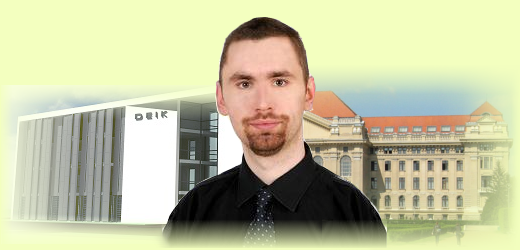
Dr. Balázs Rakos is an Associate Professor at the Budapest University of Technology and Economics (BME), affiliated with the Department of Automation and Applied Informatics . His research bridges nanotechnology, biophysics, and optical computing. His work focuses on: Integrating photoswitchable proteins with photonic devices for optical computing Developing infrared energy harvesting systems using nanoantennas and MIM diodes Modeling dipole-dipole and Coulomb-coupled protein arrays for molecular electronics Designing self-adapting pixel antenna systems for dynamic signal processing His publications from 2025–2015 reveal a trajectory from infrared sensor technologies to biophotonics and renewable energy applications , with a recurring emphasis on nanoscale biomolecular systems .
Budapest University of Technology and EconomicsHungary
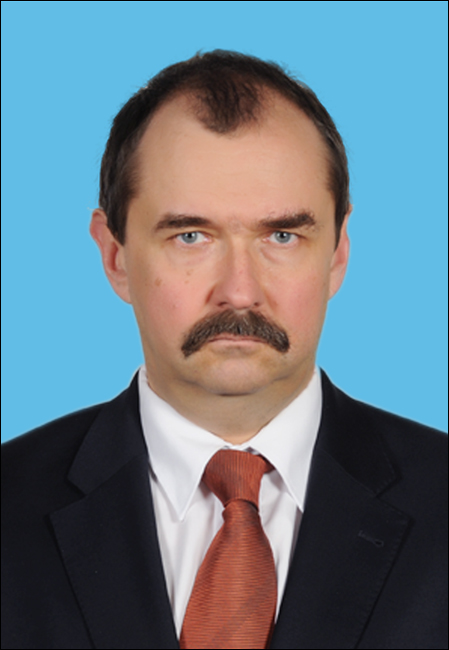
Krisztián Pomázi is a Lecturer at the Budapest University of Technology and Economics , affiliated with the Faculty of Electrical Engineering and Informatics and the Department of Automation and Applied Informatics . His work bridges educational technology and cognitive science , utilizing machine learning and bioinformatics to enhance learning experiences. Department: Automation and Applied Informatics Email: Pomazi.Krisztian@aut.bme.hu Research interests include: Adaptive learning systems integrating biofeedback Machine learning applications in cognitive workload assessment Psychological profiling using computational models Usability evaluation via biomedical signal processing Intelligent exercise generation for cognitive assessment Educational game mechanics with physiological feedback Recent publication trends show a focus on blending machine learning with human-computer interaction to create personalized educational tools. His work incorporates cognitive science principles to dynamically adjust learning environments using biofeedback data, while also exploring psychometric and usability dimensions in digital education. Contact: Pomazi.Krisztian@aut.bme.hu
Ágnes Vathy-Fogarassy is Habilitated Associate Professor and Head of the Department of Computer Science and Systems Technology at the University of Pannonia's Faculty of Engineering and Informatics. She also serves as the Rector's Commissioner for Artificial Intelligence Education and Development and the Dean's Representative for Quality Assurance and Accreditation. Additionally, she leads the Data-intensive Artificial Intelligence Methods and Systems Research Laboratory and the Healthcare Analytics Research and Development Center. Her educational background includes: PhD in Information Science (2009) Studies at Eötvös Loránd University in Computer Science (1999-2007) Studies at University of Pannonia in Computer Science (1995-1998) Mathematics-Physics and Computer Science Teacher training at Berzsenyi Dániel Teacher Training College (1995) Ágnes Vathy-Fogarassy's research focuses on machine learning, artificial intelligence, data science, and their applications in healthcare . Her work spans predictive analytics, network analysis, and medical informatics, with a particular emphasis on developing AI methods for healthcare data analysis. She has pioneered approaches for N-glycomics-based biomarker discovery, cancer treatment prediction, and heart failure risk assessment using machine learning techniques. Her interdisciplinary research bridges computer science with medical applications, creating innovative solutions for healthcare challenges. Her recent publications demonstrate a strong trend toward applied AI in healthcare , with significant work on diabetes classification, chemotherapy effectiveness prediction, and cardiovascular risk assessment. She also maintains active research in automotive AI applications (vehicle dynamics prediction) and renewable energy optimization (solar power plant modeling). Her work consistently combines theoretical machine learning advancements with practical implementations across diverse domains. Her notable scientific achievements include: László Méray Award, University of Pannonia (2024) Tarján Memorial Medal, John Neumann Computer Science Society (2022) Pro Sciencia Award, University of Pannonia (2021) Veszprém Women's Roundtable Association Women's Empowerment Award (2019) Pro Universitate Pannonica silver medal (2017) PE-MIK Best Female Instructor (2017) As an academic advisor, Ágnes Vathy-Fogarassy has successfully guided multiple PhD students to completion, including Dániel Leitold (2020), Szabolcs Szekér (2024), and János Kontos (2025). She currently supervises several ongoing doctoral research projects with Attila Knolmajer, Tamás Miseta, Veronika Gombás, and Eszter Szakács. Her commitment to talent development is evident through her students' numerous Best Paper awards at international conferences and successful TDK papers. She has developed the curriculum for several data science subjects and established the Data Science master's program at the University of Pannonia in 2023. She leads two major research entities: the Data-intensive Artificial Intelligence Methods and Systems Research Laboratory (founded 2021) and the Healthcare Analytics Research and Development Center (founded 2017). These teams focus on cutting-edge AI research with particular emphasis on healthcare applications, bringing together interdisciplinary researchers to tackle complex data challenges in medical domains.
Dr. Márk Oláh is an Assistant Professor at the University of Debrecen , affiliated with the Faculty of Science and Technology and the Institute of Mathematics . His research bridges mathematical modeling with biological systems, focusing on gene regulation, agricultural adaptation to climate change, and developmental nutrition in poultry. Organizational Unit: University of Debrecen, Faculty of Science and Technology, Institute of Mathematics Email: olah.mark@science.unideb.hu Office Hours: Thursday 09.00-10.00 (by appointment) His work demonstrates interdisciplinary applications of mathematics in biological contexts, including: Modeling adaptive agricultural practices under climate variability Computational analysis of gene regulatory networks Optimizing nutrient delivery for immune system development in embryos Scientific recognition includes: Publication Award by the Gróf Tisza István Foundation (2025) for gene regulatory research Current affiliations include the Institute of Mathematics building (Egyetem tér 1, Debrecen, M329 room). The research emphasizes translational applications in inflammation/tumor treatment and sustainable agriculture.
Dr. Christos Chinopoulos is a researcher at Semmelweis University , specializing in mitochondrial bioenergetics and oncometabolism. His work focuses on understanding how cancer cells rewire metabolic pathways through altered protein expression, particularly in mitochondrial enzymes, to develop cancer-specific therapeutic strategies. Institution: Semmelweis University Key Research: Mitochondrial metabolic theory of cancer, OXPHOS inhibition, glutaminolysis, mtSLP His research integrates biochemical analysis of mitochondrial pathways with therapeutic targeting, including studies on: OXPHOS limitations in astrocytes and tumors Alternative ATP production mechanisms in hypoxia Effects of metabolic inhibitors on cancer cells Protein expression profiling via RPPA technology Recent publications highlight mitochondrial adaptations in hypoxia, OXPHOS-independent ATP synthesis, and metabolic vulnerabilities in cancer cells. His work bridges fundamental mitochondrial physiology with translational cancer therapy.
Dr. Imre Varga serves as an Associate Professor at the Department of Information Systems and Networks within the Faculty of Informatics, University of Debrecen. His academic profile centers on complex systems and networks, utilizing advanced computer simulations to model real-world phenomena across diverse domains including transportation infrastructure, epidemiological dynamics, and biological systems. His research spans complex network theory with emphases on transportation networks (GTFS/VANETs), epidemic spreading models (notably AI-driven COVID-19 prediction), molecular landscapes in metabolic diseases, and genealogical network analysis. Methodologically, he employs agent-based simulations, network extraction techniques, and spectral graph analysis to investigate structural properties and dynamic behaviors in interconnected systems. Current projects focus on real-time transit data processing and urban mobility optimization. Analysis of his 15 most recent publications reveals a strong trend toward applied network science: 60% address transportation/urban systems (GTFS extraction, VANET communications), 20% focus on epidemiological modeling (including dual publications on AI-based pandemic prediction), and 20% explore biomedical networks (molecular landscapes, comorbidity analysis). His work consistently bridges theoretical network properties with practical implementations in smart-city applications and public health. The Department of Information Systems and Networks, led by Dr. Zoltán Gál, provides a collaborative research environment where Dr. Varga contributes to initiatives in queuing theory, stochastic process modeling, sensor networks, and embedded systems. Key departmental research groups focus on Real-time Communication, Multimedia Systems, and Internet of Things applications, aligning with his work on vehicular networks and urban mobility systems.
Vince Grolmusz is a Professor of Mathematics at the Institute of Mathematics, Eötvös Loránd University, Budapest, Hungary. His academic work spans interdisciplinary research in bioinformatics, metagenomics, and brain informatics. Research Interests: Bioinformatics, Metagenomics, Brain Graphs, Algorithmic Complexity. Teaching: Computer Science, Complexity Theory, Bioinformatics, Discrete Mathematics. His publications focus on computational biology, neuroimaging, and algorithmic modeling, leveraging tools like the Budapest Reference Connectome Server and metagenomic analysis platforms. Recent works include studies on amyloid prediction, RAS mutant drug targeting, and human brain network motifs.
Dr. Peter Igaz is a Professor of Internal Medicine and Endocrinology at Semmelweis University, where he leads the Department of Endocrinology within the Department of Internal Medicine and Oncology. He previously served as Director of the 2nd Department of Internal Medicine (2016–2020), earning it the ENETS Center of Excellence title in 2019 and co-heading this center. His expertise spans endocrinology, internal medicine, and clinical genetics, with a focus on adrenal tumors and hereditary endocrine neoplasia syndromes. His research integrates bioinformatics and molecular biology to explore microRNAs in disease diagnostics and endocrine disorders. He has authored over 180 scientific papers and edited three academic books, including Practical Clinical Endocrinology (2021) and Genetics of Endocrine Diseases and Syndromes (2019). Additionally, he holds degrees in biology (MSc) and law (JD), complementing his medical (MD) and doctoral (PhD, 1999) qualifications. He was awarded the Doctor of Sciences (DSc) degree by the Hungarian Academy of Sciences in 2013 and holds board certifications in internal medicine, endocrinology, clinical genetics, and clinical oncology. His contributions to endocrinology and interdisciplinary research have solidified his role as a leading academic authority in Hungary and Europe.
Dr. János Tóth is an Adjunct Assistant Professor at the Department of Data Science and Visualization within the Faculty of Informatics at the University of Debrecen. His research focuses on optimization of ensemble systems and big data analytics. Institution: University of Debrecen School: Faculty of Informatics Department: Data Science and Visualization Rank: Adjunct Assistant Professor Email: toth.janos@inf.unideb.hu Research Interests: Dr. Tóth specializes in optimizing ensemble systems for medical image analysis and big data processing. His work spans: Parameter optimization techniques for ensemble models Integration of classical image processing with deep learning Medical data visualization solutions Applications in diabetic retinopathy detection Handling unstructured Hungarian medical reports Cloud-based machine learning pipelines Publication Trends: Over the past decade, Dr. Tóth's research has shown consistent focus on medical image analysis (particularly fundus and Pap smear imaging) combined with ensemble learning approaches. His work includes algorithm optimization (2014-2022), data visualization techniques (2012-2024), and natural language processing for Hungarian medical reports (2024). Recent publications (2024) demonstrate continued innovation in machine learning applications for both healthcare and business domains.
Dávid Szabó is a habilitated Associate Professor at the Institute of Romance Studies , Department of French Language and Literature , Eötvös Loránd University. His academic profile bridges sociolinguistics , focusing on argot and slang studies in French-Hungarian contexts, with computer graphics and C# software development . He has contributed to diverse fields, including AI in education , sustainable finance , and real-time graphics APIs . Research Highlights: His work explores the intersection of language evolution and technology, with recent publications on Green Finance , AI-driven educational tools , and parallel processing in graphics programming . He investigates linguistic taboos in Hungarian politics and translation challenges of urban French slang into Hungarian, while developing educational software like StudyHelper. Technical Contributions: Szabó has pioneered the integration of modern C# with graphics APIs (Vulkan, OpenGL) for real-time rendering , creating frameworks for multi-platform applications and shader program development . His technical papers emphasize code efficiency, API abstraction, and GPU optimization.