Zhongyuan ZhaoView profile
Academic
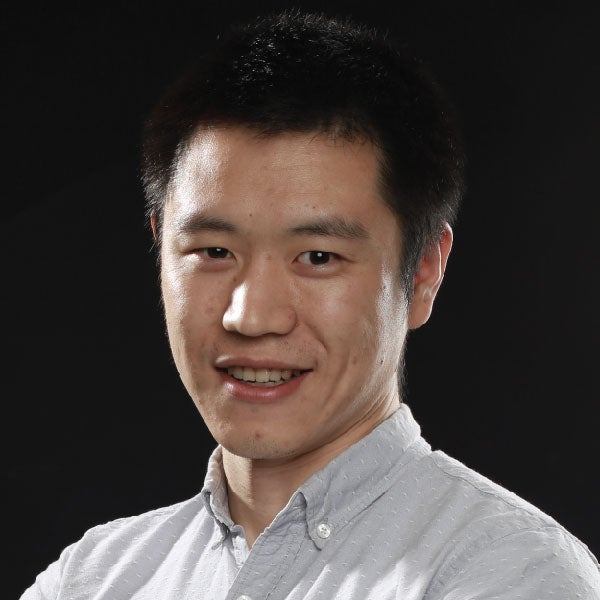
Zhongyuan Zhao is a Research Assistant Professor at Rice University's Department of Electrical and Computer Engineering, affiliated with the George R. Brown School of Engineering. He holds a Ph.D. in Computer Engineering from the University of Nebraska-Lincoln and completed his postdoctoral studies at Rice under Prof. Santiago Segarra. His research integrates graph-based neuro-symbolic approaches with domain-specific models to address challenges in wireless communications, edge computing, and networked systems. Dr. Zhao has over a decade of industry experience in 4G base-station development at Ericsson and ArrayComm, followed by academic research roles focusing on distributed algorithms and machine learning applications. His education includes a B.Sc. and M.S. in Electronic Engineering from the University of Electronic Science and Technology of China, where he also worked as a teaching assistant for national design contests. He earned a minor in Finance (15 credits) during his Ph.D. and is completing the CFA Level III program in 2024. Zhao has contributed to large-scale wireless testbeds like NEXTT and authored/co-authored 25+ peer-reviewed publications, 2 patents, and delivered academic service roles including conference session chair and journal reviewer. Research interests span autonomous networking, graph-based machine learning, stochastic optimization, and their applications in infrastructureless wireless systems. His work emphasizes distributed solutions for resource allocation, scheduling, and edge intelligence. Awards include the Future Faculty Fellowship (2023) and IEEE travel grants. He has mentored over 40 students through research internships, hackathons, and undergraduate projects, showcasing his commitment to education. Recent projects focus on scalable computation offloading, generalized backpressure routing in tactical networks, and neuro-symbolic AI frameworks for networked systems. His lab work involves open-source contributions to tools like the Actor-Twin Framework and SelR algorithm, promoting reproducibility and collaboration in the field.