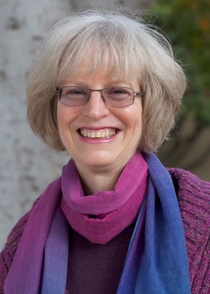
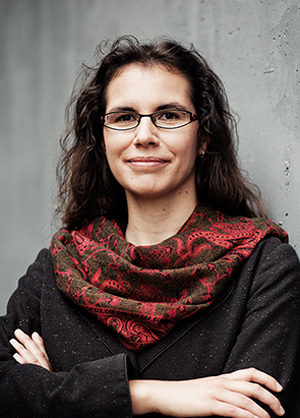
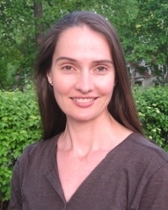
Nooshin Ahmadi serves as a Senior Lecturer in the Department of Human Centered Design within Cornell University's College of Human Ecology, where she applies research-driven methodologies to align spatial design with human behavioral needs and capabilities. Her academic credentials include: Master of Science in Architecture from Texas A&M University, College Station Professional Bachelor of Architecture from Art University of Isfahan, Iran Dr. Ahmadi's research synthesizes architectural theory with human behavioral science to develop environments that enhance usability and well-being, emphasizing evidence-based approaches to object and space optimization. She actively promotes design advocacy and innovative pedagogy to cultivate student problem-solving skills for real-world societal challenges. No scientific awards or honors were documented in the source material. Her advising philosophy centers on fostering lifelong learning through engaging educational experiences, though specific grant funding or formal mentorship records remain unreported in available biographical information.
Marjorie Harness Goodwin is a Distinguished Research Professor in the Department of Anthropology at the University of California, Los Angeles (UCLA). Her research focuses on linguistic anthropology, particularly the embodied practices of human interaction in social, familial, and workplace contexts. She explores how language, touch, and environment shape social dynamics, morality, and cultural integration. Education: Ph.D., University of Pennsylvania (1978) Ph.D. Honoris Causa, Uppsala University (2014) Research Interests: Ethnography of communication Embodied interaction and touch Conversation analysis Language and gender Family and workplace ethnography Children's social organization Publications: Dr. Goodwin’s work includes monographs like *The Hidden Life of Girls* (2006) and *Embodied Family Choreography* (2018), alongside influential articles on haptic sociality and interactional analysis. Recent research emphasizes touch as a modality of care and social coordination, with interdisciplinary impact in anthropology, sociology, and healthcare. Awards: Ph.D. Honoris Causa, Uppsala University (2014) Advising & Grants: She has mentored numerous graduate students across Anthropology, Applied Linguistics, and Education. Her research has been presented globally, including the New York Academy of Sciences Distinguished Lecture Series (2022) and the Vectors Conference (2023). Labs & Teams: Her work is supported by UCLA’s Social Sciences Division and collaborations with interdisciplinary groups like the Colab Anthropology Lab (linked via her personal and lab websites).
Prof. Dr. Andrea Dreyer is a full-time Professor of Art and its Didactics at the Bauhaus University Weimar , where she has served since 2013. She is Vice Dean for Strategic Development within the Faculty of Art and Design and actively participates in academic governance, including roles in graduation committees, teacher training advisory boards, and curriculum commissions. Her research focuses on teacher professionalization, architectural pedagogy, and digital art education, emphasizing interdisciplinary approaches and qualitative social research methodologies. First and Second State Examination for Teaching at Grammar Schools in Art Education and Social Studies (1994–2000, 2004–2006) Andrea Dreyer’s publications span topics such as Bauhaus-inspired pedagogy, urban-rural spatial education, and digital integration in art teaching. She has led initiatives like DigiProSMK and Denkraum.Bauhaus , and her work often bridges art, architecture, and societal transformation. She has served as Dean of Studies and Vice-Rector for Studies and Teaching at Bauhaus University, advocating for phase-transcendent teacher networks and reflective professional practices. Her recent articles address participatory architectural psychology, interdisciplinary curriculum design, and digitalization in art education. Despite extensive committee involvement and editorial contributions, no specific scientific awards are highlighted in the provided texts. She mentors students and collaborators within the kunst:pädagogik | netz:werk platform and maintains active partnerships with institutions like the Thuringian Ministry of Education and Friedrich-Schiller University Jena.
Dr. Frank Thomas Grub is Professor of German and Head of the Department of Modern Languages at Uppsala University. Educated at Universität des Saarlandes (Dr. phil. 2003) and promoted to Associate Professor at Gothenburg University (2012) before joining Uppsala as Professor (2018), he has been recognized as Excellent Teacher (2021). As founder of the Landeskunde Nord network since 2012 and editor of the Peter Lang book series since 2013, his career bridges academic research, educational innovation, and international collaboration. His research focuses on contemporary German-language literature , GDR cultural studies , and transcultural didactics . Key projects explore autobiographical writing, post-Wall literary representations, and the intersection of travel literature with cultural memory. Recent publications (2024-2025) examine media narratives of reunification and cultural stereotypes in language pedagogy. Prof. Grub contributes to German as a foreign language curriculum development Intercultural competence frameworks Editorial leadership in Northern European Germanistics His 2023-2025 works analyze graphic novels in education, migration discourse in literature, and media transitions during the Cold War.
Geoffrey Hunt is a Professor at the Centre for Alcohol and Drugs Research, Aarhus University, Denmark, and Director of the Institute for Scientific Analysis in San Francisco, USA. He co-edited the comprehensive Routledge Handbook of Intoxicants and Intoxication (2022), which synthesizes multidisciplinary perspectives on global intoxication practices across 34 chapters and eight thematic sections. His research spans dual domains: (1) alcohol and drug studies examining social/cultural dimensions of intoxication (evident in his editorial work on global intoxicant practices across 19+ countries), and (2) special educational needs with focus on evidence-based interventions for intellectual disabilities, autism spectrum disorders, and language impairments. Key interests include ethical frameworks for European psychologists, mediation in educational disputes, and historical policy analysis since the Warnock Report. Recent publications (2020-2025) reveal strong methodological emphasis on randomized controlled trials (E-PAtS program), cost-effectiveness analysis of mediation services, and systematic reviews of inclusive education practices. The work consistently addresses UK policy contexts while maintaining international relevance through European psychology ethics frameworks and cross-cultural intoxication studies.
Professor Isabelle Doucet is a Professor of Architecture and PGR Lead at the School of Architecture and Landscape, University of Sheffield, having joined in February 2025. Previously, she held professor positions at Chalmers University of Technology in Sweden (2018-2024) and the Manchester Architecture Research Group at the University of Manchester (2009-2018). Her academic journey began with PhD studies at Delft University of Technology in The Netherlands. Her educational background includes PhD, Masters and Bachelor degrees in Architecture from Delft University of Technology. She has been a visiting scholar at Yale University (2022), University of Sydney (2018), University of Queensland (2017) and the Brussels Centre for Urban Studies (2015). Doucet's research sits at the intersection of architecture, environmental humanities, and feminist theory. Her work centers on expanded histories of architecture and activism after 1968, women as role models in architecture, and environmental (multispecies) storytelling. She approaches these topics through historical cases (particularly post-1968), theoretical revisiting, and innovative methods of inquiry. Her research combines oral histories of women in architecture with critical revisiting of emancipatory theories from an intersectional perspective. Her extensive publication record shows a consistent focus on critical architectural practice, urban activism, and environmental storytelling. Over the past fifteen years, her work has evolved from examining specific historical cases in Brussels to broader theoretical frameworks connecting feminist theory, environmental humanities, and architectural practice. Recent publications increasingly engage with multispecies encounters and ecological storytelling in architecture. Member of the Steering Group of the Architectural Humanities Research Association (AHRA) Advisory board member for Dimensions: Journal of Architectural Knowledge and CLARA Architecture/Recherche Former editor for Architectural Histories (until 2023) Doucet actively supervises doctoral students and has developed international PhD courses. Her grant portfolio reflects her research interests in women in architecture, environmental storytelling, and architectural activism. She has co-supervised multiple doctoral students to completion and served as an external examiner for students at prestigious institutions worldwide.
Maxim Romanov heads 'The Evolution of Islamic Societies' project at University of Hamburg's Asia-Africa-Institut, funded by DFG's Emmy Noether Program. Former positions include senior research fellow at KITAB Project and University of Vienna. Research reconstructs social history of Islamic world (c.600-1600 CE) through computational analysis of Arabic chronicles and biographical collections. Research Focus: Digital humanities approaches to premodern Islamic history including OCR development for Arabic manuscripts, corpus linguistics, and geospatial modeling of historical data. Technical Contributions: Developed OpenITI corpus infrastructure, al-Ṯurayyā gazetteer system, and computational methods for large-scale historical text analysis. Recent work enhances NLP for classical Arabic with OCR accuracy exceeding 90%.
Dr. Spencer Jones is a Senior Lecturer in Armed Forces and War Studies at the University of Wolverhampton, within the Faculty of Arts, Business, and Social Sciences and the Department of History, Politics and War Studies. He is a leading historian specializing in the British Army during the Anglo-Boer War and the First World War, particularly the years 1914–1915. He also serves as the Regimental Historian for the Royal Regiment of Artillery, highlighting his deep institutional engagement with British military heritage. His research interests focus on: Military history of the British Army in the 20th century Tactical reform between the Boer War and World War I Military leadership and command Combat effectiveness and battlefield adaptation Colonial warfare influences on European conflict Dr. Jones's extensive publication record reveals a consistent focus on British military performance, leadership, and tactical evolution during the early years of World War I and the preceding Boer War. His works analyze primary sources, official records, and personal correspondence to reassess historical narratives. The articles span themes such as artillery use, infantry formations, marksmanship, leadership under pressure, and the adaptation of colonial experiences to continental warfare. A recurring thread is the examination of how the British Army learned—or failed to learn—from past conflicts. His scientific recognition includes: Douglas Haig Fellow (2018–2019), awarded for significant contributions to First World War studies Runner-up for the Templer Medal (2014) for his book Stemming the Tide: Officers and Leadership in the British Expeditionary Force 1914 Dr. Jones actively supervises doctoral and research-based degree students, with completed projects covering topics such as manpower, conscription, brigade command, and the influence of the American Civil War on British military thinking. He has secured competitive research grants from the Arts and Humanities Research Council (AHRC) under the Connected Communities program, supporting public engagement with military history. Additionally, he co-hosts the popular podcast Not So Quiet on the Western Front and has contributed to major television documentaries, including those by the BBC and Channel 4, enhancing public understanding of military history. He is associated with the Royal Artillery Historical Society and serves as Guild President of the Guild of Battlefield Guides, reflecting his commitment to both scholarly and public-facing military history.
Piotr Bilos is a Professor at INALCO - National Institute of Oriental Languages and Cultures in Paris. He specializes in Polish literature (ancient, modern, and contemporary), literary theory, the history of the novel, and intermediality. His research focuses on exile literature, critical theory, and cultural exchanges between Poland and France. Head of the Polish Section at INALCO Organizer of international colloquia on Polish literature and exile His scholarly work examines the intersection of fiction and reality, the role of exile in literary modernity, and comparative studies of Polish and European writers such as Gombrowicz, Herling, and Myśliwski. His publications span peer-reviewed journals, book chapters, and co-edited volumes. Recent research includes analyzing 21st-century Polish novels and their challenge to traditional genre boundaries, as well as the concept of 'coexistence' in cultural mediation. He has presented at conferences in Krakow, Turin, Vilnius, and Białystok, and contributed to documentaries and radio programs on Polish cultural themes.
Robert Stock is an Associate Professor for Cultures of Knowledge at the Department of Cultural History and Theory at Humboldt University Berlin. He is also the Principal Investigator (PI) in the cluster of excellence "Matters of Activity. Image Space Material" . His research focuses on cultures of knowledge, digital media and disability, museum accessibility, Luso-African cultural decolonization processes, and environmental humanities. He completed his PhD in 2017 at Justus Liebig University Giessen, exploring cultural decolonization and documentaries between Mozambique and Portugal. As a postdoc, he worked at the University of Konstanz in the project "Media and Participation" . Robert Stock collaborates extensively with international institutions, including Jagiellonian University (Krakow) and the University of São Paulo, on projects like "Multi-species homemaking in toxic coastal zones" . He co-edited Techniques of Hearing (2022) and has published widely on disability activism, urban mobility, and material agency. He organizes interdisciplinary events such as the STS HUB 2025 conference and the Symbiotic Futures symposium, emphasizing collaborative and critical approaches to contemporary challenges. Education: PhD in Cultural Studies, Justus Liebig University Giessen, 2017 Postdoctoral Research at University of Konstanz Research Interests: His work bridges cultural theory, disability studies, and environmental humanities. Notable themes include: Accessibility in digital and physical spaces More-than-human material agency (e.g., symbiotic wood, paraffin pollution) Critical approaches to technology and decolonial methodologies Grants & Projects: Leads the "Matters of Activity" cluster and collaborates on EU-funded initiatives. Recent projects include: COIL (Collaborative Online International Learning) programs on mangroves and toxic zones Exhibitions like Symbiotic Wood and Vegetal Companions Public engagement through workshops and film screenings Labs/Teams: Coordinates the Network Dis/Ability and Digital Media and mentors researchers like Rahel Kesselring. His team includes collaborators such as Karola Dierichs and Claudia Mareis in interdisciplinary material studies.
**Roles & Affiliations:** Research Professor of Communication and Journalism at USC Annenberg; Norman Lear Chair in Entertainment, Media and Society; Director of the Norman Lear Center since 2000. Previously served as Associate Dean of USC Annenberg (1997–2007). **Education:** PhD in Modern Thought and Literature (Stanford University), MA in English (Cambridge University as a Marshall Scholar), BA summa cum laude in Molecular Biology (Harvard University). Former Harvard Lampoon President. **Research Focus:** Explores media’s societal impact, including campaign coverage, public health messaging in entertainment, science communication via narrative, and the attention economy’s democratic effects. Leads the Norman Lear Center, studying media’s role in shaping culture and society. **Key Contributions:** Authored/co-authored works like *Warners’ War: Politics, Pop Culture & Propaganda in Wartime Hollywood* (2004) and *What Is An Educated Person?* (1980). Coined concepts like “Informed Citizen Disorder” to critique media-driven apathy. **Awards:** Received six first-place journalism awards from the Los Angeles Press Club (2012–2017) for columnwriting. Recognized for media commentary on *All Things Considered*, *Marketplace*, and Air America Radio’s *So What Else Is News?* **Career Highlights:** Former speechwriter for Vice President Walter Mondale, Disney Studios VP/producer (12 years), and screenwriter for films like *The Distinguished Gentleman* (Eddie Murphy). **Current Projects:** Led the Grand Avenue Civic Park digital civic initiative, blending technology and public engagement. Regularly critiques media’s role in politics and democracy on platforms like *Moyers & Company*.
Professor Charles Stafford is a leading anthropologist specializing in China, Taiwan, and the United States. He holds a professorship at the Department of Anthropology, London School of Economics (LSE), and is a Fellow of the British Academy (FBA). His research focuses on learning, child development, morality, and the intersection of economic life with cultural and psychological processes. His seminal works include The Roads of Chinese Childhood (1995) and Economic Life in the Real World (2020), which explore how cultural contexts shape human behavior and ethical frameworks. Professor Stafford's fieldwork spans decades, from Taiwanese fishing communities in the 1980s to recent studies of kinship and cooperation in rural China and Oklahoma. He has authored influential books such as Separation and Reunion in Modern China (2000) and edited volumes on ordinary ethics and cooperative dynamics in Chinese communities. His work bridges anthropology, psychology, and economics, emphasizing interdisciplinary dialogue. His research interests include cognitive anthropology, the psychology of economic life, and the role of ritual in structuring social relations. Recent studies investigate moral judgment and cooperative behavior in diverse cultural settings. His contributions have shaped debates on how cultural norms influence decision-making and ethical practices in both traditional and modern contexts.
Professor Michael J. Beran is a faculty member at Georgia State University, specializing in Psychology and co-Director of the Language Research Center. His research explores numerical cognition, delay of gratification, metacognition, and cognitive control in humans, great apes, and monkeys. Department of Psychology, Georgia State University Co-Director, Language Research Center His work bridges comparative psychology and cognitive science, focusing on evolutionary aspects of quantitative sensitivity, self-control, and perceptual illusions across species. Recent studies address face pareidolia, reverse-reward contingency tasks, and individual differences in primate cognition. Publications from 2015 to 2025 highlight trends in animal cognition, mathematical operations by primates, and confidence assessment in memory tasks. Despite no listed awards, his editorial roles include Associate Editor for Comparative Psychology at Frontiers in Psychology .
Sarah Jacoby is a Professor of Religious Studies at Northwestern University , specializing in Tibetan Buddhism with particular focus on gender and sexuality, religious autobiography, Buddhist revelation, and Tibetan literature. She holds a Ph.D. from the University of Virginia and previously held a postdoctoral fellowship at Columbia University’s Society of Fellows in the Humanities. Key academic affiliations: Northwestern University (2009–present), Columbia University (postdoc), University of Virginia (Ph.D.) Teaching areas: Introduction to Buddhism, Buddhism and Gender, Tibetan Religion and Culture, Feminist Theory, Religion and Celibacy Research Themes : Jacoby’s work centers on Tibetan Buddhist women’s voices through textual translation and analysis. Her groundbreaking study of Sera Khandro (1892–1940) explores: Autobiographical ventriloquy and spiritual legitimacy Interdependent personhood and relational ethics Translation methodology as ethical practice Gender dynamics in tantric Buddhist practices Academic Impact : 2016 E. Gene Smith Book Prize for Love and Liberation 2015 American Academy of Religion Book Award Finalist Co-organizer of 2022 Tibetan translation workshop Advocate for Tibetan script in academic publications Key Projects : Current book project on Lelung Zhepai Dorjé’s biographical texts Khyentse Foundation Buddhist Studies Lecture Series chair Collaborative translation initiatives with Tibetan writers and scholars
Dr. Tony Gaskew is a Professor of Criminal Justice and Associate Dean of Academic Affairs at the University of Pittsburgh at Bradford (UPB), where he has served since 2006. He holds a Ph.D. in Conflict Analysis from Nova Southeastern University and is a faculty affiliate at the Center on Race and Social Problems (CRSP) in the School of Social Work. His research focuses on counterinsurgency (COIN), Black Male Studies, and Killology, with a strong emphasis on police abolition, African American resistance, and prison education reform. Ph.D. Conflict Analysis, Graduate School of Humanities and Social Sciences, Nova Southeastern University M.S. Criminal Justice, Criminal Justice Institute, Nova Southeastern University B.L.S. Behavioral Science, Barry University Dr. Gaskew’s academic work explores intersections of systemic oppression, white supremacy, and transformative justice. His ethnographic research spans Africa, Israel, and the Palestinian Territories, with a notable focus on post-9/11 policing of Muslim American communities. He created the FBI-COINTELPRO-Pittsburgh Collection, a digital archive documenting FBI counterintelligence operations targeting the 1960s Black Power Movement, and has authored over 50 publications, including his 2020 book Stop Trying to Fix Policing . His 2025 awards include The Chancellor’s Distinguished Public Service Award and The Dr. Larry E. Davis Excellence in Community Engaged Scholarship Award, reflecting his commitment to social justice and community partnerships. He founded the nationally recognized UPB Prison Education Program, pioneering post-secondary initiatives at federal and state correctional facilities. Chancellor’s Distinguished Public Service Award (2025) Dr. Larry E. Davis Excellence in Community Engaged Scholarship Award (2025) Dr. Gaskew’s 15 most recent publications highlight his expertise in critical race theory, counterinsurgency, and prison reform. His work spans from 2023 analyses of Black Liberation Army strategies to foundational 2007 studies on post-9/11 policing. Common themes include systemic racism, social justice, and the psychological impacts of policing and incarceration. As a Fulbright Hays Scholar and military combat veteran, Dr. Gaskew brings interdisciplinary rigor to his roles. He teaches courses on Killology, examining the lived experience of deadly force in policing and military contexts, and advocates for transformative educational practices in correctional settings.