Kai Leonhard is an Adjunct Professor at the Chair of Technical Thermodynamics , RWTH Aachen University. His research focuses on computational chemistry, thermodynamics, and molecular modeling, particularly in solvent design and reactive chemical processes. Department: Chair of Technical Thermodynamics Email: kai.leonhard@ltt.rwth-aachen.de Prof. Leonhard's work integrates quantum chemistry with computer-aided molecular and process design (CAMD/CAPD), emphasizing solvation thermodynamics, reaction kinetics, and machine learning applications. His projects span biofuel combustion, microgel synthesis, and sustainable solvent development. Recent publications highlight advancements in COSMO-RS-based solvent screening, reaction network exploration via ChemTraYzer-TAD, and multi-fidelity modeling for partition coefficients. He employs machine learning to enhance predictive thermodynamic models and optimize chemical processes.
Dr. Daniel H. Zitomer is a Professor and Chair of the Department of Civil, Construction and Environmental Engineering at Marquette University, where he also serves as Director of the Water Quality Center. His research focuses on advancing anaerobic biotechnologies for wastewater treatment and resource recovery. Education: Ph.D. (1994), M.S. (1991) in Environmental and Water Resources Engineering from Vanderbilt University; B.S. (1988) from Drexel University. Research Interests: The Zitomer Lab Group develops environmental technologies to convert wastewater into clean water and resources like methane and biochar. Key areas include: Anaerobic biotechnology and microbial community analysis Biofuels and renewable energy from waste Biosolids pyrolysis for energy and biochar production Advanced oxidation processes for stormwater management Articles: Recent publications highlight innovations in anaerobic digestion, microbial community analysis, and biochar applications for nutrient recovery. Research spans municipal wastewater recovery, bioprocess efficiency, and wet-weather flow treatment. Scientific Awards: EPA STAR Fellowship Grants: Dr. Zitomer leads projects funded by the National Science Foundation (NSF) and Environmental Protection Agency (EPA), including advanced high-rate wet-weather treatment and biomethane production from bioplastics. Collaborative efforts with Kohler Company and Milwaukee Metropolitan Sewerage District focus on wastewater energy reduction and biosolids pyrolysis. Labs & Teams: The Zitomer Lab Group collaborates with the NSF IUCRC for Water Equipment and Policy and the Water Quality Center at Marquette University, integrating molecular tools and bioinformatics to optimize engineered bioprocesses.
Yuyu Zhou is a Professor in the Department of Geography at The University of Hong Kong. With an extensive publication record of 301 papers and over 18,000 citations, Dr. Zhou is a leading researcher in urban environmental studies, climate change, and sustainability science. Dr. Zhou received their PhD in Environmental Science from the University of Rhode Island (2004-2008) and previously worked as a Research Scientist at Pacific Northwest National Laboratory's Joint Global Change Research Institute (2010-2015). They currently serve as Chief Editor for Earth System Science Data (Copernicus Publications), Associate Editor for Ecological Processes, and Section Editor for All Earth. Dr. Zhou's research focuses on the intersection of urbanization, climate change, and environmental sustainability. Their work spans several key areas including urban heat island effects, vegetation phenology in urban environments, energy modeling, and sustainable urban development. Through innovative remote sensing approaches and spatial analysis, Dr. Zhou investigates how urban environments respond to and influence global environmental change. Analysis of Dr. Zhou's recent publications reveals a strong emphasis on urban environmental challenges, with particular attention to urban heat islands, vegetation dynamics, and climate change impacts in cities. Their work combines remote sensing data with ground observations to develop high-resolution models of urban environmental processes. Recent research has focused on urban greening effects, building energy use under climate change, and environmental justice issues related to urban heat exposure. Dr. Zhou has received significant recognition for their work, as evidenced by the high citation count of their publications. Their research has important implications for urban planning, climate adaptation strategies, and sustainable development policies worldwide. As an educator and mentor, Dr. Zhou advises numerous graduate students and collaborates with researchers globally. Their work with international teams has resulted in significant contributions to understanding urban environmental systems across different geographical contexts.
David R. Nielsen is a Professor and Program Chair for Chemical Engineering at Arizona State University (ASU), within the School for Engineering of Matter, Transport and Energy. He holds additional roles as Senior Global Futures Scientist and is affiliated with Microbiology (PhD) and Molecular/Cellular Biology (MS/PhD) programs. His research focuses on metabolic engineering and synthetic biology to develop microbial platforms for converting renewable resources into fuels and chemicals. Education: Postdoc at MIT (2006-2009), PhD from Queen’s University (2006), and B.Sc. from University of Colorado-Boulder (2001). His lab, the Nielsen Lab, integrates microbiology, bioprocess engineering, and systems biology to address challenges in sustainable biomanufacturing. Key research areas include microbial community engineering, CO2 fixation, and biofuel production. Notable achievements include the 2018 Fulton Exemplar Faculty Award and the 2010-2011 Outstanding Professor distinction. His work spans over 80 peer-reviewed publications and includes collaborations with industry partners like Ajinomoto and Sustainable Conversion Ventures. Current projects involve enhancing cyanobacterial CO2 utilization and developing integrated bioprocessing strategies. Advising highlights include mentoring PhD candidates like Dr. Zach Dookeran and Dr. Andrew Flores, and overseeing Master’s students such as Omar Abed and Chandra Chey. Research funding exceeds $10M from NSF, DOE, and industry grants, supporting initiatives in biorefinery design, microbial tolerance engineering, and carbon-neutral processes. Professional contributions include editorial roles for Biotechnology Notes and Frontiers in Microbiology , alongside membership in AIChE, SIMB, and the Engineering Biology Research Consortium. The lab is located in Biodesign C, emphasizing interdisciplinary solutions to global sustainability challenges.
J. Christopher Brown is a Professor of Geography and Environmental Studies at the University of Kansas. He specializes in human-environment interactions, focusing on sustainable development in the Amazon Basin. His research integrates ecological, political, and socio-economic dimensions to address deforestation, agricultural expansion, and NGO-mediated rural development. Affiliations: Department of Geography, University of Kansas; Collaborator with Brazil's Embrapa Agricultural Research Agency Key Projects: Amazonian NGO dynamics and political impacts Soybean and sugarcane expansion impacts Spatial analysis of deforestation and land use Research interests include political ecology, biogeography, and the interplay between global and local scales. He employs remote sensing and interdisciplinary methods to study environmental governance and policy outcomes. His work on NGOs reveals how funding shapes political behavior in Brazil, with findings published in Comparative Political Studies and Political Geography . Recent studies highlight the edge effects of land-use changes and biodiversity impacts on pollinators like orchid bees. Awards: 2016 George and Eleanor Woodyard International Educator Award (University of Kansas) Brown's research bridges academic inquiry and policy, examining how development policies interact with ecological systems in Latin America. Current projects address soy moratorium efficacy, sugarcane expansion in the Cerrado, and the MST landless movement's political influence.
Garvin Heath is a Principal Environmental Engineer and Distinguished Member of the Research Staff at the National Renewable Energy Laboratory (NREL) . He is also a Senior Research Associate at the Renewable and Sustainable Energy Institute, University of Colorado Boulder , where he contributes to quantitative sustainability assessments and energy systems analysis. Life Cycle Assessment Air Quality Modeling Circular Economy Frameworks Environmental Impact of Energy Technologies His 15 most recent publications focus on photovoltaics, renewable diesel production, and sustainability metrics, with keywords spanning Renewable Energy, Environmental Science, and Public Health . Notable works include lifecycle analyses of solar PV systems and biomass conversion technologies. NREL Chairman's Award (2013) NREL Distinguished Member of Research Staff (2021) NREL President's Award (2011) NREL Technology Transfer Excellence Award (2019) He serves as an Associate Editor for the Quantitative Sustainability Assessment section of Frontiers in Sustainability and is actively involved in international collaborations like the IEA PVPS Task 12 program on photovoltaic sustainability.
Morten Birkved is a Professor at the Department of Green Technology, University of Southern Denmark, and Head of SDU Life Cycle Engineering. He leads the SDU Climate Cluster and actively contributes to research on Life Cycle Assessment (LCA) , Circular Economy , and Environmental Sustainability . His work spans cross-disciplinary collaborations in Denmark and internationally. Education: M.Sc. in Environmental Chemistry, PhD in Sustainable Development His research interests focus on integrating LCA with circular economy principles, analyzing environmental impacts of construction materials, and developing sustainable solutions for agriculture and energy systems. Recent projects include microbial protein production, green fuels in shipping, and biorefineries for organic waste valorization. Recent publications highlight 2025 advancements in: Eco-design strategies for buildings Hybrid wastewater treatment systems Carbon-storing asphalt pavements Comparative LCA of housing typologies These studies emphasize Denmark as a case study region and leverage both parametric and probabilistic modeling approaches. Scientific Awards Recipient of SCC Fast Track Prize (2025) Teaching & Supervision Supervised PhD research on circular agriculture and plastic circularity Lectured on chemical processes and environmental impacts since 2019 Labs & Projects Coordinates EU-funded initiatives like FLAVOURFERM (plant-based fermentation) and AgriLoop (circular agriculture) Develops microbial platforms for waste-to-protein conversion Advances biostimulants for sustainable agriculture
Simon Harvey is a Professor in Energy Engineering at Chalmers University of Technology, Sweden. With a background in Mechanical Engineering and over two decades of academic leadership, he focuses on industrial energy systems optimization and sustainable process integration. PhD from Thayer School of Engineering, Dartmouth College (1994) Assistant Professor at Chalmers (1997-2011) Full Professor since 2011 His research spans : Energy efficiency in chemical processes Biomass-based industrial energy systems Biorefinery techno-economics Climate impact assessment methodologies Energy market scenario modeling Recent publications demonstrate expertise in carbon capture integration, heat recovery optimization, and biomass utilization for negative emission technologies. Collaborative work emphasizes cross-sectoral energy synergies and uncertainty analysis in industrial retrofits. Key trends include: Decarbonization of pulp/refinery operations Hybrid electric/steam generation systems Excess heat valorization in district heating Process flexibility under uncertain parameters
Naim Rashid is an Assistant Professor in the Department of Environmental Engineering at Montana Technological University, with prior roles including Associate Professor at National University of Science and Technology (2023–2024) and Assistant Professor at COMSATS University (2015–2021). His work focuses on the water-energy-environmental nexus, particularly using microalgae and purple bacteria for wastewater treatment and resource recovery. Education: Ph.D. in Civil and Environmental Engineering from KAIST (2013), M.S. in Environmental Engineering and Biotechnology from Myongji University (2009). Research interests include integrated wastewater treatment using phototrophic microalgae and purple bacteria, biofilm technologies for resource recovery, and life cycle assessment of environmental processes. He also specializes in PFAS removal and bioremediation of coal ash ponds. His publications emphasize biofilm reactors , single-cell protein production , and bioenergy systems from waste streams. Recent work explores nutrient dynamics in biofilm growth, sustainable petroleum industry wastewater treatment, and algal co-cultivation for biodiesel. Awards: Green Talent Award (Germany), Global Young Academy Membership (2017–2022), Fulbright Scholar Award (USA). Professional Service: Curriculum Review Committee, Graduate Council, and advisor to Environmental Engineers of Montana Tech (EEMT) club. Projects: Bioremediation of coal combustion residue, PFAS removal, and integration of acid mine drainage treatment with aquaculture feed synthesis.
Dr. Samet Sahin is a Lecturer in Chemical Engineering at Lancaster University's School of Engineering. He holds a PhD and professional designations including FHAE (Fellow of Advance HE), AMIChemE (Associate Member of the Institution of Chemical Engineers), and MRSC (Member of the Royal Society of Chemistry). His academic journey includes positions at Bilecik Şeyh Edebali University and postdoctoral work with distinguished advisors including Prof. John A. Rogers. Dr. Sahin's research focuses on developing healthcare solutions through biochemical systems and material science, particularly in bioelectrode development, device design, and alternative materials. His work aims to translate basic research into practical healthcare products and devices, especially wearable and implantable biosensors. His publications show a strong emphasis on electrochemical biosensors for glucose detection, biofuel cells, and aptamer-based detection systems for various analytes including mycotoxins, bisphenol-A, and medical biomarkers. His research group has received funding from multiple international sources including TÜBİTAK (Scientific and Technological Research Council of Türkiye), TÜSEB (Health Institutes of Türkiye), and non-profits like Breakthrough T1D (USA) and the Fulbright Commission. The group maintains an interconnected structure that allows researchers from different backgrounds to collaborate on various topics. Dr. Sahin has received several professional awards including Research Excellence Awards from Bilecik SE University (2022, 2023) and a Fulbright Post Doctoral Fellowship (2020). His work has been recognized with the Engineering YES Elevator Pitch Prize (2013). As an educator, he serves as Module Convenor for ENGR265 Chemical Engineering Laboratory Projects and teaches multiple engineering modules including Fundamentals of Engineering Science and Chemical Process Design Project. He has supervised PhD student Jack Morley and numerous undergraduate students. Notably, Dr. Sahin has an impressive background in Taekwondo, having been a member of the Turkish National Team, winning a silver medal at the European Taekwondo Championship, and co-founding the NeoDo Taekwondo Academy in 2025.
Hal Alper is a Professor and holds the Cockrell Family Regents Chair in Engineering at the University of Texas at Austin's Department of Chemical Engineering. His research lab focuses on rewiring cellular metabolism for biomanufacturing applications, including biofuels, pharmaceuticals, and sustainable materials, using synthetic biology, directed evolution, and pathway engineering. Education: Postdoctoral Research Associate, Whitehead Institute for Biomedical Research (2006-2008) Postdoctoral Research Associate, Shire Human Genetic Therapies (2007-2008) Ph.D., Chemical Engineering, Massachusetts Institute of Technology (2006) B.S., Chemical Engineering, University of Maryland, College Park (2002) Research Focus: The Alper Lab specializes in metabolic and cellular engineering to address global challenges in sustainability and health. Core methodologies include synthetic biology tool development, high-throughput screening platforms (e.g., biosensor-in-microdroplet systems), and evolutionary engineering of yeast strains like Saccharomyces cerevisiae and Yarrowia lipolytica . Key application areas are biofuels, biochemicals, polymer precursors, and pharmaceuticals. Publication Trends: Recent work emphasizes machine learning-assisted enzyme engineering, microbial consortia design, and advanced screening techniques for metabolic phenotypes. A consistent theme across publications is the optimization of yeast hosts for efficient bioproduction through promoter engineering, transporter modification, and evolutionary strategies. Awards & Honors: Fellow, American Association for the Advancement of Science (2024) Andreas Acrivos Award (AIChE, 2023) Fellow, National Academy of Inventors (2019) O'Donnell Award in Engineering (2019) AIChE Colburn Award (2018) Society for Industrial Microbiology Young Investigator (2015) Dreyfus Teacher-Scholar (2014) Regents’ Outstanding Teaching Award (2012) ONR Young Investigator (2011) Lab Leadership: Directs the Laboratory for Cellular and Metabolic Engineering, fostering interdisciplinary work in synthetic biology and bioprocess development. The lab prioritizes inclusivity and collaborative research, with projects spanning genetic toolkit development, metabolic flux analysis, and scalable biomanufacturing platforms.
Professor Atul Jain is a distinguished faculty member in the Department of Climate, Meteorology & Atmospheric Sciences at the University of Illinois at Urbana-Champaign. He leads a prominent research group focused on understanding Earth's climate system through advanced computational modeling and has established himself as one of the world's leading climate scientists with extensive contributions to IPCC assessments. Dr. Jain earned his Ph.D. in Atmospheric Sciences from the Indian Institute of Technology. His educational background provided the foundation for his pioneering work in climate modeling and biogeochemical cycles. Professor Jain's research centers on climate interactions with land physical processes (hydrology and energy), biological processes (carbon and nitrogen), and land use/cover changes including agricultural intensification. His lab developed the Integrated Science Assessment Model (ISAM), a global model-data integration framework that combines satellite and ground-based observations to examine biogeochemical cycles, water, and energy fluxes. His recent work has focused on the impact of land use changes on biogeophysics and biogeochemistry, permafrost carbon storage, methane and nitrous oxide emissions, climate impacts on agricultural production, and spatially explicit greenhouse gas emissions from food systems. His research has gained significant international attention, particularly his 2021 study on food production emissions which was widely covered by major media outlets including The Guardian, The New York Times, and Scientific American. Dr. Jain has received numerous prestigious awards including the National Science Foundation's Faculty Early Career Development Award. He has been consistently recognized as a "Most Highly Cited" Researcher by Clarivate Analytics One of the "World's Top Climate Scientists" by Reuters Fellow of the American Association for the Advancement of Science (AAAS) Fellow of the American Geophysical Union (AGU) Recipient of the Distinguished Alumni Award from IIT Delhi (2024) Professor Jain has mentored numerous graduate students and postdoctoral researchers who have gone on to successful careers in academia and research institutions. His research group has secured substantial funding from NSF, NASA, and other agencies to support their work on climate change modeling and assessment. He has served as a lead and contributing author for major IPCC assessments and has been instrumental in shaping climate science policy. His research group maintains the ISAM modeling framework and has developed extensive datasets on historical land-cover change and land-use conversions. The group actively collaborates with international researchers and institutions to advance understanding of Earth's climate system and its response to human activities.
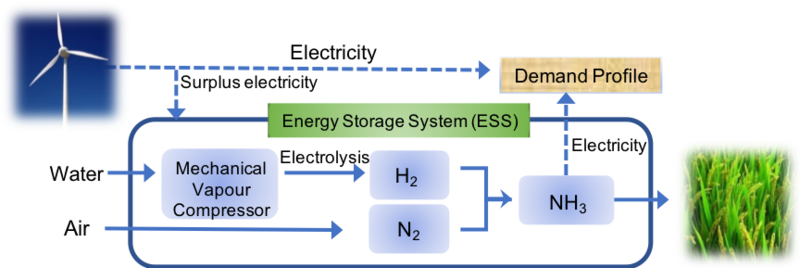
Professor Edman Tsang leads the Wolfson Catalysis Centre at the University of Oxford, focusing on catalysis and sustainable energy systems. His work includes developing novel catalysts for green ammonia production, renewable energy storage, and CO₂ conversion. He collaborates with Siemens on a £1.5M Innovate UK project for a wind-powered green ammonia plant at Rutherford Appleton Laboratory. Research spans photocatalytic solar cells, biofuel production from biomass, and hydrogen storage solutions. His team pioneered the e-Haber-Bosch process, reducing energy demands through renewable integration. Key innovations include patented catalysts for ammonia synthesis and advanced electrochemical systems. The group also explores plastic upcycling via mild heterogeneous catalysis and carbon capture technologies.
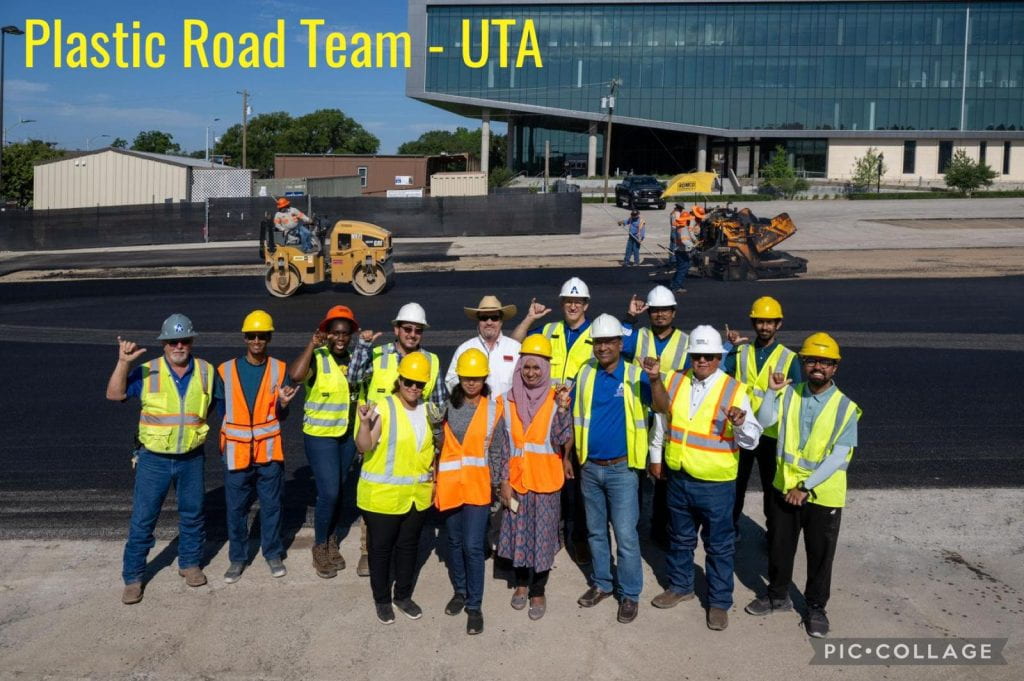
Dr. Md S Hossain is a Professor of Civil Engineering at The University of Texas at Arlington, directing the Solid Waste Institute for Sustainability (SWIS). He holds a B.S. from IIT Bombay, an M.E. from AIT Bangkok, and a Ph.D. from North Carolina State University. His research focuses on sustainable waste management, bioreactor landfills, geotechnical engineering, and slope stabilization, with notable contributions to landfill gas-to-energy and recycled materials utilization. He has over 6 years of professional experience in geotechnical and geoenvironmental projects globally. Research Interests: Sustainable waste management, landfill engineering, slope stabilization, recycled materials, geotechnical site investigations. Key Roles: Director of SWIS, Principal Investigator on numerous grants, and advisor to over 50 graduate students. Dr. Hossain has secured millions in grants from agencies like NSF, EPA, and TxDOT, focusing on waste-to-energy, landfill mining, and slope stabilization using recycled plastics. His awards include the ISWA Leadership Award and Distinguished AIT Alumni recognition. He actively collaborates with international organizations like CCAC and ISWA, advocating for sustainable waste solutions in developing countries. His work spans 50+ projects in Bangladesh, Singapore, Hong Kong, and the U.S., emphasizing practical applications like recycled plastic pins for slope stabilization and ET cover systems for landfills. SWIS, under his leadership, promotes global sustainable waste management through education, research, and policy advocacy.
Annelies Zoomers is a Professor of International Development Studies at Utrecht University's Faculty of Geosciences. Her research focuses on climate change, land governance, migration, and sustainable livelihoods. She co-founded the Netherlands Land Academy (LANDac) and the Shared Value Foundation, and served as Chair of WOTRO Science for Global Development (2019–2022). Her current projects include the EU-funded 'Welcoming Spaces' initiative, which explores integrating migrants into shrinking European regions, and 'Diamonds in the Delta,' addressing climate resilience in delta cities. Zoomers has extensive experience in policy咨询 for global organizations like the World Bank and ILO, and has authored over 200 publications. She is a member of the Dutch Advisory Council on International Affairs (AIV). Her work bridges academic research with practical solutions for inclusive development, emphasizing participatory approaches to land governance and migration policy.