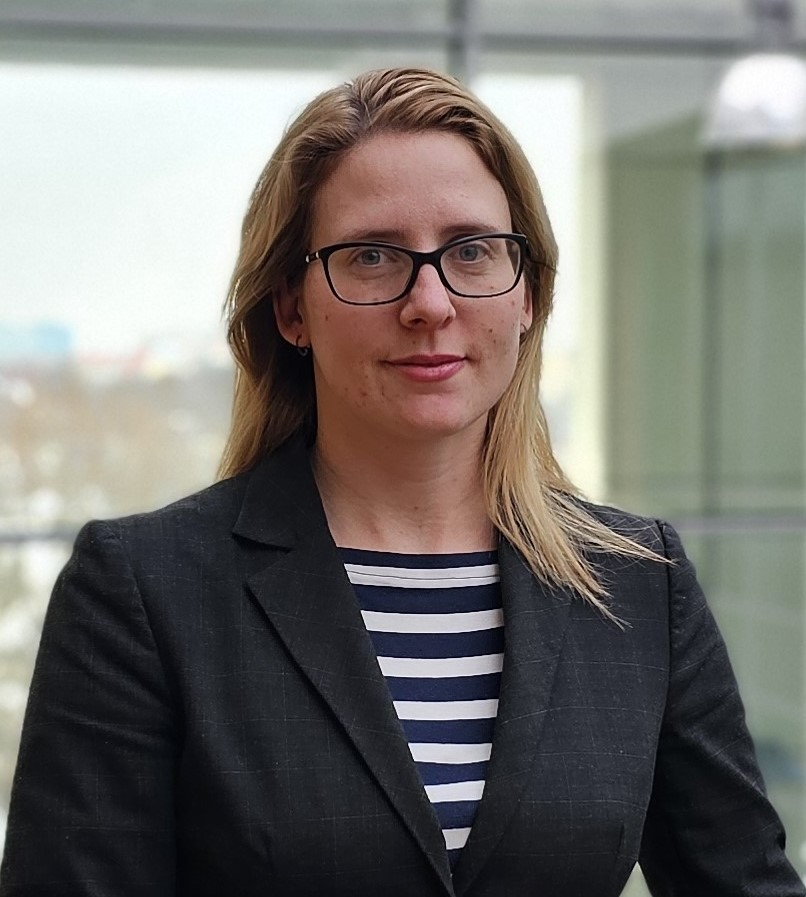
Justyna Możejko-Ciesielska is a Professor at the Department of Microbiology and Mycology within the Faculty of Biology and Biotechnology at the University of Warmia and Mazury in Olsztyn. Her research focuses on microbial biotechnology, particularly polyhydroxyalkanoate (PHA) production by extremophilic bacteria using renewable feedstocks. PhD, DSc, Eng. ORCID: 0000-0002-1002-1214 Contact: justyna.mozejko@uwm.edu.pl Supervised 1 promoted doctor and currently oversees no doctoral students H-index: 16 (Google Scholar) Her work addresses sustainable biopolymer synthesis, waste valorization, and extremophile adaptation mechanisms. Recent publications highlight PHA production from biodiesel-derived glycerol, dairy waste, and fatty acids using strains like Halomonas alkaliantarctica and Pseudomonas putida . She emphasizes environmental biotechnology applications and industrial waste conversion. Key trends in her research include Biopolymer engineering Extremophile utilization Carbon source optimization Biodegradable plastics Waste-to-resource strategies
Professor Jacek Banasiak holds a prestigious DST/NRF SARChI Chair in Mathematical Models and Methods in Biosciences and Bioengineering at the University of Pretoria, Department of Mathematics and Applied Mathematics. He also maintains strong academic ties with Lodz University of Technology in Poland where he serves as a research professor in the Department of Mathematical Modeling. His career spans several decades with extensive contributions to mathematical modeling, particularly in population dynamics, fragmentation-coagulation processes, and epidemiological modeling. Professor Banasiak's research interests center on mathematical modeling of biological and physical processes, with particular expertise in singular perturbation theory, semigroup theory, and transport equations on networks. His work bridges theoretical mathematics with practical applications in epidemiology, ecology, and population biology. He has developed sophisticated mathematical frameworks for understanding fragmentation-coagulation phenomena, malaria transmission dynamics, and savanna ecosystem modeling. His publication record shows a consistent trajectory of high-impact research, with recent work focusing on climate-based malaria models, multiscale epidemiological systems, and mathematical analysis of growth-fragmentation equations. His publications appear in top-tier journals across mathematical analysis, epidemiology, and mathematical biology fields, demonstrating the interdisciplinary nature of his work. DST/NRF SARChI Chair in Mathematical Models and Methods in Biosciences and Bioengineering Author of numerous influential publications spanning from 1984 to 2025 Editor of special issues and author of several books including 'Introduction to Mathematical Methods in Population Theory' (2025) Professor Banasiak has supervised over 15 PhD students, many of whom have gone on to successful academic careers. His mentoring spans topics including fragmentation-coagulation with transport effects, telegraph systems on networks, and mathematical modeling of malaria transmission. His research has attracted significant funding, particularly through his SARChI Chair position which supports advanced mathematical research in biosciences and bioengineering.
Professor Sławomir Borysiak is a distinguished academic at Poznań University of Technology, where he serves as Head of the Polymer Department within the Faculty of Chemical Technology. With a career spanning over two decades, he earned his Master of Science in Engineering in 1996, PhD in Chemical Sciences in 2000, completed his habilitation in 2013, and achieved the rank of university professor in 2020. His work bridges academic research and industry applications, serving as Faculty Coordinator for Cooperation with Industry and as a member of the University Team for Cooperation with the Economy. Current Position: Professor, Head of Polymer Department Institution: Poznań University of Technology, Faculty of Chemical Technology Scientific Disciplines: Chemical Sciences (75%), Materials Engineering (25%) ORCID: 0000-0003-3485-4787 Professor Borysiak's research focuses on the physicochemistry of polymers, plastics processing and recycling, and polymer composites containing renewable fillers of plant origin. His work extends to structural studies of low molecular weight compounds, minerals, polymers and nanomaterials, with particular emphasis on the functional properties of plastics and composite materials. His laboratory investigates innovative approaches to wood-polymer composites, nanocellulose applications, and sustainable material development. Analysis of Professor Borysiak's publication record reveals a strong focus on sustainable polymer composites, with particular emphasis on lignocellulosic materials, nanocellulose applications, and renewable fillers. His recent work shows increasing integration of nanotechnology with traditional polymer science, particularly in developing antimicrobial properties, enhanced mechanical characteristics, and improved sustainability profiles for polymer composites. The research spans fundamental material science to practical applications in construction, packaging, and biomedical fields. Professor Borysiak has received recognition through his appointment as Vice-Chairman of the University Disciplinary Committee for Doctoral Students and as a member of the Board of the Polish Chemical Society, Poznań Branch. He also serves on the Polish Society of Calorimetry and Thermal Analysis and the Awards Committee of the Polish Chemical Society. As an educator, Professor Borysiak has supervised multiple doctoral dissertations, including those of Majka Odalanowska (2023) and Aleksandra Grząbka-Zasadzińska (2017). His teaching portfolio includes courses on physicochemistry of polymers, composites, nanomaterials, polymer materials technology, and chemical technology. He maintains active scientific collaborations with institutions including University of Edinburgh, Institute of Molecular Physics of the Polish Academy of Sciences, Casimir the Great University in Bydgoszcz, and several other Polish universities. His laboratory focuses on polymer research with particular expertise in wood-plastic composites, nanocellulose applications, and sustainable material development. Current projects involve developing antimicrobial polymer composites, enhancing material properties through novel hybrid fillers, and investigating the effects of various treatments on lignocellulosic materials.
Magdalena Urszula Prokopowicz is a Professor and currently serves as the Dean of the Faculty of Pharmacy at the Medical University of Gdańsk. She holds a position in the Department of Physical Chemistry within the same faculty. Her research focuses on pharmacology and pharmacy, with emphasis on silica materials, drug release mechanisms, and controlled drug delivery systems. She has contributed significantly to the field through 126 publications, 2 patents, and 2 research projects. Education: Doctorate awarded in 1999, habilitation (Prof. Dr. Habil.) Her scientific achievements include work on silica polymers, sol-gel methods, and biomaterial applications in therapy. She is a member of the PRA 3 research team focused on bioanalysis and therapy using advanced engineered models. Over her career, she has supervised 2 promoted theses and holds a MEiN Score of 3,027. Her research portfolio spans drug delivery systems, nanotechnology, and material science applications in pharmaceutical contexts. She actively participates in interdisciplinary projects involving silica xerogels, hydroxyapatite, and 3D bioengineered models for therapeutic innovation.
Professor Joanna Ortyl works at the Faculty of Chemical Engineering and Technology, Tadeusz Kościuszko Cracow University of Technology (Poland). She is also CEO and Co-owner of Photo HiTech Ltd., a company developing visible-light cationic photoinitiators since 2013. Her academic background includes: MSc in Plastics Technology (2007, Cracow University of Technology) PhD in Chemistry (2012, Cracow University of Technology) Habilitation in Chemical Engineering (2020, Cracow University of Technology) She has undertaken international research experiences including: Postdoctoral research at Münster University of Applied Sciences (Germany, 2012-2013) Visiting Professor at Université de Haute-Alsace (France, 2015, 2016, 2019) Master of Business Economics (Haas School of Business, UC Berkeley, 2013) Her research focuses on practical applications of photochemistry in polymerization processes, including: Synthesis of visible-light photoinitiators for cationic polymerization Development of fluorescent probes for polymerization monitoring Two-interpenetrating polymer networks (IPN) through hybrid mechanisms 3D-VAT printing materials and technologies She holds over 30 patents and has received more than 50 scientific awards. Her grant portfolio includes: LIDER 471/L-4/2012 (2012-2016) UMO-2012/07/D/ST5/02300 (2012-2015) TEAM TECH/2016-2/15 (2018-2022) TANGO 2 - DZP/TANGO2/391/2016 (2017-2021) Her work bridges organic chemistry, materials science, and industrial applications in 3D printing and polymer coatings.
Dr. Dorota Krzyżanowska is a Lecturer at the Intercollegiate Faculty of Biotechnology of the University of Gdańsk and the Medical University of Gdańsk (MUG). She is affiliated with the Department of Plant Microbiology at the Institute of Biotechnology, University of Gdańsk. Her research focuses on microbial interactions, bacterial genetics, and biocontrol strategies against plant pathogens such as Pectobacterium and Dickeya species. She has contributed to the development of synthetic microbial consortia like 'The Great Five' for agricultural applications. Her work spans genomic analysis of plant pathogens, transcriptomic responses of bacteria to host plants, and mechanisms of phage resistance. Key projects include studying tailocin dynamics in Dickeya dadantii and the antibacterial activity of Pseudomonas donghuensis P482. Recent publications highlight innovations in biofilm assessment methods and bacterial stress responses. Dr. Krzyżanowska collaborates on interdisciplinary projects involving synthetic biology, plant-microbiota interactions, and sustainable agricultural practices. Her research integrates genomic tools, metabolomics, and ecological modeling to combat plant diseases and enhance crop resilience.
Jakub Zdarta is a Professor at the Poznań University of Technology , Faculty of Chemical Technology, Department of Chemical Technology. His research focuses on biocatalysis , enzyme immobilization , environmental biotechnology , and hybrid material synthesis . He has held positions since 2010 and currently teaches courses in Inorganic Chemical Technology and Advanced Biocatalytic Systems . PhD in Chemical Sciences (2017, Poznań University of Technology) Habilitation in Exact & Natural Sciences (2021, Poznań University of Technology) Engineer title in Chemical Technology (2013, Poznań University of Technology) Master's in Chemistry (2010, Adam Mickiewicz University in Poznań) His work investigates enzyme immobilization for micropollutant removal , biomass conversion , and composite material development . Recent publications highlight metal-organic frameworks , electrospun fibers , and graphene-based supports for biocatalytic systems . Scientific Awards include: Scholarship of the Minister of Science and Higher Education (2019) Prime Minister's Award (2022) Polish Academy of Sciences Award (2022) He supervises PhD students (Karolina Bachosz, Katarzyna Jankowska) and collaborates with institutions like DTU Bioengineering , University of Technology Sydney , and Tecnologico de Monterrey .
Institute of Animal Reproduction and Food Research of the Polish Academy of SciencesPoland
Marcin Tabaka, PhD is a Group Leader at the International Centre for Translational Eye Research (ICTER), which is part of the Institute of Physical Chemistry, Polish Academy of Sciences in Warsaw, Poland. He leads the Computational Genomics Group focused on applying high-throughput single-cell genomics technologies to diverse research areas including eye research, cell reprogramming, immunology, and cancer. Dr. Tabaka graduated from the Jagiellonian University Faculty of Chemistry in 2004 and obtained his PhD at the Institute of Physical Chemistry, Polish Academy of Science (IPC PAS) in 2009. He completed postdoctoral training in Mathematical Biology at IPC PAS (2010-2014) followed by research at the Klarman Cell Observatory headed by Aviv Regev at the Broad Institute of MIT and Harvard (2014-2019). He established his independent research group at ICTER in September 2020. His research focuses on computational approaches to single-cell genomics, with applications in translational eye research and disease mechanisms. His work spans multiple disciplines including: Computational biology and bioinformatics Single-cell and single-nucleus RNA sequencing Developmental biology and cell reprogramming Immunology and cancer biology Retinal degeneration and eye disease mechanisms Dr. Tabaka's research group has developed several computational tools for single-cell data analysis, including the recently published "Ocelli" open-source platform for developmental multimodal single-cell data analysis. His work demonstrates strong interdisciplinary collaboration between computational biology, molecular biology, and clinical research, particularly in the field of ophthalmology. Dr. Tabaka is actively involved in mentoring researchers and collaborating on multiple interdisciplinary projects, though specific students are not listed in the available information. His research is supported by institutional funding from ICTER and likely external grants related to his publications in high-impact journals. He leads the Computational Genomics Group at ICTER, which maintains strong collaborations with international research institutions including the Broad Institute of MIT and Harvard. The group combines computational expertise with experimental approaches to address fundamental questions in genomics and translational medicine, particularly in the context of eye diseases.
Katarzyna Ginszt is an Assistant Professor at the Department of English and American Studies, University of Maria Curie-Skłodowska, specializing in interdisciplinary research at the intersection of literature, film, and legal studies. Her work focuses on dystopian narratives, human rights frameworks, and the legal implications of emerging technologies. Research areas: Dystopian literature (classic, feminist, and sci-fi), law-literature interdisciplinary studies, human rights, comparative legal systems, and bioengineering legislation. Key publications explore robot rights in Blade Runner and I, Robot , critical dystopia in Fight Club , and Polish-American self-defense law comparisons. She conducts research on AI governance, capitalist critique in dystopian works, and legal-ethical challenges in science fiction narratives.
Marzena Mogielnicka-Brzozowska is an Associate Professor at the University of Warmia and Mazury in Olsztyn, affiliated with the Department of Biochemistry and Animal Biotechnology under the Faculty of Animal Bioengineering. Her research focuses on proteomic and biochemical aspects of male reproductive systems in companion and farm animals, including proteomic profiling of seminal plasma, zinc-binding proteins in reproductive processes, and molecular biomarkers of fertility. She has supervised one doctoral student and currently oversees another. Research Interests Her work explores proteomic analysis of canine and boar seminal plasma , zinc-binding proteins in sperm function regulation , and oxidative stress markers in cryopreserved semen . She investigates age-related proteomic changes in the canine epididymis and seasonal effects on stallion and boar spermatozoa. Scientific Contributions Recent publications highlight her expertise in reproductive biotechnology , with studies on PLAGL1 transcript isoforms in cancer , antioxidant status of boar seminal plasma , and zinc-protein interactions in equine and canine reproduction . Despite no listed awards, her work has been cited over 500 times (Google Scholar), reflecting significant impact. Collaborative Networks She collaborates with researchers at institutions like the University of Manitoba and Wrocław University of Environmental and Life Sciences. Her lab contributes to understanding sperm proteomics and seminal plasma composition for improved reproductive technologies.
Dr. Katarzyna Kucia serves as a Lecturer at the University of Physical Education in Krakow, Faculty of Physical Education and Sport, where she works in the Swimming pool facility, room 213. She teaches aqua therapy and aqua fitness classes in English as part of the Erasmus and Erasmus+ programs, and holds extensive professional qualifications including master class swimming coach certification, Water Rescue Instructor status from the Ministry of Interior and Administration, and numerous water sports instructor certifications. With a PhD in Physical Culture Sciences, Dr. Kucia has established herself as a prominent researcher in aquatic sports science. Her expertise spans swimming sports across all training stages, water rescue techniques, aqua fitness methodologies, extreme water sports, functional land training, and post-surgical rehabilitation programs in water. She has supervised 57 master's and bachelor's theses and served as assistant supervisor for a doctoral dissertation. Dr. Kucia's scholarly work demonstrates a consistent trajectory toward understanding human performance in water environments, with increasing emphasis on health applications for special populations like seniors. Her research on respiratory muscle fatigue and water rescue effectiveness has been particularly influential in the field. She has co-authored the National Swimming Teaching Program for the Polish Swimming Association and contributed to numerous publications in journals such as Antropomotoryka and Acta of Bioengineering and Biomechanics. She actively participates in international collaborations, including projects at the University of Groningen in the Netherlands, and serves as Secretary of the Faculty Teaching Committee (2020-2024). Dr. Kucia is also deeply involved in professional organizations including the Polish Swimming Association, Małopolska Swimming Association, and the Volunteer Water Rescue Service (WOPR), where she contributes to training committee work.
Dr. hab. inż. Magdalena Frańska is an Associate Professor at the Department of General and Analytical Chemistry , Faculty of Chemical Technology , Poznań University of Technology . Her research focuses on metal-nucleobase interactions and analytical mass spectrometry. Education: Master of Science in Engineering (1998), Doctor of Chemical Sciences (2002), Habilitation in Chemical Sciences (2018) Research Interests center on: Metal cation complexation with nucleic acid components High-performance liquid chromatography–mass spectrometry (HPLC-MS) for drug and surfactant analysis Biodegradation mechanisms of alkylphenol ethoxylates G-quadruplex binder screening using post-column techniques Molecular interactions of flavonoids and isoflavonoids Publication Trends (2015–2025) demonstrate expertise in: Structural analysis of pharmaceuticals Metal-assisted degradation studies Environmental pollutant identification Method development for nucleoside complexes Comparative ESI responses in antibiotic analysis Additional Roles: Member of the Central Recruitment Team (2018–2020) Observer for secondary school leaving exams (2017–2020) Collaborator with Adam Mickiewicz University's Faculty of Chemistry
Dr. Eng. Agata Zdarta is a researcher at the Faculty of Chemical Technology , Poznań University of Technology , specializing in the Department of Organic and Bioorganic Chemistry . Her work bridges environmental biotechnology with microbial adaptation mechanisms. Education Biotechnology, Master of Science in Engineering (2013), Poznań University of Life Sciences Quality Management, Postgraduate studies (2014), Poznań School of Banking Chemical Sciences, PhD (2020), Poznań University of Technology Research Focus Her scientific interests center on biodegradation of pollutants, including hydrocarbons and antibiotics , with emphasis on bioaugmentation , microbial stress responses , and enzyme immobilization for environmental applications. She investigates how surfactants (both natural and synthetic) alter microbial cell properties to enhance pollutant bioavailability. Recent work includes membrane-based enzyme systems and microplastic sampling methods . Scientific Contributions Developed advanced enzyme immobilization platforms using aluminum/gold-coated membranes Analyzed microplastic removal paradox in wastewater treatment plants Evaluated seasonal impacts on freshwater bacterial communities Authored 35+ scientific articles and 14 book chapters Awards and Leadership 2020 Rector’s Award for scientific achievements 2017 Santander Universidades Award for social initiatives Chairwoman of University Doctoral Students’ Self-Government (2020) Editorial board member of Materials (MDPI) special issue
Anna Wójcik is a Professor at the Department of Animal and Environmental Hygiene within the Faculty of Animal Bioengineering at the University of Warmia and Mazury in Olsztyn, Poland. Her academic work is rooted in Animal Sciences and Aquaculture, with a strong focus on animal behavior and environmental hygiene. Her research primarily investigates undesirable behaviors and stereotypes in dogs , contributing to the broader fields of animal ethology and welfare. Her expertise aligns with veterinary and bioengineering domains, emphasizing practical and observational studies in animal behavior. She has contributed significantly to the scientific community with 26 publications indexed in Scopus and 21 in Web of Science, accumulating 168 non-self citations (Scopus) and an h-index of 8 in both databases. Her Google Scholar profile shows 304 citations and an h-index of 10. Dr. Wójcik has experience in doctoral supervision, having promoted one doctor and currently supervising another. She is open to advising Polish doctoral candidates and has confirmed the availability of funding and laboratory infrastructure for new research projects. Her active ResearchGate profile indicates ongoing scholarly engagement. Scientific Awards: No specific awards mentioned in the text. Advising and Grants: She has promoted one doctoral student and is currently supervising one more. Funding is available for new doctoral research, and the necessary laboratory infrastructure is in place. She explicitly supports Polish doctoral candidates but does not accept foreign ones at this time. Labs and Teams: Research is conducted within the Department of Animal and Environmental Hygiene, which possesses adequate resources and infrastructure for planned research tasks, particularly in animal behavior studies.
Sławomir Ciesielski is a Professor at the University of Warmia and Mazury in Olsztyn, affiliated with the Faculty of Geoengineering and the Department of Environmental Biotechnology within the Institute of Engineering and Environmental Protection. His research bridges environmental engineering and biological sciences, with a strong emphasis on sustainable biotechnological solutions. His primary research interests lie in environmental biotechnology , particularly the microbial valorization of waste oils for biosurfactant production . This work supports circular economy principles by transforming waste into valuable bio-based products. His expertise extends to bioremediation , waste management , and green chemistry , with a focus on microbial processes that address environmental pollution. The analysis of his recent scholarly output reveals a consistent trajectory in developing sustainable biotechnologies for environmental protection. His work integrates microbiology, biochemical engineering, and environmental science to innovate in biosurfactant applications for oil spill cleanup, wastewater treatment, and enhanced oil recovery. The recurring themes include process optimization, microbial diversity, and environmental safety. Scientific achievement indicators highlight his impact: 73 Scopus-indexed publications, 895 citations (excluding self-citations), and an Scopus h-index of 20. He has promoted four doctoral students and is currently supervising one, actively welcoming both Polish and international candidates. Research funding and laboratory infrastructure are available for new doctoral projects under his guidance. He advises doctoral candidates in areas requiring microbial engineering and environmental applications. Grants and resources are accessible within his department to support experimental work. His lab focuses on microbial strain isolation, fermentation optimization, and biosurfactant characterization for environmental applications.