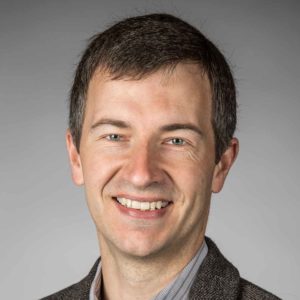
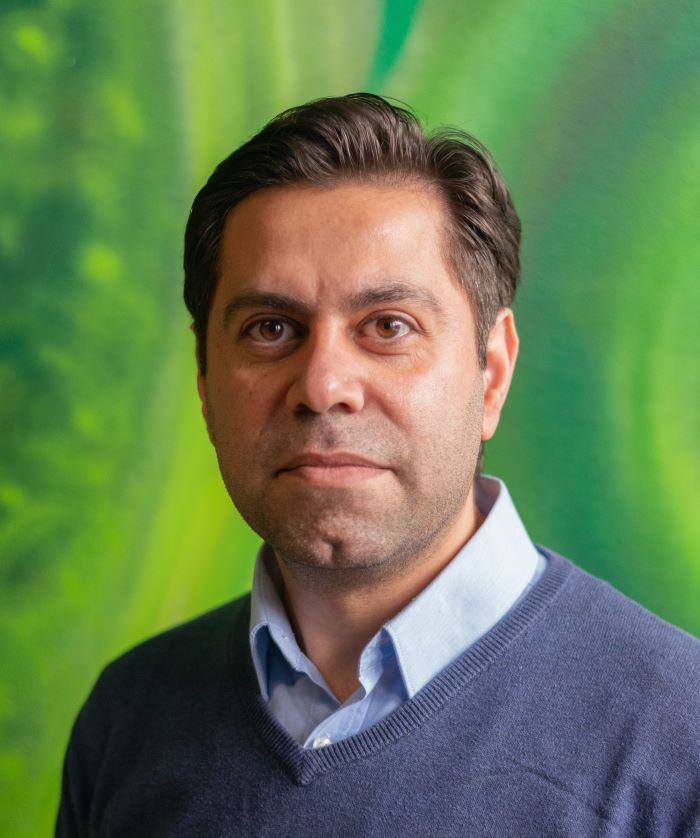
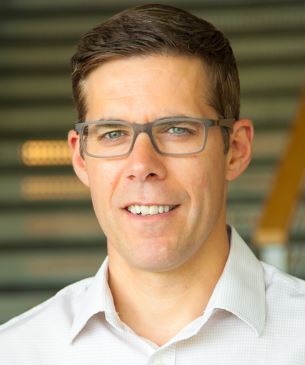
Anthony Hoffman is a Professor in the Department of Electrical Engineering at the University of Notre Dame's College of Engineering, specializing in mid-infrared and THz optoelectronics. His work focuses on quantum phenomena, optical material engineering, and device fabrication. He can be reached at ajhoffman@nd.edu . Research Interests: Hoffman's research centers on quantum engineering of semiconductor materials, particularly through layer-by-layer design of thin films for customized optical, electrical, and quantum properties. His laboratory develops and characterizes novel optoelectronic devices for mid-infrared and terahertz applications, including super-black materials, metamaterials, and high-efficiency photovoltaics. Scientific Awards: NSF CAREER Award (2015) for Development of Optoelectronic Devices for the Far-Infrared Education: Ph.D., Princeton University (2009) M.S., Princeton University (2006) B.S., University of Maryland, Baltimore County (2004)
Dr. Ali Najafzadeh is a Researcher at the Joint Glass Centre (Vitrum Laugaricio – VILA), affiliated with Alexander Dubček University of Trenčín in Slovakia. His work focuses on advanced ceramic materials, composites, and high-temperature applications. He actively participates in multiple national and international research projects and has established collaborations with institutions across Europe. Dr. Najafzadeh's educational background includes: PhD in Materials Science and Engineering from Semnan University, Iran (2015) MSc in Composite Materials Engineering from MUT, Tehran, Iran (2009) His primary research interests center around layered ceramics, eutectic materials, mechanical characterization, and advanced processing techniques. Dr. Najafzadeh specializes in developing innovative ceramic composites with enhanced mechanical properties for high-temperature applications. His work bridges fundamental materials science with practical engineering solutions, particularly in the areas of gel-casting processes and nanoindentation-induced deformation analysis. He applies finite element simulation to understand complex mechanical behaviors in brittle materials. Dr. Najafzadeh's publication record demonstrates consistent contributions to the field of advanced ceramics, with a focus on transparent ceramics, eutectic systems, and refractory composites. His research shows an evolution from fundamental studies of W-ZrC composites toward more sophisticated multi-layer ceramic designs and high-temperature applications. Recent work emphasizes translucency, mechanical robustness, and novel fabrication techniques like spark plasma sintering. His scientific achievements include: JECS TRUST programme at Montanuniversität Leoben, Austria (2023) Short-term training at Universidad de Sevilla, Spain (2022) Research Fellow at Institute of Materials Research, Slovak Academy of Sciences (2019-2020) National Scholarship Program of the Slovak Republic (2019) Top Ph.D. student at Semnan University, Iran (2015) Dr. Najafzadeh serves as Principal Investigator for the NextGenerationEU project "Design, analysis and mechanical characterization of laminar ceramics" (2024-2026) and has contributed to numerous other significant grants including Horizon 2020, APVV, and VEGA projects. His teaching responsibilities include doctoral courses in colloidal chemistry and colloidal systems. He is an active member of several professional societies including the European Ceramic Society, American Ceramic Society, Slovak Silicate Society, and Slovak Glass Society. Dr. Najafzadeh collaborates with research teams across Europe through the FunGlass Centre, which includes partners from Friedrich-Alexander Universität Erlangen-Nürnberg, Friedrich-Schiller-Universität Jena, Consejo Superior de Investigaciones Científicas, and Università degli Studi di Padova. His work contributes to the Centre's mission of advancing functional and surface functionalized glass technologies.
Professor İkram Orak is a faculty member at Bingöl University's Health Services Vocational School, where she was promoted to full Professor in November 2024. Previously, she served as an Associate Professor (2018-2024) and Assistant Professor (2014-2018) at the same institution. Her academic journey began with a Licentiate in Physics Teaching from Atatürk University in 2008, followed by a Doctorate from Atatürk University's Institute of Science in 2013. She completed postdoctoral research at Bilkent University's National Nanotechnology Research Center (UNAM) from 2014-2016. Professor Orak's research focuses on semiconductor physics and electronic device engineering, with particular expertise in photodiodes, Schottky diodes, and photovoltaic applications. Her work emphasizes interface engineering using organic-inorganic hybrid materials, rare earth elements, and nanomaterials. She investigates electrical properties under various physical stimuli including temperature, frequency, and illumination, with applications in sensors, memory elements, and solar energy conversion. Analysis of her recent publications (2022-2023) reveals a strong focus on interface engineering for improved semiconductor device performance. Her research spans multiple subfields including organic semiconductors, perovskite materials, chalcogenides, and eco-friendly materials for electronic applications. Common themes across her work include electrical characterization methodologies, temperature-dependent behavior, and the development of novel photodiode and sensor technologies. Principal Investigator on TÜBİTAK 1002 project: 'Photovoltaic applications for high-efficiency devices using new photosensitive organic ligands with different donor-acceptor pairs' (2020-120F092) Principal Investigator on TÜBİTAK 1002 project: 'Investigation of photovoltaic properties of devices obtained using compounds of W and Mo transition metals in different combinations' (2021-121F433) Principal Investigator on Bingöl University BAP project: 'Investigation of electrical properties of metal-semiconductor structures with rare earth element doped interface layer depending on different physical stimuli' (2021-BAP-SHMYO.2021.002) Co-Investigator on TÜBİTAK 1001 project: 'Investigation of diode and photodiode properties of new hybrid molecules centered on cyclotriphosphazene' (2025-124Z831) Professor Orak supervises master's students working on photodiode fabrication, photovoltaic devices, and energy systems. Her research group benefits from collaborations with multiple Turkish universities and access to specialized facilities including those at UNAM. Her laboratory work emphasizes hands-on device fabrication and comprehensive electrical characterization, providing students with valuable practical skills in semiconductor research.
Serdar Niyazi Sariciftci is a Full Professor at the Institute of Physical Chemistry, Johannes Kepler University Linz, and leads the Linz Institute for Organic Solar Cells. His work centers on sustainable energy conversion and bioelectronic interfaces, with international recognition in organic semiconductor research. His research spans Organic Solar Cells, Bioelectronics, and Artificial Photosynthesis, focusing on biodegradable materials like algal polysaccharides and DNA-based conductors. Current projects emphasize eco-friendly electronics for medical and energy applications, integrating natural compounds with organic semiconductors to reduce environmental impact. Recent publications reveal a strong shift toward biocompatible organic electronics, with innovations in flexible transistors, biodegradable nanocomposites, and low-voltage medical sensors. Key trends include merging biological materials with electronic functions and developing sustainable alternatives to conventional semiconductors. No scientific awards were mentioned in the provided text. Professor Sariciftci has supervised 58 researchers and students while leading 65 funded projects, including the EU-backed EINSTEIN Excellence initiative (2024-2028) and CO2 utilization research (2025-2027). His grants target nutrifood theranostics, organic photovoltaics, and biocompatible polymers for medical applications. He directs the Linz Institute for Organic Solar Cells, coordinating international teams on 8 active projects. Current collaborations span Europe, with recent hosting of researchers from Turkey, Slovakia, and Ethiopia to advance organic semiconductor pigments and bioelectronic interfaces.
Serpil Tekoglu is a Researcher at the Institute of Physical Chemistry, Johannes Kepler University Linz (JKU), specializing in sustainable bioelectronic materials. Her work bridges chemistry, materials science, and medical technology through development of biodegradable conductive polymers and natural biopolymer-based devices. Her research focuses on natural biopolymers for bioelectronics , particularly algal polysaccharides (sacran), DNA-based conductors, and ε-poly-L-lysine copolymers. Key interests include achieving long-term biocompatibility in implantable devices, ultrathin flexible electronics for medical applications, and eco-friendly manufacturing processes. She investigates material degradation pathways, stability mechanisms, and sustainable alternatives to conventional electronics. Analysis of her 2025 publications reveals a cohesive trajectory toward medical-grade biodegradable electronics . Her work consistently integrates natural polymers with conductive elements to solve core challenges in bioelectronic interfaces - particularly stability in physiological environments and environmental sustainability. This spans from fundamental material synthesis (e.g., enzyme entrapment techniques) to functional device fabrication (OECTs, solar cells), with strong emphasis on real-world medical applications like biodegradable rapid tests. Dr. Tekoglu leads the federally funded project BIOCOM - Biocompatible conductive polymers for medical applications (2023-2025) and actively mentors junior researchers. Her 20+ conference activities since 2024 include 6 invited talks at institutions like Universität Ferrara, demonstrating international recognition of her work on sustainable bioelectronics. She operates within JKU's multidisciplinary bioelectronics team, collaborating with physicists, chemists, and medical researchers. Current efforts focus on translating lab innovations to clinical applications, particularly biodegradable diagnostic devices highlighted in Austrian media coverage (May 2025) regarding "the future of rapid tests".
John P. Seymour, PhD is an Associate Professor at The University of Texas Health Science Center at Houston (UTHealth Houston) leading the Translational Bioelectronics Lab. His work spans multiple institutions through key affiliations with the Texas Institute for Restorative Neurotechnologies (TIRN) and Rice University's neuroengineering community. Dr. Seymour's educational background includes: Ph.D. in Biomedical Engineering from the University of Michigan M.S. in Biomedical Engineering from the University of Michigan B.S. in Engineering Physics from Ohio State University His research focuses on developing advanced neural interfaces to treat neurological conditions including epilepsy, aphasia, locked-in syndrome, and ALS. The Translational Bioelectronics Lab addresses critical challenges with current neurotechnology through computational electrode design, microfabrication techniques, and advanced packaging of integrated circuits. Dr. Seymour's work specifically targets reducing brain damage risks, infection potential, and improving clinical outcomes of implantable devices. His lab is part of the Texas Institute for Restorative Neurotechnologies co-directed by neurosurgeon Nitin Tandon, MD, creating a direct bridge between engineering innovation and clinical application. Analysis of Dr. Seymour's publication record reveals strong emphasis on flexible and stretchable neural interfaces, particularly for peripheral nerve applications and bladder monitoring systems. His research integrates materials science, microfabrication, and neuroscience to develop next-generation neural interfaces that minimize tissue damage while maximizing signal quality. Key trends include non-penetrating interfaces, multicolor optogenetic tools, closed-loop neural systems, and advanced materials like PEDOT/CNT coatings for improving chronic stability of neural recordings. Dr. Seymour actively mentors students through his lab which maintains strong connections with both clinical and engineering communities. The lab receives funding through multiple channels including NIH grants, institutional support from UTHealth, and collaborative projects with Rice University. His leadership in the field is evidenced by numerous patents related to neural interface technology. The Translational Bioelectronics Lab operates within specialized facilities including a 'brain kitchen' and 'biomaterials' lab designed for creative engineering work. The lab shares space at a state-of-the-art facility with Rice University neural engineers, providing access to Rice's nanofabrication facility and creating exceptional opportunities for translational neuroengineering research at the Texas Medical Center.
Christofer "Chris" Toumazou is a distinguished British Cypriot electronic engineer serving as the Regius Professor of Engineering at Imperial College London, a prestigious appointment made during the Queen's Diamond Jubilee in 2013. He also holds positions as Chief Scientist of the Institute of Biomedical Engineering and Professor of Circuit Design at Imperial. Beyond academia, Toumazou is an accomplished entrepreneur, having founded Toumaz Holdings Ltd and DNA Electronics Ltd., and co-founding DNAnudge, which developed the groundbreaking CovidNudge point-of-care diagnostic system. With a research portfolio spanning over 800 publications, Toumazou's work primarily focuses on the intersection of semiconductor technology and biomedical applications. His most significant contribution is the development of ISFET (Ion-Sensitive Field-Effect Transistor) technology for DNA detection, which eliminates the need for optical systems in genetic testing and enables miniaturized, lab-free diagnostic devices. This innovation has been applied across various healthcare domains including pandemic response, cancer diagnostics, and personalized medicine. Toumazou's publication record shows consistent high-impact output across biomedical engineering, electrical engineering, and applied physics. His recent work (2020-2022) has particularly emphasized point-of-care diagnostics, personalized healthcare systems integrating genetic information with real-time monitoring, and novel approaches to DNA analysis. His research demonstrates a clear trajectory from fundamental circuit design to practical healthcare applications that address significant clinical needs. Fellow of the Royal Society (FRS) Fellow of the Royal Academy of Engineering (FREng) Fellow of the Academy of Medical Sciences (FMedSci) Fellow of the Institution of Engineering and Technology (FIET) Fellow of the Institute of Electrical and Electronics Engineers (FIEEE) Regius Professor of Engineering at Imperial College London Professor Toumazou maintains an active research program with numerous ongoing projects bridging engineering and medicine. His work continues to focus on developing next-generation diagnostic technologies that integrate semiconductor electronics with biological systems, with particular emphasis on making sophisticated genetic testing accessible at the point of care. Through his academic position and entrepreneurial ventures, he maintains strong connections between fundamental research, commercial development, and clinical implementation of new healthcare technologies.
Dr Joshua Lehr is a Lecturer in Chemical Sciences at the University of Salford's School of Science, Engineering & Environment. He joined the university in 2018 after previously working at Nottingham Trent University. His academic career spans interdisciplinary research at the intersection of chemistry, nanotechnology, biology, and engineering, with a focus on molecular interfaces for medical diagnostics applications. Dr Lehr completed his educational journey with a BSc in Chemistry and Philosophy (2002-2005), followed by a 1st Class BSc Hons Chemistry (2005-2006), and a PhD in Chemistry (2006-2010) all at the University of Canterbury in New Zealand. After his PhD, he conducted postdoctoral research at the University of Oxford focused on supramolecular systems. In 2019-2020, he completed a Post Graduate Certificate in Academic Practice at the University of Salford. His research primarily focuses on the construction and study of functional molecular architectures at interfaces, leading to the development of switchable surfaces, sensors, supramolecular interfaces, and bioelectronic interfaces for medical diagnostics. Complementing this work, he studies the fundamental formation, characteristics, and electrochemical behavior of thin organic films at electrodes. His current projects include Kidscan placement studentships focused on leukaemia diagnostics and sensors, and supramolecular patterning of multifunctional interfaces. Analysis of his recent publications reveals a strong focus on electrochemical biosensors for medical diagnostics, particularly for cancer detection and monitoring. His work consistently bridges fundamental electrochemistry with practical medical applications, with increasing emphasis on childhood leukaemia diagnostics in his most recent research. The interdisciplinary nature of his work spans electrochemistry, materials science, biochemistry, and medical diagnostics. Dr Lehr leads several teaching modules including Introductory Biochemistry (Year 1), Bioinorganic Chemistry (Year 2), and Science and Industry (Year 3). He also contributes to Frontiers in Inorganic Chemistry, Applied Biomedical Science, and Current Topics in Biochemistry. As admissions tutor for Chemical Sciences, he plays an important role in student recruitment and supervision of final year projects, masters, and PhD students. His current research projects demonstrate strong industry and healthcare partnerships, particularly with Kidscan funding multiple placement studentships (2020-2025) focused on leukaemia diagnostics. These projects indicate his research has translational impact in developing electrochemical sensors for real-time monitoring of cancer treatments.
Mohamed Y. El-Naggar serves as Dean’s Professor of Physics and Astronomy and Professor of Physics, Biological Sciences, and Chemistry at the University of Southern California. His research group operates at the Michelson Center for Convergent Bioscience, focusing on interdisciplinary investigations at the interface of biology, physics, and materials science. El-Naggar's research explores biological electron transfer and energy conversion mechanisms, with emphasis on biotic-abiotic interfaces. His work spans fundamental cell physiology, renewable energy systems, biofuels development, environmental remediation strategies, and next-generation bioelectronics that merge biochemical precision with nanotechnology. Current leadership includes directing a 5-year Department of Defense-funded multi-university initiative on Living Electronics. His scientific contributions have been recognized through prestigious awards including the Presidential Early Career Award for Scientists and Engineers (PECASE) from President Obama in 2014, Popular Science’s 'Brilliant 10' in 2012, and a Department of Defense Young Investigator Program Award in 2010. Research trends across his publications reveal consistent focus on microbial electrochemistry, electron transport mechanisms in bacterial systems, biohybrid materials, and environmental applications of bioelectronic principles. Presidential Early Career Award for Scientists and Engineers (PECASE), 2014 Popular Science’s 'Brilliant 10', 2012 Department of Defense Young Investigator Program Award, 2010 El-Naggar leads significant grant-funded research including the Department of Defense multi-university initiative on Living Electronics. His laboratory develops advanced techniques for measuring electron transport in microbial systems and engineering bioelectronic interfaces. The research group maintains strong collaborations across physics, biology, and engineering disciplines, with particular emphasis on translating fundamental discoveries into environmental and energy applications. The El-Naggar Laboratory operates within the Michelson Center for Convergent Bioscience at USC, maintaining specialized facilities for electrochemical measurements, microbial culturing, nanomaterial synthesis, and advanced microscopy. Research teams integrate approaches from biophysics, microbiology, electrochemistry, and materials science to investigate electron transfer phenomena across multiple scales.