Sam Emaminejad is an Associate Professor in the Department of Electrical and Computer Engineering at the Henry Samueli School of Engineering and Applied Science, University of California Los Angeles (UCLA). His research focuses on developing advanced wearable bioelectronic systems for continuous, noninvasive health monitoring and personalized therapeutics. Key Research Areas: Biomarker detection via flexible sensors Microfluidic and ferrobotic systems Stress and drug level monitoring Biodegradable and breathable wearable materials Recent Trends: Analysis of sweat and interstitial fluids using microneedles, aerogel skins, and programmable microfluidics. Machine learning integration for physiological evaluation is prominent. Awards & Collaborations: While specific awards aren't listed, he collaborates with major UCLA Health and Engineering faculty, including Ali Khademhosseini and Dino Di Carlo, on projects funded by NIH T32 grants and institutional fellowship programs. Grants & Labs: Leads projects in NIH-funded wearable sensor research, including the development of autonomous systems for cystic fibrosis and glucose monitoring. His lab explores ferrobotic swarms and hydrogel-based interfaces for clinical and consumer applications.
Ehud Gazit is a distinguished Professor in the Department of Molecular Microbiology and Biotechnology at Tel Aviv University's Faculty of Life Sciences. He holds the Chair for Nano-Biology and serves as Vice President for Research and Development at Tel Aviv University. Professor Gazit has held numerous prestigious visiting appointments including at Umeå University, Fudan University, and Cambridge University. His academic journey began with a B.Sc. (summa cum laude) from Tel Aviv University's Special University Program for Outstanding Students in 1991, followed by a Ph.D. (with distinction) from the Weizmann Institute of Science in 1997, and postdoctoral training at MIT from 1997-2000. Professor Gazit's research focuses on molecular structure and self-assembly at the nano-scale, particularly examining protein folding, unfolding, and misfolding phenomena. His laboratory investigates the mechanisms and significance of protein unfolding and misfolding, with experimental systems including bacterial toxin-antidote systems, type II diabetes-related amyloidogenic proteins, and the VHL tumor suppressor protein. His work bridges fundamental biochemistry with nanotechnology applications, exploring how molecular self-assembly can be harnessed for technological innovation. His recent publications demonstrate a strong trajectory in peptide-based nanomaterials, with particular emphasis on amyloid formation mechanisms, peptide self-assembly for functional materials, and therapeutic applications targeting neurodegenerative diseases. His work spans multiple disciplines including biochemistry, nanotechnology, materials science, and biomedical engineering, showing increasing integration of fundamental research with practical applications. Professor Gazit has received numerous prestigious awards including: 2020 Landau Prize in Sciences and Arts in the Field of Healthy Aging 2019 Rappaport Prize for Excellence in Biomedical Research 2018 Foreign Fellow of the National Academy of Sciences, India 2016 ERC Advanced Grant from the European Research Council 2015 Elected Member of the European Molecular Biology Organization (EMBO) Professor Gazit has been actively involved in mentoring students and researchers, as evidenced by his extensive publication record with numerous collaborators. He has secured significant research funding including an ERC Advanced Grant. His professional activities include editorial board memberships for journals including Journal of Peptide Science, Nanoscience & Nanotechnology - Asia, and Amyloid. He previously served as Chief Scientist of the Ministry of Science and Technology (2012-2014). His laboratory has developed innovative approaches to studying molecular self-assembly, with particular expertise in peptide nanostructures. The research team has made significant contributions to understanding amyloid formation mechanisms while simultaneously developing novel biomaterials with applications ranging from electronics to medicine. They have established strong collaborations with research groups worldwide, creating a dynamic interdisciplinary research environment focused on the intersection of biology and nanotechnology.
Soner Sonmezoglu is an Assistant Professor of Electrical and Computer Engineering at Northeastern University's College of Engineering. His research focuses on implantable and wearable medical devices enabled by advanced microelectronics and microfabrication for neurological, diagnostic, and therapeutic applications. He leads the Sonmezoglu Lab and has secured major grants including a $13M ARPA-H award for developing photoacoustic imaging systems for early lung cancer detection. Education: PhD in Electrical and Computer Engineering, UC Davis (2017) BSc and MSc in Electrical Engineering with a minor in Solid-State Physics, Middle East Technical University (2010-2012) Postdoctoral Researcher, UC Berkeley EECS (pre-2022) Research Interests: His work spans integrated circuits, micro/nano electromechanical systems (M/NEMS), neural interfaces, and medical device integration. Key projects include ultrasonic wireless neural interfaces and millimeter-scale oxygen sensors for deep-tissue monitoring. Current initiatives include the PAIL project for lung cancer diagnostics. Awards: UC Davis Graduate Division Fellowship Scientific and Technical Research Council of Turkey Graduate Fellowship Grants & Collaborations: Principal Investigator of ARPA-H's $13M PAIL initiative. Active in the Institute for NanoSystems Innovation, contributing to chip-level technology advancements. Labs/Teams: Directs the Sonmezoglu Lab at Northeastern, focusing on next-generation biomedical device innovation through interdisciplinary microsystems engineering.
Arben Merkoçi is an ICREA Research Professor and leader of the NanoBioelectronics and Biosensors Group at the Catalan Institute of Nanoscience and Nanotechnology (ICN2). He holds a PhD in ion-selective electrodes from the University of Tirana (Albania) and has held research positions at institutions including the Polytechnic University of Budapest, University of Ioannina, and New Mexico State University. His research focuses on integrating biological molecules with micro/nanostructures to design advanced biosensors, with applications in healthcare and environmental monitoring. Education: PhD in Analytical Chemistry (University of Tirana, 1992) Roles: Co-Editor-in-Chief of Biosensors and Bioelectronics , member of the Academy of Sciences of Albania Research interests include nanomaterial-based biosensors (e.g., graphene, MXenes, quantum dots), point-of-care diagnostics, and sensor fabrication technologies. He has pioneered innovations in inkjet-printed sensors, wearable devices, and CRISPR-integrated biosensing. His group collaborates globally to advance nanobiosensor applications in clinical and environmental settings. Over 350 publications (H-index 91) and 40 supervised PhD theses highlight his contributions. He co-founded GraphenicaLab (graphene patterning) and PaperDrop (clinical diagnostics). Active in grant acquisition and policy, he shaped Spain’s first nanoscience undergraduate program at the Universitat Autònoma de Barcelona.
Prof. Kwang W. Oh is a tenured Professor at the Department of Electrical Engineering and Department of Biomedical Engineering within the School of Engineering and Applied Sciences at University at Buffalo (SUNY at Buffalo) . He serves as the Director of Graduate Studies in Electrical Engineering and Director of SMALL (Sensors and MicroActuators Learning Lab) . His academic journey includes PhD and MS in Electrical and Computer Engineering from University of Cincinnati (2001, 1997) and BS in Physics from Chonbuk National University (1995). Prof. Oh's research expertise lies at the intersection of microfluidics , BioMEMS , and lab-on-a-chip technologies. His lab has pioneered vacuum-driven microfluidic devices , PDMS-based systems , droplet manipulation , and chemical-free fabrication techniques . His work enables point-of-care diagnostics , single cell analysis , and wearable medical sensors , with significant contributions to sample-to-answer nanosystems and world-to-chip interfacing . The scientific awards section highlights his excellence in teaching and research: SUNY Chancellor's Award for Excellence in Teaching (2020) Meyerson Award for Undergraduate Teaching (2019) Qualcomm Faculty Award (2019) Senior Teacher of the Year (2017) Royal Society of Chemistry's Emerging Investigators (2013) Samsung Electronics' CEO Honor (2003) His lab has produced numerous PhD and MS students including Dr. Anyang Wang (2020), Dr. Nikhila Nyayapathi (2020), Mr. Liam Christie (2021), and Dr. Domin Koh (2019). As a conference chair , he has organized symposia at NanoTech (2012-2026) and served as editorial board member for Sensors , Micromachines , and Biomedical Engineering Letters .
Professor Klas Tybrandt leads the Soft Electronics group at Linköping University's Laboratory of Organic Electronics (LOE), focusing on stretchable materials and bioelectronics integration with the human body. He holds a Master's (2007) and PhD (2012) from LiU, followed by postdoctoral research at ETH Zurich (2013-2014). Promoted to Professor in 2024, he oversees the Wallenberg Wood Science Center (WWSC), WISE, and AFM initiatives. His work spans Stretchable batteries Neural interfaces Organic thermoelectrics and has earned awards like the ERC Consolidator Grant (2023) and Wallenberg Academy Fellow (2022). His research emphasizes sustainable materials and energy harvesting. Education: PhD in Organic Bioelectronics (LiU, 2012) ETH Zurich Postdoc (2013-2014) Research interests include soft electronics and biohybrid systems , with breakthroughs in gold nanowire electrodes and stretchable electrofluid batteries . Over 70 peer-reviewed articles and 7 patents underscore his contributions to organic electronics. Grants & Funding: ERC Consolidator Grant (€2M) Wallenberg Academy Fellowship (SEK 36M) Labs/Teams: Head of Soft Electronics group (LOE), active in WWSC and WISE consortia.
Eleni Stavrinidou serves as Senior Associate Professor and Head of Unit at Linköping University's Department of Science and Technology within the Faculty of Science and Engineering. She is Principal Investigator at the Electronic Plants research group within the Laboratory of Organic Electronics (LOE), where she leads groundbreaking research at the intersection of plant biology and electronics. Her educational background includes: Bachelor's degree in Physics (2008) from Aristotle University of Thessaloniki, Greece Master's degree in Nanotechnology (2010) from Aristotle University of Thessaloniki, Greece PhD in Microelectronics (2014) from École Nationale Supérieure des Mines de Saint-Étienne, France Stavrinidou's research focuses on developing bioelectronic devices for plant science with applications in sustainable food production and enhancing plant resistance to environmental stress. Her work explores the integration of electronic circuits within living plants, creating what she terms 'Electronic Plants.' She envisions technologies that enable new discoveries in plant biology while developing next-generation biohybrid systems that combine living and artificial components. Her research spans plant physiology, organic electronics, energy storage in biological systems, and sustainable technological concepts that harness nature's own processes. Her publications demonstrate a clear trend toward developing practical applications of plant bioelectronics, with recent work focusing on energy harvesting from plant motion, glucose-sensitive biohybrid roots, and molecular delivery systems within plants. These studies bridge plant science, materials engineering, and sustainable technology development. Notable scientific recognition includes: ERC Starting Grant (2021) Tage Erlander Prize for Natural Sciences and Technology (2023) L'ORÉAL-UNESCO For Women in Science prize (2019) Future Research Leaders grant from Swedish Foundation for Strategic Research (2020) Marie Skłodowska-Curie Fellowship (2016) Stavrinidou has secured significant research funding including a Swedish Research Council Starting Grant, an EU FET-OPEN grant (which she coordinated), and the ERC Starting Grant for her 4D-PhytoHybrid project. Her research group has developed innovative technologies such as implantable organic electronic ion pumps for hormone delivery in plants, electrically conductive 'soil' for hydroponics, and methods for storing energy in plant roots. She collaborates extensively with the Umeå Plant Science Center and participates in the EU's Horizon 2020 program through the HyPhOE initiative. As leader of the Electronic Plants group at the Laboratory of Organic Electronics, Stavrinidou directs research that follows two main avenues: incorporating electronic circuits into plants for energy storage applications, and developing bioelectronic devices to influence plant functions for greater environmental stress resistance. Her team has achieved notable breakthroughs including creating electronic circuits within rose vascular systems and developing methods to store energy in living bean plants.
Paschalis Gkoupidenis is an Associate Professor in the Department of Electrical and Computer Engineering at North Carolina State University (since August 2024) and a Group Leader at the Department of Molecular Electronics at the Max Planck Institute for Polymer Research. His research focuses on developing organic neuromorphic devices for neuro-inspired information processing, learning, sensing, and bio-interfacing. Research Interests Dr. Gkoupidenis specializes in hardware-based implementation of neuromorphic architectures, which offer efficient ways of data manipulation and processing, especially in data-intensive applications. His work explores how organic materials and devices can be used for neuro-inspired devices and bioelectronics, leveraging their attractive characteristics such as ability to operate in electrolytes, spatiotemporal response, analogue memory phenomena, tunability via chemical synthesis, low-cost fabrication processes, and biocompatibility. His research group investigates various concepts for inducing neuroplasticity, learning forms, and spatiotemporal information processing functions at a single-device level, as well as new paradigms of neuromorphic architectures at circuit level. These neuro-inspired functions are essential for trainable/adaptable circuits in energy-restricted environments and for local signal processing in bioelectronics. Scientific Contributions Development of organic neuromorphic devices for neuro-inspired information processing Research on synaptic plasticity functions in organic electrochemical transistors Exploration of neuromorphic device architectures with global connectivity through electrolyte gating Investigation of functional connectivity of organic neuromorphic devices by global voltage oscillations Advancement of organic neuromorphic devices for adaptive sensing and novel computing paradigms in bioelectronics Affiliations Associate Professor, Department of Electrical and Computer Engineering, North Carolina State University (since August 2024) Group Leader, Organic Neuromorphic Electronics, Max Planck Institute for Polymer Research (since 2017) Postdoctoral Researcher, Department of Bioelectronics, EMSE, France (2015-2017)
Arri Priimägi is a Professor at Tampere University's Faculty of Engineering and Natural Sciences, leading the Smart Photonic Materials research group. He focuses on functional soft materials, particularly light-activated systems for applications in soft robotics, photonics, and biomaterials science. His interdisciplinary work bridges physics, chemistry, and engineering, emphasizing collaboration to advance materials for future technologies. Education: PhD in Applied Physics from Helsinki University of Technology (2009), MSc in Physics from Tampere University of Technology (2004). His career includes postdoctoral research in Japan (Tokyo Institute of Technology) and Italy (Politecnico di Milano). Research Interests: Design of stimuli-responsive materials, light-driven actuators, and bioinspired systems. Key projects include ERC Starting Grant-funded work on tunable photonic structures and an ERC Proof-of-Concept Grant for optical humidity sensing. He leads the Chemistry & Advanced Materials research cluster and contributes to the PREIN Flagship in photonics. Awards : Academy of Finland Award for Scientific Courage (2018) ERC Starting Grant (2016) Outstanding Doctoral Dissertation Award (2009) Grants & Projects : ERC Proof of Concept: Optical Sensing of Humidity (2018–2020) ERC Starting Grant: Tunable Photonic Structures (2016–2021) Academy of Finland Fellowship: Halogen-Bonded Materials (2014–2019) Labs/Teams: Active in the Smart Photonic Materials group and collaborates internationally on soft robotics and photonic materials.
Christina Tringides is a tenure-track Assistant Professor in Materials Science and NanoEngineering at Rice University, affiliated with the Neuroengineering Initiative (NEI). She holds the CPRIT Scholar in Cancer Research title and leads the Tringides Lab, which develops soft materials and neurotechnologies for neural system interfaces. Her interdisciplinary work spans from cellular to organ levels, addressing both in vivo and in vitro applications. Education: B.S. in Materials Science & Engineering and Physics from MIT (2015); Ph.D. in Biophysics from Harvard University (2022) under David Mooney. Postdoctoral research at ETH Zürich with Janos Vörös as an ETH Fellow. Recognized with awards including the WIMA laureate (2023), NSF GRFP (2017), and Fulbright Scholar (2015). Research focuses on hydrogels, bioelectronics, and implantable electrode arrays. Key projects include biomimetic in vitro platforms for neural studies and viscoelastic biohybrid interfaces for neuromodulation. Her lab’s innovations aim to advance neurological disorder treatments and diagnostics. Scientific contributions include over 20 peer-reviewed articles, with recent work emphasizing conductive hydrogels, synaptic stimulation systems, and immunotherapy biomaterials. Active in professional organizations like the Materials Research Society and American Chemical Society.
Dr. Eric Meyers is an Assistant Professor in the Department of Bioengineering at the Erik Jonsson School of Engineering and Computer Science, University of Texas at Dallas. He holds a Ph.D. in Biomedical Engineering and dual Bachelor's/Master's degrees in Electrical Engineering from the same institution. His research focuses on closed-loop neurotechnology, neuromodulation, and bioelectronic medicine to enhance recovery from nervous system injuries. Key projects include developing wearable EMG sleeves for stroke rehabilitation and closed-loop neuromodulation systems to restore motor function. Education: B.S. (2012), M.S. (2018), Electrical Engineering; Ph.D. (2017), Biomedical Engineering – all from UTD His research interests span machine learning applications in neurorehabilitation, biomarker discovery for neurological conditions, and clinical translation of bioelectronic therapies. Recent work emphasizes wearable devices for real-time motor function assessment and neuromodulation-driven recovery strategies. Publications highlight advancements in EMG-based neural interfaces, closed-loop algorithms for stroke therapy, and innovative FES systems. His lab actively collaborates on projects funded by NIH and industry partnerships, with a focus on translating technologies to clinical settings.
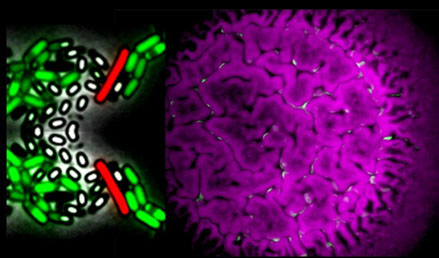
Gurol Suel is a Professor in the Department of Molecular Biology at the University of California San Diego (UCSD), affiliated with the Division of Biological Sciences. His research focuses on understanding electrical signaling in bacterial biofilms and the emergent collective behaviors they exhibit. His lab integrates quantitative biology, mathematical modeling, and synthetic biology approaches to explore principles of microbial organization and coordination. Dr. Suel earned his PhD in Molecular Biophysics from UT Southwestern Medical Center under Dr. Rama Ranganathan, followed by postdoctoral training in Dr. Michael Elowitz's lab at Caltech, combining biology and applied physics. His work has revealed groundbreaking discoveries about ion channel-mediated electrical signaling in biofilms, including their role in nutrient time-sharing between distant communities and the segmentation clock driving cellular differentiation. Key research areas include: biofilm signaling networks, bacterial collective computation, membrane potential dynamics, and engineering controllable microbial systems. His lab develops novel tools for studying bioelectronic interactions, such as potassium ion-based bioelectronic delivery systems. Spatial and temporal patterning in biofilms, including fractal interface formation and memory encoding through membrane potentials, are central themes in his work. Though no specific student names are listed, his lab actively conducts PhD rotations and trains researchers in experimental and theoretical microbiology. His work is supported by grants enabling exploration of biofilm communication and synthetic microbial systems. Contact information includes the UCSD Pacific Hall address and the email 'gsuel@ucsd.edu'. The lab's physical location includes specialized equipment for biofilm electrophysiology and quantitative imaging, as shown in lab photo collections.
Professor Sohini Kar-Narayan is a British-Indian materials scientist at the University of Cambridge, specializing in polymer-based materials for energy harvesting and biomedical applications. She serves as editor-in-chief of the journal APL Electronic Devices and leads innovative research on nanogenerators, microfluidic sensors, and bioelectronic interfaces. Education: Presidency University, Kolkata (undergraduate); Indian Institute of Science (PhD) Her research focuses on piezoelectric and triboelectric nanomaterials, with applications in self-powered wearable devices , orthopedic surgery sensors , and 4D-printed responsive systems . She develops scalable fabrication techniques like aerosol jet printing to bridge academic research and industrial innovation. The most recent publications highlight advancements in biopolymer-based energy harvesting , smart textiles , and microfluidic diagnostic tools , emphasizing interdisciplinary collaboration between materials science, biomedical engineering, and manufacturing technologies. Scientific Awards: Royal Society of Chemistry Peter Day Prize (2023), European Research Council Consolidator Grant (2023), Royal Academy of Engineering Fellowship (2024), Innovator of the Year (2024) Her work includes the development of the ArtioSense sensor for orthopedic surgery and collaborations with medical professionals to create workflow-compatible devices. She has received major funding from the European Research Council and leads a research group exploring sustainable energy solutions and bio-integrated electronics.
Professor Róisín M. Owens serves as Professor of Bioelectronics within the Department of Chemical Engineering and Biotechnology at the University of Cambridge. Her research program centers on developing integrated in vitro systems that combine biological models with advanced monitoring methodologies to study human biology through minimally invasive approaches. Her work spans three interconnected research strands: Basic understanding of biological material-transducer interfaces Development of 3D models incorporating fluidics and electronics Application of 3D in vitro systems to investigate human pathologies Specializing in electroactive materials that bridge rigid transducers and compliant biological tissues, her research enables biomimetic probing of biological systems. Key focus areas include bioelectronics, biosensors, tissue engineering, and biomedical engineering, with particular emphasis on creating physiologically relevant models for medical research. Professor Owens leads the BioElectronic System Technologies research group and maintains active laboratory operations at the Cambridge West campus (Philippa Fawcett Drive). Her direct contact channels include telephone (+44 (0)1223 763969) and email (rmo37@cam.ac.uk), reflecting her current operational status within the department.
Dr. Changsheng Wu is a Professor at the National University of Singapore (NUS), leading the Lab for Intelligent Sensing, Harvesting and Actuation (LISHA). He holds a Bachelor's from NUS and a PhD from Georgia Tech, with postdoctoral research at Northwestern University. His work focuses on wireless wearables, bioelectronics, energy harvesting, and advanced manufacturing for sustainable solutions. Education: Bachelor in Engineering Science (First Class Honours), NUS PhD in Materials Science and Engineering, Georgia Institute of Technology Postdoctoral Research, Querrey Simpson Institute for Bioelectronics, Northwestern University Research Interests: Wireless bioelectronics for clinical health monitoring Energy harvesting via nanogenerators Soft skin-electronics interfaces using metastructures Programmable materials for adaptive systems Advanced manufacturing techniques for wearable devices Key Achievements: Over 50 publications and 5 patents Recipient of TechConnect 2018 Innovation Award and 56th R&D 100 Award Developed wireless implantable sensors for tissue monitoring and bioresorbable medical devices Teaching: MLE5220: Finite Element Method in Materials MLE5238: Bioelectronics Laboratory: His LISHA lab pioneers innovations in self-powered systems, wearable health monitoring, and biohybrid robots. Current projects include metamaterial-based sensors and sustainable energy conversion materials.