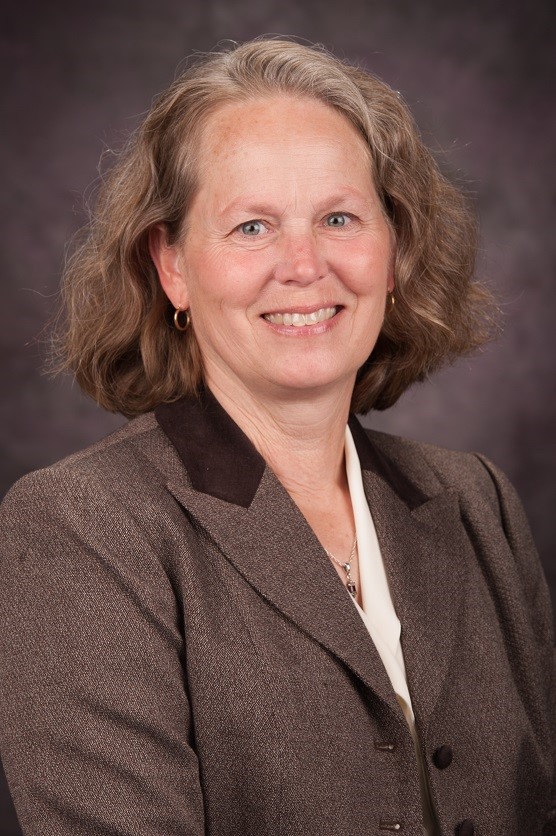
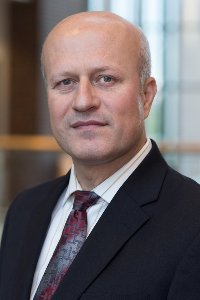
Dr. Will Crampton is a Professor in the Department of Biological Sciences at the University of Central Florida, where he serves as Associate Chair. His research focuses on the ecological, behavioral, and evolutionary mechanisms driving species diversity in Neotropical freshwater fishes, particularly gymnotiform electric knifefishes. He leads biodiversity inventories in the Amazon basin and investigates reproductive isolation, taxonomic revisions, and environmental adaptation. Research Trends: Recent publications highlight genomic studies of repetitive DNAs, sensory ecology (moonlight avoidance), hypoxia-driven physiological adaptations, and bioelectric signal evolution. His work integrates molecular genetics with ecological field studies. Scientific Awards: Co-star in National Geographic's 'Dangerous Encounters' documentary (2010) Featured in Nature News and Views (2010) Laboratory Focus: The Crampton lab studies gymnotiform electric fishes as model organisms for understanding speciation, using interdisciplinary approaches combining phylogenetics, electrophysiology, and conservation biology.
Dr. Elizabeth A. E. Boyle is a Professor and Extension Specialist in the Department of Animal Sciences and Industry at Kansas State University. She holds a B.S. in Wildlife Biology from the University of Minnesota, an M.S. and Ph.D. in Food Science from Colorado State University, and completed postdoctoral work at the University of Kentucky and University of Minnesota. Her research focuses on meat safety, quality, and HACCP systems, with an emphasis on assisting meat processors and trade associations. She is a Lead Instructor for the International HACCP Alliance and teaches courses on HACCP principles, processed meats, and food safety preventive controls. Education: B.S., Wildlife Biology, University of Minnesota, 1980 M.S., Food Science and Nutrition, Colorado State University, 1987 Ph.D., Food Science, Colorado State University, 1991 Postdoctoral Associate, University of Kentucky, 1990–1991 Postdoctoral Associate, University of Minnesota, 1991–1992 Dr. Boyle’s research spans meat safety, quality assessment, and HACCP implementation. Her work emphasizes technological innovations like bioelectrical impedance for freshness analysis and sensory evaluation of meat products. She has contributed to improving processed meat safety through microbial quality studies and flavor stability solutions for frozen bacon. Her recent publications reflect advancements in understanding grass-fed beef composition and consumer preferences for beef cuts. Awards: Fellow, American Meat Science Association (2016) AMSA Signal Service Award (2016) Dr. Boyle teaches undergraduate and graduate courses such as Processed Meat Operations and Advanced HACCP Principles , and leads HACCP workshops nationally. Her extension role bridges academic research with industry practices, focusing on food safety plans and preventive controls.
Mark Esrick is a Research Professor in Georgetown University's Physics Department, holding a B.S. (1969) and Ph.D. (1981) in Physics from Georgetown. His interdisciplinary research spans physics education, medical applications of physics, and theoretical modeling. Research specialties include deriving image potentials for charged ions near surfaces, electric impedance monitoring during hyperthermia cancer therapy, lung temperature modeling during transplantation, and axon guidance in chemical gradients. Collaborative projects involve Georgetown Medical School and funding from NIH, NSF, Sloan Foundation, and Whitaker Foundation. He coordinates Georgetown's Post-Baccalaureate Pre-Medical Certificate Program and teaches physics courses for non-science majors, including Science of Sound and Music (PHYS-013) and Basic Physics (PHYS-007).
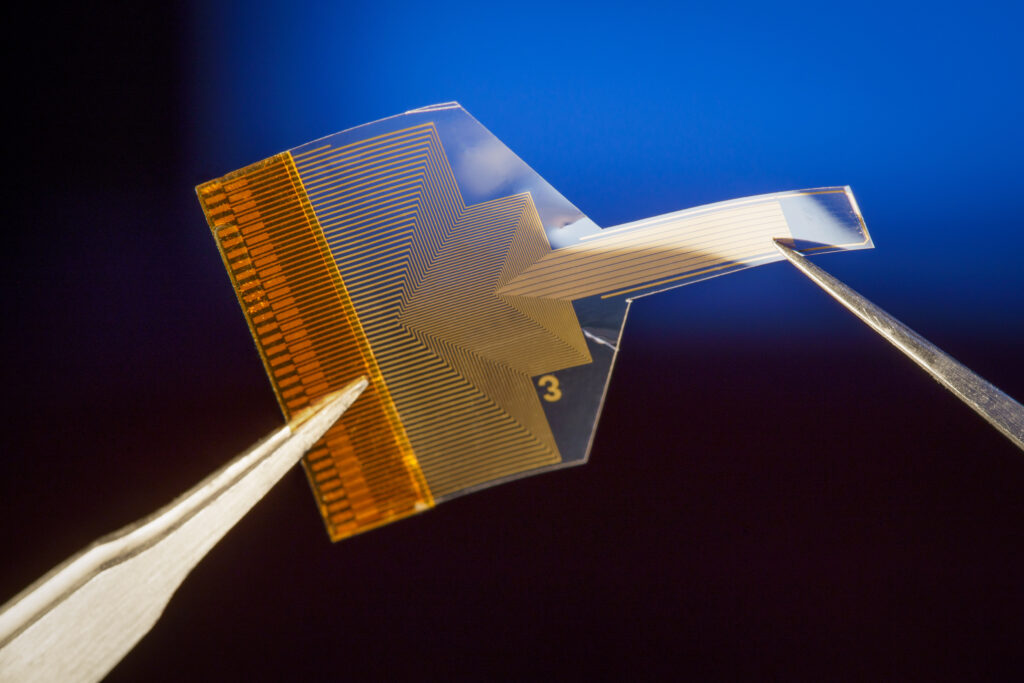
Professor Duygu Kuzum is a faculty member in the Department of Electrical and Computer Engineering at the University of California San Diego. Her research focuses on nanoelectronic devices for brain-inspired computing, neural interfaces, and clinical neurodevices. She has developed synaptic devices emulating brain computation and transparent neural implants for high-resolution brain monitoring. Kuzum holds the Joan and Irwin Jacobs-Kavli Foundation Chancellor's Endowed Faculty Fellowship and has been recognized with awards including MIT TR35, Penn Neuroscience Innovation Award, and Texas Instruments Fellowship. Her lab, the UCSD Neuroelectronics Lab, pioneers neurotechnologies combining nanoelectronics with neuroscience to advance understanding of brain circuits and develop next-generation neural interfaces. Education: PhD in Electrical Engineering (Stanford University, 2010), Postdoc in Bioengineering (University of Pennsylvania, 2011-2015), B.S. in Electrical Engineering (Bilkent University, 2004). Research interests include neuromorphic computing, neural interface design, and bio-plausible learning systems. Key innovations include filament-free RRAM for energy-efficient neural networks, graphene-based transparent electrodes, and bioresorbable neural implants. Recent work explores functional integration of cortical organoids with host brain circuits using multimodal monitoring. Grants and Awards: NIH New Innovator Award (2020), multiple industry and foundation fellowships. Her lab collaborates on projects like E-organoid systems and closed-loop optogenetic systems. Labs/Teams: Director of UCSD Neuroelectronics Lab, affiliated with Kavli Institute for Brain and Mind. Active in developing transparent neural probes and neuromorphic brain interfaces.
Seyedeh Fatemeh Khatami Firoozabadi serves as an Associate Professor in the School of Engineering and Computer Science at the University of the Pacific, specializing in interdisciplinary research bridging biomedical engineering, neuroscience, and computational systems. Her academic credentials include: Post-doctoral training at University of California San Francisco (UCSF), 2017-2019 Ph.D. in Biomedical Engineering from University of Connecticut, 2017 M.S. in Biomedical Engineering from Iran University of Science and Technology, 2011 Dr. Khatami's research integrates Brain-Computer Interfaces with advanced signal processing to address challenges in motor control and speech perception. She pioneers methods for analyzing biological signals (EEG, ECG, PPG) in clinical contexts, models auditory system functionality, and develops adaptive algorithms for real-time biomedical systems. Her work on speech-in-noise processing reveals neural mechanisms in the superior temporal gyrus, while her sensor innovations target physiological monitoring applications. Current projects emphasize optimization techniques to enhance robustness in noisy environments and translational applications for assistive technologies. Her publication record demonstrates consistent contributions to computational neuroscience conferences and journals, with recent focus on spiking network models for speech recognition and spectral entropy metrics for neural responses to natural speech.
Taner Akkin is a Professor in the Department of Biomedical Engineering at the University of Minnesota, where he leads the Akkin Lab. His research focuses on developing non-contact optical imaging tools for high-resolution structural and functional analysis of biological tissues, with emphasis on neural applications such as brain tractography and action potential detection. Key techniques include polarization-sensitive optical coherence tomography (OCT) and interferometry, enabling minimally invasive medical applications. Education: Postdoctoral Fellow at Harvard Medical School & Wellman Center for Photomedicine (2004-2005), PhD in Electrical & Computer Engineering (University of Texas at Austin, 2003), MSc/BSc in Electrical Engineering (Çukurova University, Turkey). Research Interests: The Akkin Lab specializes in: Neural imaging, optical coherence tomography, polarization-sensitive interferometry, brain mapping, tissue biomechanics, and nanoscale optical path length detection. Research thrusts include depth-resolved neural activity imaging, cerebellar mapping, and polarization-maintaining fiber technologies for OCT. Teaching: BMEn 3211 Bioelectricity and Bioinstrumentation BMEn 3215 Bioelectricity and Bioinstrumentation Lab BMEn 5421 Introduction to Biomedical Optics Lab & Team: Directs graduate students and collaborators in neurophotonics, with active projects on optical tractography, neural action potential detection, and polarization-based sensors. Former members include 11 PhD/MSc graduates.
David Paydarfar, M.D. serves as Professor and inaugural Chair of Neurology at Dell Medical School, The University of Texas at Austin, while directing the Mulva Clinic for the Neurosciences. Previously, he held leadership roles at University of Massachusetts Medical School and Harvard-affiliated Wyss Institute, establishing a career bridging clinical neurology and biomedical engineering to transform neurological care through technology innovation. Education: B.S. in Physics (summa cum laude), Duke University M.D., University of North Carolina at Chapel Hill Neurology Residency, Harvard Medical School / Massachusetts General Hospital Research Focus: Dr. Paydarfar's dual research programs pioneer predictive health monitoring through biosensors and signal-processing algorithms, while investigating neural oscillator mechanisms in apnea, epilepsy, and circadian disorders. His work integrates physiology, engineering, and data science to forecast adverse health trajectories—extending beyond reactive systems to enable preemptive interventions using digital twin technology and population-scale analytics. Publication Trends: Recent work (2023-2025) reveals accelerating integration of multi-ancestry genomics with digital health solutions, particularly in Alzheimer's disease risk prediction and stroke transport optimization. His team consistently bridges fundamental oscillator physiology with clinical applications, increasingly leveraging digital twins for cardiovascular and neurological precision medicine while addressing health disparities through ancestry-specific analyses. Scientific Recognition: Bevan Visiting Professor, University of Canterbury (2008) Dunaway Burnham Visiting Scholar, Dartmouth (2007, 2012) David A. Chad Teaching Award, UMass Medical School (2015) Fellow, American Neurological Association Member, Alpha Omega Alpha Honorary Society National Central University Visiting Professorship (2012) Research Support: Continuously funded by major federal agencies including NIH and NSF, alongside the Clayton Foundation for Research, supporting translational work from basic neural oscillator studies to clinical biosensor deployment. His grants consistently emphasize engineering-informed clinical solutions with demonstrated impact on predictive health monitoring and neurological disorder management. Collaborative Infrastructure: Leads the Physiological Laboratories at Dell Med, fostering interdisciplinary teams of neurologists, engineers, and data scientists through the Mulva Clinic for the Neurosciences. His collaborations extend to Harvard's Wyss Institute and national consortia focused on digital health validation and neurodegenerative disease genomics.
Peter Spector is a Professor of Medicine and Electrical and Biomedical Engineering at the University of Vermont. He is a practicing clinician specializing in treating abnormal heart rhythms, particularly atrial fibrillation, through catheter-based interventions. His research focuses on computational modeling of cardiac electrophysiology, electrode array design, and clinical cardiac mapping technologies. Spector is the founder and President of VisibleEP and CoreMap, companies developing software and hardware for electrophysiological research and clinical applications. Education: BA from Hampshire College, MD from Albert Einstein College of Medicine. Residencies and fellowships at UVM and the University of Utah in cardiology. Research interests include chaotic cardiac rhythms, electrode array optimization, and real-time diagnostic tools for atrial fibrillation. His work combines clinical practice with engineering innovation to improve mapping precision and ablation strategies for heart rhythm disorders. Notable contributions include a novel electrode array/mapping system enabling case-specific patient treatment and algorithmic techniques for analyzing cardiac tissue functional characteristics. His research bridges cardiology and biomedical engineering to advance both clinical practice and medical device development. Labs/Teams: VisibleEP (computational modeling) and CoreMap (clinical mapping systems). Focus areas include developing next-generation tools for cardiac arrhythmia diagnosis and treatment.
Husniye Kantarci is an Assistant Professor in the Department of Neuroscience at the University of Texas at Austin. She holds a PhD from Texas A&M University and completed postdoctoral research at Stanford University under Dr. Brad Zuchero. Her work focuses on glial regulation of neural development and excitability, particularly in the peripheral and central nervous systems. Education: Bachelor's in Molecular Biology and Genetics, Bogazici University PhD in Neuroscience, Texas A&M University Her research investigates how glial-derived signals like PGE2 influence neuronal excitability and diversity, with applications to neurological diseases. Current projects include studying glial roles in PNS neuron specification, CNS myelination processes, and disease-linked glial dysfunction. Honors include the 2024 NARSAD Young Investigator Grant, Walter V. and Idun Berry Postdoctoral Fellowship, and multiple teaching/research awards. Her lab emphasizes collaborative, inclusive training environments to advance glial-neural interaction research. Key grants: NARSAD Young Investigator Grant, Stanford ChEM-H Postdoctoral Fellowship. Labs/Teams: Kantarci Lab at UT Austin, focusing on interdisciplinary neuroscience exploring glial signaling mechanisms in health and disease.
Dr. Alireza Sadeghian is a Professor in the Department of Computer Science at Toronto Metropolitan University. His research focuses on Artificial Intelligence, Deep Learning, and Machine Learning with applications in healthcare, smart grids, and fractal geometry analysis. He holds a PhD from the University of Toronto (1999). He has received notable awards including the YSGS Outstanding Contribution to Graduate Education Award (2020), Top 25 Canadian Scientists (2014), and the Distinguished Award from Ryerson University's Faculty of Engineering (2012). His work bridges computational intelligence with interdisciplinary challenges such as medical diagnostics, energy systems, and biomaterials. Key research areas include AI-driven medical tools (e.g., stroke rehabilitation, cancer grading), smart grid fault detection, and fractal-based signal analysis. His recent publications span topics like deep learning for dysphagia screening, synthetic microplastics data generation, and multifractal analysis of cardiovascular signals. Dr. Sadeghian leads the Advanced Artificial Intelligence Lab and teaches advanced courses like CP 8206 (Soft Computing) and CP 8321 (Introduction to Deep Learning). His research emphasizes practical applications of machine learning in healthcare, energy systems, and environmental science.
Professor Douglas A. Christensen holds a dual appointment in the Department of Electrical and Computer Engineering and the Department of Biomedical Engineering at the University of Utah. With academic training in Electrical Engineering (BS from Brigham Young University, 1962; MS from Stanford, 1963; PhD from University of Utah, 1967), he has been a faculty member since 1971 and completed postdoctoral work in Biomedical Engineering at the University of Washington (1972-1974). His research program focuses on wave-based bioengineering applications, particularly therapeutic ultrasound and optical biosensors , with methodological expertise in acoustic modeling , thermal simulations , and MRI-guided interventions . Key contributions in ultrasonic bioinstrumentation include the 1988 textbook Ultrasonic Bioinstrumentation and co-authorship of Basic Introduction to Bioelectromagnetics (1999) and Introduction to Biomedical Engineering, Biomechanics and Bioelectricity (2009). Recent research (2023-2024) demonstrates in vivo ultrasound simulation validation using hybrid angular spectrum methods and CSF influence analysis in transcranial focused ultrasound treatments. Career awards include ECE Chair's Award (2022), Lifetime Achievement Award (2020), and multiple teaching honors since the 1990s, including University Distinguished Teaching Award (2004). His NIH-funded research (1996-2012) on MR-guided HIFU and 3D thermometry has produced validated simulation tools for skull aberration correction and thermal diffusivity estimation.
Akhil Jain is a Lecturer in Drug Delivery at the Pharmacy Department of The University of Manchester since May 2024. He holds a PhD in Material Physics (2017) from the USA/Mexico, preceded by a Master's (Biotechnology, 2012) and Bachelor's (Biotechnology, 2010) in India. Prior to this, he served as a Research Fellow in Bioelectronics at the University of Nottingham's School of Pharmacy from 2018 to 2024. His research focuses on developing electro-medicines and quantum nanomaterials to address cancer and life-threatening diseases linked to cellular bioelectricity imbalances. Key areas include wireless nanobioelectronic systems, photonic materials, and bioelectrical modulation therapies for hard-to-treat cancers. He contributes to UN Sustainable Development Goals through innovative biomedical solutions. Recent publications emphasize nanomaterial-driven therapies, such as wireless bioelectronic modulation of cancer cells and overcoming drug resistance in brain tumors. His work bridges material science and medicine, with articles spanning oncology, nanotechnology, and bioelectronics. Awards: Endocrine Foundation Fellow (2018) RSC Research Enablement Award (2021) MRC Impact Acceleration Account Award (2022) He mentors students in PhD projects exploring electric field interactions with diseased/healthy cells. Professional memberships include the Royal Society of Chemistry and Materials Research Society.
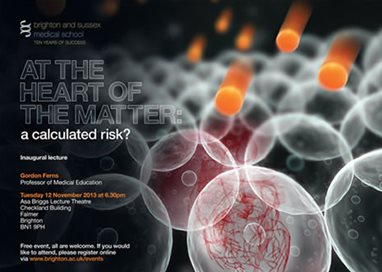
Professor Gordon Ferns holds dual roles as Deputy Dean and Professor of Medical Education and Metabolic Medicine at Brighton and Sussex Medical School (BSMS). He leads the Department of Medical Education and serves as an Honorary Consultant in Metabolic Medicine. With extensive experience, he previously held leadership positions including Dean of Medicine at the University of Surrey and Director of the Institute of Science and Technology in Medicine at Keele University. His academic credentials include a DSc (Doctor of Science) from the University of London, alongside prestigious fellowships such as FRCPath and FRCP. Education: MBBS from St Bartholomew’s Hospital Medical College, followed by an MD and MSc in Clinical Biochemistry from the University of London. Research: Focuses on cardiovascular disease mechanisms, lipid metabolism, and metabolic medicine. Over 500 publications and grants from BHF, MRC, and Wellcome Trust. Research Interests: Biomarkers of cardiovascular disease, nutrition, lipid metabolism, and clinical biochemistry. His work bridges basic science and clinical practice, with contributions to atherosclerosis research and antioxidant therapy paradoxes. Grants & Awards: Recipient of British Heart Foundation funding, Wellcome Pathology Research Fellowship, and Visiting Professorships at Surrey, Keele, Tehran, and Mashhad Universities. Labs/Teams: Leads BSMS medical education initiatives and collaborates internationally on metabolic syndrome research through his editorial role at Translational Metabolic Syndrome Research .
Mostafa Abdel-Mottaleb is a Research Assistant Professor at the University of Miami's College of Arts and Sciences, pioneering magnetoelectric nanoparticle (MENP) technologies for neural interfaces and cancer therapy. His work establishes fundamental principles for wireless modulation of neural activity and targeted tumor eradication using electromagnetic fields. Collaborating across physics, engineering, and neuroscience, he develops non-invasive biomedical devices and computational models. His research advances nanotherapeutic precision and neural recording capabilities through material innovation and biophysical optimization.
Shyam Aravamudhan is a Professor of Nanoengineering at North Carolina A&T State University and Director of the Joint School of Nanoscience and Nanoengineering (JSNN) Core Facilities. His research bridges micro/nanotechnology with life sciences, focusing on nanobioelectronic systems for diagnostics, regenerative engineering, and environmental health impacts of nanomaterials. He leads efforts in 2D materials for flexible electronics and functional additive manufacturing. Director of JSNN Core Facilities Ph.D. in Engineering (implied from title) Research interests include: Nanobioelectronic systems for disease diagnostics Toxicity of engineered nanomaterials Hexagonal boron nitride in microelectronics Regenerative engineering using nanotechnology Funding Sources: NSF, NIH, Semiconductor Research Corporation, and North Carolina Biotechnology Center. His work spans 15+ years with over 80 publications, emphasizing nanomaterials synthesis, defect engineering, and bioelectronic applications. Current students investigate topics like 3D printing of MoS₂ structures, EHS of CMP slurries, and mechanical stimuli on cell function. Outreach includes SENIC programs promoting STEM education and nanotechnology awareness.