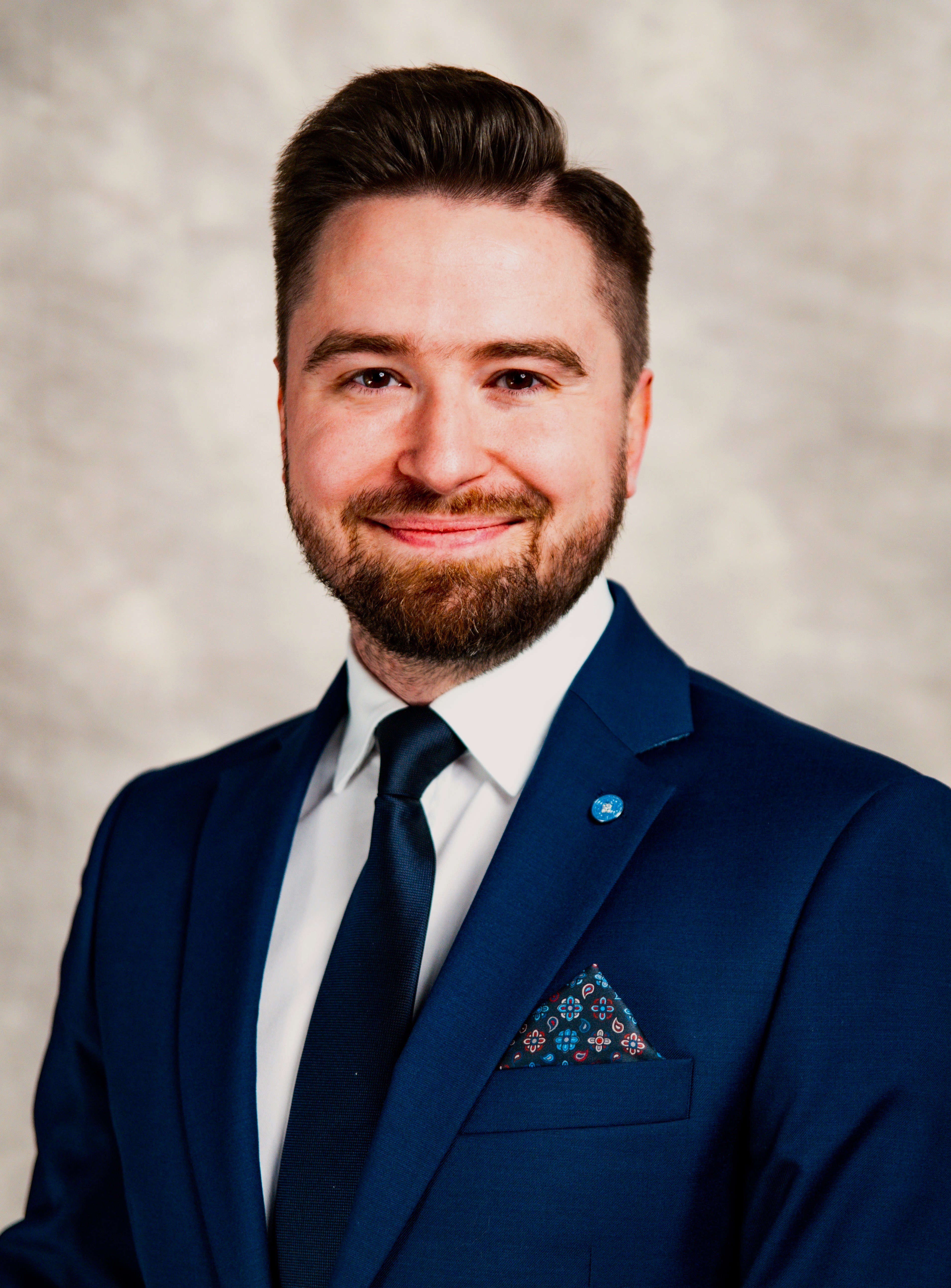
Dr. Clement Matthew Chan is a Research Fellow at the School of Chemical Engineering, University of Queensland , Australia. He earned his PhD in Biocomposites (2019) and serves as a key researcher in the Translational Polymer Research Group . His work spans biodegradable polymer development , focusing on Biodegradation mechanisms in terrestrial/marine environments Toxicological assessment of bioplastic additives Life-cycle analysis of bio-composites Computational modeling for sustainable materials His 15 most recent publications demonstrate expertise in Biopolymer modification (diisocyanate chemistry, gallic acid) Environmental impact quantification (microplastic detection, UV stability) PHA composite engineering (wood plastic interfaces, biofilm production) Waste valorization (paunch waste fibers, estuarine degradation) Currently supervising PhD students studying Lifetimes of bioplastics Green biocomposite additives Plastic biodegradation acceleration with Professors Bronwyn Laycock and Steven Pratt .
Paula Jouhten is an Associate Professor in Bioproducts and Biosystems at Aalto University, specializing in microbial physiology and metabolic engineering. Her research focuses on predictive evolution of metabolic phenotypes, synthetic growth regulation, and industrial yeast biotechnology. Key Research Areas: Systems biology of yeast metabolism, model-guided strain optimization, and CO2 valorization. Collaborations: Works with interdisciplinary teams across molecular biology, computational modeling, and industrial biotechnology. Her publications highlight innovative applications of machine learning in strain design and metabolic pathway engineering for sustainable chemical production.
Taher A Saif is the Edward William and Jane Marr Gutgsell Professor in the Department of Mechanical Science and Engineering at the University of Illinois Urbana-Champaign. His research spans biomechanics and nanomechanics, focusing on cellular mechanics, cancer metastasis, neuro mechanics, and the mechanical properties of nanoscale materials. He leads the Saif Lab which develops innovative micro and nano-scale apparatus for studying cell mechanics and material properties. Dr. Saif received his B.S. in Civil Engineering from Bangladesh University of Engineering and Technology (with Honors) in 1984, his M.S. in Civil Engineering from Washington State University in 1987, and his Ph.D. in Theoretical & Applied Mechanics from Cornell University in 1993. His academic journey includes positions as Lecturer at Bangladesh University of Engineering and Technology, Teaching Assistant at Washington State University, and various research and teaching roles at Cornell University before joining UIUC in 1997. Dr. Saif's research investigates how mechanical forces influence cellular behavior and disease progression. His lab explores fundamental questions about how cells transduce mechanical stimuli into biochemical processes, whether disease progression can be altered with mechanical stimuli, and if cell-cell interactions can be engineered to develop living machines. His work on neuromechanics has revealed that neurons generate mechanical tension that is essential for vesicle clustering and synaptic function. In cancer research, his lab investigates how cancer-associated fibroblasts generate mechanical forces that promote metastasis. His recent publications demonstrate a strong focus on biohybrid robotics, cellular mechanotransduction, and the development of novel sensors for measuring cellular forces. A key trend is the integration of engineering principles with biological systems to create living machines with unprecedented capabilities. His work spans multiple disciplines including biomechanics, materials science, neuroscience, and cancer biology, with increasing emphasis on translational applications for disease treatment and biohybrid robotics. Dr. Saif has received numerous prestigious awards including election to the National Academy of Engineering (2024), the Engineering Science Medal from the Society of Engineering Science (2020), and the Warner T. Koiter Medal from ASME (2018). He was named a Fellow of AAAS (2023) and received the Edward William and Jane Marr Gutgsell Professorship at UIUC (2010-date). Dr. Saif has advised numerous students and postdocs who have gone on to publish significant research in top journals. His lab has secured substantial funding from NSF, NIH, and other agencies to support research on cellular mechanics, cancer metastasis, and biohybrid robotics. He has organized multiple workshops and summer schools including the GEM4 (Global Enterprise for Micro-Mechanics and Molecular Medicine) programs focused on cancer, cardiovascular systems, and developmental biology. The Saif Lab operates at the intersection of engineering and biology, maintaining state-of-the-art facilities for micro and nano fabrication, cell culture, and mechanical testing. The lab has developed innovative MEMS-based devices for studying cellular forces and material properties at small scales. Current projects include "Mind in vitro" (exploring whether living neurons can perform computations), FORCE hypothesis research (investigating how mechanical forces drive cancer progression), and the development of biohybrid robots that combine living cells with engineered scaffolds.
Edith Hammer is a Senior Lecturer at Lund University , affiliated with the Centre for Environmental and Climate Science (CEC), Microbial Ecology, Functional Ecology, and the NanoLund: Centre for Nanoscience. Her research focuses on soil ecology, mycorrhizal symbiosis, and carbon cycling, contributing to UN SDGs related to climate action and life on land. 2015 UN SDG Expertise: Climate Change Mitigation Soil Carbon Storage Biodiversity Conservation Research Themes Microscale soil structure and its impact on nutrient cycling Mycorrhizal fungal roles in carbon sequestration Fungal interactions with plastic pollutants Nanoscale biogeochemical processes Microbial community dynamics in soil pore spaces Key Awards Venture Cup IDEA (2022) Swedish King’s 50th Anniversary Foundation Award (2012) Advising & Grants Supervisor for Ph.D. project: Dying - how and where? Microbial necromass quality (Swedish Research Council, 2024-2028) Principal Investigator for Windows to the Underground (FORMAS, 2025-2028) Labs & Collaborations Active in LU Profile Area: Nature-based Future Solutions, LTH Profile Area: Nanoscience and Semiconductor Technology, and the BECC: Biodiversity and Ecosystem Services in a Changing Climate. Collaborates internationally on fungal ecology and climate change projects.
Anders Tunlid is a Professor of Microbial Ecology and Functional Ecology at Lund University, serving as Principal Investigator for BECC (Biodiversity and Ecosystem services in a Changing Climate). Appointed Professor since 1998, he was elected to the Royal Swedish Academy of Sciences in 2011 and maintains active research leadership in soil microbial processes. His research examines molecular mechanisms of organic matter decomposition by soil fungi, integrating genomics, molecular geochemistry, and computational biology across spatial scales from nanometers to forest ecosystems. Key focus areas include: Functional ecology of ectomycorrhizal and saprotrophic fungi Soil carbon and nutrient cycling dynamics Fungal-mineral-microbe interactions Climate change impacts on soil biogeochemistry Recent publications reveal breakthroughs in fungal decomposition mechanisms, organic matter colloidal properties, and carbon persistence in forest soils using advanced spectroscopic and scattering techniques. His work demonstrates how fungal activities control carbon sequestration through molecular-scale interactions with soil minerals. Awards and recognition: Elected member of the Royal Swedish Academy of Sciences (2011) Professor Tunlid directs major research initiatives including the Knut and Alice Wallenberg Foundation project 'Molecular Interactions Controlling Soil Carbon Sequestration' and the Crafoord Foundation's 'LINXS Institute of advanced Neutron and X-ray Science'. He actively supervises doctoral students like Erika Andersson and collaborates internationally on soil biogeochemistry, with significant contributions to UN Sustainable Development Goals for climate action and terrestrial ecosystems.
Gemma Egan is a Research Fellow in the Department of Biomedical Engineering at the University of Strathclyde, United Kingdom. Her work focuses on biomedical and material science applications, particularly exploring silk fibroin's properties for wound healing and environmental sensing. Research Interests: Active in fields such as biomedical engineering, material science, and microbiology, Egan investigates the antibacterial effects of silk fibroin against wound pathogens and develops eco-friendly sensors using smart silk origami to detect environmental pollution. Key Research Outputs: Recent publications include studies on silk-based biopolymers' antibacterial activity and their application as biodegradable environmental sensors. These works highlight interdisciplinary approaches bridging material science, biotechnology, and environmental science. Projects: Currently co-investigating microbial contamination in prosthetic liners and previously involved in the EPSRC-funded Doctoral Training in Future Power Networks and Smart Grids. Activities: Engaged in public outreach through media participation in STEM fairs, emphasizing the societal impact of her research.
Mitar Simić is an Associate Professor at the Faculty of Electrical Engineering, University of Banja Luka. His research focuses on textile electronics , sensor technology , and IoT applications in biomedical and agricultural contexts. He leads national and international projects related to embedded systems and machine learning. Key Research Areas: Flexible sensors, impedance spectroscopy, sustainable materials, and biohybrid systems His recent publications emphasize textile-based sensing platforms , edible electronics , and machine learning for sensor data analysis . While no specific awards are listed, his work spans collaborations with institutions like NATO and the European Commission. He contributes to smart city initiatives and environmental monitoring , integrating bees as biosensors and developing systems for landmine detection. His projects often involve teams from multiple faculties, focusing on practical implementations of IoT and sensor networks.
Professor Pauline Pounds is a full Professor at the University of Queensland, jointly affiliated with the School of Electrical Engineering and Computer Science (Faculty of EAIT) and the Research Centre in Creative Arts and Human Flourishing (Faculty of HASS). She leads a broad robotics research portfolio centred on low-cost, high-performance drones, bipedal locomotion, embodied intelligence, disposable UAVs, exoskeletons and novel sensor systems. Education: Bachelor of Engineering – Australian National University Doctor of Philosophy – Australian National University Research interests span five thematic areas: (1) Drone design for extended range, efficiency and payload; (2) Low-cost bipedal robot locomotion; (3) Embodied intelligence enabling robots to exploit electromechanical dynamics without heavy computation; (4) Disposable, biodegradable UAVs for one-way missions; and (5) Human-augmenting exoskeletons for search-rescue and warehouse tasks. Her recent publications reveal concentrated effort in deep-reinforcement-learning-based robot control, tactile whisker sensors, lidar-based place recognition, modular aerial robots and real-world RL deployment—trends that emphasise cheap, robust autonomy and novel sensing. Funding & grants include current CSIRO “Robot-Enabled Autonomous Science” (2019-25), Wellcome Leap “Abdominal Laparoscopic Surgical Models with High-Fidelity Haptics” (2023-24), AuScope “EarthDrone” infrastructure (2023-25), and Advance Queensland / Trusted Autonomous Systems CRC “Integrated Sensors and Control” (2020-24), among others. PhD supervision: She has graduated four doctoral candidates to date (one as principal advisor, three as associate) and is currently available for new research students.
Sophie Guillaume is a CNRS Research Director at the Rennes Institute of Chemical Sciences (ISCR) , University of Rennes, France. Her career spans over 25 years with continuous CNRS appointments since 2000, focusing on polymer chemistry and sustainable materials. Education : PhD in Inorganic-Organometallic Chemistry (Syracuse University, 1992), Master in Polymer Chemistry (University of Bordeaux, 2000) Research Interests center on green chemistry approaches for functional polymers, including: Polymerization catalysis (metallic, organic, and dual catalytic systems) Macromolecular engineering of polycarbonates , polyesters , and non-isocyanate polyurethanes Structure-property relationships in circular polymers Biodegradable materials from CO 2 and biomass Scientific Leadership includes: Deputy Scientific Director, CNRS Chemistry (2024-) French National Representative, IUPAC Polymer Division (2022-) Associate Editor, ACS Applied Polymer Materials (2021-) President of French Polymers Group (2018-2021) Industry Collaborations span multiple European countries with institutions like ICIQ (Spain) , ULiege (Belgium) , and companies including Bostik-Arkema and Total Petrochemicals . Her 15 most recent publications (2011-2023) demonstrate expertise in ring-opening polymerization , catalytic systems , and eco-friendly materials , with recurring themes in atom-saving processes and metal-free polymerization .
James Darkwa is a senior professor and leading researcher in catalysis and organometallic chemistry, whose primary institutional affiliation from 2006 to 2023 has been the University of Johannesburg . He has additionally held research roles at the Botswana Institute for Technology Research and Innovation , the Southern African Institute of Welding , the University of the Western Cape , the University of Cape Town , the University of Limpopo , the University of Botswana , Newcastle University , Northern State University (Aberdeen) , and several others, reflecting a broad trans-national research footprint. His research interests centre on the design, synthesis and mechanistic understanding of metal complexes for catalytic hydrogenation and related transformations, with a growing emphasis on sustainable energy applications such as CO₂ fixation and biodiesel upgrading. Specific themes include: Pyrazolyl-based ligand architectures for Zn(II), Pd(II) and Ni(II) centres. Ring-opening polymerization of cyclic esters to biodegradable polyesters. Methoxycarbonylation and carbonylation of alkenes using tailored Pd(II) pre-catalysts. Ethylene polymerization catalysis and olefin activation. Across more than four decades, Darkwa’s work has appeared in high-impact journals such as Journal of the American Chemical Society , Polyhedron , Journal of Organometallic Chemistry , and Acta Crystallographica , reflecting sustained contributions to synthetic methodology, structural elucidation, and catalytic mechanism. The temporal breadth of his publications (1988–2022) shows an evolution from fundamental cluster chemistry to contemporary green-chemistry challenges. Although specific awards are not enumerated in the supplied text, Darkwa has been successful in attracting funding from the National Research Foundation (South Africa) , NSF (USA) , National Natural Science Foundation of China , Seventh Framework Programme (EU) , and other national and international sponsors, attesting to his recognised scientific stature. His collaborative network spans more than 70 institutional affiliations worldwide, with a co-authorship cluster centred in Botswana and extending globally. No named doctoral or master’s students are provided in the text, nor are laboratory or team details explicitly stated.
Nataliya Kutsevol is a Senior Researcher and Vice Dean (Research) at the Faculty of Chemistry, Taras Shevchenko National University of Kyiv. Her work bridges polymer chemistry, nanotechnology, and biomedical applications through the synthesis and characterization of stimuli-responsive polymer matrices and nanosystems. Education: PhD in Polymer Chemistry (2002), Doctor of Chemical Sciences (2013). Leadership: Head of Faculty, Vice Dean (Research), and Principal Investigator since 2014. Her research focuses on polymer-nanoparticle hybrid systems for photodynamic therapy, drug delivery, and environmental remediation. Key areas include: Thermosensitive and pH-responsive nanocarriers Metal-polymer nanocomposites (gold, silver, ZnO) Hydrogel synthesis for wound dressings Radionuclide purification using star-like polymers Optical and plasmonic properties of hybrid nanosystems Mechanistic studies of drug resistance Recent publications highlight advancements in multicomponent nanosystems for cancer therapy , antibacterial hydrogels, and polymer-based nanotoxicology. Collaborations span institutions in France, Belarus, Russia, Ukraine, and the U.S. Scientific Awards: NATO grants (2005–2006, 2011–2012) Ukrainian-French DNIPRO project (2004–2006) Erasmus+ mobility grants (2017, 2019) French PAUSE program for Ukrainian scientists (2022) She has led projects on photodynamic therapy, nanocarrier design, and metal nanoparticle applications. Her team includes chemists, biologists, and physicists, and she serves on the editorial board of Functional Materials (Scopus).
Audrey Laventure is an Associate Professor in the Department of Chemistry at the Université de Montréal , holding the Canada Research Chair in Functional Polymer Materials . Her research bridges materials chemistry and physical chemistry , focusing on 3D-printed multifunctional organic materials for optoelectronics and energy systems. Education : PhD (2017) and BSc (2013) in Chemistry from Université de Montréal, postdoc at University of Calgary (2020). Research : Explores 3D printing of conducting polymers, solid polymer electrolytes, and self-healing materials. Key applications include organic solar cells , thermoelectrics , and rechargeable batteries . Grants : Leads projects funded by NSERC , FRQNT , Canada Foundation for Innovation , and Canada Excellence Research Chair initiatives. Awards : Recognized with the Thieme Chemistry Journals Award (2025) , Canadian Society for Chemistry Emerging Materials Chemistry Award (2024) , and Vanier Canada Graduate Scholarship (2014-2017) . Outreach : Active science communicator, selected for Les chercheuses en BD (2023) , and previously served on Canada's Chief Science Advisor's Youth Council (2020-2023).
Dr. Morshed Khandaker is a Professor in the Department of Engineering and Physics at the University of Central Oklahoma (UCO) , where he has served since 2008. He also holds a joint appointment as Research Scientist at the Oklahoma City VA Health Care System since 2019. Ph.D. in Mechanical Engineering (2007) and M.Sc. (2002) from Texas Tech University B.Sc. in Mechanical Engineering (1999) from Bangladesh University of Engineering & Technology Dr. Khandaker's research focuses on solid mechanics, biomaterials, and additive manufacturing , particularly using electrospun nanofiber technology to improve biomedical implants. His work spans osseointegration of titanium implants , nanofiber-coated bone cement , and traumatic brain injury modeling using shock wave exposure studies. His laboratory (Electrospun Nanofiber Lab) has produced 26 peer-reviewed articles and 5 granted patents. He has mentored 3 post-doctoral researchers, 18 graduate students , and over 100 undergraduates , with students frequently appearing as co-authors on his publications. Recipient of the 2019 Fullbright Award 2017 Vanderford Undergraduate Research Award Multiple UCO Faculty Merit Awards in research and teaching Best student paper awards at national conferences Dr. Khandaker has secured continuous funding from federal agencies (NIH, NSF, VA), state programs (OKINBRE, PHF), and industry partners like EXAKT Technology Inc. His teaching portfolio includes foundational mechanical engineering courses and advanced topics in biomaterials and finite element analysis .
Dr. Pavle Spasojević is a Full Professor at the Faculty of Technical Sciences in Čačak, University of Kragujevac , where he has worked since 2023. His academic career at the same faculty progressed from Associate Professor (2018-2023) to his current role. Diploma: University of Belgrade – Faculty of Technology and Metallurgy (2006) in Polymer Engineering PhD: University of Belgrade – Faculty of Technology and Metallurgy (2012) , dissertation on Modification of poly(methyl methacrylate) materials for dental prostheses with itaconic acid diesters His research focuses on polymer materials engineering , including: Nanomaterials and biomaterials Sustainable development and bioeconomy Hydrogels for drug delivery Itaconic acid-based composites Recycling of PET waste Recent publications highlight green pH/magnetic-responsive hydrogels , bio-based unsaturated polyesters , and biomimetic polymer networks for environmental applications. He holds 4 patents and 3 technical solutions , with over 950 Scopus citations (h-index 19). Awards include multiple Panta S. Tutundžić and Serbian Chemical Society recognitions. Teaching subjects include Technical Materials , Textile Materials , and Environmental Monitoring .
Dr. Przemysław Bartczak is a researcher at the Institute of Chemical Technology and Engineering , Faculty of Chemical Technology, Poznań University of Technology. His work bridges polymer science, environmental engineering, and industrial applications. PhD in Chemical Technology (2017) Master of Science in Engineering (2012) Engineer degree in Chemical Technology (2011) Research interests: Focuses on Polyurethane Chemistry , developing green composites with renewable materials, optimizing foam processing , and advancing adsorption technologies for pollutant removal. Key areas include hybrid materials and bio-based polymers . Scientific trends: Recent publications highlight sustainable polyurethane composites using chitin/lignin hybrids, TiO2–ZnO fillers, and Camelina sativa biomass. His work spans materials science , environmental remediation , and industrial polymer applications . Academic roles: Active in curriculum development as: Faculty Coordinator for Course Promotion (2024-2028) Member of Faculty Evaluation Team Leader in AFM Workshop coordination Supervisor for R&D projects with industry partners Collaborative networks: Works with Maria Curie-Skłodowska University , Adam Mickiewicz University , and Poznań University of Life Sciences , emphasizing industrial-academic partnerships in the polyurethane sector.