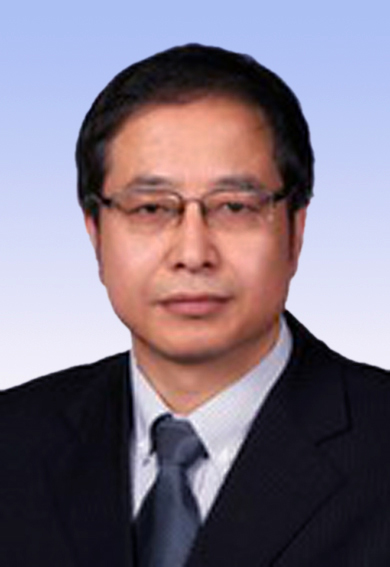
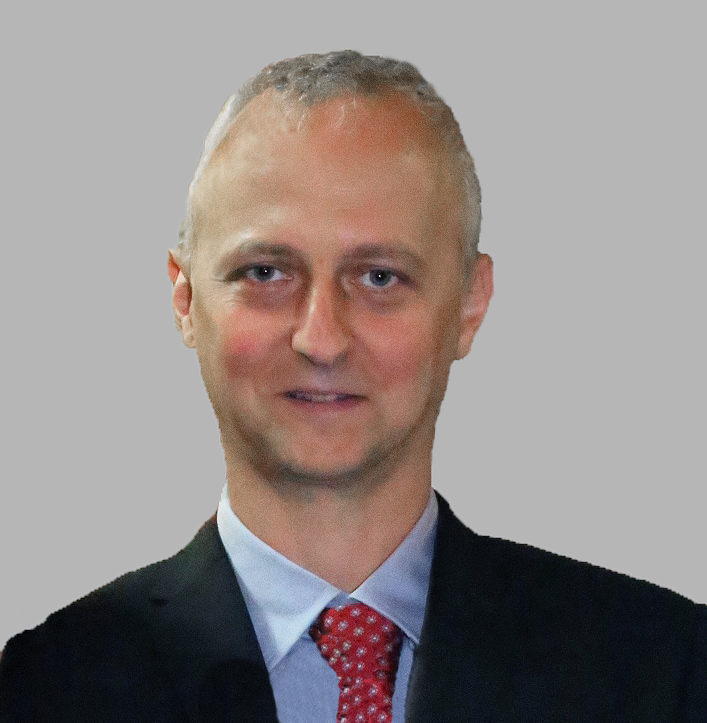
Dr. Kibret Mequanint is a full Professor at Western University's Department of Chemical and Biochemical Engineering, with cross-appointments in Biomedical Engineering. Holding a PhD from University of Stellenbosch and postdoctoral experience at Technical University of Darmstadt and McMaster University, his research bridges polymer science, materials engineering, and life sciences with applications in Biomaterials , Tissue Engineering , and Regenerative Medicine . His work spans both fundamental and translational research in cell-material interactions , polymer biomaterial design , and therapeutic radiation dosimeters , with technologies transferred to commercial applications. Leading scholar and educator with awards from NSERC, CIHR, and Western University Fellow of: American Institute for Medical and Biological Engineering (AIMBE), Ethiopian Academy of Sciences, International Union of Societies for Biomaterials Science and Engineering, Canadian Academy of Engineering Extensive editorial and panel service for NSERC, CIHR, and international journals His research program has produced over 170 refereed publications, focusing on conductive hydrogels , bioadhesives , and vascular tissue engineering . Recent work on endoscopy-deliverable bioadhesives and snake venom-derived hemostatic gels has attracted global media attention. He has served in leadership roles at the Canadian Biomaterials Society and university governance bodies including Senate and Board of Governors.
Prof. Ellen Kandeler is a leading academic in soil biology and microbial ecology at the University of Hohenheim , heading the Department of Soil Biology within the Institute of Soil Science and Site Science. Her work focuses on microbial interactions, soil organic matter dynamics, and the impacts of land use and climate change on soil systems. She actively contributes to interdisciplinary projects funded by the German Research Foundation (DFG), including studies on mineral-organic matter associations, pesticide degradation, and agroecosystem resilience. Research interests include rhizosphere dynamics, biogeochemical cycles, and the ecological functions of soil microorganisms, with applications in sustainable agriculture and environmental protection. She is also involved in institutional roles as a Deputy Ombudsperson for Scientific Integrity and member of committees overseeing large-scale research infrastructure. Her recent publications emphasize climate-soil feedbacks, microbial community assembly, and the biodegradation of agrochemicals. Projects like the DFG-FOR 1695 on agricultural landscapes under climate change highlight her commitment to addressing global environmental challenges through soil science. Prof. Kandeler’s work bridges fundamental and applied research, with a focus on translating soil microbial processes into strategies for sustainable land management and mitigating anthropogenic impacts on soil health.
Alberta N.A. Aryee, PhD is an Associate Professor in the Department of Human Ecology (Food Science & Biotechnology) at Delaware State University (DSU). She holds a PhD from McGill University and completed postdoctoral research at Agriculture and Agri-Food Canada. Her research focuses on the impact of natural products and bioactive compounds on nutrition, health, and metabolic diseases, with particular emphasis on food processing effects, functional food development, and biofortification strategies. Education: Postdoctoral Research: Agriculture and Agri-Food Canada PhD: McGill University (Dissertation: Enzyme Immobilization and Biodiesel Production) MSc: McGill University (Thesis: Lipase Purification) BSc (Hons): Kwame Nkrumah University of Science and Technology Research Interests: Food science, functional ingredients, nutraceuticals, fermentation science, lipid technology, and sustainable food systems. She explores how processing impacts food matrices, bioavailability of nutrients, and the application of nanotechnology and machine learning in food analysis. Recent Research Trends: Her work spans encapsulation of bioactives, plant-based food innovation, and leveraging AI for nutrient prediction. Studies include optimizing hempseed processing, analyzing fermented cassava chemistry, and designing smart food packaging. Awards: 2020 DSU Faculty Excellence in Research 2018 Hornet Award (Early College High School) Mini Grant for hands-on food science education Advising & Grants: Mentors students in food chemistry and product development. Collaborates on grants focused on value-added food products from agricultural byproducts. Leads experiential learning programs integrating global food challenges. Labs & Teams: Based in DSU’s Baker Annex, her lab focuses on lipid science and functional food formulation. Collaborates with industry partners on sustainable food technologies and nanodelivery systems.
Jie Xu is a Scientist at Argonne National Laboratory and a CASE Affiliated Scientist at the University of Chicago, Pritzker School of Molecular Engineering . Her research focuses on engineering durable, scalable, and sustainable polymer semiconductors for skin-like electronics and autonomous material discovery. Education : PhD in Chemistry (Nanjing University), Postdoctoral Fellow (Stanford University) Her research bridges polymer physics , self-driving laboratories , and AI-guided material synthesis to address challenges in stretchable electronics, recyclable polymers, and energy-efficient manufacturing. She pioneered polymer circuits that remain conductive under extreme deformation and developed the first roll-to-roll mass-production method for stretchable semiconductors. Her 15 most recent articles highlight advancements in AI-driven polymer discovery , biodegradable electronics , and multi-modal energy dissipation . Key themes include autonomous experimentation , hydrogen-bonded polymer systems , and machine learning for conjugated polymers , with applications in wearable medical sensors , soft robotics , and human-computer interfaces . Scientific accolades include the Materials Research Society Postdoctoral Award , MIT Technology Review’s Innovators Under 35 , and recognition as a Scialog Fellow . She serves on editorial boards for APL Machine Learning and Flexible Electronics , and her team at Argonne includes postdocs and students working on self-driving labs and degradable polymers .
Debanjan Sarkar is an Associate Professor of Teaching and Director of Undergraduate Studies in the Department of Biomedical Engineering at the School of Engineering and Applied Sciences, University at Buffalo. He is also affiliated with the Jacob's School of Medicine and Biomedical Sciences, where his full profile can be found. His research focuses on biomaterials and regenerative therapeutics, particularly exploring how engineered materials interact with cells to regulate growth, differentiation, and repair processes. Debanjan holds a PhD and has conducted extensive research in cell-substrate interactions, stem cell fate control, and mechanomorphological guidance of colloidal gels. His work integrates polymer chemistry with biomedical applications, emphasizing biodegradable elastomers, hydrogels, and extracellular matrix mimics for regenerative medicine and tissue engineering. Key research themes include drug delivery systems using novel biomaterials, mechanobiology of endothelial cells, and the design of tunable materials to direct cell behavior. His studies span from fundamental material characterization to translational applications in dentistry and vascular repair. Debanjan leads the Biomaterials and Regenerative Therapeutics Lab, which develops innovative materials to address clinical challenges in tissue regeneration. While no formal advisees are listed, his educational role underscores his commitment to undergraduate training in biomedical engineering principles and practices.
Guillaume Chiavassa is a Professor in Applied Mathematics at Ecole Centrale de Marseille, affiliated with the Laboratoire M2P2 (Mechanics, Modeling and Physical Processes Laboratory). He leads research in the Thermodynamics, Waves, Digital, Interfaces and Combustion team, focusing on advanced computational methods for complex physical phenomena. His research spans wave propagation in porous media, numerical modeling of plasma flows in Tokamak configurations, multilevel schemes for conservation laws, penalization methods for compressible flows, and wavelets in numerical analysis. Chiavassa's work demonstrates exceptional mathematical rigor applied to challenging physical systems, particularly in nonlinear wave dynamics and computational fluid mechanics. His methodologies bridge theoretical mathematics with practical engineering applications. Analysis of his recent publications reveals a strong focus on wave propagation phenomena across diverse media, with significant contributions to numerical methods for nonlinear systems. His work consistently addresses the mathematical challenges of modeling complex physical behaviors including material softening, fractional attenuation in porous media, and plasma dynamics in fusion devices. The interdisciplinary nature of his research connects applied mathematics with mechanical engineering, geophysics, and nuclear fusion technology. Chiavassa leads the PROSPERO Software project and participates in the ANR Espoir research initiative and the Consortium SEISCOPE. His teaching activities include courses on hyperbolic equations, finite elements, and heat transfer, with practical computational components developed for student instruction. He maintains an active research program through Laboratory M2P2, where his team develops advanced numerical methods for simulating complex physical phenomena with applications ranging from environmental engineering to nuclear fusion research.
Kristy M. Ainslie, PhD, is a Professor in the Department of Pharmacoengineering and Molecular Pharmaceutics at the University of North Carolina at Chapel Hill's Eshelman School of Pharmacy and a member of the UNC Lineberger Comprehensive Cancer Center. Her research develops immune-modulatory therapies using biomaterials to treat infectious and autoimmune diseases as well as cancer, with explicit focus on scalable production for resource-limited settings globally. Dr. Ainslie's work integrates biomaterials science and immunology to engineer practical drug delivery systems, particularly using acetalated dextran (Ac-DEX) platforms. Her lab specializes in creating microparticles and nanofibers for antigen/vaccine delivery, cancer immunotherapy, and autoimmune disease treatment, prioritizing formulations adaptable to developing nations. Recent advancements include electrospray techniques for non-denaturing protein encapsulation and machine learning models for predicting drug release kinetics. Her publication trajectory reveals consistent innovation in nanomedicine, with increasing emphasis on translational applications. Key trends include acid-responsive polymer systems for controlled therapeutic release, scalable manufacturing methods for global vaccine access, and immune-modulation strategies targeting T-regulatory cells for autoimmune conditions like multiple sclerosis. Dr. Ainslie's accolades include: Sato Memorial International Award (2023) Controlled Release Society Fellow (2022) American Institute for Medical and Biological Engineering Fellow (2021) OSU Council of Graduate Students Distinguished Faculty Advising Award (2012) She actively mentors PhD and Master's students, with recent advisees including Nicole Rose Lukesh, Sophie Mendell, and Ryan Woodring. Her lab comprises postdoctoral researchers like Pamela Tiet and Monica Johnson, supported by collaborative projects with institutions including Ohio State University. While specific grants aren't detailed, her high-impact publications and lab operations indicate substantial external funding. The Ainslie Lab, headquartered at 4012 Marsico Hall, drives translational nanomedicine through interdisciplinary teams. It maintains active outreach initiatives like school science demonstrations and hosts international collaborators, reflecting its commitment to education and global health impact.
Caroline Schauer is a Professor and Department Head in Materials Science and Engineering at Drexel University's College of Engineering. Holding the Margaret C. Burns Chair in Engineering, she has been tenured since 2010 and promoted to full professor in 2018. BS (1991), MS (1994), PhD (1997) in Chemistry from SUNY Stony Brook Postdoctoral fellowships at University of Twente, Tufts University, and Naval Research Laboratory Her research focuses on natural polymer processing , electrospun nanoyarns , biodegradable biomaterials , and concrete self-healing technologies . Recent work explores MICCP (microbially induced calcium carbonate precipitation) for sustainable infrastructure and collagen-based nanoyarns for tissue engineering. Key trends in her publications include bio-inspired fiber design, antimicrobial material development, and environmental applications. Notable contributions span smart textiles , wound healing dressings , and conductive polymer composites . Fellow, American Institute for Medical and Biological Engineering (AIMBE), 2021 ELATES Fellow, 2017-2018 Drexel Harold M. Myers Award for Distinguished Service, 2018 Drexel Fellowships Office Faculty Mentor Award, 2016 Schauer has secured funding from NSF , DOD , PA Innovation Fellowship , and the US Department of Education . She leads the Natural Materials and Polymer Processing Group and serves as President of the Fiber Society since 2023.
Graham Ormondroyd is a Professor at the School of Environmental and Natural Sciences , Bangor University , specializing in the Biocompounds department. His research focuses on innovative wood modification techniques, sustainable biomaterials, and environmental impact assessments. Current projects include scaling waste-based composites for infrastructure and developing Welsh wool applications. Collaborations span academia-industry partnerships like Bangor University and Zentia Ltd KTP. Research Trends: His 2025 publications emphasize multi-scale resin diffusion analysis and UK wood recycling frameworks, while 2024 work explores laser incising and phenolic resin-NMR interactions. Recent studies also address VOC emissions from formaldehyde-free composites. Professional Activities: He chairs academic panels (e.g., International Panel Products Symposium) and reviews publications. Projects focus on net-zero construction and climate resilience.
MARIO MARTINEZ MARTINEZ is Associate Professor at University of Valladolid's Department of Agricultural and Forestry Engineering, with secondary appointments at Aarhus University and Purdue University. His research develops plant-based macromolecular assemblies for food, pharmaceutical, and packaging applications. Research focuses on: Structure-function relationships of plant biopolymers Green modification techniques for polysaccharides Food waste valorization strategies Edible packaging development Nutrient bioaccessibility enhancement Recent publications showcase innovative approaches to starch modification using deep eutectic solvents, waste upcycling (bread, apple pomace, garlic peels), and functional ingredient development from underutilized sources (macroalgae, hawthorn). Major recognitions include: Nils Foss Talent Prize 2021 DFF-Sapere Aude excellence grant (€1M) Ontario Early Researcher Award Young Scientist Award from Cereals & Grains Association Leads research on sustainable food systems through international collaborations and industry partnerships.
Marc Habash is an Associate Professor at the School of Environmental Sciences, University of Guelph. His work focuses on microbial interactions in environmental systems, particularly pathogen detection, microbial biofilms, and water quality. He holds a BSc in Cellular and Molecular Biology from the University of Toronto, an MSc in Microbiology and Immunology from the University of Western Ontario, and a PhD in Environmental Biology from the University of Guelph. Research interests include molecular and culture-based detection of waterborne pathogens, microbial source tracking using Bacteroidales spp., and biofilm formation studies involving probiotics. Collaborative efforts examine proteomic analysis via mass spectrometry techniques. His lab is located in the Edmund C. Bovey Building (Room 3238). Publications emphasize environmental microbiology applications: from yeast tolerance mechanisms to advanced PCR methods for microbial viability quantification. Recent work explores bacterial surface dynamics, insect pest diapause induction, and enzymatic dehalogenation processes. Research consistently bridges fundamental microbiology with practical environmental monitoring solutions. No scientific awards are listed. Advising and grants sections remain unpopulated in available records. His interdisciplinary approach connects environmental engineering, molecular biology, and ecological systems analysis.
Iris Yu is an Assistant Professor in the Civil and Environmental Engineering department at the National University of Singapore (NUS) . Her research focuses on green chemistry and biomass conversion , particularly utilizing microwave-assisted processing and green solvents to transform food and biomass waste into sustainable chemicals and materials. She actively contributes to teaching courses like Green Catalysis and Circular Economy , while leading a team of researchers in biorefinery and waste valorization projects. Her scientific awards include the L'Oréal-UNESCO for Women in Science Singapore Award 2024 MIT Technology Review Innovator Under 35 (TR35) Asia Pacific 2023 Fellow of the Royal Society of Chemistry (2023–Present) Clarivate Highly Cited Researcher (Cross-Field) 2022–2023 World's Top 2% Scientist by Stanford University 2023 Yu’s research interests span biomass upcycling microwave technology bioresource utilization catalysis fundamentals green and sustainable chemistry platform chemical production . Her publications frequently address microwave-assisted biorefineries , catalytic hydrogenation mechanisms , and sustainable solvent impacts on biomass conversion. She serves on editorial boards for journals like Science of the Total Environment and ACS Sustainable Chemistry & Engineering , and mentors students in the IRIS@NUS internship program. Her lab’s work has been recognized in awards such as the Best Student Poster at SIWW2024, highlighting innovative approaches like microalgae-based food waste valorization .
Professor Mou Bozhong is a full Professor and Doctoral Supervisor at the School of Chemistry and Molecular Engineering, East China University of Science and Technology (ECUST) . He serves as Director of the Engineering Research Center for Biorecovery, Ministry of Education and heads the Institute of Applied Chemistry . Recognized as a Foreign Academician of the Russian Academy of Engineering , he also sits on the editorial boards of five leading journals and is a member of key professional committees of the Chinese Chemical Society and Chinese Society of Microbiology. Education & Career Path B.Sc. (1982), Chengdu University of Technology M.Sc. (1989), China Coal Research Institute (Xi’an) – Geodrilling Fluid Chemistry Laboratory Ph.D. (1998), Southwest Petroleum University – Applied Chemistry/Interfacial Chemistry Postdoctoral Research (1998–2000), Ocean University of Qingdao Visiting Scholar, University of Wyoming, USA – Microbial Enhanced Oil Recovery (MEOR) Joined ECUST as Full Professor (January 2001–present) Research Interests Professor Mu’s interdisciplinary research integrates microbiology, interfacial chemistry, and petroleum engineering . He investigates microbial life in extreme reservoir environments , focusing on: Structure and function of biosurfactants and bio-based surfactants Anaerobic biodegradation pathways of petroleum hydrocarbons and associated biomarkers Microbial community dynamics in high-temperature, high-pressure reservoirs CO₂ biotransformation and biofixation by reservoir microorganisms for CCUS applications Microbially influenced corrosion (MIC) and mitigation strategies in oilfield systems Publication & Patent Trends His 200+ SCI-indexed articles and 50+ invention patents (32 authorized) reveal a trajectory from fundamental molecular simulation of lipopeptide surfactants to large-scale field demonstrations of MEOR and CO₂-EOR technologies. Notable themes include in-situ microbial community engineering, metabolic pathway reconstruction via multi-omics, and development of eco-friendly surfactants for enhanced energy recovery . Scientific Awards & Honors Foreign Academician, Russian Academy of Engineering Second Prize, National Science and Technology Progress Award (2010) First Prize, Shanghai Science and Technology Progress Award (2008) First Prize, China Industry-University-Research Cooperation Innovation Achievement Award Baosteel Outstanding Teacher Award National Teaching Achievement Award (Second Prize) Enjoys Special Government Allowance from the State Council Member, 11th & 12th Shanghai CPPCC Teaching & Mentoring Professor Mu delivers core undergraduate courses in Physical Chemistry and graduate courses in Biophysical Chemistry and Energy Biotechnology . He pioneered the nation’s first bilingual Physical Chemistry demonstration course and mentors students in chemistry, microbiology, and bioengineering, actively recruiting Ph.D. and Master’s candidates. Laboratory & Teams His laboratories (Room 225, Laboratory Building 3) house the Engineering Research Center for Microbial Enhanced Oil Recovery , equipped for molecular microbiology, interfacial chemistry, and pilot-scale bioprocess testing. The group collaborates with PetroChina, SINOPEC, and international partners to translate fundamental discoveries into field applications.
Elizabeth A. Edwards is a University Professor at the University of Toronto in the Department of Chemical Engineering and Applied Chemistry , with cross-appointments to the Department of Cell & Systems Biology . As Director of BioZone and Canada Research Chair in Anaerobic Biotechnology, she leads groundbreaking research in microbial bioremediation of groundwater pollutants and industrial wastewater treatment through anaerobic digestion. Ph.D. in Environmental Engineering (Stanford, 1993) M.Eng. and B.Eng. in Chemical Engineering (McGill, 1985/1983) Licensed Professional Engineer (P.Eng.) Her research focuses on anaerobic microbial communities that degrade pollutants like chlorinated solvents and aromatic hydrocarbons. Using advanced molecular biology, genomics, proteomics , and biochemical pathway analysis , her lab investigates functional interactions in microbial consortia and translates discoveries to commercial applications such as the KB-1® bioproduct . Recent studies examine enzyme activity, lignocellulose degradation, and granulation dynamics in anaerobic reactors. Scientific Recognition: 2020 Killam Prize in Engineering 2016 Canada Research Chair (Tier 1) 2014 Royal Society of Canada Fellow 2011 Canadian Academy of Engineering Fellow 2011 AAAS Fellow 2008-2010 Killam Research Fellowship She supervises extensive graduate student projects spanning enzyme discovery, bioremediation optimization, and microbial consortium analysis. Her lab collaborates with GeoSyntec Consultants and SiREM Labs for field implementation of bioremediation strategies.
Prof. dr hab. inż. Łukasz Chrzanowski is a faculty member at the Institute of Chemical Technology and Engineering of the Poznań University of Technology , Poland. He holds a habilitation in Technical Sciences, Biotechnology (2013) and a PhD in Chemical Sciences, Chemical Technology (2005), both from Poznań institutions. His academic journey began with an MS in Chemical Technology (2001) at Poznań University of Technology. Current Roles: Professor, Department of Organic and Bioorganic Chemistry; Editorial Board Member of Polish Journal of Microbiology , Molecules , Polish Journal of Environmental Studies , and Toxics . Collaborations: Helmholtz Centre for Environmental Research (Germany), Technical University of Denmark, University of Applied Sciences and Arts Northwestern Switzerland, BOKU-University of Natural Resources and Life Sciences (Austria), The University of Alabama, and Université Rennes 1 (France). His research focuses on biodegradation of xenobiotics (surfactants, hydrocarbons, pharmaceuticals, herbicides, ionic liquids) in natural environments, emphasizing microbial adaptation mechanisms , plant-microbe interactions, and geomicrobiological processes . Recent work explores herbicidal ionic liquids, bioaugmentation strategies, and biosurfactant impacts on environmental remediation. Key trends in his publications include: Bioremediation of diesel/biodiesel blends and PAHs Microbial degradation of ionic liquids and pharmaceuticals Soil-water microbial dynamics and surfactant ecology Applications of geomicrobiology in pollution management Awards: Minister of Science and Higher Education Scholarship for Young Scientists (2012) Nowicki Foundation/Deutsche Bundesstiftung Umwelt grant He has supervised over 40 scientific popular articles and edited multiple journals, including Polish Journal of Microbiology and Molecules .