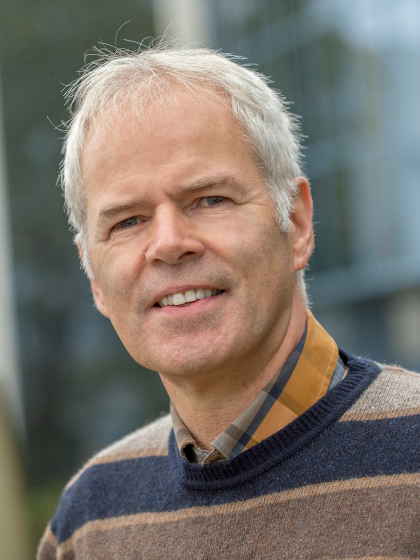
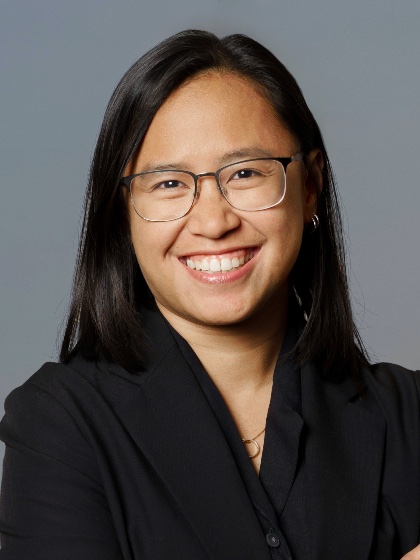
Anna Salvati is an Associate Professor specializing in nanomedicine and drug delivery systems. Her research focuses on nanoparticle-cell interactions, biomolecular corona formation, and the physicochemical properties governing nanomaterial behavior in biological environments. Key research themes include cellular uptake mechanisms, toxicity of nanomaterials, and nanoparticle targeting strategies. Recent publications highlight her work on nanoparticle stability, membrane interactions, and environmental impacts of microplastics. Her studies integrate multiomics approaches, advanced imaging, and interlaboratory validation to address challenges in nanomedicine design and safety testing. Current projects explore the role of high-density lipoproteins in nanoparticle functionality and the modulation of drug release kinetics through material engineering.
Wiebe M. de Vos is a Full Professor at the MESA+ Institute, University of Twente, where he leads research in advanced membrane technologies. His work bridges fundamental polymer chemistry and practical applications in water treatment and sustainability. Full Professor, MESA+ Institute, University of Twente His research focuses on membrane science, particularly polyelectrolyte multilayer systems, nanofiltration, and sustainable material design. He investigates how surface chemistry, phase separation, and polymer interactions influence membrane performance in complex aqueous environments. His work addresses critical challenges such as nanoplastics removal, salinity management, and micropollutant degradation. The recent publications highlight a strong trend in developing next-generation membranes with enhanced stability, selectivity, and environmental compatibility. His team explores pH-responsive systems, biocatalytic membranes, and scalable fabrication methods, contributing significantly to both academic knowledge and industrial applications in water purification. No scientific awards were mentioned in the provided text. Dr. de Vos has supervised 22 academic works, indicating active mentorship of Master’s and PhD students. While specific grants are not detailed, his extensive research output and dataset publications suggest sustained funding and collaborative projects. His research integrates experimental design, material characterization, and process engineering. His work is conducted within the MESA+ Institute, a leading nanotechnology research center, fostering interdisciplinary collaboration in materials science and engineering.
Carine J.M. Doggen is a Full Professor in Health Technology & Services Research at the TechMed Centre, University of Twente. She also serves as Scientific Director at Rijnstate Hospital since October 2017. Her academic career includes previous positions as Senior Researcher at Leiden University Medical Center (2000-2009), University of Washington, Seattle (2002-2003), and Sanquin Blood Bank (2006-2009). Her research focuses on evaluating healthcare innovations, particularly technologies enabling the transition of care from hospitals to home settings. Dr. Doggen specializes in assessing the implementation, reliability, and effectiveness of new medical technologies including wearable sensors and remote monitoring systems. Her work examines measurement validity and incorporates perspectives from both healthcare providers and patients. Analysis of her recent publications reveals strong expertise in cardiovascular technology evaluation, digital health interventions, and quality of life assessment. Her research shows particular strength in randomized clinical trials of medical devices, health technology assessment methodologies, and post-COVID health outcomes research. Dr. Doggen has presented her work at numerous conferences, with recent oral presentations including 'Towards personalised medicine: the potential of intensive longitudinal data to assess the interplay of chronic diseases' (2024) and 'Prognostic markers for acute heart failure in Chronic Obstructive Pulmonary Disease' (2021). She has also contributed to media discussions about healthcare innovations through the Rijnstate Collegetour series.
Prof. Robbert Jan Kok is a Professor of Drug Delivery Technology at Utrecht University's Utrecht Institute for Pharmaceutical Sciences (UIPS) and Programme Director for the Bachelor of Pharmacy. He obtained his Pharmacy degree (1993) and PhD in renal drug targeting (1998) from the University of Groningen, followed by postdoctoral research on endothelial-targeted drug delivery. His work spans curriculum development for pharmacy programs and interdisciplinary research in drug innovation. Research Focus: Kok specializes in advanced drug delivery systems, including nanomedicines for kinase inhibitors, 3D-printed formulations, and stimuli-responsive carriers. Key areas include: Targeted delivery to tumors, kidneys, and inflamed tissues Polymeric micelles, liposomes, and microspheres for sustained release Biopharmaceutics and pharmacokinetic optimization Publication Trends: His recent work emphasizes nanotechnology-enabled therapies (e.g., curcumin nanodelivery, photodynamic micelles) and device-integrated drug release (3D-printed implants, macroencapsulation). Studies frequently combine material science with preclinical validation in cancer, renal diseases, and inflammatory disorders. Academic Leadership: Kok oversees student advising, laboratory operations, and international collaborations at UIPS. His team explores translational applications of drug delivery platforms, including partnerships for vascularized tissue engineering and combination therapies.
Stan F.S.P. Looijmans is an Assistant Professor at the Processing and Performance of Materials group within the Department of Mechanical Engineering at Eindhoven University of Technology (TU/e). His research focuses on bridging the gap between processing-induced structure formation and mechanical properties in semi-crystalline polymers, with a particular emphasis on advanced characterization techniques and multiscale modeling. Academic Background : BSc and MSc in Mechanical Engineering (TU/e), PhD in 2023 on adhesion-modified polypropylene composites Research Tools : Synchrotron X-ray/infrared radiation, microscale mechanical testing, numerical simulations His work explores key areas such as: Crystallization in additive manufacturing Structure formation under extreme conditions Micromechanical testing of composites Contact mechanics phenomena Local failure prediction in semi-crystalline systems Recent publications highlight his expertise in polymer crystallization kinetics, fiber-reinforced composites, and processing-structure-property relationships. Notably, his 2025 work on PLA stereocomplexation and PP/HDPE blends demonstrates innovative approaches to microstructure engineering. He contributes to education through courses in mechanical characterization of materials and soft materials processing.
Yvonne van der Meer is Professor of Sustainability of Chemicals and Materials at Maastricht University's Faculty of Science and Engineering. She serves as the scientific vice-director of the Aachen-Maastricht Institute for Biobased Materials (AMIBM) and is the academic research lead of Sustainable UM2030, Maastricht University's sustainability program. Her leadership roles extend to the Royal Netherlands Chemical Society (KNCV), where she serves as vice-president since 2025 after previously serving as president (2022-2025). Van der Meer's research focuses on providing methods, indicators, and tools for sustainability assessments to support the transition from a linear fossil-based economy to a circular bio-based economy. Her expertise spans Life Cycle Sustainability Assessment, circular economy metrics, biobased materials, and sustainable chemistry. She leads a research group comprising two assistant professors, five postdoctoral researchers, and six PhD students, with teaching responsibilities across multiple programs including the Master Biobased Materials, Business Engineering, and Circular Engineering. Analysis of her recent publications reveals a strong focus on advancing Life Cycle Assessment methodologies, particularly for biobased materials and circular systems. Her work addresses critical challenges in sustainability measurement, including social dimensions of sustainability, marine microplastic emissions, dynamic carbon accounting, and the assessment of emerging bio-based technologies. The research demonstrates increasing sophistication in integrating multiple sustainability dimensions and addressing temporal aspects of environmental impacts. Professionally, Van der Meer has held significant leadership positions including membership on the Scientific Committee of the Circular Bio-based Europe Joint Undertaking (CBE JU), the General Board of the University Fund Limburg, and the Brightlands Science Advisory Board. She has been instrumental in establishing research institutes including AMIBM and the Chemelot Institute for Science and Technology. Her educational background includes molecular sciences from Wageningen University and a PhD from Delft University of Technology. With over 25 years of experience in sustainable chemistry, she has worked at the Dutch Research Council (NWO), as a consultant, and in various research policy roles before establishing her academic career at Maastricht University.
Xiaomei Yang is a Lecturer/Researcher at the Soil Physics and Land Management Group of Wageningen University & Research, focusing on soil contaminants including pesticides and microplastics. Her work examines contaminant interactions with soil processes, their environmental fate, and impacts on soil-water-plant systems. She actively contributes to the International Land and Water Management Program (BSc/MSc), mentoring students in thesis research and internships. Key Projects: MINAGRIS: Investigating microplastic sources, fate, and ecosystem impacts in agricultural soils. ISQAPER: Developing interactive soil quality assessments for Europe and China. Soils4Africa: Creating an open-access soil information system for African agricultural resilience. Research Themes: Soil management, ecotoxicology, environmental monitoring, and agroecosystem sustainability. Specific interests include pesticide transport dynamics, microplastic behavior, and ecological risk assessment in agricultural systems. Achievements: Clarivate Highly Cited Scientist (2023) Top 2% Global Scientists (Elsevier/Stanford, 2024) Lead researcher on EU-China collaborative projects (e.g., ISQAPER) Teaching: Oversees MSc thesis supervision, internships, and courses like Sustainable Soil Management: Soil4Life and Land Degradation and Remediation .
Karin Schroen is a Full Professor in Food Process Engineering at Wageningen University & Research, focusing on food emulsions, lipid oxidation, and sustainable packaging materials. Her research integrates nanotechnology, colloid science, and membrane processes to develop innovative food systems and biodegradable materials. Her work addresses challenges in food stability, nutrient delivery, and environmental impact through projects like bio-nanocomposite packaging and controlled lipid digestion systems. She supervises multiple PhD candidates and collaborates on interdisciplinary initiatives, including the INSIGHT project for probiotic delivery and food structure design. Key areas include Pickering emulsions, chitin-based nanocomposites, and oxidative stability mechanisms. Her contributions span over 396 publications, with recent emphasis on lipid oxidation dynamics and microfluidics applications.
C.E. (Cor) Koning is an Honorary Professor at the University of Groningen's Faculty of Science and Engineering, holding a part-time appointment. He is also employed at Covestro (Netherlands) B.V. in Zwolle. His research focuses on polymer chemistry, polycondensation technology, coatings science, and sustainable materials. Education: Dr. in polymer chemistry from the University of Groningen (1987). Career highlights include roles at DSM Research (1987–2000), Eindhoven University of Technology (2000–2011), and Covestro (2021–present). He pioneered renewable polymers like bio-based polyamide 4.10 and carbon dioxide-based polycarbonates. Research emphasizes bio-based materials, recycling, and biodegradable polymers. His work spans over 250 peer-reviewed papers and 90 patents. He has supervised 46 PhD students, contributing significantly to polymer science and industry-academia collaboration. Key achievements include developing EcoPAxx® and advancing carbon nanotube-based composites. His current focus is sustainable coatings and high-performance bio-based polymers.
Dr. Dina Maniar is an Assistant Professor at the University of Groningen's Faculty of Science and Engineering, specializing in Polymer Chemistry. She leads the Maniar Group, focusing on sustainable polymers, biocatalytic synthesis, and biobased composites. Her work bridges material science and environmental sustainability, with projects like the TINKER education initiative and SOLARLab's biobased photovoltaic encapsulants. She holds a PhD from the University of Groningen (2019) and degrees from Institut Teknologi Bandung (MSc 2014, BSc 2013). Notable awards include the Vlieland Lectureship (2019) and finalist status for the Best PhD Thesis Award (2020). Her research emphasizes green synthesis methods and applications in health, energy, and environmental remediation. Education: PhD in Polymer Chemistry, University of Groningen (2015–2019) MSc in Chemistry, Institut Teknologi Bandung (2013–2014) BSc in Chemistry, Institut Teknologi Bandung (2009–2013) Research Interests: Her group explores biobased polymers, enzymatic polymerization, and functional composites. Key areas include: Green synthesis of furan-based polymers Biodegradable and recyclable materials Applications in drug delivery, renewable energy, and sustainable packaging Awards: Finalist for Best PhD Thesis Award (2020) Vlieland Lectureship (2019) NWO Poster Award (2015) Advising & Projects: Supervises PhD students in polymer chemistry and collaborates on education initiatives like the TINKER Project. Manages ongoing projects on biobased encapsulants for solar cells and sustainable composite development. Labs/Teams: Maniar Group at the Zernike Institute for Advanced Materials, leading projects in both polymer innovation and STEM education reform.
Patricia Y.W. Dankers is a Full Professor of Biomedical Materials at Eindhoven University of Technology’s Department of Biomedical Engineering. She leads the DankersLab, focusing on functional biomaterials for regenerative medicine using supramolecular chemistry principles. Her academic journey includes a PhD in Chemistry (2006, TU/e) and a second PhD in Medical Sciences (2013, Groningen University). She held roles at SupraPolix, UMCG, and served as an assistant/associate professor before attaining her current rank. Her research emphasizes biomaterial design for tissue engineering, drug delivery, and antimicrobial surfaces. Education BSc/MSc in Chemistry (Biochemistry & Organic Chemistry), Radboud University (Nijmegen) PhD in Chemistry (2006, TU/e), supervised by Prof. E.W. Meijer Second PhD in Medical Sciences (2013, Groningen University) Research Interests Her work integrates supramolecular chemistry to create dynamic biomaterials for regenerative medicine. Key areas include hydrogel engineering, drug delivery systems, and bioactive surfaces. She explores applications in artificial organs, vascular grafts, and antimicrobial coatings. Recent innovations include soft robotic hybrid hearts and pH-responsive polymers. Grants & Awards ERC Starting Grant (2012) NWO Vidi Award (2017) Pauline van Wachem Award (Best Thesis in Biomaterials) Member of De Jonge Akademie (KNAW, 2015) Advising & Projects She oversees 82 supervised works and manages the 2024-2026 project: 'Novel preclinical development of drug-loaded hydrogel for metastasized ovarian cancer.' Courses taught include Biomaterials and Bio-organic Chemistry. Labs & Teams The DankersLab collaborates globally on biomaterials for kidney regeneration, cardiovascular devices, and drug delivery. Notable projects involve in situ tissue-engineered vascular grafts and antimicrobial hydrogels.
Maarten van der Zee is a Researcher in Sustainable Chemistry and Technology at Wageningen University & Research (WUR), Netherlands, holding a Dutch engineering doctorate (dr.ir.). He leads multiple active projects including MINAGRIS (2024-2026) and BIOTTEK (2024-2026), focusing on biodegradable plastics for agricultural and horticultural use. His research centers on biodegradation mechanisms, microplastics accumulation modeling, and polymer blending for environmental applications. Key interests include: Biodegradable polymers (polybutene, polylactic acid, PHBV/PBS composites) Microplastic fate in agricultural soils Circular plastic use in open-field farming Biodegradability standards for compostable plastics Green chemistry for biobased materials Recent publications (2024-2025) reveal a strong emphasis on predictive environmental modeling and polymer-soil interactions, with articles analyzing microplastic accumulation in natural settings and disintegration rates of blended biodegradable plastics. His work prioritizes practical solutions for plastic pollution in farming ecosystems. Van der Zee actively leads significant research grants: MINAGRIS (EU21036, 2024-2026): Micro- and Nano-Plastics in Agricultural Soils BIOTTEK (EU24073, 2024-2026) MINAGRIS (EU-21036, 2021-2025) GoChem (KoM21010, 2021-2023) Management Circular and Biobased Performance Materials (1-3A-7, 2020-2021) His team operates within Wageningen Food & Biobased Research, developing biodegradable sensors and plastic alternatives for horticulture through the PLANtAR project and EU-funded initiatives, with extensive collaboration across Dutch agricultural institutions.
Dr. C.F. (Rene) van Nostrum is an Associate Professor at the Department of Pharmaceutics, Faculty of Science, Utrecht University , where he has worked since 1999. His academic career spans roles in teaching physical chemistry to pharmacy students and leading groundbreaking research in advanced drug delivery systems. Active researcher in nanomedicine and biodegradable polymers Co-supervisor for 33 PhD graduates Recipient of prestigious grants and awards Education: PhD in Physical Organic Chemistry (1990-1995), University of Nijmegen MSc in Chemistry (1984-1990), University of Nijmegen Research Focus: Van Nostrum’s work centers on drug delivery systems , with emphasis on nanostructured carriers like polymer micelles, hydrogels, and nanoparticles. His innovations include thermosensitive micelles for targeted release and protein-imprinted nanoparticles as artificial antibodies. The research bridges materials chemistry and biomedical applications, contributing to sustainable development goals in health and well-being. Scientific Achievements: Thomson Reuters Highly Cited Researcher (2014) EJPS Best Paper Award (2004) Theme editor for Advanced Drug Delivery Reviews and International Journal of Pharmaceutics Grants and Leadership: He secured over €1.6 million in grants, including an NWO-CW VIDI grant (€908k) and Utrecht University High Potentials grant (€563k). His projects focus on biodegradable polymers and protein imprinting technologies.
Peter-Paul K.H. Fransen is a Researcher at the Department of Biomedical Engineering , Eindhoven University of Technology , specializing in the Biomedical Materials and Chemistry group. His work bridges materials science and pharmaceutical applications. Education: Master's thesis on "OphthaCoil: delivery of drugs to the equine eye" (2008) Research Interests: Focus on supramolecular hydrogels for drug delivery systems, particularly targeting peritoneal metastasis and ocular applications . Key areas include biochemical complexity in materials, pharmacokinetics, and nanostructure design. Recent Article Trends: Investigates CO 2 -responsive hydrogels (2023), charge effects in nanostructures (2024), and synthetic hydrogel optimization (2025). Expertise: Contributes to UN Sustainable Development Goals via biomaterial innovations for health applications.
NHL Stenden University of Applied SciencesNetherlands
Vincent Voet is a Professor of Circular Plastics at NHL Stenden University of Applied Sciences , where he leads cutting-edge research at the intersection of sustainability and polymer science. His work bridges fundamental and applied research, focusing on biodegradable materials, 3D printing technologies, and chemical recycling solutions. He established the Netherlands’ first hybrid research group HyBRIt , which received the NWO Team Science Award . Research Expertise : Sustainable polymers, self-healing materials, enzymatic plastic recycling Awards : Polymers Young Investigator (2024), ACS Materials Rising Star (2022), KIJK Best Tech Idea (2021) Collaborations : University of Groningen, Netherlands Academy of Engineering (NAE Fellow since 2024) Vincent Voet’s publications over the last five years (2020–2025) reveal a strong trend in biodegradable polymers , 3D-printable resins , and closed-loop recycling technologies. His work spans subfields like microwave-assisted chemical recycling of aramids, dynamic covalent networks for reprocessable materials, and starch-based hydrogels with dual reversible cross-linking systems. Scientific accolades include: 2024: Polymers Young Investigator Award 2024: Netherlands Academy of Engineering (NAE) Fellowship 2023: New Scientist Science Talent Finalist 2022: ACS Materials Rising Star 2021: KIJK Best Tech Idea 2021: NWO Team Science Award (HyBRIt group) Contact: vincent.voet@nhlstenden.com | LinkedIn