University of North Carolina at Chapel HillUnited States
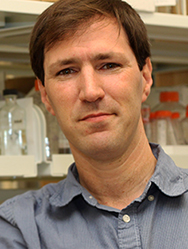
Albert Bowers is an Associate Professor in the Division of Chemical Biology and Medicinal Chemistry at the UNC School of Medicine , with affiliations in the Center for Integrative Chemical Biology and Drug Discovery , Department of Chemistry , and Lineberger Comprehensive Cancer Center . His research focuses on translating natural product insights into next-generation peptide macrocycle therapeutics. Research Interests : Synthesis and modification of natural product-derived therapeutic leads Integration of chemical synthesis, biosynthesis, and computational chemistry mRNA display for high-throughput peptide library screening Biocatalysis using RiPP enzymes for drug-like macrocycles Scientific Awards : Beckman Young Investigator Award (2014) AACP New Investigator Award (2013) NIH NCI Ruth L. Kirschstein Fellowship (2008-2011) NSF/JSPS Fellowship for Kyoto University (2005) Publications highlight advancements in mRNA display libraries, biocatalytic macrocyclization, and targeting protein-protein interfaces through structural and computational approaches.
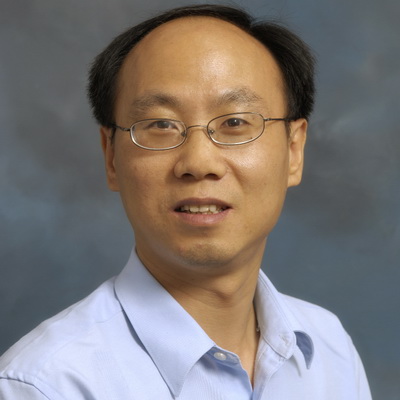
Dr. Chuanbing Tang is a Carolina Distinguished Professor at the University of South Carolina, holding the SmartState Endowed Chair in Polymer Nanocomposites and serving as Director of the NSF Center for Polymers for a Circular Economy (CCI Phase I). His research spans multiple interdisciplinary fields at the intersection of polymer chemistry, materials science, and biomedical engineering. Dr. Tang's research focuses on three primary areas: sustainable biomass chemistry and biomaterials, organometallics and metallopolymers, and polymers for dielectric energy storage. His work in sustainable chemistry has addressed the transformation of hydrocarbon-rich biomass into sustainable chemicals, bioplastics, elastomers, and biomaterials. He has pioneered the use of resin acids, plant oils, fatty acids, and terpenes as renewable feedstocks for polymer synthesis. In the antimicrobial field, his research has discovered natural resin acid-derived cationic compounds and polymers that effectively kill both Gram-positive and Gram-negative bacteria while maintaining low cytotoxicity to mammalian cells. His research group has produced over 200 publications that have significantly advanced the fields of sustainable polymers, metallopolymers, and antimicrobial materials. His work has been recognized with numerous prestigious awards including the Presidential Early Career Award for Scientists and Engineers (PECASE), Fellow of the American Chemical Society, and Fellow of the American Association for the Advancement of Science (AAAS). Dr. Tang serves as Senior Editor for Progress in Polymer Science and has held various editorial positions for leading polymer journals. He is actively involved in mentoring students and has received the Distinguished Undergraduate Research Mentor Award from the University of South Carolina. Fellow, American Chemical Society (2024) Principal Investigator, NSF Centers for Chemical Innovation Phase I Award (2023) Special Creativity Award, National Science Foundation (2022) Fellow, American Institute for Medical and Biological Engineering (AIMBE) (2021) Fellow, American Association for the Advancement of Science (AAAS) (2020) Presidential Early Career Award for Scientists and Engineers (PECASE) (2017) Dr. Tang's research group maintains state-of-the-art laboratory facilities across two locations (Horizon I and GSRC buildings) with comprehensive equipment for organic polymer synthesis and materials characterization. His work bridges fundamental polymer chemistry with practical applications in sustainability, healthcare, and energy storage, making significant contributions to the development of next-generation renewable polymers and advanced functional materials.
Dr. Christopher Reid is a Professor in the Department of Biological and Biomedical Sciences within the College of Arts and Sciences at Bryant University in Smithfield, Rhode Island. His research focuses on microbial glycobiology, specifically studying bacterial carbohydrate-acting enzymes involved in peptidoglycan metabolism and developing small molecule inhibitors as chemical biology tools and potential antimicrobials. Dr. Reid's educational background includes: Ph.D. from the University of Guelph M.Sc. from the University of Waterloo B.Sc. from Laurentian University Dr. Reid's research lies at the interface of chemistry and microbiology, with a particular focus on carbohydrate-acting enzymes, glycobiology, and chemical biology . His laboratory investigates the biosynthesis, degradation, and biological role of microbial glycoconjugates using chemical synthesis, molecular genetics, and biochemical approaches. A significant portion of his work centers on Gram-positive bacterial peptidoglycan metabolism, particularly studying enzymes like LytG (an N-acetylglucosaminidase in Bacillus subtilis) and developing inhibitors that can serve as chemical probes or potential antimicrobial agents. His research has important implications for understanding bacterial cell wall dynamics and developing novel anti-infective strategies. Analysis of Dr. Reid's recent publications (2019-2023) reveals a strong focus on bacterial cell wall metabolism, particularly peptidoglycan remodeling enzymes in Gram-positive bacteria. His work combines chemical biology approaches with microbiology to develop inhibitors and probes for enzymes involved in cell wall biosynthesis and degradation. There's a clear progression from fundamental enzyme characterization to inhibitor development and cellular phenotypic analysis, demonstrating the translational nature of his research from basic science to potential therapeutic applications. Dr. Reid has received several professional honors: Merit Award (2014) Merit Award (2012) Visiting Fellowship (2005) Dr. Reid is an active mentor to undergraduate researchers at Bryant University, with numerous students contributing to his publications as co-authors. His laboratory provides hands-on research experience in chemical biology, microbiology, and biochemistry. While specific grant information isn't detailed in the provided text, his sustained research output suggests successful funding from sources supporting chemical biology and microbiology research. His work bridges multiple disciplines, including chemistry, microbiology, and biochemistry, creating rich interdisciplinary research opportunities for students. Dr. Reid leads the Reid Laboratory at Bryant University, which focuses on "Adventures in Microbial Glycobiology." The lab investigates the biosynthesis, degradation, and biological role of microbial glycoconjugates using chemical synthesis, molecular genetics, and biochemical approaches. Current research emphasizes bacterial carbohydrate-acting enzymes involved in Gram-positive peptidoglycan metabolism and the identification of small molecule inhibitors of these enzymes as chemical biology tools and potential antimicrobials.
John Milligan serves as Assistant Professor in the Department of Chemistry within Thomas Jefferson University's College of Life Sciences. His research program centers on blue LED-driven photoredox catalysis for developing mild and efficient synthetic methodologies in organic chemistry. His educational background includes a Postdoctoral Scholar position at the University of Pennsylvania (2019), a PhD from the University of Pittsburgh (2018), and a BS from Allegheny College (2012). Milligan's primary research focuses on radical/polar crossover reactions to synthesize nitrogen heterocycles from unsaturated substrates, with particular emphasis on developing novel cyclopropanation strategies and heterocyclic frameworks. His group maintains an active intramural collaboration with Jefferson design experts to create 3D-printed devices for organic chemistry applications, bridging synthetic methodology with laboratory innovation. This work positions him at the intersection of photoredox catalysis, radical chemistry, and practical chemical tool development. Analysis of his publication record reveals three dominant research streams: (1) photoredox-mediated radical/polar crossover reactions for complex heterocycle synthesis, (2) development of strained molecule reagents (particularly bicyclobutanes), and (3) chemical education innovations including green laboratory experiments and pandemic-era remote teaching methodologies. His work demonstrates consistent methodology development within organic synthesis while addressing practical educational challenges. Scientific awards: No awards or fellowships were documented in the provided materials. Regarding academic mentorship, the source materials contain no explicit listings of current or former advisees. His educational publications suggest active curriculum development, particularly in laboratory safety and remote teaching adaptations, though specific grant funding details remain unreported. The intramural design collaboration indicates cross-disciplinary engagement beyond traditional chemistry boundaries. Milligan leads a research group actively developing 3D-printed laboratory apparatus through collaboration with Jefferson's design experts, demonstrating commitment to practical innovation in synthetic chemistry infrastructure. This initiative complements his fundamental research in photoredox catalysis and strained molecule chemistry.
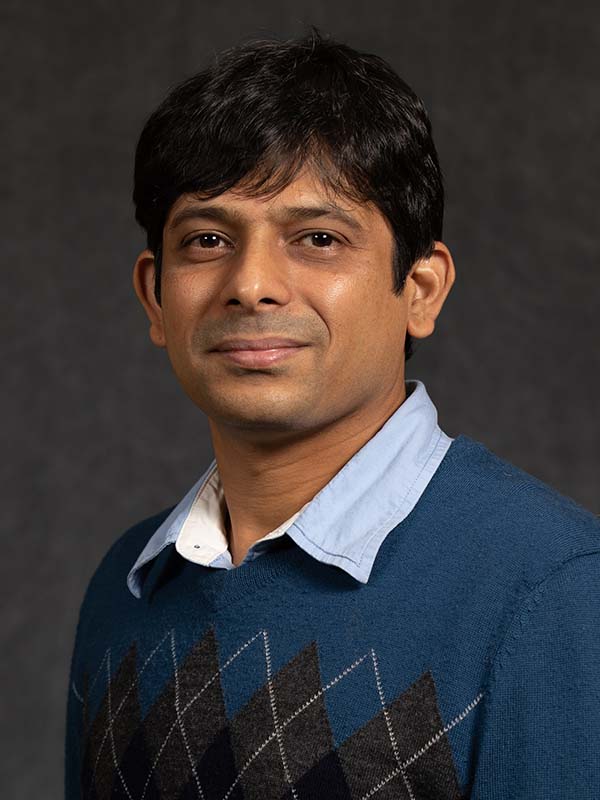
Dr. Arun Iyer is an Associate Professor in the Department of Pharmaceutical Sciences at Wayne State University's Eugene Applebaum College of Pharmacy and Health Sciences. He directs the Use-inspired Biomaterials and Integrated Nano Delivery (U-BiND) Systems Laboratory and serves as a Scientific Member of the Molecular Imaging Program at Karmanos Cancer Institute. His academic credentials include a Ph.D. in Polymer Chemistry/Advanced Drug Delivery Systems from Sojo University (Japan), an M.S. in Polymer Science, and a B.S. in Chemistry from the University of Pune (India), followed by postdoctoral training at UCSF and Northeastern University. Research Focus Dr. Iyer's research integrates nanomedicine, biomaterials, and molecular targeting to develop innovative therapeutic strategies. His work focuses on: Designing tumor microenvironment-responsive nanoparticles for cancer immunotherapy Engineering targeted antibiotic delivery systems to combat superbug infections Developing multifunctional nanoplatforms for combined imaging and therapy (theranostics) Creating stimuli-responsive nanogels for topical cancer treatment His lab specializes in polymer chemistry, antibody-drug conjugates, and hypoxia-targeted therapies to overcome drug resistance in aggressive cancers. Publication Trends Analysis of Dr. Iyer's recent publications reveals a strong emphasis on nanoscale solutions for oncology and infectious diseases. Key themes include tumor-microenvironment remodeling (particularly hypoxia and stromal targeting), immune checkpoint modulation using antibody-conjugated nanoparticles, and combinatorial approaches against antimicrobial resistance. His work consistently integrates advanced material science with translational objectives, often featuring polymer-lipid hybrid systems and stimuli-responsive designs. Awards and Honors CRS T. Nagai Research Achievement Award (2019) DoD Early Career Investigator Award Academy of Scholars Junior Faculty Award ACS Institutional Research Grant Multiple international presentation awards Research Funding Dr. Iyer leads several federally funded projects including: DoD-CDMRP Idea Development Award ($1.4M) for kidney cancer nanotherapy NCI/NIH R21 grant for lung cancer combination therapy MTRAC commercialization grant for anti-MRSA nanoparticles American Cancer Society IRG for theranostic hybrid nanoparticles His laboratory collaborates extensively with clinical oncologists and microbiologists to translate nanotechnologies. Laboratory and Collaborations The U-BiND Systems Laboratory develops clinically deployable nanoplatforms, with current projects spanning pancreatic cancer immunotherapy, renal carcinoma targeting, and antibiotic reformulation. The team maintains active collaborations with the Karmanos Cancer Institute, UCSF, and Northeastern University, leveraging Wayne State's molecular imaging infrastructure for preclinical validation.
Ngong Kodiah Beyeh serves as an Associate Professor in the Department of Chemistry within Oakland University's College of Arts and Sciences. Based in the Mathematics and Science Center (Room 205), Dr. Beyeh leads an active research program at the intersection of supramolecular chemistry, materials science, and biotechnology. Research interests focus on functional materials via receptor chemistry , halogen-bonded architectures , and molecular recognition systems . Key projects include designing macrocycles for biomedical applications against antibiotic-resistant pathogens, developing asphaltene dispersants for petroleum processing, and engineering halogen-bonded polymeric materials. The research integrates synthetic chemistry with biophysical characterization across gas, solution, and solid phases. Recent publications reveal strong trends in supramolecular biomaterials (2021-2024), with significant work on halogen bonding (2015-2021) and foundational host-guest chemistry (2008-2018). The portfolio demonstrates consistent innovation in macrocycle design for applications spanning biotechnology, petroleum science, and advanced materials. Education includes a Ph.D. in Organic Chemistry (2008) and M.Sc. in NanoScience (2004) from the University of Jyväskylä, Finland, and a B.Sc. in Chemistry (2000) from the University of Buea, Cameroon. Postdoctoral training spans Finland (Academy of Finland Postdoc, 2012-2015), Germany (Free University of Berlin), and the USA (University of Texas at Austin). The Beyeh Lab maintains active research in supramolecular materials science, with current projects targeting Gram-negative pathogens, asphaltene dispersants, and halogen-bonded polymeric systems. The laboratory leverages multiple weak interactions to construct complex chemical systems with applications in biotechnology and industrial processes.
Geert-Jan Boons serves as the UGA Foundation Distinguished Professor in Biochemical Sciences at the University of Georgia's Department of Chemistry and Complex Carbohydrate Research Center (CCRC), while also holding a secondary appointment as Professor and Chair of the Department of Medicinal and Biological Chemistry at Utrecht University (Netherlands). His educational background includes a First Degree (equivalent to M.S.) in Chemistry from Leiden University (1987), followed by a Ph.D. in Synthetic Carbohydrate Chemistry from the same institution (1991) under Prof. J.H. van Boom. Postdoctoral training was completed at Imperial College London and the University of Cambridge with Prof. S.V. Ley. Boons' research focuses on overcoming glycoscience limitations through chemical and chemoenzymatic synthesis of complex oligosaccharides and glycoconjugates. His laboratory develops innovative methodologies using minimal building blocks for efficient assembly of N- and O-glycans, ganglio-oligosaccharides, heparan sulfates, tumor-associated antigens, and bacterial capsular polysaccharides. A hallmark of his work involves applying synthesized glycans to study infectious, immunological, and inflammatory processes at the molecular level, leading to therapeutic applications including fully synthetic immuno-modulators, vaccines for epithelial cancers, and glycomimetic drugs. Analysis of his recent publications reveals dominant themes in virology (particularly SARS-CoV-2 and influenza receptor mechanisms), autoimmune disorder research (Guillain-Barré syndrome), and technological advances in automated glycan synthesis platforms. His work consistently bridges chemical synthesis with biomedical applications, emphasizing glycan roles in disease mechanisms and therapeutic development. Creativity in Carbohydrate Science Award (European Carbohydrate Association, 2003) Horace Isbell Award (American Chemical Society, 2004) Roy L. Whistler International Award (International Carbohydrate Organization, 2014) Hudson Award (2015) Cope Mid-Career Scholar Award (ACS, 2016) Boons maintains an active research group with five graduate students and leads multiple laboratory spaces at CCRC (rooms 1014, 1023, 1095, 1101, 3044). His work is supported by significant grant funding enabling the development of glycan microarrays, vaccine candidates, and visualization techniques for glycoconjugates in living cells. The Boons Group website details ongoing projects in glycomimetic drug development and chemoenzymatic synthesis automation.
William E. Allen is a Professor in the Department of Chemistry at East Carolina University. He holds a B.S. from Washington and Lee University (1990), a Ph.D. from the University of North Carolina at Chapel Hill (1995), and completed an American Cancer Society Postdoctoral Fellowship at the University of Texas at Austin (1996-1997). His research integrates organic synthesis with biological applications, focusing on: Designing fluorescent probes for studying protein behavior and membrane interactions Developing molecular tools to investigate natural antifreeze mechanisms Creating supramolecular sensors for anions and biomolecules He also leads innovations in chemical education, designing research-integrated curricula for undergraduate programs. His educational work includes implementing Course-Based Undergraduate Research Experiences (CURE) in organic and analytical chemistry sequences. Honors include the American Cancer Society Postdoctoral Fellowship . He maintains active research collaborations in biochemistry and education.