Jürgen DassowView profile
Professor
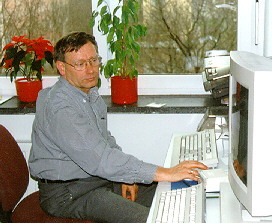
Jürgen Dassow is a Professor for Theoretical Computer Science at the Faculty of Computer Science, Otto-von-Guericke-University of Magdeburg, Germany. He has held this position since 1992 and previously served as Rector of the university from 1993 to 1996. His academic career spans over five decades, beginning with studies in mathematics at the University of Rostock in the 1960s. Professor Dassow's research focuses on formal languages, regulated rewriting, Lindenmayer systems, grammar systems, syntactical complexity, and biocomputing . His work has significantly contributed to theoretical computer science, particularly in the mathematical foundations of language theory and automata. He has maintained a prolific publication record with over 200 scientific papers and 4 monographs, including the influential 1989 work 'Regulated Rewriting in Formal Language Theory' co-authored with Gheorghe Păun. His recent research (2020-2023) continues to explore operational complexity, closure-involution operations, contextual grammars, and networks of evolutionary processors. These publications demonstrate his sustained engagement with cutting-edge theoretical problems in computer science. Professor Dassow has also been instrumental in organizing the international Descriptional Complexity of Formal Systems (DCFS) workshop series and has edited numerous proceedings volumes. Professor Dassow has been actively involved in the academic community through approximately 100 lectures at conferences and universities across 18 countries. His work bridges theoretical computer science with biological computing models, reflecting the interdisciplinary nature of modern theoretical research. His research group at the Otto-von-Guericke-University continues to advance knowledge in formal language theory, with recent publications addressing contemporary challenges in descriptional complexity and bio-inspired computational models. Professor Dassow's career exemplifies long-term dedication to advancing the theoretical foundations of computer science while maintaining relevance to emerging computational paradigms.