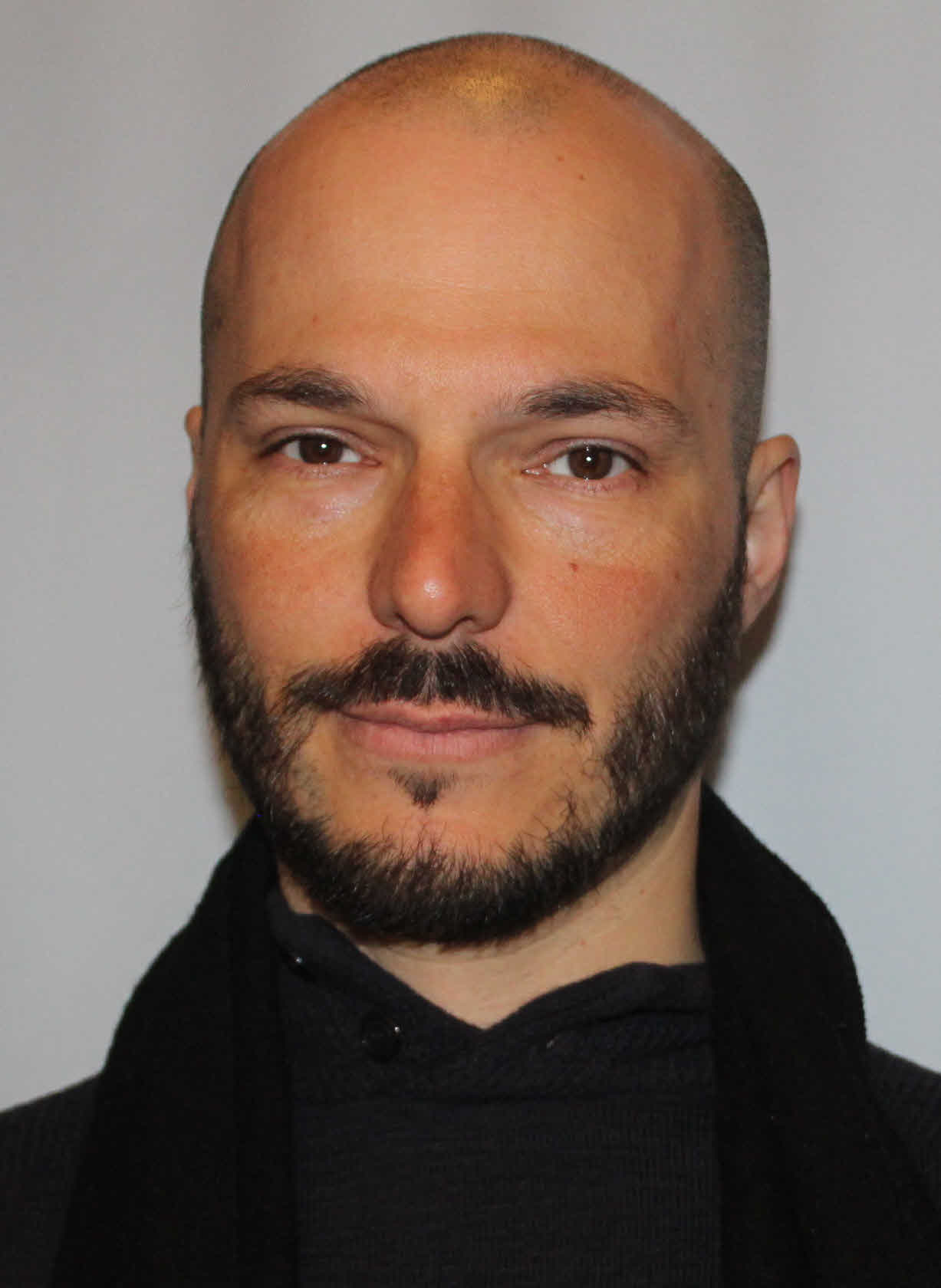
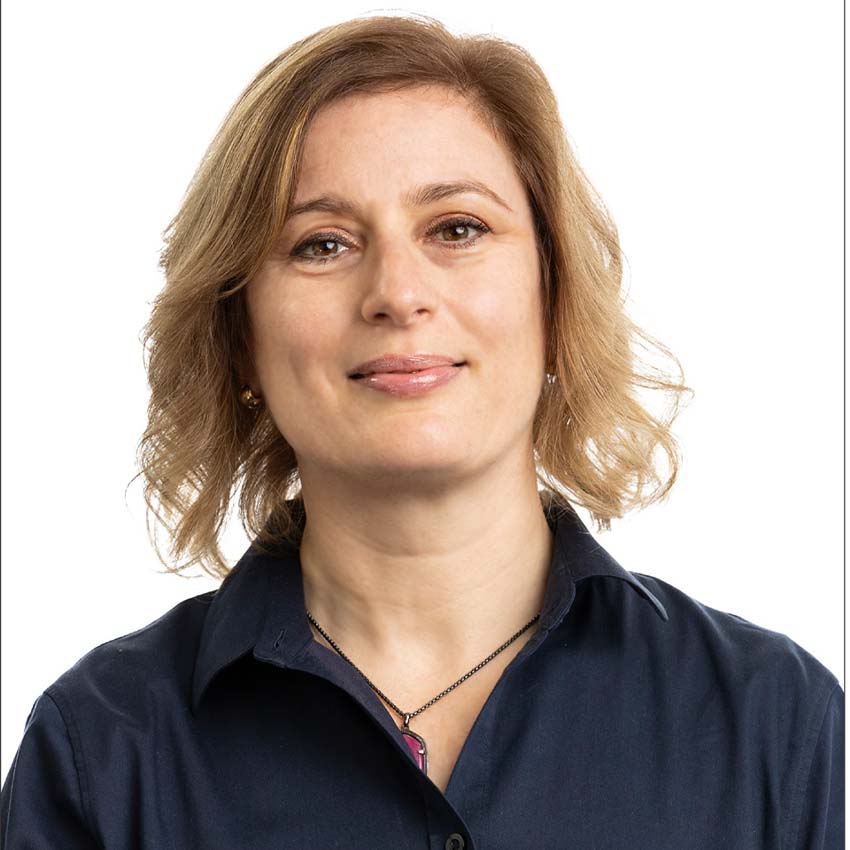
Prof. Christof Schütte is a Professor at the Mathematics Institute within the Department of Mathematics and Computer Science at Freie Universität Berlin. His affiliation includes the Biocomputing Group, focusing on interdisciplinary research at the intersection of mathematics and biosciences. He is stationed at Arnimallee 6, Room 132, Berlin. Research interests center on computational methods applied to biological systems, including mathematical modeling, stochastic processes, and systems biology. His work bridges theoretical mathematics with practical applications in bioinformatics and computational life sciences. No specific awards or recent publications are listed in the provided text. Administrative support is provided by Dorothé Auth (+49 30 838 75353).
Sven Warris is a researcher at BIOS Applied Bioinformatics within Wageningen University & Research. His work spans bioinformatics, genomics, and microbiome studies, with a focus on developing computational tools for genomic and metagenomic data analysis. PhD in Bioinformatics (2013-2019), Wageningen University Research Interests: Bioinformatics tool development for high-throughput data Gut microbiome analysis in insects Symbiotic virus colonization in parasitoids Metagenomic approaches to disease-suppressive soils Scientific Contributions: Developed Pacasus for palindromic sequence correction Contributed to chromosomal assembly of parasitic wasp genomes Studied gut bacteria impact on arbovirus transmission Advancing functional amplicon sequencing methodologies Projects: Microservices to connect genetic maps to (pan)genomes (2019) Low-cost high-performance biocomputing (PhD project, 2013-2019)
Enrico Riccardi is an Associate Professor in Computational Engineering at the Department of Energy Resources, Faculty of Science and Technology, University of Stavanger (UIS), Norway. His work bridges computational chemistry, machine learning, and multi-scale modeling, with applications in energy, environmental science, and biophysics. Research Interests: His core expertise lies in molecular dynamics , rare event simulation methods (e.g., reaction kinetics and adsorption), and multi-scale modeling from molecular to continuum levels. He is a key developer of path sampling methodologies and software such as PyRETIS and PyVisA , enabling the study of slow and rare processes in complex systems. His research spans interfacial phenomena in emulsions, membrane permeation, atmospheric chemistry, and data-driven discovery of reaction pathways using machine learning. Recent Publication Trends: Over the past decade, Riccardi has consistently published in high-impact journals such as Journal of Chemical Physics , Physical Chemistry Chemical Physics , and Nature Machine Intelligence . His recent work (2023–2025) shows an expanded scope into educational technology , environmental science , and open-source tool development (e.g., GeoSight), reflecting a growing interdisciplinary impact. The publications reveal a strong focus on algorithmic innovation in simulation methods and their application across chemistry, biology, and engineering. Scientific Contributions: Lead and co-developer of PyRETIS, a widely used open-source library for rare event simulations. Contributor to immuneML, a machine learning ecosystem for immune repertoire analysis published in Nature Machine Intelligence . Active in promoting open science, data sharing, and academic integrity through public commentary and educational initiatives. Advising and Grants: While no formal students are listed in the provided text, Riccardi has mentored or collaborated with numerous early-career researchers and PhD candidates, particularly within the van Erp group. He has contributed to multiple collaborative research projects, likely funded by Norwegian and European research councils, though specific grants are not mentioned. His outreach on postdoctoral challenges suggests engagement with academic policy and mentorship. Labs and Teams: Riccardi is part of a vibrant computational research group at UIS, closely collaborating with Prof. Titus Sebastiaan van Erp and colleagues in the Department of Energy Resources. His work is embedded in a team focused on advanced simulation techniques, with strong ties to international networks in computational chemistry and soft matter physics.
Katia Zolotovsky is an Assistant Professor at Northeastern University, holding a joint appointment in the College of Arts, Media, and Design (Art + Design Department) and the College of Science (Department of Chemistry and Chemical Biology). She earned a PhD in Computation from MIT, focusing on bacterial cellulose engineering and bioreactor design. Her BioInteractive Design Lab (BInD) bridges design, science, and engineering to develop bio-integrated materials for health and climate adaptation. Research interests include responsive biomaterials, data-driven design, and bioremediation systems. Dr. Zolotovsky's work spans interdisciplinary collaborations, supported by grants from NSF, Somerson Sustainability Innovation Fund, and coastal ecology initiatives. Her research has been recognized at international conferences (e.g., Living Machine Award) and published in high-impact journals. She serves on the editorial board of Research Directions Biotechnology Design , Cambridge University Press. Key projects include developing bioremediation systems (Biopods), marine microbial ecology studies, and fish-inspired protective materials. Her lab focuses on multiscale design of bioactive architectural structures and real-time feedback loops in bio-integrated systems.
Molly Megraw is an Associate Professor at Oregon State University's College of Agricultural Sciences , affiliated with the Department of Botany and Plant Pathology , Molecular and Cellular Biology Program , and Center for Genome Research and Biocomputing . She also collaborates with the Department of Electrical Engineering and Computer Science. Education : Ph.D. in Bioinformatics (2007) from the University of Pennsylvania Her research integrates computational biology , machine learning , and plant genomics to study: Transcriptional regulation of Pol-II genes and miRNAs in plants Network motif analysis in TF-miRNA circuits Chromatin accessibility and promoter identification via nanoCAGE Synthetic biology applications in plant systems Recent publications focus on: Salinity stress responses in rice miRNA editing in human cancer Network motif discovery algorithms PlantSimLab modeling platform Scientific accomplishments include: NSF CAREER Award (2018) for machine learning models of gene regulation MiRGen database development for miRNA genomic organization She supervises graduate students in Biological and Physical Sciences (BPP) and teaches computational courses like BDS 470/570 Introduction to Computing in the Life Sciences . Her lab maintains active collaborations across plant biology and computational disciplines.
Layla Oesper is an Associate Professor in the Computer Science Department at Carleton College. She previously worked as a post-doctoral researcher and graduate student at Brown University, where she earned her PhD and ScM in Computer Science. She received her BA in Mathematics from Pomona College and worked at Epic as a software tester. PhD in Computer Science - Brown University ScM in Computer Science - Brown University BA in Mathematics - Pomona College Her research focuses on designing algorithms for high-throughput DNA sequencing data analysis, particularly in cancer genomics. She develops computational methods for tumor evolutionary history inference, with emphasis on consensus approaches and noise tolerance in phylogenetic reconstruction. Recent publications highlight her work on computational biology education, distance measures for tumor phylogenies, and weighted consensus tree algorithms. Her research spans algorithm design, cancer genomics, and bioinformatics software development. NSF CAREER grant recipient (2021) Google Anita Borg Memorial Scholarship (2014) NSF Graduate Research Fellowship (2011) Best Presentation Award at HitSeq workshop (2014) She has advised multiple students who have received recognition in computational biology, including CRA Outstanding Undergraduate Researcher honorable mentions. Her software tools include TuELiP, CASet/DISC, and GraPhyC for tumor evolution analysis.
Bonifacio Alberto Mozo Velasco is a Professor in the Department of Computer Systems at the Polytechnic University of Madrid (UPM), with a professional career spanning since 2013. He serves as a Principal Investigator in the Mathematical Modeling and Biocomputing Group since 2017, focusing on interdisciplinary research across multiple domains. Research Interests: Artificial Intelligence, Telecommunications, Software, and interdisciplinary applications in Materials Science, Instrumentation, Chemistry, Fluid Flow, and Electrical Engineering.
Luis de la Cal García is a researcher at the Universidad Politécnica de Madrid (UPM), affiliated with the School of Computer Systems Engineering and the Department of Computer Systems. He is currently a doctoral student (Doctorando) and member of the Mathematical Modeling and Biocomputing Research Group since 2024. Current roles: Researcher, Doctoral Student Key affiliations: School of Computer Systems Engineering, Department of Computer Systems His research spans interdisciplinary fields including analytical chemistry, biochemistry, materials science, applied physics, computer science applications, and engineering disciplines like fluid dynamics and multidisciplinary engineering. His work focuses on biocomputing, mathematical modeling, and technical innovations in these areas. As a predoctoral member ("L.D. Predoct. Ini. Carrera Doc") since April 2025, he contributes to academic and research initiatives at UPM. No scientific awards or publications are listed in the available data.
Jesus Garcia Lopez de Lacalle serves as a Professor in the Department of Mathematics Applied to Information and Communication Technologies at the Polytechnic University of Madrid, holding this position since 2002. He concurrently acts as Doctoral Program Coordinator since 2017 and contributes to the Mathematical Modeling and Biocomputing Research Group as a member since 2015. His research spans exceptionally diverse domains, with primary focus areas including: Applied Mathematics and Theoretical Computer Science Statistical and Nonlinear Physics Signal Processing and Quantum Science & Technology Civil and Structural Engineering Mathematical Physics and Modeling & Simulation Electrical Engineering and Condensed Matter Physics In his Doctoral Program Coordinator role, he oversees graduate education while actively participating in the Mathematical Modeling and Biocomputing Research Group's interdisciplinary initiatives, fostering collaborations across mathematical theory, computational methods, and engineering applications.
Juan Alberto de Frutos Velasco is a Professor in the Department of Computer Systems at the Technical University of Madrid since October 31, 2012. He is also a member of the Mathematical Modeling and Biocomputing research group since March 3, 2015. Research interests: Artificial Intelligence Human-Computer Interaction Computer Vision and Pattern Recognition
Jose Luis Lopez Presa is a Professor in the Department of Telematics and Electronic Engineering at the Technical University of Madrid, holding a concurrent appointment in the Department of Computer Systems since October 31, 2012. He joined the Mathematical Modeling and Biocomputing Research Group as a member on December 10, 2023. His research spans an exceptionally broad interdisciplinary spectrum: Analytical Chemistry Theoretical Computer Science Applied Mathematics Telecommunications Software Engineering Numerical Analysis Materials Science Electrical and Electronic Engineering Engineering Discrete Mathematics and Combinatorics Artificial Intelligence Computational Mathematics Computational Theory and Mathematics Computer Science Information Systems Computer Science Applications This diverse portfolio reflects deep integration of mathematical modeling with computational biology, evidenced by his active role in the Mathematical Modeling and Biocomputing Research Group where he bridges advanced computational techniques with complex biological systems analysis. His work demonstrates substantial cross-pollination between traditionally distinct scientific domains. As a core member of the Mathematical Modeling and Biocomputing Research Group, he contributes to developing novel computational frameworks for biological problem-solving, fostering collaboration across mathematics, computer science, and life sciences disciplines.
Kathrin Völkner is a researcher at the Biocomputing Group within the Department of Mathematics and Computer Science at Freie Universität Berlin. She is based at Arnimallee 6, Room 113, 14195 Berlin. Her contact details include telephone +49 30 838 65256 and email kathrin.voelkner@fu-berlin.de . Her research focuses on biocomputing, integrating mathematics and computer science to address complex biological and computational challenges.
Prof. Dr. Christof Schütte is a faculty member in the Department of Mathematics and Computer Science at Freien Universität Berlin, leading the Biocomputing Group. His research focuses on stochastics, statistics, numerical methods, and modeling/simulation of complex and molecular systems. His expertise spans interdisciplinary applications in biocomputing, integrating mathematics and computer science to address challenges in molecular systems analysis and complex system modeling.
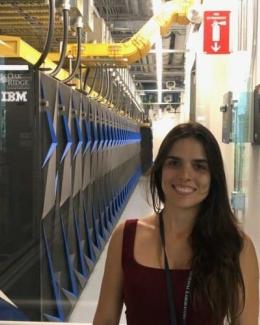
Erica Teixeira Prates is a Computational Systems Biologist at Oak Ridge National Laboratory (ORNL), working within the Biological and Environmental Systems Science Directorate's Biosciences Division. She leads computational research in the Computational and Predictive Biology Group and Biocomputing and Information Section, focusing on integrating molecular dynamics simulations with multi-omics data to study protein structure-function relationships. Her research spans three major domains: Bioenergy (CBI projects on plant-microbe interfaces and cellulose biosynthesis) Plant-Microbe Interactions (modeling receptor-ligand pairing in Populus systems) Viral Pathogenesis (SARS-CoV-2 protease mechanisms and antiviral strategies) She develops computational protocols for proteome-wide modeling, virtual screening, and enhanced sampling techniques to bridge molecular biophysics with systems-level biological traits. Publication analysis reveals consistent focus on structural bioinformatics (47% of articles), with growing emphasis on AI-driven approaches since 2020. Her work connects quantum biology with CRISPR optimization, metabolite-GWAS networks in plants, and opioid addiction genetics through meta-multiomics integration. Professional contributions include key projects: Plant-Microbe Interfaces (PMI) initiative for bioenergy crops COVID-19 research on NEMO cleavage and bradykinin storms Development of explainable AI models for viral mutation tracking
Prof. Dr. Stefan Diez leads the Diez Group at B CUBE – Center for Molecular Bioengineering, Technische Universität Dresden, where he has been Professor for BioNanoTools since 2010. Previously, he served as Group Leader at the Max Planck Institute of Molecular Cell Biology and Genetics (2004-2010) and researcher in Optical Technology Development at the same institute (2000-2004). He holds a PhD in Physics from Technical University of Berlin (2000). His interdisciplinary research bridges cell biology and nanotechnology, focusing on: Molecular transport mechanisms in cellular systems Single-molecule biophysics and advanced optical imaging In vitro reconstruction of subcellular mechano-systems Biomolecular motor applications in nanotechnology Smart surfaces with stimuli-responsive polymer layers Parallel computation using molecular-motor systems The lab's recent publications demonstrate strong focus on motor protein dynamics (kinesin), microtubule behavior, nanoscale transport systems, and quantum dot applications. Research consistently combines experimental biophysics with engineered solutions for nanotechnology challenges. Prof. Diez leads the Diez Group (BioNanoTools Lab) developing novel techniques including 3D single-particle tracking, biotemplate nanostructuring, and microfluidics integration. The lab specializes in converting biological transport mechanisms into functional nanotechnology platforms.