Michael McAlpine is a Professor in the Mechanical Engineering department at the University of Minnesota . He also holds affiliations with the Biomedical Engineering and Electrical and Computer Engineering departments. His research focuses on 3D printing functional materials & devices , Nanoscale inks , Biomedical devices , Bioelectronics , and Flexible Microsystems . Research Interests : 3D Printing, Biomedical Engineering, Nanotechnology, Flexible Electronics, Microfluidics Labs : ME 361/363 Contact : mcalpine@umn.edu , (612) 626-3303, ME 117 Recent Research Trends include 3D Printed Biomedical Devices , Flexible Electronics , and Bioprinting Applications . His work spans from Spinal Organoid Formation to Programmable Drug Release Capsules . Scientific Award : Circulation Research 2020 Best Manuscript Award
Professor Hala Zreiqat AM is a leading biomedical engineer at The University of Sydney , serving as the Director of the ARC Training Centre for Innovative BioEngineering . A Fellow of all major Australian academies (AAS, ATSE, FAHMS, FRSN), she develops 3D printed bioceramics for bone regeneration while championing diversity through initiatives like the IDEAL Society and BIOTech Futures mentorship program. Her work bridges academia, clinical practice, and industry in musculoskeletal research . Research Focus: Her lab creates synthetic bone scaffolds that mimic natural bone architecture, strength, and porosity, enabling non-rejected bone regeneration via patient-matched implants. Key applications include orthopaedic, dental, and maxillofacial repair , with over $18M in competitive funding and multiple patents. Current projects explore AI-driven scaffold performance prediction and anti-senescence strategies for aging-related bone loss. Scientific Trends: Recent publications highlight 3D printed nanovoxelated ceramics , antisenescence biomaterials , and multifunctional theranostic platforms . Her team integrates machine learning for scaffold design, atom probe tomography for interface analysis, and two-photon imaging for cellular monitoring in 3D environments. 2021-2022 Fulbright Senior Scholar 2018 NSW Premier's Woman of the Year 2019 Eureka Prize for Innovative Use of Technology Fellow of Australian Academy of Science (2021) Over $18M in research funding Teaching & Leadership: She designed core courses like Tissue Engineering and Nanomaterials in Medicine , mentoring 158 students in 2020 alone. As Chair of CAAR (2020-2023), she strengthens Australia-Arab collaborations. Her lab trains early-career researchers , with alumni now in academia and industry.
Prof. Raul Fangueiro is a Full Professor and Vice-Dean at the School of Engineering, University of Minho, Portugal. As a Senior Researcher, he leads FIBRENAMICS – Institute of Innovation on Fiber-Based Materials and Composites. His work spans advanced materials (nano, smart, composites) and structures (3D, auxetic, multiscale) with applications in defense, healthcare, construction, and automotive sectors. Supervised over 20 PhD and Post-Doc researchers Scientific coordinator of 20+ national/international research projects Author of 200+ journal papers (H-index: 47), 500+ conference publications, 36 books, 40 patents Research focuses on nanotechnology , electrospinning , and sustainable material systems : Auxetic composites for personal protection Biodegradable nanofibers for medical use Smart textiles for biological/chemical resistance Recycled mineral/wood-based composites Graphene-reinforced green materials Multiscale fiber architectures Scientific recognition includes: Top 2% most influential scientist (Elsevier/Stanford 2020) Founder of AUXDEFENSE and ICNF conferences Editorial board member of leading composite journals Advisor to European Defense Agency/NATO working groups Active in industry-academia partnerships through spin-offs (Sciencentris, B4Logic, Beyond Composites, Givaware, Pixartidea) and collaborative projects with institutions like Instituto Superior Técnico, University of Aveiro, and international universities.
Atul N. Parikh is a Professor in the Departments of Biomedical Engineering and Materials Science and Engineering at the University of California Davis. His work bridges physical and biological sciences, focusing on understanding cellular mechanisms and designing bio-inspired synthetic materials. Key research areas include membrane dynamics, phase separation in vesicles, and the creation of synthetic protocells to explore life's fundamental processes. Education details are not explicitly provided in the text. His research emphasizes far-from-equilibrium systems and non-equilibrium self-assembly, aiming to develop materials capable of complex functions like memory and self-repair. Recent studies explore lipid phase separation, osmotic stress responses, and surfactant-mediated membrane modulations. Notable projects include the development of lipid nanoconstructs for drug delivery, osmo-regulated vesicle systems, and understanding microbial membrane interactions. His work has applications in biomedical engineering, material science, and synthetic biology. Lab activities focus on experimental approaches combining microscopy, biophysical characterization, and synthetic material fabrication. Collaborative efforts involve interdisciplinary teams addressing challenges in membrane biology and functional materials design.
Adane Tilahun Getachew serves as an Associate Professor at the National Food Institute, Technical University of Denmark (DTU), specializing in bioactive compounds analysis and application within food science. His research integrates green extraction technologies with sustainable food processing to valorize marine and agricultural byproducts. His primary research interests focus on antioxidant mechanisms , bioactive compound recovery , and advanced extraction methodologies including supercritical fluids and subcritical water processing. Key application areas include marine lipid extraction from invasive species like starfish and round goby, plant protein isolation from legumes and lupin seeds, and stabilization of omega-3 enriched food products. His work directly contributes to UN Sustainable Development Goals through waste reduction and sustainable resource utilization. Analysis of his 15 most recent publications reveals a strong emphasis on extraction optimization (particularly supercritical CO 2 and pressurized liquid methods), marine bioactives (seaweed, starfish, shrimp waste), and food product development (mayonnaise, packaging films, protein concentrates). Dominant themes include response surface methodology applications, seasonal variation impacts on bioactive yields, and techno-functional properties of extracted compounds. His collaborative projects demonstrate extensive interdisciplinary work across European research initiatives: SUSTAINABLE JET FUELS (2024-2027): Micro-algal cell factories for zero-waste aviation fuel GrExOmega (2022-2025): Green extraction of omega-3 from invasive marine species AlgaeVita (2025-2027): Biofortified algae ingredients rich in vitamin D3 and omega-3 SBbioact (2019-2022): Biorefinery of Nordic brown algae bioactives Dr. Getachew leads research on sustainable food systems with emphasis on waste valorization and green processing technologies, maintaining active collaborations with multiple European institutions through DTU's National Food Institute infrastructure.
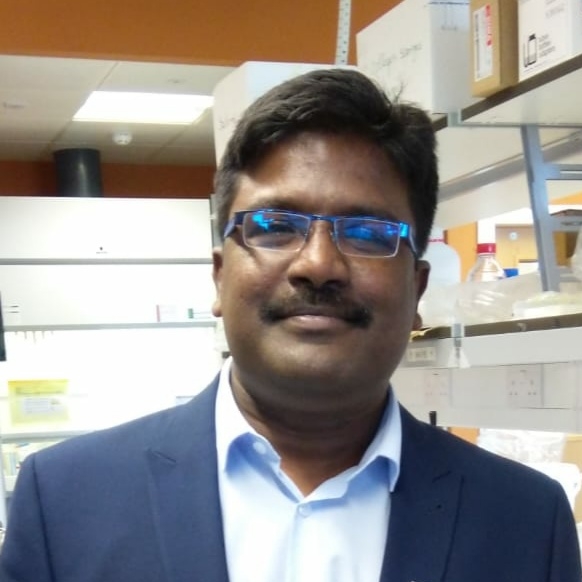
Dr. Rajendra Kurapati is an Assistant Professor at the School of Chemistry , Indian Institute of Science Education and Research Thiruvananthapuram (IISER TVM) . His research focuses on biodegradable 2D materials for biomedical applications, addressing nanomaterial biopersistence issues through enzymatic degradation studies. He leads the Biomaterials Lab and collaborates with institutions across France, Ireland, Portugal, and the UK. Born in Andhra Pradesh, India B.Sc. & M.Sc. in Chemistry (Acharya Nagarjuna University, University of Hyderabad) Ph.D. in Materials Engineering (Indian Institute of Science, 2014) Postdoc: CNRS Strasbourg (2014-2017), CÚRAM Galway (2018-2020) His research explores 2D material-biopolymer hybrids for drug/gene delivery , nanotheranostics , and antimicrobial coatings . Key article trends include: Graphene/MoS2 biodegradation by human enzymes Antibacterial coatings for medical implants Microplastics' environmental impact Lipid nanoparticles for mRNA vaccines ZnO quantum dots for bioimaging Polymer multilayer drug delivery systems Major scientific awards : DBT Ramalingaswami Fellowship (INR 40 lakhs over 5 years) SERB Start-up Grant (32 lakhs over 2 years) SERB Special Grant (45 lakhs over 3 years) DBT Mission Innovation Grant (18 lakhs over 6 months) His academic contributions span 15+ high-impact publications in journals like Advanced Materials , Nanoscale , and Chemical Communications , covering topics from graphene biodegradation to antimicrobial coatings and bioimaging . 10+ alumni students have graduated from his lab, with placements at institutions including University of Strasbourg and Dublin City University.
Dr. Bob Beitle Jr. is a Professor of Chemical Engineering and Senior Associate Vice Chancellor for Research and Innovation at the University of Arkansas. He joined the department in 1993, earned tenure in 1998, and was promoted to Full Professor in 2006. His research spans biochemical engineering , bioseparation , fermentation , and adaptive technology for the disabled , with significant work on protein purification, catalytic nanoparticles, and sustainable bioprocesses. Education: BS, MS, PhD in Chemical Engineering from the University of Pittsburgh (1987, 1991, 1993) Dr. Beitle's research combines experimental and computational approaches, focusing on peptide-directed nanoparticle synthesis and biocatalysis . His recent publications highlight advancements in MOF-based separations , CO2 capture materials , and viral detection platforms . He has secured grants like the CAREER Award and led projects in industrial partnerships and student development . Scientific contributions include multiple patents in bioseparation and software interfaces. Awards span decades: teaching honors (1988–2007) and mentorship recognition . He serves on the Cell and Molecular Biology Program Advisory Committee and the Executive Committee for the Biochemical Technology Division of ACS . Lab initiatives involve genomic data-driven affinity tail design and membrane-assisted fermentation systems .
João F. Mano is a Full Professor at the Department of Chemistry, University of Aveiro, and Director of the Doctoral Program on Biotechnology. He leads the COMPASS Research Group and serves as Vice-Director at CICECO - Aveiro Institute of Materials. His academic appointments include Invited Professor at University of Lorraine (France), Visiting Professor at KAIST (South Korea), and Adjunct Professor at Ajou University (South Korea). Education: PhD in Chemistry (1996, Technical University of Lisbon); D.Sc. in Tissue Engineering, Regenerative Medicine and Stem Cells (2012, University of Minho) Research Interests focus on Biomaterials for Regenerative Medicine , integrating Nanotechnology , Microtechnology , and Biofabrication . His group develops Bioinspired Materials using polymer chemistry, Decellularized Extracellular Matrix , and 3D Bioprinting to engineer Cell Microenvironments for therapeutic applications. Recent Publications highlight advancements in Human-Derived Hydrogels , Photopolymerizable Scaffolds , Magneto-Responsive Biomaterials , and Programmable Bioinks . Trends show emphasis on Organ-on-a-Chip integration, Smart Living Materials , and Green Bioprinting methodologies. Scientific Awards include: European Research Council Advanced Grants (2015, 2020) Fellow at IUPAC, European Academy of Sciences, and American Institute of Medical and Biological Engineering ERC Proof of Concept Grants Doctor Honoris Causa from University of Lorraine and Utrecht UNESCO Chair on Biomaterials George Winter Award (European Society for Biomaterials) Supervisions & Collaborations encompass 74+ MSc, 26+ PhD students, and 40+ postdocs. He co-founded METATISSUE and CELLULARIS Biomodels , and serves as Editor-in-Chief of Materials Today Bio .
Prof. Dr.-Ing. Arne Pietsch is a faculty member at the Technical University of Luebeck in the Department of Mechanical Engineering and Economics . His expertise centers on apparatus and plant engineering for the food industry , with a focus on hygienic apparatus engineering and high-pressure technology . Specializations: Food process engineering, supercritical fluid applications, and industrial plant design Current role: Founding Officer in the department His research spans supercritical CO2 processes , including decaffeination, turbine cleaning, and polymer impregnation. He integrates high-pressure systems into engineering education and explores viscosity dynamics in food processing. Key publication trends (2012–2019) highlight work in: Supercritical fluid extraction and impregnation High-pressure equipment safety and design Gas-assisted oilseed pressing Coffee processing quality control
Anne Berit C. Samuelsen serves as Associate Professor at the Department of Pharmacy, University of Oslo, where she also holds the position of Head of Education. Her academic foundation includes a Cand.pharm. degree and Dr.scient. doctorate, establishing her expertise in pharmaceutical sciences. Her research centers on polysaccharides from natural sources—particularly higher plants, cereals, and fungi (Basidiomycota)—with specialized focus on β-glucans. Key interests include carbohydrate chemistry, pharmacognosy, and the development of biopolymer-based pharmaceutical applications. Her work bridges fundamental structural characterization with practical drug delivery solutions, notably through liposome coating technologies and immunomodulatory compound development. Recent publications reveal a strong trajectory in fungal polysaccharide research, particularly with Pleurotus eryngii and Albatrellus ovinus species. Her team employs advanced techniques like diffusion-ordered NMR spectroscopy to analyze polysaccharide structures while investigating biological activities related to immune receptor binding (Dectin-1, Toll-like receptors) and therapeutic applications. This work demonstrates consistent output in high-impact journals including Carbohydrate Polymers and ACS Applied Bio Materials . She actively contributes to academic instruction through courses such as FARM1150 (Pharmaceutically Oriented Biochemistry), FARM3100 (Pharmacognosy), and FARM5200 (Use of Biopolymers in Pharmaceuticals). Her leadership extends to the Bioactive Natural Substances and Health Effects (BioNatH) research group and the Glyconor Consortium, where she investigates natural product applications for health improvement.
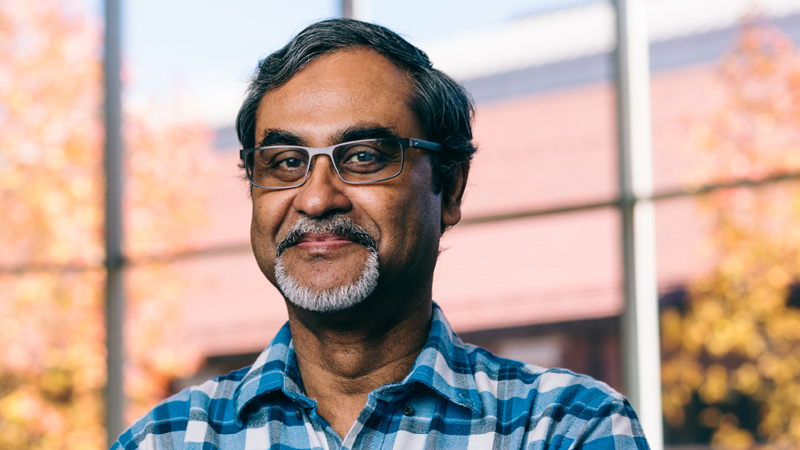
Mohammad F. Islam is a Professor in the Department of Materials Science and Engineering at Carnegie Mellon University (CMU), affiliated with the College of Engineering. His research focuses on soft materials, nanomaterials, and their applications in energy, healthcare, and manufacturing. He holds the National Science Foundation CAREER Award, Alfred P. Sloan Research Fellowship, Kavli Frontiers Fellowship, and the George Tallman Ladd Research Award. His work spans advanced materials processing, sustainable energy systems, and self-healing materials. Education: Ph.D. in Physics, Lehigh University (2000) Research Interests: Additive manufacturing and nanofabrication techniques Development of smart materials with self-healing and shape-memory properties Energy storage systems using carbon nanotube aerogels Applications in biomedicine and environmental sustainability Grants & Recognition: Recipient of multiple grants from the Wilton E. Scott Institute for Energy Innovation Co-founder of Watson Nano, commercializing carbon nanotube technologies Labs & Teams: Islam Group at CMU investigating soft matter, nanomaterials, and interdisciplinary applications
Miguel Ângelo Cerqueira is a Research Fellow at the International Iberian Nanotechnology Laboratory (INL) in Braga, Portugal. He holds a PhD in Biological Engineering from the University of Minho (2010) and served as an Assistant Professor there from 2011 to 2016. His research focuses on biopolymers, edible films, nanotechnology, and sustainable food packaging. Cerqueira has led numerous projects funded by agencies like FCT and Horizon 2020, addressing topics such as antimicrobial coatings, functional food delivery systems, and circular economy materials. Education: PhD in Biological Engineering, University of Minho (2006–2010) Bachelor's Degree in Biological Engineering, University of Minho (2000–2005) Research interests span biodegradable packaging materials, nanostructured systems for food applications, and valorization of agro-industrial byproducts. His work combines material science with food technology to develop eco-friendly solutions, such as edible coatings, oleogels, and active packaging. Recent trends in his publications focus on antimicrobial nanocomposites, recyclable food packaging, and functional foods enriched with bioactives like resveratrol and β-carotene. Awards: Best PhD Thesis Award (2011), University of Minho Young Scientist Award (2014), IUFoST World Congress Advising and Grants: Currently supervising 3 MSc and 2 PhD students. Has co-supervised 10 students and led over 30 funded projects. His work includes collaborations with industry partners like 2BNanoFood and Improveat, focusing on innovations like bioplastic packaging and functionalized food systems. Labs/Teams: Active in multidisciplinary teams such as the European Network for Gastrointestinal Health Research (ENGIHR) and COST Actions on food packaging and nanofiber composites. His lab develops nanosensors for food quality assessment and smart packaging materials with self-degradability.
Sapun Parekh is an Associate Professor in the Department of Biomedical Engineering at the University of Texas at Austin, supported by the Cockrell Family Fellowship. His research focuses on developing label-free imaging and analytical tools using nonlinear chemical microscopy to diagnose pathologies such as type 2 diabetes. The Parekh Lab, operating at UT Austin and the Max Planck Institute, investigates molecular basis of pathology, microscopy instrumentation, and mechano-chemical coupling in cancer. Key research areas include chemical and nonlinear microscopy, molecular physics of biomaterials, and imaging molecular structure under mechanical deformation. Recent work emphasizes biomolecular condensates, blood clot mechanics, and metabolic defense mechanisms in cancer cells. The lab actively recruits graduate students and postdoctoral researchers in topics like nonlinear microscopy and neurodegeneration imaging. Notable students include Jacob, Sam, Nick, and Advika, who have passed exams or defended theses. Collaborations with institutions like Brown University and EMBL advance interdisciplinary projects. The lab’s innovations bridge fundamental biophysics with clinical applications, emphasizing inclusion and innovation. Education Background: Not explicitly stated in provided texts. Affiliations: UT Austin Biomedical Engineering, Max Planck Institute. Research interests span imaging technologies, biomaterials, and disease mechanisms, with recent articles addressing biomolecular condensates, clot mechanics, and nanotechnology. The lab’s work is published in high-impact journals, reflecting its commitment to advancing biomedical diagnostics and therapies.
Tamal K. Dey is a Professor of Computer Science at Purdue University, specializing in Computational Geometry and Topology with applications to topological data analysis, geometric modeling, and computer graphics. He holds ACM and IEEE Fellowships and has authored/co-authored over 200 publications, including influential books like Curve and Surface Reconstruction and Computational Topology for Data Analysis . His research group, CGTDA, focuses on theoretical and applied aspects of geometry and topology in data science. Education: B.E. from Jadavpur University (1985), M.E. from Indian Institute of Science (1987), Ph.D. from Purdue University (1991). Postdoctoral work at University of Illinois (1992). Previously led the Jyamiti group at Ohio State University (1999–2020) and served as interim department chair (2019–2020). Major contributions include foundational work on 3D reconstruction, mesh generation, and topological algorithms. His awards include ACM Fellow (2018), IEEE Fellow, and Solid Modeling Association Fellow. Advised numerous PhD students and postdocs, with ongoing projects in persistent homology and TDA applications.
Dr. Kibret Mequanint is a full Professor at Western University's Department of Chemical and Biochemical Engineering, with cross-appointments in Biomedical Engineering. Holding a PhD from University of Stellenbosch and postdoctoral experience at Technical University of Darmstadt and McMaster University, his research bridges polymer science, materials engineering, and life sciences with applications in Biomaterials , Tissue Engineering , and Regenerative Medicine . His work spans both fundamental and translational research in cell-material interactions , polymer biomaterial design , and therapeutic radiation dosimeters , with technologies transferred to commercial applications. Leading scholar and educator with awards from NSERC, CIHR, and Western University Fellow of: American Institute for Medical and Biological Engineering (AIMBE), Ethiopian Academy of Sciences, International Union of Societies for Biomaterials Science and Engineering, Canadian Academy of Engineering Extensive editorial and panel service for NSERC, CIHR, and international journals His research program has produced over 170 refereed publications, focusing on conductive hydrogels , bioadhesives , and vascular tissue engineering . Recent work on endoscopy-deliverable bioadhesives and snake venom-derived hemostatic gels has attracted global media attention. He has served in leadership roles at the Canadian Biomaterials Society and university governance bodies including Senate and Board of Governors.