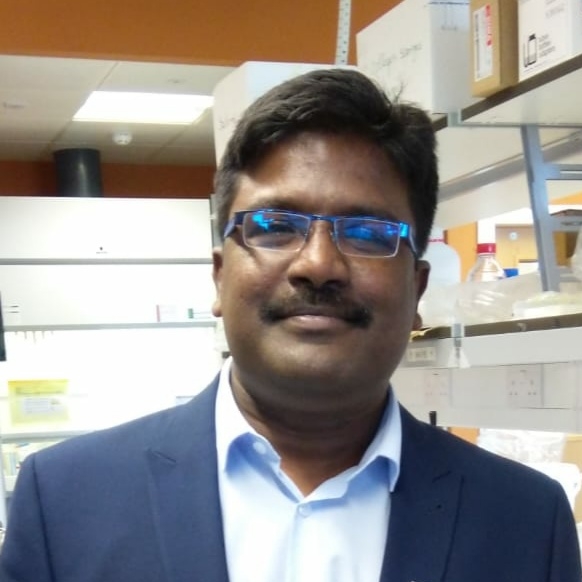
Prof. Dr. Ahmet Tutar is a faculty member in the Department of Chemistry at Sakarya University . His academic activities include teaching courses such as Organic Chemistry I/II , Organic Synthesis Design , and Stereochemistry , alongside supervising numerous master's theses in organic synthesis and humic substance applications. Research Interests: Focus on bromination reactions , BODIPY dye synthesis , humic/fulvic acid characterization , computational chemistry , and pharmaceutical applications of organic compounds. Key Article Trends: Recent publications emphasize photobromination methods , metal-organic frameworks , and biological activity of brominated derivatives , with keywords spanning organic synthesis , biochemistry , and environmental chemistry . Thesis Supervision: Guided 35+ master's theses (2007-2013) on topics like synthesis of brominated indan derivatives , humic acid extraction , and photobromination of terpenes .
Vikramaditya G. Yadav is an Associate Professor at the University of British Columbia (UBC) in the Department of Chemical and Biological Engineering, Faculty of Applied Science. He directs the Master of Engineering Leadership (MEL) Program in Sustainable Process Engineering and leads the BioFoundry research group. Education: B.A.Sc., University of Waterloo (2007) Ph.D., Massachusetts Institute of Technology (2013) Postdoctoral Associate, Harvard University (2014) His research spans sustainable chemical manufacturing, metabolic engineering, and biotechnology. Key areas include: Designing biosynthetic enzymes for biomass valorization Developing bioremediation strategies for industrial water quality Creating innovative drug delivery systems and tissue engineering solutions Advancing synthetic biology for pharmaceutical and bioenergy applications His recent work focuses on ocular drug delivery, cannabinoid biosynthesis in E. coli, lignin-based nanoparticles for cancer therapy, and computational analysis of plant secondary metabolites. Collaborations with start-ups, industry, and medical labs drive innovation in Canada's bioeconomy. Professional Leadership: Chair, Biotechnology Division of the Chemical Institute of Canada Associate Editor, The Canadian Journal of Chemical Engineering He is affiliated with UBC's BioProducts Institute and contributes to project-based learning pedagogy.
Michael McAlpine is a Professor in the Mechanical Engineering department at the University of Minnesota . He also holds affiliations with the Biomedical Engineering and Electrical and Computer Engineering departments. His research focuses on 3D printing functional materials & devices , Nanoscale inks , Biomedical devices , Bioelectronics , and Flexible Microsystems . Research Interests : 3D Printing, Biomedical Engineering, Nanotechnology, Flexible Electronics, Microfluidics Labs : ME 361/363 Contact : mcalpine@umn.edu , (612) 626-3303, ME 117 Recent Research Trends include 3D Printed Biomedical Devices , Flexible Electronics , and Bioprinting Applications . His work spans from Spinal Organoid Formation to Programmable Drug Release Capsules . Scientific Award : Circulation Research 2020 Best Manuscript Award
Mengliang Zhang is an Associate Professor in the Department of Chemistry and Biochemistry at Ohio University, College of Arts and Sciences. He leads an interdisciplinary research group focused on mass spectrometry and chemometrics, with applications in forensic, food, agricultural, environmental, and material sciences. His lab develops innovative analytical strategies for detecting toxicants, characterizing nanomaterials, and profiling metabolites in botanicals and food systems. Ph.D., Chemistry, Ohio University, 2015 Dr. Zhang’s research integrates instrumentation, chemometrics, and computational tools to address complex analytical challenges. His group works on forensic fiber and ignitable liquid analysis, plant metabolomics, nanomaterial surface chemistry, and environmental toxicant monitoring. His work is highly interdisciplinary, bridging chemistry, data science, and real-world applications in forensics and public health. His recent publications demonstrate a strong trend in advancing ambient ionization mass spectrometry (especially DART-MS), chemometric modeling, and metabolite profiling across diverse matrices—from fire debris to broccoli microgreens. His work increasingly emphasizes automation, quantitation, and database development for botanical phytochemicals. Scientific honors include the MTSU Distinguished Research Award (Early Career), and his students have received prestigious awards such as the Goldwater Scholarship and multiple URECA recognitions. He is actively supported by federal grants from NSF, USDA, DOE, DOJ (NIJ), and FEMA. Dr. Zhang mentors a vibrant research team of graduate and undergraduate students, guiding them in publishing high-impact research and presenting at national conferences like ASMS, Pittcon, and AAFS. He has organized sessions at SciX and served on editorial boards of Journal of Forensic Sciences and Journal of AOAC INTERNATIONAL . His lab recently relocated to Ohio University in August 2024, equipped with advanced instrumentation including UHPLC-QTOF-MS and DART-MS systems.
Andrew Regan is a Senior Lecturer in the School of Chemistry at the University of Manchester, specializing in organic synthesis and drug discovery. He holds a B.A. (1981), M.A. (1985), and Ph.D. (1985) from the University of Cambridge. His career includes postdoctoral research at Columbia University and a lectureship at the University of Kent before joining Manchester in 1991. Research interests focus on synthesizing biologically active compounds, such as phosphinic acids for anticancer agents, and developing novel synthetic methods. His work contributes to drug discovery, green chemistry, and efficient chemical processes. He currently supervises two PhD students researching phosphinic acid analogues and simplified erythromycin analogues. Key achievements include the synthesis of epibatidine and advancements in macrolide antibiotic design. His research aligns with sustainable development goals through eco-friendly synthesis methods.
Lee Yong Lim is a Professor of Pharmaceutics at The University of Western Australia (UWA), leading the Laboratory for Drug Delivery. She specializes in innovative drug delivery systems, particularly for pediatric populations and marine aquaculture. Her work focuses on overcoming medication challenges for children through taste-masked formulations and stable drug-loaded scaffolds for ear diseases. She has secured over $4.5 million in research grants from diverse funding bodies. Education: BSc (Pharmacy) Hons, National University of Singapore PhD, University of Manchester Research: Her team developed a patented chocolate-based formulation for bitter drugs and conducts pediatric trials. Collaborations include WA hospitals for safe compounded medicines and international projects in nanotechnology. Key research areas include pediatric medicinal products, veterinary drug delivery, and sustainable drug formulations aligned with UN SDGs. Grants & Funding: Major supporters include NHMRC, ARC, Telethon, and industry partnerships. Current active grants focus on pre-procedural chewables for children and perioperative analytics. Labs/Teams: Heads the Laboratory for Drug Delivery and collaborates with the Centre for Optimisation of Medicines and Institute for Paediatric Perioperative Excellence.
Mehdi Abdollahi is an Associate Professor at Chalmers University of Technology's Department of Food and Nutrition Science. His research focuses on alternative proteins, food biotechnology, and plant-based hybrid foods, with emphasis on sustainable utilization of food side streams, legumes, cereals, and microalgae as future protein sources. Develops pH-shift technology and ultrasound-assisted methods for protein extraction Specializes in hybrid food engineering via fermentation and biorefinery Works on 3D food printing and high-moisture extrusion for food analogs Researches collagen and biobased food packaging materials His work includes >100 peer-reviewed publications, 4 book chapters, and 3 patents. Current projects involve collaborations with Arla Foods, Lantmännen, and Nordic Seafarm, addressing sustainable seafood systems and plant-protein hybridization. 2024 Bertebos Prize recipient 2025: Recognized among Sweden's Top 101 Sustainability Figures Mentors 7 PhD students and 3 postdocs while collaborating with European institutions like Kristianstad University and Ankara University. His group explores biorefinery strategies, hybrid food functionality, and innovative packaging solutions.
Professor Hala Zreiqat AM is a leading biomedical engineer at The University of Sydney , serving as the Director of the ARC Training Centre for Innovative BioEngineering . A Fellow of all major Australian academies (AAS, ATSE, FAHMS, FRSN), she develops 3D printed bioceramics for bone regeneration while championing diversity through initiatives like the IDEAL Society and BIOTech Futures mentorship program. Her work bridges academia, clinical practice, and industry in musculoskeletal research . Research Focus: Her lab creates synthetic bone scaffolds that mimic natural bone architecture, strength, and porosity, enabling non-rejected bone regeneration via patient-matched implants. Key applications include orthopaedic, dental, and maxillofacial repair , with over $18M in competitive funding and multiple patents. Current projects explore AI-driven scaffold performance prediction and anti-senescence strategies for aging-related bone loss. Scientific Trends: Recent publications highlight 3D printed nanovoxelated ceramics , antisenescence biomaterials , and multifunctional theranostic platforms . Her team integrates machine learning for scaffold design, atom probe tomography for interface analysis, and two-photon imaging for cellular monitoring in 3D environments. 2021-2022 Fulbright Senior Scholar 2018 NSW Premier's Woman of the Year 2019 Eureka Prize for Innovative Use of Technology Fellow of Australian Academy of Science (2021) Over $18M in research funding Teaching & Leadership: She designed core courses like Tissue Engineering and Nanomaterials in Medicine , mentoring 158 students in 2020 alone. As Chair of CAAR (2020-2023), she strengthens Australia-Arab collaborations. Her lab trains early-career researchers , with alumni now in academia and industry.
Dr. Daniel Roxbury is an Associate Professor and Graduate Director at the Department of Chemical, Biomolecular and Materials Engineering within the University of Rhode Island's College of Engineering. With expertise in nanoscience and carbon nanomaterials, his research focuses on nano-bio interactions, developing functionalized nanotubes for biomedical applications and environmental monitoring through his NanoBio Engineering Laboratory. His work spans multiple disciplines including: Biomedical nanosensors Smart wearable biomaterials Targeted drug delivery systems Environmental nanotechnology Single-molecule imaging Nanotoxicology Recent publications emphasize machine learning-enhanced spectral analysis, coral reef conservation nanotechnology, and wearable stress monitoring textiles. His 2024 ACS Nano study introduces AI-driven macrophage phenotyping, while 2023 Nature Nanotechnology work explores coral reef restoration strategies using nanomaterials. Awarded the 2019 NSF CAREER grant for cellular nanometrology, he leads multiple NIH-funded projects including: $820,000 NSF CAREER: Spectral Imaging for Sub-Cellular Nanometrology $140,000 Miriam Hospital COBRE: Cortisol Detection Textiles $700,000 NSF EAGER: Multiplexed Wound Biomarker Detection His laboratory houses state-of-the-art equipment including: Near Infrared Hyperspectral Microscope Custom NIR Fluorescence Spectrometer Jasco UV/VIS/NIR Spectrophotometer Biosafety Cabinet Cell Culture Incubator Cryo-Storage System
Prof. Raul Fangueiro is a Full Professor and Vice-Dean at the School of Engineering, University of Minho, Portugal. As a Senior Researcher, he leads FIBRENAMICS – Institute of Innovation on Fiber-Based Materials and Composites. His work spans advanced materials (nano, smart, composites) and structures (3D, auxetic, multiscale) with applications in defense, healthcare, construction, and automotive sectors. Supervised over 20 PhD and Post-Doc researchers Scientific coordinator of 20+ national/international research projects Author of 200+ journal papers (H-index: 47), 500+ conference publications, 36 books, 40 patents Research focuses on nanotechnology , electrospinning , and sustainable material systems : Auxetic composites for personal protection Biodegradable nanofibers for medical use Smart textiles for biological/chemical resistance Recycled mineral/wood-based composites Graphene-reinforced green materials Multiscale fiber architectures Scientific recognition includes: Top 2% most influential scientist (Elsevier/Stanford 2020) Founder of AUXDEFENSE and ICNF conferences Editorial board member of leading composite journals Advisor to European Defense Agency/NATO working groups Active in industry-academia partnerships through spin-offs (Sciencentris, B4Logic, Beyond Composites, Givaware, Pixartidea) and collaborative projects with institutions like Instituto Superior Técnico, University of Aveiro, and international universities.
Atul N. Parikh is a Professor in the Departments of Biomedical Engineering and Materials Science and Engineering at the University of California Davis. His work bridges physical and biological sciences, focusing on understanding cellular mechanisms and designing bio-inspired synthetic materials. Key research areas include membrane dynamics, phase separation in vesicles, and the creation of synthetic protocells to explore life's fundamental processes. Education details are not explicitly provided in the text. His research emphasizes far-from-equilibrium systems and non-equilibrium self-assembly, aiming to develop materials capable of complex functions like memory and self-repair. Recent studies explore lipid phase separation, osmotic stress responses, and surfactant-mediated membrane modulations. Notable projects include the development of lipid nanoconstructs for drug delivery, osmo-regulated vesicle systems, and understanding microbial membrane interactions. His work has applications in biomedical engineering, material science, and synthetic biology. Lab activities focus on experimental approaches combining microscopy, biophysical characterization, and synthetic material fabrication. Collaborative efforts involve interdisciplinary teams addressing challenges in membrane biology and functional materials design.
Thomas Lectka is the Jean and Norman Scowe Professor in the Department of Chemistry at Johns Hopkins University, where he has been a faculty member since 1994. His research focuses on synthetic and physical organic chemistry, particularly in the area of organofluorine chemistry. PhD, Cornell University Postdoctoral Fellow, Heidelberg (Alexander von Humboldt Fellow) Postdoctoral Fellow, Harvard University (NIH Fellow) Dr. Lectka's research is centered on developing novel synthetic methods, especially for fluorination, and understanding the physical organic principles underlying reactivity. His work spans radical fluorination , catalytic asymmetric synthesis , and the design of fluorinated bioactive molecules . Using a combination of experimental and computational techniques, his lab investigates C-F bond formation , reaction mechanisms , and the biological applications of fluorinated compounds. His recent work, as reflected in publications from 2010 to 2024, shows a consistent trajectory in advancing fluorination methodologies, with increasing emphasis on site-selectivity , enantiocontrol , and biomedical relevance . Themes include the development of new reagents, mechanistic studies, and the synthesis of fluorinated natural product analogs and peptidomimetics. Dr. Lectka has received numerous honors and awards, including: ACS Arthur C. Cope Scholar (2024) ACS Maryland Chemist of the Year (2017) John Simon Guggenheim Memorial Fellowship Dreyfus Teacher-Scholar Award Sloan Fellowship NSF CAREER Award NIH First Award Eli Lilly Grantee Award He actively mentors graduate and undergraduate students in his research group, contributing to education and training in organic chemistry. His lab, The Lectka Group , is supported by grants from the NIH and NSF, enabling cutting-edge research in synthetic methodology and physical organic studies. The group fosters a collaborative environment focused on innovation in fluorine chemistry. The Lectka Group is an active research laboratory at Johns Hopkins University dedicated to pushing the boundaries of synthetic organic chemistry through the exploration of fluorine's unique properties. Current projects include site-selective radical fluorination and the synthesis of unusual fluorinated species, aiming to provide new tools for drug discovery and materials science.
Adane Tilahun Getachew serves as an Associate Professor at the National Food Institute, Technical University of Denmark (DTU), specializing in bioactive compounds analysis and application within food science. His research integrates green extraction technologies with sustainable food processing to valorize marine and agricultural byproducts. His primary research interests focus on antioxidant mechanisms , bioactive compound recovery , and advanced extraction methodologies including supercritical fluids and subcritical water processing. Key application areas include marine lipid extraction from invasive species like starfish and round goby, plant protein isolation from legumes and lupin seeds, and stabilization of omega-3 enriched food products. His work directly contributes to UN Sustainable Development Goals through waste reduction and sustainable resource utilization. Analysis of his 15 most recent publications reveals a strong emphasis on extraction optimization (particularly supercritical CO 2 and pressurized liquid methods), marine bioactives (seaweed, starfish, shrimp waste), and food product development (mayonnaise, packaging films, protein concentrates). Dominant themes include response surface methodology applications, seasonal variation impacts on bioactive yields, and techno-functional properties of extracted compounds. His collaborative projects demonstrate extensive interdisciplinary work across European research initiatives: SUSTAINABLE JET FUELS (2024-2027): Micro-algal cell factories for zero-waste aviation fuel GrExOmega (2022-2025): Green extraction of omega-3 from invasive marine species AlgaeVita (2025-2027): Biofortified algae ingredients rich in vitamin D3 and omega-3 SBbioact (2019-2022): Biorefinery of Nordic brown algae bioactives Dr. Getachew leads research on sustainable food systems with emphasis on waste valorization and green processing technologies, maintaining active collaborations with multiple European institutions through DTU's National Food Institute infrastructure.
Dr. Rajendra Kurapati is an Assistant Professor at the School of Chemistry , Indian Institute of Science Education and Research Thiruvananthapuram (IISER TVM) . His research focuses on biodegradable 2D materials for biomedical applications, addressing nanomaterial biopersistence issues through enzymatic degradation studies. He leads the Biomaterials Lab and collaborates with institutions across France, Ireland, Portugal, and the UK. Born in Andhra Pradesh, India B.Sc. & M.Sc. in Chemistry (Acharya Nagarjuna University, University of Hyderabad) Ph.D. in Materials Engineering (Indian Institute of Science, 2014) Postdoc: CNRS Strasbourg (2014-2017), CÚRAM Galway (2018-2020) His research explores 2D material-biopolymer hybrids for drug/gene delivery , nanotheranostics , and antimicrobial coatings . Key article trends include: Graphene/MoS2 biodegradation by human enzymes Antibacterial coatings for medical implants Microplastics' environmental impact Lipid nanoparticles for mRNA vaccines ZnO quantum dots for bioimaging Polymer multilayer drug delivery systems Major scientific awards : DBT Ramalingaswami Fellowship (INR 40 lakhs over 5 years) SERB Start-up Grant (32 lakhs over 2 years) SERB Special Grant (45 lakhs over 3 years) DBT Mission Innovation Grant (18 lakhs over 6 months) His academic contributions span 15+ high-impact publications in journals like Advanced Materials , Nanoscale , and Chemical Communications , covering topics from graphene biodegradation to antimicrobial coatings and bioimaging . 10+ alumni students have graduated from his lab, with placements at institutions including University of Strasbourg and Dublin City University.
Yu He is an Assistant Professor of Applied Physics and Physics at Yale University, affiliated with the Department of Physics. His research focuses on condensed matter physics and experimental techniques such as angle-resolved photoemission spectroscopy (ARPES) and x-ray scattering to study correlated electronic systems and quantum materials. Prior to Yale, he completed a Miller Research Fellowship at UC Berkeley (2019) after earning his Ph.D. in Applied Physics from Stanford University. Key research areas include metal-to-insulator transitions, superconductivity, 2D magnetism, and solid-state quantum simulation. He has contributed to advancements in material characterization techniques, including high-resolution ARPES using tabletop lasers. His work integrates crystal synthesis, electric transport measurements, and surface decoration to explore material properties. Education: B.S. in Physics from University of Science and Technology of China (USTC); M.S. in Electrical Engineering and Ph.D. in Applied Physics from Stanford University. Research Interests: Experimental condensed matter physics, quantum materials, superconductivity, and light-matter interaction studies. His current projects aim to dissect microscopic degrees of freedom (electronic, lattice, spin) in novel materials using cutting-edge spectroscopic methods. The lab employs complementary techniques like electric transport measurements and crystal growth to characterize material properties comprehensively. Awards: Miller Research Fellow, UC Berkeley (2019) Advising & Grants: No student advisees listed. Research supported by Yale University and prior fellowships. Labs & Teams: Leads a research group at Yale focused on experimental condensed matter physics, collaborating on projects involving advanced material characterization and quantum material discovery.