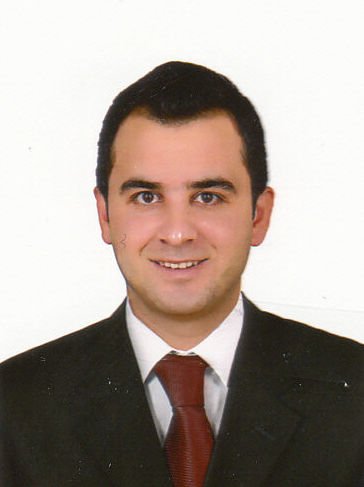
Mila Arapcheska is a researcher at the University "St. Kliment Ohridski" - Bitola, with expertise in food chemistry, environmental analysis, and molecular biology. Her work focuses on fatty acid composition food safety soil chemistry antioxidant activity food additive prevalence . Research highlights include: 2024 study on soil chemical monitoring for raspberry cultivation 2020 investigations into irradiation effects on food safety 2019 comparative analysis of conjugated linoleic acid in animal milks 2018 development of GC-FID methods for dairy product authentication Her publications span food science , environmental chemistry , and nutritional biochemistry , with particular emphasis on analytical methodologies and food quality assessment. Current affiliations include the University of Food Technologies and collaborations with international research teams.
Lígia Pimentel is a Researcher at the Centre for Biotechnology and Fine Chemistry (CBQF) of the Catholic University of Portugal (UCP) . Her work bridges Food Science , Biochemistry , and Lipid Metabolism , focusing on microbial production of bioactive compounds, functional foods, and valorization of agro-industrial byproducts.
Ana Vilas Boas is a Researcher at the Centre for Biotechnology and Fine Chemistry (CBQF) within the School of Biotechnology at the Catholic University of Portugal. Her work focuses on food science, particularly the valorization of food by-products and extraction of bioactive compounds for sustainable applications in food and health industries. Education Master's degree (completed by 2020) Research Interests Specializing in phenolic compounds, antioxidants, and gastrointestinal digestion dynamics, her research centers on citrus fruits, carob, and pineapple by-products. She investigates bioaccessibility of polyphenols, develops functional food ingredients from waste streams, and examines antioxidant behavior during simulated digestion. Key methodologies include in vitro gastrointestinal models and extraction optimization for nutraceutical applications. Research Output Trends Her 2022-2025 publications reveal a dominant focus on circular economy principles in food systems, particularly citrus and carob valorization. Recent work emphasizes encapsulation techniques for gut-targeted delivery, bromelain extraction from pineapple waste, and anthocyanin stability in upcycled extracts. The research consistently bridges food chemistry with practical applications in wound healing, functional foods, and sustainable ingredient development. Scientific Awards No scientific awards were documented in the provided materials. Advising and Professional Activities Acting as co-supervisor for Master's student Brandão, F. V. on orange peel extract microbiota research, she maintains active academic engagement through invited conference talks, oral presentations on food waste valorization, and organizational roles in events like the 3nd Online Conference on Circular Economy. Her Scopus profile shows 739 citations and an h-index of 14 across 47 research outputs since 2017. Laboratories and Teams Based at CBQF, she contributes to the AgroGrIN Tech initiative converting food waste into nutraceuticals, as highlighted in 2021 press coverage. Her collaborative network includes M. Pintado, D. A. Campos, and R. Gómez-García, with research spanning food chemistry, biotechnology, and sustainable processing within Portugal's academic ecosystem.
Lars Duelund is a Researcher at the Department of Green Technology (IGT) within University of Southern Denmark , specializing in biophysical and analytical chemistry related to food science and lipid membranes. He contributes to interdisciplinary projects at the intersection of material science and food technology. Education: MSc (cand.scient.) in Physics and Chemistry Research Focus : Umami taste mechanisms and seaweed flavor compounds Lipid membrane biophysics and interactions with bioactive compounds Food microstructure analysis using advanced spectroscopy and microscopy Environmental chemical monitoring techniques Research Output Trends : Recent work spans cannabis chemotype analysis (Raman spectroscopy), umami flavor chemistry in seaweeds and processed meats, lipid membrane dynamics, and food texture characterization. His projects often integrate analytical chemistry with sensory science and material physics. Academic Leadership : Supervises multiple student projects including: K. V. Christensen on cannabis terpene analysis (2021-2022) R. El-Houri on cannabinoid extraction and cyclooxygenase inhibition assays (2019-2020) Collaborative Projects : Active participant in NANOCHEM – Ultrahigh resolution chemical characterisation (2022-2028), investigating nanoscale chemical properties of eutectic systems and phase change materials with applications in food science and membrane biophysics.
Nadica Maltar Strmečki serves as Head of the Laboratory for Electron Spin Spectroscopy within the Division of Physical Chemistry at the Ruđer Bošković Institute in Zagreb, Croatia. She maintains significant academic connections through her extensive teaching history at the University of Zagreb's Faculty of Veterinary Medicine where she held positions from 1998 to 2013. Dr. Maltar Strmečki completed her academic foundation at the University of Zagreb, earning her B.Sc. in Physics in 1997, followed by a Master's degree in Medical Physics in 2002, and her Ph.D. in Natural Science in 2005. Throughout her career, she has demonstrated exceptional interdisciplinary expertise spanning physics, chemistry, and biological applications. Her primary research focuses on Electron Paramagnetic Resonance (EPR) spectroscopy applications across multiple domains. She has pioneered work in radiation dosimetry for emergency triage situations, biomineralization processes involving calcium phosphate and carbonate systems, and innovative applications of physical methods in food science and preservation. Her laboratory has developed novel approaches for using everyday materials as fortuitous dosimeters in radiation emergencies, significantly advancing practical response capabilities. Analysis of her recent publication record (2021-2025) reveals a clear evolution toward increasingly interdisciplinary research that bridges fundamental physics with practical applications in medicine, emergency response, and food technology. Her work shows growing integration of EPR spectroscopy with other analytical techniques to address complex problems in biomaterials development and radiation protection. NATO SPS project G5684 'Novel biological and physical methods for triage in radiological and nuclear (r/n) emergencies (BioPhyMeTRe)' as leader of Croatian team CM1306 - Understanding Movement and Mechanism in Molecular Machines, MC member, WG3 deputy CA15126 - Between Atom and Cell: Integrating Molecular Biophysics Approaches for Biology and Healthcare (MOBIEU), MC Substitute CA15209 - European Network on NMR Relaxometry, MC member Through her teaching positions at the University of Zagreb, Dr. Maltar Strmečki has mentored numerous students in physics and biophysics. Her laboratory serves as a hub for EPR spectroscopy research with multiple international collaborations, particularly in radiation emergency response networks. Her work has practical implications for improving triage protocols following radiological incidents and developing better biomaterials for medical applications. The Laboratory for Electron Spin Spectroscopy under her leadership provides specialized capabilities for studying radiation-induced radicals in diverse materials including biomaterials, food products, and geological samples. The lab plays a critical role in Croatia's contribution to European radiation protection research and has developed innovative methodologies that have been adopted in international emergency response protocols.
Alessandra Rossi is an Associate Professor at the Department of Food and Pharmaceutical Sciences, University of Parma. She coordinates the department's International Mobility Commission and contributes to the university's Internationalization Working Group. Her academic journey includes a PhD at the University of Strathclyde and postdoctoral work at Heriot-Watt University. PhD in Pure and Applied Chemistry (1998, University of Strathclyde) Graduated in Chemistry (1993, University of Pavia) Her research focuses on pharmaceutical technologies for controlled drug release, including hydrophilic matrices, nasal/pulmonary powders, and nano-microparticulate systems. She leads the COST Action SimInhale's Working Group 1 on particle engineering for inhaled medicines. Key trends in her publications include 3D-printed drug forms , phytoextract microencapsulation , nano-inhalation systems , and biopharmaceutical modeling . Her work bridges formulation science with clinical applications. Erasmus Scholarship (1993) Novartis Postdoctoral Fellowship (1998) She mentors students through teaching roles in Pharmaceutical Legislation, Galenic Preparations, and bibliographic research, with ongoing involvement in multidisciplinary pharmaceutical projects.
Agnieszka Ludwiczuk serves as an Associate Professor at the Department of Pharmacognosy with the Medicinal Plant Garden , Faculty of Pharmacy , Medical University of Lublin . With a PharmD and DSc in pharmacy, her career spans over 20 years of pharmacological research. Pharmacognosy (3.1 discipline: 100%) Essential oil chemist Terpenoid compounds specialist Plant-microbe bioactivity researcher Her research focuses on: Chemical profiling of medicinal plants and bryophytes Antimicrobial activity of natural compounds GC-MS and TLC-based bioautography methods Chemotaxonomic relationships in liverworts Biologically active terpenoids and bibenzyls Pharmaceutical applications of volatile compounds Over 266 publications highlight her work with 2021-2025 research on: Artemisia serotina essential oil bioactivity Zebrafish coumarin bioassays Marchantia polymorpha-derived anticancer agents Fusarium-hazelnut interactions Stachys sylvatica anthelminthics Cymbopogon anti-MRSA compounds She holds: 1 patent 266 total publications ORCID: 0000-0003-1108-613X
Renata Nowak is a Professor at the Department of Pharmaceutical Botany, Faculty of Pharmacy, Medical University of Lublin. Her research focuses on pharmacology, food science, and plant-derived compounds, including phenolic acids and flavonoids. She specializes in chromatography (LC-MS) techniques for analyzing plant extracts and antioxidants. ORCID: 0000-0003-4952-3147 Scopus profile EuropePMC Crossref With 280 publications and 5 promoted theses, her work emphasizes pharmaceutical botany and liquid chromatography-mass spectrometry (LC-MS) applications in studying Rosa species and plant-based bioactives.
Dr. İzzettin Güler is an Assistant Professor at Gaziantep University, affiliated with the İslahiye Vocational School's Medical Services and Techniques Department. He holds a Doctorate in Biology from Gaziantep University (2017), a Master's in Biology (2011), and a Bachelor's in Biology (2009) from Fırat University. PhD in Biology, Gaziantep University (2017) Master's in Biology, Gaziantep University (2011) Bachelor's in Biology, Fırat University (2009) His research focuses on bioactive natural compounds in cancer therapy, particularly plant-derived antitumor agents and hepatoprotective effects of medicinal compounds . He investigates mechanisms of oxidative stress modulation, apoptosis induction, and inflammation reduction in experimental models. Publications between 2012-2025 demonstrate consistent work in oncology and hepatology , with a strong emphasis on lichen metabolites , mushroom extracts , and phytochemicals using murine tumor models. Key journals include the International Journal of Pharmacology , Pharmacological Reports , and Romanian Biotechnological Letters .
Prof. Christian Ulrichs leads the Urban Ecophysiology of Plants group at Humboldt University's Albrecht Daniel Thaer Institute of Agricultural and Horticultural Sciences. His work bridges agricultural sustainability with ecological physiology. Academic affiliation: Humboldt University of Berlin Department: Albrecht Daniel Thaer Institute of Agricultural and Horticultural Sciences Research spans biocircular systems, including insect-based waste valorization , plant stress responses , and urban agriculture . Recent studies examine: Yellow mealworm substrate optimization Hemp waste fermentation for insect rearing Biodegradable packaging for leafy vegetables UV spectrum effects on cannabis metabolites Nutrient cycling in aquaponic systems His publications from 2023-2025 demonstrate interdisciplinary approaches combining entomology, horticulture, and waste management. Contact: dekan.lewi@hu-berlin.de
Professor Ivan Mijakovic leads the Mijakovic Lab at both Chalmers University of Technology (Sweden) and DTU Biosustain (Denmark) , focusing on Bacterial Systems Biology . His research bridges Microbiology , Synthetic Biology , and Nanotechnology to address challenges in Biomedicine , Biotechnology , and Environmental Applications . Current research areas include: Bacterial Pathogenesis and biofilm dynamics Metabolic Engineering of microbial cell factories Nanomaterial Applications in antimicrobial surfaces and drug delivery Experimental Evolution studies Interdisciplinary Approaches combining microbiology with material science His 2023-2025 publications demonstrate expertise in Nano-biomedical Interfaces , Antibacterial Nanomaterials , Cancer Nanotherapy , and Sustainable Bioprocesses . The lab also develops CRISPR-based Sensing and Graphene-Enhanced Biosensors for clinical applications. As group leader , he mentors 12 PhD/MSc students and collaborates across institutions in EU MSCA ITN projects like BUG-ID . The lab emphasizes scientific freedom , collaborative research , and ethical responsibility in their work.
Aloia Romani Perez is a Ramón y Cajal Researcher in the Chemical Engineering Department at the University of Vigo's Science Faculty since 2022. With a PhD in Chemical Engineering (2011, cum laude with Extraordinary Prize), she has developed her career in lignocellulosic biomass valorization, focusing on eco-friendly pretreatments and fermentative processes for bioethanol production through 20 years of research. Postdoc Fellowships: FCT-Portugal (2012-2015), I2C-Xunta de Galicia (2015-2016) Academic Positions: Assistant Researcher at University of Minho (2016-2022), Ramón y Cajal Researcher at University of Vigo (2022-present) Research Interests Her work focuses on biorefinery strategies for: Eco-friendly pretreatment of lignocellulosic biomass (autohydrolysis, steam explosion, organosolv, deep eutectic solvents) Biocatalyst development (lignocellulosic enzymes, engineered yeast strains) Valorization of diverse biomass sources: agroindustrial residues (corncob, brewery's spent grain), invasive species (Sargassum muticum), and fast-growing woods (Paulownia tomentosa) Scientific Achievements Principal Investigator of 4 research projects (260,250€ national funding + 115,000€ regional + 5,000€ institutional) H-index of 36 with 81 JCR publications Top 2% most cited scientist (Stanford rankings 2021-2023) Supervised 5 PhD theses, 5 MSc theses, and 3 TFG projects She also contributes to teaching innovation through her involvement in the GID teaching group and development of service-learning projects like "Alimentando tu futuro" using APS methodology.
PAULA GARCÍA OLIVEIRA is a postdoctoral researcher at the University of Vigo, affiliated with the College of Sciences and the Department of Analytical and Food Chemistry. She is a member of the Research Group AA1 Investigacións Agrarias e Alimentarias and holds a PhD from the University of Vigo (2024). Research Focus: Characterization and industrial applications of phenolic compounds, particularly in plant-based systems like Arnica montana Specializations: Extraction technologies, food chemistry, and technological applications of natural products His recent work centers on analytical methodologies for phenolic compounds and their industrial exploitation. Awards and honors are not explicitly mentioned in the provided data. Collaborative efforts are supported by advisors Dr. Jesús Simal Gándara and Dr. Miguel Ángel Prieto Lage.
Grazielle Náthia Neves is a postdoctoral researcher at the National Food Institute, Technical University of Denmark. Her work focuses on food science and technology, particularly on extracting bioactive compounds and proteins from plant sources using green technologies like supercritical CO2, ultrasound, and microwave processing. She contributes to research areas aligned with UN Sustainable Development Goals, including sustainable food systems and responsible consumption. Key Research Areas: Food processing technologies, bioactive compounds, legume proteins, starch digestibility, natural colorants, and sustainable methods. Recent Work Trends: Optimization of green extraction techniques (supercritical, microwave, ultrasound), techno-functional properties of flours, and characterization of bioactives in underutilized crops (breadfruit, lupin, seaweed).
Seçil Karahüseyin serves as Assistant Professor in the Department of Pharmacy Professional Sciences at Çukurova University's Faculty of Pharmacy since 2025. Previously, she held Research Assistant positions at Çukurova University (2013-2014, 2021-2025) and Istanbul University's Faculty of Pharmacy (2014-2021), establishing her career in pharmacognosy and natural product research. Her research centers on phytochemical analysis of Turkish medicinal flora, particularly Taraxacum species, evaluating antioxidant, anti-inflammatory, and antimicrobial properties through advanced techniques like HPLC-MS and GC-MS. She investigates phenolic compounds and ethnopharmacological applications, with significant contributions to understanding traditional remedies for diarrhea, kidney stones, and diabetes. Recent publications (2019-2025) demonstrate consistent focus on endemic Turkish plants, especially dandelion varieties, for therapeutic potential. Her work integrates chemical profiling with bioactivity assessment, advancing pharmacognosy and natural product development. Dr. Karahüseyin leads the 2025-present project on agricultural waste phenolics and previously directed the 2017-2021 Taraxacum mirabile pharmacognostic study. She actively participates in traditional knowledge documentation projects and serves as peer reviewer for journals including Frontiers in Pharmacology and Clinical Nutrition .