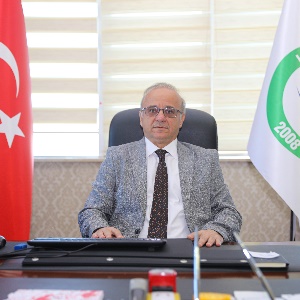
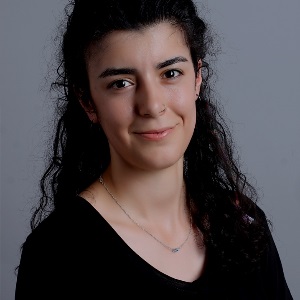
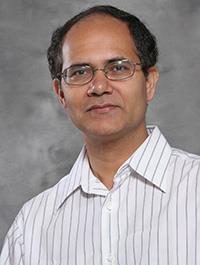
Evren Yildiztugay is affiliated with Arel University and contributes to academic research in natural products chemistry and pharmacology. Their work focuses on chemical characterization of plant extracts, evaluating biological activities through in vitro and computational methods. Key research areas include antioxidant properties, phytochemical analysis, and drug discovery potential of traditionally used plants like Arum elongatum, Glaucosciadium cordifolium, Tanacetum nitens, and Verbascum species. Recent studies emphasize interdisciplinary approaches combining experimental and computational (network pharmacology) techniques to elucidate mechanisms of bioactivity.
Prof. Ramazan Erenler is a faculty member at the Faculty of Arts and Sciences, Igdir University. His research focuses on phytochemistry, nanoparticle synthesis, and biological activities of plant extracts. He has published extensively on topics such as green synthesis of silver nanoparticles, antioxidant mechanisms in medicinal plants, and molecular docking studies. His work often involves collaboration with international researchers and spans disciplines including analytical chemistry and drug discovery. Research Interests: His primary areas include nanoparticle synthesis using plant extracts, evaluation of antioxidant and antimicrobial properties of natural compounds, and the application of advanced analytical techniques like LC-ESI-MS/MS. He also investigates the pharmacological potential of lesser-studied plant species and their bioactive compounds. Articles Overview: Recent publications highlight his focus on green chemistry approaches for nanoparticle production, quantitative analysis of bioactive compounds, and in vitro studies on anticancer and antimicrobial activities. Collaborative projects often involve Algerian and Turkish institutions, emphasizing regional plant biodiversity. Awards and Grants: No specific awards or grants are listed in the provided information. His work is supported through institutional affiliations and collaborative research networks. Labs/Teams: While no lab names are explicitly mentioned, his research involves interdisciplinary teams focusing on plant biology, nanotechnology, and analytical chemistry methodologies.
Res. Asst. Ahmet Özdemir is a Researcher affiliated with the Department of Turkish Language and Literature at Bingöl University's Faculty of Arts and Sciences. He has been serving as a research assistant since 2009, following his BSc from Gaziosmanpaşa University (2009) and MSc from Atatürk University (2014). He is currently pursuing a PhD in the same field. His academic role focuses on Turkish Language and Literature, but his research interests and publications also extend into interdisciplinary areas such as pharmacology, nanotechnology, and environmental science. Education: Bachelor's: Turkish Language and Literature, Gaziosmanpaşa University (2009) Master's: Turkish Language and Literature, Atatürk University (2014) PhD: Ongoing in Turkish Language and Literature, Institute of Turkic Studies Research Interests: While rooted in Turkish Language and Literature, his work spans diverse domains: linguistics, cultural studies, medicinal chemistry, bioenergy systems, and nanomaterial applications . His recent studies explore topics like antibacterial agents, biochar environmental impacts, and green synthesis of nanoparticles. These interdisciplinary efforts reflect a focus on bridging humanities and scientific innovation. Publications: His articles highlight trends in biomaterials, drug discovery, and ecological sustainability. Key themes include the synthesis of nano-catalysts from plant extracts, biochar's role in soil health, and the diagnostic potential of biomarkers. Awards/Grants: No specific awards or grants mentioned in the provided text. Labs/Teams: No lab affiliations explicitly stated. However, his collaborative research in chemistry and biology suggests involvement with interdisciplinary teams.
Özlem Abi is a Researcher at the Department of Nursing, Faculty of Health Sciences, Igdir University. She holds a Doctorate from the Institute of Health Sciences/Nursing at Yuzuncu Yil University (thesis title: "L VAN YUZUNCUYIL UNIVERSITY") and a License in Nursing from Van Health School. Her research focuses on geriatric care, pediatric nursing, health literacy, and phytochemistry, with notable work on anxiety in surgical patients, epilepsy awareness among educators, and vaccine hesitancy. She has contributed to projects like "Epilepsi Nöbetinde; Ne yapmalı? Ne yapılmamalı?" and "Bir Paket Mutluluk, Çokça Umut," funded by higher education institutions. She is a member of the Turkish Nurses Association. Her academic journey includes a 2025 Ph.D. from Yuzuncu Yil University and a 2016-2020 undergraduate degree from Van Health School. Her research spans interdisciplinary topics, including neonatal music therapy and phytochemical analysis of Silk Road plants. Recent projects emphasize practical healthcare solutions for pediatric surgery and public health education. Despite no listed awards, her work addresses critical gaps in geriatric psychology, vaccine communication, and herbal medicine efficacy. Key Projects: "Epilepsi Nöbetinde; Ne yapmalı? Ne yapılmamalı?" (Lead Investigator) "Bir Paket Mutluluk, Çokça Umut" (Lead Investigator) Professional Affiliation: Member of Turkish Nurses Association Her articles highlight trends in surgical patient psychology, teacher health literacy, and analytical chemistry applications. Current teaching duties are not detailed, but her academic links and social profiles suggest active engagement in nursing education.
Professor Jayashree Arcot is a distinguished academic in the School of Chemical Engineering at the University of New South Wales (UNSW), where she serves as a Professor in Food Science and Nutrition within the Food and Health group. She holds the position of Undergraduate Food Science Program Director and Advisor, demonstrating her leadership in academic program development and student mentorship. Professor Arcot's research spans the critical intersection of food science and nutritional health, with particular emphasis on food and nutrient security. Her work encompasses food chemistry, nutrient analysis, and the bioaccessibility and bioavailability of micronutrients. She has developed expertise in stable isotopic techniques and 3D cell culture methods to investigate micronutrients (vitamins and minerals) and bioactives in foods. Her research extends to practical applications including nutrient recovery from food manufacturing waste streams, utilization of agricultural wastes for biodegradable packaging materials, and extraction of nutrients using membrane technology. Analysis of Professor Arcot's recent publications reveals a strong focus on food security challenges, micronutrient bioavailability, and innovative food technologies. Her work spans from fundamental research on nutrient interactions (particularly iron, zinc, and carotenoids) to applied research on plant-based alternatives, sustainable food systems, and public health nutrition interventions. A significant portion of her recent work addresses micronutrient malnutrition in the Asia Pacific region through food-based approaches. Excellence in Postgraduate Research Supervision Award (2013) Australia-India Senior Visiting Fellowship (2012-2013) Professor Arcot has supervised numerous PhD students, honors, and Master's students in Food Science, Food Chemistry, and Nutrition. Her research has attracted significant funding, including her role as Director of the ARC Training Centre for Advanced Technologies in Food Manufacture (2013-2018). She has initiated multiple industry-funded projects and collaborates extensively with researchers across disciplines including cancer cell biologists. Her laboratory work integrates advanced analytical techniques with biological models, particularly utilizing Caco-2 cell cultures and 3D organoids to study nutrient bioavailability. She leads collaborative research teams focused on sustainable food systems, including projects in Papua New Guinea, Indonesia, and the Democratic Republic of Congo aimed at improving food and nutrition security through local crop utilization and food fortification strategies.
Associate Professor Jian Zhao is a faculty member in the Food Science and Technology Group at the School of Chemical Engineering , Faculty of Engineering , University of New South Wales (UNSW) . His research focuses on bioactive food components , fermented foods and beverages , biotransformation of foods , and innovative food processing technologies . Key research areas include enzyme discovery for dairy alternatives, microbial ecology in coffee fermentation, and functional food packaging development. Recent publications highlight advancements in marine-derived milk-clotting enzymes , chitosan-based edible films , and gut microbiome modulation via food components. His work spans interdisciplinary applications of food chemistry , biotechnology , and molecular biology , with a strong emphasis on sustainable food systems and safety. Collaborative studies with researchers like Cox J , Paul NA , and Gooneratne R demonstrate international and cross-disciplinary engagement. For detailed inquiries, contact: jian.zhao@unsw.edu.au . Office: Hilmer, Level 4, Room 421 (via SEB E8) , UNSW.
Stefan Heuser is a Professor of Organic Chemistry at Technische Hochschule Nürnberg Georg Simon Ohm since 2010, and held roles such as Vice Dean, Budget Officer, and Scholarship Officer. He previously worked at Lilly Research GmbH (2002–2007) and Beiersdorf AG (2007–2010). His education includes a PhD from Philipps University Marburg and Technical University of Munich (1999–2002), and a diploma from Philipps University Marburg (1994–1999). He has been honored as 'Teacher of the Year' five times (2016–2021) at Paracelsus Medical University. Research focuses on drug design/synthesis, catalysis in organic synthesis, and new synthetic methods. He teaches organic chemistry, medicinal chemistry, and catalysis applications. His work includes pioneering microwave-assisted synthesis methods, development of novel silylation reagents, and scalable synthesis routes for natural products like magnolol. Education: PhD in Chemistry, Philipps-Universität Marburg & TU München (2002) Diploma in Chemistry, Philipps-Universität Marburg (1999) Studies at Heriot-Watt University Edinburgh (1997–1998) Publications highlight methodological advances in organic synthesis, including benzoxazoles, oxazolopyridines, and thiazole derivatives. He is actively involved in GDCh (Medicinal Chemistry Section), Friends of Chemistry, and the Hochschullehrerbund.
doc. dr Relja Suručić is an Associate Professor at the Faculty of Medicine of the University of Banja Luka, specializing in Pharmacognosy. His research focuses on natural product chemistry, drug design, and computational studies targeting enzyme inhibition, antiviral agents, and nanotechnology applications. He leads projects on phytochemicals' biomedical potential and SARS-CoV-2 inhibition mechanisms. Research interests include: Design of multitarget drugs for neurodegenerative diseases Antioxidant and antiparasitic activities of plant extracts In silico modeling of bioactive compounds Biosynthesis of nanoparticles for medical use Recent projects involve: Inhibition of SARS-CoV-2 via plant polyphenols Development of TRPA1 agonists for vasodilation Pharmacological evaluation of Geranium robertianum extracts He coordinates national and international grants, including EU-funded initiatives on researcher career development and nanotechnology in medicine.
Mariana Mello dos Santos is a Researcher and Casual Teaching staff member at the School of Allied Health, The University of Western Australia (UWA), pursuing a Doctor of Philosophy in the Centre for Optimisation of Medicines. Her research focuses on the physicochemical and antioxidant properties of bee-derived products, particularly Australian stingless bee honey, propolis, and cerumen. She employs advanced analytical techniques like High-Performance Thin-Layer Chromatography (HPTLC) and multivariate data analysis to study bioactive compounds in these natural products. Education: Bacherlor's degree in Industrial Chemistry from Universidade Federal do Rio de Janeiro (2018). Research Interests: Her work bridges food science, chemistry, and biology, with a focus on optimizing natural products for medicinal and nutritional applications. Key areas include assessing antioxidant capacity, phenolic content, and sensory properties of bee products, as well as their potential applications in health and environmental contexts. Publications: Her recent articles (2024–2025) explore Australian stingless bee honey, propolis, and cerumen, emphasizing their chemical profiles and bioactive properties. These studies contribute to understanding these products' roles in both traditional and modern healthcare systems. Awards: No scientific awards are explicitly mentioned in the provided text. Advising/Grants: No advising roles or grants are listed, though her research aligns with interdisciplinary projects in natural product analysis and application. Labs/Teams: Active within the School of Allied Health and the Centre for Optimisation of Medicines, collaborating with researchers like Prof. Locher and Dr. Lim on HPTLC-based analytical methodologies.
Hugo Lefeuvre is a Postdoctoral Research Fellow at the University of British Columbia, specializing in systems and security research with a focus on interdisciplinary applications in biochemistry, virology, and materials science. His work spans enzymology, viral mechanisms, antioxidant activity, and drug development. Research interests include viral protease mechanisms, enzyme characterization, essential oil composition, and the application of metal complexes in biomedical contexts. Hugo’s studies often bridge fundamental biology with applied chemistry, addressing challenges in antiviral strategies, drug design, and sustainable materials. Recent publications highlight advancements in understanding SARS-CoV-2 protease activity, antioxidant materials, and enzymatic processes in insects and plants. His work has implications for medical research, renewable energy, and pharmaceutical development. No scientific awards or grants are explicitly mentioned in the provided text. Advising roles or student supervision details are also not documented here. Hugo’s research often involves collaborations across departments, though specific lab affiliations are unspecified.
Dr. Theodore Fox is an Associate Professor in the Department of Biology at the University of West Florida, within the Hal Marcus College of Science and Engineering. His research and teaching are centered on plant physiology and stress responses, with a focus on invasive and medicinal plant species native to the Florida Panhandle. His research interests include: Plant adaptations to abiotic stresses, particularly flooding tolerance in Echinochloa phyllopogon (watergrass) Molecular and physiological mechanisms of plant defense against wounding and pathogen attack, especially in Dioscorea bulbifera (air potato) Isolation and screening of biologically active metabolites such as terpenoids, steroidal compounds, and flavonoids from native plants Role of hexokinase isozymes in stress signaling and energy metabolism Phenolic antioxidants in medicinal plants like Sestiana grandiflora His work integrates molecular biology, biochemistry, and ecological botany, with strong undergraduate and graduate student involvement. Although specific publications are not listed, his research themes span plant biochemistry, stress physiology, and natural product discovery. He has contributed as a reviewer for Functional Plant Biology and published in journals including Symbiosis , Physiologia , Crop Science , and Zoology . Dr. Fox has taught courses such as Plant Biotechnology, Plant Physiology, Medical Botany, and Introduction to Forensic Biology. He earned his Ph.D. in Botany from the University of Maryland and both his M.S. and B.S. in Biology from the University of Dayton. He joined the UWF Biology Department in 2001 and continues to lead an active research lab. He is involved in multiple research initiatives, including the screening of plant extracts for herbicidal, antibacterial, and antifungal properties using HPLC separation and bioassays with Escherichia coli and radish seed germination. His lab plans to expand this work to other native Florida plants.
Venugopal Mukku, Ph.D., serves as Associate Professor and Research Labs Director in the Math, Science and Technology Department at the University of Minnesota Crookston. He teaches core chemistry courses including Organic Chemistry I and Elem Bioorganic Chemistry for Pharmacy and Health Sciences majors, demonstrating strong commitment to undergraduate STEM education through on-campus faculty engagement. Educational Background: B.Sc. (1988) - Sri Sathya Sai Institute of Higher Learning, Prasanthi Nilayam, India M.Sc. (1990) - Sri Sathya Sai Institute of Higher Learning, Prasanthi Nilayam, India Ph.D. (1995) - Andhra University, Visakhapatnam, India Dr. Mukku's research centers on natural products chemistry with emphasis on bioactive secondary metabolites from plants and microorganisms. His Natural Products Laboratory investigates compounds targeting antibiotic-resistant pathogens like MRSA and cancer cell growth inhibition. Recent work (2021-2025) focuses on bioprospecting wetlands and soil microbiomes for novel antimicrobials, while integrating ethnobotanical knowledge from traditional medicine systems. His chemistry education research develops innovative laboratory pedagogy for undergraduate organic chemistry instruction. Analysis of his 15 most recent publications reveals consistent focus on marine and terrestrial natural product discovery, with increasing emphasis on antibiotic resistance mechanisms and environmental bioprospecting since 2020. Early career work centered on structural elucidation of novel compounds from diverse ecosystems including the Indian Ocean and Zimbabwean flora. Scientific Recognition: Horace T. Morse Award (2025) Distinguished Scholar Award (2021) Award for Global Engagement & Builders of Diversity Award (2019) Alexander von Humboldt Research Fellowship (1999) Dr. Mukku mentors undergraduate researchers through his Natural Products Laboratory, recently leading student teams on international research experiences in Morocco, Spain, and France. His work has secured funding for antibiotic discovery projects targeting MRSA, with emphasis on translating traditional plant knowledge into modern therapeutic approaches. The laboratory serves as a hub for student-faculty collaborative research within the Crookston campus. He directs the Natural Products Laboratory which maintains active collaborations with international research teams and industry partners. Current projects focus on soil Streptomycetes biomarker identification for anti-MRSA compounds and phytochemical analysis of Moroccan Thymus species, reflecting his commitment to global scientific engagement and translational natural product research.
Filomena Monica Vella is a Researcher at the Institute of Biosciences and BioResources (IBBR) of the National Research Council of Italy (CNR), based in Naples. She has been with IBBR since February 2022, following previous research positions at other CNR institutes including the Research Institute on Terrestrial Ecosystems (IRET) and the Institute of Agro-Environmental and Forest Biology (IBAF). Her educational background includes: Ph.D. in Applied Biology from University "Federico II" of Naples (2011) Graduate Degree in Biological Sciences from University of Naples "Federico II" (2006) Dr. Vella's research focuses on the valorization of biomass and agri-food waste for sustainable production of bioenergy and high-value biomolecules. Her work spans food chemistry, biochemistry, food safety, and microbiology, with particular expertise in extracting bioactive compounds such as polyphenols, flavonoids, and terpenes from agricultural byproducts. She applies circular economy principles to reduce environmental impact while creating economic value from waste streams. Her publication record shows consistent research in biomass valorization, particularly with melon, chestnut, and citrus byproducts. She has developed methods for extracting bioactive compounds, analyzing food safety parameters, and optimizing biomass conversion processes. Her recent work demonstrates increasing focus on circular economy applications in the agri-food sector, with publications spanning food science, biochemistry, and environmental sustainability. Dr. Vella has collaborated extensively with researchers at CNR and University of Naples "Federico II," particularly with Bruna Laratta and Luigi De Masi. Her work has received consistent funding through CNR research programs focused on sustainable biomass utilization. She is actively involved in laboratory research at CNR's Naples facilities, working with analytical equipment for chemical characterization of biomass and food products. Her research contributes to sustainable solutions for agri-food waste management and bio-based product development.
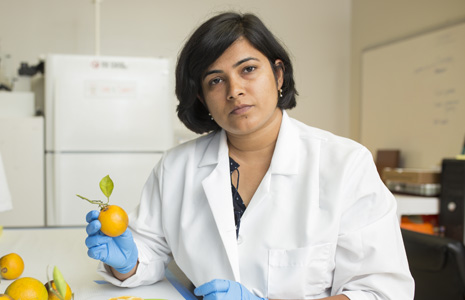
Dr. Tripti Vashisth is an Associate Professor and Associate Center Director at the University of Florida's Citrus Research and Education Center, specializing in Horticultural Sciences and Citrus Extension. Her research targets Huanglongbing (HLB) mitigation through integrated crop management, physiological interventions, and horticultural optimization to improve citrus production, tree health, and fruit quality in disease-affected regions. Research Focus: Her work spans: Physiological responses of citrus to HLB (e.g., oxidative stress, fruit drop mechanisms) Efficacy of plant growth regulators (e.g., gibberellic acid) Rootstock performance under nutrient stress Postharvest quality preservation Early disease detection using metabolomics and machine learning Publication Trends (2020–2024): Recent articles emphasize HLB management strategies, including genetic engineering for disease tolerance, biochemical stress mitigation, and precision agriculture techniques. Over 80% of her post-2020 publications focus on Huanglongbing pathophysiology and intervention. Advising & Team: Dr. Vashisth mentors four graduate students (2 Master’s, 1 Ph.D., 1 unspecified) and collaborates with researchers including: Michaela Ivy (Agriculture Associate) Taylor Livingston (Biological Scientist II)
Vera Muccilli is an Associate Professor of Organic Chemistry at the University of Catania , Italy. She coordinates the Master Degree in Chemical Sciences and contributes to the Chemistry of Bioactive Natural Products Group. Her academic journey includes a summa cum laude degree in Industrial Chemistry (2002) and a PhD in Chemical Sciences (2006), focusing on mass spectrometry applications in cereal proteins. She conducted research at the National Center for Biotechnology in Madrid and received recognition from the Italian Chemical Society in 2006. Research interests span chemical/enzymatic modification of bioactive natural compounds, structure-activity relationship studies, polyphenol extraction from medicinal plants and agricultural waste, antioxidant activity evaluation, and metabolomic analysis via NMR. Her work integrates Biomimetic and enzyme-mediated synthesis Spectroscopic characterization (MS, NMR) Metabolic enzyme inhibition for drug discovery Valorization of plant biomass into sustainable applications. Recent publications highlight her contributions to pancreatic lipase inhibition, antidiabetic agent development, and polyphenol-based materials. Collaborations include BASF SE , Universidade Federal do Paranà , and EU-OPENSCREEN ERIC. Funding includes national PRIN PNRR 2022 and 2017 grants, alongside a University of Catania Pia.ce.ri. grant for diabetes-targeted research. Award: 2006: Young Researcher in Mass Spectrometry, Italian Chemical Society Educational leadership includes roles as accredited tutor at the Scuola Superiore di Catania and delegate for CINAP (Active & Participatory Inclusion Center). She serves on the International Summer School on Natural Products committee and is a reviewer for 14 journals including Food Chemistry and Molecules .