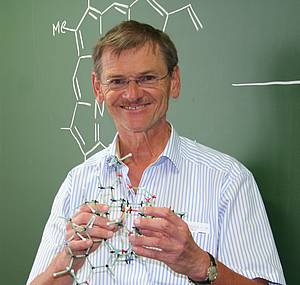
Prof. Dr. Norbert Sewald, Chair of Organic and Bioorganic Chemistry at Bielefeld University, is a leading figure in Bioorganic Chemistry , Chemical Biology , and Enzymatic Halogenation . As head of the Organic and Bioorganic Chemistry Group at the Center for Biotechnology (CeBiTec), he drives research on natural products and drug conjugates. Full Professor, Bielefeld University (since 1999) Founding Coordinator, International Graduate School of Chemistry and Biochemistry (2001-2003) Chairman, Institute of Biochemistry and Bioengineering at CeBiTec (2006-2008) Dean, Department of Chemistry (2008-2011) Chairman, Max-Bergmann-Kreis e.V. (since 2010) Coordinator, Marie Skłodowska-Curie Training Networks (MAGICBULLET, 2015-2018; Magicbullet::reloaded, 2020-2023) His research focuses on halogenases for mild peptide bromination, cryptophycin-based tumor targeting , and bioactive natural products from African flora. Collaborative projects span antiplasmodial agents , antibacterial compounds , and neurodegenerative disease inhibitors . Recent work highlights include: Enzymatic halogenation cascades Click-to-release drug conjugates Fluorescent probes for amyloid detection Key affiliations: Faculty of Chemistry Center for Biotechnology (CeBiTec) European Peptide Society (Scientific Affairs Officer, 2016-) Leibniz Institute of Plant Biochemistry (Scientific Advisory Board, 2010-2017)
Professor Johanita Kruger is a faculty member at the University of Applied Sciences Fulda, Germany, where she holds the position of Professor of Food Technology and Nutrition. Previously, she has held roles including Researcher at the University of Hohenheim and Lecturer at the University of Pretoria. Her research focuses on nutrient bioavailability, particularly inhibitors and enhancers of bioactive compounds, with an emphasis on polysorbate micelle absorption mechanisms, food-to-food fortification strategies, and mineral bioavailability in African green leafy vegetables. She collaborates internationally on projects funded by the German Research Foundation (DFG) and USAID, addressing issues such as micronutrient deficiencies and food processing innovations. Her educational background includes a PhD in Nutrition from the University of Pretoria, alongside extensive post-doctoral and research experience across multiple institutions. University of Applied Sciences Fulda, Germany (2023–present) University of Hohenheim, Stuttgart (2020–2023; 2016–2018) University of Pretoria, South Africa (2015–2015; 2011–2013) Her research interests span food biofunctionality, including the development of novel micellar formulations and the evaluation of food processing techniques to enhance nutrient bioavailability. Key projects include defining food-to-food fortification strategies and investigating iron/zinc bioavailability in traditional African diets. She has contributed to interdisciplinary collaborations, such as the USAID Feed the Future Innovation Lab for Food Processing. Publications highlight advancements in polysorbate micelle stability, polyphenol encapsulation, and the efficacy of tropical plant-based fortification. Her work bridges laboratory research and real-world applications, aiming to improve global food security and nutritional outcomes. Laboratory activities include the USAID-funded Food Processing Lab and collaborative projects with institutions in France and Slovenia. No scientific awards are explicitly noted in the provided text. Her advising and grants include DFG funding for micelle absorption studies and contributions to the Kenyan Flour Blending Initiative. Students and lab teams focus on topics like cereal biofortification and nutrient-micelle interactions.
Prof. Dr. Tuba Esatbeyoglu is a full Professor of Molecular Food Chemistry and Development and serves as the Executive Director of the Institute of Food Science and Human Nutrition at Leibniz University Hannover, within the Faculty of Natural Sciences. She leads research in food chemistry, quality, and safety, with a focus on bioactive compounds and sustainable food innovation. Research Interests: Her work centers on secondary plant metabolites, food by-product utilization, HPLC method development, proanthocyanidin chemistry, food stability, authenticity markers, and in vitro biological activity and toxicity. She investigates the bioaccessibility and sensory properties of functional foods, contributing significantly to food quality and safety science. Publication Trends: Her recent publications reflect a strong focus on polyphenols, encapsulation technologies, food waste valorization, and analytical method development. She frequently explores the health impacts of plant extracts, liver protection, and sustainable food systems, often employing in vitro and animal models. Scientific Awards: Georg Forster Research Award (Alexander von Humboldt Foundation, 2022) Poster Prize, Brunel University (2014) Danone Nutrition for Health Institute Scholarships (2013, 2014) Rochow Family Trust Scholarship (2012) DGQ Young Scientist Award (2011) Award for Outstanding Academic Achievements in Food Chemistry (2006) Advising and Grants: While specific students are not listed, she supervises research in food science and has served on examination boards. She has led projects including a genetic engineering S1 facility and holds permissions under the Infection Protection Act. She has been involved in reviewing for major funding bodies including DFG, DAAD, and the Alexander von Humboldt Foundation. Labs and Teams: She heads the Molecular Food Chemistry and Development research group at the Institute of Food Science and Human Nutrition. She is active in national and international scientific networks, including DECHEMA, GDCh, DGE, IFT, and FEI’s Scientific Advisory Board, and contributes to standardization efforts via DIN.
Chambers C. Hughes is a Research Group Leader in the Department of Microbial Bioactive Compounds at the University of Tübingen, Germany. Previously, he held positions as an Assistant Professor at the Scripps Institution of Oceanography (2012–2019) and a postdoctoral researcher with Prof. William Fenical (2005–2012). His research focuses on microbial natural product discovery, synthesis, and chemical biology, particularly employing reactivity-guided isolation and bioactivity-guided approaches to uncover novel bioactive compounds. His group has pioneered methods using chemoselective probes to target metabolites with specific functional groups, enabling the discovery of siderophores, antibiotics, and other secondary metabolites. Education: B.S. in Biochemistry, Geneseo College (1999) Ph.D. in Chemistry, University of California, Berkeley (2004) Research Interests: The Hughes Group explores microbial natural products using cutting-edge techniques like NMR spectroscopy and mass spectrometry. They focus on marine and terrestrial organisms, emphasizing the development of chemical labeling strategies to identify electrophilic compounds (e.g., epoxides, β-lactams) and conjugated alkenes. Their work bridges synthetic chemistry and biological activity, targeting antibiotic discovery, enzyme inhibition, and metabolic pathway elucidation. Notable Contributions: The group has characterized marinopyrroles (protonophoric antibiotics), kasichelins (siderophores), and vatiamides (polyketide natural products). Their methods have revealed artifacts in previously reported natural products and enabled genome-mining approaches to de-orphan biosynthetic gene clusters. Students & Collaborations: Current students include Shu-Ning Xia, Sehee Jang, Luca Salvi, and Max Knab. Collaborations span microbiology, synthetic chemistry, and bioinformatics, with key partners at the University of Tübingen and Scripps Oceanography. Labs & Facilities: The Hughes Research Group operates within the Interfaculty Institute of Microbiology and Infection Medicine, leveraging advanced analytical tools for natural product characterization and synthesis.
Yanyan Zhang is a Professor and Director of the Department of Flavor Chemistry at the University of Hohenheim. Her research focuses on aroma characterization, natural flavor production through biotechnology, and sensory quality improvement in foods and beverages. Research utilizes advanced techniques including GC-MS-Olfactometry and SAFE extraction to identify key flavor compounds and their formation pathways. Current projects explore fungal fermentation for novel non-alcoholic beverages and valorization of agricultural byproducts. Awards include the DECHEMA Young Scientist Award and Nestlé Silver Award for Flavor Science. Zhang serves on editorial boards and leads international research collaborations in food biotechnology.
Oliver Schlüter is an Adjunct Professor at the University of Bologna's Department of Agricultural and Food Sciences. He serves as Vice-Head of the Horticultural Engineering Department and Senior Scientist at the Leibniz Institute for Agricultural Engineering and Bioeconomy (ATB), leading the Microbiomics Laboratory for Bioeconomy. His work focuses on non-thermal food processing technologies and sustainable protein sources. Habilitation in Food Technology (2019, TU Dresden) Project leader for genetic engineering at ATB Chair of CIGR Section VI and INSECTA International Conference Research Interests span alternative protein sources (insects, hemp), non-thermal technologies (high pressure, plasma, pulsed electric fields), and food safety monitoring using spectral-optical methods. His recent publications emphasize edible insect processing , microbial safety , and bioactive compounds in food systems. Editorial roles in Innovative Food Science and Emerging Technologies and Journal of Insects as Food and Feed Key projects: Biomass2Food , ProtinA , F4F2 , and reKultI4Food
Dr. Silvia Ballert is a researcher at Anhalt University of Applied Sciences, affiliated with the Department of Agriculture, Nutritional Science and Landscape Development. She is actively involved in research related to food chemistry, molecular biosciences, and the analysis of bioactive plant compounds, with a particular focus on mate tea and clinical biomarkers. Her research interests include food chemistry, molecular biosciences, bioactive compounds, analytical chemistry, plant-derived phytochemicals, nutritional science, and natural product analysis. These areas are reflected in her peer-reviewed publications in high-impact journals such as Frontiers in Molecular Biosciences and Food Chemistry . The trends in her recent publications indicate a strong focus on analytical method development, particularly in HPTLC and longitudinal assay evaluation, with applications in both food science and clinical diagnostics. Her work bridges nutritional science and molecular analysis, emphasizing quality, reproducibility, and health implications of natural products. There is no public information available regarding scientific awards, student supervision, or grant funding. She contributes to academic advising and research supervision within her department, although specific students or projects are not listed. Her work is supported by institutional research infrastructure at Anhalt University. Dr. Ballert is part of a research team engaged in food and agricultural sciences, likely collaborating with other researchers in phytochemical analysis and sustainable agricultural practices.
Prof. Ulrike Holzgrabe is a distinguished Professor of Pharmaceutical and Medicinal Chemistry at the Institute of Pharmacy and Food Chemistry, Faculty of Chemistry and Pharmacy, University of Würzburg. With over 30 years of academic excellence, she has held numerous leadership positions including Dean of the Faculty of Chemistry and Pharmacy (2009-2011) and Vice President of the University of Würzburg (2018-2021), where she focused on teacher training and educational innovation. Her pioneering research spans three interconnected domains: developing novel anti-infectives from both synthetic and natural sources, designing selective ligands for muscarinic receptors, and advancing analytical methodologies using capillary electrophoresis and NMR spectroscopy for pharmaceutical quality control. Her work bridges fundamental chemistry with clinical applications, particularly in combating antimicrobial resistance and improving drug safety. Prof. Holzgrabe's recent publications reveal a strategic expansion of her research into global pharmaceutical quality issues, with particular attention to developing countries. Her analytical expertise has been consistently applied to critical problems including nitrosamine contamination in sartans, counterfeit medicines, and quality assurance of essential antibiotics. Her exceptional contributions to pharmaceutical sciences have been recognized with prestigious honors including the Bavarian Order of Merit (2019), Elsa Ullmann Medal (2021), and the Lesmueller Medal (2023). She was also named Honorary Citizen of Wuerzburg University in 2023, reflecting her profound impact on the institution. As a mentor and scientific leader, Prof. Holzgrabe has secured funding from major organizations including the German Research Foundation (DFG), DAAD, and various international bodies. Her editorial roles include Associate Editor of the Journal of Medicinal Chemistry and service on multiple editorial boards, demonstrating her influence across pharmaceutical sciences. She leads a dynamic research group that combines traditional pharmaceutical chemistry with cutting-edge analytical approaches, maintaining strong international collaborations while addressing pressing global health challenges through rigorous scientific investigation.
Prof. Dr. Sabine Kühn is a Professor of Food Technology and Sensory Science at the Department of Nutritional Science (Fachbereich Oecotrophologie) of Niederrhein University of Applied Sciences. Her roles include leadership in the Food Technology and Sensory Laboratory, where she oversees research and teaching in food processing, sensory analysis, and sustainable resource utilization. She actively participates in university governance as a member of the Department Council, Deputy Chair of the Examination Board, and member of the Senate. Her academic journey includes a Diplom-Ingenieurin in Food Technology (2008) and a PhD (2014) from Rheinische Friedrich-Wilhelms-Universität Bonn, focusing on polyphenol recovery from onion processing residues. Her research emphasizes bioactive compound extraction from agricultural byproducts, microencapsulation techniques, and sustainable food production. Notable projects include CO₂-based extraction of cranberry pomace compounds and flavor masking of polyphenolic extracts. Publications span topics like supercritical fluid extraction, in vitro digestion of polyphenols, and valorization of food industry wastes. Her work bridges food chemistry, environmental engineering, and sensory science, addressing both technical and sustainable challenges in food technology. Laboratory and administrative roles reflect her commitment to advancing practical and innovative solutions in food science education and industry collaboration.
Dr. Barbara Schulz is a researcher at the Institute of Microbiology within the Faculty of Life Sciences at Technical University of Braunschweig. Her work focuses on the study of endophytic fungi and their secondary metabolites with applications in agriculture and pharmaceuticals. Research spans fungal endophytes, plant-pathogen interactions, and marine fungi Key methodologies include molecular diversity analysis, physiological studies, and bioactive compound isolation Publications highlight discoveries in: Antifungal and herbicidal compounds from Coniothyrium species Secalonic acid derivatives with cytotoxic properties Endophyte-host symbiosis in halotolerant plants Marine sponge-associated fungal metabolites Notable collaborations include work with K. Krohn on bioactive natural products and C. Boyle on biological control strategies. Her laboratory investigates fungal interactions with plants, algae, and sponges, with applications in weed management and drug discovery.
Dr. Appolinaire Dongmo Kene is a researcher at the Faculty of Chemistry, University of Bielefeld , specializing in Organic Chemistry III . His work focuses on natural products chemistry, particularly bioactive compounds from African medicinal plants. Email: appolinaire.dongmo@uni-bielefeld.de Office: UHG F2-270 Phone: +49 521 106-2148 Research Interests : Chemophenetics, pharmacological evaluation of plant-derived compounds, and bioactivity studies of secondary metabolites. His projects emphasize antibacterial agents, cytotoxic compounds, and traditional medicine validation. Publications (2020-2025) : Key trends include structural analysis of diterpenoids, proanthocyanidins, and coumarins from African flora, with applications in drug discovery for bacterial infections and cancer. Chemophenetic significance is a recurring theme. Lab Affiliation : Works within the Organic Chemistry III group at the University of Bielefeld.
Xiaowan Liu is a researcher at the GEOMAR Helmholtz Centre for Ocean Research Kiel, specializing in Marine Natural Product Chemistry. Her academic journey includes a Ph.D. in Biomedical Sciences from City University of Hong Kong (2024), an M.Sc. in Ecology from Shenzhen University (2016), and a B.Sc. in Biotechnology from Luoyang Normal University (2012). She previously worked as a Research Associate at City University of Hong Kong Shenzhen Research Institute (2016-2020) and as a Postdoctoral Researcher at SKLMP City University of Hong Kong (2024). Ph.D. in Biomedical Sciences, City University of Hong Kong (2024) M.Sc. in Ecology, Shenzhen University (2016) B.Sc. in Biotechnology, Luoyang Normal University (2012) Liu focuses on discovering anti-osteoporosis compounds through natural products chemistry, leveraging microbial fermentation and metabolomics via HPLC-MS/MS combined with computational tools. Her work includes isolating and structurally elucidating bioactive compounds using NMR, HRMS, and IR spectroscopy. She contributes to the MorphoMarin project (2023-2026), which aims to develop marine-derived BMP stimulators for regenerative medicine through high-throughput screening of 16,000+ marine (micro)organism extracts. Liu's publications span marine drug discovery, microbial interactions, and environmental toxicology. She employs advanced chromatographic and spectroscopic techniques alongside machine learning for metabolomics analysis. Her collaborations include Christian-Albrechts University of Kiel and GEOMAR Centre for Marine Biotechnology (GEOMAR-Biotech). Email: xliu@geomar.de Office: Building 5 (ENB), Room 2.422, Wischhofstrasse 1-3, 24148 Kiel, Germany
Prof. Dr. Margit Schulze is Professor of Industrial Organic Chemistry and Polymer Chemistry at the Department of Applied Natural Sciences, Hochschule Bonn-Rhein-Sieg (H-BRS), within the Institute of Technology, Resource Conservation and Energy Efficiency (TREE). She maintains significant external academic affiliations as Privatdozent at the University of Bonn, External Expert for the PhD School at the University of Palermo, Italy, and Speaker for 'Circular Value Creation' in the NRW Doctoral College. Her research bridges fundamental chemistry with practical applications in sustainable materials development. Her research focuses on biopolymer isolation, technical catalysis, and water treatment with emphasis on lignin processing and renewable resource conversion. Prof. Schulze leads multiple research projects including BiopolymerModell for developing faster biopolymer analysis methods, LignoBau for lignin-based construction materials, and CytoTransport investigating cellular transport processes. Her work spans from fundamental molecular characterization to practical applications in packaging, biomedicine, and construction materials. Prof. Schulze supervises numerous doctoral candidates through cooperative programs with multiple universities. She has successfully guided students to completion including Dr. Roman Grimmig (2024), Dr. Katharina Walbrück (2023), and Dr. Jessica Rumpf (2023). She actively mentors through programs including GDCh's 'CheMento', FRAMES at University of Siegen, and Metra at University of Bonn. Her Schulze-Williams-Witzleben working group offers extensive student research opportunities through theses and projects. She teaches across multiple programs: Organic Chemistry (BSc CM), Organic Chemistry (BSc Bio), Macromolecular Chemistry (BSc CM), Organic Chemistry III (BSc NatFor & BSc CM), Organic Chemistry and Biochemistry (MSc AQS), and Sustainable Materials 2 (MSc MSSM). Funded by the Chemical Industry Fund's Blue Rail project, her teaching integrates practical sustainable chemistry applications. She serves as Academic Advisor for Chemistry students and Ethics Officer for her department since 2021.
Dr. Jonas Wick is a Scientist in the Department of Microbial Biotechnology at the Helmholtz Center for Environmental Research - UFZ in Leipzig, Germany, a position he has held since October 2023. His research focuses on microbial biotechnology with particular expertise in fungal secondary metabolite biosynthesis. Dr. Wick completed his PhD in the Department of Pharmaceutical Microbiology at Friedrich-Schiller-University of Jena, Germany between 2015 and 2018. His doctoral research centered on the biosynthesis of natural products in fungi. His primary research interests include Microbial Biotechnology , Natural Product Biosynthesis , Fungal Metabolism , Secondary Metabolite Production , and Psilocybin Research . Dr. Wick's work in the Systems Biotechnology working group explores the molecular mechanisms behind the production of bioactive compounds in fungi, with a particular focus on psilocybin and related compounds in "magic mushrooms." His research combines genetic, biochemical, and systems biology approaches to understand and potentially engineer biosynthetic pathways. Dr. Wick's publication record demonstrates a strong focus on fungal natural products, particularly his work on psilocybin biosynthesis pathways and the discovery of related compounds like norpsilocin. His research has contributed significantly to understanding the enzymatic mechanisms behind tryptamine methylation in Psilocybe species. Dr. Wick has collaborated extensively with research groups at Friedrich-Schiller-University of Jena, particularly with the research group led by Prof. Dirk Hoffmeister, with whom he has co-authored multiple publications on fungal secondary metabolism.
Professor Gerhard Bringmann is a distinguished academic at the University of Würzburg, Germany, where he serves as Professor of Organic Chemistry in the Faculty of Chemistry and Pharmacy. His research group focuses on bioactive compounds from nature, particularly exploring natural products chemistry with structural, biosynthetic, and pharmacological facets. With decades of commitment to research, teaching and academic self-administration, Prof. Bringmann has received high distinctions including the Federal Cross of Merit and the Medal Bene Merenti in Gold from the University of Würzburg for his extraordinary humanitarian commitment, outstanding scholarship achievements, and particular merits to the University. Prof. Bringmann's research interests span multiple disciplines within natural products chemistry. His group applies novel efficient methods of analytical, synthetic, computational, and medicinal chemistry to investigate stereochemical questions of stereogenic centers (C- or N-based), axes (C,C or C,N, sp 2 -sp 2 or sp 2 -sp 3 ), of chiral 'planes' or helices, both analytically and synthetically. They specialize in the search for novel antiparasitic, antileukemic, and anticancer natural products from tropical plants, with particular focus on elucidating their full absolute stereostructures. The group has developed innovative synthetic approaches, including the 'lactone method' for atropo-selective construction of highly hindered axially chiral biaryl and hetero-biaryl systems of any desired configuration. Prof. Bringmann's extensive publication record (over 800 publications as of 2025) reflects his leadership in the field of naphthylisoquinoline alkaloids and related natural products. His recent work shows a strong trend toward pharmacological applications, with numerous studies on antiparasitic, anticancer, and anti-inflammatory compounds. His group frequently employs interdisciplinary approaches combining natural product isolation, synthetic chemistry, computational methods, and biological testing to develop novel therapeutic agents, with particular emphasis on antiparasitic, antileukemic, and anticancer compounds. Federal Cross of Merit from Bavarian Minister of Science Bernd Sibler Medal Bene Merenti in Gold from the University of Würzburg Recognition for more than 700 publications and patents Prof. Bringmann has mentored numerous doctoral students and postdoctoral researchers, many of whom have gone on to successful careers in academia and industry. His group maintains active collaborations with international partners, particularly in the Democratic Republic of Congo, where he has contributed significantly to the development of higher education through the BEBUC program (Bila elimu hakuna maendeleo na amani - Without education no prosperity and peace). The Bringmann Group operates state-of-the-art laboratories for natural product isolation, structural analysis, and synthetic chemistry, with specialized equipment for stereochemical analysis and biological testing.