Dr Nga Wun (Doris) Li is a Senior Lecturer at the University of Technology Sydney (UTS) within the Faculty of Design, Architecture and Building, Department of Fashion and Textiles. She leads research in seamless knitting technology, smart textiles, and sustainable fashion innovation. PhD in Fashion & Textile Design (HK PolyU, 2021) BA (Hons) in Fashion & Textiles (HK PolyU, 2012) Certifications in Wholegarment Machine (Shima Seiki, Japan) and Higher Education Pedagogy (UTS) Her research focuses on functional garments, knitting technology, and bio-informed textile design. Key projects include smart socks for DVT prevention , one-size sports bras , and buoyant swimwear for children . She combines knitting with machine learning and 3D printing for material innovation. Recent publications highlight her work on compression textiles (2025), wearable glucose sensors (2025), and knitted metasurfaces for acoustic comfort (2024). She has secured AU$52,000+ in grants across 5 funded projects. Fashion Design Award (Jeanswest, China) Outstanding Presentation & Research Paper Awards (2024) Dr Li supervises PhD and MPhil students in smart textiles and sustainable design while coordinating machine knitting courses. She collaborates with AiDLab (Hong Kong) and Powerhouse Museum (Australia).
Dr. Thomas E. Doyle is an Associate Professor at the McMaster School of Biomedical Engineering and the Department of Electrical & Computer Engineering at McMaster University. His research focuses on biomedical signal processing, human-computer interfacing (HCI), and machine learning applications for healthcare augmentation, rehabilitation, and enhancement. He holds a Ph.D. from Western Ontario, Canada, and teaches courses like COMPENG 2DI4 (Logic Design). His work bridges cybernetics and clinical applications, emphasizing AI-driven solutions for medical diagnostics, patient monitoring, and space exploration. Education: B.E.Sc, B.Sc, M.E.Sc, Ph.D. from Western Ontario, Canada Recent Projects: Developed AI systems for remote healthcare diagnostics (2023) Collaborated with NASA on medical emergency simulators for deep space missions (2017–2023) Led ventilator development efforts for local hospitals during the pandemic (2020) His research interests span machine learning for mental health diagnostics, trust quantification in medical AI, and extended reality (XR) for medical training. He emphasizes interdisciplinary approaches, integrating computational methods with healthcare challenges. Recent publications highlight applications in pediatric emergency care, chronic pain management, and reliable medical device design. Dr. Doyle actively engages in educational initiatives, including first-year engineering pedagogy and experiential learning programs. He has received funding for projects such as the Educating the Engineer of 2025 (EtE-25) awards and contributes to initiatives like the Digital & Smart Systems and Health & Bio-innovation research clusters at McMaster.
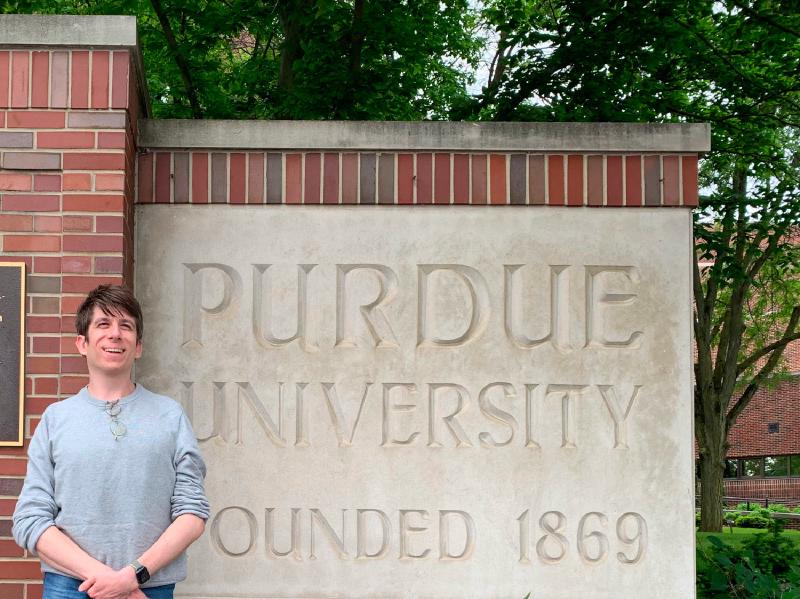
Joseph A. Campbell is an Assistant Professor in the Department of Computer Science at Purdue University, leading the Collaborative AI for Machines and People (CAMP) Lab. He holds a Ph.D., M.S., and B.S. in Computer Science and Computer Engineering from Arizona State University. Before academia, he worked as a software engineer for five years. Prior to Purdue, he was a Postdoctoral Fellow at Carnegie Mellon University's Robotics Institute. His research focuses on explainable machine learning and robotics, particularly how agents use explanations for self-improvement and decision-making. Key areas include theory of mind in multi-agent systems, lifelong learning, and interpretable transfer learning. His work bridges robotics and AI, with applications in human-robot interaction and prosthetic control. Notable publications include advancements in reinforcement learning with language models, multi-agent collaboration frameworks, and methods for enhancing state estimation in robots. His research has been presented at top conferences like NeurIPS, EMNLP, and CoRL. Dr. Campbell maintains an active GitHub profile (joe-campbell) with repositories such as Interaction Primitives for robotics applications. His lab, CAMP, explores AI systems that collaborate effectively with humans and other machines.
Prof Aaron Thean is the Deputy President (Academic Affairs) and Provost at the National University of Singapore (NUS). Formerly, he served as Dean of the College of Design and Engineering at NUS and held senior roles at IMEC (Belgium) as Vice President of Logic Technologies and Director of Logic Devices Research. His expertise spans advanced semiconductor device technologies, including FinFETs, nanowire FETs, III-V/Ge channels, and emerging beyond-CMOS architectures. He holds degrees from the University of Illinois Urbana-Champaign (B.Sc., M.Sc., Ph.D. in Electrical Engineering) and has published over 300 papers with 50+ patents. His awards include the Gregory Stillman Award (2001) and Compound Semiconductor Innovation Award (2014). Research interests focus on semiconductor innovation, device-process co-optimization (DTCO), and monolithic 3D integration. Notable contributions include industry-first Gate-First HKMG technologies, advanced strained silicon platforms, and neuromorphic computing hardware. His work bridges academia and industry through collaborations with Qualcomm, IBM, and foundry partners. Current initiatives emphasize energy-efficient computing and wearable sensor systems. Prof Thean’s leadership spans NUS-wide academic strategy and global research partnerships. His technical legacy includes foundational advancements in transistor scaling, low-power CMOS design, and AI-driven failure analysis methodologies.
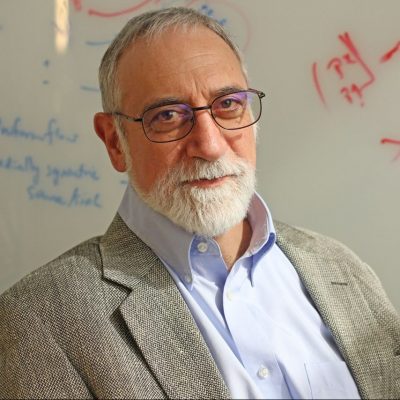
Leonardo Chamorro is a Professor in the Department of Mechanical Science and Engineering at the University of Illinois at Urbana-Champaign (UIUC), with affiliations in Earth Science and Environmental Change, Aerospace Engineering, and Civil and Environmental Engineering. His research focuses on fluid dynamics, renewable energy systems, and turbulence modeling. He holds a Ph.D. in Civil Engineering from the University of Minnesota (2010) and has held academic positions at UIUC since 2013, advancing to Full Professor in 2024. Chamorro's work spans experimental and theoretical investigations of wind and hydrokinetic energy, geophysical flows, and particle dynamics. His research group, the Renewable Energy & Turbulent Environment Group (RE-TE-G), explores topics like tidal flow multifractality, vortex dynamics, and bio-inspired robotics. Key achievements include Nature and Lab on a Chip cover articles, and contributions to turbulence modeling for tidal energy systems. He has received awards such as the Best Paper Award in Energies (2018) and recognition for pandemic-related research (2021). His editorial roles include associate editorships at journals like Journal of Renewable and Sustainable Energy and Frontiers in Energy Research . Chamorro has supervised numerous graduate students and postdocs, contributing to over 150 peer-reviewed publications since 2009.
Laurent Tapie is a Senior Lecturer at Paris Descartes University with a focus on Biomedical Engineering, Mechanical Engineering, and CAD/CAM . As Deputy Director of the URB2i research unit and manager of the PlatiNum platform , he coordinates the 3d4care.org consortium . His academic background includes a Doctorate in Mechanical Engineering from École Normale Supérieure de Cachan and authorization to direct research (HDR) from Université Paris 13. Research Interests: Mechanical Engineering, Biomedical Engineering, Medical Devices, CAD/CAM, Shaping of Biomaterials Theses Supervised: 3D evaluation of dento-prosthetic joints, impact of CAD/CAM on dental prosthesis integrity, and metrological evaluations of prostheses. Publications: His work spans dental CAD/CAM systems, surface integrity of prostheses, additive manufacturing, and 3D printing applications during the COVID-19 pandemic . Recent articles focus on data dispersion in CAD/CAM chains, tool-material influence on roughness, and numerical workflow standardization . Scientific Award: Prix du comité scientifique de la session recherche (2019). Projects: Currently leads initiatives like ProGéoMéca (Labex LaSIPS), Bio-Dents (CNRS Biomimicry), and additive process development for multi-material dental aligners .
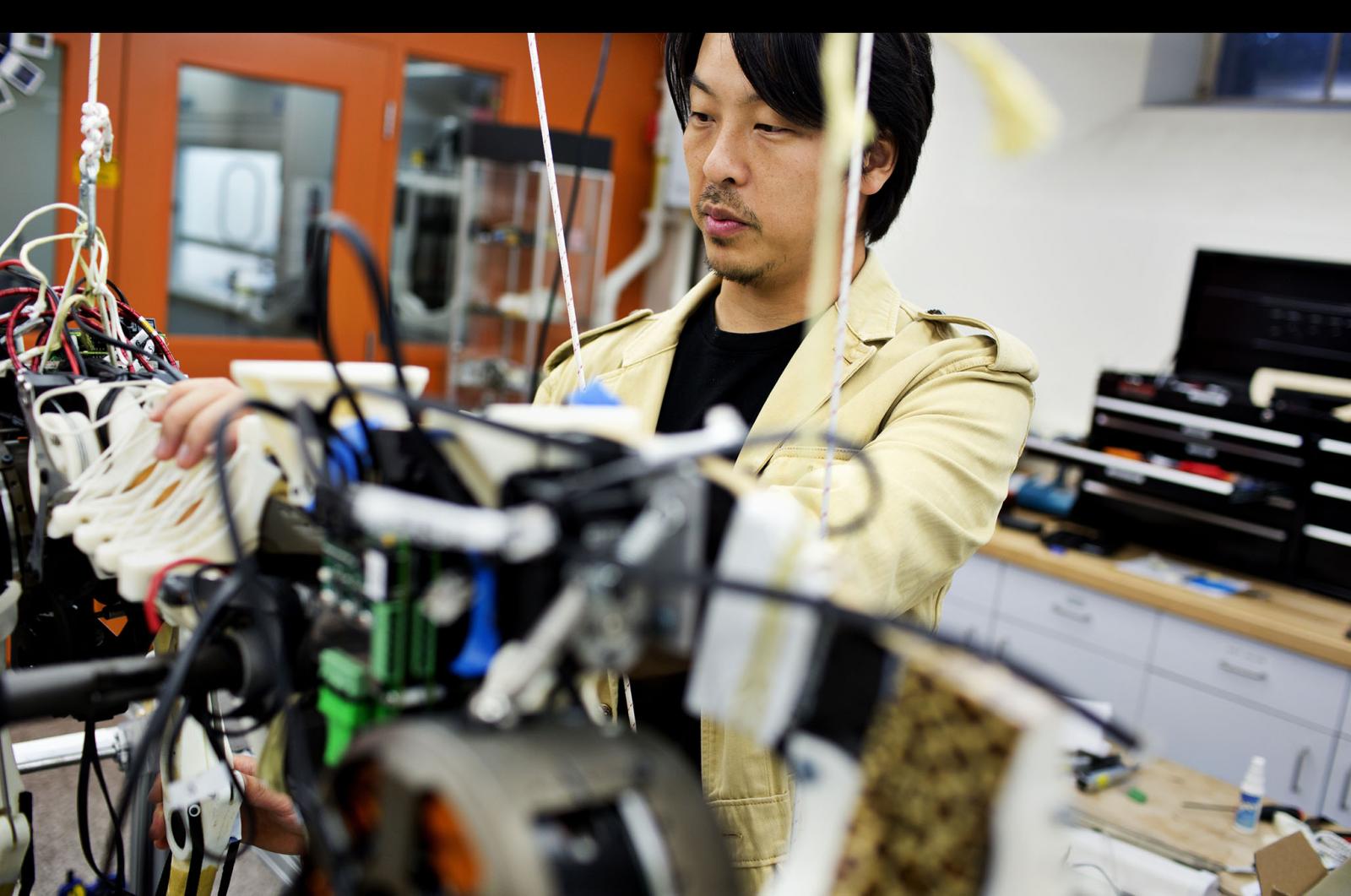
Professor Sangbae Kim is the Jerry McAfee (1940) Professor in Engineering at the Massachusetts Institute of Technology (MIT), School of Engineering, Department of Mechanical Engineering. His research focuses on bio-inspired robotics, extracting principles from animal biomechanics to develop high-performance robotic systems. Education: B.S. from Yonsei University (2001), M.S. (2004) and Ph.D. (2008) from Stanford University. Research Interests: Bio-inspired Robotics, Robotic Actuators, Locomotion Dynamics, Composite Sensor Fabrication, and Minimally Invasive Surgical Robotics. His notable achievements include the MIT Cheetah robot capable of 13mph outdoor running and autonomous obstacle jumping, and Stickybot, a climbing robot featured in TIME's Best Inventions (2006). Recent publications emphasize soft robotics, energy-efficient legged locomotion, and bio-inspired actuator design. Kim has received prestigious awards including the NSF CAREER Award (2014), DARPA Young Faculty Award (2013), and Ruth and Joel Spira Award for Distinguished Teaching (2015). Scientific Awards: NSF CAREER (2014), DARPA YFA (2013), TIME Best Invention (2006), multiple best paper awards. Professional Service: Associate Editor roles, NSF review panels, and leadership in IEEE and ASME organizations.
Georg Fantner is an Associate Professor at the Swiss Federal Institute of Technology Lausanne (EPFL) with dual appointments in the School of Engineering (STI) within the Institute of Bioengineering and the School of Life Sciences (SV) for teaching. He directs the Laboratory for Bio- and Nano-Instrumentation (LBNI) and holds leadership roles including President of the Open Science Strategic Committee and the Association des Professeurs de l'EPFL. Research Focus: Bioinstrumentation, Nanotechnology, Scanning Probe Microscopy, and Metrology Teaching: Structural Mechanics for Life Sciences, Metrology, and Metrology Practicals His research pioneers advanced instrumentation for nanoscale characterization, emphasizing data-driven approaches to enhance microscopy techniques. Recent work integrates deep learning with scanning probe microscopy for real-time biological imaging and develops novel MEMS devices for fluid-compatible nanoscale manipulation. Key innovations include hermetically sealed sample chambers for pathogen studies and deterministic nanotopography engineering. Professor Fantner actively mentors 7 current PhD students and has supervised 14 graduates. His laboratory fosters interdisciplinary collaboration across engineering, physics, and life sciences to advance nanoscale measurement technologies and instrumentation development.
Jim Torresen is a Professor at the Norwegian University of Science and Technology (NTNU), specializing in Computer Science, Artificial Intelligence, and Robotics. He earned his M.Sc. and Dr.ing. (Ph.D.) in computer architecture and design from NTNU in 1991 and 1996 respectively, followed by industry experience in hardware design before transitioning to academia in 1999. Research Interests: His work spans Machine Learning, Evolvable Hardware, and Ethical AI, with notable contributions to music technology, facial expression recognition, and healthcare monitoring systems. He actively explores interdisciplinary applications of AI in creative domains and clinical environments. Publications & Editorial Roles: Torresen has published extensively in journals like Frontiers in Artificial Intelligence and Genetic Programming and Evolvable Machines . He serves as a Topic Editor for Frontiers in Explainable AI and has editorial roles in robotics and biomedical AI domains.
Dr. Craig S. Levin is a Professor of Radiology at Stanford University's Molecular Imaging Program at Stanford (Nuclear Medicine), with courtesy appointments in Physics, Electrical Engineering, and Bioengineering. He also holds memberships in Bio-X, the Cardiovascular Institute, the Wu Tsai Human Performance Alliance, and the Stanford Cancer Institute. Dr. Levin received his B.S. Summa Cum Laude in Physics and Mathematics from UCLA in 1985, followed by M.S., M.Phil., and Ph.D. degrees in Physics from Yale University in 1987 and 1993. His educational achievements were recognized with multiple honors including Phi Beta Kappa, Sigma Pi Sigma, and various departmental awards at UCLA. Dr. Levin's research focuses on the development of novel instrumentation and software algorithms for molecular imaging. His work spans medical physics, biomedical engineering, and instrumentation development with specific emphasis on positron emission tomography (PET), gamma camera technology, and multimodal imaging systems. His laboratory explores new concepts in radiation detection, image reconstruction algorithms, and the application of these technologies to cancer, heart disease, and neurological disorders. A notable aspect of his research involves pushing the physical limits of sensitivity and spatial, spectral, and/or temporal resolutions in imaging systems. His recent publications demonstrate a strong focus on enhancing PET technology, particularly time-of-flight capabilities, with significant work on improving coincidence timing resolution, developing MR-compatible PET systems, and applying deep learning techniques to image reconstruction and normalization. His research shows a clear trajectory toward higher resolution imaging with improved quantitative accuracy for both clinical and preclinical applications. Dr. Levin's scientific achievements have been recognized with numerous awards: American Institute for Medical and Biological Engineering's College of Fellows Academy of Radiology Research Distinguished Investigator Recognition Award National Research Service Award from NIH (1993-5) Pilot Research Award from the Society of Nuclear Medicine (1996) Multiple honors from UCLA including Phi Beta Kappa and Sigma Pi Sigma Full Tuition and Research Fellowship and Bates Graduate Fellowship from Yale University As an educator and mentor, Dr. Levin directs the NIH-NCI funded T32 Stanford Molecular Imaging Scholars postdoctoral training program and serves as a Doctoral Dissertation Advisor for students in Bioengineering and Biophysics. He currently advises five postdoctoral scholars and three doctoral candidates. His laboratory, the Molecular Imaging Instrumentation Laboratory, comprises approximately 20 members who work on developing new imaging technologies and translating them into clinical applications. Dr. Levin has secured substantial NIH funding as Principal Investigator along with grants from other government agencies, industry partners, and private institutions to support his research program. Dr. Levin's Molecular Imaging Instrumentation Laboratory is at the forefront of developing new imaging technologies that bridge physics, engineering, and medicine. The lab focuses on creating instrumentation for in vivo imaging of cellular and molecular signatures of disease, with particular emphasis on pushing the physical limits of imaging performance. Their work spans computer modeling, sensor development, electronics design, data acquisition systems, and advanced image processing algorithms. The lab maintains strong industry partnerships to translate their innovations into products used for patient care worldwide.
Ming Cao is a Full Professor at the University of Groningen (Netherlands), holding positions in the Department of Discrete Technology and Production Automation, the Engineering and Technology Institute Groningen, and serving as Chair of the Jantina Tammes School of Digital Society, Technology and AI. His academic roles include Director of the Jantina Tammes School and membership in prestigious organizations such as the International Federation of Automatic Control (IFAC) and the European Commission’s DG CNECT. Cao’s research focuses on multi-agent systems, autonomous robotics, complex networks, and cooperative control, with applications in robotics, epidemic modeling, and biomimetic sensors. Education: PostDoc in Mechanical Engineering from Princeton University (2008), PhD in Electrical Engineering from Yale University (2007). Research Interests: Multi-agent systems, distributed decision-making, cooperative control, robotic teams, seal whisker-inspired flow sensing, and privacy-preserving control systems. Recent Trends in Articles: Recent work emphasizes co-evolutionary dynamics in social-technical systems, privacy in control systems, and biomimetic robotics. Key topics include feedback mechanisms in cooperation, hypergraph-based epidemic models, and seal whisker mechanics for underwater sensing. Awards: European Control Award (2016), Manfred Thoma Medal (2017), ERC Grant (2012). Grants: Vidi Grant from NWO (2015) for agent coordination research. Labs/Teams: Jan C. Willems Center for Systems and Control, Research Center for Data Science and Systems Complexity (DSSC). Active in editorial roles for journals like Artificial Life and Robotics and the SIAM Journal on Control and Optimization .
Regina Ragan is a Professor in the Department of Materials Science and Engineering at the Samueli School of Engineering, University of California, Irvine. Her research focuses on nanomaterials, self-assembly, and surface-enhanced Raman scattering (SERS) for applications in optical communication, energy systems, and biomedical diagnostics. Education: Ph.D. in Applied Physics, California Institute of Technology, 2002 M.S. in Applied Physics, California Institute of Technology, 1998 B.S. in Materials Science and Engineering, University of California, Los Angeles, 1996 Her work integrates scanning probe microscopy and first-principles calculations to study thermodynamic driving forces in self-assembly and structure-function relationships. Recent publications highlight applications in antimicrobial susceptibility testing, environmental monitoring, and plasmonic device fabrication. The Ragan group develops low-cost diagnostic tools using SERS for telemedicine applications. Current lab members include graduate students and postdoctoral researchers working on nanoscale systems from atomic to mesoscale. Scientific Awards: NSF CAREER Award for fundamental studies of biological/inorganic interfaces Research Trends: Recent articles show a focus on SERS-based diagnostics, plasmonic nanoantennas, machine learning-assisted spectral analysis, and scalable synthesis of 3D graphene architectures. Subfields span quantum plasmonics, stress-activated materials, and biofilm monitoring.
Daniel E. Koditschek is the Alfred Fitler Moore Professor in the Department of Computer and Information Science at the University of Pennsylvania’s School of Engineering and Applied Science. He also holds primary appointments in the Department of Electrical and Systems Engineering and a research affiliation with the Department of Mechanical Engineering and Applied Mechanics. He is a leading figure in the GRASP Lab, where he leads the Kod*lab, a specialized group focused on physical interaction and locomotion in autonomous robots. His research lies at the intersection of dynamical systems theory and robotics, emphasizing legged locomotion, hybrid control systems, and bio-inspired design. Koditschek's work integrates formal mathematical modeling with empirical testing of physical robots that run, jump, climb, and manipulate objects. He actively explores how biological insights into animal mobility can inform robotic autonomy and control. His group maintains strong collaborations with biologists and emphasizes embodied intelligence in machine behavior. The recent publications reflect a strong trend in applying theoretical control frameworks—such as hybrid dynamical systems, averaging methods, and navigation functions—to practical robotic challenges in unstructured environments. Topics include terrain adaptation, energy-efficient locomotion, reactive planning, and affordance-based interaction. There is a clear focus on bridging abstract mathematical models with real-world robotic performance, particularly in legged and mobile manipulation systems. IEEE RAS Pioneer Award Heilmeier Research Award AFOSR MURI Award (2010) Daniel Koditschek has advised numerous PhD students and postdoctoral researchers, many of whom now hold faculty positions or leadership roles in robotics companies like Ghost Robotics and Boston Dynamics. His research is supported by major grants from the NSF and AFOSR, including the MURI award and REU/RET programs that engage K-12 and undergraduate educators. He has also been involved in international outreach, including activities at the Penn Wharton China Center. Koditschek leads the Kod*lab within the GRASP Lab’s PERCH facility, which houses advanced legged robots such as the Ghost Minitaur, XRHhex, Inu, Delta Hopper, and Jerboa platforms. The lab emphasizes experimental validation of control theories using custom hardware and real-world terrain challenges.
Professor Asterios Bakolas is affiliated with the Department of Materials Science and Engineering at the School of Chemical Engineering, National Technical University of Athens (NTUA). His research focuses on materials science, cultural heritage conservation, and sustainable construction technologies. Key areas include the development of compatible restoration mortars for historic structures, analysis of traditional building materials, and application of non-destructive testing (NDT) techniques for heritage assessment. He has contributed to projects involving Hagia Sophia, the Parthenon, and Cretan architectural heritage. Research interests span materials characterization, composite materials, and environmental impact assessment of construction materials. Notable work includes studies on polychromy in ancient art, weathering phenomena in historic buildings, and integration of AI for material property prediction. His interdisciplinary approach combines chemistry, civil engineering, and digital humanities to address challenges in conservation and sustainable building practices. No scientific awards are explicitly listed, but his extensive publications reflect recognition in academic circles. Advising and grants are not detailed here, though his involvement in restoration projects implies active collaboration with funding bodies. He is part of the School’s research groups focused on materials science and heritage preservation.
Dr. Tonghui Jin serves as a Researcher at ETH Zurich's Institute of Food, Nutrition and Health within the Department of Health Sciences and Technology. Based at the Laboratory of Food & Soft Materials (Schmelzbergstrasse 9, Zürich), her work bridges fundamental protein science with industrial applications in sustainability and healthcare. Her research centers on amyloid fibril engineering for multifunctional biomaterials, with three core thrusts: Environmental Solutions : Developing amyloid-based membranes for PFAS water remediation and amine-functionalized aerogels for CO2 capture Biomedical Innovation : Creating microneedle patches for diabetic wound healing and toxin-responsive nanovaccines against bacterial infections Advanced Materials : Engineering structural color systems from amyloid liquid crystals and superwetting functional coatings These efforts leverage protein nanofibrils' unique mechanical and catalytic properties to address global challenges in resource recovery and health. Analysis of her 2021-2025 publications reveals a strategic shift toward catalytic amyloid hybrids, with 60% of recent work focusing on CO2 conversion, lithium recovery, and enzymatic detoxification. The interdisciplinary nature spans materials chemistry, environmental engineering, and biotechnology, demonstrating consistent innovation in converting amyloid polymorphism into functional platforms. No scientific awards were documented in available sources. Dr. Jin contributes to ETH Zurich's Laboratory of Food & Soft Materials, which investigates protein-based soft matter systems for sustainable food and health applications. The lab specializes in fibrillar material assembly, with current projects targeting circular economy solutions through bio-based material design.