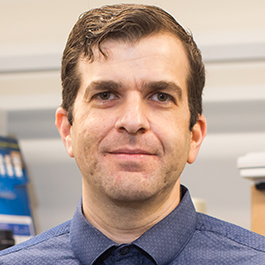
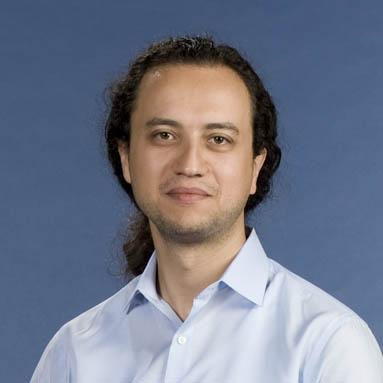
Simon Yang is a Professor in the School of Engineering at the University of Guelph, part of the College of Engineering and Physical Sciences. His research focuses on artificial intelligence, robotics, sensors, control systems, and bio-inspired intelligence. He has contributed to advanced robotics applications, including mobile robot navigation, underwater vehicle control, and agricultural automation. Dr. Yang holds editorial roles for journals such as the International Journal of Robotics and Automation and IEEE Transactions on Cybernetics . His work bridges theoretical advancements with practical implementations in areas like sensor networks, machine learning, and multi-agent systems. Recent projects include developing robust control frameworks for autonomous systems, digital twin applications, and bio-inspired neural network algorithms. His research emphasizes real-world challenges in robotics, environmental monitoring, and precision agriculture, with a focus on integrating AI-driven solutions for enhanced decision-making and system reliability. Professional contributions include advisory roles in multiple journals and conference committees, reflecting his leadership in the field.
Alireza Ramezani is an Associate Professor of Electrical and Computer Engineering at Northeastern University, leading the SiliconSynapse Lab. He focuses on bio-inspired robotics, nonlinear systems, and robot locomotion, with a particular emphasis on morphological design and control inspired by biological systems. His work integrates control theory and experimental robotics to develop robots capable of navigating confined spaces, such as caves and ducts, using mechanisms derived from bat movements. Education : PhD, Mechanical Engineering, University of Michigan (2014) MS, Mechanical Engineering, ETH Zurich (2010) BSc, Mechanical Engineering, Iran University of Science and Technology (2007) Research Interests : Design of robots with non-traditional morphologies Nonlinear feedback control systems Legged and fluidic-based locomotion Bio-inspired robotics and biology-driven engineering Awards : 2024 ASME Rising Star Award 2024 NSF CAREER Award 2022 NASA Game Changing Program Award Science Magazine Top 5% Research Output (2020) Advising & Labs : Ramezani mentors students in projects like the NASA-funded “Crater Observing Bio-inspired Rolling Articulator” and oversees the SiliconSynapse Lab, which develops robots for space exploration and confined environments. Notable advisees include Henry Noyes, a NASA Space Technology Fellow. Labs/Teams : His lab collaborates with institutions like NASA’s Jet Propulsion Lab (JPL) on projects such as the Mars Multi-modal Morphing (M4) Rover and bio-inspired snake robots for lunar crater exploration.
Md Sakib Hasan is an Assistant Professor in the Department of Electrical and Computer Engineering at the University of Mississippi. He holds a Ph.D. in Electrical Engineering from the University of Tennessee-Knoxville (2017). His research focuses on hardware acceleration, neuromorphic computing, and memristor-based systems. Research interests span: AI hardware accelerators and energy-efficient computing Biomimetic systems and bio-inspired electronics Hardware security through chaotic systems and PUFs Recent publications demonstrate strong emphasis on: Neuromorphic architectures for computer vision and temporal processing Biomembrane-based computing systems Chaotic cryptography and secure hardware design
Ellen Kuhl serves as the Catherine Holman Johnson Director of Stanford Bio-X and the Walter B. Reinhold Professor in the School of Engineering at Stanford University. She holds dual appointments as Professor of Mechanical Engineering and, by courtesy, Bioengineering, leading interdisciplinary research at the convergence of physics, computation, and biology. Her academic credentials include: Habil., TU Kaiserslautern (2004) Ph.D., University of Stuttgart (2000) M.S., Leibniz University of Hanover (1995) B.S., Leibniz University of Hanover (1993) Kuhl pioneers Living Matter Physics , developing computational frameworks that integrate physics-based modeling with machine learning to simulate biological systems across scales. Her work spans cardiovascular dynamics (including the 400-member global Living Heart Project), neurodegenerative disease progression (Alzheimer's tau pathology), and sustainable food systems (mechanics of plant/fungi-based meats). Recent innovations focus on automated model discovery using constitutive neural networks to democratize simulation tools for soft matter systems, with applications in precision medicine and climate-resilient food innovation. Her lab actively bridges engineering fundamentals with urgent societal challenges in healthcare and planetary health. Her publication trajectory reveals accelerating integration of AI with biomechanics, particularly in automated constitutive modeling for diverse tissues and food materials. Key trends include uncertainty quantification in neural networks, physics-informed machine learning for digital twins, and democratization of simulation tools for non-experts – reflecting her commitment to accessible computational science. Major recognitions include: National Science Foundation Career Award (2010) Humboldt Research Award (2016) ASME Ted Belytschko Applied Mechanics Award (2021) ERC Advanced Grant (2024) Fellowships in ASME and AIMBE As Bio-X Director, Kuhl orchestrates major interdisciplinary initiatives connecting engineering with life sciences, securing substantial funding including the 2024 ERC Advanced Grant. Her leadership extends to the US National Committee on Biomechanics and World Council of Biomechanics, while her Living Heart Project demonstrates exceptional translational impact through industry/medical partnerships across 24 countries. The Living Matter Lab operates as a nexus for high-impact research, developing computational tools that transform cardiovascular medicine, decode neurodegenerative mechanisms, and engineer sustainable food alternatives. Current projects leverage AI to accelerate plant-based meat development, model elephant-trunk-inspired soft robotics, and personalize cardiac simulations – all unified by her vision of physics-driven machine learning for global challenges.
Wei Pang is a Professor of Computer Science and Bicentennial Research Leader at the School of Mathematical and Computer Sciences, Heriot-Watt University, Edinburgh. He leads the BCML Lab and is affiliated with the Edinburgh Centre for Robotics and National Robotarium. His expertise spans bio-inspired computing, machine learning, and AI applications in healthcare, robotics, and sustainability. Pang holds a PhD in Computing Science from the University of Aberdeen, with prior roles including Senior Lecturer at the University of Aberdeen and research fellowships in systems biology. Affiliations: Heriot-Watt University, Edinburgh Centre for Robotics, National Robotarium Education: PhD in Computing Science (2009), MEng (by research), BSc (Jilin University, China) Research Interests: Bio-inspired computing (e.g., artificial immune systems, swarm intelligence), machine learning (deep learning, explainable AI), healthcare applications (medical imaging, disease detection), and interdisciplinary projects in robotics and environmental science. His work addresses challenges in robust AI, fairness, and accountable machine learning. Recent Projects: EPSRC-funded RAIns and MI projects, CRUK-funded Endo.AI, and PRIME project on minority ethnic communities' digital experiences. His research has secured over £10M in grants, including £3.5M institutional funding. Awards: Scottish Crucible Award (2015), ADMA Best Paper Runner-Up (2016), EPSRC PRIME Award (2024) Grants/Advising: Supervised 12 PhD completions; contributed to £10M+ external funding. Labs/Teams: BCML Lab (focusing on bio-inspired AI), collaborations with Oxford, Cambridge, and industrial partners like Weather2 and Data2Text.
Imraan Faruque is an Associate Professor in the Department of Mechanical and Aerospace Engineering at Oklahoma State University (OSU), part of the College of Engineering, Architecture and Technology (CEAT). His research focuses on biologically-inspired flight control systems, engineered autonomy for unmanned aerial vehicles (UAVs), and the integration of sensory feedback mechanisms in autonomous systems. Education: Faruque holds a Ph.D. and M.S. in Aerospace Engineering from the University of Maryland (2011 and 2010) and a B.S. in Aerospace Engineering from Virginia Tech (2006). Research Interests: His work emphasizes bio-inspired solutions for aerial autonomy, including swarm coordination, gust-aware flight control, and human-autonomy interaction. Key areas include unmanned systems design, visual feedback algorithms, and adaptive control strategies derived from insect flight dynamics. Awards: He has received notable accolades such as the ONR Young Investigator Award (2019), AIAA Hal Andrews Young Engineer/Scientist Award (2017), and multiple 'Best in Session' recognitions at major conferences. His team also secured 1st Place in the International Aerial Robotics Championship (2005). Publications: Faruque’s research spans topics like orbital debris management, swarm intelligence, and tornado sensing with UAVs. His work bridges biological principles and engineering, with applications in aerospace, robotics, and environmental monitoring.
Liza M. Roger is an Assistant Professor in the School of Molecular Sciences at Arizona State University (ASU) and a Senior Global Futures Scientist at the Global Futures Scientists and Scholars Program. She is affiliated with the School of Ocean Futures and works at the Walton Center for Planetary Health. Education: Ph.D. in Marine Biology and Geochemistry (University of Western Australia, 2017) B.Sc. Hon. in Marine Biology and Natural Resources Management (University of Western Australia, 2011) Associate’s Degree (Université du Littoral Côte d’Opale, France, 2006) Her research explores how environmental change affects marine organisms in symbiotic relationships with microscopic algae, such as corals, mollusks, anemones, and jellyfish. She pioneers coral in vitro methodologies to advance understanding of symbiosis, biomineralization, and stress adaptation. Recent publications highlight her work on nanotechnology for coral reef conservation, thermal stress mitigation using engineered nanoceria, and interdisciplinary collaborations merging art with coral research. Her studies also address trace metal roles in coral nutrition, insulin signaling pathways, and innovative imaging techniques to monitor coral health. Scientific Awards: NSF’s 2021 Coral Bleaching Research Coordination Network Early Career Training Program Award VCU’s 2021 Postdoctoral Independent Research Award Liza’s multidisciplinary approach integrates expertise from oceanography, biochemistry, nanoscience, and sustainability. She previously worked at the Australian Institute of Marine Science and has field experience as a cetacean naturalist in Iceland and a scuba diving instructor in the Mediterranean Sea and Southeast Asia.
Univ.-Prof. Karl Crailsheim is a Professor at the University of Graz, affiliated with the Institute of Zoology within the Faculty of Natural Sciences. His research focuses on honeybee behavior, physiology, and health, particularly investigating the honeybee superorganism and threats to their colonies. He explores swarm systems, robotics, and swarm intelligence, with recent emphasis on colony losses and environmental threats. His work bridges biology and robotics, applying insights from honeybee behavior to algorithm design. Research interests include honeybee nutrition, immune responses, pathogen impacts, and the application of citizen science in ecological studies. Key projects involve tracking honeybee behavior, analyzing pollen diversity, and developing robotic systems inspired by swarm dynamics. Collaborative efforts with citizen scientists enhance ecological data collection. Publications highlight advancements in understanding bee health, pesticide effects, and swarm robotics. His interdisciplinary approach addresses both biological and technological challenges in apiculture and robotics.
Vikram Iyer is an Assistant Professor at the Paul G. Allen School of Computer Science and Engineering and holds an Adjunct Appointment in Mechanical Engineering at the University of Washington. He co-directs the CS for Environment Initiative , focusing on interdisciplinary solutions that bridge computing, biology, and physical systems for environmental sustainability. Education : Ph.D. in Electrical & Computer Engineering (University of Washington), B.S. in Electrical Engineering and Computer Sciences (UC Berkeley) Research Interests revolve around bio-inspired wireless systems , environmentally sustainable electronics , and miniaturized autonomous robotics . His work includes: Biodegradable circuit boards Battery-free wireless sensors Insect-scale vision systems Wind-dispersed environmental monitors AI tools for sustainable design Article Trends highlight contributions to green hardware , energy-autonomous robotics , and environmental sensing networks , often integrating machine learning with physical world interaction . Awards include: NSF CAREER Award SIGMOBILE Dissertation Award Marconi Society Paul Baran Young Scholar Best Paper Awards (SIGCOMM 2016, Sensys 2018) Google/Amazon Research Awards Students advised include Kyle Johnson (NSF Fellow), Vicente Arroyos (GEM Fellow), and Qiuyue Xue (co-advised with Shwetak Patel). His lab collaborates with the Networks & Mobile Systems Lab and Urban Innovation Initiative .
Professor Klaus McDonald-Maier is a full Professor in the School of Computer Science and Electronic Engineering (CSEE) at the University of Essex , where he leads the Embedded and Intelligent Systems (EIS) Research Laboratory and heads the Intelligent Embedded Systems and Environments Research Group . He is also Director of Impact , Visiting Professor at the University of Kent, and Visiting Research Affiliate at NASA Jet Propulsion Laboratory, California Institute of Technology. Education PhD in High-Performance Parallel Neural Network Architectures, Friedrich-Schiller-University Jena (Germany, 1999) Electronic Engineering studies, University of Ulm (Germany) Electronic Engineering studies, Cardiff University (Wales) Electronic Engineering studies, École Supérieur de Chimie Physique Électronique de Lyon (CPE-Lyon) (France) Research Interests Professor McDonald-Maier’s research integrates embedded systems , System-on-Chip (SoC) architectures , and AI-driven robotics . He pioneers visual place recognition techniques that remain robust under severe appearance and viewpoint changes, develops cybersecurity frameworks based on ICMetrics for autonomous vehicles and IoT, and designs approximate real-time computing solutions for energy-constrained multicore and FPGA platforms. His work on radiation-tolerant systems supports space and nuclear applications, while his bio-inspired algorithms enable lightweight, neuromorphic perception on resource-limited robots. Publication Trends Between 2022 and 2025 his output converges on FPGA-accelerated AI , secure edge intelligence , visual navigation for autonomous systems , and healthcare analytics . He repeatedly couples rigorous algorithmic innovation with practical hardware deployment, yielding energy-efficient, real-time systems validated in domains ranging from autonomous driving to post-stroke rehabilitation. Scientific Awards & Recognition Best Paper Award – IEEE Transactions on Sustainable Computing (2024) Best Paper Award – IEEE/ACM DATE (2024) Best Paper Award – IEEE Systems Journal (2022) Best Paper Award – IEEE Sensors Journal (2021) Best Paper Award – IEEE Access (2020) Research Grants & Industrial Collaboration He has secured major funding from EPSRC , EU Horizon 2020 , Innovate UK , and industry partners. Current projects span trustworthy autonomy, radiation-hardened edge AI, and AI-enhanced rehabilitation technologies. He is Chief Scientist of UltraSoC Technologies Ltd and CEO of Metrarc Ltd , commercialising University research in semiconductor debug and cybersecurity respectively. Laboratory & Team Leadership As Director of the Embedded and Intelligent Systems Laboratory (EIS Lab) , he oversees a multidisciplinary team of researchers and PhD students, providing state-of-the-art FPGA, robotics, and embedded-systems facilities. The lab collaborates closely with NASA JPL, UK Atomic Energy Authority, and leading semiconductor firms to translate fundamental research into high-impact industrial solutions.
Dikai Liu is a Distinguished Professor and Strategic Research Director at the University of Technology Sydney (UTS), Australia, within the School of Mechanical and Mechatronic Engineering . His work spans field robotics and human-robot collaboration (HRC) , focusing on autonomous systems for infrastructure maintenance, construction automation, and underwater operations. Key research areas: Robotics, Human-Robot Interaction, Bio-Inspired Design, Infrastructure Maintenance Recent publications highlight innovations in trust modeling for HRC, stiffness control in continuum robots, and sociotechnical frameworks for AI-driven robotic systems. His 15 most recent articles emphasize applications in bridge maintenance, construction automation, and ethical AI integration. Awards include the 2019 UTS Medal for Research Impact, ASME DED Leonardo da Vinci Award (USA), and multiple engineering excellence recognitions. His research has generated over $22M in external funding, including 13 ARC grants and industry partnerships.
Mike Rubenstein is an Assistant Professor with joint appointments in the Department of Computer Science and Department of Mechanical Engineering at Northwestern University. He holds the Lisa Wissner-Slivka and Benjamin Slivka Professorship in Computer Science and is affiliated with the Center for Robotics and Biosystems. His educational background includes a Ph.D. in Computer Science from the University of Southern California, an M.S. in Electrical Engineering from USC, and a B.S. in Electrical Engineering from Purdue University. Prior to joining Northwestern, he completed a postdoctoral fellowship at Harvard University's Self-Organizing Systems Research Group. Rubenstein's research focuses on advancing multi-robot systems to enable capabilities beyond traditional single robots, emphasizing parallelism, adaptability, and fault tolerance at scale (hundreds to millions of robots). His work spans swarm shape control, modular self-reconfigurable robotics, bio-inspired satellite constellations, and novel sensing for air vehicle swarms. Key themes include algorithmic control for large-scale systems and hardware innovations to overcome current limitations in swarm robotics. His advising has produced notable student achievements, including Petras Swissler's Best Student Paper Award at DARS 2021 and Drew Curtis's NDSEG Fellowship. Research trends across his publications reveal a consistent emphasis on scalability, real-world applicability, and bridging hardware constraints with algorithmic innovation in swarm systems. Rubenstein actively mentors graduate students and leads projects involving swarm robotics platforms like FireAnt and PCBot. His lab focuses on developing systems where simplicity in individual robots enables emergent complexity at the swarm level, with applications ranging from space exploration to medical imaging.
David Lentink is a Full Professor of Biomimetics at the University of Groningen , leading the Biomimetics Group within the Faculty of Science and Engineering. His research bridges biomechanics, aerospace engineering, and robotics, focusing on avian flight mechanics and bio-inspired aerial robotics . Previously at Stanford University, he pioneered the development of the Aerodynamic Force Platform and low-turbulence wind tunnels for animal flight studies. Education : PhD in Aerospace Engineering (Stanford), MSc in Mechanical Engineering (Delft), BSc in Mechanical Engineering (Delft). Research Interests : Understanding bird flight biomechanics to design advanced drones, studying evolutionary adaptations in flight, and developing biohybrid robots with real feathers. Scientific Awards : Dutch Academic Year Prize for the Flight Artists (2013). World Economic Forum Young Scientist under 40 (2013). Alumnus of the Young Academy of The Royal Netherlands Academy of Arts and Sciences. Labs : The Lentink Lab at Groningen’s Linnaeusborg campus integrates bird aviaries, wind tunnels, and maker spaces for bio-inspired robotics development. His team collaborates globally with institutions like Stanford, TU/e, and Sorama.
Cagdas Onal is an Associate Professor of Robotics Engineering at Worcester Polytechnic Institute (WPI). He holds a BS and MS from Sabanci University (2003, 2005) and a PhD in Robotics from Carnegie Mellon University (2009). His research focuses on soft robotics, bio-inspired systems, and control theory , emphasizing the development of flexible robotic components for healthcare, industry, and sustainable applications. He leads the Soft Robotics Lab and the Future of Robots in the Workplace (FORW-RD) initiative, advancing human-centric robotics solutions. Research interests include designing bio-inspired soft robots (e.g., origami-inspired snake robots), developing modular actuation systems with embedded sensors, and exploring applications in medical devices and assistive technology. His work aligns with UN Sustainable Development Goals, particularly in healthcare access (SDG 3), quality education (SDG 4), and innovation (SDG 9). Recent projects include origami-based robotic arms for wheelchair users , self-contained underwater robots, and haptic interfaces for teleoperation. His lab collaborates on国家级 grants like the NSF-funded NRT Program and has secured patents for actuator designs (e.g., Hydro Muscle). Labs/Teams: Soft Robotics Lab, FORW-RD, NRT Program. Notable media coverage includes Worcester Telegram & Gazette and Spectrum News for innovations in human-friendly robotics.
Federico Becattini is a Tenure-Track Assistant Professor at the Department of Information Engineering and Mathematics (DIISM), University of Siena, Italy. He is an active member of the Siena Artificial Intelligence Lab (SAILab), where he contributes to cutting-edge research in computer vision, deep learning, and artificial intelligence. His work spans multiple interdisciplinary domains, including autonomous driving, human behavior understanding, cultural heritage, neuromorphic vision, and fashion recommendation. His research interests center on memory-based neural networks , which he has applied in numerous publications at top-tier venues such as CVPR, ECCV, IEEE TPAMI, and ACM TOMM. He has also delivered tutorials on this topic at international conferences including ICIAP 2022 and ACM MM 2022, and taught a Ph.D. course at the University of Florence. His recent work is aligned with the Collectionless AI paradigm, which emphasizes continual learning and interaction with dynamic environments. The recent publications highlight a strong trend in human-centric AI , focusing on understanding people through multimodal analysis of face, body, and clothing, as well as generating 3D virtual avatars. There is also a clear emphasis on memory-augmented architectures for temporal reasoning, explainability, and adaptive learning. His editorial role as Associate Editor of the International Journal of Multimedia Information Retrieval further underscores his standing in the research community. Associate Editor, International Journal of Multimedia Information Retrieval (IJMIR) Organizer, Workshop on Facial and Body Expressions (ICPR2020) Co-organizer, T-CAP Workshop (ICIAP2021, ICPR2022) Co-organizer, MCFR Workshop (ACM MM 2022) Co-organizer, WCPA Workshop and Challenge (ECCV 2022) Federico Becattini actively advises students and researchers within SAILab, particularly in the context of Ph.D. theses and research projects related to Collectionless AI and memory-based models. While specific grants are not mentioned, his extensive publication record and leadership in workshops and editorial roles suggest involvement in funded research initiatives. He collaborates with both academic and international research communities, serving as a reviewer for top-tier conferences and journals. He is a core member of the SAILab research group, which is pioneering the Collectionless AI initiative—a framework for continual learning over time, interacting with humans and agents without relying on pre-built static datasets. This lab serves as a hub for innovation in adaptive and sustainable AI systems.