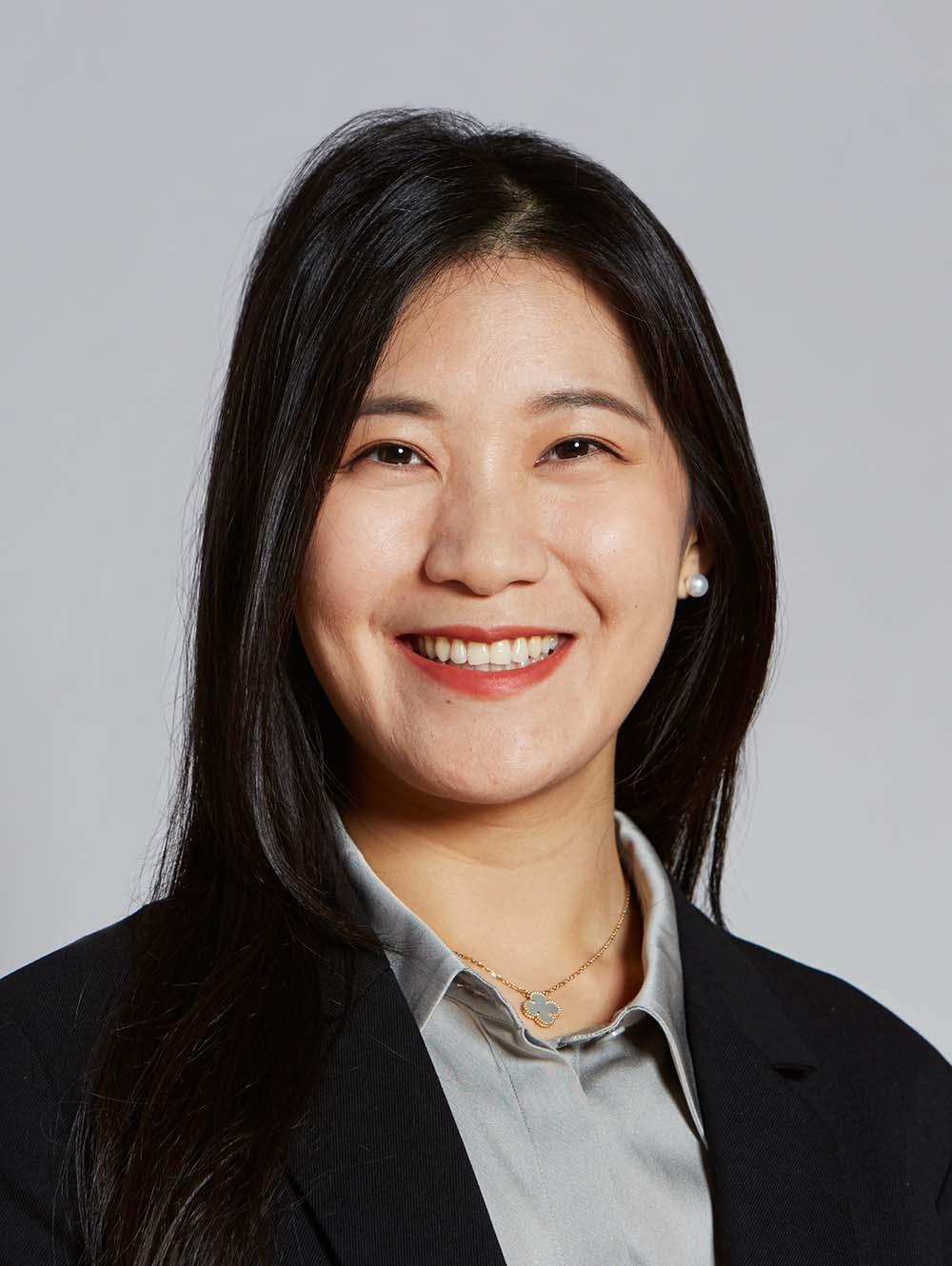
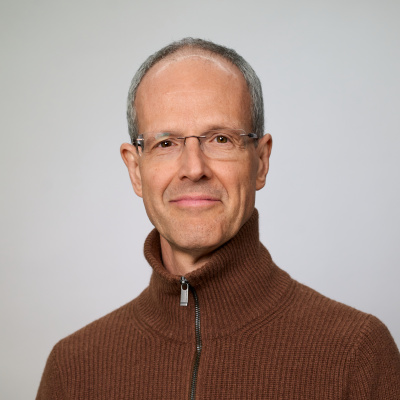
Prof. Hedan Bai is an Assistant Professor at the Department of Materials, ETH Zürich, specializing in robotics materials, bio-inspired systems, and soft robotics. Their research focuses on developing advanced materials for sensing, energy-efficient systems, and biomedical applications. Notable projects include the SmartSuit architecture for space exploration and self-healing optical sensors for soft robots. Research interests span bioelectronics, stretchable sensors, haptic interfaces, and biomimetic materials. Bai's work integrates material science with robotics to create adaptive, sustainable, and intelligent systems. Key areas include wireless implants for neuromodulation, environmental-responsive textiles, and energy-harvesting devices. Publications highlight innovations in optical waveguides, self-healing materials, and wearable technologies. Their interdisciplinary approach bridges robotics, biomedical engineering, and aerospace applications. No formal awards are listed, but contributions to next-gen materials for robotics are prominent. Advising and grants are not detailed in the text, but Bai's lab focuses on projects like SmartSuit for extravehicular activities and synthetic afferent neural networks. Collaborations likely involve aerospace and biomedical sectors.
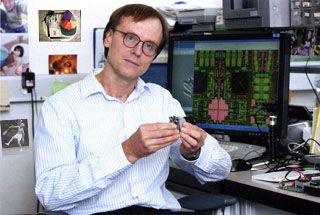
Tobi Delbruck is a titular professor of physics and electrical engineering at ETH Zurich, where he leads the Sensors Group at the Institute for Neuroinformatics (INI) in Zurich, Switzerland. He collaborates closely with Shih-Chii Liu and Giacomo Indiveri as part of the 'hardware groups' at INI. Delbruck has also served as visiting faculty at Caltech and is a Fellow of the IEEE. His work focuses on bio-inspired and neuromorphic event-based sensory processing systems. Professor Delbruck's research spans multiple areas of neuromorphic engineering, with particular emphasis on event-based vision systems and low-power analog VLSI circuits. His work has significantly advanced the field of Dynamic Vision Sensors (DVS), which mimic the human retina's response to changes in brightness rather than capturing full frames. This approach enables extremely low-latency vision processing with minimal power consumption, making it ideal for high-speed applications and robotics. His research has applications in robotics, autonomous systems, and low-power embedded vision. Delbruck is an active contributor to the neuromorphic engineering community, co-organizing the annual Telluride Workshop on Neuromorphic Engineering and serving in leadership roles with IEEE. He has authored numerous influential publications and co-authored books including "Event-Based Neuromorphic Systems" and "Analog VLSI: Circuits and Principles." His jAER (Java Address-Event Representation) project provides open-source tools for real-time event-based sensory processing. Analysis of his recent publications shows a clear trend toward integrating event-based vision with deep learning techniques and applying these systems to practical robotics problems. His scientific achievements have been recognized with multiple awards including: IEEE Fellow Winner of Best Live Demonstration award at ISCAS 2012 Honorable Mention Award from Sensory Systems Technical Committee at ISCAS 2012 Overall Best Student Paper Award and Best Paper Award from Sensory Systems Technical Committee at ISCAS 2010 Winner of the 2006 ISSCC Jan Van Vessem Outstanding European Paper Award Professor Delbruck actively mentors students and has supervised numerous PhD and Master's theses in the areas of neuromorphic engineering and event-based vision systems. His group has secured significant research funding from various sources to support their innovative work in bio-inspired sensory processing. He teaches courses on "Electronics for Physicists II (Digital)" and "Neuromorphic Engineering," helping to train the next generation of researchers in this field. The Sensors Group at INI, which Delbruck leads, operates state-of-the-art facilities for designing and testing neuromorphic vision systems. The group maintains close collaborations with researchers worldwide and has developed several important open-source resources including the jAER project and bias generator design kits. Their work continues to push the boundaries of what's possible with event-based sensory processing, with applications ranging from high-speed robotics to low-power embedded vision systems.
Swiss Federal Institute of Technology in LausanneSwitzerland
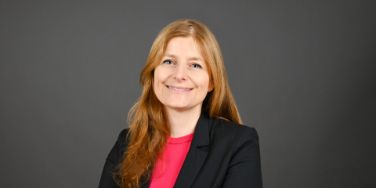
Karen Mulleners is an Associate Professor at the École polytechnique fédérale de Lausanne (EPFL), affiliated with the School of Engineering (STI), the Institute of Mechanical Engineering (IGM), and the UNFOLD Laboratory (Laboratoire de diagnostic des écoulements instationnaires). She also serves in the SGM-ENS teaching department and is a member of the EDEY-GE doctoral program commission. Her research focuses on experimental fluid dynamics, particularly unsteady flow phenomena and vortex dynamics. Professor Mulleners specializes in the intersection of fluid dynamics and bio-inspired engineering, with research interests including: Unsteady vortex-dominated flow phenomena Fluid-structure interaction in flexible systems Experimental methods for flow visualization and measurement Application of fluid dynamics principles to bio-inspired robotics Aerodynamic performance optimization of wind turbine systems Vortex dynamics in flapping and rotating wing systems Her recent publications (2022-2025) demonstrate a strong experimental focus on understanding complex fluid phenomena, particularly in bio-inspired robotics and renewable energy applications. Mulleners' work consistently addresses fundamental questions about vortex formation, flow control, and fluid-structure interactions, with significant contributions to understanding dynamic stall in wind turbines and undulatory swimming mechanics. Her research group employs advanced diagnostic techniques to study unsteady flows, often bridging engineering and biological principles. Professor Mulleners actively supervises PhD students and has directed multiple EPFL theses. Her teaching responsibilities include courses on Measurement Techniques and Aerodynamics, where she imparts knowledge on experimental methods for observing and measuring physical variables such as force, resistance, temperature, flow velocity, and structural deformation. The UNFOLD Laboratory, which Professor Mulleners leads, focuses on diagnostic techniques for unsteady flow phenomena, employing advanced experimental methods including flow visualization, particle image velocimetry, and force measurement systems to study complex fluid dynamics problems with applications in renewable energy and bio-inspired engineering.
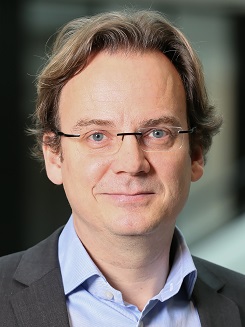
Prof. Dr. Sarah Dégallier Rochat is Head of the strategic thematic field 'Humane Digital Transformation' at Bern University of Applied Sciences (BFH). She holds a joint appointment as Professor at the School of Engineering and Computer Science and serves as co-leader of the Computer Perception and Virtual Reality Lab (cpvrLab) within the Institute for Human-Centered Engineering. Her educational background includes: Ph.D. in Robotics from École Polytechnique Fédérale de Lausanne (EPFL) Master's in Mathematics from EPFL Teaching Diploma in Mathematics from Haute École Pédagogique de Lausanne Psychology studies at University of Lausanne Her research focuses on human-centered technological development with emphasis on: Designing inclusive human-machine interfaces through participatory approaches Developing upskilling strategies for industrial workforce adaptation Examining how techno-narratives shape societal perceptions of technology Creating collaborative robotic systems for agile manufacturing (Cobotics) Exploring mixed reality interfaces for worker augmentation Her publications demonstrate strong interdisciplinary focus on robotics and human-centered AI, with recent works exploring human augmentation in industry, ethical AI implementation, and participatory robot programming. The trajectory shows increasing emphasis on socio-technical systems and workforce empowerment. Significant awards include: Industry 4.0 Shapers Award (2019) CHIRA Best Paper Award (2023) She leads multiple research projects funded by Innosuisse, SNF, and EU programs, including: CODIMAN (Cobotics and workplace humanization) Agile Robotics for High-Mix Low-Volume Production Upskill at Work (digital literacy initiatives) Augmented workers with mixed reality interfaces As founder of Auto-Mate Robotics, she develops flexible robotic cells for industrial applications. She co-leads the Computer Perception and VR Lab and serves on advisory boards including the Swiss Cobotics Competence Center and EUA Task Force on AI.
Swiss Federal Institute of Technology in LausanneSwitzerland
Herbert Shea is a Professor at École polytechnique fédérale de Lausanne (EPFL), where he leads the Microsystems for Space Technologies Laboratory (LMTS) within the School of Engineering and Institute of Microengineering. His research spans soft robotics, electrostatic actuation, and haptic interfaces with significant contributions to wearable technologies and microfabrication techniques. Shea's research focuses on developing novel actuation mechanisms for soft robotics, particularly zipping electrostatic actuators, electroadhesion technology, and dielectric elastomer systems. His work emphasizes miniaturization, energy efficiency, and practical implementation in wearable haptic interfaces for virtual and augmented reality applications. Recent research explores wafer-level microfabrication techniques, stretchable electronics, and novel approaches to fluid manipulation through electrowetting. Analysis of his recent publications reveals a strong trend toward creating more efficient, compact, and versatile soft robotic systems. His research group has made significant advances in reducing actuation voltages while maintaining performance, developing novel fabrication methods for liquid-encapsulated actuators, and creating reliable sensing systems for robotic manipulation. The interdisciplinary nature of his work bridges materials science, electrical engineering, and mechanical design to solve practical challenges in human-robot interaction. Shea collaborates extensively with researchers across multiple institutions, particularly with Samuel Rosset, Vito Cacucciolo, and Florian Hartmann. His research is supported by organizations including the Swiss National Science Foundation and the European Union, reflecting the significance and potential impact of his work in soft robotics and wearable technologies.
Simon Ruffieux is a Senior Researcher and Lecturer at the Department of Computer Science, University of Fribourg, and a member of the Human-IST Institute. He currently leads the HIP-Initiative (Human-IST x SwissPost Initiative) and coordinates academic projects related to Swiss Post. His academic roles include Lecturer and Senior Assistant , reflecting his active engagement in teaching and research. His research focuses on leveraging advanced technologies to support individuals, particularly those with special needs. Key areas include: Machine Learning and Data Science for urban systems (e.g., bike-sharing optimization) Human-Computer Interaction (HCI), especially gesture recognition and multimodal interfaces Augmented and Virtual Reality applications in rehabilitation and assistance Development of smart glasses for visually impaired users Physiological signal analysis for workload classification The 15 most recent publications reveal a strong trend in applying AI and data science to real-world challenges, particularly in assistive technologies and urban mobility. His work often involves interdisciplinary collaboration, integrating computer science with psychology, rehabilitation, and industrial applications. There is a consistent emphasis on user-centered design and real-world usability. Simon Ruffieux has not been mentioned as receiving specific scientific awards in the provided text. He has advised or collaborated with several researchers, including Nicolas Spycher, Samuel Torche, and Nicolas Ruffieux, on projects related to forecasting, AR, and gesture recognition. While no formal grant details are listed, his leadership of the HIP-Initiative suggests involvement in externally funded academic projects. His work is closely tied to the Human-IST Institute, where he contributes to interdisciplinary research in human-centered computing. He is actively involved in research teams focused on assistive technologies, gesture interaction, and data-driven urban solutions. The Human-IST Institute serves as the primary hub for his collaborative efforts, particularly through the HIP-Initiative with Swiss Post.
Swiss Federal Institute of Technology in LausanneSwitzerland
Won Dong Shin is a Postdoctoral Researcher at the Laboratory of Intelligent Systems (LIS) within the School of Engineering (STI) at EPFL. His research focuses on bio-inspired robotics, particularly in the design and control of drones and multi-modal robots. He explores topics such as avian-inspired flight mechanisms, morphological control systems, and autonomous navigation strategies. His work integrates vision-based control, biomimetic principles, and reinforcement learning to enhance the agility and accuracy of winged drones in urban environments. He has contributed to developing robots capable of transitioning between ground and air, perching, and adapting to complex terrains through energy-efficient designs. Selected projects include studies on elastic actuation for repetitive hopping, multi-modal locomotion systems, and bio-inspired claws for perching. His research often emphasizes practical applications in robotics for civilian tasks, such as urban exploration and environmental monitoring. Shin collaborates with the LIS group, which is part of EPFL’s Institute of Microengineering (IGM). His contact information includes the email won.shin@epfl.ch and a physical office at MED 1 1612 in Lausanne.
Prof. Robert Grass is a Lecturer at the Department of Chemistry and Applied Biosciences at ETH Zurich, affiliated with the Institute for Chemical and Bioengineering Sciences. His research focuses on innovative applications of nanotechnology, DNA-based storage systems, and sustainable catalytic processes for CO2 valorization. Grass has pioneered silica-encapsulated DNA technologies for traceability in healthcare, environmental monitoring, and anti-counterfeiting measures. His work bridges chemical engineering with information technology, addressing challenges in long-term data preservation and molecular-level security. Current projects include developing compostable DNA storage materials and designing catalysts for methanol synthesis from CO2, contributing to both environmental sustainability and energy systems. Grass's interdisciplinary approach integrates nanomaterials design, enzymatic processes, and machine learning to advance next-generation storage and sensing technologies. Research Interests: Development of DNA-based storage systems with error-correction mechanisms Nanoparticle engineering for medical and environmental applications Catalytic materials for CO2 conversion and green chemistry Bio-inspired security systems using molecular randomness Sustainable materials for long-term data preservation His recent work highlights advancements in silica-encapsulated DNA tracers for tracking pathogen transmission dynamics, as well as low-nuclearity catalysts enabling efficient methanol synthesis from CO2. Grass actively explores the intersection of nanotechnology and digital information, including cryptographic applications leveraging DNA's inherent complexity.
Swiss Federal Institute of Technology in LausanneSwitzerland
Auke Jan Ijspeert is a full professor at the École Polytechnique Fédérale de Lausanne (EPFL), where he serves as head of the Biorobotics Laboratory (BioRob). He holds a primary affiliation with the Institute of Bioengineering and a secondary affiliation with the Institute of Mechanical Engineering. His academic leadership and research excellence have established him as a leading figure in bio-inspired robotics and computational neuroscience. B.Sc./M.Sc. in Physics, École Polytechnique Fédérale de Lausanne (EPFL), 1995 Ph.D. in Artificial Intelligence, University of Edinburgh, 1999 Postdoctoral research at IDSIA/EPFL and University of Southern California (USC) SNF Assistant Professor at EPFL, 2002 Promoted to Associate Professor, October 2009 Promoted to Full Professor, April 2016 His research lies at the intersection of robotics, computational neuroscience, nonlinear dynamical systems, and applied machine learning. He investigates animal locomotion and movement control using numerical simulations and robotic platforms, aiming to understand biological principles and apply them to novel robot designs and controllers. His work has led to groundbreaking robots like the salamander-inspired Pleurobot and amphibious robotic systems. He also explores applications in assistive technologies such as exoskeletons and smart furniture for people with limited mobility. The recent publications reflect a strong trend in bio-inspired robotics, neuromechanical modeling, and the use of robots to understand biological locomotion. Key themes include spinal cord modeling for gait control, amphibious and aquatic locomotion, central pattern generators, and the evolutionary transition from swimming to walking. His work integrates neuroscience, biomechanics, and robotics to create physical models that serve both engineering and scientific discovery purposes. Scientific Awards and Honors: IEEE Fellow (2020) Best Paper Prize, CLAWAR 2019 Best Conference Paper Award, SAB 2018 Best Paper Award, IEEE RO-MAN 2014 Best Paper Award, IEEE Humanoids 2007 Overall Best Paper Award, IEEE ICRA 2002 Young Professorship Award, Swiss National Science Foundation Marie Curie Scholarship, European Commission Auke Ijspeert has been actively involved in academic service, serving as an associate editor for IEEE Transactions on Robotics (2009–2013) and Soft Robotics (2018–2021), and as an associate editor for IEEE Transactions on Medical Robotics and Bionics and the International Journal of Humanoid Robotics. He has secured major funding from the Swiss National Science Foundation, Human Frontier Science Program, European Commission (FP7, H2020), Human Brain Project, and other international agencies. He has organized seven major international conferences and served on over 50 program committees. His laboratory, BioRob, is a hub for interdisciplinary research, training students and researchers in biorobotics, and fostering collaboration across neuroscience, robotics, and biomechanics.
Swiss Federal Institute of Technology in LausanneSwitzerland
Francesco Stella is a current researcher at École polytechnique fédérale de Lausanne (EPFL), affiliated with CREATE-LAB. His work focuses on soft robotics, physical intelligence, and bioinspired design methodologies. Primary Affiliation: CREATE-LAB, EPFL Research Focus: Soft robotics, motor synergies, passive dynamics Collaborators: Josie Hughes, Cosimo Della Santina Stella's research explores robotic systems that leverage physical properties for intelligent behaviors. Key contributions include the PAWS passive automaton, Helix soft manipulator, and iterative learning control algorithms. His work integrates computational design with material science to address challenges in durability and control precision. His recent publications highlight advancements in IMU-based pose reconstruction, stiffness modulation, and durability metrics for architectured materials. The articles span interdisciplinary topics combining robotics, control theory, and biomechanics. Stella's collaborations with leading researchers and participation in Horizon Europe projects demonstrate his integration into cutting-edge robotics research networks.
Michel C Milinkovitch is a Full Professor in the Department of Genetics and Evolution at the University of Geneva, leading the Laboratory of Artificial & Natural Evolution (LANE) . His research merges biology, physics, and computational modeling to unravel the developmental and evolutionary mechanisms behind life's complexity, focusing on reptiles and mammals. Institution: University of Geneva Contact: Sc3 4024B | +41 22 379 33 38 Research Interests span evolutionary developmental biology, biomechanics of skin appendages, reaction-diffusion systems, mechanical instabilities in morphogenesis, and computational modeling. He investigates how physical constraints interact with genetic networks to generate patterns in scales, feathers, and pigmentation. Scientific Contributions include groundbreaking work on mechanical vs. chemical patterning in crocodile scales, snake scale organization via somitic cues, and the role of the sonic hedgehog pathway in avian feather development. His team employs advanced imaging, CRISPR-Cas9, and 3D simulations to bridge micro- and macro-scale biological phenomena. Collaborators & Alumni include Senior Lecturer Athanasia Tzika and researchers like Pierre-Yves Helleboid and Gabriel N. Santos-Durán. The lab maintains strong ties with interdisciplinary institutions and contributes to open-access protocols in reptilian genome assembly.
Romain Claret is a Doctoral Assistant at the Institute of Information Management within the Faculty of Economics at the University of Neuchâtel, Switzerland. He is completing his PhD in Computer Science with 85% progress, focusing on evolving neural networks that mimic human collective intelligence. His research bridges computer science, neuroscience, and cognitive science to develop next-generation artificial intelligence systems. His research interests include: Evolving Neural Networks Neuromodulated Neural Networks Sparse Neural Networks Collective Computational Intelligence Knowledge representation and World models Neuroscience-inspired Artificial Life Claret's research focuses on developing AI systems that evolve rather than being explicitly engineered. His work on GEENNS (Compositional Intelligence Through Evolution) demonstrates how neural networks can be taught to think in components rather than patterns, leading to more adaptable and interpretable AI. His systematic optimization approach has achieved 29% MNIST accuracy with ES-HyperNEAT, surpassing previous benchmarks through exploration of 3+ billion configurations. His publications highlight advancements in hyperparameter optimization for evolutionary algorithms and their transferability across tasks. This research has implications for autonomous systems, personalized healthcare, and adaptive robotics where traditional AI approaches struggle with novel situations. His work proves that evolutionary approaches can yield transferable solutions between different problem domains. Claret has received training in human subjects research, entrepreneurship, and academic writing. He is also the founder of Artificialkind, a startup focused on evolving intelligence, and serves as a Visiting Researcher at University College Dublin since September 2023. As an educator, he has served as a Guest Lecturer at the University of Geneva and mentors students in computational thinking and evolutionary AI approaches. His teaching philosophy emphasizes that 'intelligence emerges, isn't programmed' and that 'adaptability > benchmark scores' in complex, changing environments.
Swiss Federal Institute of Technology in LausanneSwitzerland
Sabine Hauert is Associate Professor (Reader) of Swarm Engineering at the University of Bristol, UK, affiliated with the Faculty of Engineering and the Department of Engineering Mathematics. She leads the Hauert Lab, focusing on swarm systems across scales—from nanorobots in cancer therapy to environmental and logistics robots. She is also based at the Bristol Robotics Laboratory and the Life Sciences Building. Education: PhD in Computer Science, EPFL, Switzerland (2006–2011) MSc in Computer Science, EPFL, Switzerland (2005–2006) Exchange Student in Computer Science, Carnegie Mellon University, USA (2004–2005) BSc in Computer Science, EPFL, Switzerland (2001–2004) Her research centers on swarm engineering, leveraging bio-inspired algorithms, machine learning, and distributed control to design intelligent collective systems. She explores applications in nanomedicine, environmental robotics, and public-facing AI. Her work integrates computational modeling, experimental validation (e.g., tissue-on-a-chip), and real-world deployment of robotic swarms. Sabine is a prominent science communicator and thought leader in robotics and AI. As co-founder and President of Robohub.org and executive trustee of AIhub.org, she bridges research and public discourse. Her insights have been featured in Nature, Science, BBC, CNN, The Guardian, The Economist, and TEDx. She has delivered over 40 invited talks, including three TEDx appearances, and contributed to policy discussions at the Royal Society and European Parliament. Scientific Awards and Recognitions: Society for Experimental Biology President’s Medal (2016) Lindau Nobel Laureate Meeting Selectee (2013) European Podcast Award – Swiss Non-Profit Category (2012) Human Frontiers in Science Program Cross-Disciplinary Fellowship (2011–2014) Botsker Award for Bio-inspired Flying Robots (2011) Best Video Award in Artificial Intelligence (2008) Robocup US Open Champion (2005) Sabine has supervised 6 postdoctoral researchers, 14 PhD students (3 completed), and over 50 undergraduate/MSc projects. She has taught more than 2,000 students in robotics, bio-inspired AI, engineering mathematics, and programming. She has secured major grants including EPSRC TAS, Innovate UK Future Flight, HFSP Project Award, H2020 EVONANO, and multiple EPSRC PhD studentships. She serves on influential committees such as the Royal Society Data Policy Committee, BEIS Robotics Growth Partnership, and IEEE RAS Industrial Advisory Board. She actively organizes major robotics events, including roles as Publicity Chair for IEEE ICRA 2022 and co-chair for IEEE IROS 2019. Her leadership in conference organization and program committees (GECCO, ICRA, IROS, AAAI) underscores her standing in the global robotics community.
Swiss Federal Institute of Technology in LausanneSwitzerland
Alice Tonazzini is a researcher at the Laboratory of Intelligent Systems within the Institute of Microengineering at École Polytechnique Fédérale de Lausanne (EPFL). Her work focuses on developing innovative materials for soft robotics and wearable rehabilitation devices. Her primary research interests include soft robotics, variable stiffness materials, and self-healing composites. She specializes in creating tunable stiffness fibers using low melting point alloys encapsulated in silicone, which enable morphing capabilities in robotic systems and adaptive medical devices. Her research bridges materials science with practical applications in rehabilitation engineering and biomimetic robotics. Her notable publication demonstrates a variable stiffness fiber technology capable of >700x stiffness change and self-healing properties, with applications ranging from foldable drones to wearable casts for bone injuries. This work shows strong interdisciplinary focus connecting materials engineering with biomedical applications. Affiliations: Laboratory of Intelligent Systems, EPFL Institute of Microengineering, EPFL Swiss National Science Foundation NCCR Robotics Her research is supported by the Swiss National Science Foundation through the National Center of Competence in Research (NCCR) Robotics and the PLANTOID European project (EU-FP7-FETOpen). She collaborates extensively with researchers across EPFL and the Istituto Italiano di Tecnologia. The Laboratory of Intelligent Systems develops bio-inspired robotic solutions with applications in environmental monitoring, rehabilitation, and human-robot interaction. Tonazzini's work specifically contributes to the lab's focus on soft robotics and adaptive materials systems.
Swiss Federal Institute of Technology in LausanneSwitzerland
Alexandros Anastasiadis is a Doctoral Assistant and PhD Student Representative at École Polytechnique Fédérale de Lausanne (EPFL). He is affiliated with the School of Engineering (STI), holding roles in the Unsteady Flow Diagnostics Laboratory (UNFOLD) under the Department of Mechanical Engineering (IGM) and the Biorobotics Laboratory (BIOROB) under the Institute of Bioengineering. His research focuses on bio-inspired propulsion systems, robotics, and fluid dynamics, particularly in undulatory swimming mechanisms. He has contributed to studies on energy efficiency in robotic systems and biomechanical trade-offs in aquatic locomotion. His work bridges mechanical engineering and robotics, with applications in bio-mimetic design and fluid-structure interactions. Research Interests: Bio-inspired robotics, undulatory locomotion, fluid dynamics, mechanical design, and energy optimization. Labs/Teams: UNFOLD Lab (Mechanical Engineering), BIOROB Lab (Biorobotics), and the Doctoral Program in Mechanics at EPFL.