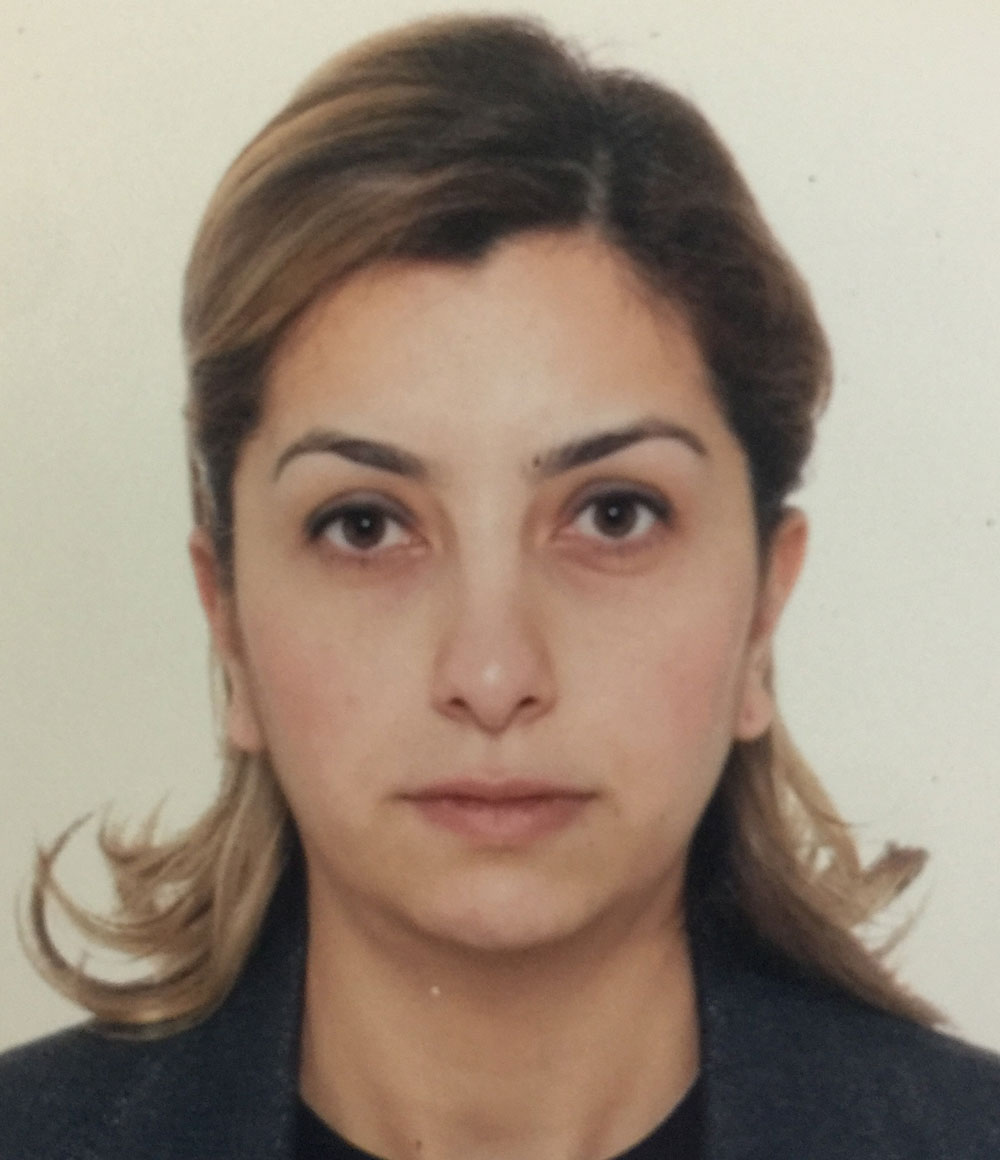
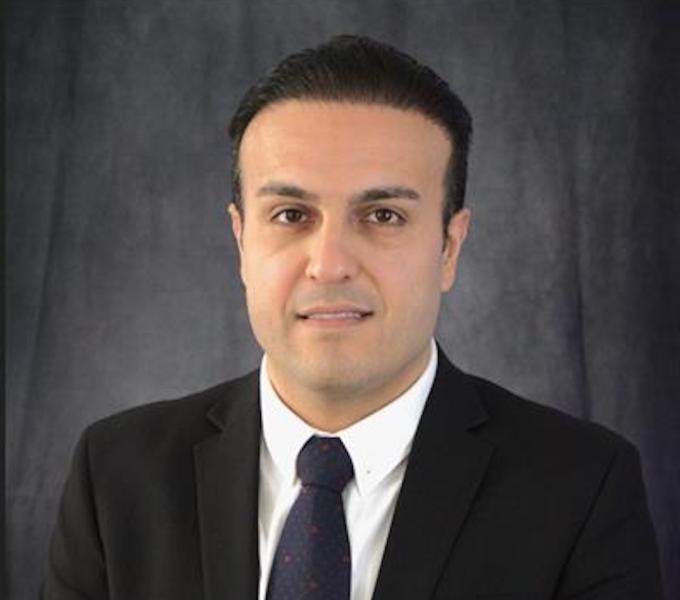
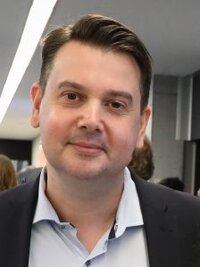
Kouros Zanbouri is a CONNECT PhD researcher at University College Cork , supervised by Prof. Dirk Pesch and Prof. Cormac Sreenan. Education : BSc in Information Technology (IT) engineering (2016) MSc in IT engineering – specialization in Computer Networks (2018) Research Interests : Wireless Time-Sensitive Networking (TSN) Cloud and Fog Computing Internet of Things (IoT) Engineering Optimization Metaheuristics Research Trends : His recent publications focus on integrating TSN with 5G for industrial settings, optimizing blockchain-based IoT systems using bio-inspired algorithms, and designing energy-efficient IoT solutions for industrial applications. His work spans theoretical modeling, algorithm development, and real-world implementation in smart cities and dependable networks. Academic Contributions : Guest reviewer for multiple journals Active in interdisciplinary research combining IoT, optimization algorithms, and network engineering
Prof. Serap Ulusam Seçkiner is a full-time Professor in the Department of Industrial Engineering at Gaziantep University's Faculty of Engineering, where she has held academic positions since 2007. She progressed from Doctor Lecturer (2007-2011) to Associate Professor (2011-2017) before attaining her current professorship in 2017. Her academic foundation includes a PhD and MSc in Industrial Engineering from Gazi University, and a BSc from Çukurova University. Her research spans multiple interdisciplinary domains with focus areas in: Operations Research : Optimization algorithms, supply chain management, and decision support systems Ergonomics & Human Factors : Workplace safety, cognitive workload modeling, and industrial design Sustainable Systems : Renewable energy integration, waste management, and carbon footprint analysis Healthcare & Aviation Applications : Hospital efficiency, airline operations, and crisis management Her publication portfolio demonstrates strong emphasis on sustainability transitions, with recurring themes in renewable energy systems, circular economy implementations, and climate-responsive infrastructure. Recent works increasingly integrate emerging technologies like blockchain and AI within industrial and environmental contexts. Awards & Honors: Best Paper Award from Endourology Association (2017) Academic Leadership: Has supervised 3 doctoral and 17 master's students on topics ranging from wind energy optimization to healthcare logistics. Secured multiple research grants including: Investigation of Work Accidents in Gaziantep Province (TÜBİTAK funded) Ergonomic Optimization of University Offices Biomass Power Plant Planning via GIS Holds editorial positions for Advances in Industrial Engineering and Management and serves in professional associations including the Turkish Ergonomics Society.
Vahid Saranirad serves as a Research Associate in Image & Vision Processing at Ulster University's School of Computing, Engineering and Intelligent Systems, based at the Derry~Londonderry campus. His academic role focuses on advancing computer vision and artificial intelligence through innovative computational frameworks. He completed his PhD in Computer Science at Ulster University in 2024 with the dissertation 'CDNA-SNN: a new spiking neural network for pattern classification using neuronal assemblies', supervised by McGinnity, Coyle, and Dora. His educational trajectory demonstrates deep specialization in neural computation. Saranirad's research centers on bioinspired artificial intelligence, with core expertise in spiking neural networks for pattern classification and industrial IoT systems. He bridges computational neuroscience with practical engineering, developing cloud-based frameworks using AWS for industrial automation while optimizing neural models through high-performance computing. His work uniquely integrates biological principles into machine learning architectures. Publication analysis (2021-2024) reveals an evolution from theoretical neural network innovations (DoB-SNN, Assembly-based STDP) toward applied industrial implementations (AWS IoT framework). This trajectory demonstrates increasing translational impact, with recent work emphasizing scalable solutions for real-world manufacturing and automation challenges. He actively collaborates within Ulster's Image & Vision Processing research group, contributing to interdisciplinary projects that connect neural computation with engineering applications. Current research directions indicate continued development of biologically plausible AI models for industrial computer vision systems.
Prof. Dario Floreano serves as Full Professor at École Polytechnique Fédérale de Lausanne (EPFL), directing the Laboratory of Intelligent Systems within the School of Engineering's Institute of Microengineering. He maintains additional teaching appointments in Microengineering, Mechanical Engineering, and the Doctoral School, while serving on EPFL's Committee of Academic Evaluation. His academic credentials include: M.A. in Vision M.S. in Neural Computation PhD in Robotics Research at the convergence of biology and engineering defines Prof. Floreano's work, with pioneering contributions across multiple robotics domains. His laboratory specializes in bio-inspired approaches that transform theoretical concepts into functional systems: Aerial Robotics : Avian-inspired morphing wings/tails for agile drone flight Evolutionary Robotics : Algorithmic co-design of morphology and control Soft Robotics : Transient edible systems and variable-stiffness mechanisms Swarm Intelligence : Emergent control through Hebbian learning Medical Robotics : Fiber-jamming catheters for cardiac procedures Recent publications (2024-2025) reveal three dominant trajectories: (1) biomimetic aerial systems with avian-inspired morphing capabilities for energy-efficient flight, (2) transient edible robotics using biodegradable materials for environmental/medical applications, and (3) advanced variable-stiffness mechanisms enabling new medical interventions. These themes reflect his consistent focus on bio-inspired solutions to engineering challenges. His scientific impact is recognized through prestigious honors: 2000: SNSF Assistant Professorship (Swiss National Science Foundation) 2021: Fellow of the ELLIS Society 2022: IEEE Fellow (Robotics and Automation Society) 2024: Julian Francis Miller Award (The Species International Society) As mentor to 44+ PhD students and founding director of Switzerland's National Center of Competence in Robotics (2010-2022), Prof. Floreano has shaped robotics education through EPFL's Master's program and Swiss Robotics Day. His research leadership generated 15+ spinoffs (including senseFly and Flyability) and secured major grants from Swiss National Science Foundation and European Commission programs. The Laboratory of Intelligent Systems maintains strong industry partnerships while advancing fundamental research in embodied intelligence, with current projects focusing on edible robotics, swarm autonomy, and bio-hybrid systems for medical applications.
Dr. Amir H. Alavi is an Associate Professor and B.P. America Faculty Fellow in the Department of Civil and Environmental Engineering at the University of Pittsburgh's Swanson School of Engineering, with courtesy appointments in Bioengineering and Mechanical Engineering. His research spans three primary thrusts: mechanics and electronics of multifunctional materials, self-powered sensing systems, and data-driven modeling of engineering systems. Dr. Alavi earned his PhD in Civil Engineering from Michigan State University, with MSc and BSc degrees from Iran University of Science & Technology. His groundbreaking work has established the scientific fields of “meta-tribomaterials” and “mechanical metamaterial electronics (meta-mechanotronics),” which integrate mechanical metamaterials with digital electronics and nano-energy harvesting to create intelligent material systems that can sense, self-power, compute, and communicate without external power sources. His research portfolio demonstrates a clear trend toward increasingly sophisticated intelligent material systems that bridge civil infrastructure, aerospace, and biomedical applications. Recent publications highlight the convergence of mechanical metamaterials with AI-driven design approaches, particularly in developing self-powered medical implants and smart civil infrastructure systems. The articles reflect a strategic focus on creating materials with “cognition” that can form sense-decide-respond loops for autonomous operation. NSF CAREER Award (2023) NIH Trailblazer Award (2019) ASME Rising Star of Mechanical Engineering Award Web of Science ESI World Top 1% Scientific Minds (2018, 2023) Stanford University List of Top 1% Scientists (2019-2023) Since joining Pitt in 2019, Dr. Alavi has secured nearly $3 million as lead PI from various funding agencies. His ISMART research group includes multiple postdoctoral scholars, PhD students, and undergraduate researchers working on projects ranging from metamaterial concrete to self-powered spinal implants. The lab actively collaborates with industry partners and government agencies, including partnerships with the Pennsylvania Turnpike Commission. Dr. Alavi also serves as Editor-in-Chief of npj Metamaterials and maintains editorial roles at Elsevier's Measurement and Chip journals.
Jean-François Lutz is a Research Professor and Director of the Institute for Supramolecular Science and Engineering (ISIS) at the University of Strasbourg since January 2024. He also directs the Laboratory of Informational Macromolecule Chemistry (LCIM) and leads the Chemistry of Informational Macromolecules research team at ISIS. His academic journey includes: PhD in Chemistry from the University of Montpellier Postdoctoral fellowship at Carnegie Mellon University under Professor Krzysztof Matyjaszewski Research position at Fraunhofer-Gesellschaft in Potsdam, Germany (2003-2010) Research Director at CNRS since 2010 Leader of the Precision Macromolecular Chemistry team at the Charles Sadron Institute (2010-2022) Editor-in-Chief of Progress in Polymer Science since January 2021 Lutz's research focuses on macromolecular chemistry, particularly sequence-controlled polymers. His recent work centers on developing synthetic polymers for digital information storage and exploring their applications in xenobiology. His innovative approaches have positioned him at the forefront of molecular information science, bridging traditional polymer chemistry with cutting-edge data storage technologies and synthetic biology. His publication portfolio reflects a strong emphasis on molecular information storage systems, with trends showing increasing focus on practical applications and integration with biological systems. Recent works explore the intersection of synthetic polymers with digital technologies, demonstrating potential for revolutionary data storage solutions that could surpass current limitations of electronic and biological storage media. Among his notable recognitions: 2024 Langevin Prize from the French Academy of Sciences 2024 GFP-Academic Innovation Prize CNRS Silver Medal (2018) Multiple ERC awards including an ERC Laureate (2010) Consistently ranked as a Highly Cited Researcher since 2015 Lutz has successfully mentored numerous graduate students and postdoctoral researchers, fostering the next generation of polymer scientists. His research has attracted significant grant funding from European and national agencies, supporting his ambitious work in molecular information science. His laboratory at ISIS serves as a hub for interdisciplinary collaboration, bringing together chemists, materials scientists, and engineers to tackle fundamental challenges in macromolecular design and application. The Chemistry of Informational Macromolecules team operates within state-of-the-art facilities at ISIS, with specialized equipment for polymer synthesis, characterization, and information encoding/decoding. The team collaborates extensively with researchers across Europe and maintains strong industry partnerships to explore commercial applications of their discoveries.
Soojeong Lee is an Assistant Professor in the Department of Computer Science and Engineering at Sejong University, focusing on Deep Learning, Machine Learning, and Uncertainty Estimation for biomedical processing. She completed her Ph.D. (2008), M.Sc. (2000), and B.Sc. (1997) in Computer Engineering at Kwangwoon University and Korea National Open University. Research Interests: Biometric signal processing, wearable health devices, AI-driven medical diagnostics Collaborations: University of Ottawa, Carleton University, Federal University of Uberlandia (Brazil) Her recent projects include AI vision-based defect detection , PPG signal-based blood pressure algorithms , and uncertainty reduction in bio-signal measurement . Selected for 15 most recent publications spanning biomedical AI , respiratory rate estimation , and blood pressure monitoring . Scientific Awards: Acoustical Society of Korea Outstanding Presentation (2006, 2008) Bronze Award in Vocational Multimedia Contest (2002) Professional Engineer License (2003) Supervised Ph.D. and Master's students in speech enhancement and biomedical signal processing. Grants include National Research Foundation of Korea projects on deep learning-based bio-signal processing (2016-2019) and blood pressure measurement algorithms (Samsung Electronics, 2018-2019).
Masao Yanagisawa is a Professor at Waseda University's School of Fundamental Science and Engineering, with over 25 years of academic experience since 1998. An IEEE and ACM member, he holds a Doctor of Engineering degree from Waseda University.
Tim Schork is a Professor at the Queensland University of Technology (QUT) , affiliated with the Faculty of Engineering and the School of Architecture & Built Environment . His research focuses on integrating computational design , robotic fabrication , and additive manufacturing in architectural and construction contexts.
Jürgen Singer is a Professor of Visual Computing at Harz University of Applied Sciences, coordinating the Media Informatics degree program. His academic career spans over two decades, including prior roles as Professor of Computer Graphics, Animation, and Virtual Reality (2006-2015) and senior research positions at institutions like MIT and the University of Texas. Education: PhD in Mathematics (1995), University of Houston Diploma in Theoretical Physics (1988), Friedrich-Alexander University Erlangen-Nuremberg Research Interests focus on visual computing, encompassing image processing, computer graphics, virtual reality, and machine learning. He explores applications in game development, 3D rendering, and web technologies, particularly emphasizing procedural generation, AI integration, and real-time visualization. Teaching Contributions include core courses in Java programming, software tools (Git, Docker, Jenkins), mathematics for computer graphics, and advanced topics like concurrency and distributed programming. His supervised theses reflect ongoing innovation in DevOps, metaverse content creation, and accessibility in UI design. Scientific Awards are not explicitly mentioned in the provided text. Labs & Teams: While specific lab details aren't provided, his work with student theses indicates collaboration in media informatics, game development, and visualization research groups.
Stefano Primatesta is a Fixed-term tenure-track Assistant Professor at the Department of Mechanical and Aerospace Engineering (DIMEAS) at Politecnico di Torino. He is also a member of the Interdepartmental Center PIC4SeR - PoliTO Interdepartmental Center for Service Robotics. His academic work focuses on flight mechanics and control systems within the broader field of Industrial and Information Engineering. His research interests span multiple domains related to autonomous systems: Autonomous Robotics Unmanned Aircraft Systems (UAS) Flight Mechanics Control Engineering Robotics Simulation Engineering and Modelling Professor Primatesta's recent publications demonstrate a strong focus on UAV control systems, path planning in complex environments, and practical applications of drone technology in agriculture and urban logistics. His work combines theoretical control approaches with practical implementation, often addressing real-world challenges such as payload uncertainty, urban navigation constraints, and mission safety. His notable scientific contributions include: Development of robust control systems for quadrotor UAVs Research on noise-aware path planning using reinforcement learning Work on multi-UAV formation flight and target estimation Innovations in precision agriculture applications for drones Advancements in safe mission planning for urban environments Professor Primatesta actively supervises multiple PhD students working on cutting-edge UAV research topics, including robust control under uncertain conditions and urban air mobility applications. He serves as Scientific Director for the 4IPLAY research project focused on improving intelligent infrastructure inspection through advanced UAV autonomy. His teaching portfolio includes advanced courses in flight dynamics, modeling and simulation, and helicopter flight mechanics at both undergraduate and graduate levels. He contributes to multiple degree programs as an invited member of academic colleges.
Lars Braubach is a Professor at the University of Hamburg's Faculty of Mathematics, Informatics and Natural Sciences, affiliated with the Department of Informatics. His research focuses on distributed systems and intelligent computing, with leadership roles in DFG, EU, and BMBF-funded projects including LinkedFYPA²C, SodekoVS, and Go4Flex. Education: Habilitation: Active Components - An Integrated Development Approach for Distributed Systems (2014) Ph.D.: Architectures and Methods for Developing Distributed Agent-Oriented Software Systems (2007) Diploma Thesis: Vesuf Model-Based User Interface Environment for Ubiquitous Computing (2001) Study Thesis: Implementation of a Distributed Container Port System (2000) Research Focus: Braubach's work spans cloud computing, multi-agent systems, BDI agent models, and distributed middleware. He develops frameworks for resilient distributed systems, cloud elasticity, and intelligent automation in industrial and healthcare contexts. His recent projects explore adaptive production systems and secure microservice architectures. Publications: His 100+ publications demonstrate consistent focus on distributed systems, agent-based modeling, and cloud computing. Recent work emphasizes supply chain resilience, cybersecurity in microservices, and middleware for large-scale systems, reflecting applied research in industrial automation and logistics. Awards: Best Paper Award at MATES-2015 Advising & Projects: Supervised 85+ theses on distributed systems, cybersecurity, and cloud computing. Secured funding for projects including: DFG Priority Programme LinkedFYPA²C (production automation) DFG SodekoVS (self-organizing distributed systems) EU AgentLink III (agent-based computing) BMBF GLOBAL INFO (digital libraries) Laboratory: Contributes to the Distributed and Information Systems (VSIS) group, focusing on scalable middleware and intelligent systems.
Professor Jonathan Thompson serves as Head of School in the School of Mathematics at Cardiff University. He holds multiple administrative roles including Year Three Director of Studies, Chair of School Board, and has significant teaching responsibilities for both undergraduate and postgraduate students. His academic career spans over two decades with previous positions at Edinburgh University (Lecturer in Statistics and Operational Research, 1996-97) and Swansea University (Research Assistant, 1994-96). Dr. Thompson's research focuses on operational research with particular expertise in graph theoretic modelling, meta-heuristics (especially ant systems, genetic algorithms and simulated annealing), and various scheduling problems including examination scheduling, sports fixture scheduling, and manpower planning. His work bridges theoretical computer science with practical applications in healthcare, transportation, and logistics. He has established strong industry connections, having completed projects with WH Smiths, John Menzies, and the International Rugby Board. His research demonstrates consistent evolution from foundational work in graph coloring and ant colony optimization toward increasingly complex real-world applications in dynamic environments. Operational Research group member External funding from Office of National Statistics (2005-2006) Editorial Board member of International Journal of Operational Research Programme Committee member for major conferences (GECCO, PPSN, PATAT) Professor Thompson has successfully supervised numerous PhD students since 2000, with completed theses covering examination timetabling, nurse scheduling, vehicle routing, and other operational research problems. His supervision portfolio reflects the breadth of his research interests, from theoretical graph theory to practical healthcare and transportation applications. He has secured external funding for research projects and maintains active collaborations with both academic and industry partners.
Viorica R. Chifu is a prolific researcher in computer science with a focus on optimization algorithms, energy systems, and health informatics. She has extensively collaborated with colleagues such as Cristina Bianca Pop, Ioan Salomie, and Tudor Cioara on projects involving web service composition , smart grid optimization , and health monitoring via wearables . Her work often integrates bio-inspired methods like whale optimization and ant-based clustering with practical applications in renewable energy and elderly care.
Carsten Witt is a Professor in the Department of Applied Mathematics and Computer Science at the Technical University of Denmark (DTU), working within the Algorithms, Logic and Graphs section. His research is centered on theoretical aspects of evolutionary computation, with a strong emphasis on runtime analysis, genetic algorithms, and randomized search heuristics. He is actively involved in guiding PhD research and has a substantial publication record in top-tier conferences and journals. PhD in Computer Science, Technical University of Dortmund, Germany Postdoctoral research at Max Planck Institute for Informatics Professor at DTU since appointment His primary research interests lie in evolutionary algorithms , runtime analysis , and probability theory in algorithmics . He investigates how bio-inspired optimization techniques such as genetic and compact genetic algorithms perform on benchmark problems like OneMax and LeadingOnes. His work often involves rigorous mathematical analysis to derive bounds on expected runtime and convergence behavior. The recent articles show a consistent trend in the theoretical foundations of evolutionary computation , particularly focusing on multi-valued representations, dynamic mutation strategies, neuroevolution models, and self-adjusting mechanisms. These works span subfields such as stochastic optimization, adaptive parameter control, and algorithmic analysis under probabilistic models. The dominant keywords include Computer Science, Theoretical Computer Science, Optimization, and Artificial Intelligence. Carsten Witt has not been explicitly listed with any scientific awards in the provided text. He has supervised several PhD students, including Adak, Rajabi, and Gießen, in projects related to nature-inspired algorithms and theoretical analysis. While specific grant names are not listed, his involvement in multiple funded PhD projects indicates active participation in research funding and academic leadership. Supervision roles include both main supervisor and examiner positions across various DTU research initiatives. Carsten Witt is affiliated with the Algorithms, Logic and Graphs group at DTU, which functions as a research lab focusing on foundational aspects of computing. This team conducts high-level theoretical research in algorithm design, discrete mathematics, and computational complexity, particularly in the context of heuristic and evolutionary methods.