Dr. Fumiya Iida is a researcher affiliated with the University of Cambridge , contributing to interdisciplinary research through Cambridge Reproduction and the Department of Engineering . His work spans bio-inspired robotics , soft robotics , and embodied intelligence , with a focus on biomechanics and human-robot interaction. His research integrates evolutionary robotics , reservoir computing , and tactile sensing , aiming to bridge engineering, physiology, and synthetic biology. Recent publications highlight innovations in Soft robotic actuation Robust control systems Multimodal sensor integration Human-robot collaborative tasks Dr. Iida's 15 most recent 2025 articles emphasize reservoir computing , soft sensor design , and adaptive motor coordination , reflecting his commitment to advancing embodied intelligence in robotics. No formal awards or student advisement details were found in the provided texts.
Rahul Sarpeshkar is a Professor of Engineering, Microbiology & Immunology, Physics, and Molecular & Systems Biology at Dartmouth College, holding the Thomas E. Kurtz Professorship and chairing the Neukom Computational Science Cluster. His research bridges analog circuits with quantum physics, synthetic biology, and ultra-low-power systems. BS in Electrical Engineering and Physics from MIT (1995) PhD in Computation and Neural Systems from Caltech (1998) His research focuses on analog synthetic biology , quantum circuit design , and bio-inspired supercomputing , emphasizing noise, thermodynamics, and energy efficiency. He develops cytomorphic chips to model biochemical networks and quantum-inspired circuits for spectrum analysis. Recent work integrates quantum and classical computation for biological simulations, drug cocktail formulation , and ATP energy measurement in living cells. Patents highlight innovations in quantum emulation and medical devices. Scientific awards include: Fellow, National Academy of Inventors (2018) IEEE Fellow (2018) NSF CAREER Award ONR Young Investigator Award Packard Fellow Award Junior Bose Teaching Award, MIT He leads a wet lab for synthetic microbial circuit implementation and a dry lab for quantum and nanoelectronics, mentoring a multidisciplinary team of physicists, bioengineers, and computer scientists.
Dr James Herbert-Read is an Associate Professor and Whitten Lecturer in Marine Biology at the Department of Zoology, University of Cambridge. He serves as Deputy Head of Department (Postgraduate Education) and leads the Marine Behavioural Ecology Group. His research focuses on understanding how animals, particularly marine organisms, collect and process information from their environments to make behavioral decisions, with emphasis on social interactions, adaptation mechanisms, and ecological constraints. His group employs theoretical frameworks, controlled experiments, and quantitative field studies to investigate behavioral diversity in marine species. Key themes include collective behavior, predator-prey dynamics, camouflage strategies, and the impacts of environmental stressors on animal decision-making. Recent publications highlight work on lionfish vocalization mechanisms, cuttlefish camouflage, citizen science applications in marine research, and behavioral responses to visual and acoustic noise. Scientific awards and affiliations include: Whitten Lecturer in Marine Biology Associate Professor, University of Cambridge He has supervised research projects on topics such as: Social attraction in invasive fish species Evolution of coordinated movement Neurophysiological basis for leadership in shoals Maternal effects on offspring exploration
Anne Staples is an Associate Professor in the Department of Mechanical Engineering at Virginia Tech, leading the Laboratory for Fluid Dynamics in Nature (FINLAB). Her research focuses on fluid mechanics in biological systems, medical fluid dynamics, and bioinspired engineering, leveraging computational modeling and microfluidic technologies to innovate in healthcare and engineering. Education: B.S. in Mechanical and Aerospace Engineering, Cornell University (2000) M.Eng. in Mechanical and Aerospace Engineering, Princeton University (2001) Ph.D. in Mechanical and Aerospace Engineering, Princeton University (2006) Postdoctoral Researcher at the Naval Research Laboratory (2006–2008) Research Interests: Her work spans bioinspired microfluidics, medical device design, and fluid dynamics in biological systems. Notable projects include developing pulse-driven micropumps for drug delivery and studying insect respiratory systems to inform engineering solutions. Publications: Over 50 peer-reviewed articles, focusing on topics like microfluidic systems, insect-inspired flow control, and hemodialyzer modeling. Recent work emphasizes wearable drug delivery and biomechanical innovations. Awards & Service: NIH Trailblazer Award (2024) Virginia Tech Dean’s Fellow (2023–present) Editorial Board Member, PLOS ONE and Scientific Reports (2021–present) Fulbright Scholar (2016) Grants & Collaborations: Leads a NIH-funded project to develop lightweight drug delivery devices. Collaborates with statisticians and biomedical engineers to simulate and optimize prototypes. Active in interdisciplinary teams at Virginia Tech and Georgia Tech. Labs & Teams: Directs the FINLAB, which integrates computational modeling, experimental microfluidics, and biological principles to address challenges in healthcare and environmental engineering.
Professor Stefan Bleeck is a Professor of Hearing Science and Technology at the University of Southampton, leading the Hearing and Balance Centre and directing the Institute of Sound and Vibration Research (ISVR). His research focuses on the intersection of hearing science, audiology, and signal processing, with specialties in bio-inspired auditory modeling, speech intelligibility in noise, cochlear implants, and auditory evoked potentials. He holds a PhD in computational neuroscience and has held roles including Head of the Hearing and Balance Centre. Awards include Vice-Chancellor's Teaching Awards (2009) and Google Research Awards (2012). Education: Diploma in Physics (University of Darmstadt, 1995), PhD in Computational Neuroscience (University of Darmstadt, 2000). Research spans experimental, computational, and clinical approaches to improve hearing aids and cochlear implants. Active projects include developing speech enhancement algorithms, antiphasic speech tests for hidden hearing loss, and neural-space speech processing. Supervises multiple PhD students in engineering and computer science. Publications highlight advancements in speech enhancement, bio-inspired models, and cross-linguistic hearing tests. Collaborates with institutions like Google and the European Union on projects funded by EPSRC, Cancer Research UK, and others. His work aims to enhance speech understanding for hearing-impaired individuals through innovative signal processing and auditory modeling.
Jim Tørresen is a Professor of Computer Science at the Department of Informatics, University of Oslo, where he has been employed since 1999 (Associate Professor 1999-2005, Professor since 2006). He serves as group leader for the Robotics and Intelligent Systems (ROBIN) research group and is also a Principal Investigator at the Centre for Interdisciplinary Studies in Rhythm, Time and Motion (RITMO). His academic career includes visiting positions at Cornell University's Creative Machines Lab (2010-2011) and Kyoto University in Japan (1993-1994). His educational background includes a Dr.ing. (Ph.D.) in Computer Architecture from the Norwegian University of Science and Technology (1996) and an M.Sc. in Computer Architecture from the same institution (1991). Before his academic career, he worked in industry at Navia Aviation (1998-1999) and NERA Telecommunications (1996-1998). Tørresen's research spans artificial intelligence, robotics, and bio-inspired computing. His work focuses on biology-inspired algorithms, programmable logic (FPGA), robotics (simulation, prototyping, control), and human-robot interaction. He has made significant contributions to areas including evolutionary computing, reconfigurable hardware, and adaptive systems. His research often bridges theoretical computer science with practical applications in healthcare, music, and industrial settings. His recent publications demonstrate a strong focus on human-robot interaction, particularly in healthcare contexts for elderly care, as well as applications in sports science, musical robotics, and geological engineering. His work shows a consistent pattern of interdisciplinary research that combines machine learning techniques with domain-specific challenges. Tørresen has also authored a popular science book on artificial intelligence in the "what is" series by Universitetsforlaget, which discusses fundamental concepts, methods, future perspectives, and ethical aspects of AI. He has been active in academic leadership, serving as General Chair for the 22nd International Conference on Field Programmable Logic and Applications (FPL) in 2012 and the 9th Joint IEEE International Conference of Developmental Learning and Epigenetic Robotics in 2019. As group leader of ROBIN, he oversees research on intelligent systems that operate in dynamic environments requiring runtime adaptation. The group works at both fundamental and applied levels, using evolutionary algorithms for robot learning and machine learning techniques for classification and recognition tasks in various application domains.
Claudia Lenk serves as Full Professor at Ulm University since 2024, leading the Biomedical Sensor Systems and Microsystems research group. Her work focuses on developing bio-inspired acoustic sensors to enhance human and machine hearing capabilities, particularly for speech processing in noisy environments through MEMS-based adaptive technologies. Education: Technical Physics, TU Ilmenau PhD in Biophysics (specializing in numerical/chemical modeling of atrial fibrillation mechanisms) Postdoctoral research developing MEMS-based artificial hair cells for hearing enhancement Her research integrates bio-inspired engineering with acoustic sensor design to create noise-robust systems that mimic biological hearing mechanisms. Key innovations include tunable MEMS resonators, neuromorphic auditory processing, and integrated signal pre-processing for hearing aids and robotics. This interdisciplinary approach bridges microsystems engineering, neuroscience, and auditory perception to address limitations in current speech processing technologies. Analysis of her 15 most recent publications (2020-2025) reveals a consistent trajectory toward adaptive neuromorphic acoustic systems. Dominant themes include resonance frequency control, dynamic range expansion through nonlinear dynamics, and bio-inspired feature extraction for low signal-to-noise ratio environments. These advancements target practical implementations in energy-constrained devices like hearing aids and autonomous systems. Scientific Awards: No awards documented in source materials Advising and Grants: Source materials contain no information regarding student supervision, research grants, or collaborative funding initiatives. Labs and Teams: She directs Ulm University's Biomedical Sensor Systems and Microsystems group, which develops cutting-edge sensor technologies for hearing applications, robotics, and speech processing systems through MEMS fabrication and neuromorphic computing approaches.
Professor Werner Hemmert leads the Bio-Inspired Information Processing group at the Munich Institute of Biomedical Engineering (TUM School of Computation, Information and Technology). His research spans theoretical, biomedical, and systems neuroscience, focusing on auditory processing, cochlear implants, and computational modeling of neural coding mechanisms. Primary research focus: Theoretical Neuroscience & Technical Applications Secondary research focus: Biomedical Neuroscience Tertiary research focus: Cellular & Systems Neuroscience His work employs computational modeling , psychophysical and objective nerve potential measurements , vibration analysis , and otoacoustic emission measurements to investigate: Coding of sound into nerve-action potentials Neuronal processing in the auditory brainstem Electrical stimulation of neurons Patient measurements in cochlear implant users Biophysics of sensory organs and neurons Recent publications highlight his contributions to auditory neuroscience, including studies on neural coding dynamics, computational modeling of auditory systems, and biophysical mechanisms of hearing. These works intersect with fields like neural networks , computational modeling , and auditory signal processing . Current or graduated GSN students under his supervision include Miguel Obando, Anna Dietze, Dr. Michael Drews, and Dr. Miguel Eduardo Obando Leitón. Contact: werner.hemmert@tum.de | Website
Ralf Salomon is a Professor at the Faculty of Computer Science and Electrical Engineering , University of Rostock , Germany. He holds the title of Prof. Dr.-Ing. habil. and is actively involved in research and teaching in embedded systems, localization, and signal processing. University: University of Rostock School: Faculty of Computer Science and Electrical Engineering Position: Full Professor Contact: Room 201, Tel: +49 381 498 7260 His research focuses on high-precision time measurement , ambient assisted living , industrial embedded systems , and localization technologies . He applies bio-inspired principles, particularly from the barn owl auditory system, to develop low-cost, high-accuracy systems. His work spans health monitoring (e.g., fall detection, cochlear implants), sports technology, and animal experimentation systems. The recent publications (2020–2025) show a strong trend in sensor systems , embedded vision , and real-time measurement , with applications in sports, healthcare, and automation. His work combines theoretical innovation with practical implementation, often using FPGAs and microcontrollers. Scientific Awards: No awards mentioned in the provided text. Advising and Grants: He advises students such as Theo Gabloffsky , who co-authors multiple publications and assists in teaching. He has led multiple funded projects including Welisa (DFG Graduate College) , iHeal , CurlDat , and BOUNCE . Many of his projects focus on health, localization, and embedded intelligence. Labs and Teams: He collaborates closely with researchers like Ralf Joost , Matthias Hinkfoth , Gerald Bieber , and Marian Lüder . His team develops FPGA-based systems, embedded sensors, and intelligent algorithms for real-world applications in health, industry, and sports.
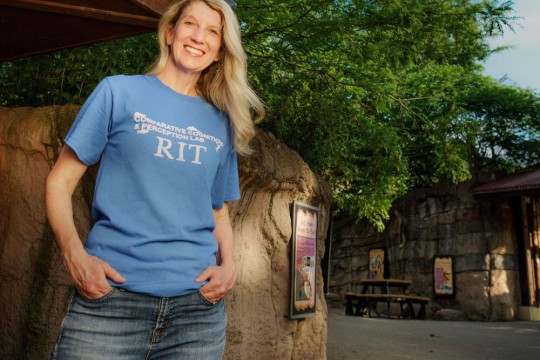
Caroline DeLong is Professor of Psychology at Rochester Institute of Technology's College of Liberal Arts, where she directs the Comparative Cognition & Perception Lab. Her research examines visual and auditory perception across species including river otters, goldfish, dolphins, and primates. Education includes Ph.D. and M.A. from University of Hawaii and B.A. from New College of Florida. Research employs behavioral methods to study object recognition, numerical discrimination, and auditory perception in diverse species. Recent publications focus on visual cognition in aquatic animals and primates, with ongoing studies at Seneca Park Zoo involving river otters and olive baboons. Research methodologies include match-to-sample tasks, sensory enrichment studies, and comparative perception experiments.
Ludovic Sacchelli is an Inria researcher (CR) affiliated with the McTAO team at the Centre Inria d'Université Côte d'Azur and the Laboratoire J.A. Dieudonné of Université Côte d'Azur. His research spans control theory, sub-Riemannian geometry, and mathematical neuroscience, focusing on optimal control, observers, and estimation problems. His work on sub-Riemannian manifolds and control systems includes stabilization techniques for non-uniformly observable systems and applications to UAV control, neural fields, and bioprocess modeling. He has contributed to heat kernel analysis, line fields interpolation, and geometric models for sound processing. His recent publications address topics like distributed state estimation in neural models, polynomial state-affine control systems, and geometric algorithms for orientation field interpolation. He has also explored observability singularities in bilinear systems and stabilization of weakly contractive systems. Teaching roles include instructing Measure Theory , Stochastic Processes , and applied mathematics at institutions such as Université Côte d'Azur, Polytech Nice, Lehigh University, and École Polytechnique. His mentorship includes supervising a Masters research project on numerical implementation of line fields interpolation in 2019.
Bruno Gas serves as a Professor at Sorbonne University, affiliated with the ASIMOV research team within the Intelligent Systems and Robotics Institute (ISIR). His academic work bridges robotics, artificial intelligence, and cognitive science through innovative investigations into sensorimotor learning frameworks for embodied agents. Gas's research centers on how naive robotic agents develop spatial and bodily representations through sensorimotor interactions, with particular emphasis on multimodal sensory integration (audition, vision, and touch). His work demonstrates how robots can autonomously construct internal models of their environment through active exploration, utilizing principles from developmental psychology and neuroscience. Key methodologies include neural network modeling, predictive processing architectures, and bio-inspired sensorimotor contingency frameworks that enable agents to learn without pre-programmed spatial knowledge. Analysis of Gas's recent publications (2013-2020) reveals consistent thematic progression in developmental robotics, focusing on the emergence of topological spatial representations, active exploration strategies, and multimodal sensor fusion. His research demonstrates how sensorimotor flow generates internal spatial models, with notable contributions including the Head Turning Modulation System for environment exploration and tactile space representation models. This work establishes critical links between robotics, cognitive science, and neuroscience through experimentally validated frameworks for embodied learning. No explicit information regarding student supervision or research grants appears in the source material, though extensive collaborative publications with researchers like Sylvain Argentieri and J. Kevin O'Regan suggest active mentorship and project leadership within the ISIR ecosystem. His publication record shows sustained interdisciplinary collaboration across European robotics institutions. Gas operates within the ASIMOV team at ISIR (Institut des Systèmes Intelligents et de Robotique), a premier robotics research unit jointly operated by Sorbonne University and CNRS. The team specializes in adaptive systems and intelligent machines, with research spanning embodied cognition, developmental robotics, and human-robot interaction. ASIMOV's experimental platforms focus on sensorimotor learning paradigms for autonomous exploration, positioning Gas at the forefront of bio-inspired robotics research in France.
Prof Peter Tyack is a Research-Focused Professor at the School of Biology, University of St Andrews, with affiliations to the Scottish Oceans Institute and Centre for Social Learning & Cognitive Evolution. His work spans marine mammal bioacoustics, behavioral ecology, and conservation biology. UN Sustainable Development Goals: 14 (Life Below Water), 13 (Climate Action) Collaborations: USA, Norway, UK institutions Research focuses on vocal learning evolution in mammals , cetacean communication systems , and anthropogenic noise impacts on marine wildlife. His lab develops novel methods for continuous behavioral sampling in field conditions. Recent publications examine porpoise echolocation masking by vessel noise, neural connectivity differences in whales, and marine mammal welfare monitoring . Over 258 publications reflect his extensive work in marine bioacoustics and conservation physiology. Scientific Awards Fellow of the Royal Society of Edinburgh (2016) Supervises PhD students including Gabrielle Arrieta and Dinah Hartmann. Active in marine policy advisory roles and has participated in 80+ professional activities including invited talks and workshops.
Dr. Josh Arnold is a Senior Lecturer at the School of Electrical Engineering and Computer Science, University of Queensland, and a Research Officer in the Scott Lab at the Queensland Brain Institute. His research bridges computational neuroscience and robotics, focusing on neural computation, temporal learning, and brain-wide activity modeling in zebrafish. Bachelor (Honours) of Engineering, University of Queensland Doctor of Philosophy in Artificial Intelligence, University of Queensland Josh specializes in computational neuroscience, particularly the role of conduction delays in neural learning rules. His work spans spiking neural networks, auditory processing in zebrafish, and social behavior modeling in robots. Recent studies examine sedation effects on brain activity and neurodevelopmental disorder phenotyping in zebrafish mutants. His publications highlight applications in temporal learning, robotics, and neuroimaging. Josh is available for supervision and contributes to projects involving zebrafish models, neural plasticity, and collaborative interdisciplinary research in the Scott Lab.
Mark A. Minor is an Associate Professor in the Department of Mechanical Engineering at the University of Utah's College of Engineering, where he serves as Director of the Robotics Systems Lab and Coordinator of the Robotics Track within Mechanical Engineering. His research spans multiple domains of robotics including climbing robots, terrain adaptable mobile robots, virtual interfaces, autonomous vehicles, and flying robots. The Robotics Systems Lab under his direction synergizes design, modeling, and control to create novel robotic embodiments with enhanced adaptability, mobility, and immersion. Dr. Minor's research focuses on the synergistic integration of design, modeling, and control of robotic systems. His lab specializes in several types of robotic systems including climbing robots, terrain adaptable mobile robots, virtual interfaces, autonomous vehicles, and flying robots. With extensive expertise in the design and control of under-actuated nonholonomic systems, kinematic motion control, dynamic motion control, state estimation, sensor development, and data fusion, his work pushes the boundaries of what robotic systems can achieve in challenging environments. His research portfolio demonstrates a consistent focus on practical robotic applications across multiple domains. Recent work shows increasing emphasis on immersive virtual environments with wind, olfactory, and thermal displays, as well as sophisticated control systems for autonomous vehicles and terrain-adaptive locomotion. The integration of haptic feedback, multi-sensory stimulation, and soft robotics components represents an emerging trend in his research trajectory, bridging the gap between physical robotics and human perception. Dr. Minor has successfully advised numerous graduate students through completion of their degrees, with alumni now working at institutions including Harbin Institute of Technology, University of Utah, Orbital Sciences Corporation, and Western Digital Corporation. His research has been supported by prestigious sponsors including the National Science Foundation, NASA, Army Night Vision Lab, and industry partners such as ATK Launch System and Kairos Autonomi. The Robotics Systems Lab, directed by Dr. Minor, maintains several active research projects including Hybrid Mobility Research (investigating robots capable of rolling, walking, and climbing), Autonomous Vehicle Research (particularly related to the DARPA Urban Challenge), Traction Sensing and Control in Wheeled Mobile Robots, Immersive Virtual Environments (including the TreadPort Active Wind Tunnel), and Compliant Framed Modular Mobile Robots. The lab continues to push the boundaries of robotic mobility, control, and human-robot interaction.