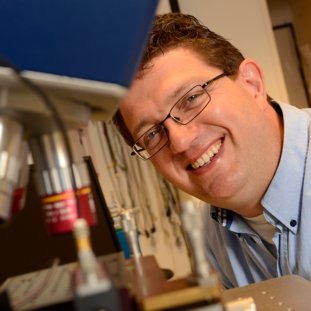
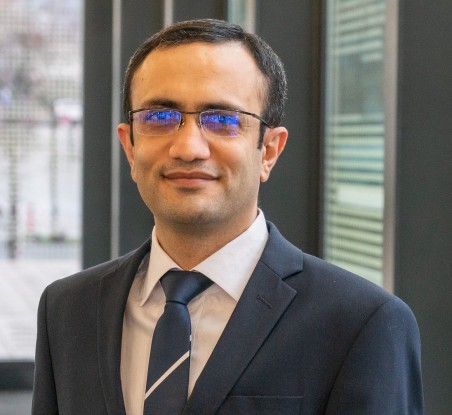
Gijs Krijnen serves as a Professor at the University of Twente within the Faculty of Electrical Engineering, Mathematics and Computer Science, based in Room Carré 3435 with contact email gijs.krijnen@utwente.nl. His research spans advanced engineering domains including: Additive manufacturing 3D printed sensors & actuators Embedded sensing systems Parametric & nonlinear transduction mechanisms Bio-inspired control algorithms Wearable & soft robotics platforms Current initiatives involve Mission I.A.M., Wearable Robotics, IRE, and the RaM laboratory, driving innovation in robotic sensing and actuation. No scientific awards were documented in the source material. Advising activities and research funding details remain unspecified in the provided information. The RaM laboratory constitutes his primary research environment for developing integrated robotics and mechatronics solutions.
Liza M. Roger is an Assistant Professor in the School of Molecular Sciences at Arizona State University (ASU) and a Senior Global Futures Scientist at the Global Futures Scientists and Scholars Program. She is affiliated with the School of Ocean Futures and works at the Walton Center for Planetary Health. Education: Ph.D. in Marine Biology and Geochemistry (University of Western Australia, 2017) B.Sc. Hon. in Marine Biology and Natural Resources Management (University of Western Australia, 2011) Associate’s Degree (Université du Littoral Côte d’Opale, France, 2006) Her research explores how environmental change affects marine organisms in symbiotic relationships with microscopic algae, such as corals, mollusks, anemones, and jellyfish. She pioneers coral in vitro methodologies to advance understanding of symbiosis, biomineralization, and stress adaptation. Recent publications highlight her work on nanotechnology for coral reef conservation, thermal stress mitigation using engineered nanoceria, and interdisciplinary collaborations merging art with coral research. Her studies also address trace metal roles in coral nutrition, insulin signaling pathways, and innovative imaging techniques to monitor coral health. Scientific Awards: NSF’s 2021 Coral Bleaching Research Coordination Network Early Career Training Program Award VCU’s 2021 Postdoctoral Independent Research Award Liza’s multidisciplinary approach integrates expertise from oceanography, biochemistry, nanoscience, and sustainability. She previously worked at the Australian Institute of Marine Science and has field experience as a cetacean naturalist in Iceland and a scuba diving instructor in the Mediterranean Sea and Southeast Asia.
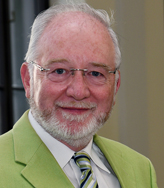
Univ.-Prof. Karl Crailsheim is a Professor at the University of Graz, affiliated with the Institute of Zoology within the Faculty of Natural Sciences. His research focuses on honeybee behavior, physiology, and health, particularly investigating the honeybee superorganism and threats to their colonies. He explores swarm systems, robotics, and swarm intelligence, with recent emphasis on colony losses and environmental threats. His work bridges biology and robotics, applying insights from honeybee behavior to algorithm design. Research interests include honeybee nutrition, immune responses, pathogen impacts, and the application of citizen science in ecological studies. Key projects involve tracking honeybee behavior, analyzing pollen diversity, and developing robotic systems inspired by swarm dynamics. Collaborative efforts with citizen scientists enhance ecological data collection. Publications highlight advancements in understanding bee health, pesticide effects, and swarm robotics. His interdisciplinary approach addresses both biological and technological challenges in apiculture and robotics.
Lin Dong is an Assistant Professor in the Department of Mechanical and Industrial Engineering at New Jersey Institute of Technology (NJIT). His research focuses on advanced energy harvesting technologies, particularly in piezoelectric materials, flexible electronics, and their biomedical applications. He leads a federally funded project (NSF grant) titled Membranous Energy Harvester with Tuning Capability for Flexible Electronics , which explores energy harvesting systems for wearable and implantable devices. His research interests include the design of self-powered sensors, piezoelectric hydrogels, and nature-inspired nanofibers for health monitoring. Notable contributions include amphibious energy generators, helical piezoelectric hydrogels for human-machine interfaces, and flexible sensors for cardiac monitoring. His work bridges materials science, biomedical engineering, and mechanical systems, with applications in smart health and wearable technology. Dr. Dong’s publications (29+ articles) emphasize energy harvesting innovations, with 16+ citations. His articles highlight trends in flexible, bio-integrated energy systems and multimodal sensing. He collaborates on projects involving body sensor networks and tunable energy harvesters for flexible electronics. He has secured a 2021 NSF grant (PI) and generated media attention for advancements in flexible energy harvesting and nanofiber research. His lab develops cutting-edge materials and devices for sustainable energy solutions and healthcare applications.
John Whitney is an Associate Professor in the Department of Mechanical and Industrial Engineering at Northeastern University's College of Engineering. He joined the university in January 2016. His research focuses on human-safe robotics, medical robotics, soft robotics, MEMS, microrobotics, and bio-inspired design, with a particular emphasis on flapping aerodynamics and insect flight mechanisms. He has led major research initiatives including the National Science Foundation-funded 'Controllable Compliance' robotic arm project and Office of Naval Research projects on haptic manipulators for explosive ordnance disposal. Whitney holds a PhD in Engineering Sciences from Harvard University (2012) and an SM in Aeronautics and Astronautics from MIT (2006). He is affiliated with Northeastern's Institute for Experiential Robotics and has contributed to advanced systems like the ANA Avatar XPRIZE robotic avatar. His work integrates interdisciplinary approaches combining mechanical engineering, control systems, and biomedical applications. Education: PhD in Engineering Sciences, Harvard University, 2012 SM in Aeronautics and Astronautics, MIT, 2006 Awards: 2023 Impact Award Finalist, International Conference on Robotics and Automation 2022-2023 College of Engineering Faculty Award Recipient His research spans teleoperation systems, haptic feedback mechanisms, and soft material manufacturing. Notable projects include a MR-safe haptic system for prostate biopsies and a novel robotic arm for contact-rich environments. His lab's work on flapping-wing microrobots draws inspiration from insect flight dynamics to improve micro air vehicle (MAV) performance. Whitney advises teams like the Northeastern Mars Rover Team and ANA Avatar XPRIZE finalists, demonstrating his commitment to hands-on student engagement. His publications emphasize practical robotics solutions for medical, industrial, and exploratory applications.
Daniel Quinn is an Associate Professor at the University of Virginia, jointly affiliated with the Department of Mechanical and Aerospace Engineering and the Department of Electrical and Computer Engineering. He is a member of the Link Lab, focusing on Cyber-Physical Systems, particularly autonomous vehicles and bio-inspired robotics. His roles include teaching courses like Aerodynamics I and Fluid Mechanics. Education: BS in Aerospace Engineering (University of Virginia), PhD in Mechanical & Aerospace Engineering (Princeton University). Postdoctoral research at Stanford University and visiting fellowships at Harvard University's Museum of Comparative Zoology. Research focuses on Fluid-Structure Interactions, Biomechanics, Bio-Inspired Robotics, Energy-Harvesting, and Cyber-Physical Systems. Key projects include studying ground effects on propulsion, fish schooling dynamics, and self-powered breath sensors. Notable awards include the NSF Career Award (2020), Pi Tau Sigma Outstanding Faculty Award (2021–2023), and the Hartfield Excellence in Teaching Award (2024–2025). His work bridges experimental optimization, computational modeling, and interdisciplinary collaboration. Grants include DURIP support for advanced research facilities. Lab locations include Olsson Hall and 122 Engineer’s Way. Active in media, featured in articles on teaching excellence and UAV design innovations.
Dr Mahdi Davoodianidalik is a researcher in the Department of Nuclear Physics & Accelerator Applications at the Australian National University (ANU). He is affiliated with the Space plasma power and propulsion group and the Physics of fluids group, focusing on interdisciplinary research at the intersection of plasma physics, fluid dynamics, and space propulsion technologies. His research interests include Turbulence and wave-driven flows Plasma thrusters and electrothermal propulsion Fluctuation-induced forces and interactions Fluid-structure dynamics Thermal engineering of micro-thrusters Nonlinear phenomena in fluids Recent publications highlight his work on analogs of the Casimir effect in turbulent flows, passive propulsion mechanisms, and advanced propulsion systems using solid hydrocarbon propellants. He has contributed to understanding turbulence in both fundamental and applied contexts, with a focus on energy transfer and chaotic flow phenomena. His collaborations span ANU colleagues including Nicolas Francois and Michael Shats, with a strong emphasis on experimental and computational fluid dynamics.
Mehdi Khamassi is a Research Director at the French National Center for Scientific Research (CNRS), assigned to the Institute of Intelligent Systems and Robotics (ISIR) at Sorbonne University in Paris, France. He holds an engineering background in computer science (specializing in AI and statistical modeling) from the National School of Computer Science for Industry and Business (2003), a Cogmaster in cognitive science from Pierre and Marie Curie University (2003), and a PhD in cognitive neuroscience from UPMC/Collège de France (2007). Recruited by CNRS in 2010, he co-organizes the Symposium of Biology of Decision-Making (SBDM) and co-directs the modeling major for the Cogmaster program. His research integrates computational modeling , neuroscience experiments , and robotic systems to study decision-making and learning mechanisms. Key interests include: Reinforcement learning in biological and artificial systems Role of social/non-social rewards in adaptive behavior Ethical implications of autonomous decision-making in AI Neuro-robotic models of hippocampal-prefrontal interactions Recent publications (2023-2025) demonstrate strong focus on reinforcement learning paradigms, AI alignment with human values, neurorobotics, and computational neuroscience. Work frequently bridges machine learning theory with empirical validation in biological systems or robotic platforms. He leads research within the ACIDE team at ISIR, exploring adaptive coordination of learning strategies in brains and robots. Current collaborations include NTUA (Greece), University of Oxford, and University of Trento.
Nicolas Cambier is a Visiting Professor at Vrije Universiteit Amsterdam, affiliated with the Faculty of Science's Artificial Intelligence department and the Network Institute. His research focuses on swarm robotics, collective behavior, and evolutionary systems. He explores topics like emergent communication, modular robotics, and prosociality in robotic swarms. Key areas include task-driven language evolution, adaptive decision-making, and environmental interaction in constrained environments. His work bridges theoretical models with practical implementations, emphasizing self-organization and cultural evolution in synthetic systems. Recent contributions address challenges in heterogeneous swarms, skill acquisition in modular robots, and decision-making without prior knowledge. He collaborates widely, with publications in IEEE Robotics and Automation Letters, Nature Communications, and top conferences like GECCO and Distributed Autonomous Robotic Systems. Research interests span robotics, artificial intelligence, and evolutionary computation, with applications to both theoretical frameworks and real-world robotic systems. His studies often involve agent-based simulations and embodied evolution approaches to understand complex collective phenomena.
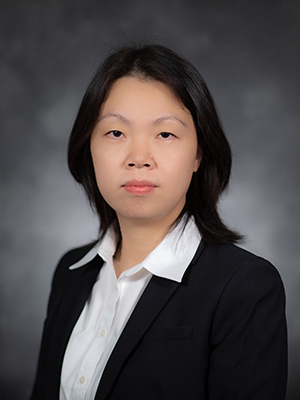
Dr. Jingjing Qiu is an Associate Professor in the Department of Mechanical Engineering at Texas A&M University (TAMU), leading the Advanced Materials & Manufacturing (AM²) Lab. Her research focuses on advanced manufacturing, nanomaterials, multifunctional composites, sustainable materials, energy harvesting, and healthcare applications. She holds a Ph.D. in Industrial & Manufacturing Engineering from Florida State University (2008), and M.S./B.S. degrees in Materials Science from Beihang University (2004/2001). Prior to academia, she gained 1 year of industrial experience as a Quality Engineer at SAIC Motor. Research interests include AI-driven nanomaterials synthesis, low-carbon manufacturing processes, and biomedical innovations such as drug delivery systems for brain tumors. The AM² Lab emphasizes interdisciplinary collaboration in materials science, data science, and sensor integration for energy and medical devices. Recent work highlights include AI-assisted microplastics removal, thermoelectric energy harvesting via graphene aerogels, and neuromorphic computing systems. Her team actively pursues postdoctoral and PhD candidates for research in energy/healthcare materials, requiring expertise in nanomaterials characterization (e.g., SEM, XPS, electrochemical techniques) and interdisciplinary problem-solving. Lab facilities support cutting-edge fabrication and testing of functional materials. Publications span over 15 years, with recent trends in sustainable manufacturing, soft robotics, and bio-inspired materials. Ongoing projects include DOE-funded initiatives on rare earth recycling and low-carbon ceramic production. No scientific awards are explicitly listed in the provided texts.
Hamidreza Marvi is an Associate Professor in the School for Engineering of Matter, Transport and Energy at Arizona State University , with additional affiliations as a Senior Global Futures Scientist . His work bridges bio-inspired robotics , soft robotics , and mechanics of animal locomotion . Education : Ph.D. in Mechanical Engineering (Georgia Tech, 2013), M.S. in Biomedical Engineering (Sharif University, 2007), M.S. in Mechanical Engineering (Clemson, 2009), B.S. in Mechanical Engineering (Iran University of Science and Technology, 2004). Marvi’s research focuses on biological systems interacting with solid, granular, and fluidic environments , translating these insights into bio-inspired robotic systems for search-and-rescue, medical, and planetary exploration. His work has been featured in Science , PNAS , and popular media like the New York Times and BBC . Recent publications highlight trends in magnetic microrobotics , soft robot control , and locomotion in granular media , with applications in medical devices, underwater inspection, and space exploration. His BIRTH Lab develops programmable interfacial structures and adaptive locomotion systems. Scientific Awards : KEEN Professorship (2017), Peebles Award (2015), Sigma Xi Best Ph.D. Thesis (2014), TechSTAR Award (2012), Emerald Publishing Literati Network Award (2011). Marvi has supervised teams for NASA competitions, co-organized robotics workshops, and served as a reviewer for journals like Nature-Scientific Reports and conferences including IEEE-IROS. His teaching portfolio includes courses in system dynamics, robotic control, and applied projects .
Vikram Iyer is an Assistant Professor at the Paul G. Allen School of Computer Science and Engineering and holds an Adjunct Appointment in Mechanical Engineering at the University of Washington. He co-directs the CS for Environment Initiative , focusing on interdisciplinary solutions that bridge computing, biology, and physical systems for environmental sustainability. Education : Ph.D. in Electrical & Computer Engineering (University of Washington), B.S. in Electrical Engineering and Computer Sciences (UC Berkeley) Research Interests revolve around bio-inspired wireless systems , environmentally sustainable electronics , and miniaturized autonomous robotics . His work includes: Biodegradable circuit boards Battery-free wireless sensors Insect-scale vision systems Wind-dispersed environmental monitors AI tools for sustainable design Article Trends highlight contributions to green hardware , energy-autonomous robotics , and environmental sensing networks , often integrating machine learning with physical world interaction . Awards include: NSF CAREER Award SIGMOBILE Dissertation Award Marconi Society Paul Baran Young Scholar Best Paper Awards (SIGCOMM 2016, Sensys 2018) Google/Amazon Research Awards Students advised include Kyle Johnson (NSF Fellow), Vicente Arroyos (GEM Fellow), and Qiuyue Xue (co-advised with Shwetak Patel). His lab collaborates with the Networks & Mobile Systems Lab and Urban Innovation Initiative .
Professor Klaus McDonald-Maier is a full Professor in the School of Computer Science and Electronic Engineering (CSEE) at the University of Essex , where he leads the Embedded and Intelligent Systems (EIS) Research Laboratory and heads the Intelligent Embedded Systems and Environments Research Group . He is also Director of Impact , Visiting Professor at the University of Kent, and Visiting Research Affiliate at NASA Jet Propulsion Laboratory, California Institute of Technology. Education PhD in High-Performance Parallel Neural Network Architectures, Friedrich-Schiller-University Jena (Germany, 1999) Electronic Engineering studies, University of Ulm (Germany) Electronic Engineering studies, Cardiff University (Wales) Electronic Engineering studies, École Supérieur de Chimie Physique Électronique de Lyon (CPE-Lyon) (France) Research Interests Professor McDonald-Maier’s research integrates embedded systems , System-on-Chip (SoC) architectures , and AI-driven robotics . He pioneers visual place recognition techniques that remain robust under severe appearance and viewpoint changes, develops cybersecurity frameworks based on ICMetrics for autonomous vehicles and IoT, and designs approximate real-time computing solutions for energy-constrained multicore and FPGA platforms. His work on radiation-tolerant systems supports space and nuclear applications, while his bio-inspired algorithms enable lightweight, neuromorphic perception on resource-limited robots. Publication Trends Between 2022 and 2025 his output converges on FPGA-accelerated AI , secure edge intelligence , visual navigation for autonomous systems , and healthcare analytics . He repeatedly couples rigorous algorithmic innovation with practical hardware deployment, yielding energy-efficient, real-time systems validated in domains ranging from autonomous driving to post-stroke rehabilitation. Scientific Awards & Recognition Best Paper Award – IEEE Transactions on Sustainable Computing (2024) Best Paper Award – IEEE/ACM DATE (2024) Best Paper Award – IEEE Systems Journal (2022) Best Paper Award – IEEE Sensors Journal (2021) Best Paper Award – IEEE Access (2020) Research Grants & Industrial Collaboration He has secured major funding from EPSRC , EU Horizon 2020 , Innovate UK , and industry partners. Current projects span trustworthy autonomy, radiation-hardened edge AI, and AI-enhanced rehabilitation technologies. He is Chief Scientist of UltraSoC Technologies Ltd and CEO of Metrarc Ltd , commercialising University research in semiconductor debug and cybersecurity respectively. Laboratory & Team Leadership As Director of the Embedded and Intelligent Systems Laboratory (EIS Lab) , he oversees a multidisciplinary team of researchers and PhD students, providing state-of-the-art FPGA, robotics, and embedded-systems facilities. The lab collaborates closely with NASA JPL, UK Atomic Energy Authority, and leading semiconductor firms to translate fundamental research into high-impact industrial solutions.
Prof. Vahid Jamali is an Assistant Professor and Head of the Resilient Communication Systems Group at the Technical University of Darmstadt, Germany. His research focuses on resilient communications, 6G wireless systems, bio-inspired molecular communication, and reconfigurable intelligent surfaces (RIS). He holds a Doctoral Degree from Friedrich-Alexander-Universität Erlangen-Nürnberg (FAU), Germany, and has served as a postdoctoral researcher at Princeton University and FAU. Education PhD in Communication Systems, FAU (2019) Visiting Researcher at Stanford University (2017) Research Assistant at FAU's Institute for Digital Communications (2013-2019) Research Interests Resilient Networks : Emergency networks, RIS-based systems, and resilience-by-design architectures. Wireless Innovations : 6G technologies, holographic MIMO, and joint communication-sensing systems. Bio-inspired Systems : Molecular communication modeling using biological principles like diffusion and chemical reactions. Recent Work Trends His 2024-2025 publications emphasize RIS optimization (e.g., temperature-aware phase shifts, fast beam switching) and molecular communication (e.g., Poisson channel identification, bio-inspired receiver designs). Emerging themes include AoI-based RIS reconfiguration and integrated sensing-communication-powering (ISCAP) for IoT. Lab Activities He leads the Resilient Communication Systems Group, exploring cutting-edge RIS hardware (e.g., liquid crystal implementations) and theoretical foundations for future wireless systems.
Elena Niculina Dragoi is a Lecturer at the Faculty of Chemical Engineering and Environmental Protection 'Cristofor Simionescu' at Gheorghe Asachi Technical University in Iasi, Romania. Her academic work integrates Artificial Intelligence and Machine Learning tools for solving complex problems in Chemical Engineering and Environmental Protection . With over 30 published papers and six active research projects, her contributions span process optimization, nanomaterials, and sustainable technologies. Teaches Applied Informatics (Years 1 & 4) and Artificial Intelligence at the Faculty of Chemical Engineering Contributes to Programming Engineering at the Faculty of Computer Science, University 'Alexandru Ioan Cuza' Engaged in interdisciplinary courses at the Faculty of Automatic Control and Computer Engineering Research Interests : Elena's work focuses on modelling and optimization (90% emphasis) of chemical processes using AI methodologies, with cross-disciplinary applications in environmental engineering (70%) and chemical engineering (95%). Her recent publications highlight innovations in: 3D-printed nanocomposite adsorbents for pollutant removal Metaheuristic optimization algorithms for industrial processes Hydrogen generation via nanocatalysts Electrochemical biosensors for environmental and health monitoring AI-driven wastewater treatment systems Green chemistry applications in pharmaceutical and dye removal