Prof. Dr. Wolfgang Nejdl is a Professor at the Institute for Data Science within the Faculty of Electrical Engineering and Computer Science at Leibniz University Hannover. He serves as Executive Director of the L3S Research Centre and Leibniz Forschungszentrum Inclusive Citizenship. Web Science Information Retrieval Artificial Intelligence Deep Learning His recent research focuses on AI applications in medicine , multimodal data fusion , and ethical AI systems . Projects include CAIMed (AI in Causal Medicine) and DAISEC (AI & Cybersecurity). His publications span conferences like AAMAS, WWW, and SIGIR. Notable awards include membership in the National Academy of Science and Engineering (acatech) . Former students hold positions at institutions like Stanford, TU Dresden, and ETH Zürich. Current projects involve climate resilience AI , federated learning for healthcare , and quantum-inspired data science .
Anne-Sophie Chauvin is a Senior Lecturer and Researcher at École Polytechnique Fédérale de Lausanne (EPFL), School of Basic Sciences, within the Institute of Chemical Sciences and Engineering and the Supramolecular Chemistry Laboratory. She actively engages in supramolecular and inorganic chemistry, focusing on f-element (lanthanides and actinides) coordination polymers and luminescent bioprobes for biological and technological applications, including invisible inks and dye-sensitized solar cells. PhD in Bioinorganic Chemistry from University Paris V-René Descartes (thesis on Nitrile Hydratase mimetics) Postdoctoral work at University of Geneva on chiral alcohol configuration analysis Habilitation à Diriger des Recherches (HDR) from University René Descartes (2006) Her research spans Lanthanide and Actinide Chemistry , Luminescence , Coordination Polymers , Metallacages , and Photovoltaic Materials . Recent publications emphasize catalytic spiro stereocenter formation, actinide coordination polymers, and photoredox-enabled biomolecule functionalization. She has supervised PhD students including Andrei Andreichenko , Julien Andrès , Steve Comby , and Aurélien Willauer . Recognitions include Fellowship of the Royal Society of Chemistry (FRSC) and membership in the Swiss Chemical Society (SCS). Current roles include teaching General and Analytical Chemistry to first-year Pharmacy and Biology students at the University of Lausanne (UNIL), overseeing practical sessions, and serving on the EPFL School of Basic Sciences Faculty Council.
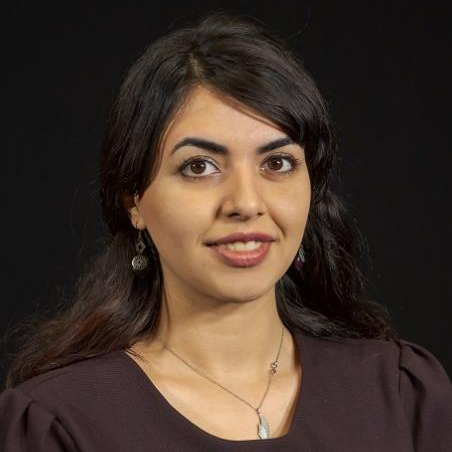
Dr. Ava Hedayatipour is an Assistant Professor of Electrical Engineering at California State University at Long Beach (CSULB), where she joined in Fall 2020. She holds a Ph.D. from the University of Tennessee, Knoxville (2020), and degrees from Iran University of Science and Technology (B.S., 2012) and Shahid Rajaee Teacher Training University (M.S., 2015). Her research focuses on analog/mixed-signal circuit design, bio-implantable devices, low-power systems, and hardware security. Notable contributions include a first-of-its-kind integrated secure multimodal sensor and a flexible paper electrode for remote electrochemical experiments. Education: Ph.D., Electrical Engineering, University of Tennessee, Knoxville, 2020 M.S., Electrical Engineering, Shahid Rajaee Teacher Training University, Iran, 2015 B.S., Electrical Engineering, Iran University of Science and Technology, 2012 Research Interests: Analog and mixed-signal circuit design Biomedical devices and lab-on-chip applications Low-power, low-noise microelectronics Hardware security for IoT and biomedical sensors Flexible electrodes for wearable systems Awards: University of Tennessee Fellowship Award (2019) Outstanding Teaching Assistant Award (2018) BEST PAPER AWARD at IEEE DCAS 2025 2nd Place Winner at IEEE BIOCAS 2023 Innovation Challenge Advising & Grants: Lead CSULB LEAP program project on medical imaging braces Funded NSF project on chaotic analog security (2018–present) Collaborated with industry partners like Applied Medical and Synaptics Labs & Teams: Next Generation Wearable Lab at CSULB Focus on sensor design, hardware security, and biomedical applications
Dr. Cosmin Ioan Roman is a Lecturer at the Department of Mechanical and Process Engineering at ETH Zürich, affiliated with the Chair in Micro and Nanosystems since 2006. His research focuses on solid-state micro and nanotransducers, spanning from traditional Silicon micromachining to carbon nanotube-based (CNT) devices for bio-sensing applications, with an emphasis on energy-efficient transducer concepts. Doctoral Degree: National Polytechnic Institute of Grenoble (INPG) Roman's expertise lies in multi-physics and compact modeling of transducers. His work bridges materials science, semiconductor device physics, and biomedical sensing, utilizing advanced fabrication techniques for scalable sensor arrays on flexible substrates. The selected publications highlight his contributions to tactile sensing and cell rheology. His co-supervised doctoral thesis on carbon nanotube resonators demonstrates his interdisciplinary approach to nanoscale and biomedical systems.
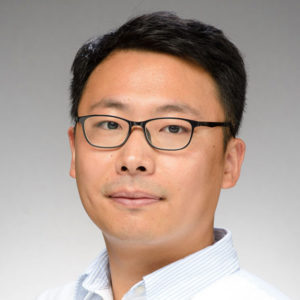
Ningyuan Cao is an Assistant Professor in the Department of Electrical Engineering at the University of Notre Dame, College of Engineering. He leads the Circuit and System Intelligence Research Lab , focusing on the intersection of advanced hardware design and real-time/low-power machine learning applications. Education : Ph.D., Electrical and Electronics Engineering, Georgia Institute of Technology (2020) M.S., Electrical Engineering, Columbia University (2015) B.S., Electrical and Electronics Engineering, Shanghai Jiao Tong University (2013) His research investigates custom analog/mixed-signal circuits , digital architecture , and micro-system design for machine learning acceleration, distributed intelligence, and data-driven IC design automation. Key application domains include Internet-of-Everything, tactile internet, and mixed reality systems. Recent publications highlight work on Bayesian neural networks , privacy-preserving bio-signal encoders , transformer-based surrogate models , and compute-in-memory architectures . Technical themes span neuromorphic computing, uncertainty quantification, and hardware security.
Yu Xia is a Post Doc at the Department of Chemistry, Stockholm University, Sweden. He is affiliated with the Tom Willhammar Research Group, focusing on advanced electron microscopy and diffraction techniques for structural characterization of materials. PhD (2019–2023) from a joint program between the University of Birmingham (UK) and the Southern University of Science and Technology (China). Research emphasizes fabrication of metallic nanoparticles with non-equilibrium structures and shapes using gas-phase condensation and thermal shock methods. Specializes in scanning transmission electron microscopy (STEM), in-situ heating experiments, and electron energy loss spectroscopy (EELS) for nanoparticle analysis. Current work prioritizes 4DSTEM imaging for electron beam-sensitive materials and Python-based post-processing of electron microscopy datasets. Yu Xia's research spans Materials Science , Nanotechnology , and Electrocatalysis , with applications in photocatalytic hydrogen evolution , graphene composites , and advanced electron microscopy techniques . His work often integrates computational image processing with structural characterization to optimize material properties. Publications highlight innovations in heterostructure engineering , metallic alloy catalysts , and electron beam-sensitive material imaging . No scientific awards are explicitly mentioned in the provided text. Yu Xia's technical expertise includes Python scripting for image analysis, in-situ electron microscopy , and multifunctional graphene-based materials .
Leila Deravi is an Associate Professor of Chemistry and Chemical Biology at Northeastern University's College of Science, affiliated with the Barnett Institute of Chemical and Biological Analysis and the Institute for Chemical Imaging of Living Systems. Her research focuses on biomaterials design, particularly protein-based systems inspired by biological mechanisms in cephalopods and extracellular matrices. She leads the Biomaterials Design Group, which explores applications ranging from tissue engineering to wearable electronics. Her work integrates bioanalytical chemistry, materials science, and design, with projects including cephalopod pigment studies for sunscreen development and bionic material fabrication using additive manufacturing. She has secured significant grants, including an NSF award and U.S. Army funding, and co-founded Seaspire Skincare, leveraging marine biotechnology. Key Research Themes: Bio-inspired materials, cephalopod pigmentation, biomedical textiles, and sustainable cosmetics Notable Collaborations: Cross-disciplinary projects with engineering, biology, and entrepreneurship Innovation: Development of UV-sensing devices and eco-friendly skincare products Deravi's educational contributions include innovative chemistry courses where students design cosmetics, bridging theory and practical application. Her lab's work frequently appears in media discussions on skincare trends and environmental chemistry advancements.
Dr. Farhad Merchant is an Assistant Professor of Innovative Computer Architecture at the Bernoulli Institute, University of Groningen, since July 2024. Previously, he served as a Lecturer (Assistant Professor) at Newcastle University (2022–2024) and held research roles at Bosch Research, NTU, and RWTH Aachen University. His research focuses on emerging technology-based computing and hardware-oriented security, including neuromorphic architectures, in-memory computing, and secure hardware design. Education: PhD in Electronics Engineering from the Indian Institute of Science, Bangalore, with a DAAD-funded visit to RWTH Aachen University. He also holds industry experience from Bosch Research. Research Interests : - Hardware Security - Neuromorphic Computing - Algorithm-Architecture Co-design - Reconfigurable Computing - Computer Arithmetic Projects : - Coordinator for the REACT project (2025–2029): Focuses on self-aware neuromorphic architectures. - Principal Investigator for Privacy-Preserving Computer Architectures (CogniGron, 2025–2029). - Completed BioNanoLock project (DFG-funded, focusing on bio-nanoelectronic security). Awards : - Best Paper Awards at ISQED 2022, NEWCAS 2023, and VLSI-DAT 2024. - Minerva Fellowship (Technion, Israel), HiPEAC Technology Transfer Award (2019). He co-founded the SeHAS workshop (since 2019) and serves on editorial and program committees for major conferences like DAC, ISLPED, and VLSI-SoC.
Arben Merkoçi is an ICREA Research Professor and leader of the NanoBioelectronics and Biosensors Group at the Catalan Institute of Nanoscience and Nanotechnology (ICN2). He holds a PhD in ion-selective electrodes from the University of Tirana (Albania) and has held research positions at institutions including the Polytechnic University of Budapest, University of Ioannina, and New Mexico State University. His research focuses on integrating biological molecules with micro/nanostructures to design advanced biosensors, with applications in healthcare and environmental monitoring. Education: PhD in Analytical Chemistry (University of Tirana, 1992) Roles: Co-Editor-in-Chief of Biosensors and Bioelectronics , member of the Academy of Sciences of Albania Research interests include nanomaterial-based biosensors (e.g., graphene, MXenes, quantum dots), point-of-care diagnostics, and sensor fabrication technologies. He has pioneered innovations in inkjet-printed sensors, wearable devices, and CRISPR-integrated biosensing. His group collaborates globally to advance nanobiosensor applications in clinical and environmental settings. Over 350 publications (H-index 91) and 40 supervised PhD theses highlight his contributions. He co-founded GraphenicaLab (graphene patterning) and PaperDrop (clinical diagnostics). Active in grant acquisition and policy, he shaped Spain’s first nanoscience undergraduate program at the Universitat Autònoma de Barcelona.
Cynthia Sung is an Associate Professor in the Mechanical Engineering and Applied Mechanics department at the University of Pennsylvania's School of Engineering and Applied Science, with secondary appointments in Computer and Information Science and Electrical and Systems Engineering. She directs the Sung Robotics Lab, focusing on computational methods for robot design, origami robotics, planning for distributed systems, and fabrication of reconfigurable systems. Her lab is funded by NSF, ONR, ARO, NASA, and Penn Health-Tech. Her research spans four key areas: Computational co-design integrating mechanical, electronic, and software components Soft/origami robotics leveraging compliance for adaptable systems Distributed planning for multi-robot coordination Novel fabrication techniques for deployable structures Publications show consistent focus on robotic mechanisms with recent trends in magnetic origami reconfiguration (2025), underwater jet coordination (2025), educational robotics kits (2025), and tunable-stiffness actuators (2024). Article keywords predominantly fall in Robotics, Material Science, and Control Systems. Awards & Recognition ONR Young Investigator Award (2023) NSF CAREER Award (2019) Johnson & Johnson Women in STEM2D Scholars Award (2020) Popular Mechanics Breakthrough Award (2017) Research Teams & Advising Leads the GRASP Lab-affiliated Sung Robotics group. Current doctoral students include Zhiyuan Yang (jet propulsion), Daniel Feshbach (kinematic design), and Gabriel Unger (reconfigurable structures). Recent graduates include Yipeng Zhang (MSc, SALP robotics) and Christopher Kim (PhD, self-sensing actuators).
Prof. Josep Puigmartí-Luis is a Research Professor at the University of Barcelona (UB) since 2020, following an ERC Starting Grant in 2015 and an ICREA Research Professorship in 2019. He holds a master’s in Chemistry and Food Engineering from IQS (2003) and a PhD in Materials Science from ICMAB. His research focuses on functional materials synthesis, microfluidic technologies, and self-assembly processes, with applications in nanotechnology and biomedical engineering. Key awards include the Premi Antoni de Martí (2009), St. Jordi Award (2006), and ETH Fellowship (2008). His group, ChemInFlow, develops magnetic microrobots and piezoelectric catalytic systems for targeted therapies and environmental remediation. Educations: PhD in Materials Science, Institut de Ciència de Materials de Barcelona (ICMAB) Master in Chemistry and Food Engineering, Institut Químic de Sarrià (IQS), 2003 Research Interests: Synthesis of functional materials in solution/surfaces, microfluidic technologies, non-equilibrium assemblies, magnetic microrobotics, and piezoelectric catalysis. Articles Trends: Recent work emphasizes microfluidics-driven material synthesis, magnetic microrobot navigation, and piezoelectric catalysis for biomedical and environmental applications. Key themes include nanoreactors, targeted drug delivery, and functional MOF/COF materials. Awards: Premi Antoni de Martí i Franquès de Ciències Químiques (2009) ERC Starting Grant (2015) Rising Star Award (IEEE 3M-NANO 2023) Grants & Labs: ERC Starting Grant (2015), ICREA Professorship (2019). The ChemInFlow Group pioneers interdisciplinary approaches in materials synthesis and robotics, with collaborations spanning Europe and Asia. Labs/Teams: Leads the ChemInFlow Group at UB, focusing on microfluidic technologies and biomedical microrobotics.
Benyamin Davaji serves as an Assistant Professor in the Department of Electrical and Computer Engineering at Northeastern University, where he joined in January 2022. He holds additional appointments as a Center Member of The Plastics Center and Core Faculty of the Institute for NanoSystems Innovation (NanoSI). His work bridges microsystems engineering, nanofabrication, and data science to develop next-generation sensing technologies. Dr. Davaji's educational background includes: Postdoctoral Associate in Electrical and Computer Engineering at Cornell University (2016-2021) Ph.D. in Electrical Engineering from Marquette University (2016) His research centers on integrated microsystems with emphasis on mechanical wave-based sensing and computation, ultrasound transducers, bio-interfaces, and microcalorimetry. The Autonomous Integrated Microsystems (AIMS) Laboratory combines physics with AI/ML to invent novel sensors and computational devices through advanced nanofabrication. Key thrusts include power-sustaining architectures and analog/digital computational integration. Recent publications (2024-2025) reveal strong trends in MEMS/NEMS optimization using digital twins, plasmonically enhanced infrared detection, ferroelectric actuators for high-speed scanning, and ultrasound-enabled metrology. His work increasingly integrates machine learning for design automation and process optimization across semiconductor manufacturing and flexible hybrid electronics. Dr. Davaji advises graduate students including Yilmaz Arin Manav (PhD'28), who won the FLEX 2024 Future Student Poster Award. He has secured over $3 million in competitive funding as PI/Co-PI, including a $550k NSF grant for MEMS actuators, $330k NSF grant for quantum detectors, and $2M DARPA grant for inertial sensors. He directs the interdisciplinary AIMS Laboratory focused on MEMS, ultrasound, and calorimetric technologies. The lab collaborates extensively with NanoSI and The Plastics Center, developing autonomous microsystems for biomedical, environmental, and industrial applications through advanced manufacturing techniques.
Tomasz Majka serves as a Lecturer at the Department of Polymer Chemistry and Technology within the Faculty of Chemical Engineering and Technology at Tadeusz Kościuszko Cracow University of Technology. His academic career spans over a decade with continuous research and teaching activities focused on polymer engineering and materials science. His educational background includes a Licentiate in Applied Chemistry (2008) and Pedagogical Preparation (2008) from State Higher Vocational School in Tarnów, followed by MSc in Plastics Technology (2010) and Dr. Eng. in Technical Sciences (2015) from Tadeusz Kościuszko Cracow University of Technology. Majka's research primarily centers on polymer processing technologies , with special emphasis on thermal analysis and flammability of polymer materials , nanocomposite development , and terminal ballistics . His work bridges fundamental polymer science with practical industrial applications, particularly in developing sustainable flame retardant systems using biobased materials like lignosulfonamides. Recent publications reveal a strong focus on circular economy approaches through polymer recycling and biodegradable material development. His scientific contributions demonstrate consistent output in high-impact journals, with a notable shift toward sustainable polymer solutions since 2020, particularly in biodegradable composites and recycling technologies. The 15 most recent publications show expertise spanning flame retardancy mechanisms, nanocomposite engineering, and sustainable polymer processing. III place at International Session of WIiTCh Krakow University of Technology Science Clubs (2010) Award in 'Sustainable Development - Scientific Debut 2010' competition (2010) Award in 'Poster about famous scientist - Norio Taniguchi' competition (2011) II Prize in B-Innovative 'Be Entrepreneurial' business plan competition (2013) Majka actively supervises the Ballistic and Flammability Research Section within WIiTCH PK Chemistry Research Club and maintains strong industry connections through numerous industrial research projects. His professional engagements include international research stays at University of Bolton (UK) and Academy of Sciences of the Czech Republic, focusing on fire testing and polymer materials innovation. He serves as a scientific advisor for several industrial projects related to polymer processing and material safety. His laboratory work spans multiple specialized facilities including thermal analysis equipment, scanning electron microscopy, and polymer processing machinery. Current research directions include developing halogen-free flame retardants from lignin derivatives, optimizing biodegradable polymer composites, and advancing recycling technologies for post-consumer plastics.
Elisa Riedo is a tenured Professor of Chemical and Biomolecular Engineering at New York University (NYU) Tandon School of Engineering, with joint appointments as Professor of Physics in NYU’s College of Arts and Science and as affiliated Professor of Mechanical Engineering at Tandon. She serves as Director of Faculty Development at NYU Tandon and has held prior tenured positions at Georgia Tech (2003–2015) and CUNY ASRC (2015–2018). Her academic career spans over two decades, with a Ph.D. in Physics from the University of Milano (2000) and postdoctoral work at EPFL. Her research focuses on nanotechnology , graphene and 2D materials , and thermal scanning probe lithography (tSPL) , with applications in biomedical diagnostics quantum electronics electromagnetic interference shielding mechanical reinforcement of materials She pioneered tSPL for sustainable nanofabrication and discovered diamene—a single-layer diamond structure from graphene under pressure. Her recent work involves transparent infrared electrodes using silver nanowires (2025) and self-organized graphene stacking domains for quantum technologies (2024). She has secured major grants from National Science Foundation , Department of Defense , and Army Research Office . Scientific honors include: 2023 NYU Tandon Excellence in Research Award 2013 American Physical Society Fellow 2005 CREA Innovation Award Membership in the Academy of Europe (2023) She contributes to editorial boards for journals like 2D Materials and Applications and advises companies such as Mirimus Inc. and SwissLitho AG .
Albert H. Titus is a Professor in the Department of Biomedical Engineering and an Adjunct Professor in the Department of Electrical Engineering at the University at Buffalo, State University of New York. He serves as Associate Vice President for Regulatory Support in the Office of the Vice President for Research and Economic Development. His research focuses on analog VLSI design for neuromorphic visual processing, biosensors, wearable devices, optoelectronic systems, and neural networks. Education: PhD in Electrical and Computer Engineering, Georgia Institute of Technology (1997) MS in Electrical Engineering, University at Buffalo (1991) BS in Electrical Engineering, University at Buffalo (1989) Research Interests: His work spans wearable and implantable sensors, bioinstrumentation, neural network-based visual processing, analog VLSI implementations, optoelectronics, and electronic packaging. He pioneered CMOS-based neuromorphic systems and developed patented technologies for glare sensing and RF power calorimetry. Publication Trends: His recent articles emphasize CMOS-integrated sensors, machine learning for bioimpedance analysis, implantable medical devices, and xerogel-based optical biosensors. These works bridge biomedical engineering and microelectronics. Scientific Recognition: He is a Fellow of the National Academy of Inventors and has received the SUNY Chancellor’s Award for Excellence in Service (2017), NSF CAREER award, and Western New York Inventor of the Year (2010). His inventions include a patented low-power glare sensor (U.S. Patent 7,586,079) featured in Popular Science’s 2011 Top Ten Inventions. Academic Leadership: As a faculty member, he has supervised nearly 20 PhD and over 40 MS students, while teaching courses in circuits, IC design, sensors, and signal processing across electrical and biomedical engineering disciplines.