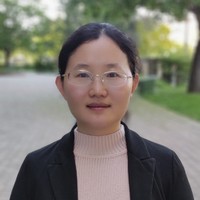
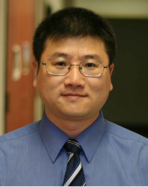
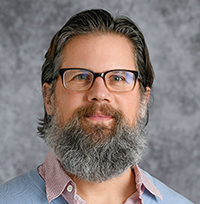
Praveen Gupta serves as Adjunct Faculty at San José State University's Lucas College and Graduate School of Business, teaching innovation courses. Founder of the Center for Innovation Science and Applications at Illinois Institute of Technology, he brings industry experience from Motorola, AT&T Bell Labs, and Prysm. Research spans innovation science, business applications, and technology development, with editorial leadership of the International Journal of Innovation Science. Authored works include Global Innovation Science Handbook and The Innovation Solution . Courses focus on innovation management frameworks and business transformation strategies. Recent publications address advanced cancer models and sustainable manufacturing.
Brian Knutson is a Professor of Psychology at Stanford University , with affiliations at the Wu Tsai Neurosciences Institute, Bio-X, and Institute for Human-Centered AI. His research focuses on elucidating the neural basis of emotion and its implications for decision-making and psychopathology. Key Affiliations : Wu Tsai Neurosciences Institute, Bio-X, Stanford Woods Institute for the Environment Programs : Symbolic Systems Program Knutson's work spans affective neuroscience, neuroeconomics, and addiction mechanisms. He investigates how biogenic amines modulate emotional experience using methods like psychopharmacology and fMRI. His studies link neural activity in regions like the nucleus accumbens and anterior insula to risky choices, resource sharing, and treatment outcomes in alcohol use disorder. Recent research trends highlight his exploration of MDMA's neural effects in PTSD subthreshold populations, Ketamine's altered states , and neuroforecasting to model market behavior. Collaborative work connects white-matter tracts to relapse prediction and examines cultural variations in neural responses to social rewards. Teaching includes graduate and undergraduate courses in Affective Neuroscience , Brain and Decision Making , and Neurophenomics . His lab trains doctoral students and conducts NIH-funded clinical trials on neuromodulation therapies. Notable findings include: Disentangling distinct neural predictors of risky choices (NAcc vs. insula) Demonstrating MDMA's normalization of negative affect circuits Identifying cultural differences in trust via ideal affect matching Linking anterior insula activity to stimulant relapse
Dr. Michael O'Toole is a Lecturer in Electrical Engineering at the University of Manchester specializing in magnetic induction sensor technology. His research develops instrumentation for biomedical and industrial applications, including bio-impedance spectroscopy for food quality assessment and electromagnetic systems for metal recycling. O'Toole holds a PhD from Loughborough University and has led EU-funded projects such as SHREDDERSORT and FRUITGRADING. His work bridges signal processing and nanomaterial science to create 'smart' detectors capable of characterizing material properties. Recent innovations include high-sensitivity multi-frequency detectors and nanoparticle-based therapeutic delivery systems. O'Toole is recognized with the BINDT Paper Award and promotes science outreach through collaborations with museums and schools.
Dr. Jayawan Wijekoon is a Lecturer in Microelectronic Design at the University of Manchester's School of Electrical and Electronic Engineering. His research focuses on neuromorphic engineering, wearable electronics, and medical applications such as fetal health monitoring. He holds a PhD (2011) and MPhil (2007) from the University of Manchester, an MSc from the University of Nottingham (2005), and a BSc from the University of Peradeniya (2002). Education: PhD in Electrical & Electronic Engineering, University of Manchester (2011) MPhil in Electrical & Electronic Engineering, University of Manchester (2007) MSc in Electronic Communications & Computer Engineering, University of Nottingham (2005) BSc in Electrical & Electronic Engineering, University of Peradeniya (2002) Research Interests: Dr. Wijekoon explores brain-inspired computing architectures, organic microelectronic technologies, and wearable biosensors. His work includes collaborations with the School of Chemistry, Biomedicine, and industry partners like NewDrive Limited. Key projects involve fetal health monitoring, emotion detection systems, and VLSI design kits for organic electronics. Awards: Best Paper Award (IEEE and INNS, IJCNN 2007) Advising & Grants: He supervises postgraduate research opportunities in neuromorphic computing and wearable electronics. Collaborations span multi-disciplinary teams at hospitals, universities, and companies. Current funding sources include Tommy’s Research Fund and EPSRC. Labs & Teams: Leads the Microelectronics Design Lab, part of the Manchester Bioelectronics Network. Engages in projects like the HARKEN in-car biosensor system and fetal monitoring vest development.
James Schneider is a Professor in the Department of Chemical Engineering at Carnegie Mellon University, with courtesy appointments in Biomedical Engineering and Chemistry. His research focuses on bio-inspired materials for advanced bioseparations and biosensing, including a gel-free electrophoretic DNA separation method using end-attached micelles that is 10-100x faster than commercial techniques. Education: Ph.D. in Chemical Engineering, University of Minnesota (1998) B.S. in Chemical Engineering, University of Wisconsin (1992) Research Focus: The Schneider Lab develops novel separation technologies for nucleic acids and proteins, with applications in forensic analysis, genomic diagnostics, and biopharmaceutical manufacturing. Additional research explores synthetic nucleic acid analogues for plasmid purification and amino acid-linked surfactants for therapeutic delivery. Publication Trends: Recent work focuses on advanced separation technologies for biomolecules, cell culture optimization for biopharmaceutical production, nanoparticle characterization methods, and applications in vaccine development. Research demonstrates consistent innovation in bioanalytical methods and biomaterials engineering. Awards and Honors: NSF CAREER Award (2001) Beckman Young Investigator Award (2002) Two-time Kun Li Award for Excellence in Education (2005, 2012) Fellow of American Institute for Medical and Biological Engineering Facilities and Recognition: As Director of Facilities, IT, and Safety for Chemical Engineering, he oversees laboratory operations. His viral detection technology has been featured for improving vaccine quality control, and his lab contributes to implantable bioelectronic device development through an ARPA-H award.
Professor Martin Tanner is a faculty member in the Department of Chemistry at the University of British Columbia (UBC), within the Faculty of Science. He serves as the Interim Graduate Advisor and leads the Tanner Research Group, focusing on mechanistic enzymology. His research explores enzyme-catalyzed reactions, particularly stereochemical control in biosynthetic processes, with a focus on enzymes like ADP-heptose 6-epimerase and sialic acid synthases. Techniques employed include isotopic labeling, synthetic organic chemistry, and molecular biology. Education: B.Sc. (University of Alberta, 1985), Ph.D. (UCLA, 1990 under Donald J. Cram), and postdoctoral training at Harvard University (1990-1992 under Jeremy R. Knowles). Awards include the Bernard Belleau Award (2010) and the Merck Frosst Lecture Award (2004). He contributes to editorial roles, such as on the Bioorganic Chemistry journal. His research group investigates enzymes critical to bacterial lipopolysaccharide biosynthesis, sialic acid metabolism, and tubulin polyglutamylation. Recent work includes inhibitor design targeting enzymes involved in bacterial resistance and cell wall synthesis. The lab’s projects highlight interdisciplinary approaches to understanding enzyme mechanisms and developing potential therapeutic agents. Awards and honors span recognition for research contributions, including the UBC Faculty of Science Achievement Award (2003) and early-career accolades like the Bio-Méga/Boehringer Ingelheim Young Investigator Award (1997). Current and past roles include leadership in professional organizations, such as the Executive Committee of the ACS Division of Biological Chemistry (2007-2009), and contributions to grant review panels, including NSERC and CIHR.
Ken Mai is a Principal Systems Scientist in the Department of Electrical and Computer Engineering at Carnegie Mellon University (CMU), part of the College of Engineering. He holds a B.S., M.S., and Ph.D. in Electrical Engineering from Stanford University. His research focuses on high-performance circuit design, secure IC design, radiation hardening, reconfigurable computing, and computer architecture. He has received prestigious awards including the NSF CAREER Award and the George Tallman Ladd Research Award. Education: Ph.D., Electrical Engineering, Stanford University, 2005 M.S., Electrical Engineering, Stanford University, 1997 B.S., Electrical Engineering, Stanford University, 1993 Research Interests: Dr. Mai’s work addresses challenges in nanometer-scale CMOS technology, including interconnect delay, leakage, and soft errors. His projects include secure IC design against hardware attacks, robust memory techniques using digital communications, 100GHz logic via cryogenic cooling, and bio-implantable computing platforms. He collaborates with neurosurgeons at the University of Pittsburgh for medical applications. Key Projects: Secure IC Design: Countermeasures against invasive/non-invasive attacks Robust Memory Design: Error correction codes for resilience 100GHz Logic: Cryogenically cooled CMOS for high-speed applications Bio-Implantable Systems: Low-power, high-density computing for medical devices Awards: NSF CAREER Award George Tallman Ladd Research Award Eta Kappa Nu Excellence in Teaching Award Teaching and Advising: He teaches courses like 18-322 (Digital Circuits), 18-617 (Memory Systems), and advises students including Mudit Bhargava and Mark McCartney. His lab, the VLSI Design Group, develops tools and methodologies linking circuit design to architectural design. Contact: Email: kenmai@ece.cmu.edu Website: Carnegie Mellon VLSI Design Group
Dr. Bryn Davies is an Assistant Professor at the Warwick Mathematics Institute, University of Warwick. His research focuses on metamaterials, wave physics, and mathematical modeling, with applications in energy harvesting, topological waveguides, and bio-inspired materials. He collaborates with institutions like Imperial College London and Turin University on projects combining functional analysis, asymptotic methods, and numerical simulations. Key research interests include quasicrystalline structures, subwavelength resonance phenomena, and the transition from finite to infinite periodic systems. His work bridges theoretical frameworks with practical applications, such as cochlear-inspired metamaterials and photo-responsive waveguides. Recent contributions include a roadmap on metamaterial theory (2025), studies on graded quasicrystal energy harvesting (2023), and topological wave localization via laser-tunable materials (2023). His research has been recognized with Editor's Picks in Physical Review Letters and Applied Physics Letters . Dr. Davies supervises PhD students through Warwick's HetSys CDT, focusing on multi-stable meta-fluids and numerical/asymptotic techniques. He actively engages in interdisciplinary projects, emphasizing the role of advanced mathematics in material science and engineering challenges.
Professor Tapio Lokki is a renowned academic in acoustics and audio engineering at Aalto University's School of Electrical Engineering, Department of Signal Processing and Acoustics. He transitioned from the School of Science's Department of Computer Science to streamline teaching and research in acoustics. His work focuses on concert hall acoustics, spatial sound reproduction, binaural technology, and augmented reality audio. Key projects include developing measurement techniques for concert halls and sensory evaluation methods. He holds the title of Honorary Member of the Acoustical Society of Finland and is a Fellow of the Audio Engineering Society. Research interests include room acoustics modeling, perceptual differences in concert halls, and hearing protection devices. His contributions span psychoacoustic studies, material science for sound absorption, and virtual acoustic environments. He leads the Aalto Acoustics Lab, advancing interdisciplinary applications in audio engineering and environmental acoustics.
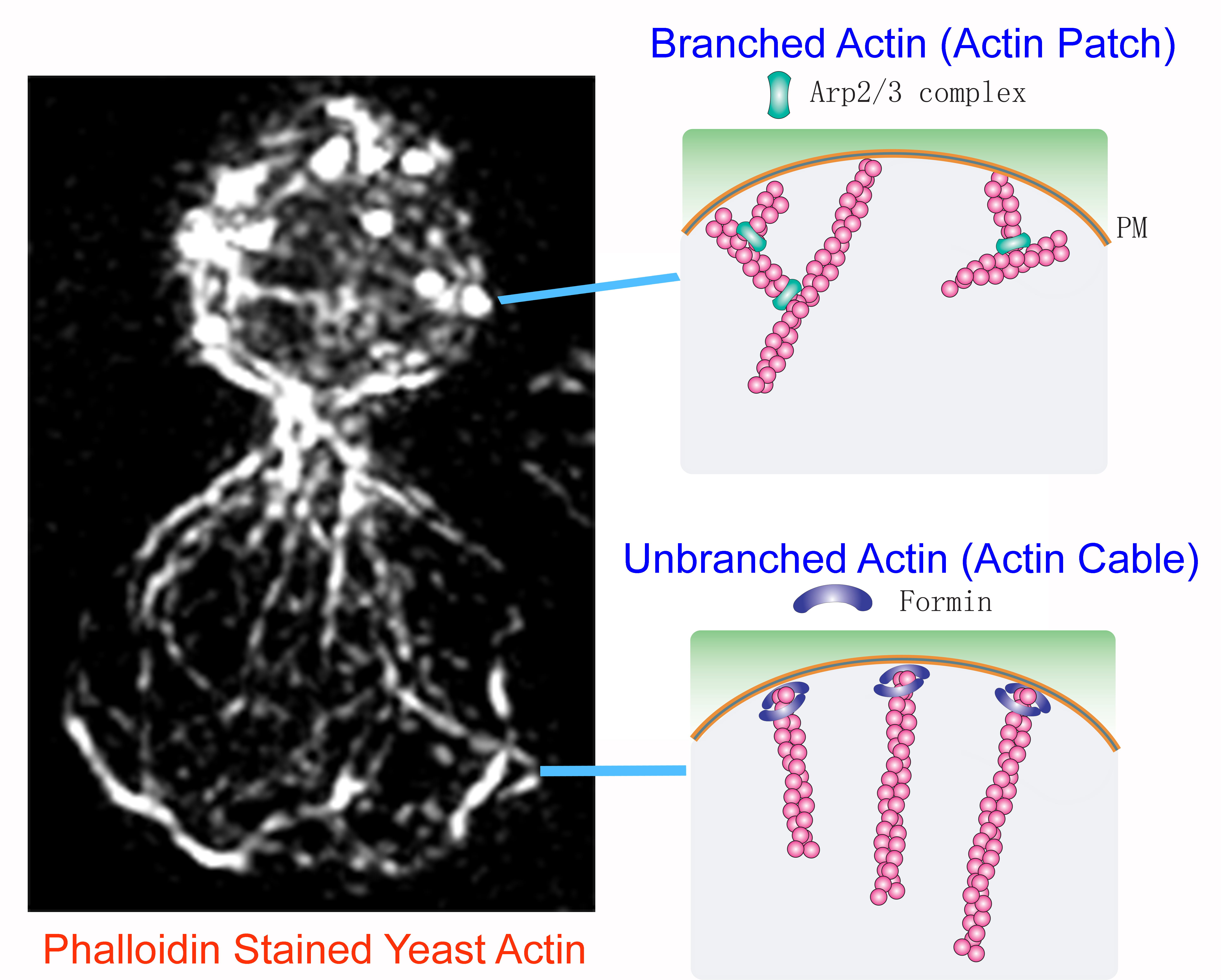
Assoc Prof Miao Yansong is an Associate Professor and Assistant Chair (Internationalization) in the School of Biological Sciences at Nanyang Technological University (NTU), Singapore. His research focuses on actin cytoskeleton dynamics, molecular condensation in cell signaling, and plant immunity. He holds a PhD from The Chinese University of Hong Kong and completed his postdoctoral training at UC Berkeley as a Human Frontier Science Program Fellow. Education: PhD (2006–2009), The Chinese University of Hong Kong Postdoc (2010–2014), UC Berkeley Awards: Nanyang Assistant Professorship (2015–2021) Singapore National Research Foundation Investigator (2023–present) His lab investigates how biomolecular condensates regulate actin assembly during plant immunity and fungal growth. Key projects include studying nanoscale plasma membrane domains in plant-pathogen interactions and applying machine learning to predict condensate formation. Recent work integrates quantum technology for sensing biological processes. Lab members include senior postdocs, graduate students, and visiting scholars from institutions worldwide. Current research also explores synthetic engineering of 'designer condensates' to enhance agricultural resilience.
Dr. Yuanyuan Li is an Assistant Professor at KTH Royal Institute of Technology, part of the Digital Futures Faculty . Her research focuses on advanced materials science, particularly in nanotechnology, sustainable biomaterials, and biomedical applications. She leads projects such as the Digital Twins of Human Neuromusculoskeletal System, aiming to revolutionize personalized medicine in neuro-rehabilitation through interdisciplinary approaches. Her work integrates cellulose-based nanomaterials , transparent wood composites, and energy harvesting systems. Notable contributions include innovations in transparent wood fabrication, nanocellulose applications, and functionalized biocomposites for medical and environmental uses. Collaborations with Stockholm University and RISE Research Institutes of Sweden highlight her cross-disciplinary engagement in addressing global challenges through digital and sustainable technologies. Dr. Li’s research spans materials synthesis , biomedical engineering , and renewable energy systems , with a focus on translating lab-scale discoveries into scalable industrial solutions. Her projects emphasize lignocellulosic materials , electrochemical devices , and bio-inspired nanocomposites .
Dr. Yasir Alfadhl is a Senior Lecturer in the School of Electronic Engineering and Computer Science at Queen Mary University of London. He holds a BEng (Hons.) and PhD, and is a Fellow of the Higher Education Academy (FHEA), member of the Institution of Engineering and Technology (MIET), and Senior Member of the IEEE (SMIEEE). As Programme Lead for the Telecommunications stream, his research focuses on electromagnetics and antennas , including computational electromagnetics, high-power microwaves, bio-electromagnetics, and dielectric characterization. His work also spans telecommunications topics like physical-layer security, cooperative radio, and radiofrequency fingerprinting for location-aware applications. His research interests include: Design of high-power microwave sources (e.g., magnetrons, backward wave oscillators) Electromagnetic exposure assessments for biomedical and communication systems Millimeter-wave and terahertz antenna systems for security and medical imaging RF security protocols and authentication methods Recent publications emphasize terahertz imaging systems, millimeter-wave antenna design, and electromagnetic field effects on biological tissues. Dr. Alfadhl collaborates on projects involving 5G beamforming networks, flexible wireless systems, and sparse array imaging techniques. His work bridges theoretical modeling (using tools like CST Studio Suite and PIC simulations) with practical applications in health monitoring, security screening, and telecommunications infrastructure.
Alessandro Leronni is a Lecturer in the Department of Mechanical Engineering at the University of Bath. His research focuses on developing mathematical models for electrochemo-mechanical systems, integrating experimental and computational approaches to advance materials science and biomedical engineering. He holds a PhD in Solid Mechanics from the University of Brescia (2021) and completed a Postdoctoral Research Associate position at the University of Cambridge (2020–2023). Key research areas include developmental bioelectricity (cell membrane voltage dynamics), lithium-ion battery mechanics (solid-state failure mechanisms), ionic electroactive polymers (actuation/sensing), aqueous corrosion (structural degradation), and cold sintering (electroceramic fabrication). His work contributes to UN Sustainable Development Goals related to affordable and clean energy (SDG7) and industry innovation (SDG9). Recent publications emphasize phase-field modeling for cold sintering of barium titanate (2025), size effects in lithium films (2024), delamination mechanisms in corrosive environments (2023–2022), and electrochemo-poromechanics of ionic polymer metal composites (2021–2020). Leronni actively collaborates with institutions globally, presenting at conferences such as the European Mechanics of Materials Conference (2024) and RAM 3: Recent Advances in Mechanics and Mathematics of Materials (2024). He is affiliated with the Centre for Integrated Materials, Processes & Structures (IMPS) and the Centre for Bioengineering & Biomedical Technologies (CBio) at the University of Bath. His research aims to bridge fundamental science with practical applications in robotics, energy storage, and regenerative medicine.
Qiang Lin is the Dean's Professor and holds dual appointments in the Department of Electrical and Computer Engineering and the Department of Optics at the Hajim School of Engineering & Applied Sciences, University of Rochester. He earned his BS and MS in applied physics from Tsinghua University (1996 and 1999) and a PhD in optics from the University of Rochester (2006). His research focuses on nanophotonic devices, quantum optics, optomechanics, and nonlinear phenomena in micro/nanostructures, with applications in chip-scale photonic signal processing. His work spans cutting-edge areas such as microcomb lasers, quantum-correlated synthetic spaces, and lithium niobate photonics. Recent articles highlight advancements in electro-optic modulators, soliton microcombs, and ultra-broadband photonics. His contributions to integrated photonics have enabled breakthroughs in optical frequency conversion, quantum communication, and high-speed sensing systems. Lin’s research bridges fundamental physics and applied technologies, with a focus on translating discoveries into practical devices. His lab develops novel photonic platforms for quantum computing, optical communication, and bio-sensing. Collaborations span academia and industry, driving innovations in nanophotonics and optomechanical systems.
Ryan Chiechi is an Associate Professor in the Department of Chemistry at North Carolina State University, affiliated with the College of Sciences. His research focuses on organic-materials chemistry, particularly the design, synthesis, and implementation of organic molecules for thin-film and interface applications. He leads interdisciplinary projects in molecular electronics, self-assembled monolayers, and unconventional nanofabrication. Education: Ph.D. in Chemistry, University of California - Los Angeles (2009) B.S. in Chemistry, University of Oregon (2001) His research explores molecular electronics , thermoelectrics , and organic photovoltaics , with a focus on optimizing charge transport and energy conversion in organic materials. Recent work highlights advancements in n-type organic semiconductors, self-assembled monolayers, and biohybrid systems like photosystem I-based devices. Publications emphasize novel nanofabrication techniques , thermoelectric material design , and stable organic electrochemical transistors . His work bridges fundamental chemistry with applications in energy and electronics, leveraging quantum mechanical effects and environmental stability studies. Dr. Chiechi collaborates across disciplines, contributing to the development of sustainable materials and bio-inspired technologies. His lab focuses on scalable, air-stable systems with applications in sensors, energy harvesting, and neuromorphic computing.