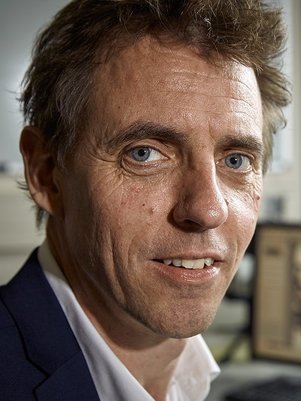
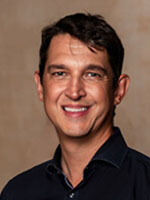
Professor Damien Coyle is a leading academic at Ulster University , holding the title of Professor of Neurotechnology and serving as Director of the Intelligent Systems Research Centre (2017-2022) and Research Director in the School of Computing, Engineering and Intelligent Systems. He also leads the Cognitive Analytics Research Laboratory (CARL) and directs Ulster’s Spatial Computing and Neurotechnology Innovation Hub (SCANi-hub) . His research focuses on AI-driven brain-computer interface (BCI) development , translating electrophysiological signals into control signals for applications in rehabilitation, diagnostics, assistive communication, and entertainment. With over 190 publications and an h-index of 31, he pioneered wearable neurotechnology through his spinout company NeuroCONCISE Ltd (founded 2016). 2008 IEEE CIS Outstanding Doctoral Dissertation Award 2011 INNS Young Investigator of the Year 2018 IET Innovation Award Over £18m in external grants Co-investigator for Northern Ireland Functional Brain Mapping Facility As a IEEE Senior Member and founder of the International Brain-Computer Interface Society , he bridges academic research with industrial applications through projects like AI for Intelligent Neurotechnology and Smart Nano-Manufacturing Corridor .
Dr. Anna Colin is Programme Director of the MFA Curating program at Goldsmiths, University of London, where she serves as a Lecturer in the Department of Art. With over twenty years of experience as a curator working both freelance and institutionally, her practice spans curatorial, pedagogical, social, and ecological fields. She has held significant positions including associate curator at Lafayette Anticipations in Paris (2014-2020), associate director of Bétonsalon – Centre for art and research in Paris (2011-2012), and curator at Gasworks, London (2007-2010). She co-curated British Art Show 8 (2015-2016) and has worked with numerous international institutions including CA2M in Madrid, Whitechapel Gallery in London, and Contemporary Image Collective in Cairo. PhD, School of Geography, University of Nottingham (2022) Permaculture Design Certificate, Permaculture Association UK (2024) Level 2 Practical Horticulture Certificate, Royal Horticultural Society (2022) MA Curating Contemporary Art, Royal College of Art (2005) BA Arts Management, London Southbank University (2003) Dr. Colin's research interests focus on the intersection of art, ecology, and alternative educational models. Her work explores how cultural practitioners can engage with human and non-human ecosystems, examining holistic and intersectional organizational models that resist chrononormativity. She investigates sustainability as a dynamic, cyclical process rather than a product-oriented goal, drawing inspiration from ecology, agroecology, and arboriculture to reconceptualize art institutions' relationship to waiting, slowness, rest, and longevity. Her current research examines regenerative artistic, curatorial, and institutional practices that serve ecosystems, with particular attention to the Black Atlantic, agricultural and digital commons, and colonialism's impact on the natural environment. Analysis of Dr. Colin's recent publications reveals a consistent thematic focus on ecological approaches to art and institutions, with increasing emphasis on practical applications of ecological principles. Her work demonstrates a clear trajectory from examining alternative educational spaces (as in her PhD research on multi-public educational and cultural spaces) toward developing concrete ecological frameworks for cultural institutions. The publications show growing integration of horticultural knowledge with curatorial practice, particularly evident in projects like 'Chaleur Humaine' and 'ĝardeno paradizo' which combine energy studies with landscape design and community engagement. Dr. Colin welcomes doctoral applicants seeking to work in cultural production at the service of ecosystems, regenerative artistic practices, alternative institutional models, and critical pedagogies. She has supervised numerous curatorial projects and community-based initiatives through Open School East, which she co-founded in 2013 as an alternative art school and community space in London and later Margate. Her collaborative approach extends to working with artists, horticulturalists, and community groups on projects that integrate art with practical ecological interventions. Dr. Colin has established several significant collaborative spaces and research groups, most notably Open School East which operated for eight years under her directorship. Her work with the Centre for Art and Ecology at Goldsmiths demonstrates her commitment to developing institutional frameworks that support ecological thinking in the arts. Current projects include 'The Ecosystemic Clock' research initiative exploring non-linear time in ecological contexts and 'ĝardeno paradizo,' a pedagogical and landscaping project in Sète, France that rehabilitates outdoor spaces to accommodate biodiversity and community needs.
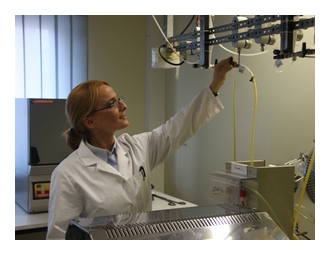
Sophie Bouchoule is a CNRS Senior Researcher (DR) affiliated with the Centre for Nanoscience and Nanostructures (C2N) at Paris-Saclay University. She serves as deputy director of the doctoral school EOBE (Electrical, Optical, and Bio-Engineering) and coordinates the C2N-RENATECH Micro-Nano Fabrication Facility since 2018. Her career spans high-speed semiconductor lasers, polariton lasers, and III-V optoelectronic device development. Her research focuses on III-V semiconductor integrated light sources (ELISE group), including vertical-cavity surface-emitting lasers (VCSELs), polariton lasers, and micro-nanophotonic technologies. She specializes in inductively coupled plasma etching, quantum dash active regions, and hybrid semiconductor-organic microcavities. Recent publications highlight her work on polariton condensation, tunable VCSELs, and microcavity engineering. Her collaborations span institutions like Institut Pascal, CRHEA, and LASMEA. She has secured industrial R&D contracts and held leadership roles in cleanroom facilities and scientific advising. With over 130 peer-reviewed articles and 25+ invited conference talks, her contributions to photonics and optoelectronics are extensive. She mentors doctoral students through EOBE and drives advancements in micro-nano fabrication methodologies.
Leman Figen Gül is a Professor at the Department of Architecture , Istanbul Technical University 's Faculty of Architecture. She also serves as Head of the Game and Interaction Technologies Program and Coordinator of the Graduate Informatics in Architectural Design Program. Her academic career spans institutions like Newcastle University, University of Sydney, International University of Sarajevo, TOBB University of Economics and Technology, and MacQuarie University. PhD (2007) - University of Sydney, thesis: "Understanding Collaborative Design in Different Environments: Comparing Face-to-Face Sketching to Remote Sketching and 3D Virtual Worlds" Master's (2003) - University of Sydney, Digital Media Program Master's (1996) - Mimar Sinan University, Urban Conservation Program Licence (1993) - Mimar Sinan Fine Arts University, Department of Architecture Her research explores intersections between architecture, technology, and cognition, focusing on collaborative design , virtual/augmented reality , and AI integration in architectural education . Current projects investigate AI-driven co-design interfaces, gamification of cultural heritage, and material innovation in design pedagogy. Recent publications highlight trends in design technology and empathy in architecture . Her work combines theoretical inquiry with practical implementations in digital fabrication and immersive environments. Scientific Awards Academic Performance Award (ITU, 2024) Academic Performance Award (ITU, 2022) QHT Prize 3rd & People's Prize 2nd (University of Westminster, 2017) As principal investigator, she directs projects funded by TÜBİTAK and BAP , including AI collaboration systems and mixed reality heritage interpretation. She leads the Kumio Lab and participates in EU Horizon Project evaluations.
Dr. Hongyan Ma is a Kummer Impact Professor, Francisco Benavides Scholar, and Associate Professor at Missouri University of Science and Technology (Missouri S&T). She joined Missouri S&T in 2015 as an Assistant Professor and was promoted to tenured Associate Professor in 2021. Currently directing the Lab of Future Cements and Carbon-negative Initiatives (FuCCI) , Dr. Ma leads research funded by NSF, DOE, DOD, and industry. Her work spans future cements , CO2 mineralization , and critical minerals recovery , with affiliations across multiple departments. Education: Ph.D. in Civil Engineering, The Hong Kong University of Science and Technology, 2013 M.Eng. in Structural Engineering, Shenzhen University, 2008 B.Law. and B.Eng. in Inorganic Non-metallic Materials Engineering, Chongqing University, 2005 Research Interests: Dr. Ma’s work addresses carbon-negative construction materials , focusing on future cements (efficiency strategies, alternative binders), solid waste upcycling , CO2 capture/utilization , thermal energy storage , and nano-biological technologies . Her lab employs advanced materials characterization and multi-scale modeling to enhance concrete durability and develop carbon-negative recovery of critical metals (Ni, Co, Li, Cu). Research Trends: Her recent publications emphasize carbon mineralization , steel slag upcycling , and multi-scale transport modeling , reflecting a strong focus on sustainable construction and industrial waste valorization . Key areas include CO2 sequestration , phosphate cement synthesis , and seawater-resistant concrete . Scientific Awards & Recognitions: Kummer Impact Professorship (2024) Francisco Benavides Scholar (2022) Faculty Excellence Awards (2023, 2020) Top 2% Scientists in 'Building & Construction' (2020–2022) Game Changer Academies Panel Fellow, NSF (2022) Grants & Leadership: Dr. Ma’s research is supported by National Science Foundation , Department of Energy , Department of Defense , and private foundations. She serves on editorial boards, evaluates grants internationally, and leads the FuCCI Lab , integrating multi-disciplinary teams for carbon-negative innovation.
T M Indra Mahlia , a Distinguished Professor at the School of Civil and Environmental Engineering , University of Technology Sydney (UTS), leads cutting-edge research in sustainable energy systems and environmental engineering. As a core member of the Centre for Technology in Water and Wastewater and the Centre for Advanced Modelling and Geospatial Information Systems , he bridges engineering innovation with practical climate solutions. PhD from University of Malaya (Kuala Lumpur, Malaysia) Fluency in English, Indonesian, Malay, and Achinese for peer review His research spans Techno-Economic Analysis , Circular Economy , and Water-Energy Nexus challenges, supported by over $5 million in grants. His work focuses on: Hydrogen energy systems optimization Advanced materials for energy storage Low-cost water purification technologies Sustainable biodiesel production Thermal management innovations As a Highly Cited Researcher (Clarivate Analytics, 2017-2022) and The Australian 's 2019/2025 Sustainable Energy Leader , he mentors future researchers - notably guiding two Highly Cited PhD students ( H.C. Ong and A.S. Silitonga ). His publications across 2024-2026 demonstrate technical advancements in: Hydrogen carrier systems Microalgae-derived lubricants High-entropy alloy corrosion resistance Artificial neural network optimization Phase change material thermal sinks Biohydrogen production pathways
Prof. Dr. Henk Jonkers is a leading researcher at Delft University of Technology's Faculty of Civil Engineering and Geosciences , serving as Professor of Bio-adapted and Sustainable Building Materials since 2021 and Departmental Director for Materials, Mechanics, Management & Design since 2024. Education: PhD in Marine Microbiology (University of Groningen, 1999) MSc in Marine Biology (University of Groningen, 1989) His research pioneers bio-adapted building materials that integrate living organisms to enhance structural performance and sustainability. Key innovations include bacteria-based self-healing concrete and moss-receptive concrete , reducing environmental impact through nature-based solutions in urban environments. Research themes encompass: Circular building methods Biodegradation mechanisms Climate-resilient infrastructure Human wellbeing in urban ecosystems Scientific contributions include: Nomination for European Inventor Award 2015 Co-inventor of patented self-healing bioconcrete technology Educational leadership includes: CT3602 - Analysis of materials, energy, and water flows CIE4100 - Materials and Ecological Engineering CTB1320 - Construction Materials and Sustainability He also provides scientific advisory services to startups like Basilisk Self Healing Concrete and Respyre.
Danielle Wilde is a Professor at the University of Southern Denmark (SDU) within the Department of Business and Sustainability , IEB Esbjerg , and SDU Climate Cluster . She serves as an Adjunct Professor at RMIT University and contributes to the EU COST Action 16229 as a Committee Member for Denmark. Her work bridges participatory design with ecological and social sustainability, focusing on wicked problems through bottom-up stakeholder engagement. PhD in Design from Monash University (2012) MA in Design Interaction from Royal College of Art (2003) Her research explores human-microbiome relations , more-than-human design , and food system transformation , particularly through living labs . Recent projects like SCC Elite Centre for Post-Anthropocentric Climate Action and SDU Food Cluster highlight her interdisciplinary approach. She received the SCC Fast track award (2025) for her climate action work. Key article trends include participatory methodologies for ecological data , experimental approaches to microbiome engagement , and design fiction for food futures . Her work often intersects with wearable technology , decollaborative practices , and environmental citizenship frameworks . Scientific Awards SCC Fast track award (2025) She contributes to teaching courses like Exploring Design , Multi-stakeholder Innovation , and Design Specialisation B , with previous supervision of Master’s thesis projects. Current collaborations span climate action , food system innovation , and bio-digital interaction across European institutions.
Rudina Bleta is an Associate Professor at the University of Artois , specializing in the synthesis of nanostructured porous materials via soft chemistry routes. Her research focuses on heterogeneous catalysis for environmental and energy applications. Education : B.Sc. in Physical-Chemistry, University of Bordeaux (2002) M.Sc. in Materials Chemistry, University of Bordeaux (2004) Ph.D. in Molecular Physical-Chemistry, University of Nancy (2007) Research Interests encompass cyclodextrin-based supramolecular assemblies for designing functional materials, with applications in air purification, corrosion inhibition, and sustainable energy. She has contributed to heterogeneous catalysts for biodiesel production, VOC degradation, and biomass conversion. Recent Publications highlight her expertise in cyclodextrin-templated mesoporous materials, enzymatic nanoreactors, and photocatalytic systems for pollutant removal. Key trends include tailoring pore structures, integrating biomolecules into inorganic matrices, and optimizing catalytic performance through nanostructuring. Labs & Teams : Affiliated with the Supramolecular Catalysis Team at UCCS Artois, collaborating with institutions like CNRS and Université Paul Sabatier Toulouse III on aerospace and environmental projects.
Ahmed Aboelezz is an Assistant Professor of Mechanical Engineering at the University of Maine , affiliated with the College of Engineering . He holds a Ph.D. in Mechanical Engineering from New Mexico Institute of Mining and Technology (2024) and a Ph.D. in Aerospace Engineering from Cairo University (2023). His research focuses on UAVs, wind energy systems, and bio-inspired design. Education: Ph.D. in Mechanical Engineering (2024), New Mexico Institute of Mining and Technology Ph.D. in Aerospace Engineering (2023), Cairo University Research Interests span applied aerodynamics, UAV flight dynamics and control, wind energy optimization, and bio-inspired engineering. His work combines computational and experimental methods to address challenges in harsh environments. Publication Trends reveal expertise in UAV propulsion systems for coal mines Wind turbine flow control Bio-inspired wing pattern analysis Low-speed wind tunnel optimization with interdisciplinary applications in energy and robotics. Professional Memberships: American Society of Mechanical Engineers (ASME) American Institute of Aeronautics and Astronautics (AIAA) Maine College of Engineering and Computing Journal Reviewer: Drones Journal The Aeronautical Journal Labs & Teams: He leads the AeroSystems Dynamics Lab (ADL) , conducting research on UAVs, wind energy systems, and bio-inspired design principles.
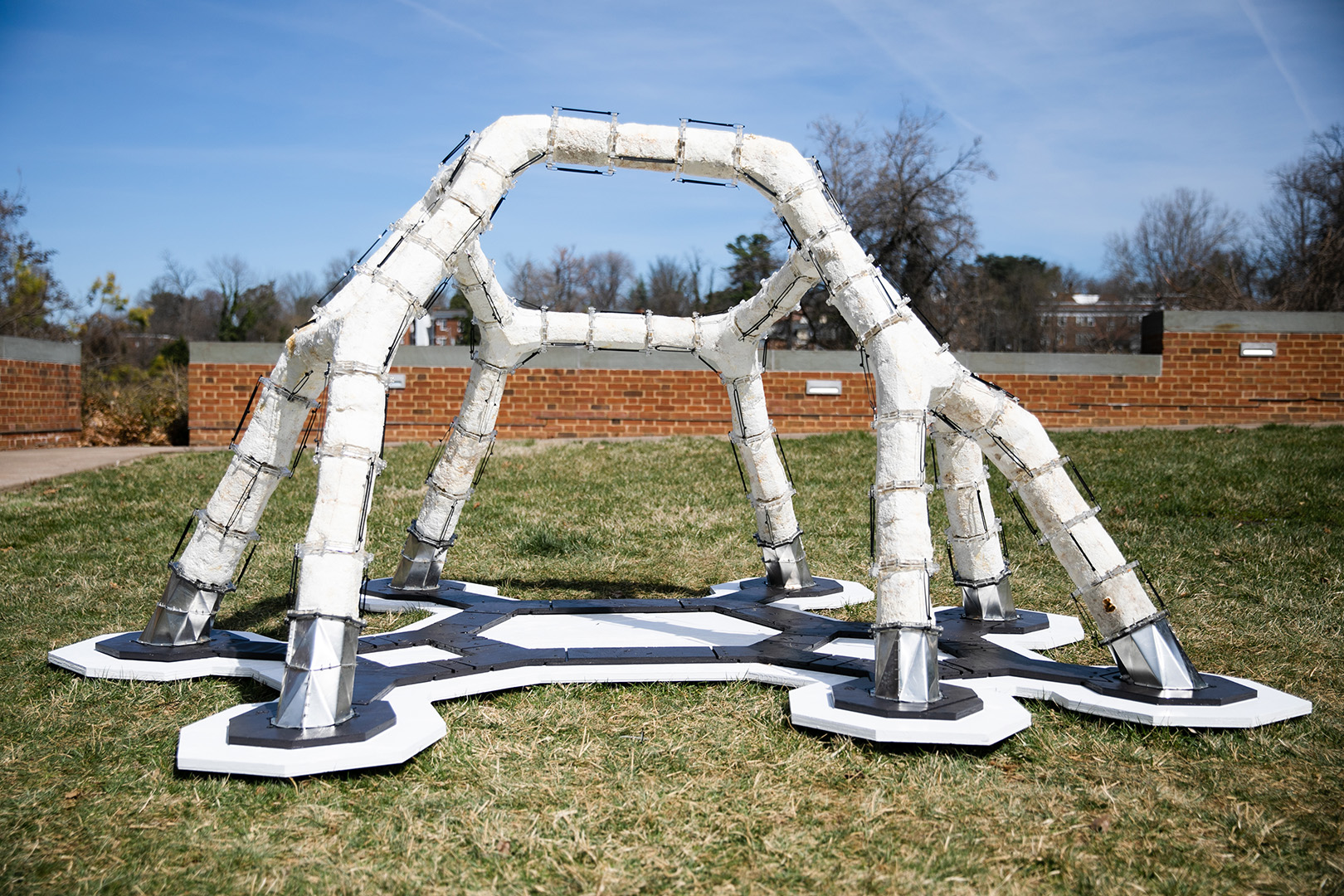
Ali Ghazvinian is an Assistant Professor of Architecture at Texas Tech University's Huckabee College of Architecture, specializing in Advanced Building Technology and Design. He holds a Ph.D. in Architecture from Penn State University, an M.S. in Architecture from the University of Tehran, and a B.S. in Civil Engineering from the University of Tehran. Education: Ph.D., Architecture, Penn State University M.S., Architecture, University of Tehran B.S., Civil Engineering, University of Tehran His research investigates the interplay of form, matter, and performance in architecture through sustainable materials innovation. Focusing on mycelium-based composites and lightweight structures, he develops novel fabrication techniques that integrate biological processes with architectural design. His work bridges material science, computational design, and structural engineering to advance eco-friendly construction solutions. Recent publications (2019-2024) demonstrate consistent innovation in mycelium composites, covering material properties, structural implementations, and sustainable fabrication. Key contributions include load-bearing spatial structures, reclamation of waste materials, and computational design frameworks that optimize bio-composite performance. Scientific Awards: AIA Upjohn Research Initiative SOM Foundation Prize Distinguished Doctoral Researcher Medal at Penn State University Dr. Ghazvinian has secured competitive research grants including the AIA Upjohn Research Initiative and SOM Foundation Prize. His interdisciplinary collaborations with biologists, material scientists, and engineers have produced exhibited works like the Biomaterial Building Expo (University of Virginia, 2022) and publications in the Journal of Architectural Education and Journal of Green Building. His research utilizes Texas Tech's Digital Fabrication Lab and focuses on advancing mycelium composite applications through bio-welding, additive manufacturing, and structural testing, positioning him at the forefront of sustainable architectural material innovation.
Vincenzo Maria Sglavo is a Full Professor of Materials Science and Technology at the Department of Industrial Engineering , University of Trento , Italy. He coordinates the Doctoral Program in Industrial Innovation (M.D. 45/2013) and has held academic appointments at The Pennsylvania State University (Postdoctoral Fellow, 1993-1994) and as Adjunct Professor there (2001). His career spans over three decades, including roles as Assistant Professor (1989-1999) and Associate Professor (1999-2018) at the University of Trento. Education: Master’s in Materials Engineering (cum laude), University of Trento (1988) Research Interests focus on glasses and ceramics , with expertise in fatigue and fracture mechanics , chemical strengthening , high-strength ceramics , flash and cold sintering , solid oxide fuel cells (SOFC/SOEC), and 3D printing of inorganics . His work bridges fundamental material behavior and industrial applications, particularly in energy, construction, and biomedical fields. Recent publications highlight innovations in ultrafast high-temperature sintering for ceramics, 3D-printed alumina , alkali-activated limestone for construction, and plasma-assisted ammonia synthesis . He explores entropy-stabilized composites, glass joining techniques, and iron speciation effects in aluminosilicates. Scientific Awards include the AIMAT Prize (1996) AIAS Prize (2000) Outstanding Reviewer Award, Scripta Materialia (2019) Pfeil Award (2022) Nanomaterials 2023 Best Paper (Second Award) Fellow, European Ceramic Society (2023) Advising and Grants: He has advised 34 PhD students and over 100 Master’s theses , managing 50+ research projects funded by NATO, the EU, MUR, and private companies. His editorial roles include Associate Editor for the Journal of the American Ceramic Society and Frontiers in Ceramics . Labs and Teams: He collaborates with institutions like the Joint Research Centre (EC) , Universidade de San Carlos , and Instituto de Cerámica y Vidrio . His work integrates academic research with industrial consultancy, addressing technical challenges in ceramics, glass, and sustainable materials.
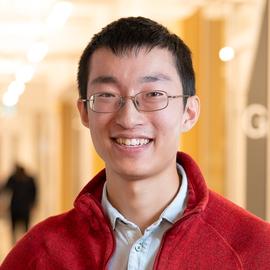
Alex Tong is an incoming Assistant Professor at Duke University (as of 2025) and will join Aithyra in Vienna as a Principal Investigator. Previously, he completed postdoctoral research at Mila under Yoshua Bengio and a visiting postdoc at Oxford with Michael Bronstein. Education : PhD (2021) and MPhil (2020) in Computer Science from Yale University; BS/MS (2017) from Tufts University Research Interests span generative modeling , deep learning , optimal transport , and graph signal processing applied to protein design and single-cell biology . His work bridges mathematical formalism (e.g., SE(3) flows, Wasserstein manifolds) with biological discovery. Publication Trends (2023-2025) focus on diffusion models for protein structure prediction , optimal transport in single-cell analysis , and geometric machine learning for molecular dynamics . Collaborations include labs like Mila, Oxford, and Yale. Awards : Best Paper (Gen Bio @ ICML 2025), Outstanding Paper (DELTA @ ICLR 2025), Best Student Paper (IEEE MLSP 2020)
Matthew Fricke is a Research Associate Professor in the Department of Computer Science at the University of New Mexico, School of Engineering. He is affiliated with the Center for Advanced Research Computing (CARC), the Moses Biological Computation Lab, and the Lab for Agnostic Biosignatures, and contributes to the Interdisciplinary Working Group on Algorithmic Justice. His work bridges computer science, biology, and environmental science through computational modeling and robotics. His educational background includes a PhD and MS in Computer Science, a BS in Mathematics, all from the University of New Mexico, and a BA in Anthropology from Appalachian State University. Fricke's research centers on distributed complex systems, including computational biology (e.g., T cell and ant foraging dynamics), swarm robotics for planetary exploration and volcano surveys, high-performance computing, machine learning for climate modeling, and biosignature detection. He applies principles from biological systems to design efficient algorithms for robotic swarms and supercomputing environments. His recent publications (2020–2025) reveal a strong trend in applying machine learning and swarm robotics to Earth and space sciences, particularly in autonomous UAV-based environmental monitoring of volcanoes and climate systems. His work increasingly integrates causal discovery, field robotics, and interdisciplinary collaboration. He has mentored multiple PhD students, including Jannatul Ferdous, John Ericksen, Jake Nichol, and Humayra Tasnim, whose dissertations reflect his research themes. He has also secured research support through student-led projects in NASA robotics challenges and HPC competitions. Fricke teaches courses such as High Performance Computing, Swarm Robotics, and Complex Adaptive Systems, and leads workshops on SLURM, MPI, and scientific computing. He is actively involved in student mentorship and interdisciplinary research collaboration. His research labs include the Moses Biological Computation Lab and the Lab for Agnostic Biosignatures, where teams work on bio-inspired robotics, immune modeling, and planetary exploration technologies.
Dr. Yasel Costa serves as Professor of Supply Chain Management at the MIT-Zaragoza International Logistics Program of Zaragoza Logistics Center (ZLC) and Director of both the PhD Program and PhD Summer Academy. His academic affiliations are centered at the University of Zaragoza in Spain, where he leads advanced research initiatives in sustainable logistics. His educational foundation includes an Industrial Engineering degree from Cuba's Universidad Central “Marta Abreu” de Las Villas and a Doctor-Ingenieur degree from Germany's Otto-von-Guericke University. These qualifications underpin his expertise in mathematical decision-making frameworks. Dr. Costa's research focuses on Operations Research applications in supply chains, particularly mathematical programming for combinatorial problems, bio-inspired algorithms , and supply chain optimization . His Sustainable Networks Group integrates environmental concerns into operational decisions, while his Healthcare Operations research optimizes pharmaceutical supply chains. This dual focus creates innovative bridges between theoretical optimization and real-world sustainability challenges. Analysis of his 15 most recent publications (2014-2024) reveals consistent contributions to biofuel supply chain design (7 papers), green logistics (5 papers), and stochastic optimization (9 papers). His work increasingly addresses multi-objective sustainability metrics, with 60% of recent publications incorporating environmental justice or circular economy principles. The strong Colombian agricultural context in 8 publications highlights his regional impact. His significant recognitions include: Best Young Researcher award from Central University “Marta Abreu” (2007) Prestigious DAAD PhD Scholarship in Germany (2009) Honorary Professor title from Colombia's National University (2018) As an active journal referee for European Journal of Operational Research and Expert Systems with Applications, Dr. Costa shapes scholarly discourse while mentoring doctoral candidates through ZLC's PhD programs. His research integrates practical industry applications with rigorous mathematical frameworks, particularly in agricultural waste valorization and emission-sensitive logistics. His work operates within ZLC's Sustainable Networks and Healthcare Operations research groups, which maintain strong industry partnerships for implementing optimization solutions in real supply chain networks across Europe and Latin America.


.jpg)