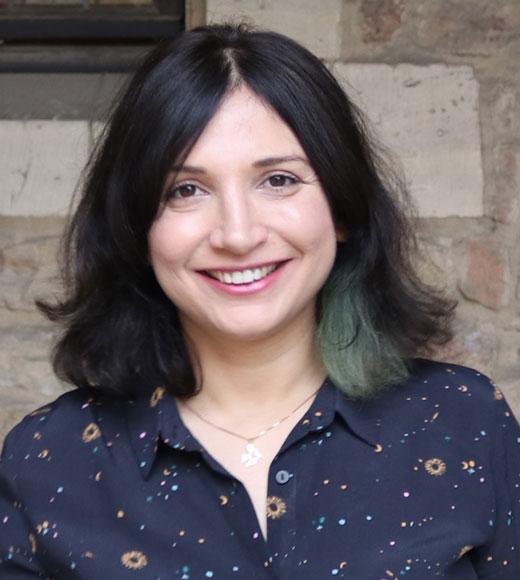
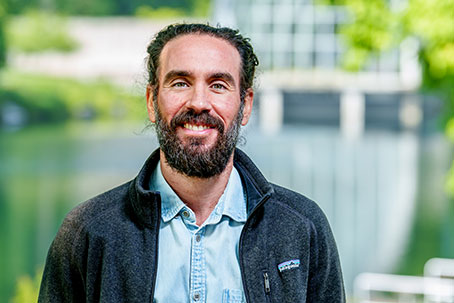
Kirstin Petersen is an Associate Professor in the Department of Information Science at Cornell University's Bowers College of Computing and Information Science. She leads the Collective Embodied Intelligence Lab, focusing on collective robotic systems that exhibit emergent intelligent behaviors through local interactions. Her research interests center on collective robotic construction, swarm robotics, soft robotics, and human-robot interaction. Petersen's work explores how groups of simple robots can collaborate to build complex structures, with applications ranging from construction to agriculture. She investigates the principles of embodied intelligence, where the physical form and environment of robots contribute to their capabilities, reducing the need for complex centralized control. Her publication trends show a consistent focus on distributed robotic systems, with recent work expanding into agricultural robotics, human-drone interaction, and novel actuation methods using phase-changing materials. Her research bridges theoretical principles of collective behavior with practical implementations in soft and modular robotic systems. Petersen has advised numerous graduate students who have become prominent researchers in robotics, including Steven Ceron, Nialah Wilson-Small, and Jiahe Chen. Her lab has secured funding for projects related to swarm construction, agricultural monitoring, and soft robotic systems. She leads the Collective Embodied Intelligence Lab at Cornell, which brings together researchers from computer science, mechanical engineering, and biology to develop novel approaches to collective robotic systems. The lab emphasizes both theoretical foundations and practical implementations, with projects ranging from tiny modular robots to agricultural drones.
Professor Daniel Söderberg is affiliated with KTH Royal Institute of Technology, where he holds the position of Professor of processes from fibre-based materials from forest raw materials. His research focuses on understanding natural material formation processes, particularly using cellulose nanofibrils as building blocks, to develop scalable industrial methods for creating high-performance bio-based materials. He employs advanced experimental techniques such as synchrotron X-ray imaging and neutron scattering to study material behavior at the nanoscale, contributing to sustainable, renewable material innovations. His research interests revolve around the development of bio-based materials and industrial processes inspired by natural mechanisms. Key areas include: Nanofibril assembly and self-organization in fluid systems Cellulose nanofibril-based composites and thin films Scalable production of high-performance bio-based materials Advanced characterization techniques (e.g., synchrotron X-ray imaging, neutron scattering) Material dynamics under various environmental conditions (e.g., humidity, compression) Integration of renewable materials into electronic and structural applications Recent research trends emphasize the application of machine learning for analyzing material dynamics, optimization of spray deposition techniques for scalable production, and exploration of lignin and cellulose nanocomposites for renewable materials. Collaborations with facilities like the MAX IV synchrotron highlight his focus on advanced imaging and structural analysis for material innovation. In advising and grants, Dr. Söderberg has contributed to research projects involving pilot-scale manufacturing processes and collaborations with advanced facilities like the MAX IV synchrotron. While specific student names or detailed grant information are not provided here, his work reflects a strong emphasis on team-based research in nanomaterials and sustainable technologies. He is also involved in academic ceremonies at KTH, including the 2021 Professorial Inauguration. Dr. Söderberg collaborates with the ForMAX beamline at MAX IV synchrotron in Lund, focusing on multiscale structural characterization of hierarchical materials. His research also involves the pilot-scale Experimental Paper Machine (XPM) for material production studies, examining fire retardant composites and nanopaper fabrication.
Kamaljit Singh is an Associate Professor at the Institute for GeoEnergy Engineering (IGE) within the School of Energy, Geoscience, Infrastructure and Society at Heriot-Watt University in Edinburgh, UK. He has held this position since 2021, after serving as an Assistant Professor at the same institution from 2019 to 2021. Prior to joining Heriot-Watt, he held research positions at Imperial College London, the European Synchrotron Radiation Facility in France, and the Max-Planck Institute in Germany. His research employs advanced imaging techniques to study fluid dynamics in porous media with applications to energy storage and environmental challenges. Dr. Singh's educational background includes: PhD in Civil Engineering from the University of New South Wales at Australian Defence Force Academy, Australia (2004-2009) M.E. in Environmental Engineering from Punjab Engineering College/Panjab University, India (2000-2002) B.E. in Civil Engineering from GNE/Punjab Technical University, India (1996-2000) His primary research focuses on 3D imaging of fluid flow in permeable media using both in-house and synchrotron X-ray micro-CT. His current projects investigate H 2 and CO 2 storage in subsurface rocks, pore-to-core scale fluid displacement dynamics, wettability effects on multiphase flow, multi-scale rock characterization, and thermoregulation in termite nests for bio-inspired building design. Dr. Singh's work directly contributes to UN Sustainable Development Goals related to clean energy and climate action, with his research group ( https://digiporflow.site.hw.ac.uk ) advancing digital imaging techniques for porous flow systems. Analysis of Dr. Singh's recent publications (2024-2025) reveals a strong emphasis on hydrogen storage mechanics in geological formations, particularly examining permeability evolution and deformation in sandstones under cyclic loading. His work also maintains significant focus on CO 2 sequestration in carbonate reservoirs and has produced notable interdisciplinary research on termite nest ventilation as a model for sustainable building design. His methodological approach consistently integrates advanced imaging techniques with computational modeling to address energy transition challenges. Dr. Singh serves as Global Course Leader for Reservoir Engineering (MSc) and teaches Introduction to Petroleum Engineering (undergraduate). His research has received considerable media attention, including coverage in The New York Times, The Straits Times, and Süddeutsche Zeitung for his work on bio-inspired ventilation systems. With 41 research publications, 4 datasets, and 7 invited talks, he maintains an active research program focused on solving critical challenges in subsurface energy storage and sustainable engineering.
Dr. Camli Badrya is an Assistant Professor in the Department of Mechanical and Aerospace Engineering at the University of California, Davis. Her research focuses on computational and experimental aerodynamics, particularly in rotary and fixed-wing aircraft design, unsteady flow analysis, turbulent modeling, and flow control systems. She leads the Davis Applied Aerodynamic Lab (DAAL), which aims to improve aviation efficiency and sustainability through innovations in laminar flow control and multidisciplinary design optimization. Education: B.Sc. in Aerospace Engineering, Technion, Israel M.Sc. and Ph.D. in Aerospace Engineering, University of Maryland, College Park (UMD), USA Research Interests: Hybrid laminar flow control (HLFC) systems for transport aircraft Aerostructural optimization of wings for hydrogen and electric aircraft Bio-inspired flight mechanics and low Reynolds number aerodynamics Wind tunnel testing of advanced flow control concepts Her work emphasizes energy-efficient aviation solutions, including boundary layer suction systems and transonic wing design. She has pioneered research on laminar flow control integration and has validated suction panel performance through large-scale experiments. Awards: Fulbright Scholarship (2011) Amelia Earhart Fellowship Award (2015) Lab Activities: DAAL collaborates on projects like the CITRIS Aviation Prize Design Contest and NCAS Fuels initiatives to advance sustainable aerospace technologies. Current research includes suction system design for subsonic aircraft and multidisciplinary optimization of regional electric aircraft wings.
Prof. Bettar Ould el Moctar is a Full Professor for Ship Technology and Ocean Engineering at the University of Duisburg-Essen, Germany, where he has served as Head of the Institute of Sustainable and Autonomous Maritime Systems (INAM) since 2008. He also directs the Model Basin: Development Centre for Ship Technology and Transport Systems (DST) in Duisburg. His academic career spans naval architecture, ocean engineering, and computational fluid dynamics with extensive industry experience in maritime technology. Prof. el Moctar earned his Graduate Engineer Degree in Naval Architecture & Ocean Engineering from the University of Hamburg (1990-1997), followed by a PhD in Computational Fluid Dynamics from the Hamburg University of Technology (1997-2001). His doctoral research focused on "Numerical Computation of Flow Induced Forces Acting on Manoeuvring Ships." Prof. el Moctar's research spans ship technology, ocean engineering, computational fluid dynamics, cavitation, hydrodynamics, and hydroelasticity. His work addresses critical challenges in maritime systems including wave-structure interactions, fluid-structure dynamics, cavitation control, and energy harvesting from marine environments. He has pioneered research in computational methods for seakeeping problems and developed innovative approaches for analyzing wave-induced loads and hydroelasticity effects. His extensive publication record demonstrates significant contributions across fluid dynamics, ship technology, and ocean engineering. Recent work shows a strong focus on cavitation phenomena, energy harvesting from marine environments, hydroelasticity of floating structures, and advanced computational methods. His research integrates experimental, numerical, and data-driven approaches to solve complex maritime engineering challenges. Georg Weinblum-Award (for dissertation, 2001) Landrini Award (for research activities, 2005) Prof. el Moctar has served as Editor in Chief of the Journal of Ship Technology Research and holds editorial positions with several prominent journals. His professional activities include membership on numerous advisory boards including the German Research Ships "Meteor" and "Merian," the German Academic Exchange Service (DAAD), and the Federal Ministry for Economic Affairs and Climate Action. He previously held leadership positions at Germanischer Lloyd AG and DNV GL SE before his academic appointment. As Director of INAM and the Model Basin DST, Prof. el Moctar oversees advanced research facilities for maritime technology development. His institute conducts cutting-edge research in sustainable and autonomous maritime systems, with capabilities in computational modeling, experimental testing, and technology transfer to industry partners.
Professor Holger G Krapp is a Professor of Systems Neuroscience in the Department of Bioengineering at Imperial College London's Faculty of Engineering. He holds affiliations with the Centre for Neurotechnology, Neuromuscular Rehabilitation Technology Network, and Robotics Forum. His research focuses on sensorimotor control mechanisms in insects, particularly blowflies, integrating neurobiology with engineering principles. Key areas include visual processing, flight dynamics, and biohybrid robotics. Education: Earned a Diploma in Biology (Neurobiology) from the University of Tübingen (1992) and a Dr. rer. nat. (PhD) from the Max-Planck Institute for Biological Cybernetics (1995). Postdoctoral research included work at Caltech and Bielefeld University before joining Imperial College as a Senior Lecturer in 2005. Research interests emphasize how insects process visual and sensory information to control movement, with applications in robotics and neurotechnology. Recent work explores optic flow processing, closed-loop control systems, and biohybrid interfaces for real-time behavioral analysis. His publications highlight innovative methodologies like high-speed X-ray imaging and neural recording platforms to study flight motor mechanics and neurophysiological responses. Publications span 25+ years, demonstrating sustained contribution to understanding multisensory integration, neuronal adaptation, and energy-efficient neural coding. Active in interdisciplinary collaboration, his work bridges neuroscience, engineering, and robotics to advance biomimetic technologies and biological system analysis.
Lars Bååth is a Senior Professor at Halmstad University's School of Business, Innovation and Sustainability. His research focuses on optical measurement systems, surface metrology, microwave technology, and wind turbine acoustics. He has contributed to advancements in functional surfaces, turbine noise reduction, and industrial process control through 50+ peer-reviewed publications and patents. His work bridges engineering and environmental science, addressing challenges in manufacturing, energy systems, and material characterization. Key research areas include interferometric techniques for surface analysis, robotic polishing automation, and microwave-based measurement systems for industrial applications. Bååth has pioneered technologies for wind turbine noise propagation modeling and material defect detection, with applications in automotive, forestry, and metallurgical industries. His patents include innovations in contactless level detection and substance analysis in containers, reflecting his commitment to solving practical industrial challenges. Bååth collaborates extensively with industry partners, emphasizing technology transfer and real-world implementation of academic research.
Professor Mark Thompson is a distinguished academic in the Department of Mechanical & Aerospace Engineering at Monash University, Faculty of Engineering. He holds the rank of Professor and has been a key figure in fluid dynamics research and academic leadership since joining Monash in 1995. He previously worked at CSIRO for ten years and earned his PhD from Monash in 1985. He has served as Associate Dean of Research Training (2003–2007) and Head of Department (2008–2011). Research interests include theoretical, computational, and experimental fluid dynamics, with focus on flow stability, transition to turbulence, bluff body flows, wake dynamics, flow-induced vibration, aeroacoustics, and applications in bioengineering, turbomachinery, vehicle aerodynamics, and sports. His work contributes to sustainable engineering and aligns with UN Sustainable Development Goals. The recent publications highlight a consistent focus on complex fluid-structure interactions, bluff body aerodynamics, and computational/experimental modeling. Key themes include wake transitions, vortex instabilities, flow control via afterbody design, and environmental and industrial applications such as wind comfort and heat transfer. His research combines high-fidelity simulations with wind tunnel and water channel experiments. Scientific awards: Faculty Research Award (2015) Fellow of the Australasian Fluid Mechanics Society (2018) Advising and grants: Professor Thompson is currently accepting PhD students and has supervised numerous research projects. He has led multiple externally funded research initiatives, including ARC-funded projects on flapping aerodynamics and fluid-structure interactions. His consulting experience includes collaborations with AMIRA, CRA, and Ford Europe. He has also contributed to editorial boards of the International Journal of Fluid Dynamics and an Elsevier journal. Labs and teams: He is a core member of a multidisciplinary research group at Monash focusing on fluid dynamics, collaborating closely with Professors Hourigan, Sheridan, and Lo Jacono. The team operates advanced experimental facilities including wind tunnels and water channels, and develops custom CFD codes for simulating complex flows.
David J. Willis is an Associate Professor in the Department of Mechanical and Industrial Engineering at the Francis College of Engineering, University of Massachusetts Lowell. His research spans computational and experimental aerodynamics, renewable energy systems, and engineering education innovation. Education: Ph.D. in Aeronautics and Astronautics, Massachusetts Institute of Technology (2006) S.M. in Aeronautics and Astronautics, Massachusetts Institute of Technology (2003) B.Eng. in Aerospace, Carleton University (2000) Research Focus: Dr. Willis develops advanced computational models for aerodynamic phenomena including biologically-inspired flight and wind energy systems. His experimental work investigates fluid-structure interactions and material properties for aerospace applications. In engineering education, he creates hands-on learning frameworks to enhance STEM pedagogy and manufacturing instruction. Publication Trends: Recent work (2023-2024) focuses on experimental characterization of parachute materials and aeroacoustic structural monitoring. Earlier publications established computational methods for unsteady flows, flapping flight energetics, and educational technology. His work consistently bridges theoretical modeling with experimental validation across aerospace and renewable energy domains. Sponsored Research: ENG-ED 4.0: Educating Next-Gen Engineers (Davis Educational Foundation) Collaborative Research: Leading Edge Vortex Evolution (NSF) UML-WIND 2016 Collegiate Wind Competition (NREL) Wind Energy Research Workshop (NSF) Hands-on MADE 4 ME (NSF)
Professor Tim Finnigan is a faculty member and Head of School in the School of Engineering at the University of Tasmania. He is actively involved in research, supervision, and academic leadership, with a focus on renewable energy and sustainability. His work is supported by ongoing grants and collaborations in green hydrogen and wave energy technologies. Education: PhD in Environmental Engineering, University of Western Australia (1996–1999) MASc in Civil Engineering, University of British Columbia (1992–1994) BASc in Engineering Physics, University of British Columbia (1986–1991) His research interests span renewable energy, hydrogen technologies, electricity markets, wave and tidal energy, fluid mechanics, and sustainable engineering. He applies principles from physical oceanography and mechanical design to develop practical energy solutions, particularly for remote communities. The recent publications reflect a strong trend in ocean-based renewable energy, especially wave and tidal systems, with focus on hydrodynamics, control strategies, and biomimetic designs. His work integrates experimental, computational, and field-based approaches to improve energy capture and system efficiency. No scientific awards are listed in the provided text. Professor Finnigan is currently supervising two doctoral students in areas of green hydrogen and acoustic sensing. He leads a funded project on green hydrogen for remote power supply (2023–2026), funded by 1376775 B.C. LTD and the University of Tasmania, with a total of $400,000. This project aims to integrate renewable energy into remote systems using hydrogen technologies to reduce emissions and costs. He is associated with no specific lab or team mentioned in the text, but his research outputs and grants suggest leadership in sustainable energy systems and ocean engineering initiatives at UTAS.
Dr. Huai-Ti Lin is an Associate Professor in the Department of Bioengineering at Imperial College London's Faculty of Engineering. His affiliations include the Centre for Neurotechnology and Robotics Forum. His research focuses on biomechanics, control systems, robotics, and neurosciences, with a particular interest in translating biological principles into engineering solutions. His lab develops bio-inspired sensors, neural devices, and robots by studying insect locomotion and sensory systems. Key projects include motion capture and neural recording techniques in insects like dragonflies. Dr. Lin holds a PhD from Tufts University, USA. His work integrates interdisciplinary approaches to understand how neural signals and physical bodies coordinate to enable sophisticated motor control in animals. The lab's innovations include the 'GoQBot' soft robot and passive aerial righting mechanisms. His research spans robotics, aerospace engineering, and artificial intelligence, with applications in micro aerial systems and obstacle negotiation. His articles highlight advancements in dragonfly flight mechanics, insect sensory systems, and bio-inspired algorithms. The lab's efforts aim to bridge biology and engineering for next-generation technologies. For more details, visit htlinlab.com .
Ido Levin is an Assistant Professor at the Department of Chemistry and Department of Mathematics within the Faculty of Science at the University of British Columbia. His research integrates geometrical modeling, responsive materials, and innovative fabrication techniques to design programmable and active materials inspired by natural systems. He combines experimental approaches with analytical and numerical tools to study shape morphing in soft systems, chemo-mechanical active solids, and lipid membrane patterning. Education: B.Sc. in Physics and Mathematics, Hebrew University of Jerusalem (2012) M.Sc. in Physics, Hebrew University of Jerusalem (2014) Ph.D. in Physics, Hebrew University of Jerusalem (2021) His work spans soft matter, material chemistry, and theoretical modeling, focusing on distributed actuation, multi-responsive materials, and geometric frustration. Articles from 2015 to 2024 highlight his contributions to programmable materials, fluid dynamics in bio-inspired structures, and mechanical instabilities in amorphous systems. Scientific Awards: WRF Postdoctoral Fellow (2022-2025) Fulbright Postdoctoral Scholar (2021-2022)
Eduardo Izquierdo Torres is an Associate Professor in the Department of Electrical and Computer Engineering at Rose-Hulman Institute of Technology. His academic work bridges multiple disciplines including Artificial Intelligence, Cognitive Science, Neuroscience, Robotics, and Electrical and Computer Engineering, contributing to the excellence of education at Rose-Hulman through his highly interdisciplinary approach. Dr. Izquierdo received his academic degrees from prestigious institutions: Ph.D. in Computer Science and AI (2008) from the Centre for Computational Neuroscience and Robotics at the University of Sussex, Brighton, UK Master of Science in Intelligent Systems (2004) from the University of Sussex, Brighton, UK Bachelor of Science in Computer Engineering (2002) from Universidad Simon Bolivar, Venezuela Dr. Izquierdo's research focuses on understanding intelligence in living organisms and developing artificial systems with similar robustness, flexibility, and adaptivity. His work spans Evolutionary and Adaptive Systems, including Evolutionary Robotics, Cognitive Science, Artificial Life, Evolutionary Computation, Morphological Computation, Embodied Intelligence, Evolutionary Hardware, Neuromorphic Engineering, BioRobotics, NeuroRobotics, and Biologically-Inspired Artificial Intelligence. He takes an integrated approach, studying how behavior arises from the interaction between brains, bodies, and environments through computational models of complete brain-body-environment systems. His recent publications demonstrate a strong trend toward understanding social interaction, neural plasticity, and multifunctional neural circuits, particularly using C. elegans as a model organism. His work combines computational neuroscience with artificial life principles to explore how complex behaviors emerge from neural circuits, with applications in robotics and artificial intelligence. Many of his recent papers focus on perceptual crossing, central pattern generation, and the role of homeostatic plasticity in neural networks. Dr. Izquierdo has received significant recognition for his research: NSF CAREER award: "From connectome to behavior: computational models of multifunctional neural circuits in C. elegans" (2019-2025), $882,772.00 as PI NSF Workshop grant: "Functional logic of neural circuits: diamonds in the rough" (Part 2, 2022-2023), $50,000.00 as Co-PI NSF Workshop grant: "Functional logic of neural circuits: diamonds in the rough" (Part 1, 2021-2022), $50,000.00 as Co-PI NSF Supplemental grant: "Reinforcement learning in dynamical recurrent neural networks" (2021), $50,683.00 as PI Winner of the 2021 ISAL (International Society of Artificial Life) Outstanding Student Paper Award Dr. Izquierdo has advised numerous graduate students, including PhD candidates Lindsay Stolting, Zachary Laborde, Andrew Claros, Josh Nunley, and Haily Merritt, as well as postdoctoral researchers Dr. Madhavun Candadai and Dr. Jason Yoder. His research has been consistently supported by multiple NSF grants totaling over $1.5 million, demonstrating the significance and impact of his work in computational neuroscience and bio-inspired AI. His grants have focused on understanding neural circuits in C. elegans, reinforcement learning in neural networks, and computational models of behavior. Dr. Izquierdo leads a research group focused on computational neuroethology and bio-inspired AI, with collaborative projects involving researchers from multiple institutions. His lab develops computational models of brain-body-environment systems, with particular expertise in neuromechanical models of C. elegans. He has created numerous open-source software tools for analysis and simulation, including packages for information theoretic analysis, connectome exploration, and neuromechanical modeling. His collaborative work with researchers like Dr. Erick Olivares, Prof. Randall Beer, and others has produced significant advances in understanding how neural circuits generate behavior.
Andres Goza is an Assistant Professor in the Department of Aerospace Engineering at the University of Illinois at Urbana-Champaign. He holds affiliate appointments in Computational Science and Engineering and Mechanical Science and Engineering. His research focuses on unsteady aerodynamics, fluid-structure interaction, and bio-inspired flow control. Goza's work combines computational methods and experimental insights to design passive and adaptive flow control strategies for aerodynamic systems, with applications in micro aerial vehicles and energy harvesting. Education: PhD (Mechanical Engineering, Caltech, 2018), MS (Mechanical Engineering, Caltech, 2013), BS (Mechanical Engineering, Rice University, 2011). Key areas of research include covert feather-inspired flaps, phononic materials for flow control, and vortex dynamics. Recent work explores reinforcement learning for hybrid flow control and surface morphing techniques at stalled angles of attack.
Methma Rajamuni is an Associate Lecturer at the School of Science, UNSW Canberra , with prior roles as Research Fellow (2023-2025) and Assistant Lecturer (2025-present). She holds a PhD in Mechanical Engineering from Monash University, an MSc in Applied Mathematics from Texas Tech University, and a BSc in Engineering from the University of Peradeniya. Her research spans computational fluid dynamics, fluid-structure interaction, and ember storm dynamics during bushfires, with expertise in numerical methods like immersed boundary and lattice Boltzmann techniques. Education: PhD, Mechanical Engineering (Monash University) MSc by Research, Applied Mathematics (Texas Tech University, USA) BSc, Engineering (University of Peradeniya, Sri Lanka) Research Interests: Methma specializes in fluid-structure interactions , particularly vortex-induced vibrations of bluff bodies and ember storm modeling in wildland-urban interfaces. Her work integrates bio-inspired insights with advanced numerical methods (immersed boundary, spectral element) to solve environmental and mechanical challenges. She has developed stable computational techniques for simulating complex systems like bushfire embers and vibrating cylinders. Recent Publications show a focus on boiling heat transfer , FSI acoustics , and microchannel cooling . Key trends include optimizing heat transfer via flow-induced vibrations and modeling ember storm dynamics using lattice Boltzmann methods. Scientific Awards: 2023: NCI Adaptor Allocation Grant ($12K) and UNSW Seed Funding ($27K) 2018: Monash Engineering Women's Leadership Award 2014: 1st Place in Annual Graduate Student Poster Competition 2010: Manamperi Engineering Award (Sri Lanka) Teaching & Supervision: Methma lectures in Rotorcraft Engineering , Fluid Mechanics , and Engineering Mathematics . She supervises PhD candidate Mohammed Ibrahim on microchannel boiling enhancement projects.