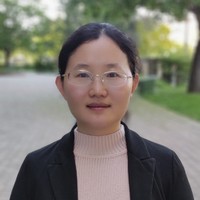
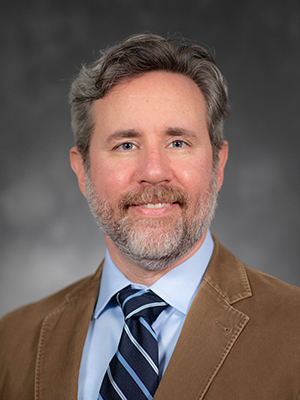
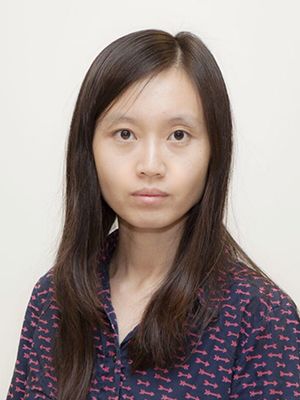
Assoc Prof Yu-Cheng Chen is an Associate Professor at Nanyang Technological University (NTU), Singapore, affiliated with the School of Electrical & Electronic Engineering (EEE) and SCBE. He holds the prestigious Nanyang Assistant Professorship Award (2018), one of the youngest faculty members at NTU. His research focuses on pioneering bio-laser technologies for biomedical applications, including cancer detection, disease diagnosis, and neuro-analysis. He invented the laser-emission microscopy technique, a breakthrough in bio-device development and precision medicine. Education: M.S. in Optoelectronics (National Taiwan University, 2012); Ph.D. in Biomedical Engineering (University of Michigan, 2017), notable for completing his PhD in just two years. Research interests span biological lasers, smart sensing, secure communication systems, and the interface between biology and engineering. His work has been featured in over 200 global media outlets, including Nature Biomedical Engineering, ACS Nano, and Advanced Science. He leads the NTU Biomedical Imaging and Lasers Platform (NTUBIMP) lab, advancing translational research in laser-emission microscopy and medical diagnostics. Key Achievements: Over 60 top-tier publications since 2012, including 60+ top journals/proceedings; first student to achieve a PhD in 2 years at University of Michigan.
Dr. Yuanyuan Li is an Assistant Professor at KTH Royal Institute of Technology, part of the Digital Futures Faculty . Her research focuses on advanced materials science, particularly in nanotechnology, sustainable biomaterials, and biomedical applications. She leads projects such as the Digital Twins of Human Neuromusculoskeletal System, aiming to revolutionize personalized medicine in neuro-rehabilitation through interdisciplinary approaches. Her work integrates cellulose-based nanomaterials , transparent wood composites, and energy harvesting systems. Notable contributions include innovations in transparent wood fabrication, nanocellulose applications, and functionalized biocomposites for medical and environmental uses. Collaborations with Stockholm University and RISE Research Institutes of Sweden highlight her cross-disciplinary engagement in addressing global challenges through digital and sustainable technologies. Dr. Li’s research spans materials synthesis , biomedical engineering , and renewable energy systems , with a focus on translating lab-scale discoveries into scalable industrial solutions. Her projects emphasize lignocellulosic materials , electrochemical devices , and bio-inspired nanocomposites .
Dr. Yasir Alfadhl is a Senior Lecturer in the School of Electronic Engineering and Computer Science at Queen Mary University of London. He holds a BEng (Hons.) and PhD, and is a Fellow of the Higher Education Academy (FHEA), member of the Institution of Engineering and Technology (MIET), and Senior Member of the IEEE (SMIEEE). As Programme Lead for the Telecommunications stream, his research focuses on electromagnetics and antennas , including computational electromagnetics, high-power microwaves, bio-electromagnetics, and dielectric characterization. His work also spans telecommunications topics like physical-layer security, cooperative radio, and radiofrequency fingerprinting for location-aware applications. His research interests include: Design of high-power microwave sources (e.g., magnetrons, backward wave oscillators) Electromagnetic exposure assessments for biomedical and communication systems Millimeter-wave and terahertz antenna systems for security and medical imaging RF security protocols and authentication methods Recent publications emphasize terahertz imaging systems, millimeter-wave antenna design, and electromagnetic field effects on biological tissues. Dr. Alfadhl collaborates on projects involving 5G beamforming networks, flexible wireless systems, and sparse array imaging techniques. His work bridges theoretical modeling (using tools like CST Studio Suite and PIC simulations) with practical applications in health monitoring, security screening, and telecommunications infrastructure.
Alessandro Leronni is a Lecturer in the Department of Mechanical Engineering at the University of Bath. His research focuses on developing mathematical models for electrochemo-mechanical systems, integrating experimental and computational approaches to advance materials science and biomedical engineering. He holds a PhD in Solid Mechanics from the University of Brescia (2021) and completed a Postdoctoral Research Associate position at the University of Cambridge (2020–2023). Key research areas include developmental bioelectricity (cell membrane voltage dynamics), lithium-ion battery mechanics (solid-state failure mechanisms), ionic electroactive polymers (actuation/sensing), aqueous corrosion (structural degradation), and cold sintering (electroceramic fabrication). His work contributes to UN Sustainable Development Goals related to affordable and clean energy (SDG7) and industry innovation (SDG9). Recent publications emphasize phase-field modeling for cold sintering of barium titanate (2025), size effects in lithium films (2024), delamination mechanisms in corrosive environments (2023–2022), and electrochemo-poromechanics of ionic polymer metal composites (2021–2020). Leronni actively collaborates with institutions globally, presenting at conferences such as the European Mechanics of Materials Conference (2024) and RAM 3: Recent Advances in Mechanics and Mathematics of Materials (2024). He is affiliated with the Centre for Integrated Materials, Processes & Structures (IMPS) and the Centre for Bioengineering & Biomedical Technologies (CBio) at the University of Bath. His research aims to bridge fundamental science with practical applications in robotics, energy storage, and regenerative medicine.
Richard Malak is Professor and Associate Department Head for Graduate Programs in Mechanical Engineering at Texas A&M University. His research develops computational methods for engineering systems design, including optimization, machine learning, and decision-making frameworks with applications to materials design, smart structures, and complex engineered systems. Education: PhD in Mechanical Engineering (Georgia Tech, 2008), MS in Mechanical Engineering (Georgia Tech, 2005), MS in Electrical and Computer Engineering (Carnegie Mellon, 2000), B.E. in Electrical and Computer Engineering (Stony Brook, 1998). Research focuses on computational design methodologies integrating optimization, machine learning, and control theory. Key contributions include: (1) Co-design frameworks integrating control and physical system design; (2) Computational materials design for additive manufacturing; (3) Resilient system-of-systems engineering; and (4) Parametric optimization algorithms for resource-intensive problems. Awards include multiple best paper awards from ASME conferences, teaching excellence awards, and prestigious fellowships including TEES Young Faculty Fellow and Morris E. Foster Faculty Fellow. Directs the Design Systems Laboratory which develops novel computational approaches for complex engineering challenges through interdisciplinary collaborations.
Congrui Grace Jin is an Assistant Professor in the Department of Engineering Technology and Industrial Distribution at Texas A&M University's College of Engineering. Her research focuses on advanced manufacturing, sustainable construction, energy storage, and bio-inspired materials, with notable work on engineered living materials for Martian habitats and self-healing concrete using microbial systems. She holds a Ph.D. in Mechanical Engineering from Cornell University, an M.S. from the University of Alberta, and a B.S. in Electrical Engineering from Nankai University. Dr. Jin’s educational contributions include developing a technical elective course on energy and sustainability to teach macroethics in civil engineering. Her teaching innovations, such as integrating MATLAB programming into fluid mechanics courses, emphasize hands-on learning. Her research also spans battery technology, including ultrasonic monitoring for lithium-ion batteries and sodium-ion anode design. Her publications reflect interdisciplinary strengths in materials science, environmental engineering, and aerospace applications. Notable trends include bio-inspired solutions for infrastructure challenges, sustainable waste management using nanomaterials, and scalable manufacturing techniques for energy systems. Her work bridges engineering education and cutting-edge material development, addressing global sustainability and technological advancement.
Qiang Lin is the Dean's Professor and holds dual appointments in the Department of Electrical and Computer Engineering and the Department of Optics at the Hajim School of Engineering & Applied Sciences, University of Rochester. He earned his BS and MS in applied physics from Tsinghua University (1996 and 1999) and a PhD in optics from the University of Rochester (2006). His research focuses on nanophotonic devices, quantum optics, optomechanics, and nonlinear phenomena in micro/nanostructures, with applications in chip-scale photonic signal processing. His work spans cutting-edge areas such as microcomb lasers, quantum-correlated synthetic spaces, and lithium niobate photonics. Recent articles highlight advancements in electro-optic modulators, soliton microcombs, and ultra-broadband photonics. His contributions to integrated photonics have enabled breakthroughs in optical frequency conversion, quantum communication, and high-speed sensing systems. Lin’s research bridges fundamental physics and applied technologies, with a focus on translating discoveries into practical devices. His lab develops novel photonic platforms for quantum computing, optical communication, and bio-sensing. Collaborations span academia and industry, driving innovations in nanophotonics and optomechanical systems.
Axel Wismueller is a Professor of Imaging Sciences, Biomedical Engineering, and Electrical and Computer Engineering at the University of Rochester. He holds a PhD from the Technical University of Munich (2006) and is affiliated with the Hajim School of Engineering & Applied Sciences. His research focuses on developing computational visualization methods for analyzing high-dimensional biomedical imaging data, combining biological principles with machine learning and image processing. Key application areas include functional MRI for brain mapping, MRI mammography for breast cancer diagnosis, and multi-modality fusion in neurodegenerative diseases. Education: PhD, Technical University of Munich, 2006 Research Interests: Mathematical algorithms for computational analysis, pattern recognition in clinical applications, biomedical time-series analysis, and quantitative bio-imaging. His laboratory is located at the Rochester Center for Brain Imaging, equipped with a 3T Siemens MRI scanner and high-field magnets. Labs/Teams: Active in the Rochester Center for Brain Imaging, specializing in neuroimaging infrastructure and translational research.
Dr. Derrick Fam serves as an Adjunct Assistant Professor at NTU's School of Materials Science and Engineering and holds the position of Scientist III at the Institute of Materials Research and Engineering (IMRE), A*STAR. He currently leads the Structural Power Programme for portable and electrified transportation within A*STAR's AME initiative, focusing on structural battery development. He earned his B.Eng (2006) and Ph.D. (2012) in Materials Science from NTU. After a postdoctoral fellowship at NTU's CREATE-HUJI-NTU programme, he was awarded the A*STAR International Fellowship to conduct research on structural supercapacitors at Imperial College London (2014). His research focuses on multifunctional and sustainable energy storage materials, particularly polymer and composite ionic conductors for batteries and supercapacitors. Key themes include structural robustness, sustainability, and energy density optimization. His work spans diverse applications like wearable electronics and electric vehicles, with notable advancements in self-healing silk-based materials, halide-catalyzed polyurethane electrolytes, and nanostructured carbon composites. These innovations aim to integrate energy storage with structural integrity. Awards: A*STAR International Fellowship (2014) Lab Affiliations: IMRE's Polymer & Composite Department (Structural Power group) Key Contributions: Over 10 peer-reviewed publications since 2013, with impact in energy storage material design and nanocomposite synthesis
Guillaume Morel is a Professor of Robotics at Sorbonne University, where he currently serves as the head of the Institute of Intelligent Systems and Robotics (ISIR). He is a member of the ASIMOV research team, focusing on advanced robotics and human-robot interaction. His work is centered on medical robotics, particularly in surgical and assistive applications. His research interests include medical robotics , human-robot interaction , assistive and rehabilitation robotics , surgical robotics , prosthetics , and control systems . A key contribution is the concept of comanipulation, which integrates user and robotic sensory-motor loops to enhance assistance. His recent publications (2022–2024) reflect a strong focus on wearable robotics, surgical safety, and adaptive control. Articles frequently explore force control, bone breach detection, prosthetic control, and supernumerary robotic limbs, indicating a trend toward intelligent, responsive, and safe human-centered robotic systems. Hands-free teleoperation and virtual body-to-robot links Force and torque-based surgical safety in spine procedures Adaptive and closed-loop control for prosthetics Supernumerary and wearable robotic assistance Human locomotion and exoskeleton control Scientific Contributions and Leadership: Created the first CTI-certified robotics engineering program (2007) Founded the first INSERM-certified medical robotics research team (2010) Directed Carnot-Interfaces, an industrial partnership structure (2016) Holds multiple patents in medical robotics and surgical systems Guillaume Morel has supervised numerous researchers and students, contributing to advancements in prosthetics, surgical robotics, and human-robot collaboration. His work is supported by strong institutional affiliations and industrial partnerships. He leads the ISIR and is actively involved in guiding research teams, securing certifications, and fostering innovation in medical robotics. His lab, ASIMOV, is at the forefront of developing robotic systems that seamlessly integrate with human motor functions.
Jekan Thanga is an Associate Professor in the Department of Aerospace and Mechanical Engineering at the University of Arizona’s College of Engineering, with a joint appointment in Electrical and Computer Engineering and status as a Member of the Graduate Faculty. He is the Head of the Space and Terrestrial Robotic Exploration (SpaceTREx) Laboratory and leads the NASA-supported ASTEROIDS Laboratory, focusing on innovative robotic systems for space and planetary exploration. Dr. Thanga earned his B.A.Sc. in Engineering Science (Aerospace) from the University of Toronto and his Ph.D. in space robotics from the University of Toronto Institute for Aerospace Studies (UTIAS). He completed a postdoctoral fellowship at MIT’s Field and Space Robotics Laboratory (FSRL) and gained industry experience at MDA Space Missions, working on the Canadarm and Orbital Express programs. His research is centered on autonomous robotic systems, including CubeSats, swarms, and sensor networks, for exploring extreme environments such as asteroids, lava tubes, and planetary surfaces. He employs multi-disciplinary optimization and bio-inspired neuro-evolutionary methods to design high-performance, unconventional robotic systems. His work spans propulsion, power, communications, and control, with applications in interplanetary missions, on-orbit servicing, and lunar/asteroid resource utilization. The 15 most recent publications highlight a strong trend toward autonomous systems for lunar and planetary construction, swarm-based exploration, inflatable and deployable structures, propulsion innovation (including solar thermal and steam systems), and cislunar surveillance. His team is advancing technologies for the Lunar Ark concept, lava tube exploration, debris avoidance, and in-situ construction using robot swarms and AI-driven design. Popular Mechanics Breakthrough Award (2016) Tech Briefs Top 5 Award, Aerospace/Defense (2017) HeroX CubeSat Challenge Winner (2017) MBR Mars Settlement Challenge Winner (2018) NASA RASCAL Winner and Finalist (2021) NASA BIG Competition Top 10 and Collaboration Award (2020) ASEE Teaching Award (2019) Subject Matter Expert Fellowship, US Special Forces SOFWERX (2019) Multiple Best Student Paper and Presentation Awards (2017–2021) Dr. Thanga has graduated over 60 students who now hold leadership roles in aerospace, defense, and IT. He is the Engineering PI on two CubeSat missions: the US Air Force-funded SWIMSat and AOSAT-1, a CubeSat centrifuge laboratory. His lab, SpaceTREx, fosters interdisciplinary collaboration and student-centric research, securing significant grants from NASA, NSF, and DoD. The lab is equipped with clean rooms, vacuum chambers, 3D printers, and air tables to support design, integration, and testing for extreme environments.
Dr Jordan H Boyle is a Lecturer in Engineering Systems at the School of Mechanical Engineering, University of Leeds, Faculty of Engineering and Physical Sciences. His research lies at the intersection of engineering, biology, and neuroscience, focusing on bio-inspired robotics derived from invertebrate behavior. He leads in the development of robust, low-cost, and adaptive robotic systems for operation in unpredictable environments. His expertise includes computational neuroscience, neural modelling, 3D printing, and robot locomotion. He is affiliated with the Robotics Institute and the Institute of Design, Robotics and Manufacturing at Leeds. BSc (hons) in Electrical Engineering, University of Cape Town MSc in Electrical Engineering, University of Cape Town PhD in Computational Neuroscience, University of Leeds Dr Boyle's research is driven by the philosophy of invertebrate biology—emphasizing simplicity, high deployability, and cost-efficiency in robotic systems. He investigates neuromechanical control in organisms like C. elegans and Aplysia californica to inform the design of autonomous robots capable of adaptive locomotion in complex terrains. His work combines computational modelling with advanced manufacturing techniques to create bio-mechatronic systems. Although no specific publications are listed in the provided text, his research outputs span bio-inspired robotics, surgical robotics, and computational neuroscience, indicating a strong interdisciplinary focus on adaptive control, locomotion mechanisms, and neural controllers. His work on a serpentine robot using a virtual C. elegans nervous system gained international media coverage. Scientific recognition includes: EPSRC PhD+ Fellowship Media features in New Scientist, Financial Times, BBC Radio Leeds, and The Gadget Show Dr Boyle supervises postgraduate researchers and contributes to undergraduate education, particularly in electronics and microcontrollers for product design students. He also serves as a personal tutor and project supervisor for Mechatronics students. His educational approach is hands-on, integrating lectures with practical lab sessions. He is the Mechatronics Programme Manager and Public Relations Liaison for the EPSRC National Facility for Innovative Robotic Systems, and continues to contribute to the CoDIR project in a supervisory role.
Naveen Verma is the Ralph H. and Freda I. Augustine Professor of Electrical and Computer Engineering at Princeton University, affiliated with the Andlinger Center for Energy and the Environment and the Princeton Materials Institute. His research focuses on low-power integrated circuits for emerging applications like biomedical systems, remote sensing, and in-memory computing accelerators. He leads the Verma Lab, which explores synergies between algorithms, circuits, and materials to enable pervasive intelligent systems. Education: Ph.D., Massachusetts Institute of Technology (2009) M.Sc., Electrical Engineering, MIT (2005) B.A.Sc., Computer Engineering, University of British Columbia (2003) Research Interests: His work spans ultra-low-power systems, in-memory computing architectures, large-area electronics for IoT/5G, and bio-inspired sensor systems. Key areas include analog biomedical signal processing, energy-efficient computing fabrics, and GHz-frequency circuit design using zinc-oxide TFTs. Publications: Recent work emphasizes scalable in-memory computing macros, GHz-frequency flexible electronics, and AI-driven hardware resilience. Major contributions include energy-efficient neural network accelerators and reconfigurable antennas using large-area electronics. Awards: AFOSR Young Investigator Program Award (2014) NSF CAREER Award (2013) IEEE Best Paper Awards (2015, 2016) Advising & Labs: Directs Verma Lab, mentoring 4 current advisees. Research outputs include over 150 peer-reviewed articles and patents on LAE-based systems. Collaborates with industry partners on next-gen AI hardware and energy-efficient IoT architectures. Lab Focus: Verma Lab pioneers hybrid systems combining CMOS and large-area electronics for applications like structural health monitoring, wearable biosensors, and wireless communication. Recent prototypes include sensing sheets for bridge damage detection and piezoelectric soft robots.
Ruben Gonzalez Rodriguez is a Professor in the Department of Mechanical Engineering within the Faculty of Science and Technology at Bournemouth University. His academic credentials include a PhD in Mechanical Engineering - Tribology (2007) and a BEng (Hons) in Marine Engineering (2000) from the University of Oviedo, where he received honors for the best academic record in the Higher Nautical School and an excellence award for his PhD thesis. PhD in Mechanical Engineering - Tribology (2007) BEng (Hons) in Marine Engineering (2000) His research focuses on tribology, surface engineering, and lubrication science, with particular expertise in ionic liquids, nanoparticles, and coatings as lubricant additives. His work has significant applications in wind turbine gearboxes, marine engines, and electric vehicle transmissions. Recent publications demonstrate his continued active research in deep eutectic solvents, waste heat recovery systems, and electrical compatibility of lubricants for electrified transmissions. His research trends show a consistent focus on sustainable lubrication solutions, with increasing attention to applications in renewable energy systems and electrified transportation. Recent work emphasizes the environmental properties of lubricants and their compatibility with emerging technologies. Honours Award for the Best Academic Record in the Higher Nautical School of University of Oviedo Excellence award for the best Ph.D. Thesis in the Department of Mechanical and Civil Engineering of Oviedo University Professor Gonzalez Rodriguez has successfully supervised PhD students including Ángel del Reguero Huerta (researching functionalized nanoparticles as lubricant additives) and Raquel Monge García (focusing on wind turbine gearbox optimization). He has secured multiple research grants from Spanish government entities including the Ministry of Economy and Competitiveness, Ministry of Science and Innovation, and the Principality of Asturias, totaling projects related to ionic liquids, wind turbine efficiency, laser cladding coatings, and marine engine applications. His research group appears to collaborate extensively with colleagues at University of Oviedo, particularly with Jose Viesca Rodriguez and A. Hernández Battez.
Benoit Miramond is a Full Professor at Université Côte d’Azur, affiliated with the Laboratory of Electronics, Antennas and Telecommunications (LEAT) and Polytech Nice Sophia. He serves as Director of Research at the 3IA Côte d'Azur – Interdisciplinary Institute for Artificial Intelligence, and leads the eBRAIN Research Group focused on neuromorphic engineering. His research interests lie at the intersection of embedded systems, artificial intelligence, and neuroscience. He specializes in bio-inspired AI , spiking neural networks , event-based processing , and neuromorphic hardware architectures . His work emphasizes energy efficiency, real-time performance, and hardware-aware design for AI at the edge. The recent publications highlight a strong trend in embedded AI , neuromorphic computing , and energy-efficient sensor networks . His team explores hardware-aware neural architecture search, distillation for spiking networks, and FPGA-based implementations, demonstrating a consistent focus on deploying intelligent systems in resource-constrained environments. He is actively involved in national and interdisciplinary initiatives: Member of PEPR IA (EMERGENCES project) Scientific advisor at AICO Technology (startup) Member of the Scientific Committee of the NeuroMod Institute Member of GDR BioComp He advises several researchers and students in the fields of embedded AI and neuromorphic systems. His work is supported by institutional affiliations and collaborative grants, particularly through 3IA Côte d’Azur and PEPR IA. He contributes to advancing the next generation of edge intelligence through interdisciplinary research bridging hardware, algorithms, and cognitive principles. His research is conducted within the LEAT laboratory, a CNRS UMR7248 unit, where the eBRAIN group fosters innovation in bio-inspired computing and adaptive hardware systems.