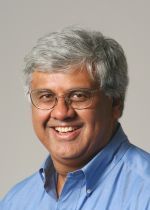
S. Shankar Sastry is a distinguished academic and researcher holding the title of Professor in the Departments of Electrical Engineering and Computer Sciences, Bioengineering, and Mechanical Engineering at the University of California, Berkeley. He served as Dean of the College of Engineering from 2007 to 2018 and previously directed CITRIS (Center for Information Technology Research in the Interest of Society), the EECS Department, and the DARPA Information Technology Office. His academic journey includes a B.Tech. from IIT Bombay (1977) and advanced degrees from UC Berkeley (M.S. EECS 1979, M.A. Mathematics 1980, Ph.D. EECS 1981). Research interests span artificial intelligence, control systems, robotics, cyber-physical systems, and security. He leads initiatives at the Berkeley Artificial Intelligence Research Lab (BAIR), Berkeley Center for New Media, and the Blum Center for Developing Economies. Notable contributions include work on sparse representation for face recognition, hybrid system analysis, and biomimetic robotics. His publications (15+ highlighted here) showcase expertise in dynamic games, networked control, and quantum computing. Awards include the Rufus Oldenburger Medal (2021), Berkeley Citation (2018), and multiple fellowships. Sastry has advised numerous students and oversees labs focusing on autonomous systems and human-robot interaction. Teaching includes courses on feedback control and linear system theory.
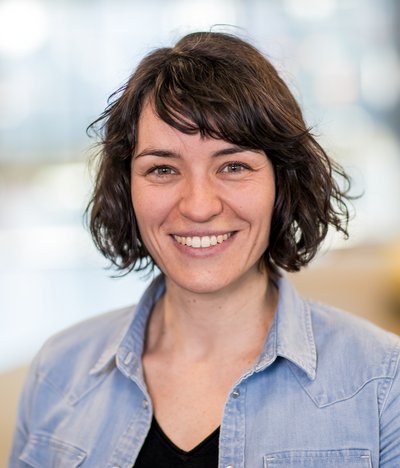
Maria MAKAROV is an Associate Professor at CentraleSupélec, affiliated with the Control Department at L2S (Laboratoire des signaux et systèmes), part of Université Paris-Saclay. Her research focuses on robust control methods for interactive robotic systems, human motor control modeling, and bio-inspired control strategies. She holds a PhD in Automatic Control from SUPELEC and a Master's in Electrical Engineering from KTH Royal Institute of Technology. Research Interests: Robust control of uncertain robotic systems Human-robot interaction and safety Dynamic stability and impedance estimation in human motion Bio-inspired control for humanoid robotics Key Projects: Ongoing work includes the ANR HERMIN project and contributions to the SYCOMORE research team. Her recent publications explore human arm impedance dynamics, octorotor state estimation, and collaborative robotics evaluation.
Tomás Palacios is the Clarence J. LeBel Professor of Electrical Engineering and Computer Science at MIT, directing the Microsystems Technology Laboratories (MTL). His research focuses on advanced semiconductor materials (e.g., GaN, 2D materials) and devices for high-frequency, high-voltage, and energy-efficient electronics. He leads projects in quantum computing, Venus rover microelectronics, and large-area neural networks. Palacios has pioneered innovations like vertical GaN FinFETs and graphene-based biosensors, earning the IEEE George Smith Award twice. Education: BS (Telecommunications Engineering, Technical University of Madrid, 2001), MS/PhD (Electrical Engineering, UC Santa Barbara, 2004/2006). Affiliations: Director of MIT-GaN Energy Initiative, Founding Director of MIT Graphene Center, Associate Director of SUPREME Center. Research emphasizes interdisciplinary approaches combining electrical engineering, materials science, and device physics. Notable contributions include record-breaking GaN transistor performance and first MoS2 circuits. His group also explores bio-inspired sensors and wearable electronics, such as smart gloves for tactile interaction. Palacios advises startups like Vertical Horizons (GaN power devices) and FabuBlox (nanofabrication tools). Awards: PECASE (2012), Intel Researcher Award (2020), IEEE Fellow. Grants & Partnerships: Supported by NSF, DoE, industry collaborations (e.g., IBM, NEMC Hub). Labs include the Palacios Group at MIT, with ongoing projects in quantum devices, Venus electronics, and 6G networks. His work bridges academia and industry, aiming to address energy challenges and next-gen computing needs.
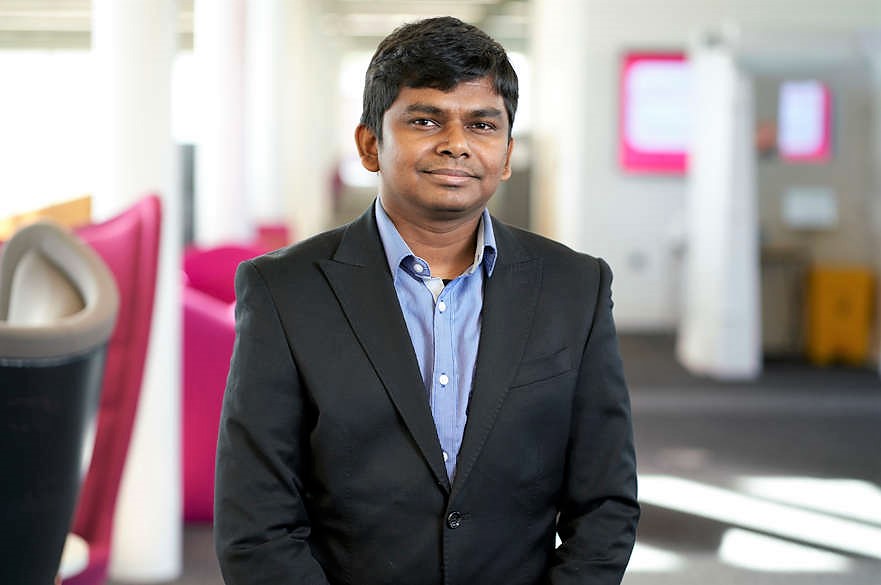
William Navaraj is a Senior Lecturer in Engineering at Nottingham Trent University, specializing in flexible micro/nanoelectronic devices, electronic skin, and assistive robotics. He holds a PhD in Electrical and Electronic Engineering from the University of Glasgow and has over 8 years of interdisciplinary research experience. Education : PhD (University of Glasgow), MSc (CSIR-Central Electronics Engineering Research Institute), BSc (Academy of Scientific and Innovative Research) Research Interests His work focuses on: Flexible Electronics Electronic Skin Bio-mimetic Systems Wearable Healthcare Devices Graphene-based Sensors Nanowire Transistors Recent Publications Trends His 2018-2025 publications demonstrate expertise in tactile sensing, wearable dosimetry, and flexible robotics. Key topics include nanoribbon transistors, 3D-printed prosthetics, and self-powered e-skin systems. Scientific Contributions 50+ peer-reviewed publications 2 filed patents 2 book chapters on wearable bioelectronics Peer reviewer for 10+ journals/conferences Grants & Collaborations Recipient of ERDF, InnovateUK, and CSIR funding. Collaborates with institutions like Humotech (prosthetic systems), STMicroelectronics, and the University of Glasgow.
Giorgos Retsinas is a Postdoctoral Research Associate at the National Technical University of Athens (NTUA), focusing on Image Processing, Document Image Analysis, Pattern Recognition, Deep Learning, Algorithms, and Mathematical Optimization. He completed his Ph.D. in Electrical and Computer Engineering at NTUA in February 2020, with collaborative work at the Institute of Informatics and Telecommunications of the National Center for Scientific Research “Demokritos” from 2015 to 2018. His research has spanned document analysis, bio-signal processing, and deep neural network compression, resulting in 17 publications. Education: Diploma in Electrical and Computer Engineering, National Technical University of Athens (2014) Ph.D. in Electrical and Computer Engineering, National Technical University of Athens (2020) Research Interests: Image Processing Document Image Analysis Pattern Recognition Deep Learning Algorithms Mathematical Optimization Professional Affiliations: Postdoctoral Research Associate, National Technical University of Athens Collaboration with Institute of Informatics and Telecommunications, National Center for Scientific Research “Demokritos”
Houxiang Zhang is a Professor and Deputy Head of Department (Research) at the Department of Ocean Operations and Civil Engineering , Faculty of Engineering , Norwegian University of Science and Technology (NTNU) in Ålesund, Norway. He joined NTNU in 2011 and holds an industry-supported gift professorship (2011-2016). His research focuses on biological robots/modular robotics and virtual prototyping/marine mechatronics , with over 300 publications and 8 patents. Ph.D. in Mechanical and Electronic Engineering (2003) Habilitation in Informatics (2011) Research Interests include: Bio-inspired robotics and system design Marine automation and ship intelligence Digital twin technology and co-simulation Hybrid modeling approaches Artificial intelligence applications in maritime systems Scientific Awards and recognitions: Multiple IEEE best paper awards (2008, 2014, 2015, 2023, 2024) Finalist in IEEE Robotics and Automation conferences Dimitris N. Chorafas Award for outstanding PhD work Academy memberships: IEEE Senior (2012), NTVA (2019), DKNVS (2024) Advising and Research Leadership : Supervised 21 PhD/Master's students WP Leader for EU Horizon project RoboSAPIENS (2024-2026, 7.5M Euros) Key member in Norwegian Digital Ocean Space-Møre Ocean Lab (2023-2030, 30.7M NOK) Coordinated major SFI projects (2015-2022, 190M NOK each)
Subham Sahoo is an Associate Professor at Aalborg University's Faculty of Engineering and Science, Department of Applied Power Electronic Systems. His research focuses on power electronic control, reliability, and system optimization with particular emphasis on reliability of power electronic converters. He holds a PhD in Electrical Engineering from Indian Institute of Technology Delhi with dissertation on Coordinated Control of DC Microgrids. Dr. Sahoo's research interests span power electronics, microgrid systems, cyber-physical systems, reliability engineering, and AI applications for power systems. His work integrates advanced control strategies with cybersecurity considerations for modern power systems. He has developed innovative approaches for stability assessment, cyber-resilient control, and condition monitoring of power electronic systems. His recent publications demonstrate a strong focus on addressing critical challenges in modern power systems including cyber threats to microgrids, stability of grid-forming inverters, and data-light methods for system assessment. The research shows a clear trajectory toward more reliable, flexible, and secure power electronic systems with increasing integration of AI techniques. Scientific Awards: Innovative Students Projects Award 2019 - Doctoral Level Dr. Sahoo serves as Principal Investigator and Co-Investigator on multiple significant research projects including PRISM (Probabilistic bio-plausible machine learning) funded by The Lundbeck Foundation and SAFEr Grid (Store-And-Forward Energy Grid) funded by HORIZON-ERC-SYG. He has supervised PhD students and collaborated with institutions including Massachusetts Institute of Technology where he was a guest researcher from October 2023 to March 2024. His external engagement includes serving as Chair of the IEEE Joint IES/IAS/PELS Chapter since January 2025. His work contributes to UN Sustainable Development Goals related to clean energy and sustainable infrastructure.
Ghislaine Vantomme is an Assistant Professor at Eindhoven University of Technology (TU/e), where she leads the Supramolecular Chemistry and Materials group within the Department of Chemical Engineering and Chemistry and the Institute for Complex Molecular Systems. Her research focuses on developing intelligent supramolecular materials inspired by living systems, with applications in molecular computing, bio-(opto)electronics, and sustainable materials. Dr. Vantomme received her chemistry education at l'École Normale Supérieure (Cachan, France) from 2006 to 2010, followed by an MSc from Sorbonne University (Paris). She completed her PhD in 2014 under Nobel Laureate Prof. Jean-Marie Lehn at the Institut de Sciences et d'Ingénierie Supramoléculaires in Strasbourg. After a postdoctoral fellowship at TU Eindhoven working with Prof. Bert Meijer on photo-actuators based on liquid crystal networks, she was appointed Assistant Professor in 2019. Her research program bridges organic synthesis, systems chemistry, and materials science to create supramolecular materials capable of sensing, adapting, communicating, and learning. Dr. Vantomme's group designs, synthesizes, and characterizes complex molecular systems with the ultimate aim of building intelligent materials that can be trained to learn new decision-making functions. Her work particularly focuses on developing materials that mimic the adaptability and sustainability of living matter using purely synthetic molecules, as she states: 'My dream is to synthesize materials that are as adaptive and sustainable as living matter - using purely synthetic molecules.' Analysis of Dr. Vantomme's recent publications reveals a strong focus on supramolecular materials with adaptive properties, particularly in the areas of chirality control, 2D nanostructure formation, and biomimetic systems. Her research integrates concepts from polymer science, nanotechnology, and computational modeling to create materials with precisely controlled morphologies and functions. The interdisciplinary nature of her work is evident in publications spanning chemistry, materials science, and electronics journals, with a particular emphasis on applications in next-generation electronic devices and sustainable technologies. Dr. Vantomme has received significant recognition for her research, including: VENI grant (2017) VIDI grant (2024) 2026 New Horizons Solvay Lectureship Her research is supported by prestigious funding sources including the European Research Council (SYNMAT project ID 788618) and the Dutch Ministry of Education, Culture and Science (Gravity program 024.001.035). Dr. Vantomme is actively involved in mentoring students and teaching courses including Organic Chemistry 1 & 2, Practical Organic Chemistry, and Advances in Molecular Chemistry. Dr. Vantomme leads the Supramolecular Chemistry and Materials group, which is part of the ICMS Core and Macro-Organic Chemistry groups within the Institute for Complex Molecular Systems. Her team brings together expertise in organic synthesis, physical characterization, and materials science to tackle challenging problems in supramolecular chemistry and advanced materials development.
Danilo Demarchi is Full Professor at the Polytechnic University of Turin's Department of Electronics and Telecommunications (DET). He directs the eLiONS Lab and coordinates PoliTO's Italian Institute of Technology Microelectronics Group. As pioneer in wearable plant sensors and AgriFood electronics, he bridges microelectronics with agriculture and biomedical applications. IEEE Senior Member Founder & Editor-in-Chief: IEEE Transactions on AgriFood Electronics General Chair: IEEE BioCAS (2017), IEEE CAFE (2023) Research spans smart systems for: Precision agriculture (IoT, plant health monitoring) Biomedical devices (implantables, wearables) Low-cost electronics Molecular electronics His 350+ publications focus on bio-inspired architectures integrating microsystems with physiological applications, while leading EU and PNRR projects like FERNS and ATHOS. Scientific leadership includes: Coordinating 5 EU projects Founding 2 IEEE conferences Editorial roles in 4 IEEE journals Current PhD students explore topics from plant bioimpedance to pilot workload monitoring, supported by his 5 granted patents and extensive industry collaborations.
Warren A. Hunt, Jr. is a Professor at the The University of Texas at Austin in the Department of Computer Sciences . He specializes in formal methods , computer architecture , and computational biology , with a focus on X86 specification in ACL2 , RSFQ computing , and biological-inspired computing . 25+ years in hardware verification First mechanical verification of a microprocessor (1985) Associate Editor, Formal Methods in System Design journal Research Interests include formal specification, program verification, automated theorem-proving, and computational biology tools. His work spans microprocessor design validation , symbolic simulation , and linear/nonlinear arithmetic in ACL2 . Scientific Awards : ACM 2015 Distinguished Engineer Advising : Supervises current PhD students Gavin Meil and Balasubraman Muthuveli . Has advised 12 PhD graduates, including Sol Swords (Intel) and Serita Nelesen (co-advised with Tandy Warnow). Grants & Collaborations : Leads NSF-funded projects like TC: Small (memory analysis) and TWC: Large (internet routing). Collaborates with ARM Corporation , Intel , and Centaur Technology . Labs & Conferences : Active in the ACL2 theorem proving community , served as FMCAD Steering Committee Chair (1996-2020), and co-organized FMCAD 2000 .
Natale Arcuri is a Full Professor in Environmental Technical Physics at the University of Calabria 's Department of Mechanical, Energy and Management Engineering. His research focuses on building energy efficiency, solar systems, and climate mitigation technologies. Thermal behavior of buildings Active/passive solar systems Phase change materials Zero energy districts Green climate mitigation As coordinator of multiple national/international projects including R-wine , SWEET HoMe , and I-BEST , he manages over €3 million in research funding. He leads the Efficienza Energetica degli Edifici laboratory and serves on the executive council of IBPSA-Italy . Recent publications demonstrate expertise in: Thermal insulation innovations (2025) Wooden wall energy performance (2025) Zero energy district frameworks (2024) Green trellis modeling in tropical climates (2024) Hybrid heat pump optimization (2025) Awards include memberships in: International Solar Energy Society (ISES) Italian Association of Refrigeration and Air Conditioning (AICARR) IBPSA-Italy
Anubhav Bussooa is a post-doctoral researcher at the Department of Bio-engineering Sciences, Vrije Universiteit Brussel. His work bridges biomedical engineering and microfluidics, focusing on biosensor development for cardiovascular diagnostics and therapeutic interventions. Projects: Involved in the 'IOFCOFUN1: IOF strategic cofinancing' initiative (2021–2025). Universiteit Brussel, Belgium. Research interests include: Microfabricated biosensors for cellular analysis Organ-on-Chip technology for real-time biological monitoring Smart stents with integrated sensing capabilities Electromediated apoptosis for vascular disease treatment Recent publications highlight advancements in impedimetric detection , oxygen level monitoring , and smart implant design. His work emphasizes the convergence of diagnostic and therapeutic systems in cardiovascular medicine.
Michele Bonnin is an Associate Professor at the Politecnico di Torino , Department of Electronics and Telecommunications (DET). He contributes to teaching in Electromagnetism and Circuit Theory and Electrical Engineering courses across Computer Engineering , Electronic Engineering , and Physical Engineering programs. External Lecturer, University of Turin (2011-2017) Teaching activity at Turin Polytechnic University in Tashkent (2024) His research spans Nonlinear Dynamics , Energy Harvesting , and Stochastic Processes , focusing on: Phase Noise in Oscillators Memristor-Based Systems Ultra-Low-Voltage Circuit Reliability Stochastic Averaging Frameworks Recent work explores Nonlinear Multi-DOF Mechanisms for vibration energy harvesting and Edge of Chaos Theory in biological oscillator models. His 2025 articles highlight Memristor Amplification , SRAM Variability , and MEMS Optimization . Scientific Awards: BEST PAPER OF THE YEAR (2004), International Journal of Circuit Theory and Applications He serves as Associate Editor for Nonlinear Engineering and Computation , and contributes to doctoral programs in Sustainable Development and Climate Change (2021-2024). His research group LiNCS (Linear and Nonlinear Circuits & Systems) drives projects like RECOMMEND (2024-2027) and COMBlaser (2015-2017).
Goutam Koley serves as the Samuel R. Rhodes Professor of Electrical and Computer Engineering at Clemson University's College of Engineering and Computing. He leads the Nanoscale Electronics and Sensors Laboratory (NESL) and is affiliated with the Center for Optical Materials Science and Engineering Technologies (COMSET). Previously, he was an Associate Professor at the University of South Carolina from 2009-2014, where he served as Graduate Director for three years. Dr. Koley received his B.Tech. from the Indian Institute of Technology Kharagpur in 1998, M.S. from the University of Massachusetts Lowell in 1999, and Ph.D. from Cornell University in 2003. He has maintained active research collaborations with Oak Ridge National Laboratory and the University of Alberta. His research focuses on micro and nanoscale materials for electronic, optical, and sensing applications, with emphasis on graphene and other 2D materials, MEMS/NEMS sensors, and chemical/biological detection systems. Current projects include synthesis of 2D materials using chemical vapor deposition, investigation of graphene heterojunctions for nanoelectronics, and development of novel MEMS/NEMS sensors based on micro/nanocantilevers. His publication record shows consistent output across multiple domains, with recent work emphasizing flexible piezoelectric sensors, infrared modulation using phase-change materials, and advanced characterization of wide bandgap semiconductors. The research demonstrates strong interdisciplinary connections between materials science, electrical engineering, and sensor technology. National Science Foundation CAREER Award (2009) Multiple University of South Carolina Excellence in Research Awards Dr. Koley has successfully mentored numerous graduate students through completion of their degrees, with recent doctoral graduates including Lavanya Muthusamy (2025) and Samee Azad (2023). His research has been supported by significant funding from NSF, DOD, NASA, and private industry. He maintains active roles as a senior IEEE member, journal reviewer for over 25 publications, and organizer of major conferences including IEEE Sensors and IEEE Nano.
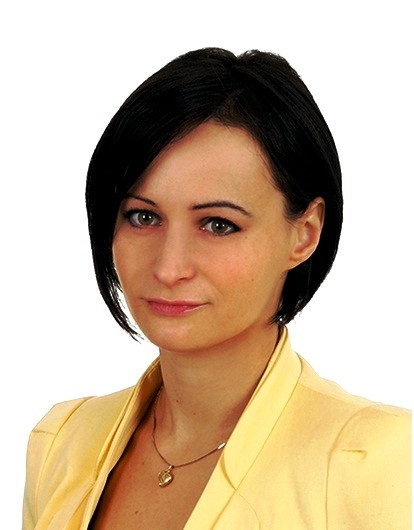
Dr. Mariola Robakowska is a researcher at the Faculty of Chemical Technology , Poznań University of Technology , with a focus on polymer chemistry and photopolymerization . Her work spans nanocomposites , 3D printing , and dental materials . PhD in Chemical Sciences (2006), Poznań University of Technology Master of Science in Environmental Protection (2006), Poznań University of Technology Her research explores photocurable polymer composites with nanofillers, including boron/silicon nitrides , TiO2-ZrO2 oxides , and nanosilica , aiming to enhance thermal/electrical conductivity and mechanical properties . She has investigated applications in bone cements , UV-aged coatings , and hybrid fiber composites . Recent publications (2023–2025) highlight her work on homogenizing photopolymers with nanofillers , biocompatible oxide fillers , and rubber waste incorporation in polyurethane coatings. Collaborations include institutions like the University of Twente , Max Planck Institute , and Cracow University of Technology . She contributes to scientific projects such as the NCN grant New generation of ionogels (2018–2020) and participated in developing educational materials on polymer identification and TGA analysis .