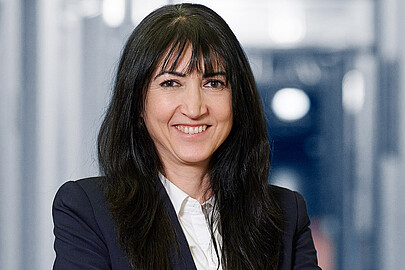
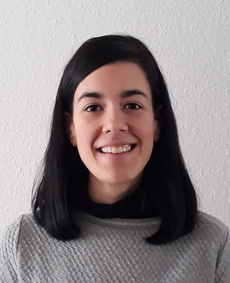
Jan Knippers is a Professor and Institute Director at the University of Stuttgart's Faculty of Architecture and Urban Planning , leading the Institute of Building Structures and Structural Design (ITKE) . He co-founded Knippers Helbig Advanced Engineering and established Jan Knippers Ingenieure in 2018 to focus on innovative fiber composite and timber structures. Key roles: Deputy Executive Director of Cluster of Excellence IntCDC , former Vice-Rector for Research (2019-2021), and Dean of Faculty of Architecture (2021-2023) Technical focus: Hybrid FRP-Timber systems, computational design, and biomimetic principles His projects include the 2024 Hybrid Flax Pavilion , Urbach Tower (2024), and BUGA Fiber Pavilion (2019). He contributes to European standardization committees and serves as 2024 Leverhulme Visiting Professor at University College London.
Prof. Dr.-Ing. Selin Kara is a Professor at the Institute of Technical Chemistry, Faculty of Natural Sciences, Leibniz University Hannover. She leads research in biocatalysis and bioprocessing, with a focus on sustainable and innovative enzyme-based technologies. Her leadership roles include Spokesperson of the Curriculum and Teaching Committee for Life Science and Chairperson of the Admissions Board for MSc Life Science. Full Name: Selin Kara Institution: Leibniz University Hannover Faculty: Faculty of Natural Sciences Department: Institute of Technical Chemistry Academic Rank: Professor Email: selin.kara@iftc.uni-hannover.de Her research interests center on biocatalysis and bioprocessing , particularly in redox biocatalysis , enzyme immobilization , non-conventional media such as deep eutectic solvents, biocatalytic cascades , and flow biocatalysis . She explores enzyme kinetics and process engineering to enhance efficiency and sustainability in chemical synthesis. Her group develops novel reactor systems and materials, including hydrogels and 3D-printed microfluidics, for advanced biocatalytic applications. She emphasizes green chemistry principles, aiming to replace traditional chemical processes with eco-friendly enzymatic alternatives. The most recent publications (2024–2025) demonstrate a strong trend in deep eutectic solvents , fusion enzymes , immobilization techniques , and sustainable synthesis of bio-based chemicals . Her work integrates experimental and computational methods to understand enzyme behavior and optimize reaction systems. Key themes include process intensification, solvent engineering, and industrial scalability, with applications in pharmaceuticals, fragrances, and sustainable materials. She holds leadership positions in academic governance, including: Spokesperson, Curriculum and Teaching Committee, Life Science (BSc/MSc) Chairperson, Admissions Board for MSc Life Science Executive Board Member, Institute of Technical Chemistry Deputy Representative for Professors in Faculty Council and Examination Boards Her research is highly collaborative, involving interdisciplinary teams and international partners, and is consistently published in high-impact journals such as Green Chemistry , ACS Catalysis , and ChemSusChem . While specific scientific awards and student advisees are not listed in the provided text, her extensive publication record and leadership roles reflect significant academic contributions.
Julien Warnan is a researcher at the Catalysis Research Center (CRC) of the Technical University of Munich (TUM). He leads a multidisciplinary research group focusing on renewable energy, particularly artificial photosynthesis and photocatalytic systems for fuel production. His work emphasizes molecular dyes, catalysts, polymers, and hybrid materials to transform CO2 and water into value-added chemicals. He holds the title of Researcher and is actively involved in academic leadership, including co-editing special issues and organizing international conferences like the ECAT conference. His research has been recognized with awards such as the TUM Chemistry Supervisory Award 2021. Recent activities include visiting scientist roles at Imperial College London and collaborations with groups at TUM and other institutions. Research interests encompass MOF-based photocatalysis, biohybrid systems, and sustainable energy conversion. Key achievements include pioneering studies on metal-organic frameworks for CO2 reduction and solar fuel production. His team has published extensively in high-impact journals like Angewandte Chemie and Advanced Materials , with a focus on functional hybrid materials and electrochemical systems. PhD supervision: Nadine Schmaus, Philip Stanley, Johanna Eichhorn, and others Notable collaborations: Shustova Lab, Rieger Group, Fischer Group Labs: Catalysis Research Center (CRC)
Dr. Friederike Adams is an Independent Research Group Leader at the University of Stuttgart and University of Tübingen, focusing on Precision Polymers for Pharmaceutics . Her work bridges polymer chemistry and nanomedicine, emphasizing sustainable materials for drug delivery systems. Education: PhD in Chemistry (2019, TU Munich), M.Sc. in Chemistry (2015, TU Munich), B.Sc. in Chemistry (2013, TU Munich) Awards: No explicit awards listed Research: Specializes in living-type polymerizations, catalyst design, and post-polymerization functionalization for drug and RNA delivery . Publications: 15+ works on sustainable polyesters, metal-catalyzed polymerization, and nanocarrier systems. Students: Mentors 10+ PhD, master’s, and bachelor’s students, including Lea-Sophie Hornberger and Philipp Weingarten . Collaboration: Joint research group with the Schnichels Lab at the Eye Hospital Tübingen. Funded by BMBF and Baden-Württemberg Ministry of Science under Germany’s Excellence Strategy.
Prof. Dr. Roland Zengerle serves as Full Professor for Application Development at the Institute of Microsystems Technology within the Faculty of Engineering at Albert Ludwigs University of Freiburg, concurrently holding the position of Director at Hahn-Schickard Institute for Microanalysis Systems in Freiburg. His academic leadership spans microsystems engineering with a focus on translational research bridging fundamental science and clinical applications. Zengerle's research expertise centers on Microfluidics, Lab-on-a-Chip systems, Bio-MEMS, Electrochemical Energy Systems, and Tomographic Reconstruction of Mesoporous Materials. He pioneers hybrid manufacturing techniques integrating molten metal printing with polymer processing to develop point-of-care diagnostic platforms and advanced energy systems. Current projects include UTI-Diag for urinary tract infection diagnosis and PhotonMed, a 32-million-euro medical technology initiative where his MEMS Applications Laboratory develops centrifugal microfluidic solutions. Analysis of his recent publications reveals a dominant trend toward multi-technology integration: centrifugal microfluidics combined with 3D bioprinting for organoid-based drug testing, molten metal printing for flexible electronics, and bead-based immunoassays for infectious disease detection. The work demonstrates strong clinical translation focus, particularly in cancer diagnostics (circulating tumor cell isolation), infectious disease testing (TB diagnostics), and regenerative medicine (spheroid/organoid handling). His laboratory has secured significant funding for high-impact projects including: UTI-Diag: Molecular diagnostics for urinary tract infections PhotonMed: Medical technology innovation consortium livMatS: Living, Adaptive and Energy-autonomous Materials Systems Zengerle actively mentors researchers through Freiburg's Master Lab program and Writer's Studio initiative while promoting young talent via Bootcamp training. His group maintains strategic alliances with Hahn-Schickard spin-offs and industry partners, leveraging university cleanroom facilities and specialized service centers for microfabrication. The MEMS Applications Laboratory operates as a hub for interdisciplinary innovation, combining microfabrication expertise with clinical insights to develop commercializable diagnostic solutions. Current infrastructure supports centrifugal microfluidic cartridge development, 3D-bioprinting of tissue models, and electrochemical sensor integration, with ongoing work focused on automating complex biological workflows for point-of-care applications.
Prof. Frieder W. Scheller is affiliated with the Institute of Biochemistry and Biology at the University of Potsdam, Germany. His work centers on advanced biosensing technologies, particularly molecularly imprinted polymers (MIPs), bioelectronics, and biomimetic recognition systems. Research Interests: His primary fields include Bioanalysis, Bioelectronics, Biosensors, Molecularly Imprinted Polymers, Electrochemical Sensing, and Plastibodies. His research bridges chemistry, materials science, and biotechnology to develop synthetic alternatives to biological receptors for medical and environmental applications. The recent publications (2019–2024) highlight a strong trend in designing MIP-based nanofilms for protein and virus recognition, including applications in SARS-CoV-2 detection and enzyme monitoring. These studies focus on improving selectivity, stability, and reliability of electrochemical biosensors using innovative polymer architectures. Scientific Contributions: Developed Strep-tag imprinted polymer platforms for bio(electro)catalysis. Explored ACE2-mimicking MIPs for viral epitope recognition. Investigated challenges in MIP sensor reliability and non-specific binding. Advanced the concept of plastibodies for biomacromolecules, viruses, and cells. Collaborations and Advising: Prof. Scheller has collaborated with over 145 co-authors globally, indicating strong network engagement. While no formal students are listed in the provided text, his collaborative output suggests mentorship and team leadership roles in multidisciplinary research projects involving materials, electrochemistry, and biotechnology. Laboratories and Research Teams: His work is conducted within the Institute of Biochemistry and Biology at the University of Potsdam, likely involving a research group focused on bioanalytical chemistry and sensor development. The frequent co-authorship with researchers like Aysu Yarman and Xiaorong Zhang indicates an active, interdisciplinary team working on next-generation biosensing platforms.
Prof. Dr. Uli Lemmer is a Professor at the Department of Electrical Engineering and Information Technology (ETIT) at the Karlsruhe Institute of Technology (KIT). His research focuses on optoelectronics, thermoelectric materials, and printed electronics, with a strong emphasis on energy harvesting, nanotechnology, and photonics. He leads the Lichttechnisches Institut (LTI) and is affiliated with the Institute of Applied Physics. His work spans innovations in laser systems, flexible electronics, and bio-inspired materials. Office: Building 30.34, Room 223; Phone: +49 721 608-42530; Email: uli.lemmer@kit.edu. Research interests include the development of advanced materials for solar cells, thermoelectric generators, and sensor technologies. He pioneers methods like aerosol-jet printing and inkjet printing for scalable production of electronic devices. His group explores biomimetic structures (e.g., snake scale nanopores) and terahertz systems, pushing boundaries in both fundamental science and applied engineering. Recent publications highlight breakthroughs in printed thermoelectric modules, perovskite-based photovoltaics, and high-frequency antennas. His work integrates cutting-edge fabrication techniques with material science to address challenges in renewable energy, sensor networks, and flexible electronics. Prof. Lemmer collaborates internationally on projects like EU-funded energy initiatives and partners with industry for technology transfer. His lab specializes in additive manufacturing, optical systems, and nanoscale device engineering, aiming to bridge the gap between academic research and industrial applications.
Paschalis Gkoupidenis is an Associate Professor in the Department of Electrical and Computer Engineering at North Carolina State University (since August 2024) and a Group Leader at the Department of Molecular Electronics at the Max Planck Institute for Polymer Research. His research focuses on developing organic neuromorphic devices for neuro-inspired information processing, learning, sensing, and bio-interfacing. Research Interests Dr. Gkoupidenis specializes in hardware-based implementation of neuromorphic architectures, which offer efficient ways of data manipulation and processing, especially in data-intensive applications. His work explores how organic materials and devices can be used for neuro-inspired devices and bioelectronics, leveraging their attractive characteristics such as ability to operate in electrolytes, spatiotemporal response, analogue memory phenomena, tunability via chemical synthesis, low-cost fabrication processes, and biocompatibility. His research group investigates various concepts for inducing neuroplasticity, learning forms, and spatiotemporal information processing functions at a single-device level, as well as new paradigms of neuromorphic architectures at circuit level. These neuro-inspired functions are essential for trainable/adaptable circuits in energy-restricted environments and for local signal processing in bioelectronics. Scientific Contributions Development of organic neuromorphic devices for neuro-inspired information processing Research on synaptic plasticity functions in organic electrochemical transistors Exploration of neuromorphic device architectures with global connectivity through electrolyte gating Investigation of functional connectivity of organic neuromorphic devices by global voltage oscillations Advancement of organic neuromorphic devices for adaptive sensing and novel computing paradigms in bioelectronics Affiliations Associate Professor, Department of Electrical and Computer Engineering, North Carolina State University (since August 2024) Group Leader, Organic Neuromorphic Electronics, Max Planck Institute for Polymer Research (since 2017) Postdoctoral Researcher, Department of Bioelectronics, EMSE, France (2015-2017)
Prof. Tanja Weil is a Director at the Max Planck Institute for Polymer Research, recognized for her groundbreaking research at the intersection of polymer chemistry and biomedical applications. She received the prestigious Karl Ziegler Award in 2023 for her work on supramolecular polymers in living cells, particularly their role in disrupting cancer cell structures. Her research focuses on designing synthetic materials that interface with biological systems, with applications in targeted drug delivery, cancer therapy, and imaging technologies. Notably, her studies on light-responsive peptide nanostructures and fluorescent nanodiamond sensors highlight her expertise in merging materials science with life sciences. Her scientific contributions span polymer synthesis, nanomedicine, and diagnostic tools, with recent breakthroughs in intracellular assembly dynamics and metallodrug development. Awards include the Karl Ziegler Award (50,000€ + gold medal), acknowledging her dual impact on fundamental science and translational medicine. Collaborations with international teams are evident in symposia like the CRC1066 on tumor immunotherapy, underscoring her role in fostering interdisciplinary research. Awards: Karl Ziegler Award (2023) Key Research Areas: Peptide nanostructures in cancer, bioorthogonal chemistry, nanodiamond quantum sensors. Lab/Team: Department Weil at Max Planck Institute, leading projects on synthetic biology and biomedical nanomaterials.
Thomas Gries is a Professor at RWTH Aachen University 's Department of Textile Technology . He serves as the Director of the university's textile machinery department, leading research in composite materials, sustainable textiles, and advanced manufacturing technologies. Current Role: University Professor & Director, Chair of Textile Machinery Research Focus: Textile engineering, carbon fiber composites, sustainable manufacturing, digital twins His work spans experimental studies on fiber-reinforced composites, AI-driven process optimization, and lunar regolith-based fiber production for space applications. Collaborations include public research projects with industrial partners and events like the WIRKTag 2025 on AI in work design. Recent publications analyze: Mechanical behavior of natural/synthetic fiber composites Recycled thermoplastic composite thermoforming 3D-woven CFRP structural optimization Moon-based fiber production from lunar materials Environmental impact assessment tools for textiles
Prof. Dr.-Ing. Katharina Schmitz serves as Institute Director and Vice Dean at the Institute for Fluid Power Drives and Systems, RWTH Aachen University. Her leadership within the Production Technology Cluster and extensive contributions to fluid power engineering establish her as a leading authority in mechanical engineering research and education. Her research spans fluid power systems, hydraulic component design, tribology, and physics-informed machine learning applications. She pioneers sustainable propulsion solutions through bio-hybrid fuels research while addressing fundamental challenges in polymer material behavior under hydraulic stresses. Current work focuses on carbon-neutral heavy-duty transportation, physics-based neural networks for lubrication modeling, and advanced control systems for electro-hydraulic actuators. Analysis of her 15 most recent publications reveals a dominant trend toward integrating physics-based modeling with deep learning to solve complex engineering problems. Her team consistently develops novel frameworks for cavitation prediction, flow rate determination, and material compatibility assessment - significantly advancing fluid power system reliability, efficiency, and digitalization. Scientific recognition includes: GfT Förderpreis 2023 for experimental and simulative investigation of partially hydrostatic relieved contacts in variable speed axial piston machines As head of the Institute for Fluid Power Drives and Systems, she leads cutting-edge research in sustainable fluid power technologies. The institute maintains strong industry partnerships while driving innovation in hydraulic component design, digital twins for condition monitoring, and next-generation propulsion systems through its position within RWTH Aachen's Production Technology Cluster.
Eva Blasco is an Associated Group Leader at the Functional Polymeric Materials Research Unit under the Institute of Nanotechnology at Karlsruhe Institute of Technology (KIT), with affiliations to the University of Heidelberg. Her work bridges 3D printing , polymer chemistry , and nanophotonics , focusing on light-driven material design. Her research centers on photochemically activated 3D printing inks , light-stabilized dynamic materials , and multi-photon lithography . She explores how two-color light absorption , alkoxyamine chemistry , and visible light post-processing enable adaptable microstructures. Key trends include 4D printing , biodegradable inks , and temperature/light-responsive systems . Blasco's publications highlight collaborations with institutions like KIT, University of Heidelberg, and international teams. Her work spans photonic metamaterials , bio-inspired 3D scaffolds , and subtractive laser lithography , often involving interdisciplinary applications of light in material science.
Marcel Mayor is a Full Professor of Chemistry at the University of Basel and Research Unit Chair at the Karlsruhe Institute of Technology's Institute of Nanotechnology. He leads the Synthetic Chemistry research unit, focusing on designing functional molecules for nanotechnology applications. His interdisciplinary work bridges synthetic chemistry, molecular electronics, and nanomaterials science. Mayor studied at the University of Bern (Diploma 1991, PhD 1995) and conducted postdoctoral research with Jean-Marie Lehn at Université Louis Pasteur. He became Maître de Conférence at Collège de France (1997-1998) before joining Forschungszentrum Karlsruhe (now KIT) in 1998. His research explores: Molecular electronics and single-molecule devices Carbon-based nanostructures and functional molecules Supramolecular systems for nanotechnology applications Advanced materials for optoelectronics and sensing Recent publications demonstrate innovations in molecular heat engines, single-molecule junctions, bio-conjugation chemistry, and stimuli-responsive materials. Research consistently integrates synthesis, nanofabrication, and physical characterization. Awards: Erwin Schrödinger Award (2004) for Molecules for future Nanoelectronics He directs laboratories at both the University of Basel and KIT, leading interdisciplinary teams in synthetic chemistry, molecular device fabrication, and nanoscale characterization. Current work focuses on quantum interference in molecular wires and chiral nanomaterials.
Professor Volker F. Wendisch serves as Professor and Chair of Genetics of Prokaryotes at Bielefeld University's Faculty of Biology. He is Scientific Director of the Center for Biotechnology (CeBiTec) since 2024 and has held leadership roles including Dean of the Department of Biology (2016-2018) and Vice Chairman of the Cluster of Industrial Biotechnology (CLIB) since 2023. His research focuses on microbial metabolic engineering, particularly using Corynebacterium glutamicum as a cell factory for sustainable production of valuable compounds. His work spans industrial biotechnology, molecular genetics, and synthetic biology with applications in pharmaceuticals, food additives, and bio-based materials. His team develops novel metabolic pathways for producing amino acids, carotenoids, pharmaceutical precursors, and specialty chemicals from renewable resources. Wendisch's recent publications reveal a strong focus on sustainable bioproduction from waste streams, optimization of microbial processes, and development of novel microbial cell factories. His research increasingly emphasizes circular economy principles, utilizing agricultural sidestreams and food waste as feedstocks for amino acid and specialty chemical production. Distinguished Scientist Award of the International Bioprocessing Association (2019) Schwarzbich Inventor Award (2019) As Scientific Director of CeBiTec and former Dean of Biology at Bielefeld University, Wendisch has secured significant research funding and established numerous collaborative projects including the CLIB-Competence Centre Biotechnology. His leadership extends to coordinating the BMBF collaborative research network on Genome reduction and serving on the Senate of Bielefeld University. Wendisch leads the Prokaryote Genetics Group at CeBiTec, which focuses on fundamental and applied research in bacterial genetics and metabolic engineering. His team maintains strong industry partnerships through CLIB and works on translating basic research into industrial applications, particularly in the bioeconomy sector.
Prof. Regina Palkovits is a Full Professor of Heterogeneous Catalysis & Chemical Technology at RWTH Aachen University's Institute of Chemical Technology & Macromolecular Chemistry (ITMC). She serves as Acting Director of ITMC since 2015 and holds a Max Planck Fellowship at the MPI for Chemical Energy Conversion (since 2019). Her research focuses on sustainable catalytic processes for renewable energy and biomass conversion, including photocatalytic CO2 reduction, electrochemical water splitting, and biorefinery pathways. Key projects involve developing solid molecular catalysts, immobilized heteropolyacids, and single-atom catalysts on covalent triazine frameworks. Palkovits leads a research group with ongoing projects in catalytic hydrogenation, bio-based tandem reactions, and hydrogen production technologies. Education: Diploma in Chemical Engineering, Technical University Dortmund (1998–2003) PhD, Max Planck Institute for Coal Research (2003–2006) Postdoc, Utrecht University (2007) Group Leader, Max Planck Institute for Coal Research (2008–2010) Research Interests: Palkovits’ work bridges heterogeneous catalysis and materials innovation to address global challenges. Key areas include: Electrochemical hydrogen production and water splitting Biomass conversion to platform chemicals (e.g., xylitol) CO2-to-fuel processes using photocatalytic systems Immobilized catalyst design for recyclability and stability Awards: Max Planck Fellow (2019) EFCATS Young Researcher Award (2019) DECHEMA Award (2017) Robert Bosch Junior Professorship (2010) Hendrik Casimir–Karl Ziegler Award (2006) Grants & Collaborations: Active in interdisciplinary projects with MPI-CEC and Hamburg University. Her group seeks students for research in catalytic hydrogenolysis, electrochemical conversions, and biorefinery pathways. Labs/Teams: Leads the “Solid Molecular Catalysts” group, focusing on sustainable chemical processes and material synthesis for green energy applications.