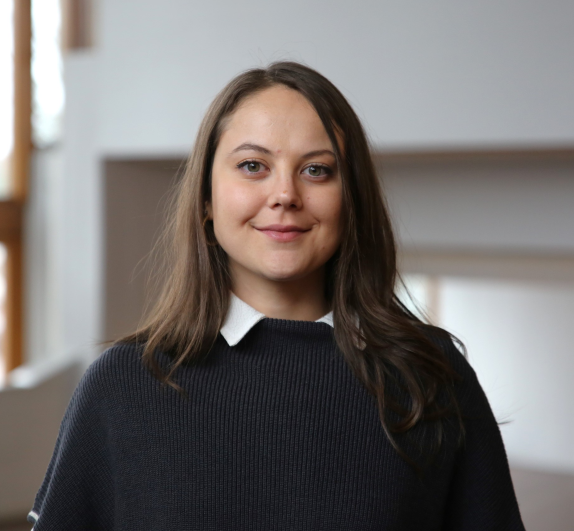
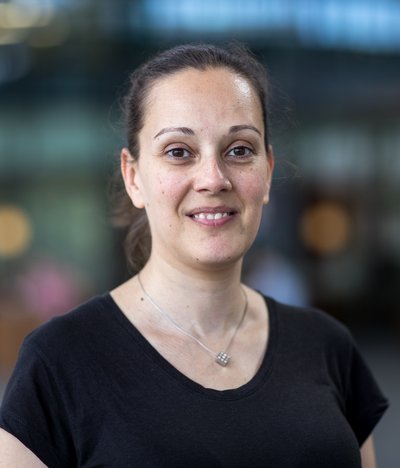
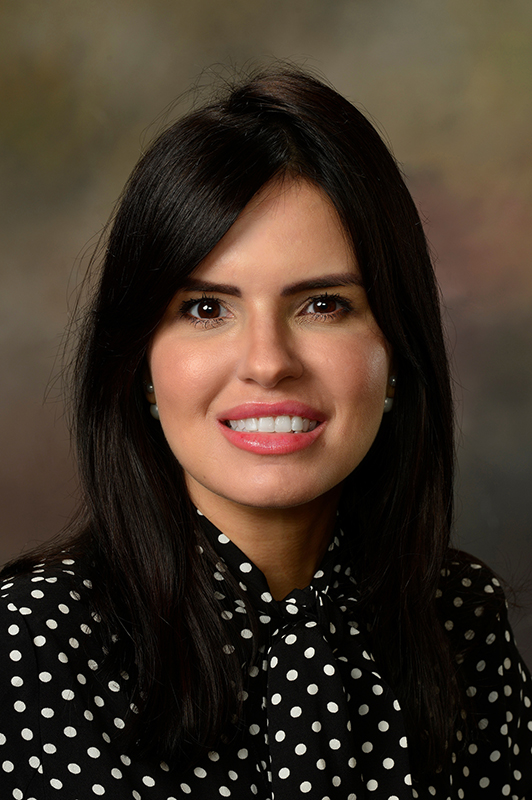
Magda Posani is an Assistant Professor in the Department of Civil Engineering at Aalto University, focusing on building physics, hygrothermal behavior of materials, and environmental sustainability. Her research explores the use of bio-based insulation, thermally massive stone and earth walls, and additive manufacturing techniques to enhance indoor comfort and address climate change challenges in Nordic regions. Integrated Master's Degree in 'Building Engineering and Architecture' from the University of Bologna (Italy) Ph.D. in Civil Engineering from the National Laboratory for Civil Engineering (LNEC) and the University of Porto (FEUP, Portugal) Postdoctoral Research at ETH Zürich (Switzerland) Her research integrates vernacular solutions with modern technology, such as combining additive manufacturing with super-hygroscopic materials to develop components for passive humidity regulation. She addresses critical issues like occupant comfort, health risks from improper humidity, and climate change impacts on traditional constructions. The articles highlight her work on low-carbon materials, 3D-printed building components, and strategies for enhancing hygrothermal performance in both modern and historic structures. Key themes include moisture buffering, thermal insulation compatibility, and climate-resilient renovation.
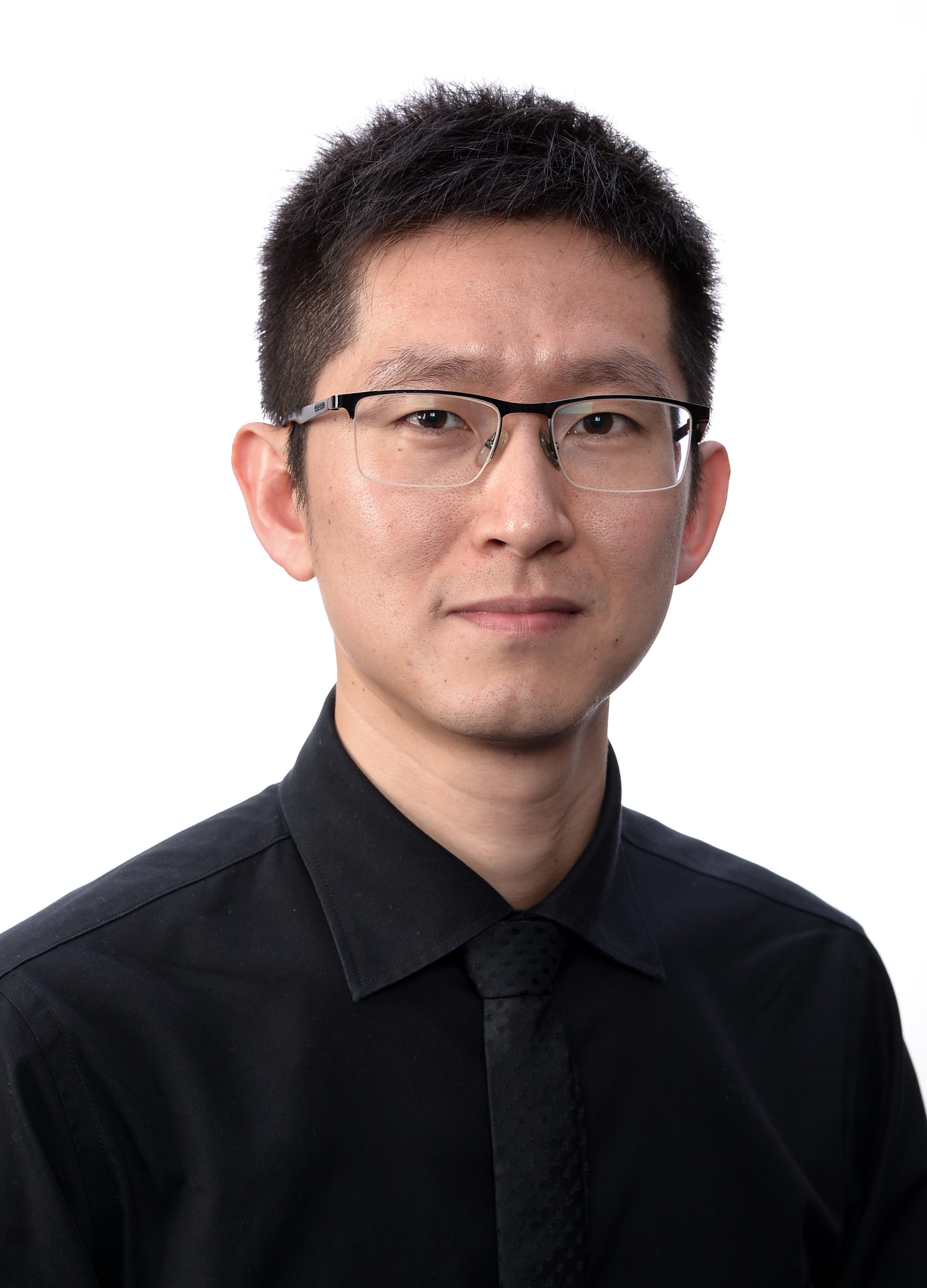
Dr. Geng Guoqing is an Assistant Professor in the Department of Civil and Environmental Engineering at the National University of Singapore (NUS). He holds concurrent roles as East Asian Regional Convener for RILEM and board member of ACI-Singapore Chapter. His research focuses on sustainable construction materials, particularly durability, microstructural characterization, and waste material utilization. Geng earned his PhD from UC Berkeley (2017), followed by postdoctoral research at the Paul Scherrer Institute (Switzerland). He has authored over 50 papers and leads multiple projects funded by Singapore’s Ministry of Education, Energy Center, and National Research Foundation. Education: Bachelor of Engineering, Southeast University, China (2010) Master of Science, UC Berkeley, USA (2013) PhD, UC Berkeley, USA (2017) Research interests center on sustainable construction materials, multi-scale characterization, and material durability . Key themes include recycling low-grade materials, mitigating degradation in concrete, and developing high-performance binders like LC3. His work employs advanced techniques like molecular modeling, X-ray diffraction, and NMR. Recent articles explore hydration kinetics, CSH matrix mechanics, and waste clay applications. Awards include the 2023 RILEM Medal and multiple teaching excellence recognitions. Current projects address CO 2 absorption, sustainable cement blends, and resilient façade materials. Professional service includes editorial roles at Cleaner Materials and Frontiers in Materials , plus organizing the 2022 EASEC Conference. His lab focuses on bridging microstructural insights with macro-scale material performance.
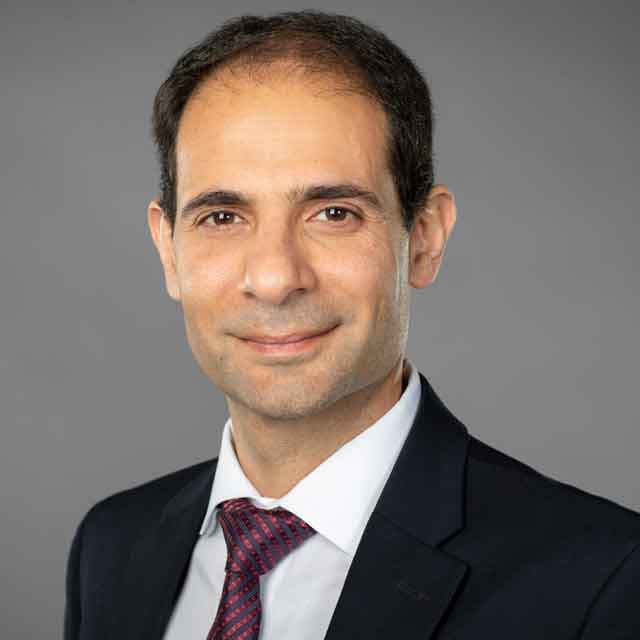
Elie Hajj is a Professor in the Department of Civil & Environmental Engineering at the University of Nevada, Reno (UNR), serving as Associate Director of the Western Regional Superpave Center. His research focuses on asphalt pavement engineering, sustainable materials, and infrastructure resilience. He specializes in pavement rehabilitation, numerical modeling of dynamic load impacts, and economic analysis of pavement preservation strategies. Dr. Hajj has received recognition for his 2016 ASTM award for outstanding work on pavement rehabilitation economics. He actively engages in professional service, including TRB webinars and academic seminars on topics like pavement damage assessment and vehicle operating costs. His teaching spans graduate and undergraduate courses in pavement design, materials engineering, and advanced pavement analysis. His research integrates experimental and computational methods to address challenges in pavement performance under superheavy loads, recycled material utilization, and energy-efficient construction practices. Collaborations with industry and government agencies enhance the practical applicability of his findings.
Peter Irga is a Senior Lecturer and ARC DECRA Fellow at the University of Technology Sydney's School of Civil and Environmental Engineering, Faculty of Engineering and Information Technology. He is globally recognized as a leader in nature-based biological air treatment technologies, particularly green wall systems (Phytosystems), with current worldwide ranking #1 in his research topic (SciVal Topic T.37087). Dr Irga's research focuses on innovative nature-based solutions for urban air pollution challenges, including phytoremediation technologies, biosolar green roofs, and agrivoltaics. His work bridges environmental engineering with practical urban applications, examining the performance of nature-based systems in real-world settings to quantify their value and identify development opportunities. His research demonstrates how living infrastructure provides cities with natural beauty while improving human health and wellbeing, addressing UN Sustainable Development Goals 11 (Sustainable Cities), 13 (Climate Action), 15 (Life on Land), and 3 (Good Health). His research portfolio includes 80+ publications with an H-index of 30 and $5.21M in research income, including ARC funding. Industry recognition includes $4.54M in high-level consultancies. His work spans multiple disciplines including atmospheric science, environmental engineering, and sustainable materials development, with particular emphasis on practical implementation of green infrastructure solutions in urban settings. Tall Poppy Science Award (2022) from the Australian Institute of Policy and Science ARC DECRA Fellow (2021-2024) Chancellor's Postdoctoral Research Fellow (2018-2021) Dr Irga actively supervises Masters and PhD students and coordinates Postgraduate Environmental Engineering and Water Engineering programs. His funded research includes Sustainable High-Performance Transitory Structures using Biobased Materials (2025-2026), Bradfield Green and Bio-Solar Roof Monitoring (2025), and Plantabox for Targeting the Urban Heat Island Challenge (2024-2025). He collaborates with industry partners including Junglefy, Ambius, Bradfield Development Authority, and City of Sydney.
Nam Tran is a Research Professor and Assistant Director of the National Center for Asphalt Technology (NCAT) at Auburn University. He holds a Ph.D. in Engineering from the University of Arkansas, along with an M.S. and B.S. in Engineering from the University of Arkansas and the National University of Civil Engineering, respectively. His research focuses on asphalt technology, pavement durability, recycled materials, and sustainable infrastructure solutions. Tran’s work emphasizes improving pavement performance through advanced material science and environmental sustainability. He has contributed to projects such as the Alabama Transportation Conference and initiatives like the STEP-UC program, which enhances pedestrian safety in underserved communities. His research spans asphalt mixture design, emissions quantification, and lifecycle assessment of transportation infrastructure. Key Research Areas: Recycled binder utilization, polymer-modified asphalt, pavement durability, and sustainable materials. Notable Projects: Development of guidelines for asphalt binder selection, durability testing of open-graded friction courses, and lifecycle analysis of construction practices. Affiliations: Auburn University’s National Center for Asphalt Technology (NCAT) and Auburn University Transportation Research Institute (AUTRI).
Dr. Priya Samudrala is a Senior Lecturer and Deputy Director of Education in Monash University's Department of Chemical and Biological Engineering. Her research spans heterogeneous catalysis, green chemistry, and sustainable processes, with expertise in biomass conversion, glycerol valorization, and 3D-printed catalysts for renewable fuel production. Recent publications (2017-2025) demonstrate consistent focus on sustainable catalyst design for biomass conversion, including catalytic reforming, hydrogenolysis, and CO2 valorization. Article trends emphasize catalyst innovation for circular economy applications, particularly in waste glycerol utilization and biomass-derived chemical production. Professional credentials include a PhD in Applied Chemistry from RMIT University and Master of Teaching from Monash University. Research contributions have been recognized through awards including the Martin Bennett Research Excellence Award.
Dr. Zahid Hossain is a Professor of Civil Engineering and Director of Graduate Programs in Engineering at Arkansas State University (A-State). He specializes in Transportation Engineering, Sustainable Materials, and Geotechnical Engineering. His research focuses on innovative pavement materials, environmental sustainability, and advanced material characterization techniques. Dr. Hossain holds a Ph.D. from The University of Oklahoma and has been recognized with the Fellow of ASCE and President's Gold Medal from Khulna University. Education: Ph.D., Civil Engineering, University of Oklahoma (Norman, OK) M.S., Computer Science, University of Oklahoma M.S., Civil Engineering, University of Oklahoma B.Sc., Civil Engineering, Khulna University of Engineering and Technology (Bangladesh) Research Interests: Dr. Hossain’s work emphasizes sustainable infrastructure, including asphalt modification with recycled materials, soil stabilization, and lean construction methodologies. His recent studies involve nanotechnology applications in materials science, moisture resistance of binders, and seismic site analysis in Arkansas. He employs advanced techniques like FTIR spectroscopy and AFM for material characterization. Scientific Awards & Affiliations: Fellow, ASCE Green Belt Certification (Lean/Six Sigma) Member, American Concrete Institute and National Dean List Advising & Research: Dr. Hossain leads interdisciplinary teams at the Center for Efficient and Sustainable Use of Resources (CESUR), focusing on green technologies and pavement durability. His grants include projects on warm mix asphalt feasibility and corrosion mitigation in metal culverts. Labs & Teams: Active in CESUR, he collaborates on projects involving rice husk ash utilization, soil stabilization, and pavement performance evaluation.
Prof. Dr. Seden Acun Özgünler is a faculty member at the Faculty of Architecture, Istanbul Technical University , where she has served as Professor since 2021. Her research spans material science in architecture, focusing on durability, maintenance, and sustainable building technologies . She has supervised numerous theses and led projects on natural binders, thermal insulation, and historical preservation . Education: PhD in Building Science (Dr), Istanbul Technical University. Academic Roles: Department Head (2023), Associate Professor (2013-2021), Research Assistant (1999-2003). Research Trends include: Material Innovation: Mycelium-based composites, natural hydraulic binders, and geopolymer concrete. Sustainability: LCIA models, waste material utilization, and energy-efficient designs. Historical Preservation: Volcanic tuff conservation, grouting methods for masonry repair, and adaptive reuse of structures. Scientific Awards: 2nd Young Türkiye Summit Academy Award (2017) for Mimar Sinan Cultural Wealth Preservation. Publication-based Academic Performance Awards (2022, 2025) from Istanbul Technical University. Key Projects involve biocomposite materials, natural cement reproduction, and chromic glass applications in facades. Her work bridges traditional building techniques with modern sustainability through experimental and computational approaches.
Professor Luyi Sun is a faculty member at the University of Connecticut in the Department of Chemical and Biomolecular Engineering. He earned his Ph.D. from The University of Alabama in 2004 and has held academic positions at Texas State University and Texas A&M University before joining UConn. Current research focuses on multi-functional nanostructured materials for structural, environmental, and energy applications. Specializes in polymer nanocomposites, wearable electronics, soft robotics, and stimuli-responsive materials. Develops green science solutions using biomass-derived materials and novel polymer processing techniques. Recent publications highlight advancements in 4D printing of polymers, MXene-based flexible electronics, and defect engineering in photocatalysts. His work spans nanoscale design for energy storage, flame-retardant coatings, and self-assembled nanosheets for dielectric performance. Awards include Fellow of the National Academy of Inventors, Morand Lambla Award, and Composites Educator of the Year. Professional memberships span American Chemical Society (ACS), American Institute of Chemical Engineers (AIChE), and Society of Plastics Engineers (SPE). 2021 Fellow of the National Academy of Inventors 2020 Morand Lambla Award (Polymer Processing Society) 2018 Composites Educator of the Year (SPE) 2016 Fellow of the Royal Society of Chemistry and SPE His lab develops scalable methods like rotational coating and doctor-blade-assisted casting for thin nanocomposite films. Research includes bio-inspired mechanochromisms, superhydrophilic silica coatings, and enzyme-linked microneedle patches for diabetic wound healing. Current projects explore 4D-printed nerve guidance conduits, dual photo-mechano-responsive materials, and sustainable phase change materials for thermal energy storage.
Sandra Simaria de Oliveira Lucas is an Associate Professor in the Department of the Built Environment at Eindhoven University of Technology (TU/e). Her research focuses on autonomous manufacturing of construction materials, leveraging machine learning and data science to develop sustainable and functional materials. She leads two NWO-funded projects on smart, sustainable 3D-printed concrete and previously held a senior lecturer position at the University of Greenwich. Education: BEng in Ceramic and Glass Engineering from University of Aveiro MSc in Environmental Management and Materials PhD in Civil Engineering (2011, University of Aveiro) Marie Curie Postdoctoral Researcher at Fraunhofer Institute UMSICHT (Germany) Visiting Researcher at EPSI ParisTech (France) and TU/e Research Interests: Sandra explores machine learning applications in material discovery, sustainable construction materials, and additive manufacturing. Her work emphasizes materials with adaptive properties and environmental impact mitigation. Recent projects include 3D-printed concrete waste valorization and bio-based materials education frameworks. Key Achievements: Marie Curie Postdoctoral Fellowship Principal Investigator (PI) for multiple Innovate UK and NWO projects Grants & Advising: Currently leads two NWO projects. Prior roles include PI for industry-academia collaborations via Innovate UK. Advises on structural design and materials education through TU/e assignments like the 'Bouwkundewinkel' practicals. Labs & Teams: Core member of the Concrete Structures research group at TU/e, focusing on 3D printing and material functionality.
Raquel Moraes serves as an Associate Research Professor at the National Center for Asphalt Technology (NCAT) within Auburn University's Samuel Ginn College of Engineering, focusing on advancing sustainable pavement technologies through innovative asphalt research. Her academic credentials include: Ph.D. in Civil and Environmental Engineering from the University of Wisconsin-Madison M.S. in Civil and Environmental Engineering from the University of Wisconsin-Madison M.S. in Inorganic Chemistry from the Federal University of Ceará, Brazil B.S. in Industrial Chemistry from the Federal University of Ceará, Brazil Dr. Moraes specializes in asphalt technology with expertise in recycled asphalt pavements (RAP) , asphalt binder modification , and durability enhancement . Her research addresses critical industry challenges including cracking resistance, moisture susceptibility, and sustainable material integration through bio-based recycling agents and recycled plastics. She develops balanced mix designs for high-recycled-content asphalt that maintain structural integrity while reducing environmental impact. Analysis of her 2023-2025 publications reveals a concentrated research trajectory on high-recycled-content asphalt mixtures, with 60% of recent work focused on recycling agent optimization and 30% addressing airfield pavement joint performance. Key trends include the development of bio-based modifiers (15% of publications), recycled plastic integration (10%), and durability assessment protocols for mixtures with >30% recycled content. Her work bridges laboratory innovation with field applications, particularly through NCAT's industry partnerships. As a core researcher at the National Center for Asphalt Technology, Dr. Moraes contributes to this globally recognized pavement research facility that conducts full-scale accelerated testing and develops industry standards. Her 2024 promotion to Associate Research Professor reflects significant contributions to sustainable pavement engineering, though specific grant details and advising activities were not documented in available sources.
Prof. Stanislav Unčík is a Professor at the Slovak University of Technology (STU), holding positions in the Department of Materials Engineering and Physics and serving as Dean of the Faculty of Civil Engineering. He also collaborates with the Faculty of Architecture and Design. His research focuses on advanced construction materials, including cement composites for 3D printing, acoustic properties of recycled materials, and sustainable lightweight concretes. Key projects include environmentally friendly materials development and quality management in construction. Unčík has advised students like Adam Uhlík on doctoral research. He teaches courses in construction technology, materials science, and building components. His work integrates material innovation with practical applications in civil engineering.
Sui Zhang leads a research group focused on membrane science and technology, addressing challenges in water, energy, and sustainability. Their work emphasizes engineering membrane transport pathways at molecular, nano, and micro-scales, with a focus on nanoporous materials such as graphene, 2D laminar membranes, and polymers. Key research areas include antifouling surface engineering, high-efficiency separations, and applications in gas separation and organic solvent nanofiltration. Collaborations leverage machine learning to accelerate material design and membrane fabrication. Their technology for high-flux, antifouling membranes has been licensed for commercialization, highlighting practical industrial impact. The group actively collaborates globally, with members including postdoctoral researchers and advanced students in materials science and chemical engineering. Research Interests: Design of nanoporous membranes for CO2 capture, gas separation, and water treatment Surface engineering for fouling resistance and enhanced permeability Integration of machine learning in materials discovery Development of sustainable synthesis methods for eco-friendly membranes Recent advances include licensed antifouling membrane technology and breakthroughs in MOF-based composite membranes for hydrogen purification. The team’s patent (WO2020076240) underscores commercial viability. Advising spans interdisciplinary projects with 10+ active researchers, and grants focus on advancing membrane-based solutions for environmental and energy challenges.
Zeynep Başaran Bundur is an Associate Professor and Chair of Civil Engineering at Özyeğin University in Istanbul, Turkey. She leads the Sustainable and Adaptive Materials (SAM) Research Group and oversees the Construction Materials Laboratory at the university. Her academic journey began with a Bachelor's degree in Civil Engineering from Bogazici University in 2009, followed by Master's and Ph.D. degrees from The University of Texas at Austin in 2011 and 2013, respectively. Dr. Başaran Bundur's educational background is impressive and well-focused on her research interests: Bachelor's in Civil Engineering, Bogazici University, 2009 Master's in Civil Engineering, University of Texas at Austin, 2011 Doctorate in Civil Engineering, University of Texas at Austin, 2013 Dr. Başaran Bundur's research focuses on the development of sustainable and adaptive materials for civil engineering applications. Her work centers on understanding the relationship among processing, chemistry, properties, and performance of cement-based materials to develop novel, sustainable, and durable construction solutions. She is particularly known for her pioneering work in bio-based self-healing concrete technologies, where microorganisms are incorporated into cementitious materials to enable automatic crack repair. Her research spans several key areas: Advanced cementitious and mineral building materials (self-healing, self-cleaning) Effect of supplementary cementitious materials and geopolymers Additive manufacturing (3D printing) of cement-based composites Development of bio-based rheology modifying admixtures Use of end-of-life materials as alternative binders in concrete Her publication record demonstrates a consistent focus on sustainable construction materials, with over 40 publications and more than 500 citations as of 2022. The trend in her research shows a progression from fundamental studies on biomineralization in cement-based materials toward practical applications in construction technology, particularly in additive manufacturing and sustainable material development. Her work bridges the gap between biological processes and civil engineering materials, creating innovative solutions for the construction industry's environmental challenges. Dr. Başaran Bundur has received significant recognition for her research contributions: Patent for "CEMENT-BASED COMPOSITIONS WITH IMPROVED RHEOLOGICAL PROPERTIES AND METHODS FOR PRODUCTION THEREOF" (2016) Development of BioCrete, an eco-friendly cement-based mortar with adaptive performance Multiple research grants from TÜBİTAK (The Scientific and Technological Research Council of Turkey) Funding from industrial partners like ÇİMSA A.Ş. for applied research International collaborations with universities in Belgium, France, and the USA As an educator, Dr. Başaran Bundur has supervised numerous graduate and undergraduate students, many of whom have continued their academic careers at prestigious institutions worldwide. Her research group, SAM, actively works on cutting-edge projects that address global challenges in the construction sector, particularly focusing on reducing CO2 emissions and developing sustainable alternatives to traditional construction materials. The group's work aligns with the urgent need to transform the construction industry, which accounts for approximately 8% of global CO2 emissions. The SAM Research Group operates at the intersection of biology, material science, and civil engineering, developing innovative solutions such as: BioCrete: A sustainable and self-healing cement-based grout with improved rheology Geo-3D: Additive manufacturing using fiber-reinforced geopolymers Conc-3D: Additive manufacturing of fiber-reinforced cement-based composites ReCement: Regenerating end-of-life materials for reuse in cement/concrete
Patrizia Savi is a Tenured Associate Professor at the Polytechnic University of Turin within the Department of Electronics and Telecommunications. She actively participates in the Power Electronics Innovation Center (PEIC) and serves as a Senior Member of IEEE and the International Union of Radio Science . Teaching: She has been the Titolare del corso for 'Campi Elettromagnetici' (Electromagnetic Fields) since 2019-2021 at the Polytechnic University of Turin. Key Collaborations: Works with researchers across Italy and international institutions on projects involving GNSS-R for environmental monitoring. Research Interests: Her work focuses on GNSS Reflectometry for soil moisture retrieval, carbon-based composites (graphene, biochar, nanotubes) for microwave applications, and graphene tunable devices including biosensors. She also explores electromagnetic shielding using sustainable materials. Recent Publication Trends: Recent work emphasizes machine learning integration with GNSS-R data, biochar composite shielding in construction materials, and graphene-based biosensors for glucose and HRP detection. Key applications span climate action , environmental monitoring , and medical diagnostics . Scientific Awards: IEEE Fellow (2016-) IEEE Senior Member (2016-) International Union of Radio Science Senior Member (2024-) Advising: Supervises PhD students Simone Gaetano Ballaera and Fabio Peinetti , focusing on graphene sensors and tunable devices.