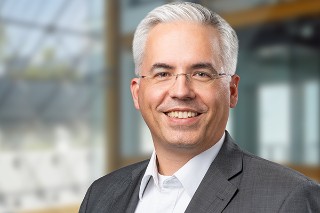
Jonathan Sarton is a Lecturer in Computer Science at the University of Strasbourg and a Researcher at the ICube laboratory. He holds an affiliation with the Geometric and Graphics Computing (IGG) team within the UFR of Mathematics and Computer Science. His primary research focuses on scientific visualization, volume rendering, and GPU programming. Education includes a PhD (2018) from the University of Reims Champagne-Ardenne titled 'High-performance interactive visualizations of massive volumetric data: an out-of-core multiresolution approach based on GPUs' , and a Master's in Visualization, Imaging, and Performance (2014) from the University of Orléans. He has held roles including Temporary Teaching and Research Associate (ATER) at the University of Reims (2018-2019) and a doctoral researcher at CReSTIC (2015-2018). Current research emphasizes interactive visualization of large unstructured meshes from numerical simulations, supported by the ANR LUM-Vis project. His technical work includes GPU-based out-of-core architectures for handling AMR time series data and distributed visualization systems. Professional activities include teaching computer science courses at undergraduate and graduate levels, focusing on 3D graphics, parallel programming, and algorithms. Professional contact: Office C118 at ICube, sarton@unistra.fr .
Jessica Ritchie Klein is a Senior Research Manager in the Department of Internal Medicine at Yale School of Medicine. She leads regulatory science initiatives including the Yale University Open Data Access (YODA) Project and the Yale-Mayo Clinic Center of Excellence in Regulatory Science and Innovation (CERSI). Her work focuses on improving transparency in clinical trial data sharing and post-market medical device research. Klein holds a BS in Biological Sciences from University of Rhode Island and an MPH from Southern Connecticut State University, alongside a Project Management Professional (PMP) certification (2014). Education: Bachelor of Science in Biological Sciences, University of Rhode Island (2005) Master of Public Health, Southern Connecticut State University (2011) Project Management Professional Certification (2014) Research Interests: Klein specializes in regulatory science, clinical trial data governance, and healthcare outcomes research. Her work emphasizes ethical data sharing practices, improving transparency in medical research, and leveraging interdisciplinary collaboration to advance healthcare innovation. Recent projects include evaluating the concordance between clinical trial data proposals and resulting publications, and developing protocols for multimodal assessment of cancer patient physical function. Key Contributions: Klein has co-authored over 10 peer-reviewed studies, with a focus on data sharing policies, medical device post-market surveillance, and collaborative research frameworks. Her work with the YODA Project has established best practices for accessing and utilizing clinical trial data. Klein also leads the Yale Collaboration for Regulatory Rigor, Integrity, and Transparency (CRRIT), fostering ethical standards in regulatory science. Labs/Teams: She is affiliated with the Center for Outcomes Research and Evaluation (CORE) and serves as a core member of the Yale-Mayo Clinic CERSI and YODA Project teams.
Marco Brambilla is a Professor at Politecnico di Milano and a Lecturer at Università della Svizzera italiana (USI) . He leads the Data Science Lab at Politecnico di Milano's Department of Electronics, Information and Bioengineering (DEIB) and serves as director of Computer Science and Engineering B.Sc. and M.Sc. curricula . Research focus on data science, AI explainability, web science, crowdsourcing, model-driven development, and social media analytics Co-inventor of the OMG IFML standard and holder of 2 patents on crowdsourcing and multi-domain search Founder of four startups: WebRatio, Fluxedo, Servitly, and Quantia His recent publications explore: Graph-based Retrieval Augmented Generation for energy efficiency Human-AI interaction analysis through live streaming platforms Model-driven approaches for multiexperience AI interfaces Explainable AI with human-in-the-loop validation Scientific contributions include: Best paper awards at international conferences Associate editor role at SIGMOD Records Editorial contributions to the PERISCOPE H2020 project on pandemic impacts He actively participates in European research initiatives such as: TRIGGER project on EU global governance PERISCOPE for pandemic preparedness
Dr. Heng Cai is an Assistant Professor at Texas A&M University, leading the GIScience for Resilience (GIResilience) Research Group. Her work focuses on geographic information science, disaster resilience, socio-environmental sustainability, and environmental health. She develops geospatial data mining and decision-support tools to model human-environment interactions under climate change and natural hazards. Education: Ph.D. in Environmental Science (Louisiana State University), M.S. in Geographic Information Science (Chinese Academy of Sciences), B.E. in Surveying and Mapping (China University of Geosciences). Research interests include geospatial data science, hazard modeling, and resilience assessment. Her group has pioneered studies on land loss prediction in coastal Louisiana, social media analysis for disaster response, and cyberGIS platforms like PRIME. Recent work emphasizes climate adaptation strategies and urban resilience frameworks. Publications span interdisciplinary journals like Remote Sensing , Annals of the American Association of Geographers , and International Journal of Digital Earth . She actively collaborates with NASA and disaster management agencies, securing grants for projects like HeatSMART and U-CARE. Labs/Teams: GIResilience Group (www.gis-resilience.info) focuses on innovative geospatial solutions for societal resilience. She mentors undergraduate and graduate students in GIS programming, webGIS, and geodatabase applications.
Dr. Su Nguyen is a Senior Lecturer in AI and Analytics at RMIT University's Department of Accounting, Information Systems & Supply Chain, located at the City Campus in Australia. His research focuses on integrating artificial intelligence, analytics, and operations research to address challenges in sustainability, safety, and critical domains like healthcare and logistics. Key areas include transparent AI systems, simulation models for dynamic environments, and optimization algorithms for energy and transportation. His work emphasizes making AI systems accountable to mitigate risks such as discrimination and ensures fairness in autonomous decision-making. Collaborations span Australia, New Zealand, and the Asia Pacific region, promoting AI applications in industry. Supervised projects include topics like personalized care plans, workforce rostering optimization, and AI-driven solutions for supply chains and cyber-risk evaluation. Dr. Nguyen's research bridges theoretical advancements with practical industry engagement, aiming to enhance decision-making through advanced analytics and business optimization frameworks.
Prof. Dr. Jörn Kohlhammer is an Honorary Professor at TU Darmstadt and Head of the Information Visualization and Visual Analytics department at Fraunhofer Institute for Computer Graphics Research IGD. His work focuses on decision-oriented visualization using semantics, visual business analytics, and applications in medical data analysis, internet security, and industrial sectors. He holds a PhD from TU Darmstadt (2005) and has authored over 50 publications in journals and conferences like IEEE VAST and EuroVis. Education: B.Sc./M.Sc. in Computer Science with Business Administration Minor (1993-1999), Ludwig-Maximilians-Universität München Research Interests: Context-dependent visualization solutions Medical data analysis and cohort visualization Decision support systems Visual analytics for cybersecurity and network traffic Professional Activities: Regular member of program committees for IEEE VAST, EuroVis Reviewer for journals/conferences including IEEE Transactions on Visualization and Computer Graphics Co-chair of IEEE VAST (2009) and founder of EuroVA (2010) Labs/Teams: Leads Fraunhofer IGD's Information Visualization & Visual Analytics group Projects: ATHENA, CorASiV (health authority support), SoBigData (social big data analytics)
Tae-Hoon Kim is a Professor in the Department of Computer Information Technology and Graphics at Purdue University Northwest. He holds a Ph.D. in Information Science from the University of Pittsburgh, an M.S. in Interdisciplinary Telecommunications from the University of Colorado Boulder, and a B.S. in Mechanical Engineering from Oklahoma State University. His research focuses on cybersecurity education, wireless sensor networks, data-driven analysis using machine learning, and AR-based educational tool development. Current projects are funded by the Army Research Office, NSF, NSA, and industry partners. Research interests span network security, data science, and innovative educational technologies. He actively develops interactive tools for K-12 and college cybersecurity education using augmented reality and data visualization techniques. Teaching specialties include network protocols, IoT, blockchain, and big data analytics. His publications address topics ranging from biomass energy prediction models to cultural heritage glyph analysis. Teaching responsibilities include courses on LAN/WAN design, network security, AI, and mobile applications. Over 20 years of academic experience includes advising student projects in cybersecurity and data science.
Andreas Bayerl is an Assistant Professor of Marketing at the Erasmus School of Economics, Erasmus University Rotterdam. He holds a PhD in Quantitative Marketing from the University of Mannheim and conducts interdisciplinary research at the intersection of digital behavior, consumer psychology, and data science. His research focuses on how individuals generate, process, and are influenced by digital information, particularly in the context of online reviews and influencer marketing. Using a mixed-method approach—combining large-scale observational data, text and image analysis, and field and laboratory experiments—Andreas investigates behavioral patterns in digital ecosystems. His work has been published in leading journals including Journal of Marketing , Harvard Business Review , MIT Sloan Management Review , and Nature Human Behavior . The most recent publications reveal a consistent focus on digital influence, credibility, and consumer decision-making. Key themes include the effectiveness of micro-influencers, the psychological impact of fake reviews, multimodal analysis of visual and textual content, and experimental validations of marketing strategies across platforms. His methodological rigor and real-world relevance are evident across these works. Andreas has received significant recognition for his contributions, including: H. Paul Root Award for groundbreaking research in influencer marketing He actively teaches in the area of data science and marketing analytics, contributing to the next generation of analytically skilled marketers. While no formal advisees are listed, his role as an assistant professor suggests involvement in student supervision and academic mentorship. His research program appears to be supported by empirical rigor and industry relevance, though specific grants or lab affiliations are not mentioned in the provided text.
Andreia Salvador is an Assistant Researcher at the Centre of Biological Engineering (Universidade do Minho, Portugal). Her research focuses on anaerobic biotechnology , microbial ecology , and biodegradation of pollutants , particularly using conductive materials to enhance biogas production. She holds a PhD in Chemical and Biological Engineering (University of Minho, 2013) and has authored over 50 peer-reviewed articles. Education: PhD in Chemical and Biological Engineering (2013), University of Minho MSc in Advanced Biomolecular Methods (2007), University of Aveiro BSc in Biology (2004), University of Aveiro Key Research: Optimization of anaerobic digestion via conductive materials Biodegradation of microplastics and pharmaceuticals Development of bioinformatics tools (e.g., MOSCA framework) Notable Grants: "GLOMICAVE" (EU-funded, 2021–present) "MarPlas" (regional grant, 2021–present) "Novel anaerobes for a biobased economy" (EU, 2015–2017) Labs/Teams: Led projects on microbial community analysis and bioremediation strategies
Adja Waelput is a Researcher in the Department of Obstetrics & Gynecology at Erasmus University Rotterdam, focusing on perinatal health inequities and social determinants of health. Her work directly contributes to UN Sustainable Development Goal 3 (Good Health and Well-being). Her research spans critical areas including: Perinatal mortality and health outcomes Socioeconomic drivers of health disparities Vulnerability assessment in pregnant populations Advanced statistical methodologies (latent class analysis, mediational g-formula) Data visualization techniques for public health policy Cross-sectoral collaboration frameworks Recent publications reveal a strong trend toward interdisciplinary approaches using big data analytics and community engagement to address systemic inequities. Her work emphasizes actionable interventions through tools like heat maps and vulnerability stratification models. No scientific awards were documented in the provided materials. Collaborative networks form the core of her methodology, particularly through the Dutch Healthy Pregnancy 4 All-3 Program which integrates healthcare, policy, and community stakeholders to tackle perinatal health disparities at structural levels.
Hong-Mei Chen is a Professor in the Department of Information Technology Management at the Shidler College of Business, University of Hawaii at Manoa. Her research bridges business strategy and information systems through architecture-centric approaches, focusing on transformative technologies like Big Data and blockchain. She maintains an active teaching load across undergraduate, master's, and doctoral programs while directing significant research initiatives. Her academic credentials include: PhD in Business Administration, University of Arizona MS in Management Information Systems, University of Arizona BS in Business Administration, National Taiwan University Professor Chen's research centers on Big Data System Design Methodology and Software Architecture , with pioneering work on the Neo-Metropolis Model for Big Data as a Service. She investigates technical debt reduction, DevOps integration, and cybersecurity applications while extending these frameworks to service systems, social CRM, and green information systems. Her approach combines empirical studies with practical industry implementations, particularly in aviation and energy sectors, to develop value engineering frameworks for business model innovation. Analysis of her 2015-2017 publications reveals three dominant trends: (1) Architecture-centric Big Data solutions for business innovation, (2) Proactive cybersecurity frameworks using predictive analytics, and (3) Service-oriented transformations through Service Dominant Logic. Her work consistently addresses the tension between agile development and architectural rigor in ultra-large-scale systems. She has received significant recognition including: Presidential Citation for Meritorious Teaching Award Dennis Ching Outstanding Teaching Excellence Award Fulbright Senior Specialist in IT Award CISE Global Information Infrastructure Healthcare award Professor Chen has secured over $6.5 million in competitive funding including a $1.1M NSF grant on software economics, $5M DARPA telemedicine projects, and $450K electrical vehicle data visualization research. She obtained substantial instructional hardware/software grants exceeding $2M from Oracle, Sun, Apple, and KPMG to establish the AIMS Lab. Her teaching development grants from IBM and CIBER have modernized ITM curricula with real-world data engineering components. She founded and directs the Advanced Information Management Solutions (AIMS) Lab, which serves as an industry-academic nexus for Big Data research. The lab partners with major technology providers to develop Neo-Metropolis architecture implementations while training students in DevOps and cybersecurity analytics through hands-on projects with aviation and healthcare organizations.
Takayuki Mizuno is an Associate Professor at the National Institute of Informatics and SOKENDAI (The Graduate University for Advanced Studies), where he leads interdisciplinary research at the intersection of informatics, econophysics, and computational social science. His work focuses on analyzing complex global systems such as economic networks, financial markets, human mobility, and geopolitical dynamics using big data and network science. Doctor of Science, Chuo University (Physics) JSPS Research Fellow (2004) Lecturer, Institute of Economic Research, Hitotsubashi University (2007–2010) Associate Professor, University of Tsukuba (2011–2013) Senior Research Fellow, Canon Institute for Global Studies (2009–present) His research interests include computational social science, econophysics, network science, wealth inequality, financial bubbles, cryptocurrency regulation, public opinion manipulation, and global supply chain ethics. He develops models to understand market dynamics, detect hidden financial influences, and visualize geopolitical power shifts. The recent articles highlight a consistent trend in applying big data and network analysis to real-world socio-economic problems: visualizing China's indirect control in global shareholder networks, detecting financial risks, analyzing online market competition, studying supply chain ethics, and understanding cultural integration through human mobility. The work bridges physics, economics, computer science, and political science. Scientific Awards: Best Paper Award, Japanese Society for Artificial Intelligence (2019) Best Paper Award, Information Processing Society of Japan (2019, 2013) Student Encouragement Award, IPSJ (2019) Best Paper Award, Transdisciplinary Federation of Science and Technology (2019) JSPS Research Fellow (2004) Dr. Mizuno advises multiple Ph.D. and master’s students and leads the Mizuno Laboratory, which conducts cutting-edge research on global challenges. He has secured significant research grants from JSPS, JST (Sakigake), and other funding bodies. His work is frequently featured in major media outlets including Nikkei, NHK, The Wall Street Journal, and Yomiuri Shimbun, indicating broad societal impact. He is actively involved in professional service, including as Director of the Society for Computational Social Science of Japan and member of the Editorial Board of the Japanese Society for Artificial Intelligence. He also participates in government advisory committees on big data, economic policy, and telecommunications. His lab, the Mizuno Laboratory, focuses on the fusion of political economy and data science, aiming to disentangle complex global networks to address issues like economic bubbles, terrorism, and social polarization.
Cecilia Furlan is an Assistant Professor at the Institute of Landscape Architecture , part of the Department of Landscape, Water and Infrastructure at the University of Natural Resources and Life Sciences, Vienna (BOKU). She holds a joint PhD in Engineering and Urbanism from KU Leuven and IUAV Venice. Landscape Urbanism Circular Economy Urban Metabolism Spatial Research Resource Scarcity Her research focuses on systemic design approaches for circular economy transitions in urban and regional contexts, particularly through projects like ATLANTES and REPAiR . She explores material flow mapping, post-industrial landscape regeneration, and urban wasteland transformation. Recent publications examine geodesign methods for circular construction hubs, ecosystem services in urban cemeteries, and spatial parameters for sustainable development. She contributes to international discourse through presentations at institutions in Austria, Belgium, Italy, Netherlands, and South Africa. 2020: Knowledge Frontiers Symposium grant 2019: EUROPAN 15 Runner-Up 2018: Premio Giovanni Ferraro PhD award 2014: Lisbon Open Room Competition honorable mention As a project leader for initiatives like Reindustrialisation Following the Brownfield Principle , she combines academic research with practical applications. She participates in peer-review activities for journals like Sustainability and Landscape Research , and organizes educational workshops on circular design.
Leonora Onarheim Bergsjø is an Associate Professor at the Department of Health and Nursing Sciences, University of Agder, with a primary affiliation at the Faculty of Teacher Education and Languages. Her work bridges digital ethics, artificial intelligence, and societal implications through interdisciplinary research and teaching. PhD from University of Oslo Chair of NORDE Norwegian Council for Digital Ethics Supervises PhD/Master's students across institutions (HiØ, UiA, UiO, INN) Research spans digital ethics , AI governance , and responsible digitalization , focusing on algorithmic accountability, digital judgment, and ethical risk assessment. Her 2025-2024 publications emphasize metaverse ethics, AI risk frameworks, and societal impacts of generative AI. She chairs NORDE and provides expert input to Norwegian authorities including the Ministry of Education, Norwegian Institute of Public Health, and Prime Minister's Office on digital ethics policy. Scientific Awards : Chair of NORDE Norwegian Council for Digital Ethics Active in public engagement through lectures, podcasts, and media appearances, addressing topics like AI literacy, digital security, and ethical challenges in education and healthcare.
Daniel Amo Filvà is an Assistant Professor at the Engineering Department of La Salle Digital Engineering School, Ramon Llull University. His academic work bridges engineering, education, and data science, with a strong emphasis on learning analytics, educational technology, data privacy, and the ethical integration of artificial intelligence in education. His research interests focus on Learning Analytics , Educational Technology , Data Privacy , GDPR in Educational Contexts , Data Literacy , and AI in Education . He explores how digital tools can support personalized, inclusive, and ethically sound learning environments, especially in K-12 and higher education. The recent publications reflect a clear trajectory toward data-driven education, urban mobility innovation, and ethical data use. His work combines empirical research, case studies, and tool development, often using systematic reviews and project-based methodologies. Themes such as GDPR-aware educational design, ChatGPT integration, and robotics for inclusive education recur across his outputs. Scientific Projects: IADE : Integrating AI and Data Literacy in Education for personalization. DIVINTECH : Robotics for students with Autism Spectrum Disorder. Visibilizar el aprendizaje con ChatGPT : Enhancing education through AI tools. InnovAI : Digital transformation in Catalan SMEs. Acciona y Conecta : Sustainable urban mobility in Barcelona. He advises students such as B. Donate-Beby and S. Aguayo-Mauri, and collaborates with national and international researchers. His work is supported by research grants from institutions like the Department of Education and ACCIÓ. He leads multiple funded projects and contributes to interdisciplinary teams focused on technology transfer and innovation. He is affiliated with research groups working on digital engineering, human-environment interaction, and inclusive technology development. These teams foster collaboration across education, engineering, and public policy sectors to address real-world societal challenges.