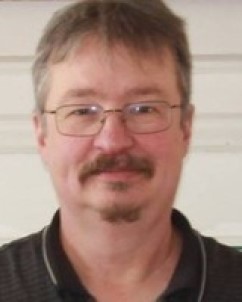
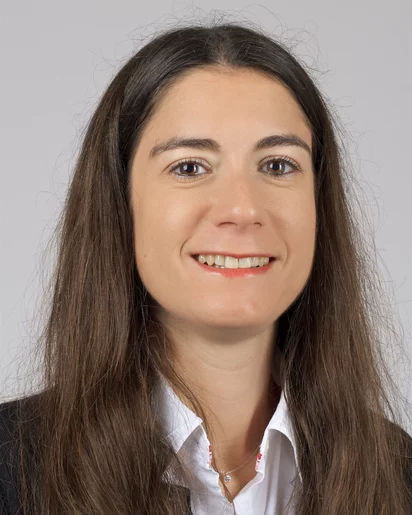
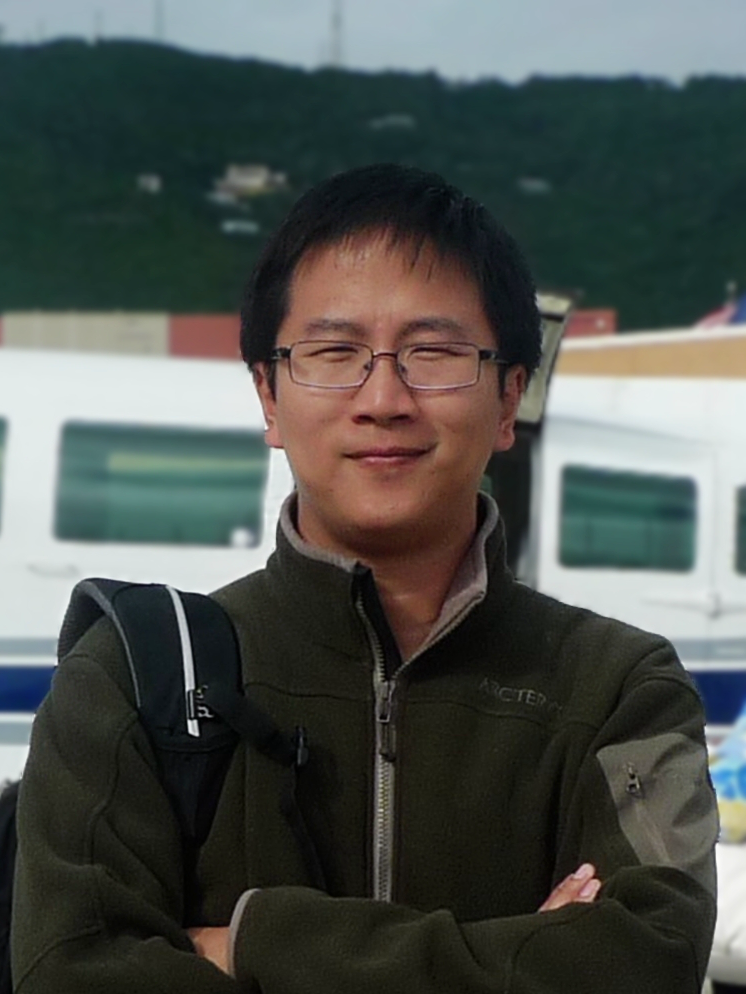
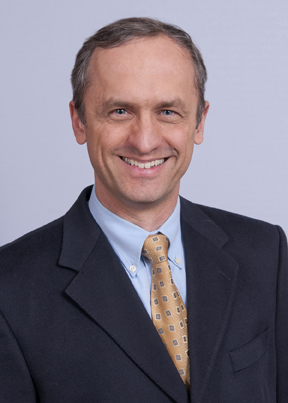
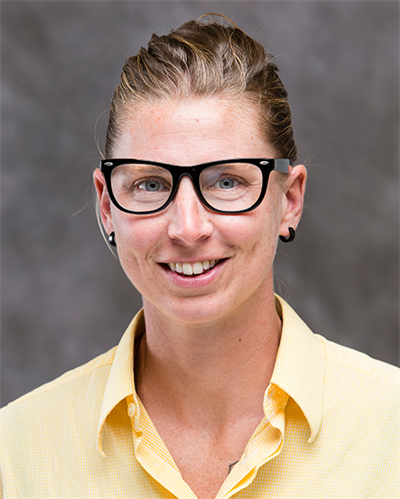
Raj Sunderraman is a Professor of Computer Science at Georgia State University, specializing in databases, data mining, and logic programming. His research focuses on deductive databases, semantic web technologies, bioinformatics, and graph data modeling. He holds a B.E. (Honors) in Electronics Engineering from Birla Institute of Technology and Science, an M.Tech. in Computer Technology from Indian Institute of Technology Delhi, and a Ph.D. in Computer Science from Iowa State University. His research projects include NeuronBank—a tool for cataloging neuronal circuitry—and work on scalable graph storage systems for big data. He has developed a programming environment for protein structure data and contributed to the paraconsistent relational data model. His teaching and research emphasize practical applications in bioinformatics, geoinformatics, and software systems. Key areas of exploration include reasoning with incomplete/inconsistent data, deductive database semantics, and graph query languages. Recent work involves lambda calculus visualization tools and 3D perception benchmarks for UAVs. He has authored over 150 publications and a textbook on Oracle 10g programming.
Jon Reades is a Professor of Geographic Data Science at the Centre for Advanced Spatial Analysis (CASA) at University College London (UCL), where he currently serves as Director. His academic journey includes a PhD in Town Planning from UCL's Bartlett School of Planning, and prior roles as Senior Lecturer and Lecturer in Quantitative Human Geography at King's College London. His research integrates urban planning, human geography, and data science, with a focus on housing policy, geospatial modeling, and urban systems analysis. Reades' educational background spans comparative literature (BA, Princeton University) and non-academic experience in software engineering and database mining. He has held visiting research positions at MIT's SENSEable City Lab and completed postgraduate training in data science and academic practice. His work bridges computational methods with urban theory, addressing challenges like housing inequality, urban gentrification, and pandemic-era spatial dynamics. Key research interests include spatial data visualization (e.g., Folium library contributions), agent-based modeling of urban behavior, and quantitative approaches to gender equity in academia. He actively engages with policy-relevant topics such as affordable housing and urban innovation, leveraging open-source tools and collaborative frameworks like CyberGIS. Reades' interdisciplinary approach is reflected in his teaching, which emphasizes practical coding skills (Jupyter notebooks) alongside theoretical urban concepts. Labs/Teams: As CASA Director, he oversees a multidisciplinary team advancing spatial data science methodologies. His research network includes collaborations with MIT's SENSEable City Lab and contributions to global urban initiatives like 'Smart London.' Current projects explore post-pandemic urban resilience, spatial equity in housing markets, and digital tools for urban analytics.
Peter Wetz is a researcher affiliated with the Institute of Software Technology and Interactive Systems at TU Wien. His work focuses on semantic data processing, environmental data systems, and interactive data exploration. He has contributed to frameworks like YABench for RDF stream processing and StatSpace for statistical data integration. His research integrates Linked Data, real-time environmental monitoring, and user-friendly data visualization tools. Notable projects include Linked Widgets and Open Mashup Platform, aiming to lower barriers for data exploration. He has authored over 20 publications between 2013–2017, emphasizing interdisciplinary approaches to data management and semantic technologies. Key Areas: Semantic Web, Environmental Data, Stream Processing Tools Developed: YABench, StatSpace, Linked Widgets Platform
Elena Guidetti is a Fixed-term Assistant Professor in the Department of Architecture and Design (DAD) at Politecnico di Torino, where she is also a member of the Interdepartmental Center FULL - Future Urban Legacy Lab and the research group TRANSITIONAL MORPHOLOGIES. She contributes to the College of Architecture and Design and serves on the Planning and Design Board. Her teaching spans multiple programs including Architecture, Urban Planning, and Aerospace Engineering, focusing on sustainability, heritage, and urban regeneration. Her research centers on adaptive reuse , architectural and urban design , building sustainability , and the reuse of industrial heritage . She investigates embodied carbon and energy in buildings and promotes sustainable transformation of the built environment. Her work intersects with cultural heritage, environmental policy, and urban resilience, supported by participation in the ProArch research network. The recent publications highlight a strong trend toward sustainable urban transformation, participatory design, and the integration of digital tools in urban analysis. Her 2025 book The Potential of Form explores architectural strategies for repurposing underused buildings in Europe. Other works address energy landscapes, urban ecosystems, and the use of social media data for mapping urban communities, reflecting a multidisciplinary approach to contemporary urban challenges. Scientific Awards: No scientific awards mentioned in the provided text. Advising and Grants: Elena Guidetti has not been listed as supervising any students in the available information. There is no mention of grants or funded research projects directly attributed to her, though her involvement in collaborative research suggests potential participation in broader initiatives. Labs and Research Groups: FULL - Future Urban Legacy Lab : Interdepartmental center focused on sustainable urban transformation. TRANSITIONAL MORPHOLOGIES (DAD) : Research center within the Department of Architecture and Design. ProArch Research Network : Active participant since 2019, contributing to discourse on architectural and urban design.
Berenike Herrmann is a Professor in the Faculty of Linguistics and Literary Studies at the University of Bielefeld, Germany. She is affiliated with the Department of German Studies and the Department of Literary Studies, and actively contributes to interdisciplinary research through centers such as the Bielefeld Center for Data Science (BiCDaS) and the Center for Uncertainty Studies (CeUS). She leads major research projects within Collaborative Research Centers SFB 1288 and SFB 1646, focusing on comparative literature and linguistic creativity. Faculty of Linguistics and Literary Studies Department of German Studies Department of Literary Studies Collaborative Research Center 1288 – Subproject E06 SFB 1646 – Project A05 Bielefeld Center for Data Science (BiCDaS) Center for Uncertainty Studies (CeUS) Her research spans computational stylistics, data humanities, German-Swiss literature, affect and emotion, metaphors, and social reading practices. She employs digital methods to analyze literary texts and reader responses, bridging traditional literary scholarship with computational approaches. Her work emphasizes comparative frameworks, national literature formation, and the impact of digitality on contemporary literary culture. The 15 most recent articles reflect a strong interdisciplinary trend, combining literary theory with data science, cognitive linguistics, and affect studies. Key themes include computational analysis of style and creativity , emotional dynamics in literature , metaphorical structures , and digital reading practices . The research is characterized by methodological innovation, using metrics and models to study linguistic and literary phenomena in both historical and contemporary contexts. Deputy Chairwoman, Board of Literary Studies Deputy Chair, Library Commission Member, IKM Officers (with Prof. Dr. Maximilian Benz) Voting Member, Linguistics Department Member, BiSEd (Faculty of Linguistics and Literature) She is involved in academic governance and digital infrastructure, advising on library policy, research data services, and curriculum development. She is the module responsible for 'Literature in the present: Culture, media, digitality' (23-GER-PLit2_a), indicating active teaching and program leadership. Her projects are supported by third-party funding, particularly through the German Research Foundation (DFG), and she collaborates across disciplines, especially at the intersection of humanities and data science. Berenike Herrmann is embedded in several interdisciplinary research environments, including the Collaborative Research Centers 1288 and 1646, the Bielefeld Center for Data Science (BiCDaS), and the Center for Uncertainty Studies (CeUS). These labs and teams foster innovative, cross-disciplinary approaches to literary and linguistic research, combining traditional hermeneutics with computational modeling and data-driven analysis.
Mark Conrad serves as an Adjunct Lecturer at the Advanced Information Collaboratory (AIC) within the University of Maryland's College of Information Studies. With over 30 years of experience in archives, he focuses on digital curation, data management, and computational methods in archival science. Previously, he spent 28 years at the National Archives and Records Administration (NARA), where he led technology initiatives and collaborated globally on digital preservation solutions. He also served in roles at the Rhode Island State Archives and Penn State University, alongside Fulbright Scholar appointments in Ireland and Scotland. His research emphasizes computational approaches to archival challenges, including digital preservation systems, audit processes for trustworthy repositories (e.g., ISO 14721/OAIS), and integrating technology into archival education. He has contributed to major standards development for digital repositories and advised federal agencies like the National Park Service and Army Research Lab. His projects often bridge traditional archival practices with emerging technologies, fostering interdisciplinary collaboration between archivists, data scientists, and historians. Conrad’s involvement in national committees such as the White House NITRD Subcommittee and his leadership in the NHPRC Technology Initiatives underscores his influence in shaping archival policy and infrastructure. His teaching extends to non-credit certificate programs in digital curation and online courses on electronic records management, reflecting a commitment to professional education.
Anthony C. Robinson is Professor of Geography and the E. Willard and Ruby S. Miller Professor at The Pennsylvania State University. He serves as Director of Online Geospatial Education Programs through the John A. Dutton e-Education Institute and Director of the GeoGraphics Lab within the Department of Geography in the College of Earth and Mineral Sciences. Robinson also holds leadership positions as Vice Chair of the International Cartographic Association Commission on Geovisualization and Chair of the AAG Cartography & Mapping Specialty Group. Dr. Robinson earned his B.S. in Applied Geography from East Carolina University (2002), followed by his M.S. (2005) and Ph.D. (2008) in Geography from Penn State. His academic career at Penn State has progressed from Research Assistant (2003-2008) to his current position as full Professor (2024-present), with previous appointments as Assistant Professor (2015-2019) and Associate Professor (2019-2024). Robinson's research focuses on designing and evaluating geovisualization tools to improve geographic information utility and usability across multiple domains including epidemiology, crisis management, national security, and higher education. His key contributions include characterizing how users assemble analytical results, studying visualization tools through eye-tracking methodologies, and exploring map symbol standardization for emergency management. Recent innovative work examines viral cartography in social media, techniques for visualizing the 'presence of absence' in big spatial data, and geographic dimensions of learner engagement in educational analytics. His publication record demonstrates a consistent trajectory toward increasingly complex geospatial challenges, with early work focused on foundational geovisual analytics methods evolving into current research addressing big data cartography, social media geovisualization, and educational applications of geographic information science. Robinson's scholarly output bridges theoretical cartographic principles with practical applications across diverse domains, particularly emphasizing user-centered design approaches. E. Willard and Ruby S. Miller Professor in Geography Past President of the North American Cartographic Information Society (NACIS) Co-Chair of the International Cartographic Association Commission on Visual Analytics Co-Director of GeoGraphics Lab Director of Online Geospatial Education Programs since 2014 As an advisor, Robinson has mentored doctoral students including Tim Prestby (recent PhD graduate) and currently supervises PhD candidate Lily Houtman. He actively seeks graduate students interested in cartography and geovisualization, user-centered design and evaluation, and health and ecological informatics. His research has been supported through institutional positions at Penn State including leadership of online geospatial education programs serving thousands of students globally. Robinson directs the GeoGraphics Lab, which serves as an incubator for innovative geospatial projects including community mapping initiatives and geospatial storytelling devices focused on community resilience and climate action. The lab recently hosted its inaugural Community Mapping Day at Penn State, engaging students, faculty, and community members in mapping pollinator pathways. Through the John A. Dutton e-Education Institute, he leads Penn State's GIS Certificate, Master of GIS, and Master of Spatial Data Science programs, which have educated thousands of professionals worldwide.
Sunil Choenni is a Lecturer in Future Information & Communication Technology at the Rotterdam University of Applied Sciences and an active researcher within the Creating010 Knowledge Center . He leads and participates in the Data Driven Society project, where his work centers on algorithmic transparency, big-data analytics, large language models, and privacy & security engineering. Research Interests: Algorithmic transparency and explainable AI Big-data analytics for smart government and justice systems Privacy engineering and data minimization technologies Security architectures, including Zero-Trust models Open and semi-open data governance Ethical implications of AI and machine learning in society Across nearly 50 refereed contributions since 2013, Choenni’s publications reveal a sustained focus on leveraging data science to enhance public-sector decision-making while rigorously safeguarding individual privacy and fairness. His 2024 pre-print on explainable ML using concept activation vectors, together with articles on Zero-Trust smart-shipping architectures and privacy-minimization in public organizations, exemplify his forward-looking research agenda. Scientific Awards & Recognition: No specific awards or fellowships are listed in the provided materials. Advising & Grants: While the text does not enumerate PhD or Master’s advisees, Choenni actively mentors students and practitioners through Rotterdam University’s internship and graduation-research programs. External grant details are not supplied. Labs & Teams: Choenni is embedded in the Creating010 Knowledge Center , an interdisciplinary research environment that integrates ICT, media, and behavioural sciences to foster innovation in the digital society.
Dr. Anne Bonnin serves as a Beamline Scientist at the Paul Scherrer Institute (PSI) in Switzerland, where she has been instrumental in X-ray imaging research since joining the X-ray Tomography Group in 2014 and assuming her current role at the TOMCAT Beamline in 2016. Affiliated with PSI's Center for Photon Science and Laboratory for Macromolecules and Bioimaging, she operates at the forefront of synchrotron-based imaging techniques. Her academic foundation includes a PhD from INSA de Lyon focused on material properties for explosive detection, followed by postdoctoral work at the European Synchrotron Radiation Facility (ESRF) in X-ray diffraction and phase contrast tomography, and an NSF Research Fellowship for paleontology research at Harvard University and ESRF. Specializing in X-ray imaging (micro/nano-tomography, phase-retrieval) and powder diffraction, Dr. Bonnin leads the bioimaging program at TOMCAT with particular emphasis on the international Heart Imaging Project. Her research develops novel methodologies for materials characterization across diverse domains including cardiac microstructure analysis, paleontology, and neurodegenerative disease modeling, with significant contributions to understanding material behavior at microscopic scales. Her recent publications (2019-2021) demonstrate strong interdisciplinary impact, advancing X-ray imaging applications in energy storage (battery materials), biomedical research (cardiac/auditory systems), and materials engineering (aerogels). A defining trend is the integration of machine learning for image analysis, alongside methodological innovations like non-rigid image stitching and Fourier ptychography. These works reflect extensive international collaboration and address critical challenges in healthcare, energy, and fundamental material science. Dr. Bonnin leads the Heart Imaging Project to quantify cardiac microstructure using contrast-agent-free X-ray phase-contrast imaging, while actively contributing to the SLS2.0 upgrade project preparing TOMCAT for multiscale, multimodal, and dynamic tomographic capabilities. Her collaborative framework spans global researchers in materials science, paleontology, and biomedical engineering. As manager of the TOMCAT nanoscope—a full-field imaging setup achieving 150 nm 3D resolution—she enables cutting-edge research in absorption and phase-contrast imaging. Her team within the X-Ray Tomography Group drives the bioimaging program forward, particularly through the Heart Imaging Project's dynamic cardiac studies using modified Langendorff setups.
Bo Luo is a Professor in the Department of Electrical Engineering and Computer Science at the University of Kansas . He serves as Director of the High Assurance and Secure Systems (HASS) Research Center within the Institute for Information Sciences (I2S) , a National Center of Academic Excellence in Cyber Defense and Research by the National Security Agency. Education: Ph.D. in Information Sciences and Technology, Pennsylvania State University (2008) M.Phil. in Information Engineering, Chinese University of Hong Kong (2003) B.E. in Electronic and Information Engineering, University of Science and Technology of China (2001) His research focuses on security and privacy at the intersection of data science, AI/ML, IoT/CPS, and network security . Current projects include adversarial machine learning, privacy compliance in smart devices, and hardware-enabled security solutions. He leads the InfoSec Research Group , mentoring students in areas like IoT security, deep learning vulnerabilities, and cryptographic systems. Recent article trends highlight IoT device vulnerabilities (2025), privacy compliance in automotive apps (2024), adversarial AI-art detection (2024), and secure computation frameworks (2024). His work appears in top venues like ACM CCS , USENIX Security , and IEEE TDSC . Scientific Recognition: ACSAC 2021 Distinguished Paper Award ACSAC 2017 Best Paper Award CCS 2022 Best Paper Honorable Mention ICPC 2024 Distinguished Paper As Principal Investigator for the Jayhawk SFS CyberCorps Scholarship , he trains future cybersecurity professionals. His lab collaborates on cyber-physical security and AI safety , with alumni placed at institutions like Beloit College, Apple, and Amazon.
Matt Higham is an Assistant Professor at St. Lawrence University in the Math, Computer Science, and Statistics Department . His research focuses on Spatial Statistics with ecological applications, particularly Spatial Prediction Models that account for imperfect detection of animals in surveys. Education: PhD in Statistics from Oregon State University (2019) B.S. in Statistics and Botany from Miami University (2014) Research interests involve developing statistical methodologies for ecological applications, including spatial sampling , spatio-temporal modeling , and imperfect detection adjustment in wildlife surveys. He contributes to R software packages like spmodel and sptotal for spatial data analysis. Recent publications demonstrate trends in spatial statistics (4/7 articles), ecological modeling (5/7 articles), and statistical software development (2/7 articles). Key subfields include spatial prediction , block kriging , finite population estimation , and big spatial data handling . Teaching activities include courses in Introduction to Statistics , Applied Regression Modeling , Foundations of Data Science , and Data Visualization . Personal interests include racket sports, jogging, gaming, hiking, and backpacking.
Aldert Zomer is an Associate Professor at the Faculty of Veterinary Medicine , Utrecht University, specializing in Infectious Diseases & Immunology . He is affiliated with the WHO Collaborating Centre for Campylobacter and Antimicrobial Resistance and serves as a Bioinformatics Consultant for Janssen Pharmaceuticals . His research focuses on bacterial (meta)genomic analysis for comparative genomics , molecular epidemiology , and genotype-phenotype associations in pathogens like Salmonella , Escherichia coli , and Campylobacter . PhD in Molecular Genetics from University of Groningen (2007) Postdoctoral work at University College Cork and Radboud University Medical Centre His research integrates bioinformatics , microbiome analysis , and machine learning to study antimicrobial resistance mechanisms, host-pathogen dynamics, and microbial ecology in veterinary and public health contexts. Current projects include Visiting Scientist at Quadram Institute (Norwich, UK) Leadership in Utrecht University's Research IT Committee He has developed open-source tools like RFPlasmid and Kaptive for genomic analysis and is actively involved in WHO's One Health AMR initiatives OIE Reference Laboratory for Campylobacter Teaching microbial genomics courses at Utrecht University
William J. Turkel is a Professor of History at The University of Western Ontario, Canada, and a member of the Royal Society of Canada's College of New Scholars. His research focuses on computational history, science and technology studies, and disability studies. He holds a PhD from MIT (2004) and leads the History Department's Fab Lab, equipped with advanced fabrication tools. Turkel's work includes reverse-engineering historical technologies, digital exhibit design, and mentoring over 20 students. He has authored books like Spark from the Deep and The Archive of Place , and his open-source textbook Digital Research Methods with Mathematica is widely used. Awards include the Western Award for Technology-Enhanced Teaching (2021) and SSHRC funding for NiCHE (2004–14). Education: PhD, MIT (2004) Research Interests: Computational methods, big history, modular synthesis, disability studies, and astrobiology. His lab explores tangible computing, 3D printing, and historical experimentation. Articles Overview: Recent work spans digital humanities tool development, historical computing analysis, and music-pattern recognition via machine learning. Key themes include bridging computational methods with historical inquiry. Awards: Royal Society membership (2018), Western University award (2021), and SSHRC leadership (2004–14). Advising & Grants: Supervised over 20 students and postdocs, including Devon Elliott and Ian Milligan. Collaborates with Tim Hitchcock, Edward Jones-Imhotep, and others on projects like MK ULTRA analysis and exoskeleton patent studies. Labs/Teams: The History Department Fab Lab includes 3D printers, CNC tools, and electronics prototyping. His lab designs interactive exhibits and tangible artifacts to explore historical phenomena.
Sorin Draghici is a Professor of Computer Science at Wayne State University's James and Patricia Anderson College of Engineering. His research specializes in computational biology, integrating multi-omics data to discover disease subtypes and repurpose drugs. He develops bioinformatics tools like ROntoTools and CPA for pathway analysis and single-cell data interpretation. Research Focus: Machine learning applications in oncology and infectious diseases, including COVID-19 proteomics and ovarian cancer recurrence prediction. Recent innovations include AI-driven data interrogation (LmRaC) and upstream regulator prediction (PURE). Publications emphasize scalable algorithms for big data challenges.
Megan Monroe is an Associate Teaching Professor in the Department of Computer Science at Tufts University . Her academic journey includes a Ph.D. and M.S. from the University of Maryland and a B.S. from Carnegie Mellon University . Research Interests : Monroe specializes in Visual Analytics , focusing on Temporal Data Analysis and Computational Thinking . She developed the EventFlow visualization tool used in healthcare and defense sectors. Her work bridges Artificial Intelligence , Computation Theory , and Human-Computer Interaction . Publications highlight her contributions to Interactive Visualization , Temporal Querying , and Multi-user Environments , with applications in healthcare data and machine learning debugging. Scientific Awards : Information is Beautiful Awards (2016) HCIL-Yahoo! Research Award (2013) VAST 2013 Honorable Mention Audience Choice Award at Pitch Dingman Competition (2011) Monroe’s teaching includes Computation Theory , Machine Structures & Programming , and Teaching Computer Science courses. She previously worked at IBM Research , designing tools for Watson technologies.