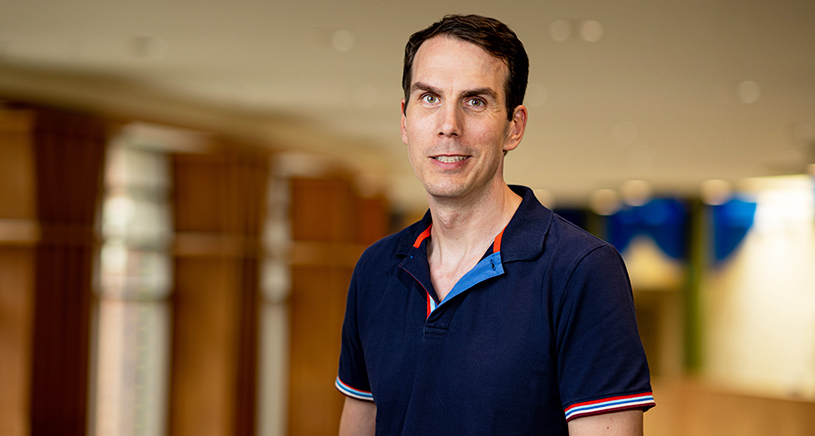
Lars G. Fritsche is an Associate Research Scientist in the Department of Biostatistics at the University of Michigan School of Public Health. His work bridges human genetics, big data analytics, and public health, with a focus on understanding the interplay between genetic and non-genetic risk factors for complex diseases. Education: PhD (University of Regensburg, 2009), MS (University of Regensburg, 2004) His research spans polygenic risk scores (PRS), electronic health record (EHR) integration, pharmacogenetics, and longitudinal disease modeling. Projects include developing the PRSweb and ExPRSweb repositories for genetic and exposure risk scores, with applications in cancer, age-related macular degeneration (AMD), and cardiometabolic conditions. Recent publications highlight his expertise in cross-ancestry genetic studies, selection bias correction, and AI-driven analysis of retinal imaging data. Collaborations include the Michigan Genomics Initiative and UK Biobank, emphasizing scalable tools for disease prediction and prevention.
Anne de Jong is a researcher in the Molecular Genetics department at the University of Groningen, specializing in bioinformatics and computational biology. Her work focuses on developing user-friendly pipelines and web servers for integrating data mining and statistics, particularly in bacterial genetics and transcriptomics. She contributes to tools like BAGEL3, PePPER, and Genome2D, which aid in analyzing prokaryotic genome and transcriptome data. Her group utilizes Linux servers to manage large datasets from techniques such as Next Generation Sequencing and proteomics analysis. Her research interests include RNA folding, biospectroscopy, and translating big-data into biological knowledge. She has published extensively on bacteriocin detection, promoter prediction, and data visualization frameworks for prokaryotic systems biology.
Nikolaos Pelekis is a Professor at the Department of Statistics and Actuarial Science, School of Finance and Statistics, University of Piraeus, where he teaches courses in Data Science, Data Management, Information Systems, and Computer Programming. He has been actively involved in both undergraduate and postgraduate education, offering specialized courses such as "Statistical Data Mining Methods" in the Applied Statistics Master's program and "Big Data Management" in the Cybersecurity and Data Science postgraduate program. Born in 1975, Professor Pelekis earned his Bachelor's degree in Computer Science from the University of Crete (1998), followed by an MSc in Information Systems Engineering (1999) and a PhD in Moving Object Databases (2002) from UMIST University in the United Kingdom. His educational background laid the foundation for his distinguished career in data science and database management. Professor Pelekis' research spans multiple domains within data science and database management, with particular emphasis on mobility data analytics. His work focuses on data mining, big data management and analytics, with special attention to location and motion data including trajectories of moving objects. He has made significant contributions to spatial and spatiotemporal database management, moving object database systems, privacy-preserving data mining, and OLAP analysis. His research bridges theoretical foundations with practical applications, particularly in maritime and transportation domains. An analysis of Professor Pelekis' recent publications reveals a strong trend toward maritime data analytics and vessel traffic prediction. His work increasingly focuses on applying machine learning techniques to maritime trajectory data, developing systems for collision risk assessment, vessel location forecasting, and maritime route prediction. The research demonstrates a progression from foundational database management techniques to sophisticated analytics for time-critical mobility forecasting, with applications in aviation and maritime domains. Five best research paper awards 1st & 3rd place in the SemEval-2017 competition 3rd place in the ACM SIGSPATIAL Cup 2016 competition Best paper award at ACM SIGSPATIAL'14 (Path-based Queries on Trajectory Data) Best paper award at ER'13 (Baquara: A Holistic Ontological Framework for Movement Analysis with Linked Data) Best application paper award at ICDM'09 (Clustering Trajectories of Moving Objects in an Uncertain World) Ralf H. Güting best research paper award at SSTD'21 (A Novel Indexing Method for Spatial-Keyword Range Queries) Best Demo Paper award at SSTD'21 (MaSEC: Discovering Anchorages and Co-movement Patterns on Streaming Vessel Trajectories) Professor Pelekis has been actively involved in advising and research funding acquisition. He has participated in over 10 European and National Research and Development projects as principal investigator or key researcher. His leadership extends to directing research laboratories and coordinating large-scale collaborative projects. As co-founder of the Data Science Lab - DataStories at the University of Piraeus, he has mentored numerous researchers and students. His research has been supported by prestigious funding programs including Horizon Europe, Horizon 2020, and national research initiatives. Professor Pelekis co-founded and leads the Data Science Lab - DataStories at the University of Piraeus, which comprises 9 faculty members from 4 different Departments along with experienced and young researchers. He previously served as Head of Research for the Information Management Lab (InfoLab) at the Department of Informatics, University of Piraeus (2005-2014). His current research team is actively engaged in multiple European projects including "DAT.AI – Energy-efficient AI-ready Data Spaces" and "EMERALDS – Extreme-scale Urban Mobility Data Analytics as a Service," focusing on cutting-edge applications of data science in maritime and urban mobility contexts.
Nicolas PRAT is an Associate Professor at ESSEC Business School specializing in Information Systems, Data Analytics and Operations. He serves as Head of the Information Systems Track at the Cergy campus and has been with ESSEC since 1995, progressing from Lecturer to his current position as Associate Professor since 2006. His academic credentials include: Accreditation to supervise research (Université Paris Dauphine-PSL, 2012) PhD in Information Systems (Université Paris Dauphine-PSL, 1999) Specialized Master in Information Systems (ESSEC Business School, 1991) MSc in Management (ESSEC Business School, 1990) International Teachers Programme (Stockholm School of Economics, 2004) PRAT's research focuses on conceptual modeling, design science research, business intelligence, and knowledge management with increasing attention to emerging technologies like AI and blockchain. His work bridges theoretical foundations with practical applications, examining how data and knowledge engineering can support organizational decision-making processes. He has made significant contributions to understanding the evolution of conceptual modeling and taxonomy development for complex technologies. His recent publications demonstrate a clear research trajectory toward exploring generative AI's impact on business intelligence, sustainability frameworks for design science research, and advanced methods for taxonomy development in complex emerging technologies. These works reflect his ongoing engagement with cutting-edge developments while maintaining strong theoretical foundations in information systems research. Scientific recognition includes: Qualification to the function of full Professor in the French University system (Computer Science, 2013) PRAT has supervised doctoral research, including Demigha S. at Université Paris 1 Panthéon-Sorbonne in 2005. His academic leadership includes serving as Academic Director for specialized programs and Head of the Information Systems Track. He actively contributes to the scholarly community through editorial board memberships for "Systèmes d'Information et management" (since 2022) and "Journal of Database Management" (since 2013).
Maksimenkova Olga Veniaminovna is an Associate Professor and Deputy Head of the Department of Software Engineering at the Faculty of Computer Science, National Research University Higher School of Economics (HSE University) in Moscow. With over 20 years of scientific and teaching experience, she has been working at HSE since 2009. Her academic journey includes positions as Senior Lecturer, Researcher at the International Laboratory for Intelligent Systems and Structural Analysis, and Deputy Director of the Center for Strategic Analytics and Big Data. Dr. Maksimenkova holds a Candidate of Technical Sciences degree (2018) in Information Systems and Processes, with a dissertation on improving educational information systems based on life cycle models of control and measuring materials. She graduated from Moscow State Institute of Electronics and Mathematics in 2006 with a specialty in Applied Mathematics and the qualification of Mathematician-Engineer. Her extensive professional development includes numerous advanced training programs in educational technologies, software engineering, and emotional intelligence. Her research focuses on educational software design, collaborative learning methodologies, game development education, and adaptive learning systems. She has made significant contributions to the field of educational technology through her work on data science education, virtual reality applications, and computer-supported collaborative learning environments. Dr. Maksimenkova's research bridges theoretical frameworks with practical applications in software engineering education. Analysis of her recent publications reveals a strong emphasis on game-based learning approaches, particularly using Unreal Engine for educational purposes. Her work demonstrates a consistent focus on practical applications of educational technology in software engineering contexts, with increasing attention to AI integration in educational settings. The publications show evolution from foundational work on educational software testing to more sophisticated applications involving game development, virtual reality, and adaptive learning systems. Honorary certificate of HSE University (March 2025) Gratitude from Higher School of Economics (December 2022) Multiple gratitudes from HSE University Vice-Rector (August 2021) Academic work bonus for six consecutive academic years (2013-2019) Inclusion in HSE University's high professional potential group (personnel reserve) Recognition in the Best Russian-language Scientific Works competition (2024) Dr. Maksimenkova actively supervises student course works and final qualification projects, and mentors graduate students. She has been instrumental in developing educational projects including the Summer School on Software Engineering and the GameDev Laboratory at ITHub College. Her grant activities include participation in the Microsoft Azure University Grant program (2016-2017) and various educational innovation projects at HSE University. She has coordinated teams for translating educational platforms and developed numerous educational materials for programming courses. As Academic Director of the Summer School on Software Engineering and Senior Analyst at the 'Vintorog' game development studio, Dr. Maksimenkova leads initiatives that bridge academic research with industry applications. She coordinates the OpenEdX-platform translation team and has been involved in developing educational games, including 'FCN Go!' released to celebrate the 10th anniversary of the Faculty of Computer Science. Her laboratory work focuses on practical applications of game development principles in educational contexts, creating tools that enhance the learning experience through interactive technologies.
Stephen Hill is an Associate Professor of Data Analytics in the Department of Economics, Finance and Quantitative Analysis at the Brock School of Business , Samford University in Birmingham, Alabama. He is also the founder of Illumined Analytics, LLC , an analytics education and consulting firm. Education: Ph.D. in Operations Management, University of Alabama (2008) Research Interests: Dr. Hill’s research focuses on the application of analytics techniques across a wide range of domains. His primary areas include: Sports Analytics: Especially in-game win probability models for sports like Canadian football and college football. Supply Chain Analytics: Optimization and modeling in logistics and operations. Education Analytics: Assessing learning outcomes, flipped classroom effectiveness, and use of technology in teaching. Healthcare Analytics: Applying data-driven methods to improve healthcare delivery and outcomes. He has published extensively in journals such as the Journal of Business Analytics , focusing on both methodological innovation and practical applications. His 2022 article on win probability models for Canadian football is a notable contribution to sports analytics. Teaching and Professional Contributions: Dr. Hill teaches courses in Advanced Data Analytics and Sports Analytics at Samford University. He has developed and led training programs through Illumined Analytics, LLC , offering analytics education and consulting services to a broader audience. He has also taught internationally and is actively involved in curriculum development for data analytics in business schools. Personal Interests: Beyond academia, Dr. Hill is an avid traveler and photographer. As of August 2024, he has visited 57 countries with a goal of reaching 100. He also enjoys college football and integrates his passion for sports into his research and teaching.
Maribel Yasmina Campos Alves Santos serves as a Full Professor in Information Systems in Organisations and Society at the Department of Information Systems, School of Engineering, University of Minho, Portugal. She is a Senior Researcher at the ALGORITMI Research Centre and the CCG/ZGDV ICT Innovation Institute, where she leads the data engineering and analytics group. Previously, she led the Software-based Information Systems Engineering and Management Group (2017-2022) and currently coordinates the 'Organisational and Analytical Data-intensive Systems' research track since 2009. Her research focuses on Business Intelligence and Analytics, with particular emphasis on Big Data Analytics including data architectures, processing, analysis, and visualization. She contributes to international classifications through the Association for Information Systems (AIS) Topics in Decision Support and Analytics, Geographic Information Systems, and Big Data Application Processes, as well as IFIP Technical Committee on Information Systems. Dr. Santos has held significant administrative roles including Vice-Dean of the School of Engineering (2019-2022), Dean of the Pedagogical Council (2019-2022), and Associate Director of the Department of Information Systems (2010-2014). Since February 2024, she has served as Director of the Doctoral Program in Information Systems and Technologies. She was actively involved with AGILE as Secretary-General (2013-2015) and remains a member of the Association of Information Systems (AIS). Her recent publication portfolio demonstrates strong focus on emerging technologies, with 15 most recent works spanning large language models for conceptual modeling, storytelling dashboards for Industry 4.0, data mesh adoption, and model-to-model transformations. These publications reveal consistent themes in data architecture innovation, visualization techniques, and the integration of AI in information systems. Associate Editor, Business & Information Systems Engineering Journal (Q1, since January 2022) Scientific/Program/Organizing Committee member for over 140 international conferences Co-inventor of two patents (one national, one international) Dr. Santos has supervised 7 PhDs, 60 MSc, and 2 post-doc students, and currently mentors 4 PhD students, 4 MSc students, and 1 post-doc. She has supervised over 45 research grants and participated in more than 30 funded research projects. Her leadership extends to coordinating the Doctoral Program in Information Systems and Technologies and contributing to European research initiatives including a Marie Skłodowska-Curie Actions Joint Doctorate Program in Geoinformatics.
Hiroyuki Kasai is a Full Professor at the School of Fundamental Science and Engineering, Waseda University, where he leads research in signal processing, machine learning, and optimization. He holds a B.Eng. (1996), M.Eng. (1998), and Dr.Eng. (2000) in Electronics, Information, and Communication Engineering from Waseda University. His career includes positions as Associate Professor and Professor at the University of Electro-Communications (2007-2019), Senior Policy Researcher at Japan's Cabinet Office (2011-2013), and visiting roles at Technical University of Munich and British Telecom. His research spans: Fundamental methodologies : Riemannian optimization, stochastic gradient algorithms, tensor decomposition Applied domains : Network analysis, multimedia systems, environmental sound processing, video coding Emerging areas : Low-rank modeling, manifold learning, and large-scale anomaly detection His publications focus on efficient algorithms for high-dimensional data, with recent work emphasizing Riemannian manifold optimization and real-time tensor analysis. This includes development of open-source tools like SGDLibrary (MATLAB) and McTorch (PyTorch) for optimization tasks. Awards include: IEEE ICCE Best Paper Award (2011) Yamashita Memorial Award (2003) Ericsson Young Scientist Award (2001) 電気通信普及財団賞 (2015) IEICE Service Recognition Award (2010) He maintains memberships in IEEE, IEICE, IPSJ, and JSIAM, and has contributed to over 100 peer-reviewed publications with significant citation impact (h-index 27 via Google Scholar).
Bruce Draper is a Professor and Chair of the Department of Computer Science in the College of Natural Sciences at Colorado State University. His work bridges artificial intelligence, machine learning, and computer vision, with a strong emphasis on real-world applications involving visual data and intelligent systems. Research Interests: Draper's research centers on machine learning with a focus on visual learning, adversarial AI, and visual agents. He investigates how AI systems can perceive, interpret, and interact with visual environments through technologies like facial recognition, object tracking, augmented reality, and automated visual communication. His work addresses both the capabilities and vulnerabilities of modern AI, particularly in defending systems against adversarial attacks. Publication Trends: His recent scholarly output reflects a consistent trajectory in advancing computer vision and AI robustness. The articles span topics from adversarial defense mechanisms and visual agent autonomy to scalable learning frameworks and real-time video analysis. Collectively, they emphasize secure, efficient, and context-aware visual intelligence systems grounded in deep learning and representation learning. Scientific Awards: No specific awards mentioned in the provided text. Advising and Grants: While no students or grants are explicitly listed, his leadership role as department chair and prior experience as a DARPA program manager suggest extensive involvement in research funding, mentorship, and high-impact project direction. His background indicates likely supervision of graduate students and management of federally funded research initiatives in AI and computer vision. Labs and Teams: Although no specific lab or research group is named, his research scope implies leadership or affiliation with interdisciplinary teams working on AI security, computer vision, and augmented reality systems within the Department of Computer Science at CSU.
John Breslin is a Personal Professor in Electronic Engineering at the University of Galway, leading the TechInnovate/AgInnovate programs. His roles include Director of the Insight (Data Analytics) and VistaMilk (AgTech) research centers. He has authored 350+ publications and co-created the SIOC framework, widely used in web applications. His research spans Data Science, AI, Semantic Web, IoT, and Entrepreneurship. He has won multiple awards, including the Best Irish-Published Book and IIA Net Visionary Awards. His teaching spans 25 years, covering topics like Digital Control Systems and Innovation. He co-founded boards.ie, StreamGlider, and leads initiatives in Galway's innovation ecosystem. Research Interests: Data Science, AI, Social Semantics, IoT, Agricultural Technology, and Innovation. He is ranked top in Engineering and Computer Science citations at the University of Galway. His work contributes to UN SDGs related to Industry, Innovation, and Infrastructure. Education: Details not explicitly provided in text. Collaborations include Bosch, Cisco, IBM, and Harvard Medical School. Active in industry partnerships and startups, including the PorterShed Innovation District. Awards: Best Paper Awards, Entrepreneurship Recognition, and Academic Excellence. Supervised nearly 30,000 ECTS across modules, with a focus on graduate and postgraduate tech innovation programs.
Laura Pollacci is a postdoctoral researcher at the Knowledge Discovery and Data Mining Laboratory (KDDLab), a joint research group of the Information Science and Technology Institute of the National Research Council (CNR) in Pisa and the University of Pisa, where she holds a position as Research Fellow in the Department of Computer Science. Her educational background includes: Bachelor's Degree in Digital Humanities (2014) from University of Pisa with 110/110 cum laude Master's Degree in Digital Humanities (2015) from University of Pisa with 110/110 cum laude PhD in Computer Science (2019) from University of Pisa with thesis on 'conjunct usage of Big Data and Sentiment Analysis for the study of Human Migration' Pollacci's research focuses on Social Network Analysis and Visual Analytics for Social Mining, Human Migration, and Sentiment Analysis. Her work bridges computational methods with social science questions, particularly examining how digital traces can reveal patterns in human behavior, migration, and emotional expression across social platforms. She has developed expertise in analyzing complex social networks, music diversity, and political polarization through data-driven approaches. Her publication record shows a clear trajectory from computational linguistics and sentiment analysis toward broader applications in social network analysis, migration studies, and musicology. Early work focused on emotive lexicon development and sentiment polarity classification for Italian language, while more recent publications examine political polarization on Reddit, human migration patterns through big data, and the fractal dimensions of music diversity. Pollacci is actively involved with the HumMingBird project, which focuses on 'Enhanced migration measures from a multidimensional perspective.' Her work at KDDLab places her at the intersection of data science and social research, contributing to the laboratory's mission of developing theory, techniques and systems for extracting knowledge from large data sets.
Nan Sun is a Lecturer at the School of Systems & Computing , University of New South Wales, Canberra , conducting interdisciplinary research at the intersection of cybersecurity and artificial intelligence. Her work focuses on data-driven cybersecurity incident prediction, cybersecurity awareness education systems, and AI applications for threat intelligence. PhD in Information Technology (Deakin University) Former Research Fellow at Deakin University's Centre for Cyber Security Research and Innovation Her research spans cybersecurity (60%), machine learning (25%), and software engineering (15%). Recent publications analyze adversarial machine learning, tropical cyclone forecasting with deep learning, and ethical AI frameworks for cyberbullying mitigation. She leads grants including the UNSW Recruitment Research Proposal Grant and CSIRO Data61 funding. Current teaching includes Big Data and Decision Analytics for Security and Digital Forensics . She offers PhD scholarships to students with high academic achievement.
Dr. Daniel Possler is a research assistant at the Department of Journalism and Communication Research at Leibniz University Hannover . He previously held a research assistant position at the Department of Media and Business Communication at Julius-Maximilians-Universität Würzburg (2022-2024). His work focuses on media psychology , entertainment research , and the use and effects of digital media , particularly video games and social media. He also explores environmental communication and computational methods in social research. PhD (2020): "Fascinating Entertainment: The Elicitation and Entertaining Quality of the Emotion Awe in Media Reception Using Video Games as a Case Example" Research Interests include player-avatar relationships, emotional responses to media (especially awe), pro-environmental messaging through documentaries, and computational approaches to analyzing communication data. His recent publications examine dual-process entertainment models, eudaimonic gaming motives, and automated content analysis tools. Professional Activities involve: Young Members’ Representative of the Media Psychology Division (DGPs, since 2023) Co-organiser of the DGPuK 2022 conference Member of the editorial board of Media Psychology (since 2022) Lecturer for the Media Entrepreneurship program (since 2013) Membership in ICA, ECREA, DGPuK, and DGPs
Sidharth Kumar is an Associate Professor in the Department of Computer Science at the University of Illinois at Chicago (UIC), where he leads research in high-performance computing and data visualization. He joined UIC in August 2023 after previously working at the University of Alabama at Birmingham. His research focuses on developing scalable algorithms and data structures for data-intensive applications, intersecting HPC, visualization, databases, and machine learning. Education: Ph.D. in Computing (2016) from the University of Utah's Scientific Computing and Imaging Institute, advised by Valerio Pascucci. Bachelor of Technology in Information and Communication Technology (2009) from DAIICT, Gandhinagar, India. Research Interests: Dr. Kumar's work centers on parallel I/O, GPU acceleration, big data processing, and scientific visualization. His projects include: 1) Exascale data management systems, 2) GPU-accelerated web visualization, 3) Declarative analytics frameworks, and 4) Topology-driven analysis for neuroscience and virology. He develops solutions for memory-constrained environments and heterogeneous systems. Publication Trends: Recent works (2023-2025) demonstrate strong focus on GPU-accelerated databases (Datalog optimizations), parallel communication algorithms (all-to-all collectives), memory-efficient visualization techniques (speculative raycasting), and applied topological analysis (brain networks, virus taxonomy). His publications consistently appear in top-tier HPC and visualization venues. Awards & Honors: Best Paper Awards: IEEE HiPC (2019), ISC Hans Meuer (2020), LDAV (2023) Honorable Mention: PacificVis (2025) Poster Awards: SC23 Finalist, HiPC SRS (2021) NSF EPSCoR Research Fellow (2022) Grants & Advising: NSF PPoSS Large: Declarative Analytics ($960K PI) NSF SHF: Scalable I/O Runtime ($300K PI) NSF EPSCoR: Relational Algebra ($265K PI) Advises 6 PhD students in HPC and visualization research Lab & Service: Leads a research team working on exascale computing challenges. Serves on technical committees for SC, ISC, IPDPS, and HiPC conferences. Teaches courses in Database Systems, Algorithms, and Data Visualization.
Felix Gessert is a Researcher at the University of Hamburg's Department of Computer Science, affiliated with the Visual and Semantic Information Systems (VSIS) group. He is the CEO and co-founder of Baqend, a company developing web acceleration technology based on his PhD research on caching for cloud computing. His work focuses on cloud systems, NoSQL databases, and scalable data architectures. Research Interests: Cloud Computing, Polyglot Persistence, Scalable Database Systems, Distributed Systems, Web Protocols, Microservices, Probabilistic Data Structures, Stream Processing. Key Projects: Baqend (co-founder), InvaliDB (push-based real-time queries), Orestes (low-latency caching middleware), and Speed Kit (GDPR-compliant caching solution). Publications: Author of 31+ papers on web performance, cloud data management, and NoSQL systems. Notable works include cross-entity delta encoding in web compression, polyglot persistence architectures, and real-time query frameworks. Honors: Junior Fellow of the German Informatics Society (GI); winner of Heureka 2018 (10,000 Euro) and Startups@Reeperbahn 2017 (100,000 Euro). Academic Service: Organizer of workshops and symposia on scalable cloud data management; member of program committees for IEEE Big Data, VLDB, and BTW conferences.