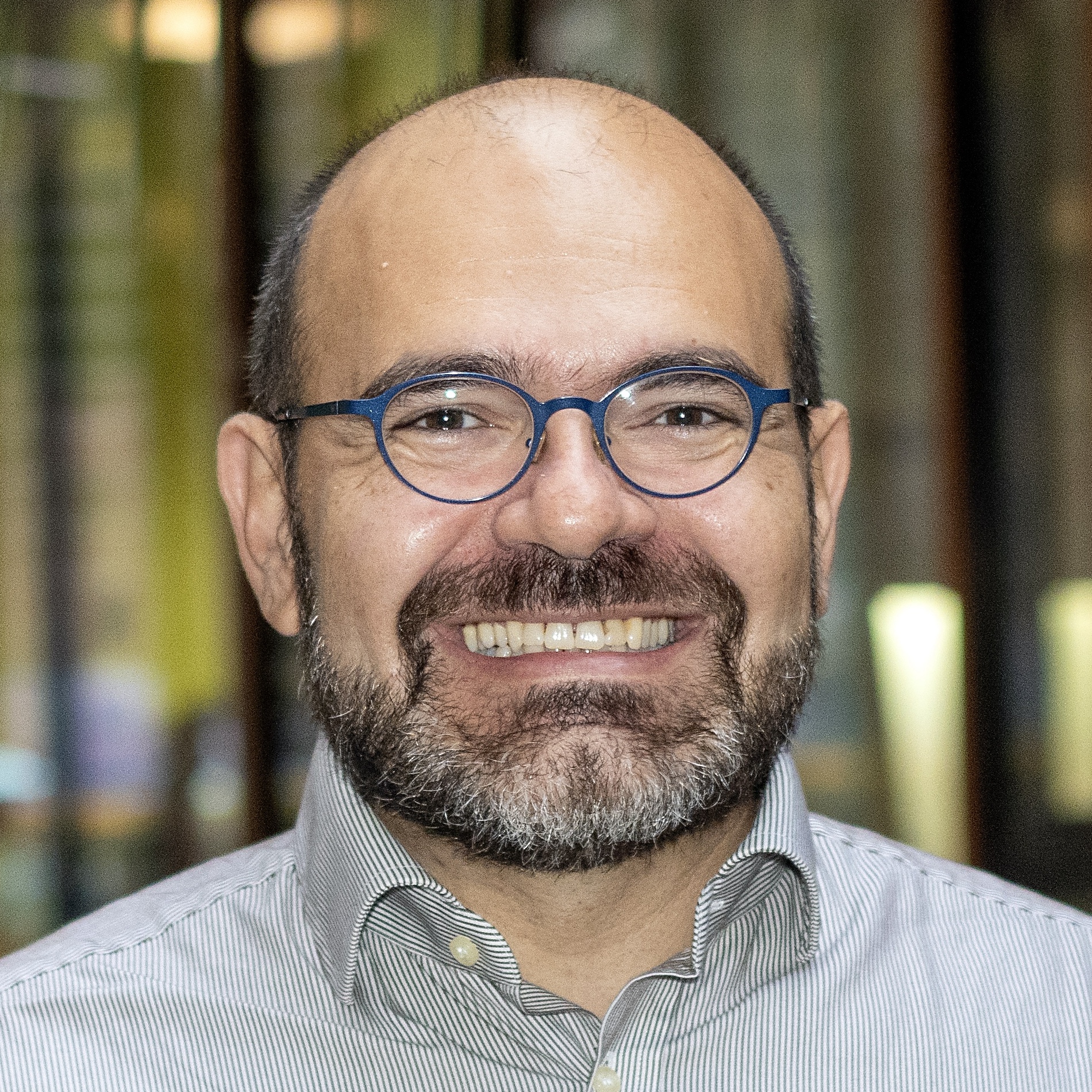
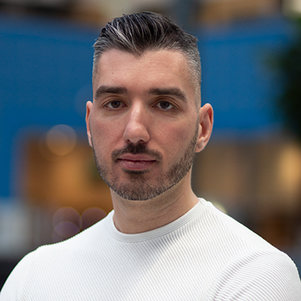
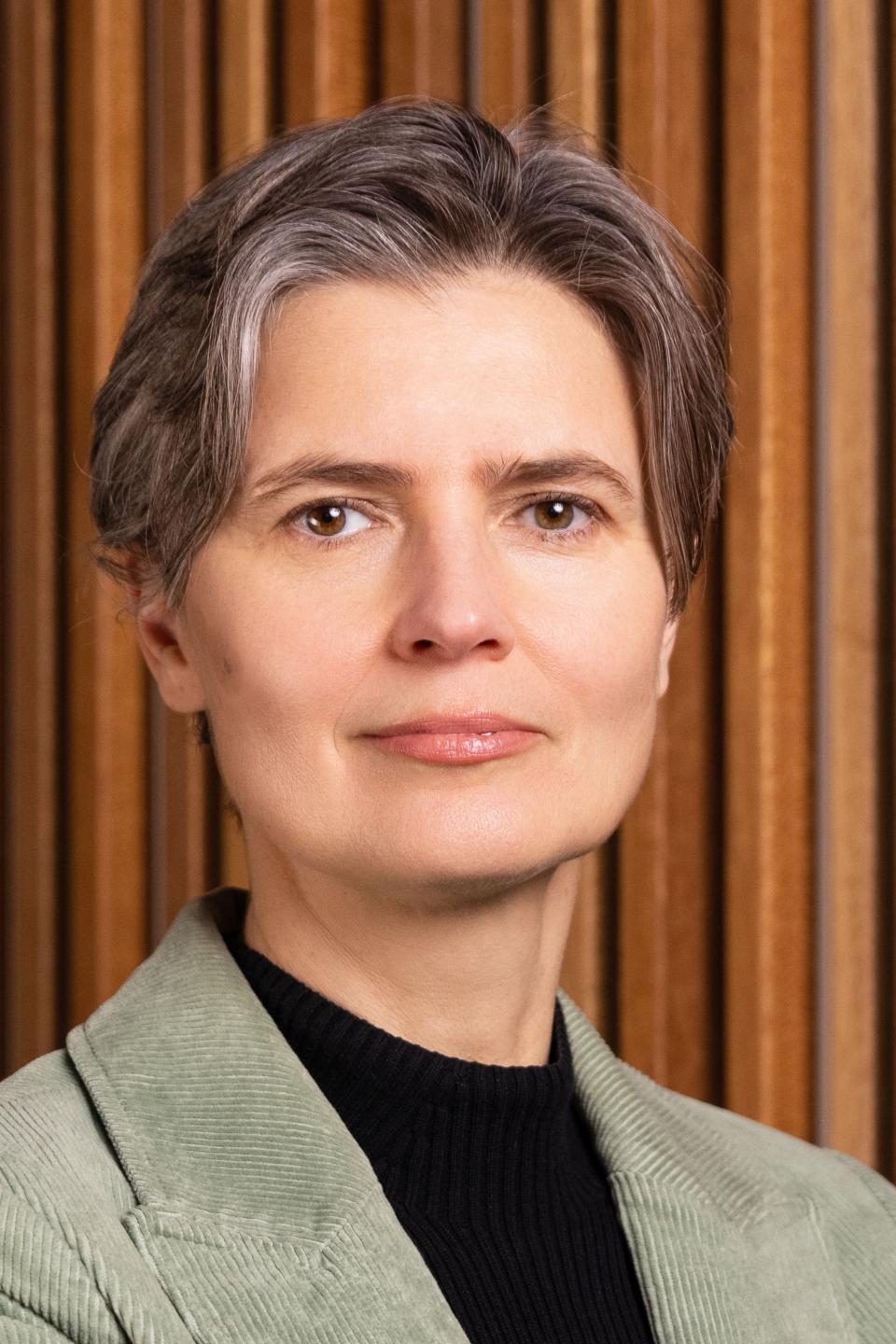
Dr. Jeewanie Jayasinghe Arachchige is a Lecturer in the Department of Computer Science at Vrije Universiteit Amsterdam, Faculty of Science. She teaches undergraduate courses including Bachelor Project Computer Science, Professional Development, and Software Engineering Processes for the academic year 2024–2025. Her research focuses on process mining , healthcare informatics , and data security . She applies process mining to analyze healthcare pathways and subpopulation treatment variations, develops explainable AI frameworks for predictive analytics, and examines data governance in emerging architectures like Data Lakehouses. Her work intersects legal informatics, particularly formalizing Sri Lankan civil court processes using ontology engineering. Recent publications highlight trends in balancing simplicity and complexity in process modeling, Industry 4.0 healthcare applications, and cybersecurity in model-driven web development. She has contributed to over 20 peer-reviewed articles since 2006, spanning topics from service-oriented architectures to value network analysis. Her teaching and research emphasize practical applications of IT in healthcare, legal systems, and enterprise environments. No ancillary activities are currently recorded.
Prof. Dr. Dennis Herhausen is a Full Professor of Marketing and Head of the Marketing Department at Vrije Universiteit Amsterdam’s School of Business and Economics. Previously, he held positions as Associate Professor at KEDGE Business School, Visiting Professor at the University of St. Gallen, and Assistant Professor at the University of St. Gallen. His research focuses on digital communication, customer journeys, multichannel management, and social media strategies, with publications in top-tier journals like the Journal of Marketing and Journal of Marketing Research. His work addresses critical issues such as online firestorm mitigation, complaint de-escalation, and gig economy communication. He has been awarded multiple prestigious prizes, including the 2021 CBSIG Consumer Research Award and the 2019 William R. Davidson Award. Education: PhD in Marketing from University of St. Gallen (2011) Teaching: Courses on Customer Experience Management, Survey Research Methods, and Thesis Guidance Research Interests: His work explores digital marketing strategies, customer-centric innovations, and the dynamics of online platforms. Recent studies address topics like business-to-investor marketing signals, privacy orientation measurement, and machine learning biases in marketing. He actively contributes to editorial boards of journals including Journal of Marketing and Journal of Interactive Marketing. Awards: 2021 CBSIG Consumer Research in Practice Award 2021 Retail & Pricing SIG Best Paper Award 2021 SERVSIG Best Services Article Award 2020 William R. Davidson Award Grants & Editorial Work: His research has been funded by national/international grants, and he serves on multiple editorial boards. Notable datasets include studies on online retailer strategies and virtual brand sabotage responses.
Ioannis Athanasiadis is a Full Professor and Chair of Artificial Intelligence at Wageningen University & Research (The Netherlands). He leads the Artificial Intelligence (AIN) group, focusing on advancing AI methods for global challenges in agriculture, ecology, and sustainability. Previously, he was faculty at the Dalle Molle Institute for Artificial Intelligence (IDSIA, Switzerland) and the Democritus University of Thrace (Greece). He holds a PhD (2005, cum laude) in Electrical and Computer Engineering from Aristotle University of Thessaloniki. His research integrates machine learning, knowledge engineering, and environmental modeling to address food security, climate adaptation, and ecosystem services. He leads initiatives like AgML (AgMIP's machine learning benchmarking effort) and coordinates European grants such as LTER-LIFE and CYBELE . Prof. Athanasiadis has supervised over 40 PhD/postdoc researchers and serves as Editor of Environmental Modelling and Software . He collaborates internationally on projects involving AI for crop modeling, digital twins, and sustainable agriculture. His team develops frameworks like Crop2ML and PyCrop2ML to enhance interoperability between process-based models and machine learning systems.
Gamze Z. Dane is a tenured Assistant Professor at the Department of Built Environment of Eindhoven University of Technology (TU/e), affiliated with EAISI Mobility and EAISI Health. She leads the Digital City Program (2020-2024) and specializes in decision-support systems, GIS, urban informatics, and data analytics for sustainable urban development. Her research integrates citizens into urban decision-making using digital tools like VR twins and data-driven approaches. Education: PhD in Urban Planning, MSc in Geographical Information Systems (GIS) and Decision Making. Research Interests: Focuses on human-environment interaction, transdisciplinary urban projects, and the impact of digitalization on cities. She develops tools for public participation and uses big data to analyze citizen behavior and urban experiences. Projects: Principal Investigator for EU/national projects involving cities like Eindhoven, Bologna, and Lisbon. Notable projects include UBeX Urban Behavior eXtended reality lab (2024-2026) and ROCK (2017-2020). Awards: Cuperusprijs 2020 (2nd place for student thesis) Drivers of Change Exhibition 2021 ISPRS International Journal Cover Story (2020) Teaching & Innovation: Coordinates courses like Smart Cities and Urban Redevelopment. Developed online teaching materials using VR, drones, and mobile apps. Guest lectures at Istanbul Technical University and visiting scholar at National University of Singapore. Labs & Networks: Leads the UBeX lab exploring immersive technologies for urban analysis. Active in academic networks including Urban Planning journals and international conferences.
Achilleas Psyllidis is an Assistant Professor of Urban Mobility and Director of the Urban Analytics Lab at TU Delft. He also leads the Social Urban Data Lab at Amsterdam Institute for Advanced Metropolitan Solutions and is affiliated with the LDE Centre for BOLD Cities. His roles include membership in TU Delft's Transport & Mobility Institute, the Mobility Futures Vision Team, and serving on the Executive Board of CUPUM. Education: PhD in Spatial Data Science (TU Delft, Faculty of Architecture and the Built Environment) Master of Science in Spatial Planning (National Technical University of Athens) Engineering Diploma in Architectural Engineering (National Technical University of Athens) Research Interests: Focuses on accessibility, walkability, land-use dynamics, and travel behavior. Develops computational methods for analyzing access equity, spatial segregation, and human mobility. Leads projects on sustainable urban mobility, environmental exposures, and the 15-minute city concept. Awards: CTwalk Map: Best Demo Award (ICT.Open 2024) ROUTE Ontology of Urban Transportation Entities (2015) Grants & Projects: Involved in initiatives like PERISCOPE (Social Resilience Design), Horizon2020 'Equal-Life' (Environmental Health), and SocialGlass (Urban Analytics Dashboard). Active in research collaborations across Europe and Asia. Labs & Teams: Directs Urban Analytics Lab and Social Urban Data Lab, focusing on data-driven urban solutions. Engages in interdisciplinary teams addressing mobility futures, urban health, and sustainable design.
Dr. Ilias Gerostathopoulos is an Assistant Professor at the Faculty of Science, Vrije Universiteit Amsterdam, affiliated with the Network Institute and the Department of Information Management & Software Engineering. He specializes in self-adaptive systems, cyber-physical systems, and machine learning operations (MLOps). His work focuses on software architectures for autonomous systems, decision-making under uncertainty, and experiment-driven adaptation frameworks. He teaches courses such as 'Fundamentals of Adaptive Software' and 'Information Management', emphasizing practical applications of adaptive systems and data-driven decision-making. Gerostathopoulos has been awarded the Best Presentation Award (2021) for contributions to evaluating self-adaptive systems. His research addresses challenges in industrial self-adaptation, MLOps architectures, and robotics. Key research themes include: Architecture-based self-adaptation in robotics and CPS MLOps frameworks and systematic analysis of AI systems Uncertainty management in autonomous systems Experiment-driven learning and tool development Notable contributions include the ExpEngine tool for workflow optimization and the ReBeT framework for robotic systems. His work bridges theoretical software engineering with practical industrial implementations.
Professor Peter Verhoef is a renowned academic at the University of Groningen, serving as a Professor of Marketing and Director of the University of Groningen Business School. He earned his PhD from the Erasmus School of Economics. His research focuses on customer management, loyalty, and consumer behavior in contexts such as organic product purchasing and digital transformation. Notably, Verhoef received the 2013 Sheth Foundation/Journal of Marketing Award and the 2009 Harold M. Maynard Award, marking him as a leading figure in marketing research. He also chairs the Advisory Council for the Customer Centre of the Dutch Banking Association (NVB). Education: PhD from Erasmus School of Economics Affiliations: Director of University of Groningen Business School, Chair at NVB Research Interests: Verhoef’s work bridges academic rigor and practical applications. He investigates how digital transformation impacts businesses, explores consumer responses to privacy practices, and analyzes the effects of marketing strategies on customer retention. His findings often challenge conventional wisdom, such as demonstrating that 'light' products do not aid weight loss. Recent studies emphasize omnichannel retailing, privacy calculus, and the business value of SME digitalization. Awards: His accolades include the Sheth Foundation/Journal of Marketing Award for groundbreaking work on CRM efforts and the Harold M. Maynard Award for best paper in the Journal of Marketing. These prizes underscore his global influence in marketing academia. Grants & Teams: While specific grants are not detailed, his leadership roles suggest involvement in large-scale research projects. Collaborative work with institutions like the SOM Research School and contributions to interdisciplinary initiatives (e.g., digital transformation frameworks) highlight his team-oriented approach. Labs/Teams: Active in the University of Groningen Business School’s marketing department, he collaborates with researchers like Dong J.Q., Nguyen D.K., and Eggers F., focusing on data analytics, customer experience, and privacy-related challenges.
Dr. Rong-Hao Liang is an Assistant Professor at Eindhoven University of Technology (TU/e), affiliated with both the Future Everyday Group (Department of Industrial Design) and the Signal Processing Systems Group (Department of Electrical Engineering). His research bridges intelligent sensing systems and user interface technology for ubiquitous computing and embodied human-computer interaction . He co-organized international ACM conferences (CHI, UIST, DIS) and has over 70 peer-reviewed publications and 10 patents. PhD in Computer Science (2014) and MSc in Electrical Engineering (2010) from National Taiwan University Founded GaussToys Inc. in 2015, focusing on magnetic-field sensors Cross-appointed to Electrical Engineering in 2021 His research explores intelligent sensing systems , tangible user interfaces , and physiological sensors for real-world challenges. Key trends in his work include ubiquitous health monitoring (e.g., preterm infants), wearable technology , and innovative interaction design . Articles like GaussBits and NFCStack demonstrate his focus on magnetic and RFID-based tangible systems . Scientific awards include the ACM CHI 2013 Best Paper Award , 2014 Honorable Mentions , and the ACM SIGGRAPH Asia 2012 Emerging Technologies Prize . He mentors passion-driven projects in user interface design and embedded systems , emphasizing technical rigor and creativity. His STRAP project (2020–2025) addresses heart disease prevention via big data and AI . Labs and teams include the Future Everyday Group and Signal Processing Systems Group , with collaborations across healthcare , education , and technology startups . His work aligns with UN Sustainable Development Goals , particularly good health and well-being .
Prof. Geert-Jan P.M. Houben is a Professor at Delft University of Technology's Web Information Systems Department within the Faculty of Electrical Engineering, Mathematics and Computer Science. His research focuses on AI ethics, machine learning, data integration, and decision support systems. He has published over 165 works and supervised 24 students. Notable contributions include frameworks for meaningful human control in AI systems and methodologies for bias mitigation in data-driven systems. Editorial roles: Editor for CEUR-WS, Springer, and other publishers since 2012 Awards: Royal Honours from TU Delft (2025) Research emphasizes ethical AI, data engineering, and scalable systems. Recent work addresses AI governance, bias in analytics, and interactive data discovery in modern data ecosystems. He actively contributes to conferences like ACM Web Science and VLDB.
Dr. Tarek Alskaif is an Associate Professor of Energy Informatics at Wageningen University & Research, specializing in the intersection of information technology and energy systems. He leads research on smart energy systems, focusing on electricity markets, distributed energy resources, and AI-driven solutions. His work integrates modeling, optimization, and big data analytics to advance the sustainable energy transition. Education: PhD in Energy Informatics (2012–2016, Cum Laude) from Universitat Politècnica de Catalunya, Spain. Postdoc at Utrecht University’s Copernicus Institute (2016–2020). Current roles include coordinating the BSc Data Science Minor and teaching Python and Big Data courses. Research interests emphasize leveraging digitalization for energy systems, including smart grids, electric mobility, and battery storage. Notable projects include HighLO Energy Markets (EU-funded, using particle physics and AI for market transparency) and MESSM (coordinated via TKI Urban Energy). He also leads the AI ELSA Lab (NWO-funded). Editorial roles include Associate Editor for IEEE Transactions on Smart Grid and IEEE Power Engineering Letters . Member of IEEE, the Netherlands Institute for Research on ICT (4TU.NIRICT), and the Technical Program Committee for IEEE SmartGridComm and PSCC 2026. Has supervised over 50 students (MSc/BSc) and 7 PhDs. Projects address challenges like grid congestion, EV charging optimization, and decentralized energy trading. His work bridges academic research with industry collaborations, including partnerships with CERN and ACER.
Dr. Karin van Es is an Associate Professor in the Department of Media and Culture Studies at the Faculty of Humanities, Utrecht University. She serves as project lead for the Humanities at Data School and is an affiliate and impact liaison at the Centre for Digital Humanities. Her work bridges academic research and practical applications in the digital society, with a focus on collaborating with external parties on interdisciplinary projects. She is also part of the GenAI in Education Humanities taskforce at Utrecht University. Her research is situated at the intersection of television studies, software studies, and critical data and algorithm studies, with a particular focus on streaming video culture and industries. Her notable publications include the book The Future of Live (Polity Press, 2016) and co-edited volumes such as The Datafied Society (AUP, 2017), Situating Data (AUP, 2023), Collaborative Research in a Datafied Society (AUP, 2024), and Governing the Digital Society (AUP, 2025). She has published extensively in journals including Television & New Media , Media, Culture and Society , Critical Studies in Television , Social Media + Society , Big Data and Society , and First Monday . Dr. van Es's recent publications reveal a strong focus on the governance of digital platforms, AI ethics, and the impact of streaming services on media consumption. Her work increasingly examines the societal implications of datafication, with particular attention to educational contexts, public values, and methodological innovations for studying digital phenomena. She has pioneered approaches like "data walking" and "data donations" as research methods for understanding how people interact with digital platforms in everyday contexts. Her scholarship demonstrates a consistent commitment to critical technical practice that bridges theoretical insights with practical interventions in the datafied society. Editor of special issue "Critical Technical Practice(s)" for Convergence Organizer of "Innovative Methods for Video-on-Demand Research" workshop (2024) Speaker at ECREA 2024 conference on "Netflix Uncovered: Insights from Data Donations" Member of editorial board for Convergence journal Her media contributions include appearances on WORT 89.9 FM discussing "The Meaning of Live" (2022), participation in the "De Maatschappelijk Betrokken Docent" program (2022), and earlier contributions on topics like "Wat is beeldradio?" (2016) and "Live liveness in realtime" (2015). She leads the Media and Performance Studies research group and is deeply involved with the Data School at Utrecht University. Her work with the GenAI in Education Humanities taskforce focuses on understanding and shaping the integration of generative AI in educational contexts. Through her role at the Centre for Digital Humanities, she helps bridge academic research with practical applications in society, particularly around issues of data governance, digital literacy, and the societal impact of emerging technologies.
Dr. Tom Boot is an Associate Professor at the Department of Economics, Econometrics & Finance at the University of Groningen. He holds a PhD in Econometrics from Erasmus University Rotterdam (2017) and an MSc in Econometrics from the same institution (2012), along with an MSc in Physics from the University of Groningen (2010). His research focuses on econometric theory applied to macroeconomic forecasting, high-dimensional data analysis, and causal inference. He has been recognized with the Veni grant (2021–2024) for his work on forecasting methodologies. Boot’s research interests include improving forecast accuracy through methods like subspace projections, structural break modeling, and privacy-aware marketing analytics. His recent work explores privacy-utility trade-offs in data-driven marketing and unbiased estimation techniques for clustered errors. He has supervised PhD students including Jhordano Aguilar Loyo and Gilian Ponte, whose theses addressed panel data heterogeneity and differential privacy applications. Boot is also a program director for the MSc Econometrics, Operations Research, and Actuarial Studies (since 2024). His contributions to econometrics span over a dozen peer-reviewed publications, with a focus on advanced statistical techniques for economic forecasting and policy analysis. Collaborations include work with institutions like Harvard/MIT and the organization of workshops on causal inference and machine learning.
Helga Gardarsdottir is a Professor in Pharmacoepidemiology at Utrecht University (Netherlands), serving as Scientific Director of the Center for Pharmacoepidemiology. She also holds an adjunct professorship at the University of Iceland and serves as a Seconded National Expert at the European Medicines Agency (EMA). Her work focuses on real-world data for regulatory decision-making, drug safety, and clinical guideline implementation. She leads international projects like IMI Trials@Home and EMA IMPACT, addressing decentralized clinical trials, risk minimization, and pharmacovigilance impact. Her roles include co-chairing the ENCePP steering group and editing Pharmacoepidemiology & Drug Safety . Beyond research, she chairs the Faculty of Science’s EDI committee, promoting inclusive academic practices. Education: Pharmacist training in Sweden; Pharmacoepidemiology specialization in the Netherlands. Research Interests: Innovations in real-world evidence generation, regulatory science, drug safety surveillance, and clinical trial modernization. Key areas include RWE’s role in HTA/regulatory decisions, unintended impacts of drug policies, and digital health integration. Publications: Recent work emphasizes methodological advancements in decentralized trials, pharmacovigilance outcomes (e.g., fluoroquinolone prescribing shifts), and harmonized approaches to external control trials. Her studies bridge regulatory practices with clinical practice guideline adherence. Achievements: Overseeing multi-country initiatives like the IMI Trials@Home consortium (decentralized trials framework) and EMA IMPACT (guideline-RMM integration). Recognized for leadership in ENCePP’s methodological standards and ISPE’s Real-World Evidence Task Force. Grants & Teams: Principal investigator on EMA-funded projects and IMI grants. Leads Utrecht’s Applied Data Science initiative and collaborates with the EU PEV Research Network. Active in training next-generation researchers through teaching and mentoring. Labs/Teams: Utrecht Center for Pharmaceutical Policy & Regulation; Trials@Home consortium; ENCePP working groups.
Adriana Iamnitchi is a Full Professor and Key Domain Chair for Computational Science at Maastricht University's Faculty of Science and Engineering, affiliated with the Department of Advanced Computing Sciences. Her research focuses on computational social science, social media dynamics, and misinformation detection. Her primary research interests include: Analysis of coordinated information campaigns across social platforms Development of LLM-based synthetic data generation for social media research Polarization quantification in multi-community networks Policy compliance frameworks for digital regulation (e.g., EU's Digital Services Act) Ethical AI applications for content moderation and transparency Her recent publications (2023-2025) demonstrate strong focus on: Cross-platform disinformation detection using multimodal embeddings Generative AI for synthetic social media datasets Quantitative analysis of toxicity monetization in creator economies Regulatory compliance automation for content transparency
Dr. Sjoukje Osinga is an Assistant Professor in the Information Technology group at Wageningen University's Department of Social Sciences. Her research focuses on computational social science, natural language processing (NLP), and big data applications in agriculture. She holds a PhD from Wageningen University on agent-based modelling of knowledge management in the pig sector, with fieldwork in China. She contributed to EU H2020 projects like Cybele (big data in agriculture) and Dragon (knowledge transfer of ABM tools). She is a member of the SiLiCo Centre, specializing in simulating complex systems through agent-based simulations. Education: Artificial Intelligence and Cognitive Science (Groningen and Leuven, 1991) Research interests include agent-based modelling, big data analytics for agriculture, machine learning, and knowledge management. She explores topics like digital twins in health and agriculture, and sentiment analysis in policy-making. Her work bridges technical innovation with societal challenges, such as sustainable farming practices and compliance strategies in regulatory environments. Publications span agent-based models for pork supply chains, machine learning applications in crop forecasting, and digital twin frameworks for agriculture. She actively engages in interdisciplinary projects addressing data integration and policy implications of emerging technologies.