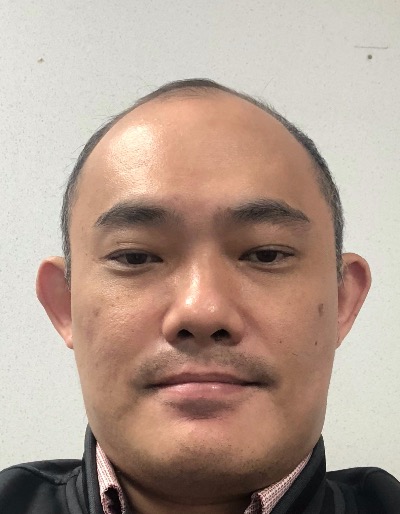
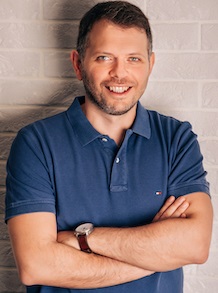
Dr. Chee Kiat Seow is an Associate Professor at the University of Glasgow's School of Computing Science. He holds a PhD from Nanyang Technological University (NTU) and an MSc from the National University of Singapore (NUS). His research focuses on cyber-physical security, wireless communication localization, and IoT systems leveraging AI/ML. He has led projects valued in the millions, winning awards like the IEEE Best Student Paper and National Instruments Engineering Impact Awards. Education: PhD (NTU), MSc (NUS) Research: Specializes in UWB positioning, spoofing detection, and IoT integration with 5G/GNSS. Teaching: Courses include Big Data, Software Engineering, and Data Analytics. His recent work addresses NLOS mitigation in indoor localization and cyber-physical security threats. Over 63 publications span journals like IEEE Transactions and conferences such as IPIN and WF-IoT. Supervised 6+ PhD/MSc students on topics like autonomous robotics and AI-driven localization. Grants: Includes $853K for 5G-X Smart Building projects and $797K for GNSS signal authentication. Awards: IEEE PIERS Best Student Paper (2019), NI Engineering Impact Awards (2015-2016). He advises on IoT and cybersecurity for organizations like ARTC and National Instruments. Active in IEEE Signal Processing and Computer Society.
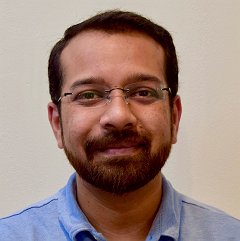
Mark Jenkinson is a Professor of NeuroImaging at the University of Oxford's Nuffield Department of Clinical Neurosciences and also holds positions at the University of Adelaide's Australian Institute for Machine Learning and the South Australian Health and Medical Research Institute (SAHMRI). He heads the Structural Modelling and Analysis Group at the FMRIB Centre, where his research focuses on multimodal population modeling and structural brain segmentation. Education: DPhil in Robotics Research (University of Oxford, 1999) BSc (Hons I) in Mathematical Physics (University of Adelaide, 1994) BE (Hons I) in Electrical and Electronic Engineering (University of Adelaide, 1993) Professor Jenkinson's research spans two major themes: multimodal modeling of populations to describe disease processes and apply to individual patient diagnoses, and structural segmentation and analysis of brain anatomy and pathology, particularly focusing on sub-cortical structures and lesions. His work integrates advanced computational methods with neuroimaging to develop tools for understanding neurological disorders. As the developer of key components of the FMRIB Software Library (FSL), he has significantly contributed to standard neuroimaging analysis pipelines used worldwide. His recent publications demonstrate a strong focus on deep learning applications in neuroimaging, uncertainty quantification in medical AI, and advanced segmentation techniques. There's a clear trend toward developing more robust, anatomically plausible models that preserve topological structures while improving diagnostic capabilities for conditions like multiple sclerosis, Huntington's, and Parkinson's diseases. Scientific Awards: Highly Cited Researcher (Clarivate Analytics 2018-2021, Thomson Reuters 2014-2016) ISMRM Outstanding Teacher Award (2009, 2014) Teaching Excellence Award, University of Oxford (2012) David Phillips Fellowship from BBSRC (2005-2010) Professor Jenkinson has supervised over 25 doctoral students whose work spans brain segmentation, connectivity analysis, and clinical applications of neuroimaging. His research is supported by significant grants including the Medical Research Future Fund (AU$2m), Wellcome Trust Centre for Integrative Neuroimaging (£11m), and NIH Human Connectome Project (US$30m), reflecting the high impact and translational potential of his work. As head of the Structural Modelling and Analysis Group at FMRIB, Jenkinson leads a team developing the FSL (FMRIB Software Library), one of the most widely used neuroimaging analysis packages globally. His group collaborates extensively with clinical researchers on applications ranging from multiple sclerosis to traumatic brain injury, translating computational advances into clinical practice.
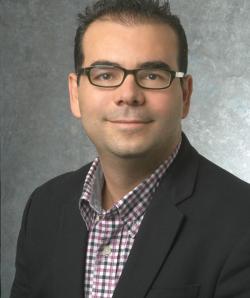
Boris Jukic is a Professor and Director of Applied Data Science at the Reh School of Business , Clarkson University. With a PhD from the University of Texas at Austin, he teaches courses such as Visual Basic Programming for Business Applications and Development of Business Applications on the Internet. Dr. Jukic's research focuses on: Management and pricing of networks and telecommunication services Application of data management and presentation strategies in e-business and e-commerce IT architecture's impact on organizational success metrics His recent publications highlight trends in data warehousing , IT architecture , and business intelligence . Notable subfields include data modeling , incentive-compatible pricing , and process-data integration . Contact: Email: bjukic@clarkson.edu Phone: 315/268-3884 Office: 227 Bertrand H. Snell Hall, Clarkson University
Dr. Chutima Boonthum-Denecke is a Professor in the Department of Computer Science at Hampton University's School of Science. She joined Hampton University in 2006 as an Assistant Professor and now serves as Director of the Information Assurance and Cyber Security Center (IAC@HU). She leads the NSF CyberCorps Scholarship for Service program and has contributed to NSF initiatives like ARTSI and STARS Alliances. Her educational background includes a Ph.D. in Computer Science from Old Dominion University (2007), an MS in Applied Computer Science from Illinois State University (2000), and a BS in Computer Science from Srinakharinwirot University (1997). Dr. Boonthum-Denecke's research integrates artificial intelligence, natural language processing, and cybersecurity. Key interests include: Developing intelligent tutoring systems and educational games Secure coding practices for software engineering NLP applications in information retrieval and assessment tools Cyber-physical security for IoT and robotics Her recent publications (2016-2021) focus on machine learning applications in cybersecurity, including sentiment analysis for threat detection, blockchain-enhanced IoT security, and vulnerability assessments of emerging technologies. Collaborative work with students frequently addresses privacy ethics in AI assistants, RFID implants, and cloud systems. She mentors students through the IAC@HU lab, resulting in award-winning conference presentations on cybersecurity topics. As Principal Investigator of NSF CyberCorps, she oversees scholarship programs that bridge academic research with national security needs.
Dr. Dijiang Huang is an Associate Professor in the School of Computing and Augmented Intelligence at Arizona State University (ASU). He joined ASU in 2005 after completing his Ph.D. in Telecommunications and Computer Networking from the University of Missouri-Kansas City (2004). His research focuses on cybersecurity, mobile computing, and cloud computing, supported by grants from the National Science Foundation (NSF), Office of Naval Research (ONR), and industry partners like HP. He has received prestigious awards, including the ONR Young Investigator Award and HP Innovative Research Award. Education: B.E. in Telecommunications, Beijing University of Posts and Telecommunications (1995) M.S. in Computer Science, University of Missouri-Kansas City (2001) Ph.D. in Telecommunications and Computer Networking, University of Missouri-Kansas City (2004) Research Interests: Huang’s work emphasizes secure communication protocols, privacy-preserving techniques, and resilient network architectures. He has pioneered frameworks like Secure Group Communication (SeGCom) and Attribute-Based Cryptography , addressing challenges in VANETs, SDN, and edge computing. His recent projects include developing Waterfall for SDN security and SmartDefense for DDoS mitigation. Grants & Awards: ONR Young Investigator Award (2008) HP Innovative Research Award (2008) NSF grants for secure mobile cloud frameworks and cyber-physical systems Professional Contributions: Huang has served as a reviewer for journals like IEEE Transactions on Wireless Communications and conferences such as ACM MobiArch. He co-developed the Open Human-Robotic Mobile Networking and Security Testbed (OHReST) and the Virtual Laboratory (VLab) for cybersecurity education.
Muhammad Ali Gulzar is an Assistant Professor in the Computer Science Department at Virginia Tech and an Amazon Scholar at Amazon Web Services. His research focuses on improving developer productivity through automated debugging and testing for applications in emerging domains, including data-intensive software such as dataflow programs, ML/AI applications, and computational notebooks. Education Ph.D. in Computer Science from University of California, Los Angeles (Google Ph.D. Fellow 2017-2020) Research Interests Gulzar's research spans three primary areas: (1) automated tracking-code localization techniques in web applications, (2) re-engineering testing and debugging for data-intensive applications, and (3) advancing current testing and debugging practices in Federated Learning Applications. His work addresses the challenges of debugging in complex systems where traditional approaches fail due to the scale and distributed nature of modern applications. His research has significant implications for improving software quality, developer productivity, and accessibility in web applications. Research Trends Recent publications demonstrate a strong focus on debugging and testing challenges in emerging application domains. His work bridges traditional software engineering with machine learning, data-intensive systems, and web technologies. Notably, he has made significant contributions to Federated Learning debugging (FedDebug), accessibility challenges in ad-driven web applications, and semantic caching for Large Language Models. His approach often combines novel algorithmic insights with practical implementations that address real-world challenges in software development and maintenance. Scientific Awards Google Ph.D. Fellow (2017-2020) $1.1 million NSF award for Federated Learning research ACM CCS 2024 Distinguished Artifact Award Advising and Grants Gulzar leads a productive research group with multiple students contributing to publications in top-tier venues. His NSF-funded research on Federated Learning demonstrates his ability to secure competitive funding for innovative projects. His advising style appears to emphasize practical impact alongside theoretical contributions, with students often taking lead roles in publications. Current research directions include debugging techniques for Large Language Models, accessibility challenges in modern web applications, and novel testing approaches for distributed data processing systems.
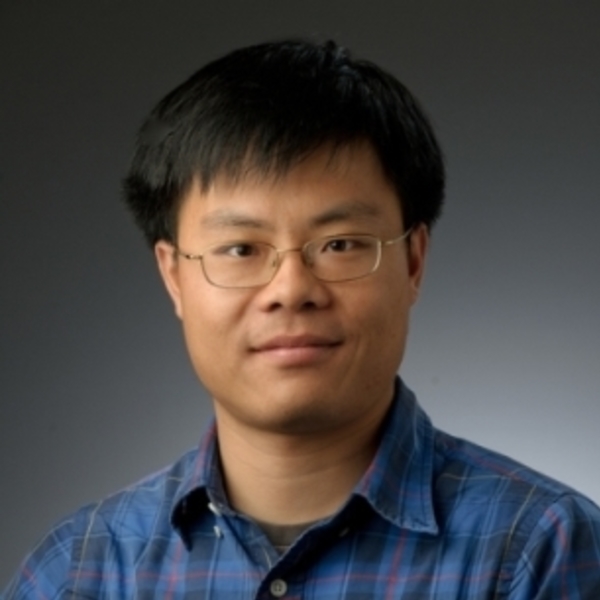
Jun Li is a Full Professor in the Department of Applied and Computational Mathematics and Statistics at the University of Notre Dame's College of Science. He specializes in developing statistical and computational methods for big data, with a focus on interdisciplinary applications in bioinformatics, machine learning, and data mining. His career includes tenure as an Assistant Professor (2012–2017) and promotion to Associate Professor (2017) before becoming Full Professor (2020). Dr. Li holds a Ph.D. in Statistics from Stanford University (2012), supervised by Robert Tibshirani, and earlier degrees from Tsinghua University: a B.E. in Automation (2004) and an M.S. in Pattern Recognition and Intelligent Systems (2007). Research Interests : Dr. Li’s work centers on advancing computational frameworks for handling large-scale datasets, integrating statistical rigor with algorithmic innovation. Recent themes include AI-driven code improvement, ethical LLM applications in HCI, and GUI automation. His methodologies emphasize human-AI collaboration and transparency in algorithmic systems. Publications : His 2025 work explores LLM vulnerabilities in GUI agents, AI-assisted education tools like GLITTER, and ethical challenges in HCI research. Earlier studies (2024–2023) address topics such as natural language database queries, privacy-preserving app promotion analysis, and multimodal task learning. Lab/Teams : Affiliated with Notre Dame’s computational statistics research groups, focusing on interdisciplinary projects bridging statistics, computer science, and applied mathematics. His work often involves collaborations with industry and academic partners to translate theoretical advancements into practical applications.
Michael O'Dea is a Senior Lecturer in the Department of Computer Science at the University of York, United Kingdom. He has held previous academic positions at York St John University, Beijing University of Technology, University of Hull, and Waikato Institute of Technology, bringing extensive international experience in computer science education. He is actively engaged in pedagogical scholarship and leadership in higher education innovation. Senior Lecturer, Department of Computer Science, University of York Senior Lecturer in Computer Science, York St John University Lecturer in Software Engineering, Beijing University of Technology, China Lecturer in Computer Science, University of Hull Lecturer in Information Technology, Waikato Institute of Technology, NZ Dr. O'Dea earned his Ed.D. in Computer Based Learning from the University of Leeds. His research centers on the integration of artificial intelligence into educational practices, with a strong emphasis on AI literacy, the effectiveness of generative AI in teaching and learning, and the evolving landscape of technology acceptance in higher education. He investigates how AI tools can enhance student learning, faculty development, and institutional policy. His recent publications span topics such as AI literacy assessment, the future of online and blended learning, the application of machine learning in earthquake prediction, and international study abroad effectiveness. These works reflect a broad interdisciplinary approach, combining computer science, educational theory, and policy analysis. His scholarship is increasingly focused on the transformative potential of generative AI in academic settings, as evidenced by his leadership in special journal issues and funded research projects. Dr. O'Dea holds significant editorial responsibilities as Associate Editor and Lead Guest Editor for the Journal of University Teaching and Learning Practice and as Guest Editor for a special issue in Education Sciences on generative-AI-enhanced learning. He is also an Invited External Academic Affiliate at the King's Institute for Artificial Intelligence, King's College London. Associate Editor - Special Issues, Journal of University Teaching and Learning Practice Lead Guest Editor, Special Issue on Technology Acceptance Models, JUTLP (2024) Guest Editor, Special Issue on Generative-AI-Enhanced Learning, Education Sciences Principal Investigator, QAA Collaborative Enhancement Project on Graduate Attributes in the Era of GenAI (2025) He has delivered numerous invited talks and workshops at institutions such as the University of York, Queen Mary University of London, and international conferences including the Academy of Management and the International Conference on Artificial Intelligence in Education. His work bridges research, practice, and policy in higher education, with a strong commitment to inclusive and innovative teaching methodologies.
Dr. Tim Conrad is a researcher at the Zuse Institute Berlin in the Visual and data-centric computing department under the Mathematics of Complex Systems division. He leads projects at the intersection of computational biology, AI, and medical data analysis. Projects: Geometric Learning for Single-Cell RNA Velocity Modeling, MODAL MedLab, Sparse Compressed Sensing in -Omics Data, BIFOLD (Big Data and Machine Learning) Research Networks: Affiliated with MATH+ and MODAL Research Campus His research focuses on applying machine learning , network optimization , and sparse data analysis to biological and medical challenges including disease modeling, microbiome dynamics, and ECG classification. Recent work explores hybrid PDE-ODE epidemic models and federated learning in healthcare. 2023-2025 publications highlight trends in AI for biological networks , temporal community detection , and medical signal processing . He co-authored studies on SARS-CoV-2 simulations, proteomics feature selection, and multi-label ECG analysis. His 2004 doctoral thesis at Monash University laid foundations for later work in metabolic pathway analysis. Awarded as a Zuse Fellow , he contributes to open science initiatives like FAIR data sharing . Collaborations span institutions including Freie Universität Berlin and Charité in medical informatics and clinical applications.
Giuseppe Santucci is an Associate Professor at the Department of Computer, Control and Management Engineering Antonio Ruberti at Sapienza University of Rome. He teaches courses on Fundamentals of Computer Science, Software Engineering, and Visual Analytics. His office is located in Room B218 at Via Ariosto 25, Rome, and his contact email is santucci@diag.uniroma1.it. Dr. Santucci's research focuses on Visual Analytics, Information Visualization, Human-Computer Interaction, and Information Retrieval. His work spans theoretical aspects of visual query languages for semantic models to practical applications in visual analytics for cybersecurity, cryptocurrencies, and deep learning explainability. He has published over 130 articles in international journals and conferences, demonstrating his significant contributions to these fields. His recent publications show a strong trend toward applying visual analytics to increasingly complex domains including cybersecurity, cryptocurrencies, and explainable AI. The work demonstrates an evolution from theoretical foundations of visual query systems to practical applications that help users understand complex data and systems. His research bridges the gap between theoretical computer science and practical user-centered solutions. Dr. Santucci has received notable recognition including: IEEE VizSec 2018 Best Paper Award Human-Computer Interaction Cybersecurity Awards 2018 He actively mentors students through thesis projects focused on information visualization and visual analytics. His PROMISE project provides a framework for students to engage in cutting-edge research in information retrieval and visual analytics. He has supervised work on topics including visual evaluation techniques, visual mappings optimization, and user studies for Infovis systems. Dr. Santucci leads the A.WA.RE (Advanced Visualization & Visual Analytics REsearch) group at Sapienza University. This group conducts research on visual analytics tools for information retrieval evaluation, cybersecurity analysis, and deep learning explainability. Their work includes developing frameworks like CryptoComparator for cryptocurrency analysis and BUCEPHALUS for cybersecurity platform analysis.
Dr. Song Jiang is a Professor in the Department of Computer Science and Engineering at The University of Texas at Arlington (UTA). He holds a PhD from the College of William and Mary (2004) and has held academic positions at institutions such as Wayne State University and Los Alamos National Laboratory. His research focuses on system infrastructure for large language models (LLMs) and big data processing, including GPU/CPU memory systems, file and storage systems, and high-performance computing (HPC) I/O systems. He has received significant funding from the National Science Foundation (NSF) and industry partners like VMware and Tencent. Education: B.S. and M.S. from University of Science and Technology of China (1993, 1996), Ph.D. in Computer Science from College of William and Mary (2004). Postdoctoral research at Los Alamos National Laboratory (2004–2006). Research interests include file and storage systems, data management, big data analytics, and optimizing computing architectures for AI/ML. Key contributions include the LIRS replacement algorithm (adopted in MySQL and NetBSD), CLOCK-Pro page replacement (used in Linux), and swap token algorithms (Linux kernel). Awards include the 2022 ACM SIGMETRICS Test of Time Award and 2009 NSF CAREER Award. His work has led to 15+ patents and impactful industry collaborations with Facebook, Baidu, and others. Advising: Supervised 14+ PhD/Master’s students, including current advisees Chen Zhong and Sujit Maharjan. Active roles in doctoral committees and thesis supervision. Grants: Over $2.5M in NSF funding for projects like 'Software Defined Cache for Index Search' and 'Taming Small Data Writes'. Industry grants include VMware’s $240K project on distributed key-value storage. Labs/Teams: Leads research on persistent memory systems, key-value stores, and LLM infrastructure through UTA’s CSE department and collaborations with industry partners.
Mehmet Koyutürk serves as the Andrew R. Jennings Professor in the Department of Computer and Data Sciences at Case Western Reserve University's Case School of Engineering, with additional affiliation as a Member of the Cancer Genomics and Epigenomics Program at the Case Comprehensive Cancer Center. His computational research bridges algorithm development with biological applications, focusing on network-structured data analysis to address complex biomedical challenges. Dr. Koyutürk earned his Ph.D. in Computer Science from Purdue University following B.S. and M.S. degrees in Electrical Engineering and Computer Engineering from Bilkent University. His primary research domains include high-throughput biological data analysis, systems/network biology methodologies, data mining algorithms, and scientific computing optimization, with particular emphasis on phosphorylation networks, genomic interactions, and multi-omics integration. Recent publication trends reveal expanding applications of his network science expertise into Alzheimer's disease phosphoproteomics, bipolar disorder biomarker discovery, and intimate partner violence analysis, while maintaining core contributions to graph neural networks and biological link prediction. His group actively develops open-source analytical tools like RokaiXplorer for phospho-proteomic data accessibility. Scientific Recognition Andrew R. Jennings Professorship Dr. Koyutürk leads multiple NIH-funded initiatives including R01-LM012980 for phosphoproteomics analysis, U01-CA198941 (BD2K program) for big network integration, and R01-LM011247 for GWAS enhancement, complemented by NSF CAREER Award CCF-0953195. He serves on the steering committee for CWRU's Systems Biology and Bioinformatics graduate programs and as Associate Editor for IEEE/ACM Transactions on Computational Biology and Bioinformatics (TCBB), with extensive collaboration through Mark Chance's Center for Proteomics and Bioinformatics. His laboratory specializes in developing scalable algorithms for biological network analysis, currently advancing projects on kinase-substrate association prediction, co-phosphorylation network characterization in cancer, and network-based approaches to intimate partner violence data mining, with strong emphasis on translating computational methods into biomedical insights through open-source software dissemination.
Dr. Ilias Gerostathopoulos is an Assistant Professor at the Faculty of Science, Vrije Universiteit Amsterdam, affiliated with the Network Institute and the Department of Information Management & Software Engineering. He specializes in self-adaptive systems, cyber-physical systems, and machine learning operations (MLOps). His work focuses on software architectures for autonomous systems, decision-making under uncertainty, and experiment-driven adaptation frameworks. He teaches courses such as 'Fundamentals of Adaptive Software' and 'Information Management', emphasizing practical applications of adaptive systems and data-driven decision-making. Gerostathopoulos has been awarded the Best Presentation Award (2021) for contributions to evaluating self-adaptive systems. His research addresses challenges in industrial self-adaptation, MLOps architectures, and robotics. Key research themes include: Architecture-based self-adaptation in robotics and CPS MLOps frameworks and systematic analysis of AI systems Uncertainty management in autonomous systems Experiment-driven learning and tool development Notable contributions include the ExpEngine tool for workflow optimization and the ReBeT framework for robotic systems. His work bridges theoretical software engineering with practical industrial implementations.
Roles and Affiliations : Dimitris Kolovos is a Professor of Software Engineering at the University of York's Department of Computer Science. He leads the Automated Software Engineering (ASE) research group and is an Eclipse Foundation committer, leading development of the Epsilon open-source platform. His roles include research leadership, teaching, and academic service. Education : PhD in Software Engineering - University of York MSc in Software Engineering with Distinction - University of York First Class Honours Degree in Informatics - Athens University of Economics and Business Research Interests : Kolovos focuses on advancing Model-Driven Engineering (MDE), GenAI integration in software development, low-code platforms, and data analytics. His work emphasizes scalable modeling tools, education technology (e.g., MDENet platform), and industry collaboration with organizations like NASA, BAE Systems, and Siemens. Labs and Projects : He leads the Epsilon project under the Eclipse Modelling initiative, developing tools for model transformation, validation, and code generation. His research group also explores AI-driven model transformations and hybrid graphical-textual editors.
Dr. Timothy Fraser is a Computational Social Scientist serving as Ezra Systems Research Associate in Cornell University's Systems Engineering Program and Coordinator for the Center for Transportation, Environment, & Community Health (CTECH). Holding a PhD in Political Science from Northeastern University (2022), he focuses on climate change adaptation, disaster resilience, and energy policy using big data analytics, GIS, and AI. His work bridges computational methods with societal challenges, emphasizing community engagement and policy impact. Education: PhD in Political Science, Northeastern University (2022) MA in Political Science, Northeastern University BA in International and Global Studies, Middlebury College Research Interests: Fraser’s research integrates computational social science with environmental policy, exploring how social networks and governance structures influence cities' climate adaptation strategies. Key areas include renewable energy adoption, disaster evacuation dynamics, and pandemic response mechanisms. He employs mixed methods such as network analysis, statistical modeling, and fieldwork. Grants & Awards: Fulbright Fellowship (2016), Kyushu University Japan Foundation Doctoral Fellowship (2020) USDOT Multimillion Grant Administrator (2022-2023) Teaching & Mentorship: Fraser teaches statistical methods and research design at Cornell, advising over 30+ students in projects published in leading journals. He coordinates capstone teams and mentors researchers in data science and policy analysis. Labs & Projects: Leads the Climate Action in Transportation dashboard initiative (Gao Labs), developing tools for emissions visualization. Collaborates on UNDP social capital mapping projects in Mexico and Paraguay, applying spatial analysis techniques for vulnerable communities.