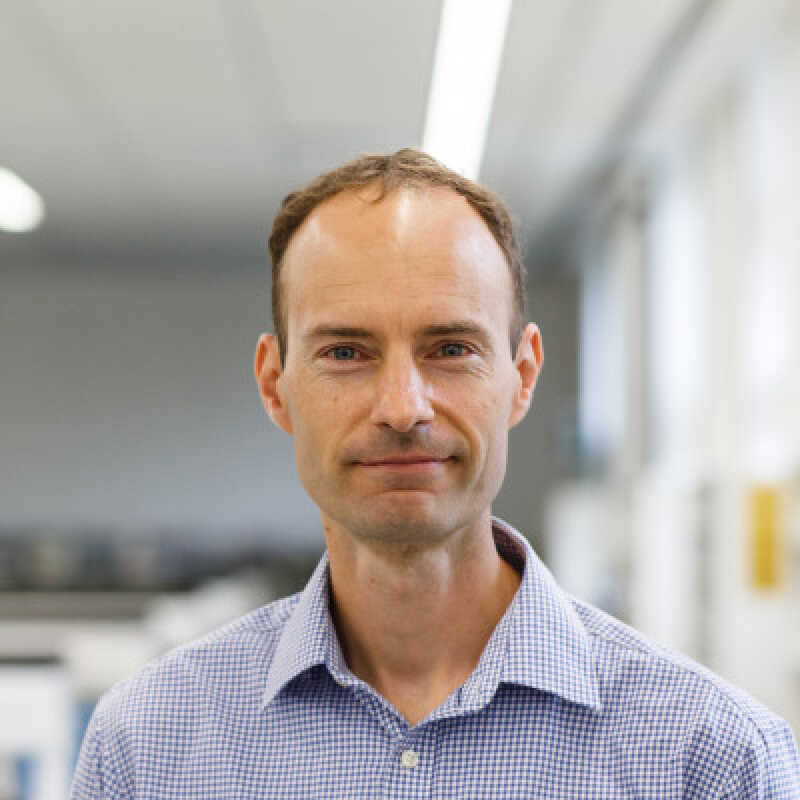
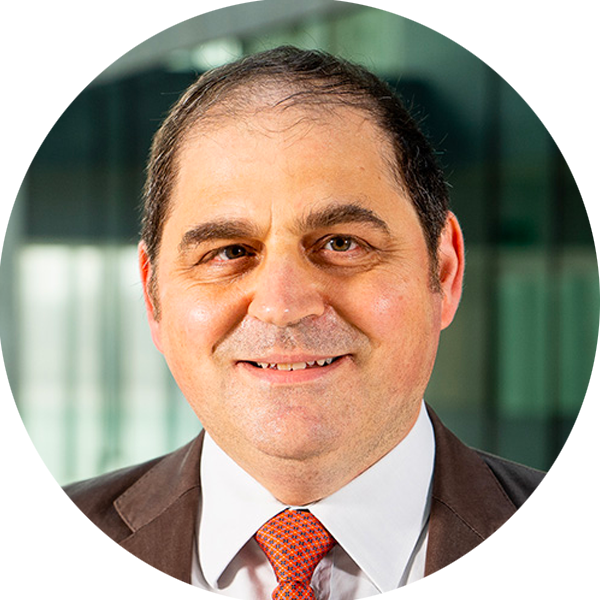
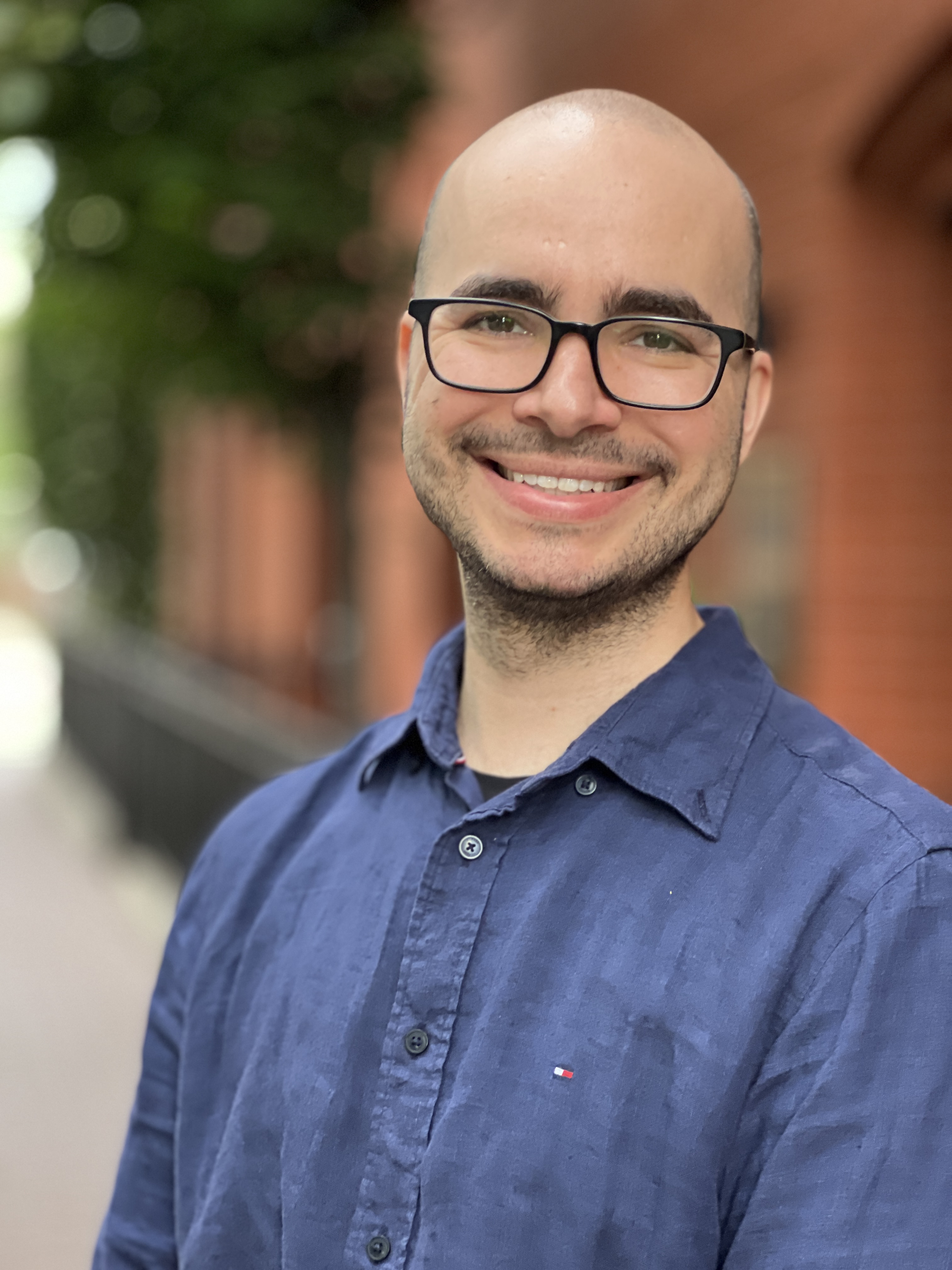
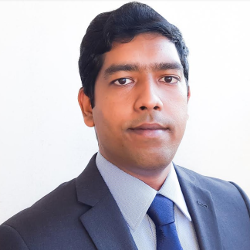
Dr. Stuart Gibson is a Senior Lecturer in Physics and Astronomy at the School of Physics and Astronomy, University of Kent. He is the co-inventor of the EFIT-V facial composite system, widely adopted by UK police constabularies and international agencies. His academic contributions span interdisciplinary research bridging forensic science, computational methods, and machine learning. Research Interests: Forensic applications of digital image processing Machine learning in natural sciences Facial composites for criminal investigations Medical image analysis Computer vision with security applications Teaching: Stuart teaches numerical and computational methods, mathematical techniques for physical sciences, and digital forensics. His pedagogical focus integrates theoretical frameworks with practical forensic and computational tools. Publications & Collaborations: Over his career, Dr. Gibson has published extensively in journals such as Pattern Recognition Letters , ACS Nano , and Utilities Policy . His work includes innovations in evolutionary algorithms, facial composite systems, and applications of machine learning to muon spectroscopy and Raman spectroscopy.
Claudio Tebaldi is an Associate Professor at Università Bocconi , specializing in financial economics and quantitative methods. He serves as Managing Editor of Quantitative Finance and has collaborated with institutions including UCLA, NYU, the Federal Reserve Board, and ECB. Education : Ph.D. in Statistical Mechanics from SISSA; Master in Economics and Finance from Venice International University His research spans financial economics (asset/derivative pricing, risk management) and mathematical/physical sciences (complexity theory, collective phenomena). He employs advanced statistical methods like machine learning and big data analysis to develop decision rules for uncertain environments. Key publication themes include computational finance (2025), pension economics (2024), network-based financial contagion (2024), and optimal trading algorithms (2024). Earlier works focus on econometric theory (2023) and risk measurement frameworks (2022). Scientific Recognition : Excellence in Research Award (2023), Best Paper in Derivatives (NFA 2019), Best Paper (Swiss Econometrics and Finance Society meeting 2007)
Miklós Szócska is a Professor and Dean of the Faculty of Public Health at Semmelweis University, Budapest. He also serves as the Director of the Healthcare Management Training Center and Head of the Institute of Digital Health Sciences. His career bridges academic leadership with healthcare policy, including roles as Secretary of State for Health (2010–2014), where he focused on evidence-based health policy, public health taxes, and e-health systems. Education: General Practitioner, Semmelweis University (1989) Master of Public Administration, Harvard University's John F. Kennedy School of Government (1998–1999) PhD, Semmelweis University (2008) Research Interests: Szócska's work spans network analysis , leadership and change management , crisis communication , social innovation , and big data/AI applications in healthcare . His recent studies focus on reconstructing 3D histological structures via machine learning, global mortality linked to pathogens, and tobacco control policies. Article Trends: His publications emphasize global health metrics (e.g., mortality decomposition, colorectal cancer risk factors) and digital health innovations (AI, e-health). Systematic analyses from the Global Burden of Disease Study frequently inform his research. Academic Affiliations: He leads the Institute of Digital Health Sciences and chairs the Faculty of Public Health at Semmelweis University. His international roles include Board Membership at the European Health Forum Gastein and Supervisory Board positions at EIT Health.
Harutyun Ishkhanovich Avetisyan is a Professor and Head of the Basic Department "System Programming" at the Faculty of Computer Science of the National Research University Higher School of Economics (HSE). He began his tenure at HSE in 2017 and brings 30 years of scientific and teaching experience to his role. Additionally, he serves as the Director of the Institute for System Programming of the Russian Academy of Sciences (ISP RAS), a position he has held since 2015. Avetisyan holds numerous prestigious academic distinctions, including being elected as an Academician of the Russian Academy of Sciences in 2019 and as a Corresponding Member in 2016. He earned his Doctor of Physical and Mathematical Sciences degree in 2012 and was awarded the academic title of Associate Professor in 2009. His educational background includes a specialty in "Applied Mathematics" from Yerevan State University (1993). His research focuses on three main areas: analysis and transformation of programs, software security, and parallel and distributed computing technologies. These interests are reflected in his extensive publication record and leadership in major research initiatives. His work bridges theoretical computer science with practical applications in cloud computing, secure data storage, and high-performance computing systems. Avetisyan's scholarly contributions demonstrate a consistent focus on system programming challenges, particularly in the areas of code analysis, optimization, and security. His recent publications indicate a growing interest in cloud computing paradigms, smart city infrastructure, and energy-efficient computing solutions. His research has significant implications for both academic theory and industrial applications in software development. Among his notable recognitions, Avetisyan was awarded the medal of the Order "For Merit to the Fatherland" 2nd degree in 2021 for his significant contributions to science and dedicated service. He also serves on the editorial boards of several prestigious journals including "Programming" (since 2015) and "Proceedings of the Institute for System Programming of the RAS" (since 2010). Throughout his career, Avetisyan has led and participated in numerous research grants funded by the Ministry of Education and the Russian Foundation for Basic Research. His professional trajectory shows steady progression from postgraduate studies (1997-2000) to research fellow (2000-2002), deputy director of ISP RAS (2002-2015), and ultimately director of the institute (2015-present). At HSE, Avetisyan teaches courses in parallel programming and mentor seminars for master's students in Software Engineering. His teaching philosophy emphasizes the integration of cutting-edge research with practical software development skills, preparing students for careers at the forefront of computer science.
Swati Srivastava is an Associate Professor in the Department of Political Science at Purdue University, College of Liberal Arts. She joined Purdue in 2018 after completing her Ph.D. at Northwestern University, M.A. in international relations from the University of Chicago, and B.A. in political science from UCLA. Ph.D., Political Science, Northwestern University M.A., International Relations, University of Chicago B.A., Political Science, University of California Los Angeles Her research focuses on international relations , particularly on private actors in global governance , sovereignty theories , and algorithmic governance . She examines how nonstate actors like corporations, NGOs, and Big Tech reshape traditional concepts of sovereignty and responsibility. Key projects include her book Hybrid Sovereignty in World Politics (Cambridge University Press) and an undergraduate research lab on Big Tech and Political Responsibility. Professor Srivastava's work addresses the intersection of corporate power , state authority , and ethical accountability in global politics. She employs constructivist and relational approaches to analyze governance structures. Excellence in Discovery and Creative Endeavors Award, College of Liberal Arts Kenneth T. Kofmehl Outstanding Undergraduate Teaching Award Antonia Syson Cornerstone Outstanding Teaching Award Her research has been funded by major institutions including the National Endowment for the Humanities , Andrew Mellon Foundation , American Council of Learned Societies , and Buffett Institute for Global Studies . Srivastava's publications span topics like AI governance, surveillance capitalism, and historical sovereignty dynamics, with a focus on hybrid governance models and ethical frameworks.
Chris Danforth is a Professor in the Department of Mathematics & Statistics at the University of Vermont and serves as Director of the Vermont Advanced Computing Center. Co-founder of the Computational Story Lab with Peter Dodds, he applies mathematical principles to analyze complex systems across social media, behavioral health, and cultural dynamics. Education: Not explicitly stated in text Affiliation: University of Vermont His research spans Computational Social Science , Machine Learning , and Behavioral Health Analytics , focusing on quantifying human behavior through social media analysis, wearable device data, and literary structures. Key projects include the Hedonometer (Twitter happiness measurement), Storywrangler (cultural timeline analysis), and LEMURS (longitudinal study on student well-being). Recent publications demonstrate expertise in Nonlinear Dynamics , Data Privacy , and Urban Demographics . Articles explore topics ranging from pandemic attention dynamics to computational paremiology (proverb analysis), with applications in mental health prediction, market efficiency, and social justice metrics. 2022 Kroepsch-Maurice Excellence in Teaching Award NSF, AMD, and MassMutual funding Co-developer of Storywrangler and Hedonometer tools As director of the Vermont Advanced Computing Center, Danforth leads high-performance computing initiatives while maintaining an active research agenda with interdisciplinary collaborations across medicine, computer science, and social sciences.
Dr. Saidi Siuhi serves as an Associate Professor of Civil Engineering at South Carolina State University, where he teaches undergraduate and graduate courses while conducting research and providing institutional service across departmental and university levels. His academic credentials include: Ph.D. in Civil Engineering from the University of Nevada, Las Vegas (2009) M.Sc. in Civil Engineering from Florida State University (2006) B.Sc. in Civil Engineering from the University of Dar-es-Salaam (2003) Specializing in transportation engineering, Dr. Siuhi's research focuses on traffic safety, transportation planning, and microscopic traffic simulation. His work addresses critical transportation challenges including distracted driving/walking behaviors, traffic management during special events (notably the 2017 solar eclipse), and the application of advanced computational methods to transportation networks. He integrates emerging technologies like virtual reality, machine learning, and deep learning to develop innovative safety solutions for complex transportation systems. Analysis of his recent publications (2021-2025) reveals a strong trajectory toward computational transportation safety, with increasing emphasis on AI-driven solutions for pedestrian safety, driver behavior analysis, and infrastructure monitoring. His work consistently bridges theoretical transportation models with practical safety applications, particularly in distracted behavior analysis and event-based traffic management. Dr. Siuhi actively mentors students through senior design projects (CE 459/460) and graduate coursework, though specific advisee names aren't documented. His service contributions span departmental, college, and university committees, supporting academic operations and strategic initiatives within the engineering program.
Dr. Miguel Mascaró Portells is a Senior Lecturer at the University of the Balearic Islands in the Department of Mathematics and Computer Science. He holds a PhD in Computer Science and actively contributes to research groups focused on computer graphics, AI, and multimedia technologies. Research Focus: His work encompasses web development, cloud computing, Big Data applications, neural vision systems, multimedia content management, and geolocation technologies. Specific interests include: Object-Oriented Programming (OOP) and SOA services Mobile device programming and TDT visualization Cloud-based multiprocessing systems Home automation and control systems Teaching: Current courses include: Advanced Algorithms Programming - Computer Science I Final Degree Project supervision SOA solutions for tourism Affiliations: Active member of: Computer Graphics, Vision and AI Unit (UGIVIA) Multimedia Information Technology (TIM) Research Group
Despina Kontos, PhD is the Herbert and Florence Irving Professor of Radiological Sciences at Columbia University Irving Medical Center (CUIMC), with appointments in the Department of Radiology and the Herbert Irving Comprehensive Cancer Center. She serves as the Chief Research Information Officer for CUIMC, Vice Chair of Artificial Intelligence and Data Science Research in the Department of Radiology, and Director of Biomarker Imaging at NewYork-Presbyterian Hospital. Additionally, she holds appointments in the Departments of Biomedical Informatics and Biomedical Engineering. Dr. Kontos received her educational training from prestigious institutions: BS in Engineering from the University of Patras, Greece MSc and PhD in Computer and Information Sciences from Temple University Postdoctoral training in Radiology at the University of Pennsylvania Certificates in Biostatistics and Epidemiology from UPenn, Cancer Biology from Harvard, and AI for Decision Making from Wharton As a computer scientist with expertise in artificial intelligence and machine learning, Dr. Kontos focuses on developing computational methodologies to leverage imaging as quantitative biomarkers for personalized disease prediction, particularly in cancer. Her research program investigates how imaging data can be mined to extract sophisticated phenotypic signatures with diagnostic, prognostic, and predictive value. While her primary focus has been on breast cancer, her lab also pursues related research in lung cancers, evaluating the integration of CT radiomic features with liquid biopsy data to characterize tumor heterogeneity. Dr. Kontos founded and directs Columbia University's Center for Innovation in Imaging Biomarkers and Integrated Diagnostics (CIMBID), a multidisciplinary center dedicated to developing and integrating quantitative imaging and non-imaging biomarkers for personalized disease prediction. Through CIMBID, she has built a vibrant scientific ecosystem that brings together expertise across Columbia's campuses, linking basic science, engineering, clinical medicine, public health, and health services research. Analysis of Dr. Kontos's publication record reveals a strong focus on applying AI and machine learning to biomedical imaging, particularly for cancer risk prediction and personalized treatment. Her work demonstrates a progression from foundational methodological development to clinical translation, with increasing emphasis on multi-modal biomarker integration. Recent publications show expansion into new disease areas including Alzheimer's disease prediction, while maintaining her strong focus on breast and lung cancer applications. Dr. Kontos has received significant recognition for her contributions to the field: Academy for Radiology and Biomedical Imaging Research Distinguished Investigator Award (2020) Eastern Cooperative Oncology Group - American College of Radiology Imaging Network ECOG-ACRIN Young Investigator Award of Distinction for Translational Research (2014) Dr. Kontos has been highly successful in securing research funding, with numerous grants from federal agencies including the National Institutes of Health (NIH) and the Department of Defense (DOD), as well as private foundations such as the American Cancer Society (ACS) and the Radiological Society of North America (RSNA). Her leadership extends to mentoring students and postdoctoral researchers through her roles at CIMBID and the Department of Radiology. As the founding director of CIMBID, Dr. Kontos leads a multidisciplinary team that includes the Computational Imaging Biomarker Group (CBIG), the Laboratory of AI and Biomedical Science (LABS), and several other affiliated research labs. The center leverages Columbia's institutional strengths in engineering, data science, and clinical medicine to advance personalized healthcare through AI and imaging technologies.
Garth Gibson is a Professor in the Computer Science Department and Department of Electrical and Computer Engineering at Carnegie Mellon University's School of Computer Science. He serves as Co-Director of the Master of Computational Data Science program and as Associate Dean for Master's Programs. Gibson has been a faculty member at CMU since 1991, after receiving his Ph.D. and M.Sc. in Computer Science from the University of California at Berkeley and a Bachelor of Mathematics in Computer Science and Applied Mathematics from the University of Waterloo. Gibson's research focuses on large-scale parallelism in computer systems, secondary memory system technologies and optimization, scalable file and key-value storage systems, scalable machine learning, and systematic testing for large scale systems. His work bridges theoretical concepts with practical implementations, with a strong emphasis on shepherding technological advances from academic research to commercial reality. He has made significant contributions to RAID technology, network-attached secure disks (NASD), and parallel file systems that have shaped industry standards and products. Gibson's recent publications reveal a strong trend toward data-intensive scalable computing, with increasing focus on machine learning systems, distributed storage solutions, and high-performance computing infrastructure. His research has evolved from foundational storage technologies to address the challenges of petascale and exascale computing environments, with particular attention to the intersection of storage systems and machine learning workloads. The papers demonstrate a consistent theme of addressing system scalability challenges through innovative architectural approaches. Scientific Awards: 2014 Fellow of the IEEE for contributions to the performance and reliability of transformative storage systems 2012 Fellow of the ACM for contributions to the performance and reliability of storage systems 2012 Jean-Claude Laprie Award in Dependable Computing Industrial/Commercial Product Impact Category 2011 SIGOPS Hall of Fame for the SIGMOD88 RAID paper 1999 Reynold B. Johnson Information Storage Award 1999 Allan Newell Award for Research Excellence 1998 Test of Time Award 1991 A.C.M. Doctoral Dissertation Award (tied for second) Gibson has advised numerous graduate students who have gone on to influential positions in both academia and industry, including Swapnil Patil who won first place in the 2010 ACM Graduate Student Research Competition. He has secured significant research funding through initiatives like the DOE Petascale Data Storage Institute and the Intel Science and Technology Center for Cloud Computing. His research has been supported by collaborations with national laboratories including Los Alamos, Sandia, Oak Ridge, Pacific Northwest, and Lawrence Berkeley. Gibson founded CMU's Parallel Data Laboratory (PDL) in 1993, which has grown into a vibrant research community comprising 6-9 faculty members, 2-3 dozen students, and 4-10 staff. The PDL operates with guidance from the Parallel Data Consortium, which includes 15-25 companies interested in parallel data systems. He also founded Panasas Inc. in 1999, a scalable storage cluster company that has deployed technology in national laboratories, energy sectors, and other high-performance computing environments. More recently, Gibson established the Big Learning research group and created the Systems Major curriculum within CMU's Master of Computational Data Science program.
Alessandro Bitetto is an Assistant Professor in Statistics at the Department of Economics and Management, University of Pavia. He holds an MSc in Applied Mathematics and has professional experience as a data scientist in banking/insurance sectors, focusing on econometric models and machine learning applications. His research interests span FinTech applications, network theory, credit risk modeling, and deep learning techniques like Graph Neural Networks. He collaborates externally with the University of Milan’s Mathematics and Logic department and teaches courses in Big Data Analysis, Python programming, and Advanced Statistics at the University of Pavia. Education: MSc in Applied Mathematics Research Interests: Alessandro's work bridges financial analytics and machine learning, with a focus on credit risk modeling, cryptocurrency ESG integration, and medical imaging applications. His recent projects include developing data-driven financial indexes using network theory and applying explainable AI to public health risk assessment. Publications Trends: His articles emphasize machine learning applications in credit risk, ESG factors in blockchain finance, and time-series analysis for financial stability. Notable contributions include studies on ICO underpricing mitigation and deep learning in echocardiogram analysis. Awards/Grants: No specific awards listed, but his collaborations suggest active grant-funded projects in interdisciplinary domains. Labs/Teams: Involved in cross-institutional collaborations, including work on pandemic data analysis via GitHub repositories like 'Computer_Vision_Tutorial' for medical imaging research.
Professor Karim R. Lakhani is the Dorothy & Michael Hintze Professor of Business Administration at Harvard Business School (HBS), specializing in technology management, innovation, digital transformation, and AI. He leads initiatives like the Laboratory for Innovation Science at Harvard and co-founded the Digital, Data, and Design (D^3) Institute. His research explores open innovation, crowdsourcing, and AI-driven business models, with over 150 peer-reviewed publications. Lakhani holds a PhD from MIT and has taught in HBS's MBA, executive, and online programs. His work bridges academia and industry through partnerships with NASA, Harvard Medical School, and private firms. Education: PhD in Management, MIT SM in Technology and Policy, MIT Bachelor's in Electrical Engineering and Management, McMaster University Research Interests: Lakhani's work focuses on leveraging crowds, open-source communities, and contests to solve complex challenges. He explores how digital technologies reshape industries, emphasizing AI's role in redefining business models. His studies on innovation ecosystems and organizational behavior highlight strategies for competitive advantage in the age of AI. Key Contributions: He co-authored Competing in the Age of AI , a seminal work on AI-driven enterprise transformation. His research on blockchain and digital ubiquity has informed global business strategies. Lakhani's initiatives, including the NASA Tournament Lab, demonstrate practical applications of academic research in real-world innovation. Recognition: Aga Khan Foundation International Scholarship Doctoral Fellowship from Canada's Social Science and Humanities Research Council Advising & Grants: Lakhani advises executives on digital transformation through HBS programs like Competing with Big Data. His grants fund projects on AI ethics, innovation contests, and organizational learning. He has co-developed courses on digital strategy and innovation, blending theory with actionable insights. Labs & Teams: He leads the Crowd Innovation Lab and co-chairs HBS's Business Analytics Program. His collaborations span academia, government, and industry, fostering interdisciplinary problem-solving and scaling innovation.
Arijit Khan is an Associate Professor in the Department of Computer Science at Aalborg University, Denmark. He leads the Data Engineering, Science and Systems group and is affiliated with the Technical Faculty of IT and Design. His research focuses on Graph Neural Networks , Blockchain , Data Management , and AI interpretability . He is the Principal Investigator (PI) of a major project on Data Management, Fundamental Algorithms, and Machine Learning for Emerging Problems in Large Networks (2022–2027). Research Interests : Graph Data Management & Machine Learning Blockchain Transaction Analysis Large Language Model + Knowledge Graph Synergies Healthcare AI (e.g., ICU glucose prediction) Explainable AI for Graph Neural Networks Research Trends : His publications emphasize neuro-symbolic systems , uncertain graph analysis , and AI-driven blockchain insights . Recent work bridges large language models with knowledge graphs and explores GPU performance optimization via shader code analysis. Awards & Grants : No explicit awards listed, but his active research grants include a 5-year project on large network analysis with interdisciplinary applications in life and health sciences. Funding emphasizes algorithmic innovation and data science integration. Labs/Teams : Head of the Data Engineering, Science and Systems research group, focusing on AI for societal impact ('AI for the People') and scalable graph data systems. Collaborations span blockchain analytics, healthcare informatics, and GPU architecture design.
Chris Geoga is Assistant Professor of Statistics at the University of Wisconsin-Madison's School of Computer, Data & Information Sciences. His research develops computational methods for spatial statistics, focusing on scalable Gaussian process models, spectral analysis techniques, and high-performance statistical computing. Geoga's work enables efficient analysis of large spatial datasets through innovations in covariance approximation, automatic differentiation, and numerical algorithms. Research areas include: Scalable inference for nonstationary spatial processes Machine-precision spectral likelihood computation Automatic differentiation for covariance functions Hierarchical matrix methods for spatial statistics Irregular time series analysis He develops open-source Julia libraries including Vecchia.jl for Gaussian likelihood approximations, GPMaxlik.jl for statistical inference, and BesselK.jl for specialized mathematical functions. Applications span environmental monitoring, fluid dynamics, and large-scale spatiotemporal modeling.
Dr. Debajyoti Mondal is an Associate Professor in the Department of Computer Science at the University of Saskatchewan. His research focuses on algorithms, network visualization, computational geometry, and visual analytics. He holds a PhD from the University of Manitoba and has held postdoctoral positions at the University of Waterloo and Microsoft Research. Mondal's work spans interdisciplinary applications, including collaborations with Saskatoon Transit and academic medicine. He has authored over 100 peer-reviewed publications and secured grants such as NSERC Discovery, CFI, and Canada First Research Excellence grants. His awards include the 2023 New Scholar RSAW Award. Education: Ph.D. in Computer Science, University of Manitoba, 2016 MSc in Computer Science, University of Manitoba, 2012 BSc. Engg. in Computer Science, Bangladesh University of Engineering and Technology, 2009 Research Interests : Algorithms, graph drawing, computational geometry, visual analytics, and interdisciplinary applications in software engineering, transportation, and bioinformatics. His lab (VGA Lab) develops visualization systems for big data analysis. Key Contributions : Advanced theoretical foundations in computational geometry and graph drawing, developed practical visualization tools, and contributed to climate-related projects like Global Water Futures. Grants & Awards : NSERC Discovery Grant (2018-2024) CFI Grant (2021-2025) Microsoft Research Internship (2015-2016) New Scholar RSAW Award (2023) Labs/Teams : Leads the VGA Lab, collaborating with interdisciplinary teams on projects like Clone-World (software clone visualization) and SET-STAT-MAP (mixed data visualization).