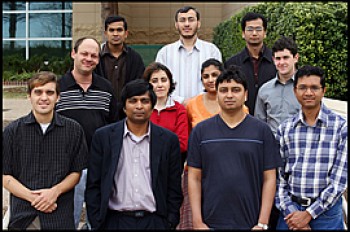
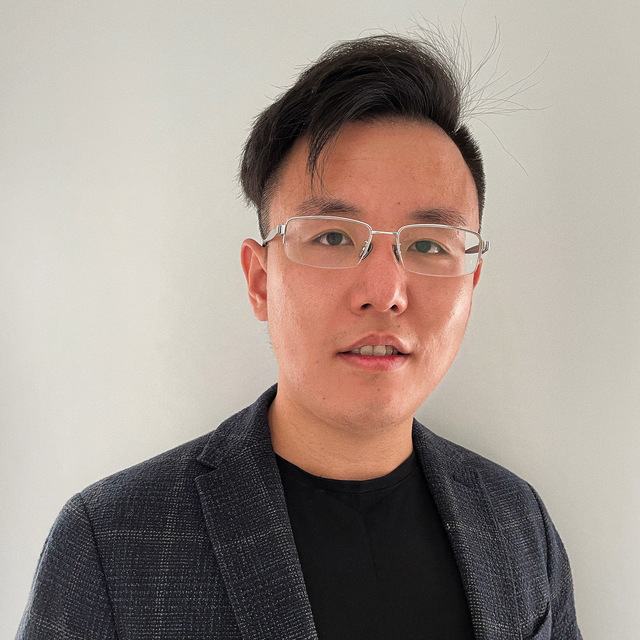
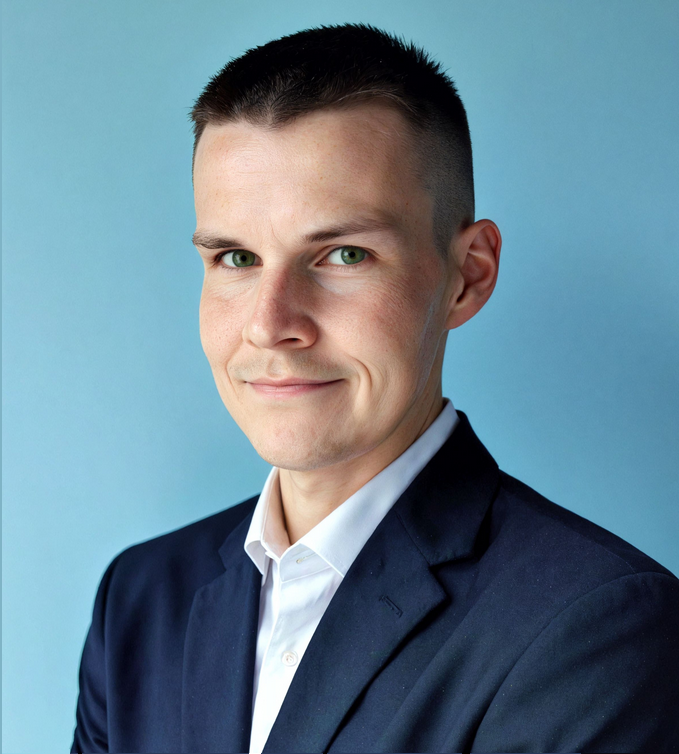
Dr. Latifur Khan is a Professor in the Department of Computer Science at the University of Texas at Dallas' Erik Jonsson School of Engineering and Computer Science. He directs the Database and Data Mining Laboratory and conducts research in data mining, cybersecurity, and semantic web technologies. Research domains include: Large language models for threat detection Fairness in machine learning Vulnerability analysis in software systems Graph-based information retrieval Recent publications focus on AI security applications in transportation systems, political conflict analysis using NLP, and federated learning for IoT security. His work consistently bridges theoretical algorithms with practical cybersecurity implementations. Research grants include funding from NSF, NASA, Raytheon, Nokia, and SUN Microsystems. Teaching includes courses in Plant Breeding (PBG 450/550) and Breeding Clonal Crops (PBG 551).
Marc Sánchez Artigas is an Associate Professor at Rovira i Virgili University, Department of Computer Engineering and Mathematics. He holds a PhD from Pompeu Fabra University (2009) and conducted postdoctoral research at EPFL (Switzerland). His research focuses on distributed computing, cloud storage systems, and serverless architectures. He leads the CloudLab research group and coordinates major EU projects like Horizon Europe's CloudSkin and H2020's IOStack. Education: PhD in Computer Science (2009), Pompeu Fabra University MSc in Computer Engineering (2004), Universitat Rovira i Virgili BSc in Computer Engineering (2002), Universitat Rovira i Virgili Research Interests: Distributed systems, cloud computing, software-defined storage, serverless computing, and privacy-preserving storage solutions. His work emphasizes scalable architectures, data management in heterogeneous environments, and optimizing cloud storage efficiency through novel algorithms and frameworks. Awards: Best Paper (IEEE LCN 2007), Best Dataset (ACM IMC 2015), Serra-Hunter Excellence Professorship, and multiple grants from EU and Spanish funding bodies. Grants & Projects: Coordinated over €5 million in projects including H2020 CloudButton (serverless analytics), FP7 CloudSpaces (personal clouds), and national initiatives like Software-Defined Edge Clouds. Active in coordinating IPCEI-CIS for cloud infrastructure. Teaching: Courses on distributed systems, parallel architectures, and cloud computing. Taught at Universitat Rovira i Virgili and Universitat Oberta de Catalunya.
Girija Chetty is a Full Professor in Computing and Information Technology at the University of Canberra's School of Information Technology and Systems. She holds a PhD in Information Sciences and Engineering and has over 35 years of experience in academia and research leadership roles, including Head of Software Engineering and Program Director of ITS courses. Her research focuses on multimodal systems, medical image computing, AI, and data science. She leads a dynamic research group comprising PhD students, postdocs, and international collaborators. Education: PhD in Information Sciences (Australia, 2007), MSc and BSc in Electrical Engineering/Computer Science (India). She has held visiting roles at Deakin University and CSIRO. Research interests span computer vision, pattern recognition, and medical diagnostics, with 200+ publications in top journals/conferences. Her work addresses global challenges via AI-driven solutions in healthcare (e.g., pain assessment systems, malaria diagnostics) and sustainability (SDG impact frameworks). Projects include AI for remote ultrasound imaging and smart farming systems. She actively collaborates with industry and global research institutions. Grants/Projects: 12 funded initiatives including AI for extreme environment healthcare, malaria pathogen detection, and big data-driven population health. Awards: Senior IEEE/Australian Computer Society membership, editorial roles in IEEE/Elsevier journals. Labs/Teams: Leads a multidisciplinary research group focused on medical AI and multimodal systems.
Di Zhu is an Assistant Professor of Geographic Information Science at the University of Minnesota's Department of Geography, Environment and Society. He directs the Geospatial Data Intelligence (GeoDI) Lab, focusing on GeoAI and social sensing to analyze human-environment interactions in urban systems, public health, and socioeconomic dynamics. His educational background includes a PhD in Cartology and GIScience from Peking University, complemented by a BSc in GIS and a BA in Economics from the same institution. Key research interests include spatial regression models, human mobility patterns, and GeoAI applications. He has collaborated on projects funded by NIH, NSF, and other agencies, exploring topics like spatiotemporal data imputation, urban flow analysis, and pandemic spatial dynamics. His work bridges traditional GIScience with modern machine learning techniques, emphasizing actionable insights from big geospatial data. Teaching focuses on advanced GIS, numerical spatial analysis, and urban sensing. He actively mentors students through the University of Minnesota's Master of GIS program and serves on academic boards including CPGIS. Current projects include analyzing Twin Cities mobility networks and developing intelligent spatial prediction frameworks.
Yushu Zhu is an Associate Professor at the School of Public Policy at Simon Fraser University. Her research focuses on housing stratification , urbanization , and social equity , with a particular emphasis on immigrant communities , low-income populations , and ethnic minorities . She teaches courses on housing policy, urban transformation, and research methods. PhD in Architecture from University of Illinois at Urbana-Champaign M.Sc. and B.Sc. (Hons) in Geography from Sun Yat-sen University, China Former roles at Asia Pacific Foundation of Canada, UBC, and Brown University Research Interests include urban sociology , community housing , and public policy . Recent work analyzes housing inequality in Canada (1981–2016), state-embedded gentrification in China, and neighborhood participation dynamics. Her publications appear in top journals like Urban Studies and Environment and Behavior . Scientific Awards include multiple SSHRC grants (Partnership, Insight, Partnership Engage) and a Lincoln Institute of Land Policy fellowship. She has contributed to policy reports and participated in expert panels on urban housing, pandemic impacts, and social integration.
Christos Nicolaides is an Assistant Professor at the Department of Business and Public Administration within the School of Economics and Management at the University of Cyprus (UCY), holding a secondary appointment as a Digital Fellow at MIT's Initiative on the Digital Economy. Previously, he spent three years as a James McDonnell Foundation-funded Postdoctoral Fellow at MIT Sloan School of Management. His educational background includes a PhD in Engineering from Massachusetts Institute of Technology (2014), SM from MIT (2011), MSc in Applied Mathematics from Imperial College London (2009), and BSc in Physics from University of Thessaloniki (2008). Nicolaides' research applies mathematical, statistical, and computational tools to large-scale empirical questions in social influence mediated by digital technologies. His work spans Data Science , Machine Learning , Social Networks , and Computational Social Science , with significant contributions to understanding human mobility patterns, disease transmission dynamics, and social contagion effects. His research has established novel methodologies for analyzing complex network structures in mobility data and social interactions. Analysis of his 15 most recent publications reveals a consistent focus on applying network science to real-world problems, particularly in pandemic response (12 publications), human mobility analytics (9 publications), and social contagion dynamics (7 publications). His work demonstrates increasing interdisciplinary integration, combining computer science, epidemiology, and organizational behavior since 2020. Marie S. Curie Fellow Two Highly Cited Papers by Web of Science (2017, 2020) Best Paper Award by Risk Analysis Society (2019) Professor of The Week by Poets & Quants (2020) As principal institutional investigator, Nicolaides has secured over €1 million in research funding from the European Commission, industry partners, Cyprus Innovation and Research Foundation, and Cyprus Ministry of Health. His current teaching includes Social Networks and Entrepreneurship, Introduction to Operations Management, and Quantitative Methods in Management. Media coverage of his work spans major outlets including The New York Times, CNN, Nature, and Science, with significant impact on public health policy discussions during the COVID-19 pandemic.
Professor Gregoris Mentzas is a faculty member at the National Technical University of Athens, School of Electrical and Computer Engineering, where he directs the Division of Industrial Electric Devices and Decision Systems. His research focuses on AI-enabled decision systems, knowledge management, and semantic technologies applied to digital enterprises and e-government. With over 350 publications, he ranks among the top 2% most cited scientists globally. Research Interests: Artificial intelligence for decision augmentation, big data analytics in personalized health and smart mobility, semantic web technologies, and industrial internet of things. Current projects investigate trustworthy AI frameworks and hybrid intelligence systems for Industry 5.0. Teaching: Leads courses in Digital Enterprise Management, Strategic Information Systems, and Project Management at undergraduate and postgraduate levels, incorporating industry case studies and experiential learning approaches. Awards & Leadership: Top 2% Highly Cited Scientist (PLOS Biology 2021) 5 Best Paper Awards in international conferences Director of Information Management Unit (1997-present) Board Member of Institute of Communication and Computer Systems (2006-2009) Projects & Funding: Secured over €18 million in research grants through 60+ European projects with industry partners including SAP, IBM, and Siemens. Research outcomes led to three technology spin-offs.
Dr. Rahat Masood is a Lecturer at the School of Computer Science & Engineering (CSE), UNSW Sydney. Her research focuses on cybersecurity, including privacy-preserving technologies, authentication mechanisms, critical infrastructure protection, and network security analysis. She holds a PhD in Information Security and Privacy from UNSW (Data61-CSIRO, Australia), an MS in Computer and Communication Security from NUST, Pakistan, and a B.Sc. in Software Engineering from the University of Engineering & Technology, Pakistan. Her academic contributions span theoretical and applied cybersecurity domains. Dr. Masood’s educational background includes: PhD: Information Security and Privacy (UNSW, Data61-CSIRO, Australia) MS: Computer and Communication Security (NUST, Pakistan) B.Sc.: Software Engineering (University of Engineering & Technology, Pakistan) Her research interests emphasize privacy technologies, authentication systems, and securing distributed energy resources. Recent work includes developing frameworks for quantifying privacy risks and analyzing social media manipulations. She employs data-driven methodologies and machine learning to address challenges such as WiFi device tracking and federated learning security. In her publications, she highlights trends in privacy controls usability, satirical news detection using multilingual models, and threat modeling for critical infrastructure. These studies underscore her commitment to bridging cybersecurity theory with real-world applications. No scientific awards are mentioned in the provided texts. Her teaching and supervision roles at UNSW are active, though specific student advisees or grant details are not listed. She is affiliated with Data61-CSIRO through her PhD and contributes to interdisciplinary cybersecurity efforts within CSE.
Skyler Wang is an Assistant Professor of Sociology at McGill University, specializing in AI, technology, and human-computer interaction. He holds a Ph.D. from UC Berkeley and previously served as a Sociologist at Meta’s FAIR lab. His research critically examines sociotechnical systems' epistemic cultures and social impacts, focusing on AI-driven human-machine interactions in health, relational contexts, and digital platforms. His research interests include AI ethics, platform societies, digital intimacy, and multilingual systems. Notable works include the book project Sharing Bodies in the Sharing Economy , exploring Couchsurfing’s sociosexual dynamics, and applied AI projects like No Language Left Behind (doubling machine translation languages) and SeamlessM4T (awarded TIME’s 2023 Best Inventions). Teaching focuses on Technology & Society, Artificial Intelligence & Society, and Digital Intimacy. Advising roles include Major/Minor and Honours Sociology students. Active in interdisciplinary collaborations through McGill’s Quebec Inter-University Centre for Social Statistics and global AI ethics initiatives. Education: Ph.D. Sociology, UC Berkeley (2023) Key Affiliations: Meta FAIR Lab (prior), McGill Department of Sociology Publications in Nature , CSCW , Big Data & Society , and media features in WIRED, CNN, and NPR
Dr. Daniel Tubbenhauer is an ARC Future Fellow at the University of Sydney's School of Mathematics and Statistics, specializing in categorical representation theory, 2-representation theory, and their applications to topology, cryptography, and machine learning. His research bridges algebra, category theory, and low-dimensional topology, with a focus on modular representation theory and diagrammatic algebra. Education: PhD in Mathematics (2013), supported by extensive postdoctoral research globally. Research Interests: He explores categorical structures in representation theory, including categorification of quantum groups, link homologies, and applications in cryptography. His work emphasizes diagrammatic methods and computational approaches to algebraic problems. Publications: Over 30 peer-reviewed articles, including foundational work on web categories, Soergel bimodules, and applications of representation theory to machine learning. Recent projects analyze growth rates in tensor powers and fractal behavior in algebraic structures. Awards: Australian Research Council Future Fellowship (2023), supporting his research on categorical representation theory. Teaching & Supervision: Taught courses on quantum topology, category theory, and representation theory. Current student: Daniel Collison (PhD). Advises on projects linking representation theory to AI and cryptography. Labs/Teams: Collaborates with global networks in algebraic topology and categorification, including projects at the Sydney Mathematical Research Institute. Maintains an active YouTube channel ( VisualMath ) for outreach.
Ana Valdivia is a Departmental Research Lecturer at the Oxford Internet Institute (OII), specializing in AI, Government, and Policy. Her research bridges critical data studies with computer science, focusing on AI's environmental footprint, algorithmic fairness, and sociotechnical impacts. She holds a mathematics background and collaborates with civil society organizations. Currently, she is a Visiting Research Fellow at UCL and writing a book on AI supply chains for Bristol University Press. Her interdisciplinary work combines quantitative (machine learning) and qualitative (ethnographic) methods. Key projects include investigating AI's environmental costs, surveillance technologies, and algorithmic accountability in risk assessment tools. She is Associate Editor for Big Data & Society and has received grants from the British Academy and The Alan Turing Institute. Valdivia advises DPhil students on AI governance, fairness, and digital policy. Her research has influenced international media and policy debates, with coverage in The Guardian , The New York Times , and El País . She leads OII's Research Programme on AI, Government, and Policy, emphasizing transdisciplinary approaches to AI's societal challenges.
Douglas H Fisher is an Associate Professor of Computer Science and Computer Engineering at Vanderbilt University's School of Engineering. His research focuses on artificial intelligence, particularly machine learning, and computational sustainability. He holds a Ph.D., M.S., and B.S. in Computer Science from the University of California - Irvine. His work bridges AI with societal challenges, emphasizing sustainability, education technology, and cognitive modeling. Notable areas include integrating sustainability into computing curricula, leveraging AI for peer review systems (pReview), and exploring bias mitigation in neural networks. He has contributed to foundational machine learning techniques, such as rule induction for medical data analysis and decision tree optimization. Fisher's research spans interdisciplinary applications: from geospatial water resource modeling to MOOCs' social incentives. His educational contributions include blended learning frameworks and open educational resources advocacy. He has authored over 100 publications across AI, sustainability, and education, reflecting a commitment to both technical innovation and societal impact.
Christoph T. Koch is a Professor of Physics at Humboldt-Universität zu Berlin, where he has held the W3 Chair since 2015. Previously, he held a similar position at Ulm University (2011–2015), supported by the Carl Zeiss Foundation. His research focuses on advanced electron microscopy techniques, including quantitative transmission electron microscopy (TEM), electron holography, and strain mapping. He leads the AG Strukturforschung/Elektronenmikroskopie group, advancing materials science through innovations in imaging and spectroscopy. Education: B.Sc./M.Sc. in Physics at Heidelberg University (1996–1998), followed by an exchange at Arizona State University (1997–1998). PhD in Physics from Arizona State University (2002, advisor: Prof. John C.H. Spence). Postdoctoral research at the Max Planck Institute for Metals Research, Stuttgart (2002–2011). Research interests include: Electron diffraction and phase retrieval Nanometer-scale strain and defect analysis Electron energy-loss spectroscopy (EELS) for plasmonics and bandgap mapping Development of FAIR data infrastructure for materials science Leadership: Managed the Department of Physics at Humboldt University (2020–2024). Collaborates widely, with key co-authors including P.A. van Aken, W. Sigle, and C. Felser. His work bridges experimental microscopy and computational modeling, addressing challenges in semiconductors, ceramics, and 2D materials. Notable contributions include pioneering methods for 3D reconstruction via electron ptychography, dynamic electron diffraction analysis, and strain mapping in advanced CMOS technologies. Current efforts emphasize real-time imaging and AI-driven data analysis in materials research.
Dr. Martin Zuidhof is a Professor in the Department of Agricultural, Food & Nutritional Science at the University of Alberta. His primary research focus is on Poultry Systems Modeling and Precision Feeding, particularly in optimizing broiler breeder management and energy partitioning. He holds a PhD in Animal Science from the University of Alberta and has pioneered transformative precision feeding systems that achieve unprecedented flock uniformity ( Education: PhD, Animal Science, University of Alberta Research Interests: Dr. Zuidhof’s work centers on advancing precision livestock systems through mathematical modeling (e.g., multiphasic growth models), optimizing pullet body weight for reproductive efficiency, and addressing societal concerns about animal welfare in poultry production. His innovations in precision feeding systems reduce nutrient waste while enabling precise metabolic studies. Publications: Over 50 peer-reviewed articles since 2004, spanning topics from energy partitioning to smart farming technologies. Recent work emphasizes low-cost sensor applications and Big Data integration in poultry systems. Teaching: Instructs courses like Applied Poultry Science (AFNS 571/AN SC 471) and Principles of Animal Agriculture , emphasizing experiential learning and critical scientific thinking. Grants/Advising: No explicit grants listed, but his research has received institutional support. No advisee names found in provided texts.
Sharmistha Guha is an Assistant Professor in the Department of Statistics at Texas A&M University, part of the College of Arts & Sciences. Her research focuses on Bayesian methods for analyzing complex, high-dimensional data, with applications in neuroscience, network security, and social sciences. She develops techniques for supervised network data analysis, causal inference, and data privacy preservation. Education: Ph.D. in Statistical Science (Duke University, implied by dissertation recognition). Research Interests: Bayesian high-dimensional regression, object-oriented regression, causal inference in randomized trials, probabilistic record linkage, Bayesian nonparametric mixture models, and integration of heterogeneous data types like networks and functional data. Her work addresses challenges in neuroimaging (dMRI/fMRI) and big data analytics. Recent Contributions: Her articles span Bayesian methodologies for network analysis, differential privacy in treatment effect estimation, and applications in environmental health (e.g., PM2.5 exposure studies). Notable trends include leveraging Bayesian hierarchical models for complex data structures and advancing causal inference frameworks. Awards: 2022 Blackwell-Rosenbluth Award (ISBA) 2021 Savage Award Honorable Mention 2024 NSF-DMS Grant 2413721 Grants & Advising: Secured NSF funding for heterogeneous data integration research. Mentored students like Jose Rodriguez-Acosta (NSF GRFP Fellow) and Jacob Pagel (NIH-funded CoSIBS participant). Lab/Team: Leads a research group integrating statistical method development with domain collaborations in neuroscience and network security. Active in organizing workshops and serving on panels to foster academic engagement.