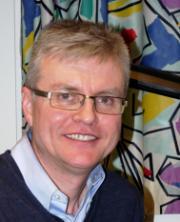
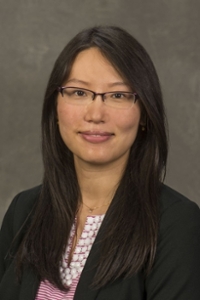
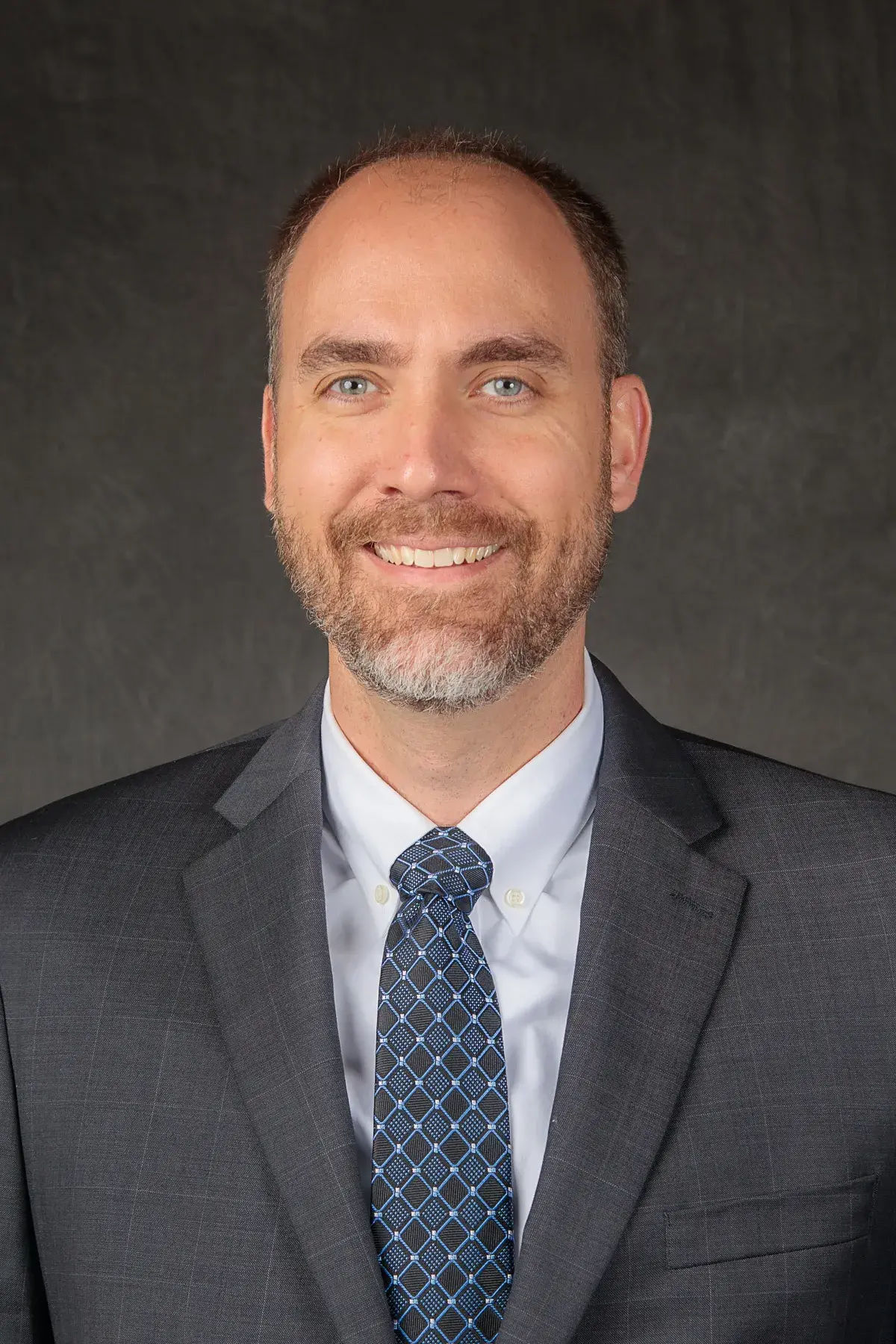
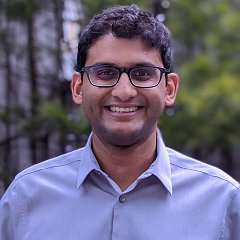
Stein Olav Skrøvseth is an Associate Professor in Machine Learning at the Department of Physics and Technology, UiT The Arctic University of Norway. His research focuses on the intersection of artificial intelligence and healthcare, particularly addressing challenges in eHealth implementation, health data analytics, and the ethical implications of AI in medicine. Selected Articles: 2024 on AI opportunities in healthcare; 2023 analysis of structured health data; 2020 critique of Norway's Axon IT project Collaborations: Partnered with WHO/Europe, contributed to policy discussions on national eHealth strategies Current work emphasizes privacy-preserving distributed health data computation, reducing inequalities through digital health, and advocating for open platform architectures over proprietary systems in public healthcare infrastructure projects.
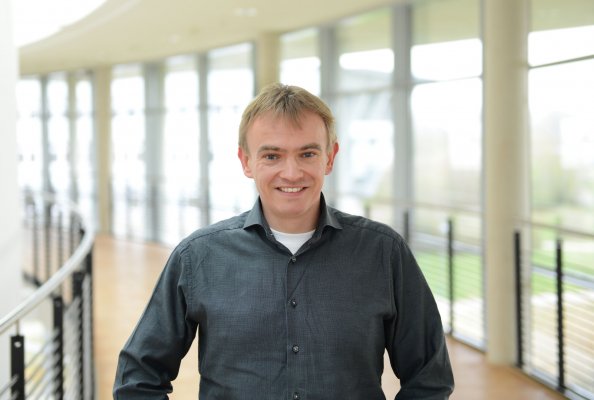
Dr. Fred Godtliebsen is a Professor at the Department of Mathematics and Statistics , UiT The Arctic University of Norway. His research bridges Machine Learning , Statistical Analysis , and Geosciences , with a particular focus on automating microfossil classification and medical data analysis . Dr. Godtliebsen leads projects like "Transforming ocean surveying by the power of DL and statistical methods" , applying AI to geological and healthcare challenges. His recent work demonstrates how deep learning and reinforcement learning can automate paleontological analysis, manage blood glucose control for diabetes, and process hyperspectral dermatologic data for cancer detection. His publications span Artificial Intelligence in Geosciences , Medical Imaging , and Statistical Methodology , often collaborating with multidisciplinary teams. While no formal awards or student advisement details are listed, his work influences electronic health record analysis , environmental monitoring , and AI implementation barriers .
Fabian Pfitzner is a Research Associate at the Technical University of Munich (TUM) , specifically within the Chair of Computing in Civil and Building Engineering led by Prof. Dr.-Ing. André Borrmann. His work focuses on leveraging data mining , computer vision , and knowledge graphs to enhance construction site monitoring and process automation. Research Interests: Data Mining & AI in Construction: Developing intelligent systems to extract actionable insights from construction site data. Computer Vision for Process Monitoring: Applying advanced image analysis techniques to track construction progress and activities. Knowledge Graph Construction: Creating semantic models to represent construction processes and enable better decision-making. Digital Twinning: Building real-time digital replicas of construction sites for enhanced control and optimization. His recent publications span Automation in Construction , Forum Bauinformatik , and CIB W78 , focusing on concrete pouring monitoring , rebar installation prediction , and robotic construction monitoring . These works consistently integrate AI-driven analytics with real-world construction challenges . Teaching & Supervision: Mr. Pfitzner teaches Bau- und Umweltinformatik 1 and Softwarelab , and has supervised multiple Master’s and Bachelor’s theses on topics including BIM-based progress monitoring, digital twins, and automated environmental impact calculations. Contact: fabian.pfitzner@tum.de | Room 0501.03.161 | Tel: +49 (89) 289-25064
Dr. Qian Jenny Huang is an Associate Professor of Architecture at the School of Architecture, Southern Illinois University Carbondale (SIUC) . She began as a tenure-track Assistant Professor in August 2015 and was promoted to Associate Professor in May 2020. Holding a PhD in Building Construction Management from Purdue University and a background in Chinese law, she combines construction management expertise with legal and technological perspectives. Education: Ph.D. in Building Construction Management – Purdue University, USA (2013) Master of International Law – Nankai University, China Bachelor of Law – Nankai University, China Research Interests: Dr. Huang’s scholarship lies at the intersection of construction management, smart-building technologies, and international construction law . She leverages big-data analytics, wireless sensor networks, machine learning, and IoT frameworks to advance energy-efficient, safe, and legally compliant built environments. Core themes include: International construction law and contract practice Construction safety training and risk management Smart-grid-enabled building systems Occupancy-driven energy optimization AI-driven hazard detection for vulnerable occupants (e.g., infants) BIM maturity assessment across global construction industries Her work is recognized by interdisciplinary audiences in architecture, civil engineering, computer science, and law. Publication Landscape: Between 2010 and 2025, Dr. Huang has authored more than 30 peer-reviewed articles spanning AI algorithms for smart buildings, lightweight CNN models for resource-constrained robotics, wireless sensor networks for environmental monitoring, and socio-technical studies on BIM adoption . Recent trends emphasize edge-deployable AI for real-time building monitoring and sustainable construction practices. Teaching & Mentorship: Dr. Huang teaches a progressive sequence of construction-management courses: ARC 210 – Building Construction Management: Introduction & Professional Practice ARC 310 – Program Management ARC 410 – Construction Safety Management ARC 411 – Time, Value & Risk Management ARC 412 – Construction Project Management While specific student advisees are not listed, her curriculum fosters advanced project-based learning, and she maintains active collaboration with graduate researchers in smart-building laboratories. Laboratory & Facilities: Dr. Huang conducts research within SIUC’s smart-building and construction-management laboratories , utilizing wireless sensor testbeds, FPGA prototyping boards, and GPU-enabled edge devices to validate AI models in realistic built environments.
Carlos Jesús Fernández Basso is a Post-Doc Researcher at the Universidad de Granada in the Department of Computer Science. His work focuses on the intersection of Big Data, Data Mining, and Fuzzy Systems, with applications in energy efficiency, social network analysis, and medical diagnostics. His research interests include: Energy-efficient building management using IoT and Big Data Distributed frequent itemset mining and association rule discovery Fuzzy logic for data interpretability in complex systems Text mining and pattern detection in social media Recent publications highlight his contributions to Spark-based distributed algorithms, predictive control systems, and visualization of fuzzy association rules. He collaborates with researchers across disciplines, including applications in healthcare and cybersecurity.
Prof. Dr. Sven Hofmann is a faculty member at the University of Leipzig , holding the Professorship for Didactics of Computer Science . He serves as a coordinator for the "MIT Schools in Saxony" initiative and an appointed member of the expert advisory board for the "Digital School Saxony" initiative. Focus on teaching computer science at secondary, grammar, and vocational schools Active in projects like SharKI, PraxisdigitaliS, and UndiMeS Member of the GI specialist group "Information Technology Education in Saxony and Thuringia (IBiSaTh)" Research interests include web-based teaching scenarios, e-learning, ontological structures in education, AI integration in curricula, and digital media in school contexts. His recent work spans both artificial intelligence education and ecological studies on bark beetles under climate change. Scientific projects involve: SharKI (AI and Big Data in higher education) PraxisdigitaliS (Digitalization in Saxony's schools) UndiMeS (Digital media in Saxony's education)
Michael Sama is an Associate Professor at the University of Kentucky , with appointments in the Department of Biosystems and Agricultural Engineering and the Department of Electrical and Computer Engineering . He currently serves as the Director of Graduate Studies in Biosystems and Agricultural Engineering. Doctor of Philosophy, Biosystems and Agricultural Engineering, University of Kentucky (2013) Master of Science, Biosystems and Agricultural Engineering, University of Kentucky (2008) Bachelor of Science, Computer and Systems Engineering, Rensselaer Polytechnic Institute (2004) His research focuses on Precision Agriculture , Unmanned Aircraft Systems (UAS) , In Situ and Remote Sensing , and Embedded Control systems, often integrating drone technology with agricultural and environmental applications. The 15 most recent articles highlight his work in UAS navigation, sensor calibration, GNSS performance, and agricultural data analysis. Themes include machine learning , atmospheric monitoring , and precision spraying , with subfields spanning geospatial analysis, fluid dynamics, and livestock behavior.
Martin Schlüter is a Professor at the Department of Geodesy and Geoinformatics within the School of Engineering at Mainz University of Applied Sciences. His research focuses on the integration of photogrammetry, geodetic engineering, and machine learning for structural monitoring applications. Key institutional affiliations include leadership in the i3mainz research center and collaboration with the German Society for Photogrammetry, Remote Sensing and Geoinformation (DGPF). His research interests span Geodesy , Photogrammetry , and Structural Health Monitoring , with recent emphasis on machine learning applications for optical measurement systems. Schlüter pioneers modular digital camera tachymeters (MoDiTa) for bridge vibration analysis, railway safety, and BIM integration. His work bridges theoretical geodetic principles with practical engineering solutions for infrastructure monitoring, emphasizing real-time data processing and sensor fusion. Schlüter leads significant research projects including BAM (Big-Data Analytics in Environmental Monitoring) and VCSA3D (Virtual Crime Scene Analysis) , securing institutional funding through Mainz University's Best Practice Research Program. His laboratory specializes in optical measurement systems, developing calibration protocols for X-ray micro-CT and laser tracking applications. Current work focuses on AI-driven structural monitoring for transportation infrastructure and heritage preservation. Professional contributions include active participation in the DGPF and editorial roles in German surveying journals. His research demonstrates consistent innovation in merging traditional geodetic methods with emerging computational techniques for precision engineering applications.
Kathryn Newhart is an Assistant Professor in the Chemical, Biological, and Environmental Engineering department at Oregon State University's College of Engineering. Her work bridges the water-data nexus through statistical and machine learning applications to optimize water/wastewater systems. Ph.D. in Civil and Environmental Engineering (2020) M.S. in Civil and Environmental Engineering (2018) B.S. in Environmental Engineering (2016) Dr. Newhart's research focuses on: Machine learning for water/wastewater treatment monitoring and control Decarbonization strategies in water systems Engineering education innovations using gamification Collaboration with utilities/non-profits for real-world deployments Her recent publications emphasize: Stochastic modeling for wastewater-based epidemiology Ultrafiltration process monitoring Energy terminology analysis in wastewater literature Escape room pedagogy for ethics training Data science tools for decarbonization Advanced fault isolation in decentralized systems Dr. Newhart integrates her industry experience (operator, engineer, data scientist) into practical teaching, emphasizing data science tools and critical thinking in environmental engineering education.
Jason Radford is a Principal Research Scientist at Northeastern University and founder of the Social Design Lab. He joined Northeastern in 2014 as part of David Lazer’s lab, co-founding Volunteer Science—a platform for online behavioral studies that evolved into a global SaaS company. Primarily based at The Roux Institute in Portland, ME (100 Fore St), he operates in a remote capacity with additional offices in Boston and London. Education Ph.D. in Sociology, University of Chicago: Focused on organizational effectiveness Research Interests Radford’s work bridges social science methodology , big data analytics , and digital experimentation . He pioneers techniques for non-probability sampling, machine learning integration in social research, and platform-based behavioral studies. His research emphasizes translating theoretical frameworks into scalable solutions for societal challenges through scientific entrepreneurship. Publication Trends His publications (2016-2025) show a clear evolution from foundational big data concepts ( Data ex Machina , 2017) to methodological innovations in survey science (2025). A consistent thread is the critical examination of data quality in digital-era research, with increasing focus on sustainable implementation of scientific findings in real-world contexts. Labs and Initiatives As founder of the Social Design Lab, Radford leads ventures including Disinformation Monitor, Current Argument Optimization, Equitable Relationships App, and Volunteer Science. The lab partners with faculty, students, and practitioners to transform research into impactful solutions, emphasizing scientific entrepreneurship and translational science.
Ladjel Bellatreche is a Full Professor of Data Engineering at ISAE-ENSMA (National Engineering School for Mechanics and Aerotechnics) in Poitiers, France, where he has served as faculty since September 2010. He leads the Data and Model Engineering Team within the Laboratory of Computer Science and Automatic Control for Systems (LIAS). Prior to his current position, he spent eight years as Assistant and then Associate Professor at Poitiers University. His academic journey includes visiting positions at the University of Québec en Outaouais (Canada), Purdue University (USA), and Hong Kong University of Science and Technology (China). Professor Bellatreche's research focuses on Semantic Data Integration, Ontology-based Database Design, Life Cycle of Extremely Large Database Design, Big Data & Cloud Computing, Green Computing, and Database Deployment. His work bridges theoretical foundations with practical applications in data management systems, particularly addressing challenges in scalability, efficiency, and semantic enrichment of data repositories. His research has evolved from traditional data warehousing to encompass modern big data analytics and energy-efficient database systems. Analysis of his recent publications reveals a strong trend toward addressing the challenges of big data management through innovative approaches in semantic integration, graph-based query optimization, and green computing. His research shows consistent focus on data warehousing evolution, with increasing emphasis on semantic technologies, RDF data processing, and energy efficiency in query processing. The work demonstrates progression from traditional database design to contemporary challenges in data science and advanced analytics. Professor Bellatreche actively contributes to the academic community through editorial roles, including serving as an Editorial Board Member for the International Journal of Reasoning-based Intelligent Systems and Subject Area Editor for the Scalable Computing Journal. He has organized numerous international conferences and workshops including DAWAK, DOLAP, and MEDI, and has served on program committees for over forty international conferences. He is deeply involved in research mentorship and international collaboration, particularly in Africa and Asia, where he co-supervises students and organizes academic events such as ICT-EurAsia and CIIA. His work extends to promoting research capacity building in developing regions through academic partnerships and collaborative projects. As leader of the Data and Model Engineering Team at LIAS laboratory, Professor Bellatreche oversees research initiatives focused on advanced data management systems. His team works on cutting-edge problems in database design, optimization, and integration, with particular expertise in semantic data warehousing, big data analytics, and green computing approaches for database systems.
Salvatore DISTEFANO is a Full Professor of Computer Science in the Department of Mathematical and Computer Sciences, Physical Sciences and Earth Sciences at the University of Messina. With over 250 scientific publications, he maintains active research collaborations with institutions worldwide including University of Massachusetts Dartmouth, UCLA, Duke University, and Innopolis University. His academic appointments include Professor Fellow at Kazan Federal University (2015-2018) and coordinator of the CINI Working Group on System and Service Engineering. Professor DISTEFANO's research spans an exceptionally broad range of computing disciplines with emphasis on practical applications. His primary interests include non-Markov modeling, performance and reliability evaluation, distributed computing paradigms (cloud, edge, fog), Internet of Things, cyber-physical systems, and smart city technologies. His work demonstrates strong interdisciplinary connections between theoretical computer science and real-world applications in transportation, environmental management, and healthcare. Notably, he has contributed to the development of several research tools including WebSPN, ArgoPerformance, GS3, and Stack4Things. His recent publications (2021-2025) reveal a research trajectory focused on applying computing technologies to sustainability challenges. The articles demonstrate consistent emphasis on IoT applications for environmental monitoring, smart urban infrastructure, and resource management. His work shows particular strength in developing analytical models for complex distributed systems, with increasing integration of machine learning techniques in recent years. Best Paper Award IEEE International Conference on Distributed Computing Systems (2017) Professor DISTEFANO has participated in numerous significant research projects including Reservoir, Vision (EU FP7), SMSCOM (EU FP7 ERC Advanced Grant), Beacon, and IoT-Open.EU (EU H2020). He serves on editorial boards for prestigious journals including IEEE Transactions on Dependable and Secure Computing, Journal of Cloud Computing, and Journal of Big Data. As one of the co-founders of startup SmartMe.io (2017), he has successfully translated academic research into commercial applications. He currently serves as referent for both the High-performance Computing and Applications Group and the Quantum Information and Computing Systems Group at the University of Messina.
Rohan Padhye is an Assistant Professor in the Software and Societal Systems Department (S3D) within the School of Computer Science at Carnegie Mellon University. He leads the Program Analysis, Software Testing, and Applications (PASTA) research group and serves as affiliate faculty at CyLab. His research spans software engineering, programming languages, systems, and security, with publications at top venues including ICSE, ASE, ISSTA, MSR, OOPSLA, SOSP, SoCC, NSDI, and USENIX Security. Padhye completed his Ph.D. in Computer Science at UC Berkeley under Koushik Sen, where he investigated techniques for specializing program analysis and automated testing tools. He holds a Master's degree from IIT Bombay in static program analysis. Prior to CMU, he worked with Amazon Web Services, Microsoft Research, Samsung Research America, and IBM Research India. His research focuses on automatically discovering software bugs using dynamic program analysis and coverage-guided fuzz testing. Recent projects include Fray (a concurrency testing platform for the JVM), Mu2 (mutation-based fuzz testing), and JQF+Zest (coverage-guided property-based testing). His work has identified numerous bugs in open-source software across Google Closure Compiler, OpenJDK, Apache projects, and others. Padhye's publications demonstrate a consistent focus on improving software testing through innovative fuzzing techniques, with recent work expanding into date/time bug analysis, distributed systems testing, and AI-driven legal reasoning. His research bridges theoretical foundations with practical applications, evidenced by tools like ChocoPy (used for teaching compilers at multiple universities) and JQF+Zest (integrated into Fuzzit cloud service). NSF grant as PI on Practical Controlled Concurrency Testing for Managed Code (2025) NSF grant as PI on Strengthening Correctness of Date and Time Logic in Software Systems (2025) Amazon Research Award for property-based testing (2025) Distinguished Reviewer Award for PLDI'25 ACM SIGSOFT Distinguished Paper Award for date/time bugs study Best Paper Award at SOSP 2019 Padhye advises multiple Ph.D. students in the PASTA Lab, including Ao Li, Vasudev Vikram, and Shrey Tiwari. He has served on program committees for major conferences including ASE, SPLASH, ISSTA, ICSE, and PLDI. His teaching at CMU includes courses on Program Analysis and Fantastic Bugs and How to Find Them, continuing his work from Berkeley where he was an Outstanding Graduate Student Instructor. The PASTA Lab conducts research on Program Analysis, Software Testing, and Applications with a focus on dynamic analysis and grey-box fuzzing. The lab follows an open science ethos, making all research artifacts openly accessible and reproducible under permissive licenses. Their research is funded by NSF, CyLab, and Amazon, with a commitment to responsible disclosure practices in security research.
Maria Drakaki is Professor of Humanistic Engineering and Dean of the School of Science and Technology at the International Hellenic University. She also serves as Director of the Institute for Refugee Flows and Crisis Management of the University of Macedonia, and leads multiple postgraduate programs including the MSc in Environmental Management and Sustainability and the MSc in Humanitarian Logistics and Crisis Management. Dr. Drakaki earned her Ph.D. in Physics from the University of Texas at Austin (1992), an M.Sc. in VLSI System Design from the University of Westminster (2004), and a B.A. in Physics from the Aristotle University of Thessaloniki (1986). Her academic career progressed from research positions at the Aristotle University of Thessaloniki to faculty roles at various Greek institutions before her current position. Her research focuses on humanitarian engineering, AI methods for disaster management, humanitarian logistics, decision support systems, and supply chain management. She has pioneered approaches that combine advanced computational techniques with humanitarian applications, particularly in crisis response and management. Her work bridges the gap between traditional engineering disciplines and humanitarian practice. Analysis of her recent publications reveals a strong trend toward applying artificial intelligence, particularly machine learning and natural language processing techniques, to humanitarian challenges. Her research spans disaster response, migration management, supply chain resilience during crises, and community-based partnerships for resilience building. She has increasingly focused on social media analysis for disaster management and the application of transformer models for consequence identification from accident narratives. Fulbright Scholar Best paper award at the International Conference on Information Systems Architecture and Technology (2017) Humanitarian Engineering Lectureship award from UT Austin (2024) Dr. Drakaki supervises 4 PhD candidates and has participated in numerous European research projects including the European Qualifications – Refugees and Recognition 4 (EQUAL), Transforming Graduate Education for Green and Sustainable Future (T-Green), and the Humanitarian Engineering project with UT Austin. She serves on editorial boards including as Associate Editor for the Data Analytics for Social Impact Section of Frontiers in Big Data. She directs the Institute for Refugee Flows and Crisis Management and has established strong research collaborations across Europe.
Ralf Lübben is Professor of Business Informatics specializing in Operating Systems and Computer Networks at Flensburg University of Applied Sciences. He serves as Deputy Head of FLAIR (Flensburg Artificial Intelligence Research) and as Scientific Director of KI-Infrastructure & MLOps. His organizational responsibilities include leadership roles in the KI4FUAS initiative and the KI Application Center (KIAZ), where he focuses on Data Science and Artificial Intelligence infrastructure development. Education: Dr.-Ing. (2013) from Gottfried Wilhelm Leibniz Universität Hannover M.Sc. in Electrical Engineering and Information Technology - Computer Engineering (2007) from Gottfried Wilhelm Leibniz Universität Hannover Dipl.Ing. (FH) in Electrical Engineering - Information Technology (2005) from Private Hochschule für Wirtschaft und Technik Vechta/Diepholz/Oldenburg Lübben's research spans multiple dimensions of computer networking with particular emphasis on performance evaluation methodologies. His work integrates traditional network analysis with cutting-edge machine learning techniques, creating novel approaches for network optimization. Current research directions include transport protocol enhancements, network virtualization techniques, IoT network architectures, and applying AI to solve complex networking challenges. His recent projects explore GPU virtualization in edge computing environments and federated learning applications for vehicular communication systems. Analysis of Lübben's publication history reveals a strong trajectory from traditional network performance evaluation toward AI-integrated networking solutions. Early work focused on TCP congestion control and network measurement methodologies, while recent publications demonstrate increasing integration of machine learning techniques. His 2024 publications show particular emphasis on applying federated learning to vehicular networks and developing novel approaches for GPU virtualization in edge environments, reflecting the convergence of AI and networking research. Lübben actively supervises student projects with published project ideas spanning networking and eHealth domains. His networking project portfolio includes multi-path network access solutions, AI-based network path prediction, and LoRaWAN IoT gateway deployment. The eHealth projects demonstrate interdisciplinary applications of his networking expertise to healthcare contexts. As leader of the FLAIR research group, Lübben oversees infrastructure development for AI research at the university. His technical blog posts reveal hands-on expertise in deploying Kubeflow and Kubernetes infrastructure, with specific focus on GPU integration for machine learning workloads. The group maintains strong industry connections, particularly evident in their work on vehicular communication systems that builds on Lübben's prior industry experience at Robert Bosch GmbH.