Privatdozent (Senior Lecturer) Alexander Wilkie is affiliated with the Faculty of Informatics at the Technische Universität Wien , specifically the Institute of Computer Graphics and Algorithms. His research focuses on photorealistic rendering, color science, and optical phenomena. Photorealistic Image Synthesis Bidirectional Reflectance Distribution Function (BRDF) Chromatic Adaptation Spectral Rendering Fluorescence Modeling His work explores layered materials, atmospheric effects, and gemstone simulations, with significant contributions to physically based rendering algorithms. Students under his supervision include Andreas Weidlich and Harald Grasberger. Wilkie has collaborated on projects funded by the Austrian Science Fund (FWF) from 2005–2007.
Christian Freude is a PreDoc Researcher at the Department of Computer Graphics , Faculty of Informatics , Vienna University of Technology (TU Wien) , focusing on Visual Computing and Human-Centered Technology . His work bridges photorealistic rendering , Monte Carlo methods , and real-time simulation . Active in projects: Toward Optimal Path Guiding (2023–2027, WWTF-funded), ACD (2020–2028) Supervised PhD/Master's students : Lukas Lipp, Christian Jauernik, Johannes Lurf Research spans Monte Carlo denoising , radiative thermal transport , subsurface scattering , and point cloud rendering . His 2025 work on Inverse Simulation of Radiative Thermal Transport introduces novel methods for efficient heat distribution modeling. Key scientific awards include the OCG Förderpreis 2016 . Publications from 2015–2025 highlight advancements in rendering algorithms , stereoscopic film , and uncertainty visualization .
Ioannis Fudos is Professor and former Chair (2014-2018) of the Computer Science and Engineering Department at the University of Ioannina. He holds a Diploma in Computer Engineering from University of Patras, and MS/PhD degrees in Computer Science from Purdue University. His research spans computer graphics, CAD systems, geometric modeling, animation, and image retrieval. He directs the Computer Graphics Research Group and has secured substantial funding (€2M+) from European and national sources for 17+ projects. His scholarly contributions include publications in top venues (SIGGRAPH, Eurographics, IEEE TVCG) covering rendering techniques, 3D printing quality control, assistive technologies, and cultural heritage digitization. Recent work explores neural rendering transparency methods, wheelchair navigation interfaces, and pedestrian routing algorithms. His laboratory maintains a repository of 3D models for research use.
Shuai Ma is a researcher at Beihang University , School of Computer Science and Engineering, China. His work spans database systems , machine learning , and natural language processing , focusing on temporal knowledge graphs, graph neural networks, and privacy-preserving federated learning. He received his PhD from the University of Edinburgh , UK, in 2011. Research interests include graph theory , spatiotemporal data analysis , data mining , and anomaly detection . His recent publications address: 2025 : Technology mapping for ASICs, temporal network motifs, and 3D geometry compression. 2024 : Knowledge graph completion, scene mining for e-commerce, and secure aggregation for federated learning. Article trends reveal expertise in graph neural networks , temporal data processing , and privacy-aware systems . Collaborations with institutions like Concordia University and industry leaders underscore his interdisciplinary impact.
Thomas Marrinan is an Assistant Professor of Computer & Information Science at the University of St. Thomas, College of Arts and Sciences. His expertise spans computer graphics, visualization, human-computer interaction, and high-performance computing. He specializes in developing interactive tools for large-scale data analysis, including multi-platform visualization applications like VisAnywhere and immersive virtual reality experiences. His research focuses on bridging gaps between simulation analysis and user interaction through novel interfaces and algorithms. He has pioneered work in 3D Gaussian splatting, real-time image compression, and collaborative environments using 360 panoramas. Marrinan teaches courses such as Intro to Programming & Problem Solving and Web Development, emphasizing practical application of computational concepts. In 2024, his team won the IEEE Scientific Visualization Contest for VisAnywhere, a tool enabling cross-platform scientific visualization. His work spans over two decades, with contributions to scalable resolution displays (SAGE2), GPU-based rendering optimizations, and AI-driven audio generation for video games. He holds a strong commitment to data-intensive collaboration and immersive technologies. Recent projects include developing omnidirectional stereo imaging techniques for VR exploration of large datasets and leveraging AI to enhance user-generated content in interactive media. His research addresses challenges in distributed rendering, real-time data transmission, and improving accessibility to complex scientific datasets.
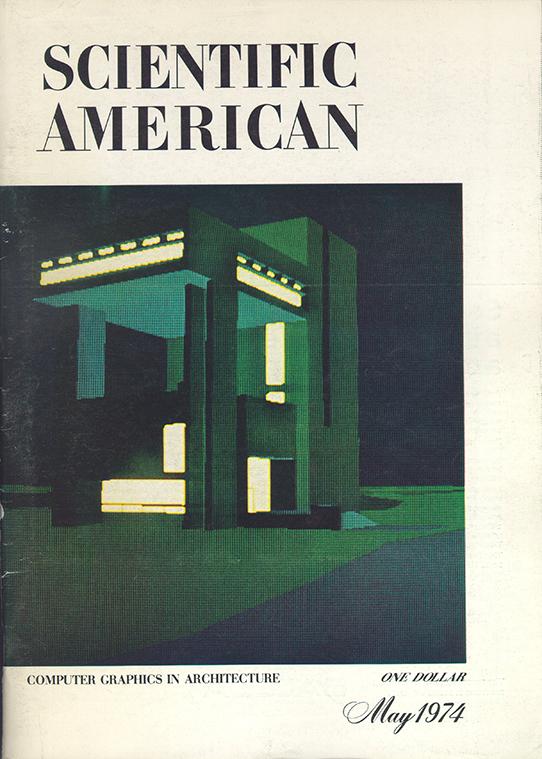
Donald Greenberg is the Jacob Gould Schurman Professor of Computer Graphics at Cornell University, affiliated with the College of Architecture, Art, and Planning (AAP) and the Department of Architecture. He holds joint teaching responsibilities across Computer Science, Art, and the Business School, reflecting his interdisciplinary impact. His office is located in Rhodes Hall and Sibley Hall at Cornell. Greenberg earned his B.C.E. from Cornell in 1958 and his Ph.D. in 1968, with additional studies at Columbia University. His academic journey has been deeply rooted at Cornell, where he has taught and researched since 1966. His research interests center on computer graphics, with a focus on real-time realistic image generation, color science, and computer-aided architectural design. He pioneered the concept of physically accurate and perceptually indistinguishable digital imagery, laying the foundation for modern rendering and digital twin technologies. His current work includes the development of 'digital twins' for architectural design, enabling real-time simulation of energy use, sunlight, and weather impacts. The selected publications reflect a career-long trajectory from foundational work in computer graphics in architecture to advanced frameworks for realistic image synthesis. These works span disciplines including computer science, architecture, and visualization, emphasizing physically based modeling, interdisciplinary applications, and educational innovation. Scientific Awards: Fellow, American Association for the Advancement of Science (2002) ACSA Creative Research Award in Architecture (1997) Member, National Academy of Engineering (1991) National Computer Graphics Association Academic Award (1989) ACM SIGGRAPH Steven A. Coons Award (1987) Greenberg has advised numerous graduate students, including Rob Cook (Pixar, Oscar winner) and Michael Cohen (Microsoft Research, Facebook), many of whom have achieved significant recognition. He emphasizes student-led research, with nearly 90% of his published papers featuring students as first authors. He leads the multidisciplinary Program of Computer Graphics and collaborates across departments and colleges. His current course, 'Design in the Age of Digital Twins,' exemplifies his ongoing commitment to innovation in education and research. He founded and directs the Program of Computer Graphics at Cornell, a hub for interdisciplinary research involving architecture, computer science, and the arts. The program has nurtured generations of leaders in graphics and visualization, including Kavita Bala, now dean of the Cornell Bowers College of Computing and Information Science.
Rafał Mantiuk is a Professor of Graphics and Displays at the Department of Computer Science and Technology , University of Cambridge, UK. He leads the Rainbow Research Group and works on visual perception, display algorithms, and computational imaging. His academic journey includes a PhD (summa cum laude) from Max-Planck-Institut (2006) and an MSc from Technical University of Szczecin (2003). His research spans applied visual perception , high dynamic range imaging , display algorithms , and machine learning for image synthesis . Recent work focuses on ColorVideoVDP (HDR video metrics), AR-DAVID (AR display artifacts), and elaTCSF (flicker modeling). His methodologies combine psychophysics with computational models to enhance display technologies. His awards include: SIGGRAPH Test-of-Time Award (2023) ICME Grand Challenge Second Place (2025) CIC Best Paper Awards (2022, 2020) Human Vision and Electronic Imaging Best Paper (2020) Heinz Billing Award (2006) Key grants: ERC Consolidator Grant (2017) for EyeCode, MSCA RealVision (2018), and EPSRC funding (2017, 2011). He supervises projects involving novel display technologies like HDR multi-focal stereo displays and 10-bit LCD systems.
Jinzhu Gao is a Professor at the University of the Pacific, specializing in Data Science, Artificial Intelligence, and Parallel Computing. His work bridges theoretical and applied research, with a focus on healthcare technology, visualization, and distributed systems. PhD, Computer and Information Science, Ohio State University (2004) MS, Mechanical Engineering, Huazhong University of Science and Technology (1998) BS, Computer Science and Engineering, Huazhong University of Science and Technology (1995) His research spans AI applications in healthcare, including wearable navigation systems and fall prediction models. He has pioneered advancements in large-scale data visualization and parallel computing, particularly for atmospheric nucleation studies and climate dynamics. Recent publications highlight his work on IoT systems, GPU computing, and fuzzy logic in machine learning. His projects integrate collaborative analytics, cloud computing, and educational tools like simulation-assisted teaching frameworks. Jinzhu Gao’s contributions extend to scalable algorithms for volume visualization, remote rendering, and real-time data processing in heterogeneous environments.
Alexander Wilkie is a Full Professor at Charles University, Faculty of Mathematics and Physics (MFF), Department of Software and Computer Science Education. He has been affiliated with Charles University since 2008 and leads the computer graphics branch of the CGG research group. Position: Full Professor, Head of Computer Graphics Branch (CGG) Location: Mala Strana Room 425, Prague 1 Research interests include Predictive Rendering , Spectral Rendering , Fluorescence Effects , Polarization Modeling , and 3D Printing Optimization . His work focuses on creating physically accurate rendering techniques that predict real-world material appearances, particularly for fluorescent and polarizing surfaces. Recent publications highlight advancements in constrained spectral uplifting , fluorescence handling , and sky/atmosphere modeling . These works are published in venues like Computer Graphics Forum , SIGGRAPH , and Optics Express . Professional roles include membership in ACM SIGGRAPH and IEEE , reviewer for journals/conferences like Computer Graphics Forum (CGF) , and local organizer of EGSR 2011 . Labs and teams: Wilkie is part of the CGG research group , where members present ongoing work at seminars and collaborate on projects like the ART: Advanced Rendering Toolkit and DISTRO (Horizon 2020 grant).
Liguo Zhou is a Researcher at the Technical University of Munich's Department of Informatics, affiliated with the Chair of Robotics, Artificial Intelligence, and Real-time Systems. His academic journey includes a Bachelor's in Software Engineering from Suzhou University (2008–2012), a Master's in Pattern Recognition and Intelligent Systems from Wuhan University (2015–2018), and ongoing PhD studies in Computer Science at TUM (2018–present). His research centers on Computer Vision , Deep Learning , and Autonomous Driving , with specialized interests in object detection, path planning, semantic segmentation, and simulation frameworks for intelligent vehicles. Zhou develops efficient neural architectures for real-time applications in robotics and transportation systems. Recent publications (2022–2024) predominantly focus on autonomous driving technologies, including trajectory prediction, collision avoidance networks, photorealistic simulators, and compressed learning frameworks. Over 80% of his work involves deep learning applications for vehicle perception and control. He actively mentors students through thesis supervision ( End-to-End Autonomous Driving , Vision-Centric Autonomous Driving ) and teaches practical courses including: Simulation-Based Machine Learning in Robotics (2022–2023) Data Simulation for Autonomous Driving (2023) Simulation-Based Autonomous Driving in Crowded City (2023–2024) Zhou contributes to the GarchingSim autonomous driving simulator project and collaborates extensively with TUM's robotics and AI research teams.
Professor Mike Zinn is a faculty member in the Department of Mechanical Engineering at the University of Wisconsin-Madison, with affiliations in the College of Engineering and Biomedical Engineering. His research focuses on human-centered robotics, emphasizing safe and effective actuation/control for applications like haptics, medical robotics, and human-robot interaction. He holds a PhD from Stanford University and BS/MS degrees from MIT. Key research areas include haptic interfaces, robotic actuation technology, continuum/soft robotics, and manufacturing process control. He has received awards such as the 2023 IEEE World Haptics Conference Best Paper and 2018 IEEE Haptics Symposium Best WIP Paper. His recent work addresses challenges in friction stir welding defect detection, shared autonomy systems, and high-fidelity haptic rendering. Teaching responsibilities include courses on robotics control (ME 441/EC E 441), feedback control systems (ME 446), dynamics (EMA 202), and graduate research supervision. His research integrates mechanical design, control theory, and human factors to advance robotics applications across healthcare and manufacturing sectors.
Douwe Dresscher is an Assistant Professor with dual affiliations in Robotics and Mechatronics and the Digital Society Institute. His research focuses on advanced robotics, teleoperation systems, and haptic feedback technologies, with applications in surgery and energy-efficient control systems. He contributes to the UN Sustainable Development Goals through innovations in robotics for sustainable practices. Research Interests : His work spans teleoperation control architectures, human-robot interaction, haptic feedback in medical robotics, and energy-aware system design. He explores embodied telepresence and cognitive aspects of motor learning in tele-robotic environments. Collaborations : Active in global research networks, his recent studies address challenges in surgical robotics and dynamic object segmentation for tele-robotic systems. He emphasizes operator-centric design principles and perceptual embodiment for enhanced teleoperation performance. Key Contributions : Over 28 publications since 2012, with recent focus on bidirectional impedance reflection control, embodiment in tele-robotics, and haptic feedback for liver surgery. His work bridges theoretical control systems with practical applications in healthcare and energy efficiency.
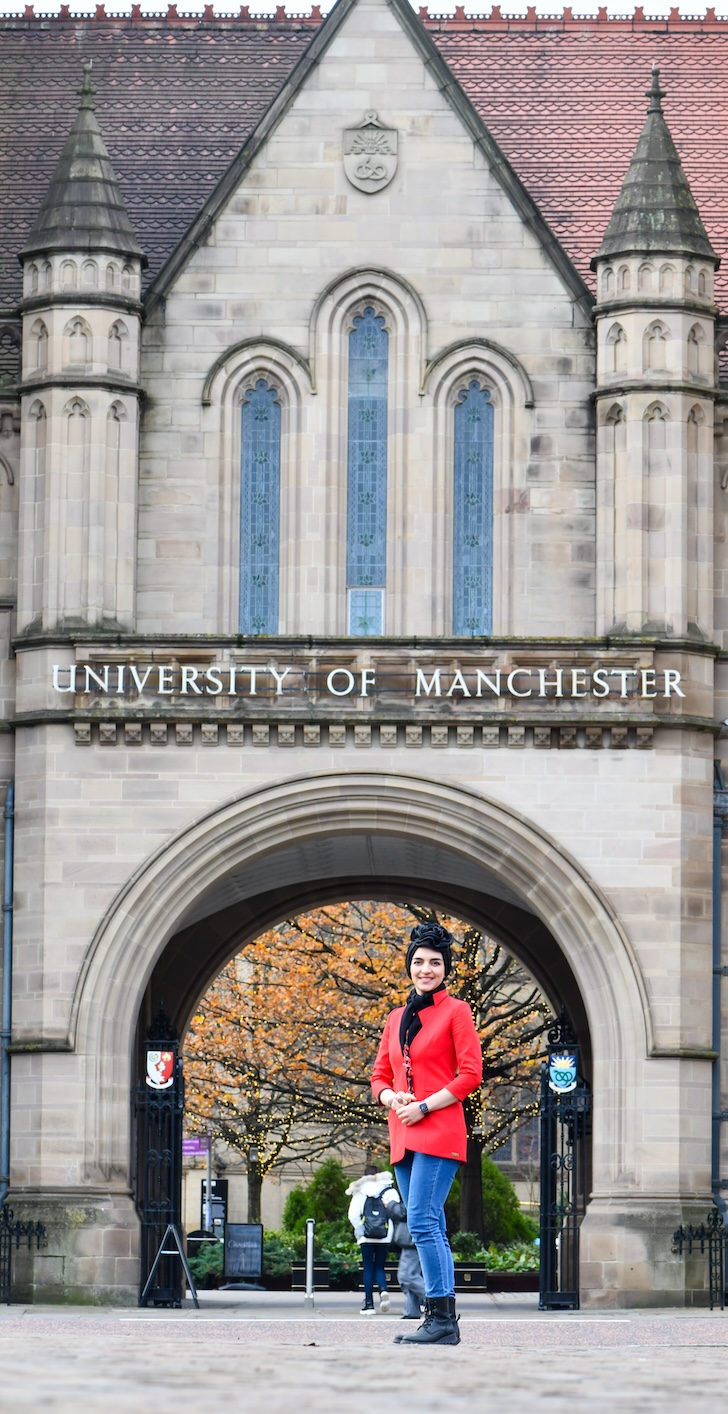
Zahra Montazeri is a Lecturer (Assistant Professor) in the Department of Computer Science at the University of Manchester. Her research focuses on physics-based computer graphics, particularly photorealistic rendering and appearance modeling for complex materials like cloth, hair, and fur. She holds a PhD in Computer Science from the University of California, Irvine (UCI), and has industry experience at Disney Research, WetaDigital, Industrial Light & Magic (ILM), Pixar, and Luxion. **Education:** PhD in Computer Science (UCI, 2015–2021) M.Sc. in Computer Science (UCI, 2015–2017) B.Sc. in Computer Engineering (Sharif University of Technology, Iran, 2010–2014) **Research Interests:** Zahra’s work bridges academic and industrial applications, emphasizing practical and efficient rendering techniques. Her key areas include physics-based rendering, material modeling for fabrics, and virtual reality optimizations like foveated rendering. She collaborates with industry leaders such as WetaDigital and has contributed to movies like The Mandalorian and Avatar: The Way of Water . **Articles Trends:** Recent work focuses on texture-free cloth rendering, dynamic BTF synthesis, and neural-based material models. Her research often addresses computational efficiency while maintaining photorealism, with applications in film, gaming, and VR. **Awards:** Best Paper Award at EGSR (2023) Best Visuals Award at EGSR (2023) UCI Doctral Fellowship (2015) LightSpeed Venture Partners Summer Fellowship (2016) **Advising & Grants:** Advises four PhD students and has one alumni (David Petrescu). Her group actively collaborates with industry and explores applied research in rendering and virtual environments. She serves on program committees for PG, EGSR, and I3D. **Labs/Teams:** Leads a research group at Manchester focused on graphics and virtual environments, with interdisciplinary projects in computer vision, AI, and material science.
Luca Quartesan is an Instructor at the Academy for AI, Games & Media, focusing on research in computer graphics and neural networks. His work emphasizes texture function compression and rendering techniques, leveraging neural scene representations and artificial intelligence. Research interests include bidirectional texture functions (BTF), surface material analysis, and applications of neural networks in graphics. His recent contributions explore efficient compression methods for BTF data and real-time rendering optimizations. No scientific awards, grants, or advisees are explicitly noted in the provided materials. His academic profile centers on innovative applications of neural architectures to solve challenges in visual computing and media technologies.
Tomáš Skřivan serves as a Research Fellow at the Hoskinson Center for Formal Mathematics , Carnegie Mellon University. His work bridges formal mathematics with practical scientific computing through the development of the SciLean library in Lean 4, targeting enhanced reliability in machine learning and simulation software. Skřivan's research spans interdisciplinary domains with core emphases on: Physics-based simulation of fluid dynamics and wave phenomena Computer graphics algorithms for light transport and rendering Formal verification techniques applied to numerical methods Mathematical modeling of viscoelastic materials His publication trajectory since 2016 reveals evolving expertise from computational fluid dynamics (water wave simulation, viscoelastic modeling) toward formal methods in scientific computing, consistently merging theoretical rigor with practical implementation. Recent work on SciLean represents a strategic pivot toward verified software foundations. As a key contributor to the Hoskinson Center's mission, Skřivan collaborates on projects leveraging proof assistants to eliminate errors in scientific code. The center, established through Charles Hoskinson's support, pioneers mathematically guaranteed correctness in computational science through formal verification frameworks.