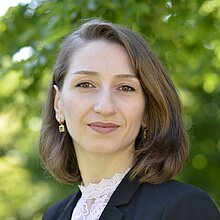
Thorsten Chmura is a Professor in the Department of Economics at Nottingham Business School, Nottingham Trent University. His work focuses on experimental and behavioral economics, utilizing laboratory and field experiments to address real-world challenges. He maintains collaborations within NTU’s Applied Economics and Policy Research Group, Public Service Management Research Group, and international partnerships across Europe, China, and the US. Chair of Industrial Economics at University of Nottingham (previous) Director, Centre for Research in the Behavioural Sciences (previous) PhD in Economics and Physics from University of Bonn Research interests span behavioral economics, experimental economics, game theory, and traffic modeling. His work examines decision-making under risk, wage discrimination, and behavioral responses in complex systems. Recent publications explore AVOD streaming economics (2024), social trading herding (2022), and toll road choice dynamics (2014). Key article trends include: Behavioral responses in financial markets Risk attitudes across 30 countries Cultural value impacts on loyalty programs Traffic flow simulations Game theory applications in coordination problems Experimental validation of economic theories
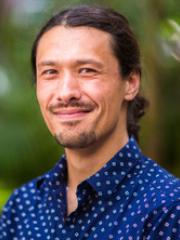
Matt Nassar is an Associate Professor of Neuroscience and Assistant Professor of Cognitive and Psychological Sciences at Brown University. He leads the Learning, Memory and Decision Lab, which is part of the Department of Neuroscience and the Robert J. & Nancy D. Carney Institute for Brain Science. His research focuses on understanding how the brain flexibly processes information to achieve complex and adaptive behaviors through computational approaches that bridge cognitive psychology and neuroscience. Education: PhD, University of Pennsylvania (2012) BA, Colgate University (2004) Nassar's research examines how different cognitive systems—learning, memory, and perception—leverage common computational principles to optimize decision-making. His work particularly focuses on how the brain balances stability and flexibility in processing information, how uncertainty is represented and utilized in learning, and how neural computations underlie complex behaviors. Through computational modeling and empirical research, he investigates how modular information-processing systems impact decisions and complex behavior in dynamic environments. His research integrates methods from cognitive psychology, neuroscience, and computational modeling to address fundamental questions about human cognition. Analysis of Nassar's recent publications (2020-2024) reveals a strong focus on computational neuroscience applied to decision-making, learning, and psychiatric conditions. His work frequently employs Bayesian modeling approaches to understand belief updating, uncertainty processing, and structure learning. Key themes include the neural basis of flexibility in learning, computational mechanisms underlying psychiatric symptoms, and age-related changes in cognitive processing. His research bridges cognitive psychology, neuroscience, and computational modeling to provide insights into both healthy cognition and disorders such as depression and schizophrenia. Scientific Contributions: Developed computational models of belief updating and learning under uncertainty Investigated neural mechanisms of stability-flexibility tradeoffs in cognition Examined age-related differences in learning and memory processes Explored computational mechanisms underlying psychiatric conditions Studied the role of noise correlations in neural learning systems Investigated how prefrontal cortex representations shape decision processes Nassar actively mentors researchers in his lab, with recent announcements highlighting postdocs joining from prestigious institutions like Max Planck UCL and Freie Universität Berlin. His lab appears to receive significant research funding, supporting multiple postdoctoral positions and research projects. Collaborations span multiple departments at Brown University, particularly with researchers in Cognitive and Psychological Sciences, Neurology, and Psychiatry. The lab has produced numerous high-impact publications in top journals including Nature Human Behaviour, Brain, and eLife. The Learning, Memory and Decision Lab, led by Nassar, is an active research group that uses computational models to understand how the brain represents and stores information for effective decision making. Recent lab announcements (as of February 2025) indicate the lab is expanding with new postdoctoral researchers joining from Harvard, Max Planck UCL, and Freie Universität Berlin, suggesting strong research momentum and funding support. The lab appears to be well-integrated within Brown's neuroscience community, with collaborations spanning multiple departments and research centers.
Éric Bélanger is a Professor in the Department of Political Science at McGill University, specializing in Canadian and Quebec politics. His research focuses on electoral behavior, political parties, nationalism, and public opinion dynamics. He holds a PhD from the Université de Montréal and has published extensively on topics such as generational shifts in Quebec nationalism, party realignment, and municipal voting patterns. His work frequently employs quantitative methods, including advanced econometric modeling for election forecasting. Research interests include: Quebec and Canadian political systems Political party competition and realignment Nationalist movements and identity politics Economic voting and fiscal policy impacts Municipal elections and local governance Comparative studies of electoral systems His recent work highlights innovative approaches to forecasting elections in diverse contexts like France and Latin America, while maintaining a strong focus on Quebec-specific issues such as generational voting patterns and the evolving nationalist landscape. Bélanger’s research often bridges theoretical frameworks with empirical analysis, contributing to both Canadian and comparative political science literatures.
Rasha Baruni is an Assistant Professor in the Department of Psychology at the University of Manitoba's Faculty of Arts. She teaches courses including Seminar in Behaviour Modification (PSYC 4540/8240) and Seminar in Basic Operant Research (PSYC 4540/8270). Her academic background includes a PhD in Applied Behaviour Analysis from the University of South Florida (2023), an MS in Applied Behaviour Analysis from St. Cloud State University (2012), and a BA Honours in Psychology from York University (2007). PhD (Applied Behaviour Analysis), University of South Florida, 2023 MS (Applied Behaviour Analysis), St. Cloud State University, 2012 BA Honours (Psychology), York University, 2007 Baruni's research focuses on applied behavior analysis for child safety , particularly in digital environments. She develops and evaluates behavioral skills training (BST) and conjugate reinforcement schedules to address physical and digital safety threats (e.g., firearms, social media risks). Her work extends to staff training methodologies and procedural fidelity in intervention implementation. Recent publications analyze conjugate reinforcement dynamics, remote safety training efficacy, and BST adaptations. Research trends show emphasis on digital safety threats , cross-cultural interventions , and technology-assisted training for both children and practitioners. She actively explores ways to improve stakeholder accessibility to safety programs. Currently accepting Master’s and PhD students, Baruni collaborates with international institutions on behavioral safety initiatives and maintains active research connections through platforms like Google Scholar and ResearchGate.
Saleem Bahaj is an Associate Professor of Economics and Finance at University College London (UCL), serving as Programme Director for MRes/PhD in Financial Economics. He joined UCL in 2021 after seven years at the Bank of England's research department and holds a PhD from the University of Cambridge. His research focuses on the intersection of macroeconomics and finance, emphasizing international finance, corporate behavior, and bank capital regulation. Notable work includes studies on cross-border financial policy coordination, central bank liquidity lines, and the implications of bank capital requirements. Bahaj's research also explores topics such as open banking's impact, inflation risk markets, and the effects of monetary policy through collateral channels. He is affiliated with UCL's Department of Economics and School of Management, with a professional presence at Drayton House in London. Research interests include global financial stability mechanisms, the macroeconomic effects of fiscal policies, and the transmission channels of monetary policy. His work often addresses systemic risks and policy coordination in international contexts. He has contributed to discussions on liquidity management, solvency hedging strategies, and the anatomy of currency pegs. Bahaj's publications span topics from corporate behavior during crises to the economic impacts of residential collateral dynamics. His advising and grants activities are not explicitly detailed in the provided materials. He maintains a lab or team focused on financial stability and macroeconomic policy analysis, though specific team names are not mentioned. Contact information and a personal website are available via his UCL profile.
Braam Lowies is a Senior Lecturer in Property at UniSA Business, University of South Australia, based at the City West Campus. He is an active researcher and Research Degree Supervisor, focusing on the intersection of financial behaviour, mental health, and ageing in Australia. His work spans multiple disciplines including housing, public policy, gerontology, and behavioural economics. Institution: University of South Australia School: UniSA Business Department: Property Position: Senior Lecturer Email: Braam.Lowies@unisa.edu.au Dr. Lowies' research primarily explores the financial and psychological wellbeing of older Australians, particularly in the context of retirement, housing equity, and crises such as the COVID-19 pandemic. His studies examine how savings, debt, hope, and mental health influence financial decisions, and how the home environment affects health outcomes across different age groups in later life. He frequently employs large-scale datasets like HILDA and applies both qualitative and quantitative methods. His recent publications highlight trends in ageing-in-place, equity release, digital banking challenges, and the socio-ecological determinants of financial stress. These works appear in high-impact journals such as Stress and Health , PLoS One , and Ageing & Society , as well as in book chapters with Edward Elgar Publishing. His research has relevance for policy development in housing, retirement planning, and mental health support systems. Dr. Lowies collaborates extensively with researchers such as Kurt Lushington, Rajabrata Banerjee, and Vandana Arya. His work has been cited in academic databases and picked up by media outlets, indicating its societal impact. Understanding the effect of financial behaviour on mental health: evidence From Australia (2025) Ageing-in-place (2024) The home environment: influences on the health of young-old and old-old adults in Australia (2024) The effect of psychological factors on financial behaviour among older Australians (2023) COVID‐19: financial well‐being of older Australians in times of crisis (2022) Dr. Lowies has no listed scientific awards in the provided materials. He is actively involved in supervising research degrees but specific student names are not mentioned. There is no information about grants, laboratories, or research teams he leads, though his collaborative work suggests strong interdisciplinary engagement.
Katrine Eldegard is a Professor at the Norwegian University of Life Sciences (NMBU), Faculty of Environmental Sciences and Natural Resource Management (MINA), Department of Ecology and Natural Resource Management (INA). She leads BatLab Norway and contributes extensively to national and international conservation science policy. Institution: Norwegian University of Life Sciences School: Faculty of Environmental Sciences and Natural Resource Management Department: Department of Ecology and Natural Resource Management Position: Professor Her research centers on understanding how human activities and land use affect natural ecosystems and species across taxa and spatial scales. She specializes in the behavioral, population, and community-level responses of mammals, birds, and insects to anthropogenic pressures such as energy infrastructure, transport networks, and forestry. A major focus is on bat ecology and conservation, pollination dynamics, and biodiversity monitoring in boreal and agricultural landscapes. Her recent publications reveal strong trends in climate change impacts on bat morphology and distribution, pollinator-plant interactions under environmental change, and the ecological consequences of infrastructure development. These works integrate field ecology with advanced modeling and policy-relevant assessments. She has played leading roles in key scientific committees: Chair, Mammal Committee, Norwegian Red List for Species (2021) Chair, Mammal Committee, Norwegian Alien Species List (2023) Member, Norwegian Scientific Committee for Food and Environment (VKM), CITES Expert Panel Norway’s representative, UNEP/Eurobats Advisory Committee Eldegard has supervised numerous research projects and collaborated with government agencies and private partners on applied ecology. She teaches courses including NATF200 Vern og forvaltning av norsk natur and the upcoming NATF300 Conservation Science. Her work is supported by extensive fieldwork, interdisciplinary collaboration, and integration of ecological theory with practical conservation. She leads BatLab Norway, a research group dedicated to advancing knowledge on bat ecology, behavior, and conservation through innovative methods including telemetry, acoustic monitoring, and landscape analysis.
Chao Ma is a Lecturer at the Research School of Management, Australian National University (ANU). He holds a Doctor of Philosophy, MPhil, Master of Business, and BBA in Human Resource Management from ANU and HKBU. His research focuses on Human Resource Management (e.g., perceived overqualification, career development) and Organisational Behaviour (e.g., leadership, unethical pro-organisational behaviour). He has supervised research students and contributed to over 22 peer-reviewed articles since 2016, exploring topics like AI in HR, knowledge-sharing platforms, and leadership dynamics. His work often examines cross-cultural contexts, particularly in China, addressing themes such as temporary worker integration, follower behaviour under authoritarian leadership, and the dual effects of overqualification on workplace outcomes. Collaborations span international scholars, focusing on topics like employee voice, humility in leadership, and stress management in multi-employment environments. Chao Ma's research bridges theoretical frameworks with practical implications for managing modern organisational challenges, emphasizing ethical leadership, employee well-being, and leveraging technology in HR practices. His recent studies highlight AI's role in improving migrant worker conditions and resolving knowledge-sharing dilemmas in digital platforms.
Maria C.W. Peeters serves as a Full Professor at Eindhoven University of Technology (TU/e) within the Department of Industrial Engineering and Innovation Sciences, specifically the Human Performance Management Group. She concurrently holds an Associate Professor position at Utrecht University in the Department of Social, Health and Organizational Psychology, reflecting her dual institutional engagement in Work and Organizational Psychology. Her educational background includes: MSc in Health Sciences from Maastricht University PhD from Radboud Universiteit Nijmegen (dissertation: effect of social support on work stress) Peeters' research investigates sustainable workforce performance through the critical lens of worker diversity in high-tech environments. She specializes in worker (ill)health and well-being, work engagement, sustainable employability, job crafting interventions, work-life balance dynamics, and tailored technological innovation implementation. Her work emphasizes adapting technologies to accommodate older workers, those with lower educational levels, and disabilities to extend labor market participation. Recent publications (2025) analyze psychosocial safety climate and the DISC model for office workers, while earlier studies (2018-2015) focused on job crafting transmission and intervention efficacy. Her research consistently employs quantitative methodologies like regression analysis within the Job Demands-Resources framework, addressing sustainable performance threats from rapid technological implementation. No specific scientific awards or prizes are documented in the provided text. Peeters has published over 100 national and international articles and book chapters, with 75 research outputs listed in TU/e's repository. She co-edited the textbook "An Introduction to Contemporary Work Psychology" (Wiley Blackwell, 2014) and serves on editorial boards for Work & Stress and Gedrag en Organisatie (Dutch Journal of Behaviour in Organizations). Her academic leadership includes presidency of the Dutch Association of Work & Organizational Psychology since 2018. She operates within the Human Performance Management Group at TU/e, which studies workforce optimization through health, engagement, and sustainable employability metrics in digitized workplaces.
Dr. Shadi Hashem is a Research Fellow at the School of Geosciences, University of Aberdeen. His work bridges behavioural economics, agricultural systems, and sustainable food supply chains, with a focus on promoting environmentally and socially responsible production and consumption practices. His research interests lie at the intersection of Behavioural Economics , Sustainable Agriculture , and Entrepreneurship . He investigates consumer behaviour related to sustainable food choices, examines how supply chain collaboration can improve competitiveness—especially for small-scale and disadvantaged farmers—and explores digital innovations such as blockchain technology and knowledge exchange hubs to enhance transparency and sustainability in agri-food systems. Dr. Hashem is currently contributing to the VISIONARY project, a research initiative aimed at understanding the drivers and barriers to transitioning food systems toward sustainability. This work involves interdisciplinary analysis of policy, economic incentives, technological adoption, and social dynamics across global food supply networks. While no specific scientific awards have been listed, his involvement in high-impact sustainability research demonstrates recognition within the academic community. He has not advised any named students in the provided text, nor are specific grants mentioned, but his participation in large-scale collaborative projects suggests active engagement in funded research. He is part of a research team working on sustainable agri-food systems, likely embedded within a larger research group or center focused on environmental sustainability or food security at the University of Aberdeen. The VISIONARY project indicates collaboration with European partners and stakeholders across the agri-food sector.
Changjian Li is an Assistant Professor in the School of Informatics at the University of Edinburgh. He leads the GraphViX Group (Graphics, Vision and X) and is a member of the Institute of Perception, Action and Behaviour (IPAB). His research spans computer graphics, computer vision, and human-computer interaction with a focus on 3D generation and analysis. Education: Bachelor's Degree from Shandong University (2014) Ph.D. from the University of Hong Kong (2019) under Prof. Wenping Wang Postdoc at University College London (UCL) with Prof. Niloy Mitra Starting Researcher position at Inria with Dr. Adrien Bousseau Research Interests: Changjian's research focuses on sketch-based 3D modeling, CAD modeling, point cloud processing, and medical imaging applications. He develops systems that bridge intuitive sketching with precise CAD workflows, enhances 3D animation pipelines, and applies neural methods to sparse medical data reconstruction. Scientific Recognition: Best Paper Honorable Mention Award (MICCAI 2021) CADTalk selected as Highlight (CVPR 2024 top 10%) ACM SIGGRAPH Asia 2018 cover image selection ACM SIGGRAPH Asia 2015 technical paper highlight CVPR 2019 poster highlighted in 'Computer Vision News' Advising & Collaborations: He mentors postdocs and PhD students including Duolikun Danier, Haocheng Yuan, Ankan Bhunia, and Lei Zhong. Former advisees include Salvatore Esposito (now at Edinburgh), Guangshun Wei (Shandong University), and Mingjun Yang (University of Melbourne). Collaborates with Oisin Mac Aodha, Hakan Bilen, and Niloy Mitra. Professional Service: Currently serves as Associate Editor for IEEE TVCG and participates in program committees for SIGGRAPH Asia, SIGGRAPH, EuroGraphics, and Geometry Design and Computing (GDC) conferences.
Alexander Westkamp is a Professor in Economics at the University of Cologne since 2018. His research focuses on matching markets , mechanism design , and behavioral economics , with significant contributions to understanding stability, strategy-proofness, and exchange mechanisms in complex market structures. Current position: Associate Professor (W2) with tenure , University of Cologne Prior roles: Assistant Professor , Maastricht University (2013–2015); Visiting Scholar , Stanford University (2012–2013) Affiliated with interdisciplinary research clusters like ECONtribute: Markets & Public Policy , Germany’s first Cluster of Excellence in economics. His work has been published in top journals including the Journal of Political Economy , Games and Economic Behavior , and Theoretical Economics . Recent articles explore topics such as: Generalized matching with contracts and networks Stability and strategy-proofness in trading networks Tie-breaking mechanisms in priority-based matching systems Westkamp’s research often intersects with quantum computing and social behavior through collaborations at the University of Cologne’s Key Profile Area: Social and Economic Behaviour .
Quentin Gausset is an Associate Professor in the Department of Anthropology at the University of Copenhagen, Faculty of Social Sciences. His work bridges environmental anthropology, development studies, and climate action, with extensive fieldwork across West, Southern, and East Africa, as well as Southeast Asia and Denmark. He leads the SAMSKAB research project focused on green transitions and community-driven sustainability. His research interests include environmental anthropology, natural resource management, development, HIV/AIDS, ethnicity, autochthony, indigeneity, kinship, religion, and interdisciplinary field methods. He is a member of the Anthropological Research Group on Nature, Environment and Climate (NEC), reflecting his deep engagement with ecological and societal transformations. The recent scholarly output of Quentin Gausset demonstrates a strong shift toward climate action, citizen-driven environmental initiatives, and sustainable community models, particularly in Denmark. His publications analyze eco-villages, carbon footprinting, and collective behavioral change, emphasizing the cultural and social dimensions of the green transition. This reflects a broader interdisciplinary trend in his work, linking anthropological insight with sustainability science and policy. While no formal scientific awards are listed in the provided material, his editorial leadership in key books on climate mitigation and green transitions underscores his influence in the field. His collaboration with institutions such as Gulu University and participation in research networks highlight his international academic engagement. Quentin Gausset has advised or collaborated on numerous research initiatives and projects, including the Citizen Driven Environmental Action (CIDEA) project and initiatives on natural resource management in Africa. He has contributed to interdisciplinary teaching and capacity-building programs in Southeast Asia and southern Africa, demonstrating a commitment to collaborative and applied research. He is actively involved in the Anthropological Research Group on Nature, Environment and Climate (NEC) at the University of Copenhagen, which serves as a hub for interdisciplinary research on environmental change, sustainability, and community governance. His work often involves collaborative networks across Denmark and internationally, particularly in Africa and Southeast Asia.
Dr. Miranda Svanidze is a Researcher at the Leibniz Institute of Agricultural Development in Transition Economies (IAMO), affiliated with Martin Luther University Halle-Wittenberg. She has served as a Research Associate at IAMO since November 2019, focusing on agricultural markets, price transmission, and food security in transition economies. Her work contributes significantly to understanding market dynamics in the Black Sea region and post-Soviet states, particularly in relation to geopolitical events like Russia's war in Ukraine. Dr. Svanidze's educational background includes: PhD in Agriculture from Martin Luther University Halle-Wittenberg (MLU), Germany, with highest honors ("summa cum laude") Master's degree in Economics (with Honors) from the International School of Economics at Tbilisi State University (ISET), Georgia Dr. Svanidze's research centers on the functioning of agricultural markets and resilience of agri-food value chains, with specific expertise in price transmission analysis, market integration, consumer behavior, regional trade, and food security. Her work emphasizes agri-food markets in transition economies, particularly examining how geopolitical events like Russia's war in Ukraine impact grain markets, wheat pricing, and food security in the Black Sea region and beyond. She employs sophisticated economic modeling to analyze trade networks, market efficiency, and the effects of policy interventions. Analysis of Dr. Svanidze's recent publications reveals a strong focus on the intersection of geopolitics and agricultural markets, particularly regarding Russia's wheat exports and their global implications. Her work increasingly examines how climate factors, exchange rate fluctuations, and wartime conditions affect agricultural pricing and market integration. There's a notable trend toward analyzing crisis impacts on food systems, with growing attention to consumer behavior in wine markets of the South Caucasus region. Dr. Svanidze has received several notable scientific recognitions: Doctoral grant from the German Academic Exchange Service (DAAD) Selection as a young economist for the 6th Lindau Nobel Laureate Meeting on Economic Sciences (2017) PhD awarded with highest honors ("summa cum laude") from Martin Luther University Halle-Wittenberg Dr. Svanidze has been actively involved in multiple research projects including BlackSeaGrain (studying Russia's grain export business in the Black Sea), CRISPR (consumer protection and innovation marketing of green genetic engineering), EU4Dialogue_SC (improving agri-food value chains in the South Caucasus), MATRACC (global food crisis impact on wheat markets), and VALUMICS (understanding food value chains). Her work often involves international collaboration with researchers across Europe and the Caucasus region. As part of IAMO's Agricultural Markets, Marketing and World Agricultural Trade department, Dr. Svanidze contributes to a team examining market dynamics in transition economies. Her research frequently intersects with teams studying food security, trade policy, and value chain analysis, particularly in regions affected by geopolitical instability. She regularly presents findings at major agricultural economics conferences including the European Association of Agricultural Economists (EAAE) Congress and IAMO Forum events.
Dr. David Sewell is a Senior Lecturer and Deputy Head of School (Teaching & Learning) at the School of Psychology, The University of Queensland. His research focuses on attention, learning, memory, and decision-making, with a strong emphasis on formal mathematical models of human cognition. He is affiliated with the Centre for Perception and Cognitive Neuroscience within the Faculty of Health, Medicine and Behavioural Sciences. Education: Bachelor (Honours) of Arts and Doctor of Philosophy, both from the University of Western Australia. David's research explores the intersection of cognitive psychology and computational modeling. Key areas include perceptual decision-making, attentional mechanisms, and the application of diffusion models to understand cognitive processes. His work also extends to sustainability and collective self-regulation through cognitive frameworks. The 15 most recent articles highlight his contributions to modeling decision thresholds in memory prioritization, analyzing gaze cueing effects, and investigating neural correlates of confidence in multisensory decisions. Collaborative projects frequently involve interdisciplinary approaches, combining neuroscience, psychology, and computational methods. He has supervised multiple PhD candidates, serving as Principal or Associate Advisor, with research topics ranging from visual categorization to metacognition in children. Current and past funding includes ARC Discovery Projects on collective self-regulation and category learning constraints.